Plant Kingdom Chapter Notes | Famous Books for UPSC Exam (Summary & Tests) PDF Download
| Table of contents |

|
| Plant Kingdom |
|
| Algae |
|
| Classification |
|
| Bryophyta |
|
| Pteridophyta |
|
| Angiosperms |
|
| Gymnosperms |
|

Plant Kingdom
Kingdom Plantae includes green, brown and red algae, liverworts, mosses, ferns and seed plants with or without flowers.
They have the following characters:
- Multicellular organisms with walled and frequently vacuolated eukaryotic cells.
- They contain photosynthetic pigment in plastids.
- The principle mode of nutrition is photosynthesis, but the number of plants has become absorption.
- Primarily non-motile, living anchored to a substrate.
- Structural differentiation leading towards organs of photosynthesis, anchorage and support and in higher forms towards specialized photosynthetic, vascular and covering tissues.
- Reproduction is primarily asexual or sexual. The reproductive organs are multicellular.
- A multicellular embryo is formed during development from the zygote. Algae lack embryo stage. The life cycle consists of alternating haploid gametophyte and diploid sporophyte generation. This phenomenon is called alternation of generation.
Some important classifications are as follows:
- The artificial system of classification used gross superficial morphological characters and was based mainly on vegetative characters or on the androecium structure.
- Natural classification systems were based on natural affinities among the organisms and consider not only the external features but also internal features.
- Phylogenetic classification systems are based on evolutionary relationships between various organisms which assumes that organisms belonging to the same taxa have a common ancestor.
Types of taxonomy, we study are:
- Numerical Taxonomy is based on all observable characteristics, where numbers and codes are assigned to all the characters and the data are then processed.
- Cytotaxonomy is based on cytological information like chromosome number, structure, behaviour.
- Chemotaxonomy is based on the chemical constituents of the plant.
Algae
(i) Algae: Simple, Chlorophyll-bearing Aquatic Organisms
- Algae are simple, thalloid (non-vascular), and mostly aquatic (both in freshwater and marine) organisms.
- They can be found in various habitats such as moist stones, soils, wood, and even in association with fungi or animals.
- Algae exhibit a wide range of forms and sizes, from colonial forms like Volvox to filamentous forms like Ulothrix and Spirogyra, and even massive plant bodies like kelps.
(ii) Reproduction of Algae: Vegetative, Asexual, and Sexual
- Algae reproduce through vegetative, asexual, and sexual methods.
- Vegetative reproduction occurs through fragmentation, where each fragment develops into a new thallus.
- Asexual reproduction involves the production of different types of spores, with zoospores being the most common, which are flagellated and give rise to new plants upon germination.
- Sexual reproduction in algae can be isogamous, where two gametes are flagellated and similar in size, or anisogamous, where two gametes are dissimilar in size. Another type of sexual reproduction is oogamous, where a larger non-motile female gamete fuses with a smaller motile male gamete, as seen in species like Volvox and Fucus.
(iii) Importance of Algae: Photosynthesis and Commercial Uses
- Algae are crucial in the carbon dioxide fixation process through photosynthesis, accounting for at least half of the total carbon dioxide fixation on Earth.
- They are important as primary producers of energy-rich compounds that form the basis of food cycles for aquatic animals.
- Some species of marine algae, such as Porphyra, Laminaria, and Sargassum, are used as food for humans.
- Certain types of algae, particularly brown and red algae, produce hydrocolloids such as algin and carrageen, which are used commercially in various products.
- Agar, obtained from Gelidium and Gracilaria, is used in the growth of microbes and in the preparation of ice-creams and jellies.
- Chlorella, a unicellular alga rich in proteins, is used as a food supplement even by space travelers.
(iv) Classification of Algae: Chlorophyceae, Phaeophyceae, and Rhodophyceae
- Algae are classified into three main classes: Chlorophyceae, Phaeophyceae, and Rhodophyceae, based on their characteristics and pigmentation.
Classification
1. Chlorophyceae
 Chlorophyceae
- Plants freshwater or marine.
- Forms unicellular to parenchymatous.
- Cells showing eukaryotic organization.
- Chief pigments: Chlorophyll a, b; a, b, g: carotene, lycopene, lutein, violaxanthin.
- Reserve food: Starch and oil.
- Zoospore formation occurs.
- Male gametes flagellate.
- Flagella identical.
- Sexual reproduction: Isogamous, anisogamous or oogamous.
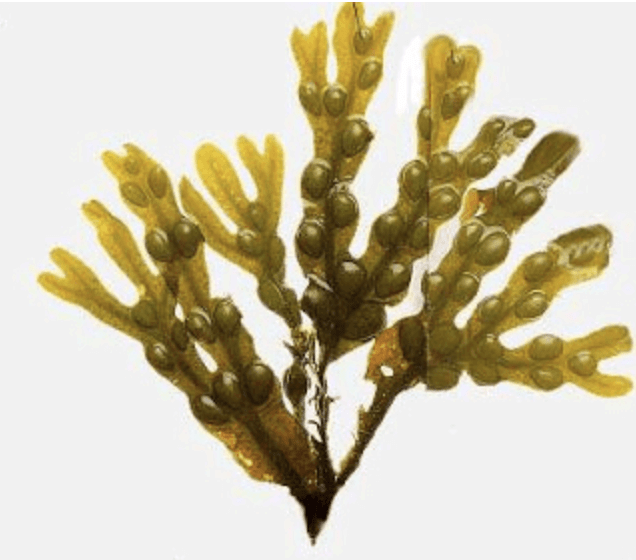
2. Phaeophyceae
 Phaeophyceae
- Plants marine.
- Forms one-celled to parenchymatous.
- Cells showing the eukaryotic organization.
- Chief pigments – Chlorophyll a, c; beta–carotene, fucoxanthin, lutein, violaxanthin, diatoxanthin.
- Reserve food – Laminarin, mannitol and oils.
- Zoospore formation occurs.
- Male gametes flagellate.
- Flagella are unequal.
- Sexual reproduction – Isogamous, anisogamous or oogamous.
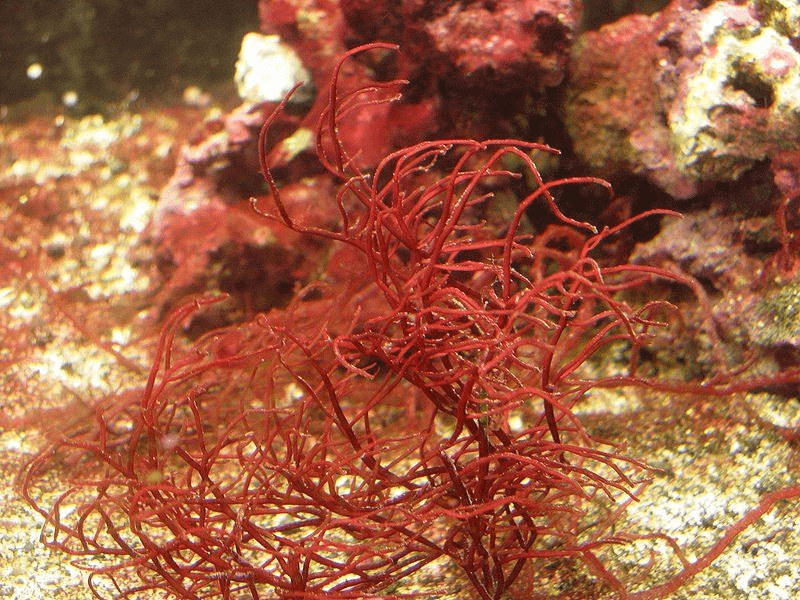
3. Rhodophyceae
- Plants generally marine.
 Rhodophyceae
 - Forms filamentous to parenchymatous.
- Cells showing eukaryotic organization.
- Chief pigments – Chlorophyll a, d is present, but chlorophyll c is absent; a, b–carotene, lutein, violaxanthin, fucoxanthin, myxoxanthin, g–phycoerythrin, g–phycocyanin and allophycocyanin.
- Reserve food: Floridean starch, galactan –SO4 polymers.
- No zoospore formation.
- Male gametes non-flagellate.
- Sexual reproduction by a specialized type of oogamy.
- Life cycle haplobiontic or diplobiontic.
Bryophyta
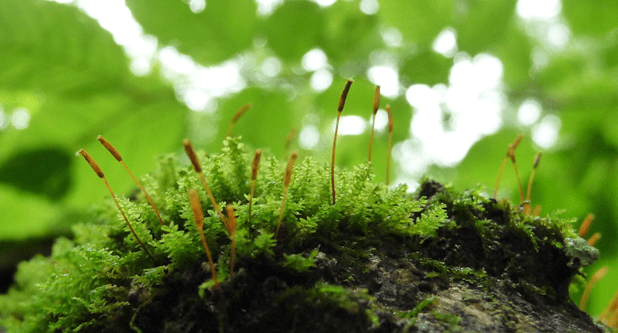
- Bryophyta (Gk: Bryon = moss; phyton = plants) includes the simplest and primitive land plants.
 Bryophyta
 - Due to peculiar type of their habitats, they are regarded as 'the amphibians of the plant kingdom'.
- Habitat: Bryophytes usually grow in moist and shady places.
- Specialized habitats: Some bryophytes grow in diverse habitats such as:
(a) Aquatic (Example: Riccia fluitans, Ricciocarpus natans, Riella), epiphytes (Example: Dendroceros, Radula protensa and many mosses), saprophytes (Example: Buxbaumia aphylla, Cryptothallus mirabilis).
(b) Dry habitats such as dry heaths (Example: Polytrichum juniperinum), deserts (Example: Tortula desertorum) and dry rocks (Example: Porella platyphylla). - Sexual reproduction: The male sex organ is called as antheridium and the female as archegonium.
- They are called amphibians of the plant kingdom because they can live in soil but rely on water for sexual reproduction.
- Bryophytes play an important role in plant succession on bare rocks/soil.
- The plant body of bryophytes is more differentiated than that of algae, with a thallus-like structure that is prostrate or erect.
- Bryophytes lack true roots, stems, or leaves, but may have root-like, leaf-like, or stem-like structures.
- The main plant body of bryophytes is haploid and called a gametophyte, which produces multicellular sex organs.
- Male sex organs called antheridia produce biflagellate antherozoids, while female sex organs called archegonia produce a single egg.
- Fertilization occurs in water, where an antherozoid fuses with the egg to form a zygote.
- The zygote develops into a sporophyte, which remains attached to the gametophyte and derives nourishment from it.
- Some cells of the sporophyte undergo reduction division (meiosis) to produce haploid spores, which germinate to form gametophytes.
- Bryophytes have little economic importance, but some mosses provide food for animals and Sphagnum mosses are used as fuel and packing material.
- Mosses are the first organisms to colonize rocks and play an important ecological role in decomposing rocks and preventing soil erosion.
Bryophytes are divided into liverworts and mosses:
Salient features of classes:
(i) Liverworts / Hepaticopsida
- The Latin word Hepatica means liver. Thus the members of hepticopsida are popularly known as liverworts.
- Liverworts are commonly found in moist, shady habitats such as stream banks, marshy ground, damp soil, tree bark, and deep in the woods.
- The plant body of a liverwort is thalloid, with a dorsiventral thallus closely appressed to the substrate.
- Leafy liverworts have tiny leaf-like appendages arranged in two rows on stem-like structures.
- Asexual reproduction in liverworts occurs through fragmentation of thalli or the formation of gemmae, which are green, multicellular, asexual buds that develop in gemma cups on the thalli.
- Gemmae detach from the parent body and germinate to form new individuals.
- Sexual reproduction in liverworts involves the production of male and female sex organs on the same or different thalli.
- The sporophyte of liverworts has differentiated structures such as a foot, seta, and capsule.
- After meiosis, spores are produced within the capsule, and these spores germinate to form free-living gametophytes.
(ii) Mosses / Bryopsida
The members of Bryopsida are commonly known as mosses. The class is characterised by the following characters:
- Gametophyte is differentiated into two stages: Prostrate protonema and Erect radial leafy shoot.
- Leaf-like appendages are spirally arranged on stem – like axis.
- Rhizoids are multicellular with oblique septa.
- Sex organs develop from superficial cells.
- Sporogonium is differentiated into foot, seta and capsule.
- Wall of capsule is several layered with stomata on epidermis.
- The capsule has central columella.
- Elaters are absent.
Gametophyte Stage:
- Predominant stage of mosses' life cycle.
- Consists of two stages: protonema and leafy stage.
- Protonema stage develops directly from a spore, is green and filamentous.
- Leafy stage develops from secondary protonema as a lateral bud.
- Leafy stage has upright, slender axes with spirally arranged leaves.
- Attached to soil through multicellular, branched rhizoids.
- Bears sex organs (antheridia and archegonia).
Vegetative Reproduction:
- Mosses reproduce vegetatively through fragmentation and budding in the secondary protonema.
- Sexual Reproduction:
- Sex organs (antheridia and archegonia) are produced at the apex of the leafy shoots.
- After fertilization, zygote develops into a sporophyte.
- Sporophyte consists of a foot, seta, and capsule.
- Moss sporophyte is more elaborate than that of liverworts.
- Capsule contains spores, which are formed after meiosis.
Spore Dispersal:
- Mosses have an elaborate mechanism for spore dispersal.
Examples of Mosses:
- Common examples of mosses are Funaria, Polytrichum, and Sphagnum.
Pteridophyta
- The pteridophytes (Gk. Pteron = feather and phyton = plants; means plants with feather-like fronds or ferns). They are flowerless, seedless, spore-producing vascular plants which have successfully invaded the land.
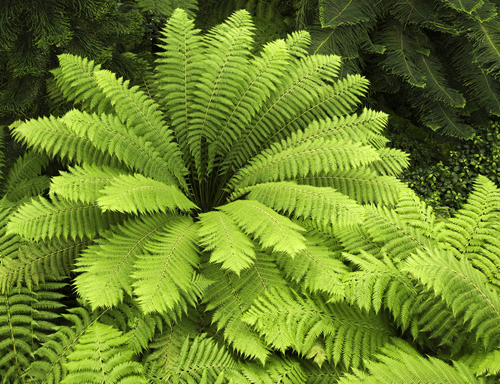 Pteridophyta
 - Habitat: The plants of pteridophytes are mostly terrestrial. They prefer shady habitats.
- They have Sporophytic plant body.
- Apical growth: The pteridophyte generally possesses a single apical cell with three cutting faces in the shoot apex.
- Sub-Phylum:
(a) Psilopsida example: Psilotum, Tmesipteris.
(b) Sub-Phylum: Lycopsida example: Lycopodium, Selaginella, etc.
(c) Sub-Phylum: Sphenopsida example: Equisetum.
(d) Sub-Phylum: Pteropsida example: Dryopteris, Pteris, Pteridium, Polypodium, etc.
Angiosperms
- The angiosperms, or flowering plants, constitute the most dominant and ubiquitous vascular plants of present-day flora which changed the green and yellow melancholy of the earth's vegetation by the colourful brightness and fragrance of their flower.
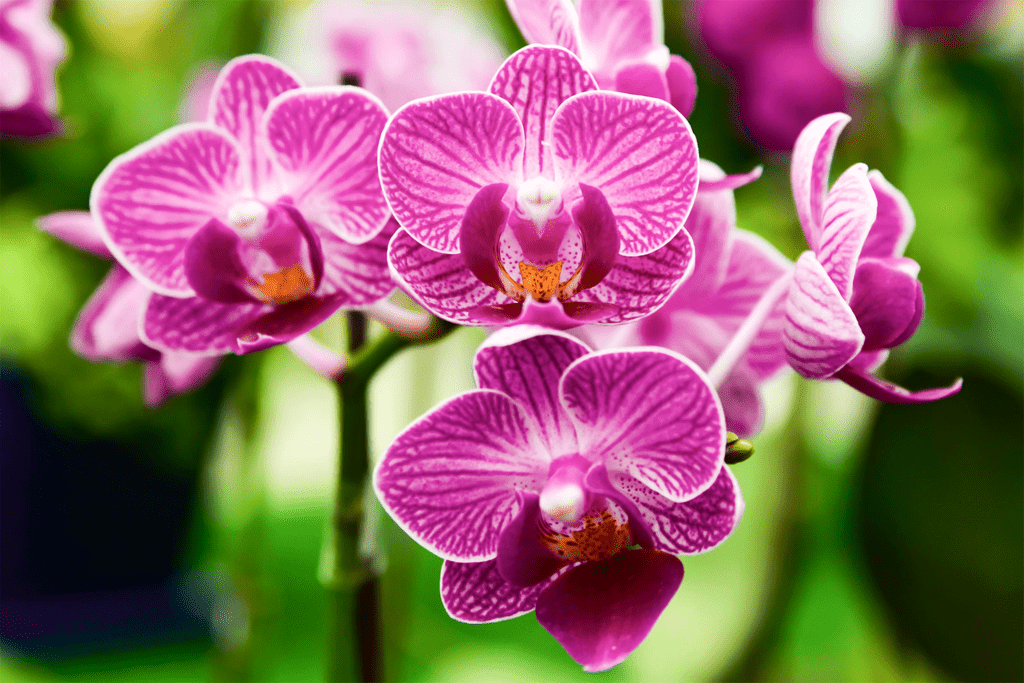 Angiosperms
 - The term angiosperm means 'enclosed seed' because the ovules or potential seeds are enclosed within a hollow ovary.
- Classification: The plants of Angiosperms divided into two major groups as Dicotyledons and Monocotyledons.
(i) Dicotyledons
They show the following distinguishing characteristics:- Taproots found in the members of this group.
- The leaves in members of these class exhibit reticulate (net-like) venation.
- The flowers are tetramerous or pentamerous having four or five members in the various floral whorls, respectively.
- The vascular bundles arranged in a ring, numbering 2–6, open and with cambium.
- The seeds of dicotyledons are with two cotyledons as the name indicate.
(ii) Monocotyledons
They show the following distinguishing characteristics:- Adventitious roots found in the members of this group.
- The leaves are simple with parallel venation.
- The flowers are trimerous having three members in each floral whorl.
- The vascular bundles scattered in the ground tissue, many in number, closed and without cambium.
- The seeds of monocotyledons are with one cotyledon as the name indicates.
Example: Cereals, bamboos, sugarcane, palms, banana, lilies and orchids.
Gymnosperms
- Living gymnosperms are mostly perennials, xerophytic, evergreen, arboreal and woody plants.
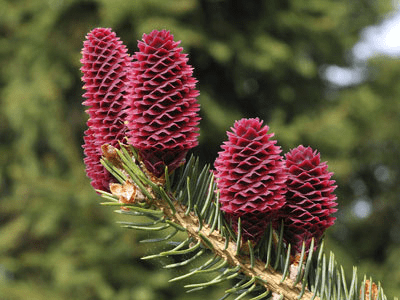 Gymnosperms
 - They grow as wood trees, bushy shrubs or rarely as climbers.
Example: Gnetales - None of them is herbs or annuals.
External features:
- The plant body is sporophyte and differentiated into root, stem and leaves.
- The plant possesses a well-developed tap root system. In some cases, the roots are symbiotically associated with algae.
Example: Coralloid roots of Cycas or with fungi - Mycorrhizal roots of Pinus - The stem is erect, aerial, solid, woody and branched (unbranched in Cycadales) but almost tuberous in Zamia.
- The leaves may be microphyllous or megaphyllous.
Old NCERT Syllabus
Salient features of sub-phyla:
(i) Sub-Phylum: Psilopsida
- These are the oldest known vascular plants; most of them (except Psilotum and Tmesipteris) are fossils.
- The plant body is relatively less differentiated.
- Roots are absent; instead, the dichotomously branched rhizome is present.
- Aerial axis is either naked or have small spirally arranged leaves.
- Sporangia are cauline (i.e., directly borne on the axis or stem); they are lateral or terminal in position.
Example: Psilotum, Tmesipteris.
(ii) Sub-Phylum: Lycopsida
- The plant body is differentiated into root, stem and leaves.
- Leaves small (i.e., microphyllous) with a single unbranched vein.
- Sporangia develop in the axil of the sporophylls.
- Sporophylls generally form compact strobili.
Example: Lycopodium, Selaginella, etc.
(iii) Sub-Phylum: Sphenopsida
- Stem differentiated into nodes and internodes.
- Leaves microphyllous, present in whorls at each node.
- Sporangia are borne on the sporangiophores which form compact cones at the apex of the fertile branches.
Example: Equisetum.
(iv) Sub-Phylum: Pteropsida
- Plant body well differentiated into root, stem and leaves.
- Leaves megaphyllous, pinnately compound.
- Sporangia develop on the ventral surface of the sporophylls, usually aggregated into sori.
Example: Dryopteris, Pteris, Pteridium, Polypodium, etc.
|
743 videos|1444 docs|633 tests
|
FAQs on Plant Kingdom Chapter Notes - Famous Books for UPSC Exam (Summary & Tests)
| 1. What are the main classifications of plants in the Plant Kingdom? |  |
| 2. What are some examples of plants belonging to the Algae classification? | |
| 3. What are Bryophyta plants and how do they differ from other plant classifications? | |
| 4. What are Angiosperms and Gymnosperms and how do they differ? | |
| 5. Can you provide examples of plants belonging to the Pteridophyta classification? | |




Viva Questions
,ppt
,Plant Kingdom Chapter Notes | Famous Books for UPSC Exam (Summary & Tests)
,Objective type Questions
,Important questions
,Semester Notes
,Plant Kingdom Chapter Notes | Famous Books for UPSC Exam (Summary & Tests)
,Free
,MCQs
,Sample Paper
,Previous Year Questions with Solutions
,Exam
,shortcuts and tricks
,practice quizzes
,Plant Kingdom Chapter Notes | Famous Books for UPSC Exam (Summary & Tests)
,video lectures
,mock tests for examination
,Summary
,Extra Questions
,study material
,past year papers
;



Chapter Notes: Plant Kingdom Free PDF Download
Importance of Chapter Notes: Plant Kingdom
Chapter Notes: Plant Kingdom
Chapter Notes: Plant Kingdom UPSC Questions
Study Chapter Notes: Plant Kingdom on the App
|
© EduRev
|
Education Revolution
|


|




