UPSC Exam > UPSC Notes > History for UPSC CSE > Warren Hastings 1732-1818
Warren Hastings 1732-1818 | History for UPSC CSE PDF Download
| Table of contents |

|
| INTRODUCTION |
|
| ABOLITION OF THE DUAL SYSTEM |
|
| REVENUE REFORMS |
|
| JUDICIAL REFORMS |
|
| TRADE REGULATIONS |
|

INTRODUCTION
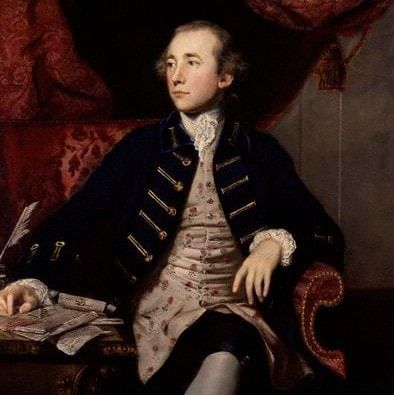
Warren Hasting (1732 - 1818)
- He started his career as a writer (clerk) in the East India Company at Calcutta in 1750.
- In 1758, he became the British resident at Murshidabad, the capital of Bengal, after Mir Jafar was installed as the Nawab after the Battle of Plassey.
- During his term, the First Anglo-Maratha war and the second Anglo-Mysore war were fought.
- The Regulating Act of 1773 was passed during his term.
- He supported Sir William Jones in the formation of the Asiatic Society of Bengal in 1785.
ABOLITION OF THE DUAL SYSTEM
- Hastings abolished the Dual System that had been established by Robert Clive. In the Dual System, the company had Diwani rights (rights to collect revenue) and the Nizam or Indian chiefs had the administrative authority.
- The Nawab’s annual allowance of Rs.32 lakh was reduced to Rs.16 lakh.
- The annual tribute paid to the Mughal Emperor was also stopped.
REVENUE REFORMS
- For revenue collection, a Board of Revenue was set up at Calcutta.
- Treasury was moved from Murshidabad to Calcutta. Calcutta became Bengal’s capital in 1772.
- British collectors were appointed for each district and an Accountant General was also appointed.
- Unreasonable fines were done away with and restrictions were placed on the raising of rent.
JUDICIAL REFORMS
- The judicial powers of the Zamindars were abolished.
- Civil and criminal courts were established. Two appellate courts were established at Calcutta, one for civil (Sadar Diwani Adalat) and one for criminal (Sadar Nizamat Adalat) cases.
- The criminal court was to have an Indian judge.
- Muslims were to be tried according to their law in the Koran and Hindus, according to Hindu laws. A code of Hindu Law, prepared by Hindu Pandits was translated into English.
- He also came down heavily on the dacoits in Bengal.
TRADE REGULATIONS
- Hastings abolished the system of dastaks which were misused by company officials and traders earlier.
- He enforced a uniform tariff of 2.5% for Indian and foreign goods.
- Private trade by company officials was restricted.
The document Warren Hastings 1732-1818 | History for UPSC CSE is a part of the UPSC Course History for UPSC CSE.
All you need of UPSC at this link: UPSC
|
216 videos|855 docs|219 tests
|
FAQs on Warren Hastings 1732-1818 - History for UPSC CSE
| 1. Who was Warren Hastings and what is his significance in history? |  |
Warren Hastings was a British colonial administrator who served as the first Governor-General of Bengal from 1772 to 1785. He played a crucial role in British colonial rule in India and implemented several administrative reforms. His significance lies in his efforts to establish a more efficient and centralized administration in British India.
| 2. What were the major reforms implemented by Warren Hastings during his tenure as Governor-General of Bengal? | |
During his tenure, Warren Hastings implemented various important reforms. Some of the major ones include:
- The establishment of a judicial system based on English common law, known as the Cornwallis Code.
- The introduction of the Permanent Settlement, a revenue system that aimed to stabilize land revenue and provide landlords with hereditary rights over the land.
- The creation of the Civil Service to ensure a professional and merit-based administration.
- The abolition of the system of dual government, which had allowed the East India Company and the Mughal Emperor to share power.
| 3. How did Warren Hastings handle the political and military challenges during his time as Governor-General? | |
Warren Hastings faced various political and military challenges during his tenure. He successfully navigated conflicts with local rulers, such as the Rohilla War and the Maratha Wars, by employing diplomacy and military strategies. He also sought to establish alliances with native rulers and reduce the influence of external powers, such as the French, in the region. His policies aimed to consolidate British power and expand their territorial control in India.
| 4. What were the controversies surrounding Warren Hastings' impeachment trial? | |
Warren Hastings' impeachment trial was a major political event that lasted from 1787 to 1795. He faced charges of corruption, bribery, and committing atrocities during his time as Governor-General. The trial was highly controversial, with political factions divided over his guilt or innocence. Ultimately, Hastings was acquitted of most charges, but the trial highlighted the growing scrutiny and criticism of British colonial rule in India.
| 5. What was the impact of Warren Hastings' tenure as Governor-General on British colonial rule in India? | |
Warren Hastings' tenure as Governor-General had a significant impact on British colonial rule in India. His reforms laid the foundation for a more centralized and efficient administration, which would be further developed by his successors. His policies also contributed to the consolidation of British power in India and set the stage for future expansion and control over Indian territories. However, his tenure also raised questions about the ethics and practices of British colonialism, as highlighted by his impeachment trial.
About this Document

2.2K Views

4.64/5
Rating

Sep 20, 2025
Last updated
Related Exams
Document Description: Warren Hastings 1732-1818 for UPSC 2025 is part of History for UPSC CSE preparation.
The notes and questions for Warren Hastings 1732-1818 have been prepared according to the UPSC exam syllabus. Information about Warren Hastings 1732-1818 covers topics
like INTRODUCTION, ABOLITION OF THE DUAL SYSTEM, REVENUE REFORMS, JUDICIAL REFORMS, TRADE REGULATIONS and Warren Hastings 1732-1818 Example, for UPSC 2025 Exam. Find important definitions, questions, notes, meanings, examples, exercises and tests below for Warren Hastings 1732-1818.
Introduction of Warren Hastings 1732-1818 in English is available as part of our History for UPSC CSE
for UPSC & Warren Hastings 1732-1818 in Hindi for History for UPSC CSE course.
Download more important topics related with notes, lectures and mock test series for UPSC
Exam by signing up for free. UPSC: Warren Hastings 1732-1818 | History for UPSC CSE
Description
Full syllabus notes, lecture & questions for Warren Hastings 1732-1818 | History for UPSC CSE - UPSC | Plus excerises question with solution to help you revise complete syllabus for History for UPSC CSE | Best notes, free PDF download
Information about Warren Hastings 1732-1818
In this doc you can find the meaning of Warren Hastings 1732-1818 defined & explained in the simplest way possible. Besides explaining types of
Warren Hastings 1732-1818 theory, EduRev gives you an ample number of questions to practice Warren Hastings 1732-1818 tests, examples and also practice UPSC
tests

Related Searches
Semester Notes
,Sample Paper
,Objective type Questions
,Extra Questions
,past year papers
,Previous Year Questions with Solutions
,MCQs
,study material
,Warren Hastings 1732-1818 | History for UPSC CSE
,Exam
,shortcuts and tricks
,Important questions
,Warren Hastings 1732-1818 | History for UPSC CSE
,practice quizzes
,video lectures
,Viva Questions
,Summary
,Warren Hastings 1732-1818 | History for UPSC CSE
,mock tests for examination
,ppt
,Free
;



Additional Information about Warren Hastings 1732-1818 for UPSC Preparation
Warren Hastings 1732-1818 Free PDF Download
The Warren Hastings 1732-1818 is an invaluable resource that delves deep into the core of the UPSC exam.
These study notes are curated by experts and cover all the essential topics and concepts, making your preparation more efficient and effective.
With the help of these notes, you can grasp complex subjects quickly, revise important points easily,
and reinforce your understanding of key concepts. The study notes are presented in a concise and easy-to-understand manner,
allowing you to optimize your learning process. Whether you're looking for best-recommended books, sample papers, study material,
or toppers' notes, this PDF has got you covered. Download the Warren Hastings 1732-1818 now and kickstart your journey towards success in the UPSC exam.
Importance of Warren Hastings 1732-1818
The importance of Warren Hastings 1732-1818 cannot be overstated, especially for UPSC aspirants.
This document holds the key to success in the UPSC exam.
It offers a detailed understanding of the concept, providing invaluable insights into the topic.
By knowing the concepts well in advance, students can plan their preparation effectively.
Utilize this indispensable guide for a well-rounded preparation and achieve your desired results.
Warren Hastings 1732-1818 Notes
Warren Hastings 1732-1818 Notes offer in-depth insights into the specific topic to help you master it with ease.
This comprehensive document covers all aspects related to Warren Hastings 1732-1818.
It includes detailed information about the exam syllabus, recommended books, and study materials for a well-rounded preparation.
Practice papers and question papers enable you to assess your progress effectively.
Additionally, the paper analysis provides valuable tips for tackling the exam strategically.
Access to Toppers' notes gives you an edge in understanding complex concepts.
Whether you're a beginner or aiming for advanced proficiency, Warren Hastings 1732-1818 Notes on EduRev are your ultimate resource for success.
Warren Hastings 1732-1818 UPSC Questions
The "Warren Hastings 1732-1818 UPSC Questions" guide is a valuable resource for all aspiring students preparing for the
UPSC exam. It focuses on providing a wide range of practice questions to help students gauge
their understanding of the exam topics. These questions cover the entire syllabus, ensuring comprehensive preparation.
The guide includes previous years' question papers for students to familiarize themselves with the exam's format and difficulty level.
Additionally, it offers subject-specific question banks, allowing students to focus on weak areas and improve their performance.
Study Warren Hastings 1732-1818 on the App
Students of UPSC can study Warren Hastings 1732-1818 alongwith tests & analysis from the EduRev app,
which will help them while preparing for their exam. Apart from the Warren Hastings 1732-1818,
students can also utilize the EduRev App for other study materials such as previous year question papers, syllabus, important questions, etc.
The EduRev App will make your learning easier as you can access it from anywhere you want.
The content of Warren Hastings 1732-1818 is prepared as per the latest UPSC syllabus.
|
© EduRev
|
Education Revolution
|


|




Signup to see your scores
go up within 7 days!
Access 1000+ FREE Docs, Videos and Tests
Takes less than 10 seconds to signup