Chapter Notes: Time and Calendar


Introduction
Have you ever wondered how we know when to wake up, eat lunch, or go to bed? That's all because of time! Time helps us understand when things happen and how long they last. It's like a magical tool that keeps our day organized!
Imagine if there were no clocks-how would we know when our favourite cartoon starts or when it's time for a birthday party? Let's dive into the world of time and discover how it helps us every day!
What is a Clock?
A clock is a tool used to tell time. It has two hands:
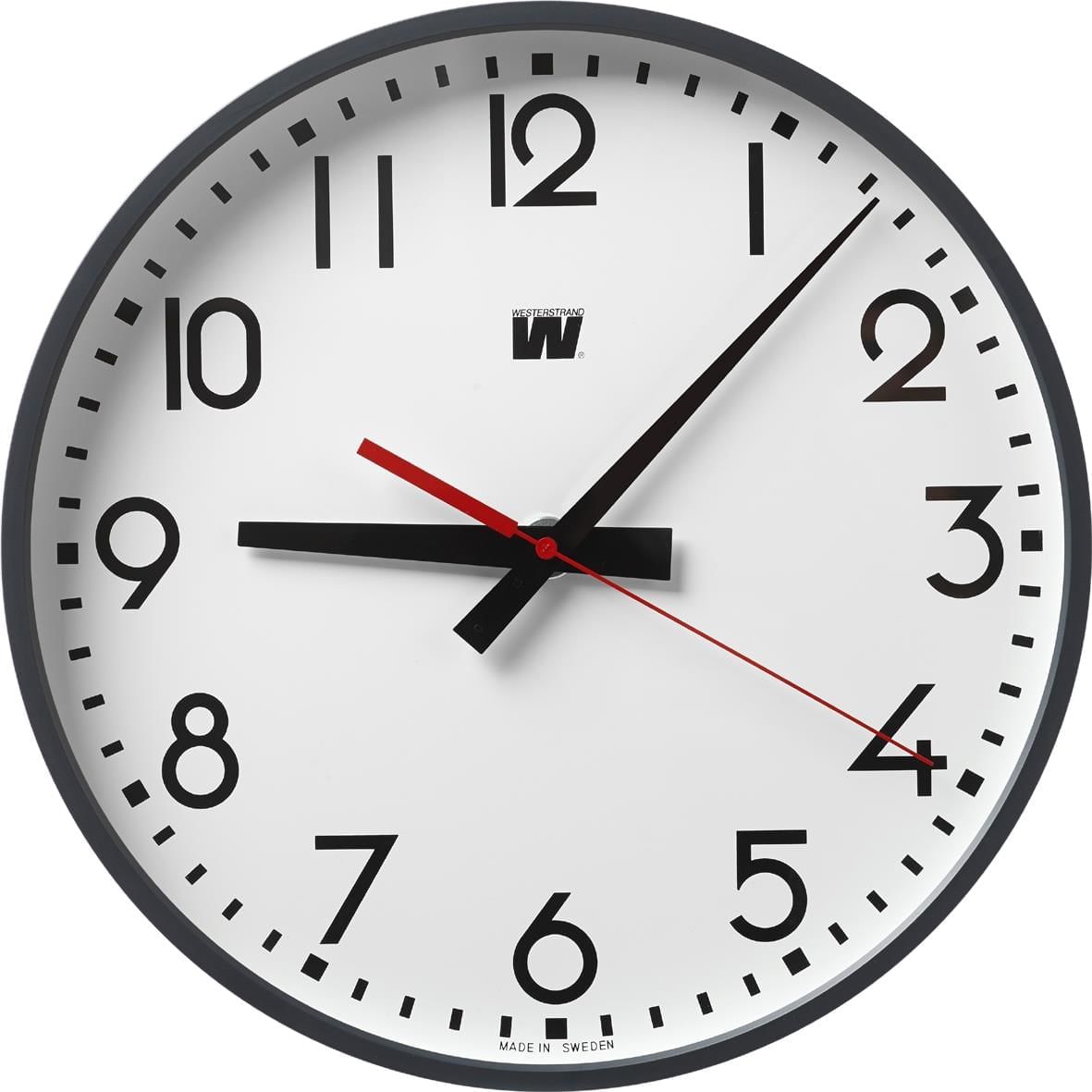
- Hour Hand: The short hand that shows the hour.
- Minute Hand: The long hand that shows the minutes past the hour.
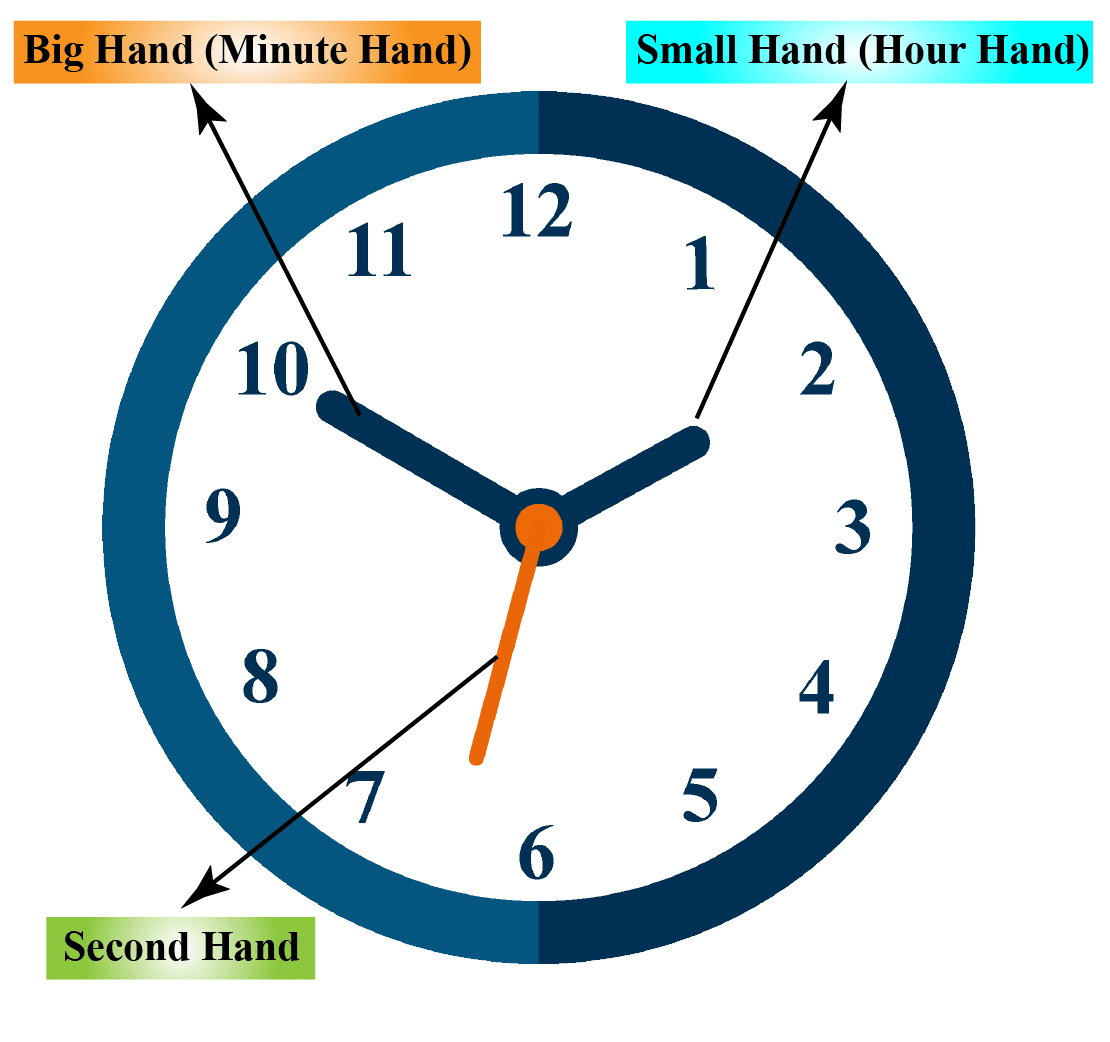
These hands move at different speeds, helping us understand how much time has passed.
Units of Time Measurement
- Hour (hr) and Minute (min) are the main units for measuring time.
- The hour hand shows the current hour, while the minute hand shows how many minutes have passed within that hour.
- The minute hand makes a full circle around the clock in 1 hour, and the hour hand completes one full circle in 12 hours.
- When the minute hand goes all the way around the clock, from 12 to 12, it signifies that one hour has passed.
Telling Time to the Half-Hour
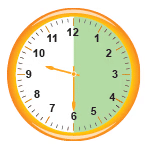
Let's look at the clock.
- The hour hand is between 9 and 10.
- The minute hand is at 6.
This means 30 minutes have passed. We call this time half past nine (9:30).
When the minute hand is at 6, it always means half past the hour.
Time Conversions
Here are some important time facts to remember:
- 60 minutes = 1 hour
- 30 minutes = half an hour
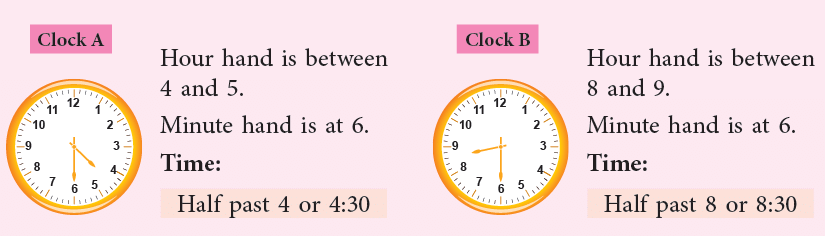
Please take note of the following clocks
Telling Time to the Nearest Five Minutes
The hands of the clock move in a pattern:
- When the hour hand (short hand) moves from one digit to the other, 1 hour passes.
- When the minute hand (long hand) moves from one digit to the other, 5 minutes pass.

- Count the minutes all around the clock by 5s, starting at 12.
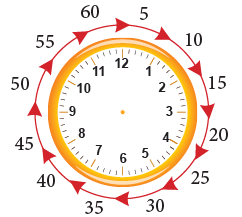 The numbers outside the clock show the count.
 - So, we skip count by 5s to find the time to the nearest five minutes. There are many ways of reading and telling the time.
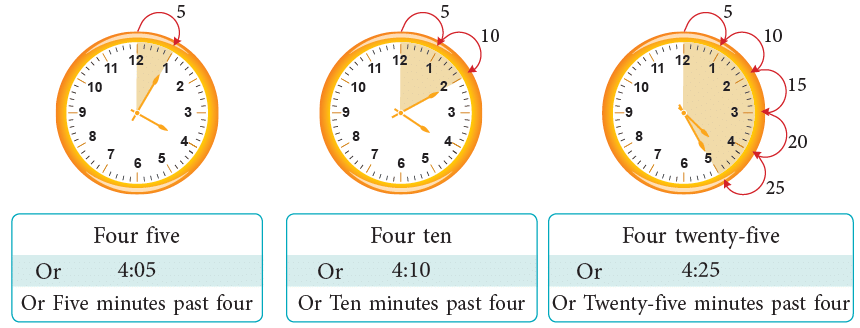
When the minute hand has moved past 6, we say the time in the following two ways:
1. First Way : The hour hand is between 4 and 5, so the time is after 4 o' clock. The minute hand is at 7. Starting at 12 and counting ahead by 5s to 7, we get 35 minutes.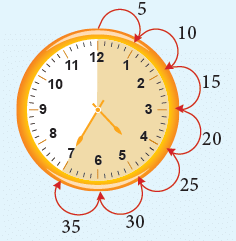
So, we say that the clock shows the time 35 minutes after 4 or 35 minutes past 4.
2. Second Way: The hour hand is between 4 and 5, so the time is before 5 o' clock. The minute hand is at 7. Starting at 12 and counting back by 5s to 7, we get 25 minutes. We write 25 minutes to 5 to tell the time because there are 25 minutes left to 5 o' clock.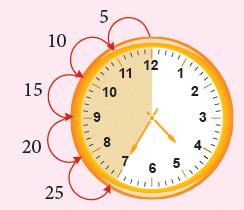
Examples: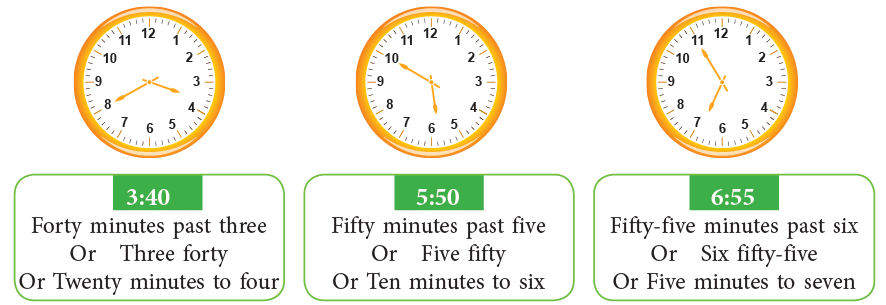
Telling Time to the Quarter Hour
A quarter of an hour is 15 minutes.
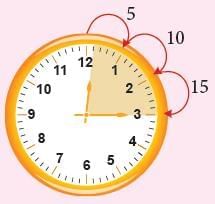
- Clock A: When the minute hand moves from 12 to 3, it's quarter past the hour.
Example: 12:15 = quarter past twelve. - Clock B: When the minute hand moves from 9 to 12, it's quarter to the next hour.
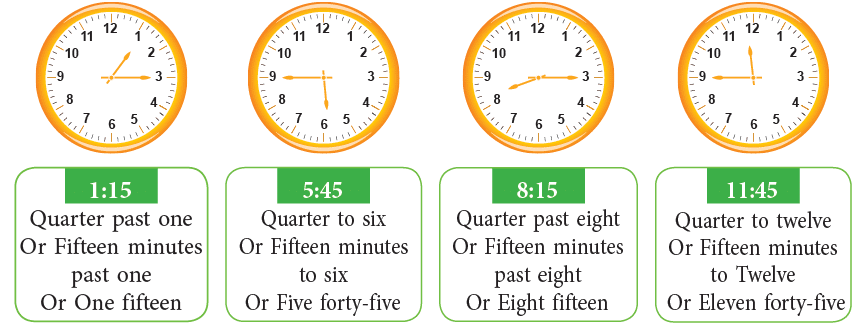
Example: 8:45 = quarter to nine.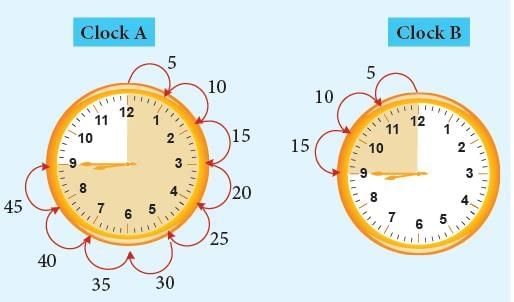 Think of the clock like a pizza-each quarter is one slice of time. Here are some more clocks to help you understand:
Calendar
Imagine you have a special book that helps you know what day it is, plan events, and remember important dates like birthdays and holidays. This special book is called a calendar!
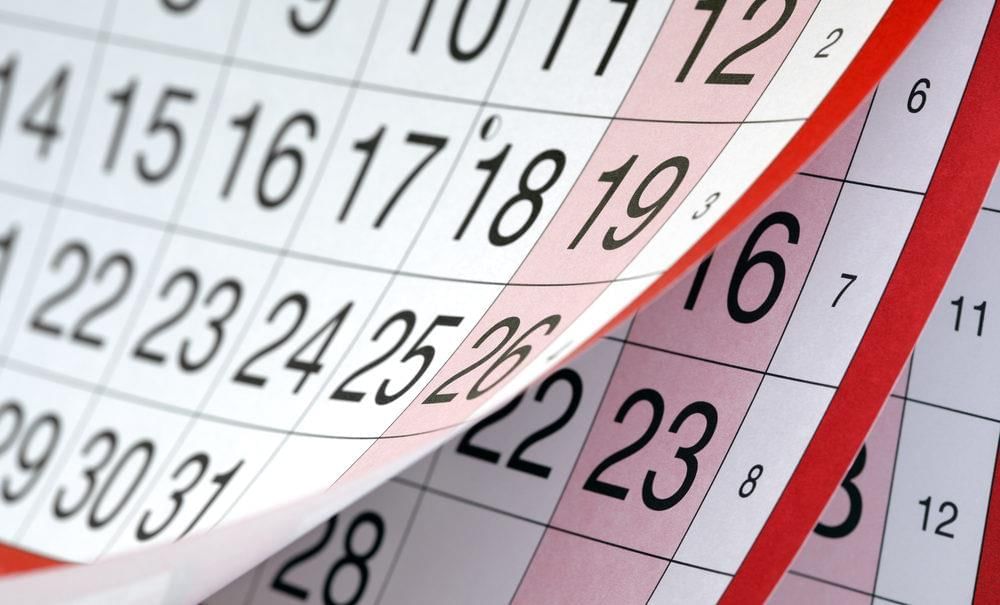
- A calendar is a system used to organize and keep track of time, usually based on the Earth's movements, such as its rotation on its axis and its orbit around the Sun.
- Calendars are essential tools that help us monitor days, weeks, months, and years efficiently, allowing us to plan and schedule various activities like events, religious observances, and farming tasks.
- The calendar is presented in a table format that displays the days, weeks, and months of the year, showing all the dates and days of the week.
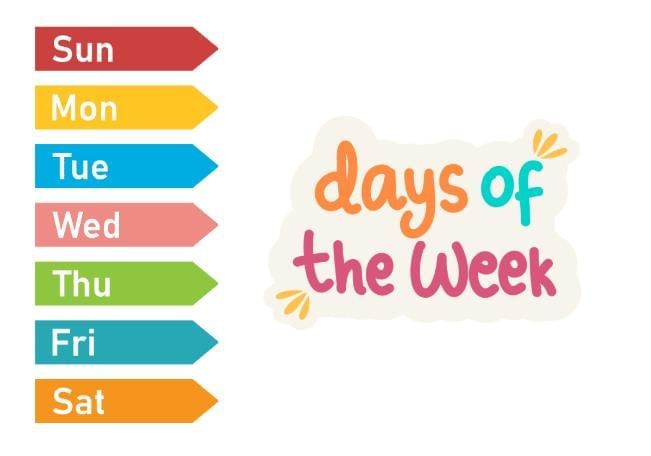
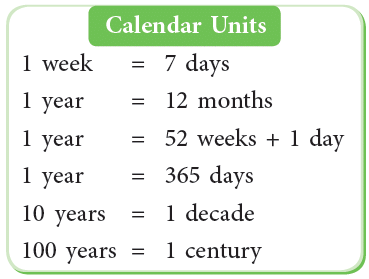
- There are 7 days in a week, which is a standard accepted by most cultures around the world.
Days of the Week in Order
- The week starts with Monday and ends with Sunday.
- A year is made up of 12 months.
- Most years have 365 days, but every four years, we have a leap year with 366 days. This is why February can have either 28 or 29 days.
Here are the months of the year, listed in order:
Format of Calendar
- Each month is also known by its position in the year.
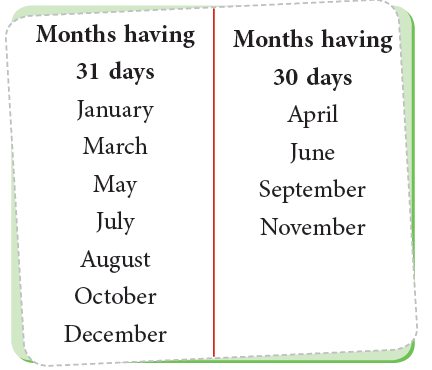
- The number of days in each month varies: some months have 30 days, some have 31 days, and February has fewer days than the others.
- Month having 28 or 29 days February.
Writing a Date
- A calendar date is used to identify a specific day on the calendar. For instance, the first Monday of January 2019 is represented as 7th January 2019, which can be shortened to 7/01/2019, 07-01-2019, or 07.01.2019. In this format, '01' stands for the month, '2019' is the year, and '07' indicates the day of the month.
- The standard format for writing a date is: dd/mm/yyyy, where dd - day, mm - month, yyyy - year
Examples
- If someone tells you to meet them on 25th June, you'll know it's the 25th day of June.
- On your birthday, your family might write the date like this: 10.12.2013 (10th December 2013) to remember your special day!
- If someone says they will visit you on 15th August, you'll know it's the 15th day of August, a special day in the year!
Let's Practice
1. Observing the calendar of month January 2025 given below, Can you answer the following questions:
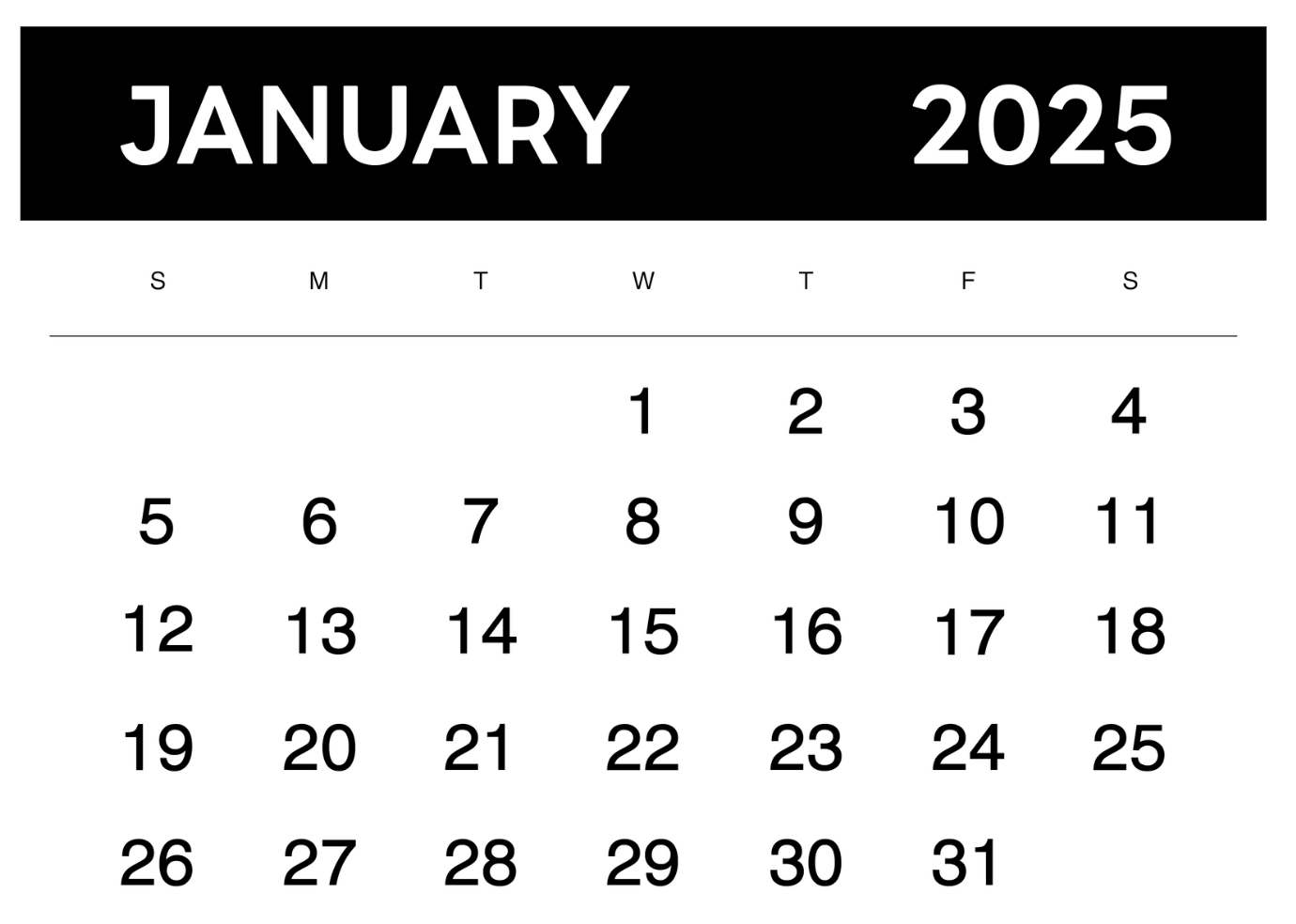
(i) Total number of Sundays in January month ______________________________.
(ii) Write the dates in this month that fall on Thursday ___________________________.
(iii) Three days after 22nd January is _________________January . The day on this date is _____________________.
(iv) A school closes on January 7 for 10 days. The date on which the school will open is _____________________.
Answer:
(i) No. of Sundays = 4
(ii) The dates that fall on Thursday in this month are 2, 9, 16, 23 and 30.
(iii) Three days after 22nd January is 25th January , and the day on this date is Saturday.
(iv) A school closes on January 7th for 10 days. The date on which the school will open is 17th January.
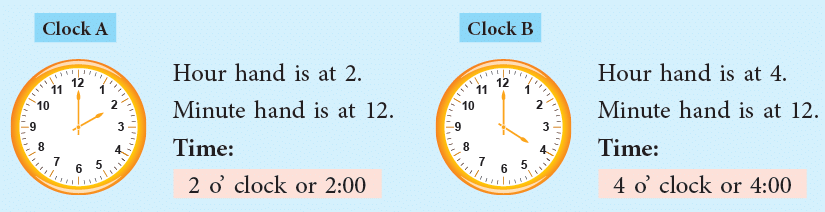
2. Write the time that is shown in each clock :
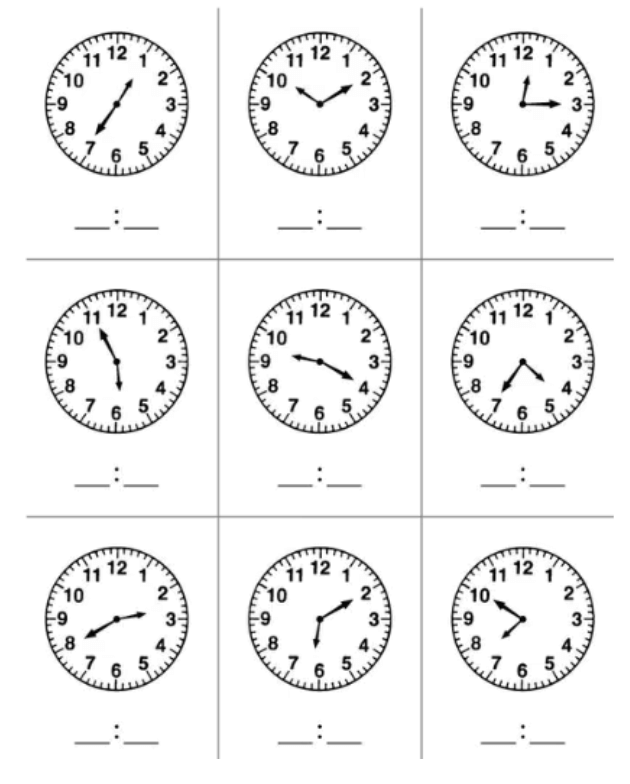
Answer: 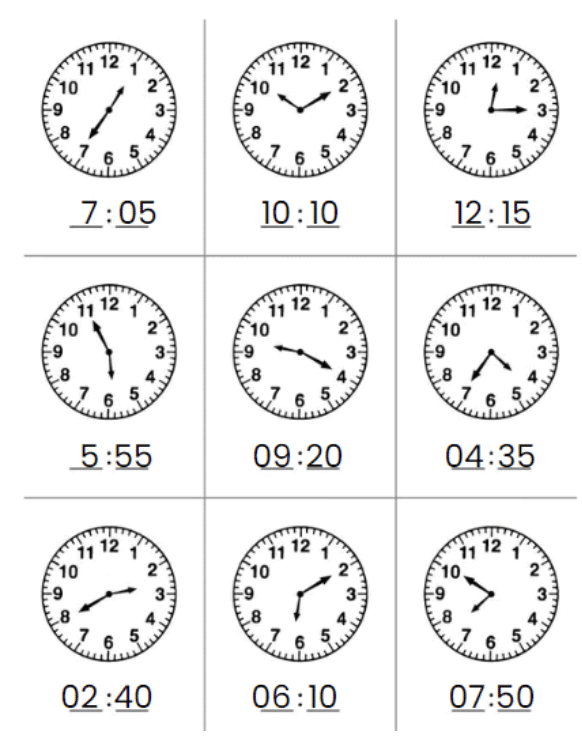
In conclusion, learning about the months, weeks, and days of a year, understanding how time works, and knowing our age helps us manage our time better and notice important patterns, like leap years, which happen once every four years.
FAQs on Chapter Notes: Time and Calendar
| 1. How do I read and understand a clock face for Class 3 Maths Olympiad? |  |
| 2. What's the difference between AM and PM time in daily life and exams? | |
| 3. How do I count days in a month and find the total days in a year? | |
| 4. Why do I get confused between weeks, months, and years in time problems? | |
| 5. How do I solve calendar-based problems asking "what day comes after Tuesday" or date calculations? | |