

Best Study Material for Class 8 Exam
Class 8 Exam > Class 8 Notes > Social Studies (SST) Class 8 > Worksheet: Parliament and the Making of Laws
Parliament and the Making of Laws Class 8 Worksheet Social Science
| Table of contents |

|
| Multiple Choice Questions (MCQs) |
|
| Fill in the Blanks |
|
| True/False |
|
| Very Short Answer Questions |
|
Multiple Choice Questions (MCQs)
Q1: What is the main benefit of democracy?
A) It allows the government to control everything
B) It protects the interests of a small group of elites
C) It gives citizens the right to choose their representatives and have a say in government decisions
D) It only benefits people who have a lot of money and power
Q2: What is the significance of the Indian Parliament in the political framework?
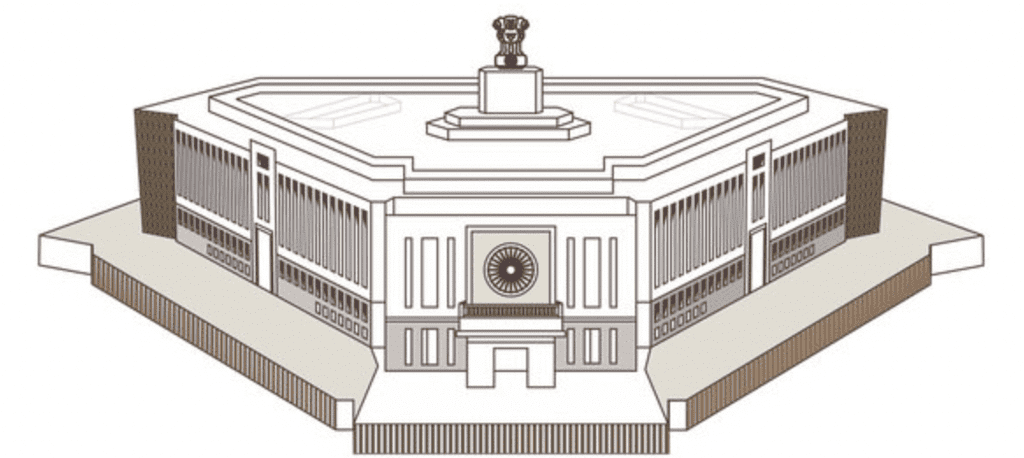
A) It has no authority in the political framework
B) It serves as a testament to the distrust that the Indian public has in democratic principles
C) It wields significant authority and the government is answerable to it for its actions
D) It has no power to question the government's choices or evaluate its performance
Q3: What does the Parliament do when a controversial law is widely criticized by the public?
A) Ignores public opinion and maintains the law
B) There is pressure on Parliament to amend or repeal it
C) Parliament passes more laws to strengthen the controversial one
D) The law is automatically nullified
Q4: What was a direct outcome of Rosa Parks' act of protest?
A) The establishment of the United Nations
B) The enactment of the Civil Rights Act of 1964
C) The start of World War II
D) None of the above
Q5: How are members of the Lok Sabha elected?
A) By nomination from the President of India
B) Directly by the people of India through general elections
C) By appointment from the Prime Minister
D) Through selection by the state legislatures
Fill in the Blanks
Q1: The Indian Parliament was established after gaining independence in ___________.
Q2: Parliament has the power to ___________ laws.
Q3: The ___________ is the lower house of Parliament and is also known as the House of the People.
Q4: Members of the Rajya Sabha are elected by the ___________ assemblies of different states.
Q5: The opposition in Parliament plays a crucial role in ___________ the functioning of the government.
True/False
Q1: The Government of India Act 1909 allowed all adults to vote.
Q2: The Parliament cannot intervene in controversial laws once they are passed.
Q3: The Lok Sabha has more power than the Rajya Sabha in the law-making process.
Q4: The Constitution of India was established with the principle of universal adult franchise right at independence.
Q5: Rajya Sabha members are directly elected by the public.
 |
Download the notes
Worksheet: Parliament and the Making of Laws
|
Download as PDF |
Download as PDF
Very Short Answer Questions
Q1: How does the Parliament session begins?
Q2: What are the two Houses of Parliament?
Q3: What is a constituency?
Q4: What is the purpose of parliament?
Q5: How many members does the President nominates in Lok Sabha and Rajya Sabha?
Q6: Parliament is the most important symbol of Indian Democracy. Explain.
Q7: What are the basic ideals of democracy?
Q8: Enlist the components of Indian Parliament.
Q9: Describe coalition government.
Q10: How is a national government selected?
Q11: What is ‘Question Hour’ in Parliament?
Q12: "With the coming of Independence we are going to be citizens of a free country". What did this mean for India?
You can access the solutions to this worksheet here.
The document Parliament and the Making of Laws Class 8 Worksheet Social Science is a part of the Class 8 Course Social Studies (SST) Class 8.
All you need of Class 8 at this link: Class 8
|
66 videos|428 docs|46 tests
|





FAQs on Parliament and the Making of Laws Class 8 Worksheet Social Science
| 1. What is the role of the Parliament in the law-making process? |  |
| 2. How many houses are there in the Parliament, and what are they called? | |
Ans. The Parliament consists of two houses: the Lok Sabha (House of the People) and the Rajya Sabha (Council of States). Each house plays a crucial role in the legislative process.
| 3. What is a bill, and how does it become a law? | |
Ans. A bill is a proposal for new legislation or an amendment to existing laws. To become law, a bill must be introduced in Parliament, debated, and passed by both houses, followed by the President's assent.
| 4. What is the difference between a 'money bill' and a 'non-money bill'? | |
Ans. A 'money bill' deals solely with taxation or public expenditure and can only be introduced in the Lok Sabha. A 'non-money bill' covers other areas of law and can be introduced in either house of Parliament.
| 5. Why is the Parliament considered a vital part of democracy? | |
Ans. The Parliament represents the people's will and ensures that the government is accountable to them. It provides a platform for debate and discussion on national issues, making it essential for a functioning democracy.
Related Exams
About this Document

2.3K Views

4.67/5
Rating

Apr 02, 2025
Last updated
Document Description: Worksheet: Parliament and the Making of Laws for Class 8 2025 is part of Social Studies (SST) Class 8 preparation.
The notes and questions for Worksheet: Parliament and the Making of Laws have been prepared according to the Class 8 exam syllabus. Information about Worksheet: Parliament and the Making of Laws covers topics
like Multiple Choice Questions (MCQs), Fill in the Blanks, True/False, Very Short Answer Questions and Worksheet: Parliament and the Making of Laws Example, for Class 8 2025 Exam. Find important definitions, questions, notes, meanings, examples, exercises and tests below for Worksheet: Parliament and the Making of Laws.
Introduction of Worksheet: Parliament and the Making of Laws in English is available as part of our Social Studies (SST) Class 8
for Class 8 & Worksheet: Parliament and the Making of Laws in Hindi for Social Studies (SST) Class 8 course.
Download more important topics related with notes, lectures and mock test series for Class 8
Exam by signing up for free. Class 8: Parliament and the Making of Laws Class 8 Worksheet Social Science
Description
Full syllabus notes, lecture & questions for Parliament and the Making of Laws Class 8 Worksheet Social Science - Class 8 | Plus excerises question with solution to help you revise complete syllabus for Social Studies (SST) Class 8 | Best notes, free PDF download
Information about Worksheet: Parliament and the Making of Laws
In this doc you can find the meaning of Worksheet: Parliament and the Making of Laws defined & explained in the simplest way possible. Besides explaining types of
Worksheet: Parliament and the Making of Laws theory, EduRev gives you an ample number of questions to practice Worksheet: Parliament and the Making of Laws tests, examples and also practice Class 8
tests


Related Searches
Parliament and the Making of Laws Class 8 Worksheet Social Science
,Parliament and the Making of Laws Class 8 Worksheet Social Science
,Sample Paper
,Important questions
,mock tests for examination
,Exam
,Extra Questions
,Summary
,MCQs
,Viva Questions
,Parliament and the Making of Laws Class 8 Worksheet Social Science
,practice quizzes
,video lectures
,Previous Year Questions with Solutions
,shortcuts and tricks
,Free
,ppt
,past year papers
,study material
,Objective type Questions
,Semester Notes
;




Additional Information about Worksheet: Parliament and the Making of Laws for Class 8 Preparation
Worksheet: Parliament and the Making of Laws Free PDF Download
The Worksheet: Parliament and the Making of Laws is an invaluable resource that delves deep into the core of the Class 8 exam.
These study notes are curated by experts and cover all the essential topics and concepts, making your preparation more efficient and effective.
With the help of these notes, you can grasp complex subjects quickly, revise important points easily,
and reinforce your understanding of key concepts. The study notes are presented in a concise and easy-to-understand manner,
allowing you to optimize your learning process. Whether you're looking for best-recommended books, sample papers, study material,
or toppers' notes, this PDF has got you covered. Download the Worksheet: Parliament and the Making of Laws now and kickstart your journey towards success in the Class 8 exam.
Importance of Worksheet: Parliament and the Making of Laws
The importance of Worksheet: Parliament and the Making of Laws cannot be overstated, especially for Class 8 aspirants.
This document holds the key to success in the Class 8 exam.
It offers a detailed understanding of the concept, providing invaluable insights into the topic.
By knowing the concepts well in advance, students can plan their preparation effectively.
Utilize this indispensable guide for a well-rounded preparation and achieve your desired results.
Worksheet: Parliament and the Making of Laws Notes
Worksheet: Parliament and the Making of Laws Notes offer in-depth insights into the specific topic to help you master it with ease.
This comprehensive document covers all aspects related to Worksheet: Parliament and the Making of Laws.
It includes detailed information about the exam syllabus, recommended books, and study materials for a well-rounded preparation.
Practice papers and question papers enable you to assess your progress effectively.
Additionally, the paper analysis provides valuable tips for tackling the exam strategically.
Access to Toppers' notes gives you an edge in understanding complex concepts.
Whether you're a beginner or aiming for advanced proficiency, Worksheet: Parliament and the Making of Laws Notes on EduRev are your ultimate resource for success.
Worksheet: Parliament and the Making of Laws Class 8 Questions
The "Worksheet: Parliament and the Making of Laws Class 8 Questions" guide is a valuable resource for all aspiring students preparing for the
Class 8 exam. It focuses on providing a wide range of practice questions to help students gauge
their understanding of the exam topics. These questions cover the entire syllabus, ensuring comprehensive preparation.
The guide includes previous years' question papers for students to familiarize themselves with the exam's format and difficulty level.
Additionally, it offers subject-specific question banks, allowing students to focus on weak areas and improve their performance.
Study Worksheet: Parliament and the Making of Laws on the App
Students of Class 8 can study Worksheet: Parliament and the Making of Laws alongwith tests & analysis from the EduRev app,
which will help them while preparing for their exam. Apart from the Worksheet: Parliament and the Making of Laws,
students can also utilize the EduRev App for other study materials such as previous year question papers, syllabus, important questions, etc.
The EduRev App will make your learning easier as you can access it from anywhere you want.
The content of Worksheet: Parliament and the Making of Laws is prepared as per the latest Class 8 syllabus.
|
© EduRev
|
Education Revolution
|


|








Signup to see your scores
go up within 7 days!
Access 1000+ FREE Docs, Videos and Tests
Takes less than 10 seconds to signup