CBSE Class 2 > Class 2 Notes > Mathematics (Joyful-Mathematics) > Worksheet: A Day at the Beach (Counting in Groups)
Worksheet: A Day at the Beach (Counting in Groups)

Q1: Fill in the Blanks to Count total buttons:
i) 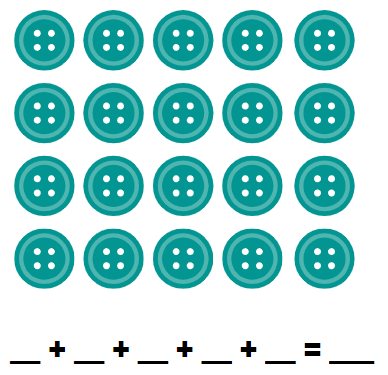 ii)
ii)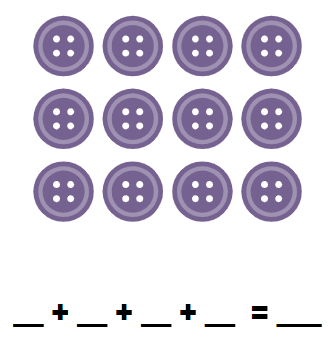
iii)
iv)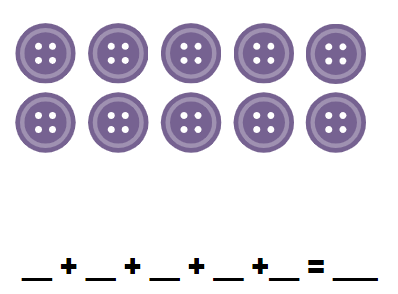
Q2. Count the number of stars in each set. Compare using >, <, or =
i) 
ii)
iii) 
Q3: You have 3 groups of apples. Each group contains 4 apples. How many apples are there in total?
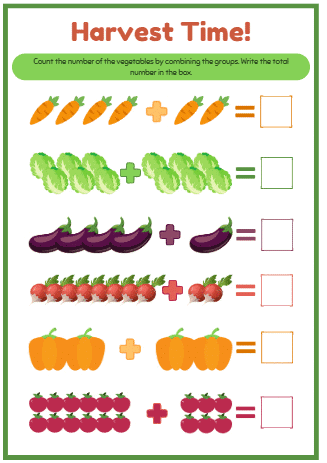
Q4: Count the total number of vegetables in groups:
You can access the solutions to this worksheet here.
The document Worksheet: A Day at the Beach (Counting in Groups) is a part of the Class 2 Course Mathematics for Class 2 (Joyful-Mathematics).
All you need of Class 2 at this link: Class 2
FAQs on Worksheet: A Day at the Beach (Counting in Groups)
| 1. How do I count objects in groups of 2, 5, and 10 for Class 2 maths? |  |
Ans. Counting in groups means putting objects together in sets and then multiplying to find the total. For example, 3 groups of 5 equals 15. This skip-counting method helps students count larger quantities faster. Grouping by 2s, 5s, and 10s builds the foundation for multiplication and makes mental maths easier for Class 2 learners.
| 2. What's the difference between counting one by one and counting in groups? | |
Ans. Counting individually takes longer-you say 1, 2, 3, 4, 5... Counting in groups skips numbers: groups of 5 means 5, 10, 15, 20. Grouping is quicker and prepares students for multiplication concepts. This method reduces counting mistakes and develops number sense faster than traditional one-by-one counting.
| 3. Why do we use groups of 2, 5, and 10 in beach-themed maths worksheets? | |
Ans. Groups of 2, 5, and 10 are easiest for Class 2 students to visualise and remember. Beach scenarios-like counting pairs of shells, groups of starfish, or ice cream sticks-make these numbers concrete and relatable. Real-world contexts help young learners connect abstract counting to familiar objects and situations they enjoy.
| 4. How can I help my child understand skip-counting when solving grouping problems? | |
Ans. Skip-counting is counting by intervals instead of ones. Start with fingers or objects arranged visibly. Say "5, 10, 15" while pointing to each group of 5. Repetition and rhythm help memory. Use EduRev's visual worksheets and flashcards on skip-counting patterns to reinforce this essential skill for grouping exercises.
| 5. What's the best way to check if my answer is correct for a counting in groups question? | |
Ans. Verify by counting the total again using the group method, then recount individually to match both results. If grouping gives 4 groups of 10 equals 40, count 1-40 to confirm. Double-checking prevents errors. Worksheets often include picture-based problems where students can visually count each group separately to validate their answer.
About this Document

18K Views

4.74/5 Rating

Apr 19, 2026 Last updated
Document Description: Worksheet: A Day at the Beach (Counting in Groups) for Class 2 2026 is part of Mathematics for Class 2 (Joyful-Mathematics) preparation. The notes and questions for Worksheet: A Day at the Beach (Counting in Groups) have been prepared according to the Class 2 exam syllabus. Information about Worksheet: A Day at the Beach (Counting in Groups) covers topics like and Worksheet: A Day at the Beach (Counting in Groups) Example, for Class 2 2026 Exam. Find important definitions, questions, notes, meanings, examples, exercises and tests below for Worksheet: A Day at the Beach (Counting in Groups).
Introduction of Worksheet: A Day at the Beach (Counting in Groups) in English is available as part of our Mathematics for Class 2 (Joyful-Mathematics) for Class 2 & Worksheet: A Day at the Beach (Counting in Groups) in Hindi for Mathematics for Class 2 (Joyful-Mathematics) course. Download more important topics related with notes, lectures and mock test series for Class 2 Exam by signing up for free. Class 2: Worksheet: A Day at the Beach (Counting in Groups)
Description
Worksheet: A Day at the Beach (Counting in Groups) of Mathematics - variety of important questions with solutions, helping you prepare for exam. Download free PDF from EduRev.
Information about Worksheet: A Day at the Beach (Counting in Groups)
In this doc you can find the meaning of Worksheet: A Day at the Beach (Counting in Groups) defined & explained in the simplest way possible. Besides explaining types of Worksheet: A Day at the Beach (Counting in Groups) theory, EduRev gives you an ample number of questions to practice Worksheet: A Day at the Beach (Counting in Groups) tests, examples and also practice Class 2 tests



Related Searches
video lectures, practice quizzes, Extra Questions, Free, Viva Questions, shortcuts and tricks, Important questions, MCQs, Sample Paper, Worksheet: A Day at the Beach (Counting in Groups), past year papers, Previous Year Questions with Solutions, Summary, pdf , Exam, study material, Worksheet: A Day at the Beach (Counting in Groups), Objective type Questions, mock tests for examination, ppt, Semester Notes, Worksheet: A Day at the Beach (Counting in Groups);