Notes: Things We Make and Do | EVS & Pedagogy Paper 1 for CTET & TET Exams - CTET & State TET PDF Download
| Table of contents |

|
| Art and Craft |
|
| The World Famous Pashmina |
|
| Languages |
|
| Tribes |
|
| Professions |
|

Art and Craft
In India diverse kinds of culture, arts and craft are found. Each region of the country have some unique and traditional craft to offer.
Painting
The tradition of painting has been carried on the Indian subcontinent since ancient times.
Different types of paintings are given below :
(i) Chitra Kathi Painting: This painting belongs to Maharashtra, through this painting story is depicted. In this painting only natural color is used.
(ii) Kalamkari Painting: This painting belongs to Andhra Pradesh, natural color is used and they are also done on cloth as blocks printing.
(iii) Madhubani Painting: It belongs to state of Bihar. In this painting natural things like leaf, flower, animals, birds and humans are depicted. Natural color is used in painting, color from indigo, turmeric and normal flowers are obtained. A special kind of paste of grinded rice is made to further glorify the painting.
(iv) Pata Painting: It is found in Odisha, natural color from minerals and vegetables are used. Painting is done on the cloth.
(v) Phad Painting: This painting is done on the cloth and belongs to Rajasthan.
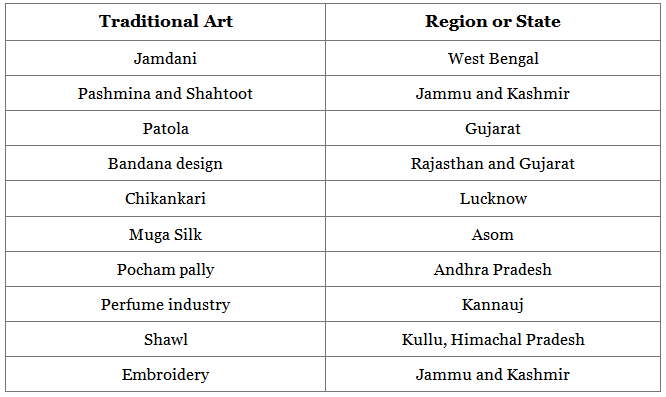
Traditional Art
Art is a part of the culture. It is a skill and knowledge which are passed down through generation to generations. Some of the famous traditional art forms are given below:Some Traditional Art Forms:
The World Famous Pashmina
- Pashmina shawl is as warm as six Sweaters! It is very thin and warm. The goats from which the soft Pashmina wool is collected are found on very high altitudes of 5000 metres. In winter temperature drops to low as – 40°C. A coat of warm hair grows on the goat’s body which protects it from extreme cold.
- The goat shed some of their hair, fur in summer. This hair is so fine that six of these would be as thick as one hair of ours. The fine hair cannot be woven on machines so weavers in Kashmir made these shawls by hands. This is long and difficult process. After almost 250 hours of weaving one plain pashmina shawl is made.
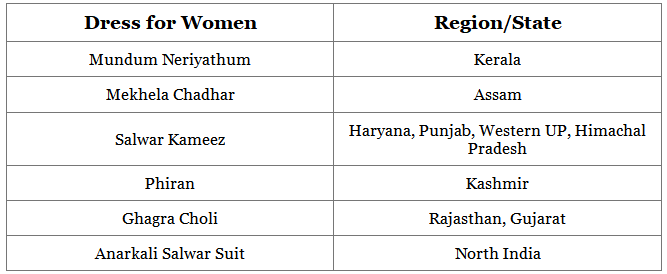
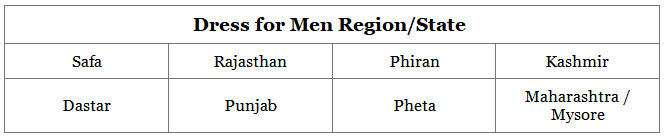
Special Dresses of Different Region of India:
Languages
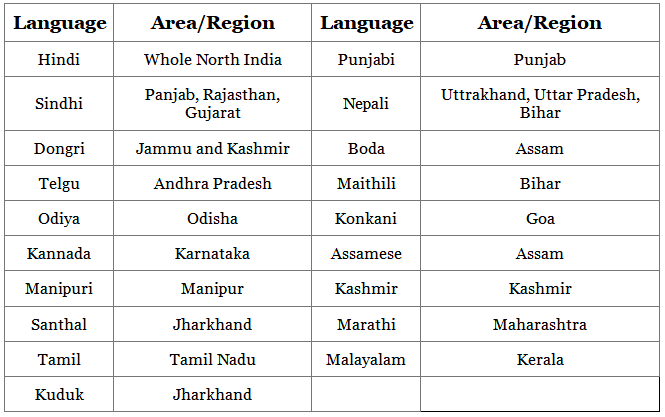
There are 22 constitutionally recognized languages in India. English and Hindi languages are widely spoken in our country. Several states in India have their own official languages which are spoken in particular areas. These are as follows:Different Language and Dialects of India:
Braille Script: It is a special way of reading and writing for people who cannot see. It is written on a thick paper by making a row of raised points with a pointed tool. Braille script is based on 6 points and it is read by running the finger on the raised dots. Louis Braille of France invented new script for visually disabled and it is known as Braille script.
Tribes
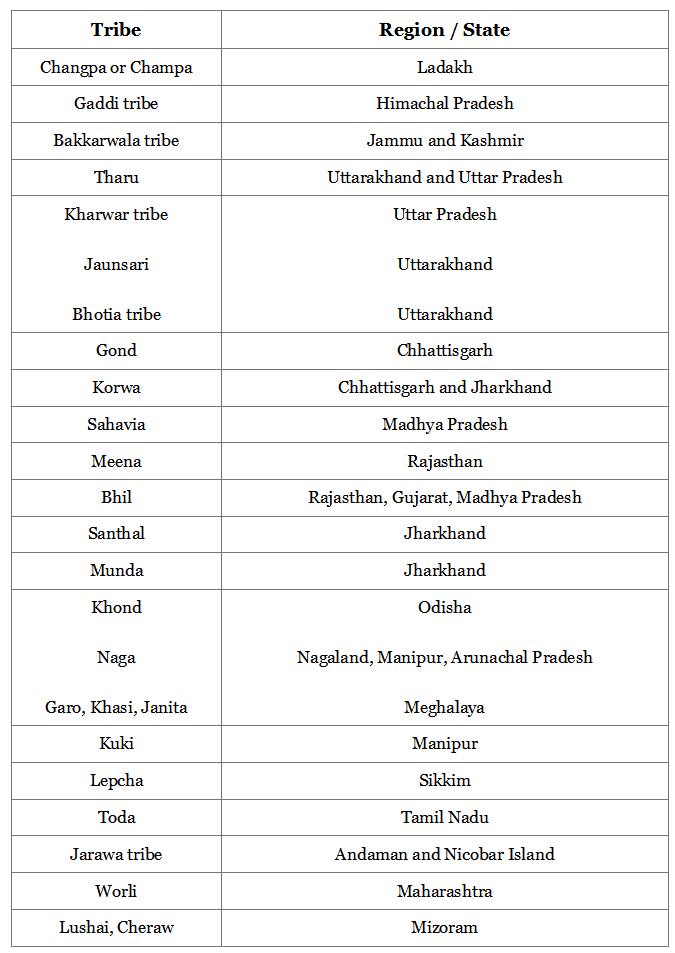
A tribe is a group of distinct people, dependent on their land for their livelihood, who are largely self – sufficient and not integrated into the national society. They have their own way of living and culture.
Famous Tribes of India:
Professions
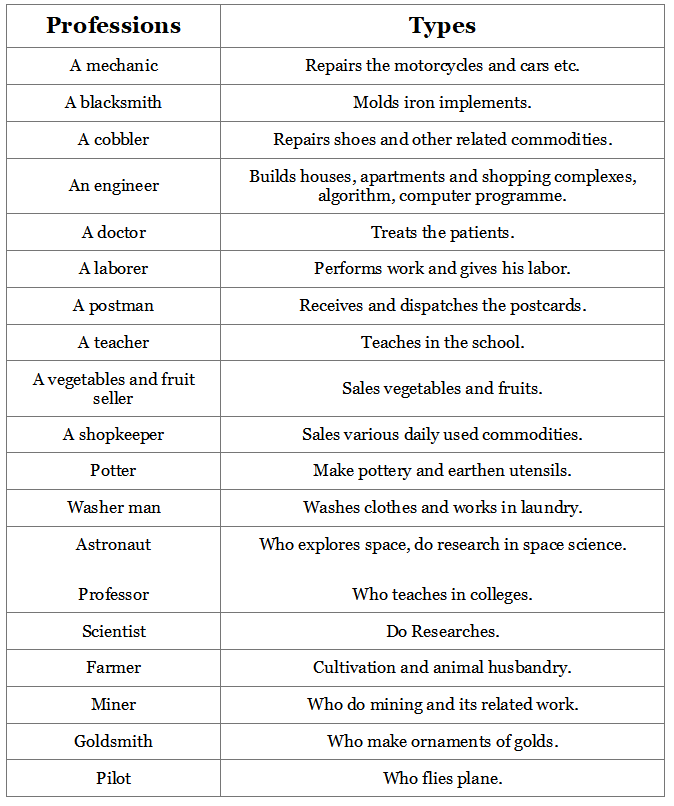
The word ‘profession’ means that it is a paid occupation any type of job/work that needs training or particular skills. Profession provides income and source of livelihood.

Different kinds of Professions
1. Agriculture
- Agriculture is the practice of farming, including cultivation of the soil for growing crop and rearing animals for food, wool etc.
- Large section of Indian population is dependent on agriculture for employment. Agriculture provides food to all the country men.
- For proper farming, it is important that good variety of seed is given to farmers, proper irrigation facilities should be provided, use of organic manure should be promoted new instrument and technique should be made available to farmers.
- Use of chemicals and fertilizer should be reduced as they cause pollution, inter-cropping or mixed cropping should be promoted because, such cropping can replenish the soil with nutrients and help in retaining nutrient in the soil.
- Mono-cropping and excessive use of fertilizer makes the soil barren.
- To get better yield of milk, meat and wool, breeding of domesticated animals should be done with superior trait animals.
Famous Sports and Sports Person:
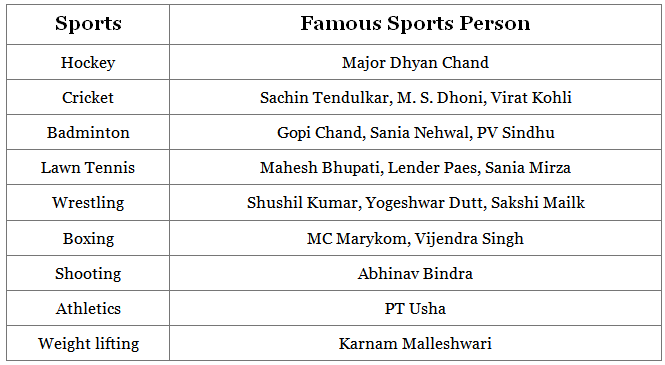
Note: Karnam Malleshwari: Karnam Malleshwari is a weight lifter, she lives in Andhra Pradesh and her father is a constable. She started lifting weight when she was only 12. She even lifted a weight of 130 kilograms. Karnam has won 29 medals in an international event.
2. Dance
- It is a performance art comprises of selected human movement.
- Dance has aesthetic, symbolic value and it is a part of culture.
- Dances are source of entertainment, and are performed for celebrating festivals, events of climate etc.
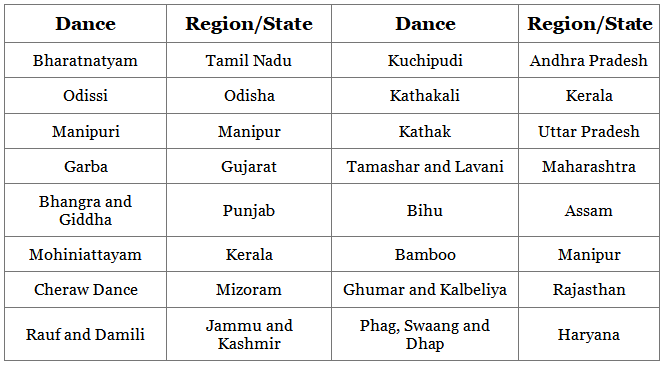
Different kinds of Dances in India:
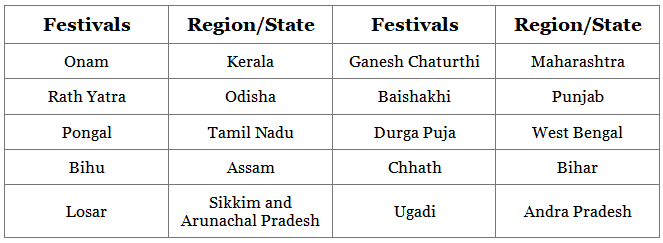
3. Festivals in India
- A festival is an event ordinarily celebrated by a community and centering on some characteristics aspect of that community and its religion or traditions often marked as a local or national holiday.
Specific Festivals of Specific Region in India:
|
21 videos|139 docs|35 tests
|
FAQs on Notes: Things We Make and Do - EVS & Pedagogy Paper 1 for CTET & TET Exams - CTET & State TET
| 1. What is CTET and State TET? |  |
| 2. How can I apply for CTET or State TET? | |
| 3. What is the eligibility criteria for CTET and State TET? | |
| 4. What is the exam pattern for CTET and State TET? | |
| 5. How can I prepare for CTET or State TET? | |



Exam
,Free
,shortcuts and tricks
,Important questions
,Notes: Things We Make and Do | EVS & Pedagogy Paper 1 for CTET & TET Exams - CTET & State TET
,Notes: Things We Make and Do | EVS & Pedagogy Paper 1 for CTET & TET Exams - CTET & State TET
,Extra Questions
,practice quizzes
,MCQs
,Notes: Things We Make and Do | EVS & Pedagogy Paper 1 for CTET & TET Exams - CTET & State TET
,Previous Year Questions with Solutions
,video lectures
,ppt
,study material
,Sample Paper
,Summary
,Objective type Questions
,past year papers
,Viva Questions
,mock tests for examination
,Semester Notes
;



Notes: Things We Make and Do Free PDF Download
Importance of Notes: Things We Make and Do
Notes: Things We Make and Do
Notes: Things We Make and Do CTET & State TET Questions
Study Notes: Things We Make and Do on the App
|
© EduRev
|
Education Revolution
|


|




within 7 days!