Federalism Class 11 Political Science

What is Federalism?
Federalism is a principle form of political organization that involves the division of power and authority between a central or federal government and multiple constituent units, such as states, provinces, or regions. Under federalism, both the central government and the constituent units possess significant powers and autonomy within their respective spheres of authority, which are delineated by a constitution or other legal framework.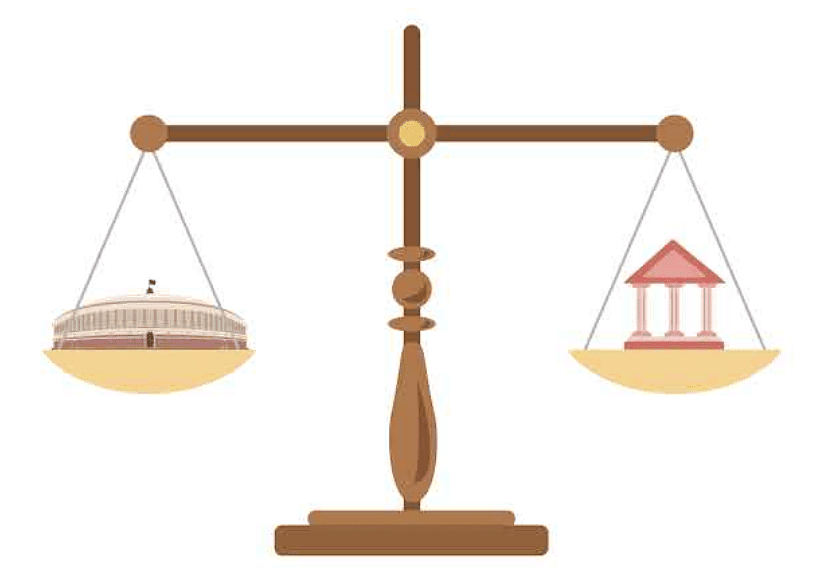
Federalism Overview:
- Institutional mechanism for two sets of polities: regional and national.
- Each government is autonomous in its sphere.
- Some federal countries have dual citizenship, unlike India with single citizenship.
- Dual Identities: People identify both regionally (e.g., Gujaratis, Jharkhandis) and nationally as Indians.
- Distinct Powers and Responsibilities: Each level of polity has separate government systems. Powers and responsibilities outlined in a written constitution.
- Division of Subjects: Certain subjects like Defense and Currency are national responsibilities. Regional matters fall under the jurisdiction of state governments.
- Conflict Prevention: Independent judiciary to settle disputes between central and state governments. Judiciary resolves legal matters about the division of power.
What factors help in the smooth functioning of Federalism?
- Determinants of Federation Functionality: Politics, culture, ideology, and history shape a federation's functionality.
- Smooth Operation Factors: Culture of trust, cooperation, mutual respect, and constraint enhances federation performance.
- Influence of Political Parties: Political parties impact how a constitution operates within a federation.
- Dominance Challenges: Dominance by a single unit, state, language group, or philosophy can lead to resentment.
- Potential Consequences: Resentment may result in requests for secession or even civil wars by aggrieved units.
West Indies Federation
Formation of the Federation (1958): The West Indies Federation was established by the British, encompassing several Caribbean islands. It was characterized by a weak central authority with each island managing its own economy independently.
Dissolution (1962): Due to political rivalries and economic independence among the islands, the federation dissolved after only four years.
Formation of the Caribbean Community (1973): Post-dissolution, the independent islands signed the Treaty of Chiguaramas, leading to the formation of the Caribbean Community (CARICOM). This organization aimed to foster regional integration and cooperation.
Structure of CARICOM: The community established several joint authorities including a common legislature, a supreme court, and a unified market and currency. It also features a common executive body where heads of member governments participate.
Continued Challenges: Despite the formal structures, the islands face ongoing challenges in balancing regional integration with local autonomy, illustrating their interdependence and individual identities.

Federalism in Nigeria
 Federal Government of NigeriaHistorical Background:
- Northern and Southern Nigeria: Distinct British possessions until 1914.
- Federal Constitution: Established in 1950 at the Ibadan Constitutional Conference.
- Ethnic Governance:
- Three major ethnic groups: Yoruba, Ibo, and Hausa-Fulani.
- Regional Governance: Each group governed a specific region (Yoruba - West, Ibo - East, Hausa-Fulani - North).
- Power Struggles and Conflict:
- Desire for power expansion by ethnic groups.
- Resulted in fear and warfare, leading to the establishment of military administration.
- Military Rule and Constitutional Changes:
- 1960 Constitution: Joint federal and regional administration of Nigerian police.
- 1979 Constitution: Military administration, no state allowed to have a civil police force.
- Return to Democracy (1999):
- Nigeria regained democracy in 1999.
- Contemporary Challenges:
- Religious Divisions: Persisting issue.
- Oil Revenue Management: Disputes over control and management of oil resources.
- Local Opposition: Ethnic groups oppose centralization of power over oil resources.
- Current State of Nigeria:
- Blend of Divisions: Religious, ethnic, and economic divisions persist among groups.
- Contentious Federation: Federal arrangement has struggled to produce a stable state.
Federalism in the Indian Constitution
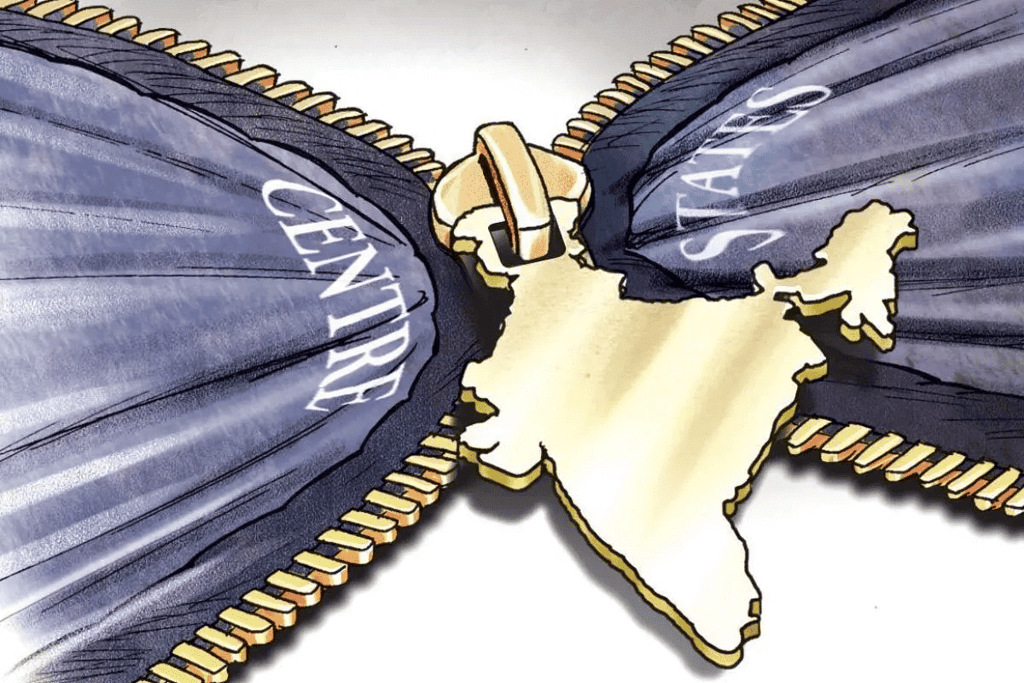
- Even before gaining Independence, many leaders in our national movement understood that governing a large nation like India required a division of powers between provinces and the central government.
- There was also a realization of the regional and linguistic diversity within Indian society, which needed to be acknowledged.
- People from various regions and speaking different languages should have the opportunity to share power, and it was important for each region to govern itself.
- This approach seemed logical if we aimed to establish a truly democratic government.
- The main question was about the range of powers that the regional governments should possess.
- In light of the Muslim League's demands for greater representation, discussions took place during negotiations before the Partition to create a compromise that would grant significant powers to the regions.
- After the decision to partition India, the Constituent Assembly set out to create a government that would be founded on the ideas of unity and cooperation between the central authority and the states, while also ensuring distinct powers for the states.
- A key aspect of the federal system in the Indian Constitution is that the relationship between the states and the center is meant to be based on cooperation.
- Therefore, while the Constitution recognizes the diversity of the nation, it also highlights the importance of unity.
Division of Powers
- Distribution of Powers:
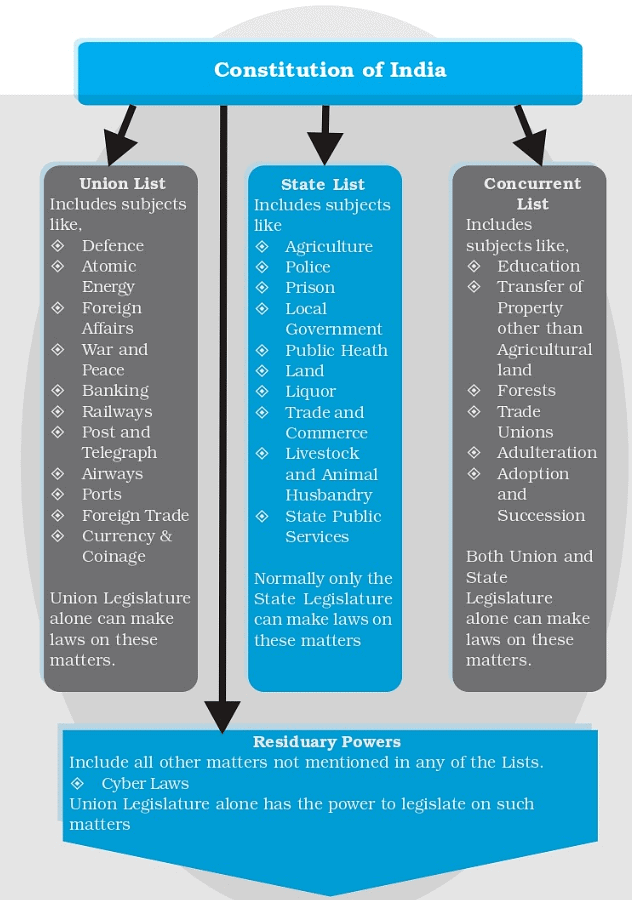
- Constitution of India divides powers and responsibilities between central and state governments.
- Three Lists of Subjects:
- Union List: 100 subjects (originally 97).
- State List: 61 subjects (originally 66).
- Concurrent List: 52 subjects (originally 47).
- Concurrent List Dynamics:
- Both central and state governments can enact laws on Concurrent List subjects.
- In case of conflict, central law prevails.
- Residual Subjects:
- Residual subjects (not in any list) assigned to the central government.
Federalism with a Strong Central Government
The Indian Constitution established a strong central government to manage the country's vast diversity and complex social challenges. The framers aimed to balance federalism—to accommodate diversity—with a powerful centre to prevent disintegration and drive social and political reforms.
At independence, India was divided into British provinces and over 500 princely states that needed integration. Addressing poverty, illiteracy, and economic inequality also required centralized planning and coordination.
Key Provisions Strengthening the Centre
State Reorganization
- Parliament can create new states, merge states, or alter state boundaries and names, with some consultation with state legislatures.
Emergency Provisions
- During an emergency, powers centralize. Parliament can legislate on state matters, turning the system highly centralized.
Financial Control
- The Centre controls major revenue sources. States rely on grants and financial aid from the Union government.
- Centralized economic planning (via the Planning Commission) oversees resource distribution, often criticized for being biased against opposition-ruled states.
Governor’s Powers
- The Governor can recommend the dismissal of a state government and dissolve the assembly.
- The Governor may also reserve state bills for the President’s assent, allowing the Centre to delay or veto state legislation.
Legislating on State Matters
- The Centre can make laws on State List subjects if approved by the Rajya Sabha.
- The Centre's executive powers override state powers, and it can issue directives to state governments.
- Article 257(1): States must exercise their powers without hindering the Union, and the Centre can give directions to states as needed.
Integrated Administrative System
- All-India Services officers (e.g., IAS, IPS) are under central control, even when serving in state roles. States cannot discipline or remove them.
Special Powers During Martial Law
- Articles 33 and 34 empower Parliament to protect officials' actions during martial law, reinforcing Union authority. The Armed Forces Special Powers Act (AFSPA) stems from these provisions, sometimes causing tension between the military and civilians.
Conflicts in India's Federal System
- The Indian Constitution grants significant powers to the central government while recognizing the separate identity of individual states.
- This setup often leads to states demanding more autonomy and power, causing tension between the center and the states.
- While legal disputes between the center and states can be settled by the judiciary, political demands for greater autonomy require negotiation.
- Balancing regional identity with centralized authority is an ongoing challenge.
- States seek a larger role in governance, reflecting the complexities of India's federal structure.
Centre-State Relations
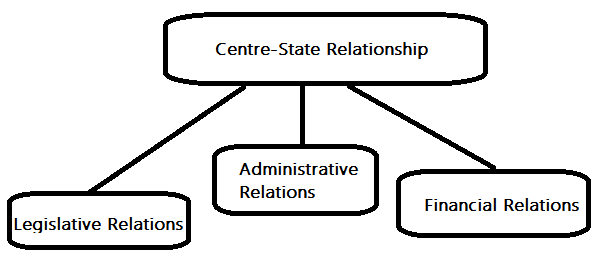
- Foundation of Federalism (1950s and early 1960s):
- Jawaharlal Nehru played a key role in laying the foundation of Indian federalism during this period.
- Congress dominance over both the Center and the States.
- Congress Dominance and Normal Relations (1950s - Early 1960s):
- Congress was dominant at both the central and state levels.
- Relations between the Center and the States were generally normal, except on the issue of the formation of new States.
- Shift in Political Landscape (Middle of 1960s):
- Congress dominance declined in the mid-1960s.
- Opposition parties came to power in a large number of States.
- Demands for Greater Powers and Autonomy (1960s):
- Opposition parties in power led to demands for greater powers and autonomy for the States.
- Resulted from different parties ruling at the Center and in many States.
- Protests Against Central Interference:
- State governments protested against perceived unnecessary interference by the Congress government at the centre.
 |
Download the notes
Chapter Notes: Federalism
|
Download as PDF |
Demands for Autonomy
- Shift in Division of Powers (Autonomy Demands):
- Demands for changing the division of powers in favour of the States.
- Calls for assigning more and important powers to the States.
- Financial Autonomy Demands:
- States seek independent sources of revenue.
- Demand for greater control over resources, known as financial autonomy.
- Administrative Autonomy Demands:
- Resentment against central control over administrative machinery.
- States seek greater administrative powers.
- Cultural and Linguistic Autonomy Demands:
- Autonomy demands related to cultural and linguistic issues.
- Opposition to the dominance of Hindi (e.g., in Tamil Nadu).
- Demands for promotion of regional languages and cultures (e.g., advancing Punjabi language and culture).
- Protests Against Hindi Imposition (1960s):
- Agitations in some States during the 1960s against the imposition of the Hindi language.
- Some States feel there is a domination of Hindi-speaking areas over others.
Role of Governors and President's Rule
- The Governor is appointed by the Central government and is not an elected official.
- Many Governors have been retired military officers, civil servants, or politicians, raising concerns about political neutrality.
- The Governor’s actions are often perceived as interference by the Central government in state affairs.
- Tensions between the Centre and the State increase when different political parties are in power at each level.
- The Sarkaria Commission (1983–1988) recommended that the appointment of Governors should be strictly non-partisan to prevent bias.
Article 356 and President's Rule
- Article 356 allows the President of India to impose President's Rule in a state if the state government cannot function according to constitutional provisions.
- When President's Rule is imposed, the Union government takes direct control of the state’s administration.
- The Governor has the authority to recommend the dismissal of the state government and to suspend or dissolve the state assembly.
- The President’s proclamation of President's Rule must be approved by Parliament and can be extended for up to three years.
Misuse of Article 356

- Article 356 was used sparingly until 1967, after which it became more common due to the rise of non-Congress governments in many states.
- The Congress-led Central government often used this provision to dismiss state governments or prevent the majority party in a state from forming the government.
- In 1959, the elected government of Kerala was dismissed despite holding a majority in the legislature.
- In the 1980s, the elected governments of Andhra Pradesh and Jammu and Kashmir were removed by the Central government.
- The Supreme Court has ruled that the use of Article 356 is subject to judicial review, meaning the courts can examine whether its application was constitutionally valid.
Demands for New States
Tension in Federal System: A significant source of tension in India's federal system has been the demand for the creation of new states.
Linguistic States: Post-Independence, the States Reorganisation Commission (1953) recommended forming states based on linguistic groups, leading to the creation of linguistic states in 1956.
State Formation Timeline:
1960: Creation of Gujarat and Maharashtra.
1966: Separation of Punjab and Haryana.
1970s and 80s: Formation of North Eastern states like Manipur, Tripura, Meghalaya, Mizoram, and Arunachal Pradesh.
2000: Larger states like Madhya Pradesh, Uttar Pradesh, and Bihar were divided to create Chhattisgarh, Uttarakhand, and Jharkhand.
Ongoing Demands: Some regions, like Vidarbha in Maharashtra, are still demanding separate statehood.
 |
Take a Practice Test
Test yourself on topics from UPSC exam
|
Practice Now |
Interstate Conflicts
While states often clash with the Central government over autonomy and the distribution of revenue, conflicts between states themselves are also common. Although the judiciary serves as the legal authority to settle such disputes, many of these issues are deeply political and are best resolved through negotiation and mutual understanding.
Types of Inter-State Disputes
Inter-state conflicts in India mainly fall into two categories:
Border Disputes
- Maharashtra vs. Karnataka: Dispute over the city of Belgaum.
- Manipur vs. Nagaland: Ongoing conflict over shared border areas.
- Punjab vs. Haryana: Dispute over Chandigarh, which serves as the capital of both states. In 1985, an agreement led by Prime Minister Rajiv Gandhi promised Chandigarh to Punjab, but it hasn’t been implemented yet.
- Language-based boundaries often complicate these disputes, as many border regions have linguistically mixed populations.
River Water Disputes
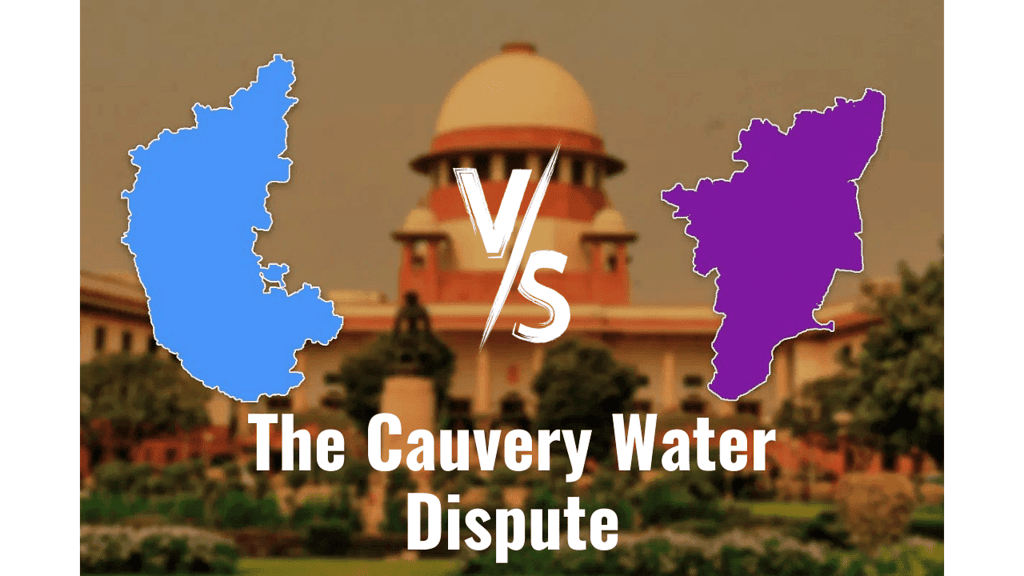
- Cauvery Water Dispute (Tamil Nadu vs. Karnataka): Both states depend on the Cauvery River for agriculture and drinking water. Despite a river water tribunal, the issue has escalated to the Supreme Court.
- Narmada River Dispute (Gujarat, Madhya Pradesh, Maharashtra): These states struggle over the sharing of Narmada waters, impacting agriculture and water supply.
- River disputes are often more intense than border disputes because they directly affect people's livelihoods and daily needs.
Federalism and Conflict
Conflicts are a natural part of a federal system, where multiple governments share power. However, these disputes highlight the need for cooperation and peaceful resolution to ensure that states can coexist harmoniously and work together for the country's development.
Special Provisions
- Special Provisions for Certain States:
- Granted due to unique social and historical backgrounds.
- Primarily related to north-eastern States (e.g., Assam, Nagaland, Arunachal Pradesh, Mizoram) with significant indigenous tribal populations.
- Hilly States (e.g., Himachal Pradesh) and others (e.g., Andhra Pradesh, Goa, Gujarat, Maharashtra, Sikkim, Telangana) also have special provisions.
- Jammu and Kashmir's Special Status under Article 370:
- J&K has special status under Article 370 of the Constitution.
- Maharaja of Kashmir acceded to the Indian union after a war between India and Pakistan.
- Autonomy of J&K is less than suggested by Article 370.
- President's Role in J&K's Special Status:
- President, with the concurrence of the State government, can specify the application of parts of the Union List to the State.
- Constitutional orders issued in concurrence with J&K government make large parts of the Constitution applicable.
- Despite separate constitution and flag, Parliament's power to make laws on Union List subjects is fully accepted in J&K.
- Differences between J&K and Other States:
- No emergency due to internal disturbances can be declared in J&K without the State's concurrence.
- Union government cannot impose a financial emergency in the State.
- Directive Principles do not apply in J&K.
- Amendments to the Indian Constitution under Article 368 require concurrence with the government of J&K.
|
476 videos|360 docs
|
FAQs on Federalism Class 11 Political Science
| 1. What is federalism and how does it function in different countries? |  |
| 2. What was the West Indies Federation and why did it dissolve? | |
| 3. How does federalism manifest in Nigeria, and what are its challenges? | |
| 4. What are the key features of federalism in the Indian Constitution? | |
| 5. What role do governors play in India's federal system, particularly regarding President's Rule? | |



Free
,shortcuts and tricks
,mock tests for examination
,Federalism Class 11 Political Science
,Sample Paper
,practice quizzes
,ppt
,Previous Year Questions with Solutions
,Extra Questions
,Exam
,Federalism Class 11 Political Science
,Viva Questions
,study material
,Federalism Class 11 Political Science
,Objective type Questions
,video lectures
,Important questions
,Semester Notes
,past year papers
,Summary
,MCQs
;




Chapter Notes: Federalism Free PDF Download
Importance of Chapter Notes: Federalism
Chapter Notes: Federalism
Chapter Notes: Federalism UPSC Questions
Study Chapter Notes: Federalism on the App
|
© EduRev
|
Education Revolution
|


|




