Worksheet: Independence of India | General Knowledge for Young Learners - Class 1 PDF Download

Section A: Fill in the Blanks
Q1: India gained independence from British rule on __________.
Q2: The leader of India's independence movement was __________.
Q3: The famous nonviolent protest led by Mahatma Gandhi was called the __________.
Q4: The Indian National Congress was founded in the year __________.
Q5: The national flag of India has __________ horizontal stripes.
Q6: The leader of the Muslim League during India's independence was __________.
Q7: The British viceroy at the time of Indian independence was __________.
Q8: The famous speech by Jawaharlal Nehru on the eve of independence is known as the __________ speech.
Q9: The partition of India resulted in the creation of two countries: __________ and __________.
Q10: The first Prime Minister of India was __________.
Section B: Match the Column
Q1: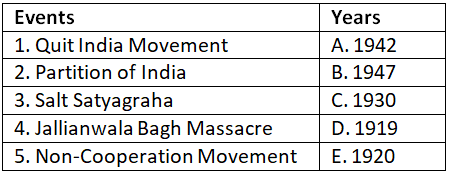
Q2: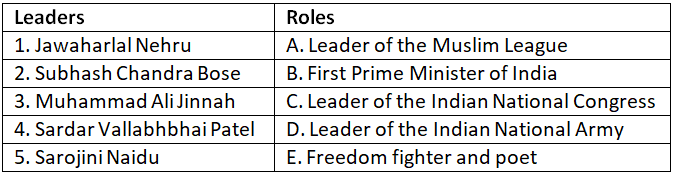
Section C: True or False
Q1: The Indian National Congress was established in 1885.
Q2: Mahatma Gandhi was born in India.
Q3: The Salt Satyagraha was a protest against the high taxes imposed on salt.
Q4: The Indian flag was designed by Rabindranath Tagore.
Q5: The Indian Independence Act was passed in 1948.
|
51 videos|98 docs|40 tests
|




Exam
,past year papers
,Worksheet: Independence of India | General Knowledge for Young Learners - Class 1
,Objective type Questions
,study material
,Worksheet: Independence of India | General Knowledge for Young Learners - Class 1
,Important questions
,practice quizzes
,Previous Year Questions with Solutions
,ppt
,Worksheet: Independence of India | General Knowledge for Young Learners - Class 1
,Summary
,Free
,Extra Questions
,Viva Questions
,video lectures
,Semester Notes
,mock tests for examination
,MCQs
,shortcuts and tricks
,Sample Paper
;



Worksheet: Independence of India Free PDF Download
Importance of Worksheet: Independence of India
Worksheet: Independence of India Notes
Worksheet: Independence of India Class 1 Questions
Study Worksheet: Independence of India on the App
|
© EduRev
|
Education Revolution
|


|








within 7 days!