Commerce Exam  >  Commerce Notes  >  Accountancy Class 11  >  Worksheet: Recording of Transactions - II

Worksheet: Recording of Transactions - II

Q1: Which balance of the bank column in the cash book signifies bank overdraft?

Q2: Mention two transactions which are recorded in journal proper.

Q3: Is it correct to say, sales book is a record prepared from invoices issued to customers?

Q4: In which book of original entry, a discount of Rs. 50 offered for an early payment of cash of Rs. 1,050 be recorded?

Q5: Described the advantages of sub-dividing the journal?

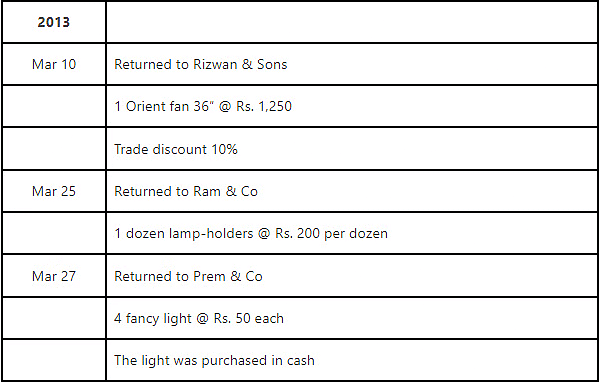
Q6: Prepare the purchases return book in the book of Abdulla Stores from the following transactions:
Worksheet: Recording of Transactions - II

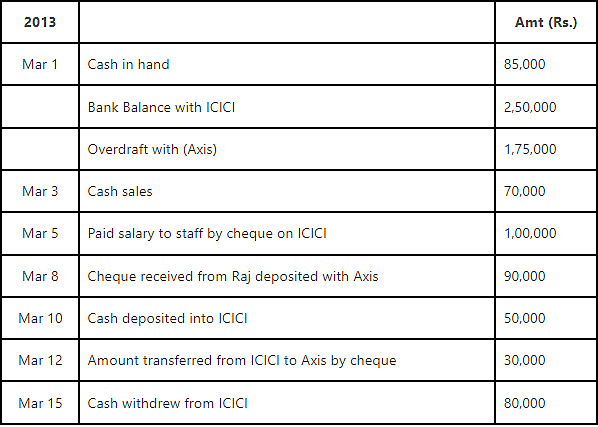
Q7: From the following particulars provided by Rishi, prepare a cash book with suitable column. 
Worksheet: Recording of Transactions - II

Q8: Prepare two column cash book from the following transactions for the month of April, 2013

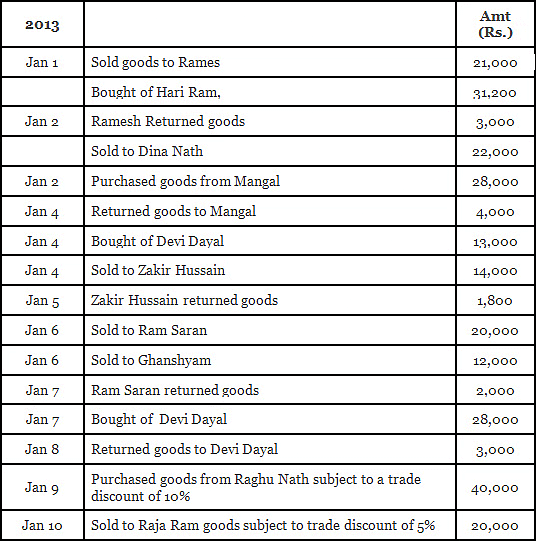
Q9: Enter the following transactions in proper subsidiary books of Balram
Worksheet: Recording of Transactions - II

You can access the solutions to this worksheet here.

The document Worksheet: Recording of Transactions - II is a part of the Commerce Course Accountancy Class 11.
All you need of Commerce at this link: Commerce

FAQs on Worksheet: Recording of Transactions - II

1. What are the key components of recording transactions in commerce?
Ans. The key components of recording transactions in commerce include identifying the transaction, documenting relevant details such as date, amount, and parties involved, classifying the transaction into appropriate accounts (e.g., assets, liabilities, revenue, expenses), and ensuring accuracy through double-entry bookkeeping.
2. Why is it important to maintain accurate transaction records in business?
Ans. Maintaining accurate transaction records is crucial for several reasons: it helps in financial reporting, aids in tracking business performance, ensures compliance with tax regulations, facilitates budgeting and forecasting, and provides essential information for decision-making.
3. What is double-entry bookkeeping and how does it relate to recording transactions?
Ans. Double-entry bookkeeping is an accounting method where each transaction is recorded in at least two accounts: one as a debit and the other as a credit. This system ensures that the accounting equation (Assets = Liabilities + Equity) remains balanced, providing a comprehensive view of a company's financial situation.
4. How can businesses ensure their transaction records are accurate and reliable?
Ans. Businesses can ensure accuracy and reliability in transaction records by implementing strong internal controls, regularly reconciling accounts, conducting periodic audits, training staff on proper recording practices, and utilizing accounting software that minimizes human error.
5. What common mistakes should businesses avoid when recording transactions?
Ans. Common mistakes to avoid include failing to record transactions promptly, misclassifying transactions, overlooking small transactions, not reconciling accounts regularly, and neglecting to back up financial data. These errors can lead to inaccurate financial statements and poor business decisions.
Explore Courses for Commerce exam
Get EduRev Notes directly in your Google search
Related Searches
Extra Questions, study material, mock tests for examination, Summary, Previous Year Questions with Solutions, pdf , Worksheet: Recording of Transactions - II, Free, video lectures, Worksheet: Recording of Transactions - II, past year papers, MCQs, Exam, Sample Paper, Worksheet: Recording of Transactions - II, practice quizzes, Important questions, Viva Questions, ppt, Semester Notes, shortcuts and tricks, Objective type Questions;