CBSE Class 3  >  Class 3 Notes  >  EVS : The World around us (Our Wondrous World)  >  Worksheet Solutions: Making Things

Worksheet Solutions: Making Things

Worksheet Solutions: Making Things

Fill in the Blanks

Q1: Bricks become hard after being baked in a ____________.
Ans: Kiln

Q2: ____________ is used to keep the heat out of traditional mud houses.
Ans: Cow dung

Q3: Patterns can be found everywhere in ____________.
Ans: Nature

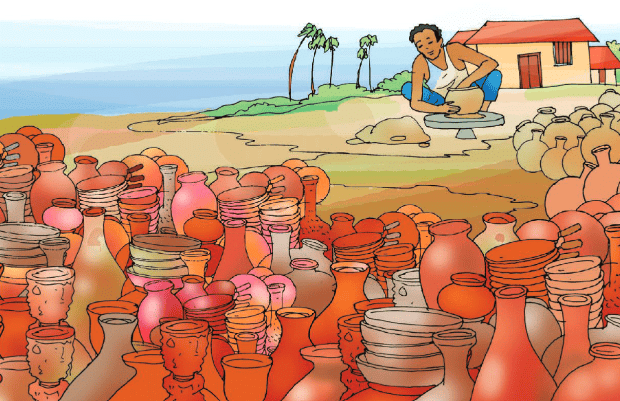
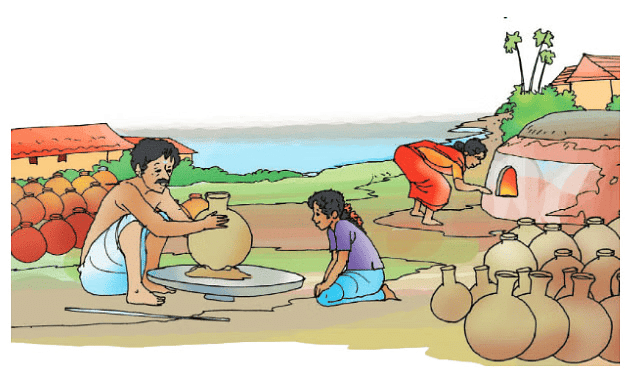
Q4: Pots are made by shaping clay on a ____________.
Ans: Stone wheel or potter's wheel

Q5: A potter's oven is called a ____________.
Ans: Kiln
Fill in the Blanks

True or False

Q1: Pots are shaped by spinning clay on a stone wheel.
Ans: True

Q2: Patterns can only be found in artificial objects.
Ans: False

Patterns exist in both nature and man-made objects.

Q3: Traditional mud houses are made using cement.
Ans: False

Traditional houses are made of mud, cow dung, and straw.

Q4: Cow dung helps to keep insects out of houses.
Ans: True

Q5: Bricks are used for the construction of buildings.
Ans: True
True or False

One -Word Answer Type Questions

Q1:  What type of patterns can be seen on peacocks or tigers? 

Ans: Stripes

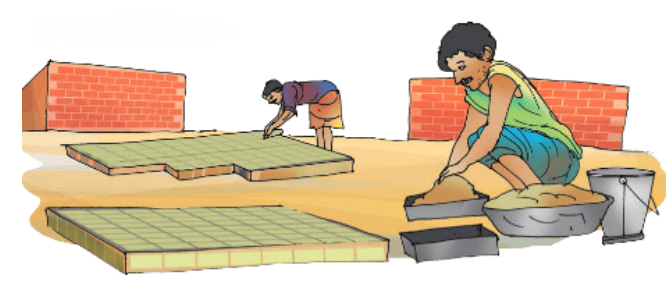
Q2: What are bricks made of?

Ans: Mud

Q3: Where does Rohan live?

Ans: Jaipur

Q4: What natural material is used in traditional mud houses for walls and floors?

Ans: Cow dung

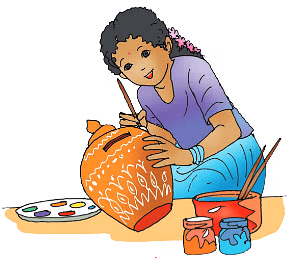
Q5: What is used to make patterns on pots?

Ans: Clay
One -Word Answer Type Questions

Multiple Choice Questions (MCQs)

Q1: What is a potter's oven called?
(a) Kiln
(b) Oven
(c) Stove
(d) Fireplace

Ans: (a) Kiln

Q2: Which natural material is used to make mud houses?
(a) Grass
(b) Wood
(c) Cow dung
(d) All of the above

Ans: (d) All of the above

Q3: What helps to keep insects out of traditional mud houses?
(a) Cement
(b) Cow dung
(c) Paint
(d) Bricks

Ans: (b) Cow dung

Q4: Which of the following is NOT a use of pots?

(a) Storing water
(b) Baking bread
(c) Holding money
(d) Serving food

Ans: (b) Baking bread

Q5: What is a potter's favorite pastime according to the text?
(a) Making pots
(b) Watching brick walls being built
(c) Painting patterns on clay items
(d) Observing patterns in nature

Ans: (c) Painting patterns on clay items
Multiple Choice Questions (MCQs)

Match the Following

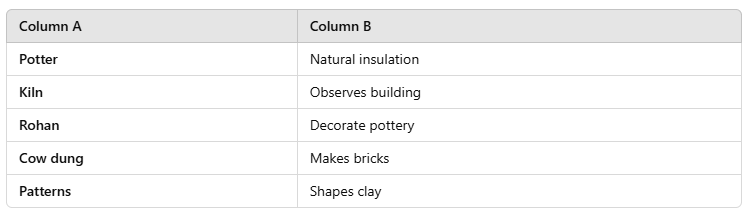
Match the FollowingAns:

Match the Following

The document Worksheet Solutions: Making Things is a part of the Class 3 Course EVS Class 3: The World around us (Our Wondrous World).
All you need of Class 3 at this link: Class 3

FAQs on Worksheet Solutions: Making Things

1. How do we make things from raw materials in Class 3 EVS?
Ans. Making things involves converting raw materials from nature into useful products through simple processes. Students learn how raw materials like wood, clay, and metals are transformed into everyday items such as furniture, pots, and tools. Understanding these processes helps children recognise where common objects originate and appreciate the effort behind them.
2. What are examples of things we can make using natural materials?
Ans. Natural materials like clay, wood, leaves, stones, and fibres can be crafted into pottery, wooden toys, paper crafts, and baskets. Class 3 learners explore how these raw materials from the environment become functional or decorative objects through shaping, weaving, and moulding techniques. This hands-on learning connects children to sustainable practices and traditional craftsmanship.
3. Why do we need to know about the process of making things for CBSE Class 3?
Ans. Learning manufacturing processes develops critical thinking about resource usage and sustainability. Students recognise how everyday objects require raw materials, labour, and skill. This knowledge builds environmental awareness, encourages respect for workers, and helps children understand the value of finished products they use daily.
4. What's the difference between raw materials and finished products explained in Class 3 worksheets?
Ans. Raw materials are unprocessed natural resources like cotton, iron ore, or timber; finished products are items ready for use, like cloth, metal utensils, or furniture. The transformation occurs through manufacturing processes involving tools, techniques, and human effort. Recognising this distinction helps students trace how everyday items develop from their source.
5. How can I understand making things better using study materials for Class 3 EVS?
Ans. Visual learning through mind maps, flashcards, and PPTs on EduRev helps clarify manufacturing concepts effectively. These resources illustrate raw-to-finished transformations with diagrams and examples. Interactive worksheets with solutions reinforce understanding of processes like pottery-making, weaving, and woodwork, making abstract concepts tangible for young learners.
Explore Courses for Class 3 exam
Get EduRev Notes directly in your Google search
Related Searches
Free, Important questions, Objective type Questions, Worksheet Solutions: Making Things, Worksheet Solutions: Making Things, Sample Paper, Extra Questions, Worksheet Solutions: Making Things, shortcuts and tricks, ppt, Previous Year Questions with Solutions, Exam, past year papers, Viva Questions, video lectures, pdf , practice quizzes, Summary, mock tests for examination, study material, MCQs, Semester Notes;