PIB Summary- 24th September, 2024 | PIB (Press Information Bureau) Summary - UPSC PDF Download

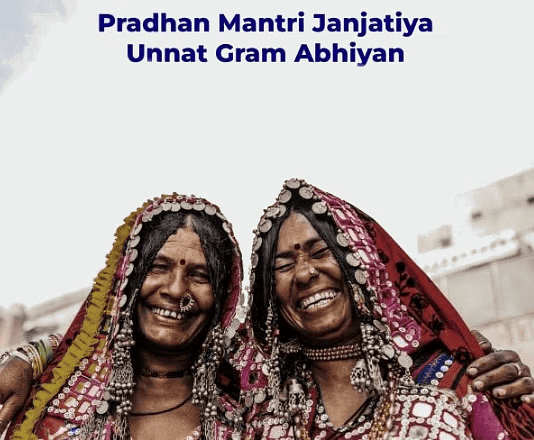
Pradhan Mantri Janjatiya Unnat Gram Abhiyan
Context
Recently, the Union Cabinet approved Pradhan Mantri Janjatiya Unnat Gram Abhiyan (PMJUGA) for improving the socio-economic condition of tribal communities.
Key Facts About the PMJUGA:
- Centrally Sponsored Scheme: Aimed at the welfare of tribal families in tribal-majority villages and aspirational districts.
- Coverage:
- Will be implemented across 549 districts and 2,740 blocks in tribal-majority villages.
- Encompasses 30 States/UTs and approximately 63,000 villages, benefitting over 5 crore tribal people.
- 2011 Census Data: India’s Scheduled Tribe (ST) population stands at 10.42 crore (8.6% of the total population), comprising over 705 tribal communities.
- Objective: Focuses on addressing gaps in social infrastructure like health, education, and livelihoods through various government schemes by integrating and converging efforts.
Goals of the Mission:
- Interventions: 25 interventions will be implemented by 17 ministries under the Development Action Plan for Scheduled Tribes (DAPST) over the next 5 years.
Developing Enabling Infrastructure:
Housing & Amenities:
- ST households will receive pucca housing under PMAY (Rural), along with tapped water (Jal Jeevan Mission) and electricity.
- Ayushman Bharat cards (PMJAY) will ensure health coverage.
Road and Digital Connectivity:
- ST-majority villages will receive all-weather road connectivity (PMGSY), mobile access (Bharat Net), and internet services.
Health, Education, and Nutrition:
- Infrastructure will improve under schemes like the National Health Mission, Samagra Shiksha, and Poshan Abhiyan.
Skill Development & Livelihood:
- Programs for skill development, entrepreneurship, and self-employment will be implemented.
- Marketing support for tribal products through Tribal Multipurpose Marketing Centres (TMMCs) and assistance in agriculture, animal husbandry, and fisheries for Forest Rights Act, 2006 (FRA) patta holders.
Education:
- Efforts to increase the Gross Enrollment Ratio (GER) and provide affordable education for ST students through the Samagra Shiksha Abhiyan.
- Tribal hostels will be set up at district/block levels.
Health Initiatives:
- Aim to meet national standards in Infant Mortality Rate (IMR) and Maternal Mortality Rate (MMR) and improve immunization coverage through Mobile Medical Units.
Mapping & Monitoring:
- The tribal villages will be mapped under the PM Gati Shakti portal to identify gaps and award the best-performing districts.
Innovative Schemes to Promote Tribal Livelihood under PMJUGA:
Tribal Home Stay:
- To encourage tourism and alternative livelihoods, 1,000 homestays will be promoted under the Swadesh Darshan scheme.
- Funding will be provided for 5-10 homestays, including Rs 5 lakh for new rooms, Rs 3 lakh for renovation, and Rs 5 lakh for community needs.
Sustainable Livelihood for Forest Rights Holders:
- Focus on 22 lakh FRA patta holders, recognizing forest rights and providing livelihoods through various government schemes.
Improving School & Hostel Infrastructure:
- Upgrading the infrastructure of tribal residential schools, hostels, and ashram schools to improve enrollment and retain students.
Sickle Cell Disease Diagnosis:
- Centers of Competence (CoC) for prenatal diagnosis will be set up in AIIMS and premier institutes in states with a high prevalence of sickle cell disease, with a budget of Rs 6 crore per CoC.
Tribal Multipurpose Marketing Centres (TMMCs):
- 100 TMMCs will be established to market tribal products, improve marketing infrastructure, and enhance packaging, branding, and transportation.
Goa Maritime Symposium 2024
Context
The Indian Navy is hosting the fifth edition of the Goa Maritime Symposium at Naval War College, Goa.
Goa Maritime Symposium 2024:
Purpose:
- The symposium serves as a platform for fostering collaborative thinking, cooperation, and mutual understanding between India and key maritime nations within the Indian Ocean Region.
Theme for 2024:
- The theme is Common Maritime Security Challenges in the Indian Ocean Region: Addressing issues like illegal and unregulated fishing and other illegal maritime activities by progressing collective efforts.
Participation:
- Representatives from 12 Indian Ocean Littoral countries will participate, including:
- Bangladesh, Comoros, Indonesia, Madagascar, Malaysia, Maldives, Mauritius, Myanmar, Seychelles, Singapore, Sri Lanka, and Thailand.
- Observers will also attend from Kenya and Tanzania.
Goa Maritime Symposium (GMS):
History:
- Conceptualized and initiated by the Indian Navy in 2016.
Objective:
- A platform for fostering cooperation and enhancing mutual understanding between India and key maritime nations of the Indian Ocean Region (IOR).
Frequency:
- The symposium is conducted biennially by the Naval War College (NWC) in Goa.




Extra Questions
,shortcuts and tricks
,past year papers
,ppt
,Important questions
,2024 | PIB (Press Information Bureau) Summary - UPSC
,PIB Summary- 24th September
,PIB Summary- 24th September
,Semester Notes
,Objective type Questions
,Sample Paper
,study material
,2024 | PIB (Press Information Bureau) Summary - UPSC
,video lectures
,Viva Questions
,MCQs
,Previous Year Questions with Solutions
,practice quizzes
,2024 | PIB (Press Information Bureau) Summary - UPSC
,Exam
,Summary
,Free
,PIB Summary- 24th September
,mock tests for examination
;




PIB Summary- 24th September, 2024 Free PDF Download
Importance of PIB Summary- 24th September, 2024
PIB Summary- 24th September, 2024 Notes
PIB Summary- 24th September, 2024 UPSC Questions
Study PIB Summary- 24th September, 2024 on the App
|
© EduRev
|
Education Revolution
|


|