Cheat Sheet: Union & its Territory | Indian Polity for UPSC CSE PDF Download

Introduction
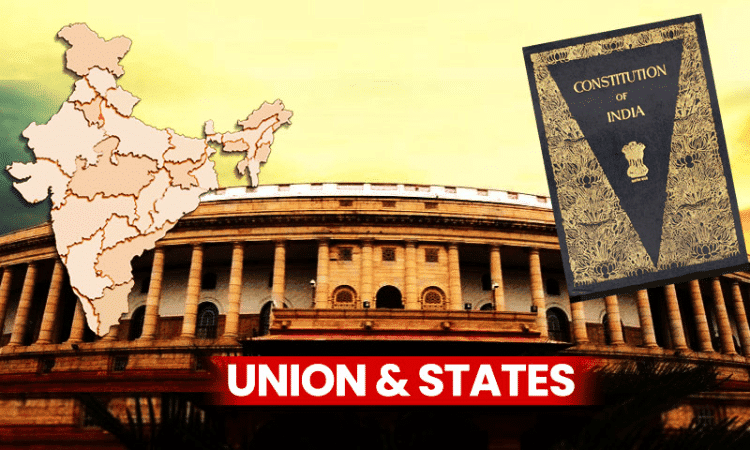
This document provides a detailed chronology of the evolution of the Union and its Territory as outlined in Part I of the Indian Constitution. It covers the formation, reorganization, and renaming of states and union territories, as well as the powers of the Parliament to alter India's political structure. The information is organized into distinct sections, making it easy to understand the history and development of India's territorial organization. This document is designed for quick revision, offering clear insights into key events and constitutional provisions related to India's Union and its Territory.
Union of States (Article 1)

Article 2: Adding New States

Article 3: Reorganizing Existing States

Exchange of Territories with Bangladesh (100th Constitutional Amendment Act, 2015)

Integration of Princely States Post-1947

Constitutional Classification of States (1950)

Dhar Commission (1948) and JVP Committee (1948)

Creation of Andhra State (1953)

Fazl Ali Commission (1955)

States Reorganisation Act (1956)

Creation of Maharashtra and Gujarat (1960)

Integration of Dadra and Nagar Haveli (1961)

Goa, Daman, and Diu (1962-1987)

Creation of Nagaland (1963)

Haryana, Chandigarh, and Himachal Pradesh (1966-1971)

Creation of Manipur, Tripura, and Meghalaya (1972)

Sikkim's Integration (1975)

Creation of Mizoram, Arunachal Pradesh, and Goa (1987)

Chhattisgarh, Uttarakhand, and Jharkhand (2000)

Telangana Creation (2014)

Jammu & Kashmir and Ladakh Reorganization (2019)

Conclusion
The territorial evolution of India is a dynamic process influenced by historical events, political demands, and constitutional amendments. From the integration of princely states post-independence to the formation of new states and union territories, the Indian political map has continuously evolved. The power vested in Parliament under Articles 2 and 3 has allowed for the reshaping of states, ensuring a responsive and adaptable governance system. This chronology serves as a comprehensive guide to understanding the development and reorganization of states and territories within India, reflecting the country's growth and political flexibility.
|
154 videos|994 docs|260 tests
|




Cheat Sheet: Union & its Territory | Indian Polity for UPSC CSE
,Exam
,Objective type Questions
,study material
,practice quizzes
,Sample Paper
,Extra Questions
,Important questions
,mock tests for examination
,video lectures
,shortcuts and tricks
,Viva Questions
,ppt
,Cheat Sheet: Union & its Territory | Indian Polity for UPSC CSE
,Semester Notes
,Previous Year Questions with Solutions
,Cheat Sheet: Union & its Territory | Indian Polity for UPSC CSE
,past year papers
,MCQs
,Summary
,Free
;




Cheat Sheet: Union & its Territory Free PDF Download
Importance of Cheat Sheet: Union & its Territory
Cheat Sheet: Union & its Territory Notes
Cheat Sheet: Union & its Territory UPSC Questions
Study Cheat Sheet: Union & its Territory on the App
|
© EduRev
|
Education Revolution
|


|




