CBSE Class 10 > Class 10 Notes > Science > Cheat Sheet: Control and Coordination
Cheat Sheet: Control and Coordination


Introduction
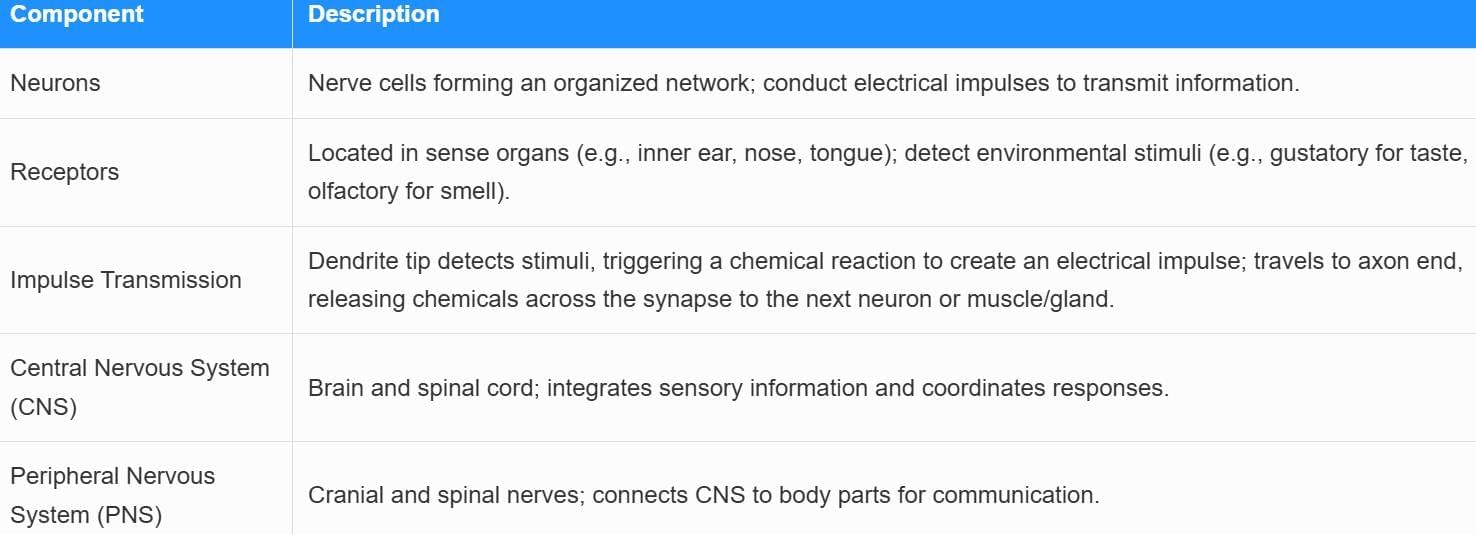
Control and coordination enable living organisms to respond to environmental changes with precise movements. Animals use nervous and muscular tissues, while plants rely on chemical signals and growth. These processes are managed by specialized systems to ensure appropriate responses, such as a cat running from danger or a plant growing toward light.
Animals - Nervous System
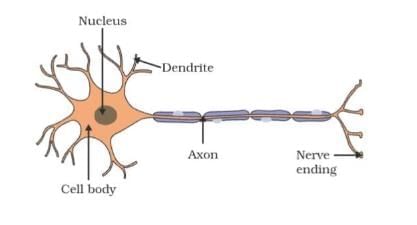
Reflex Actions

Human Brain
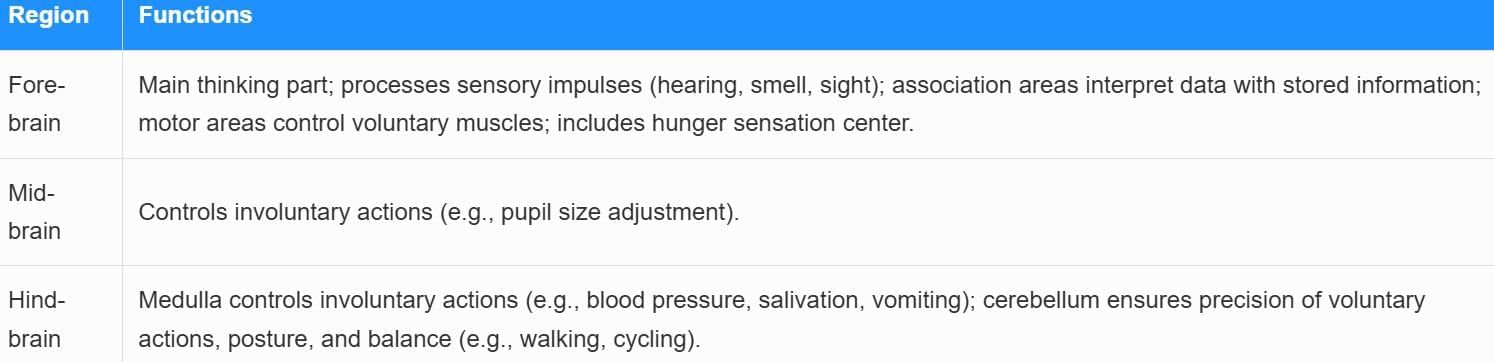
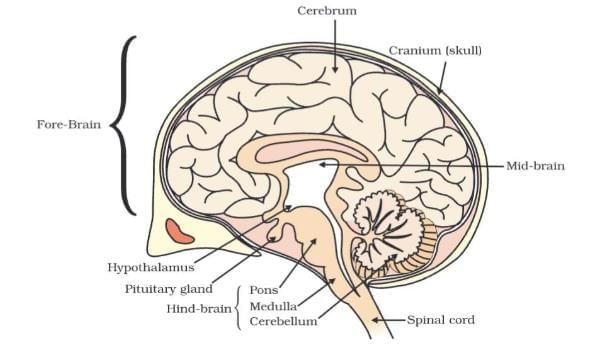
Protection of Nervous Tissue

Nervous Tissue and Muscle Action

Coordination in Plants
Types of Plant Movements

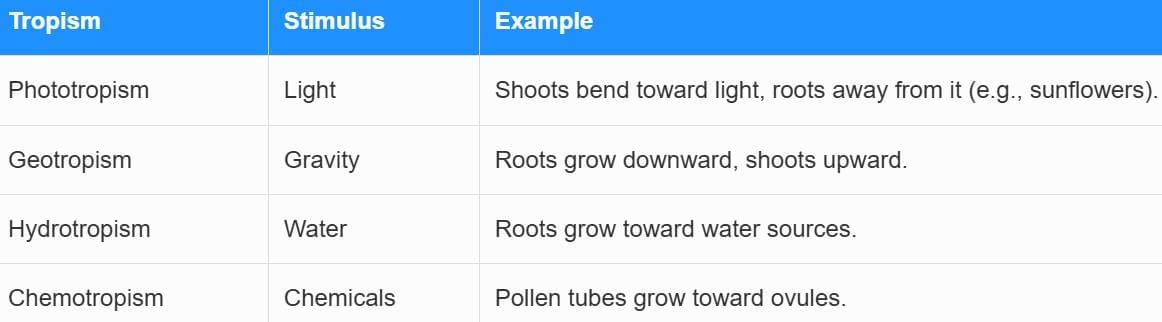
Tropisms
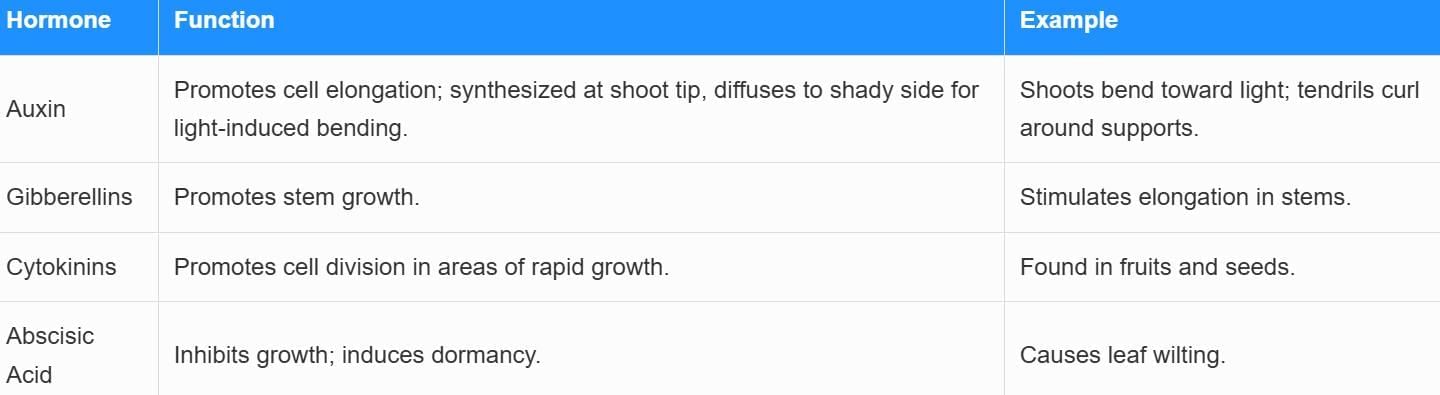
Plant Hormones
Mechanism
- Plants lack nervous tissue; use electrical-chemical signals to transmit information cell-to-cell.
- Hormones diffuse to target areas, coordinating growth and responses.
Hormones in Animals
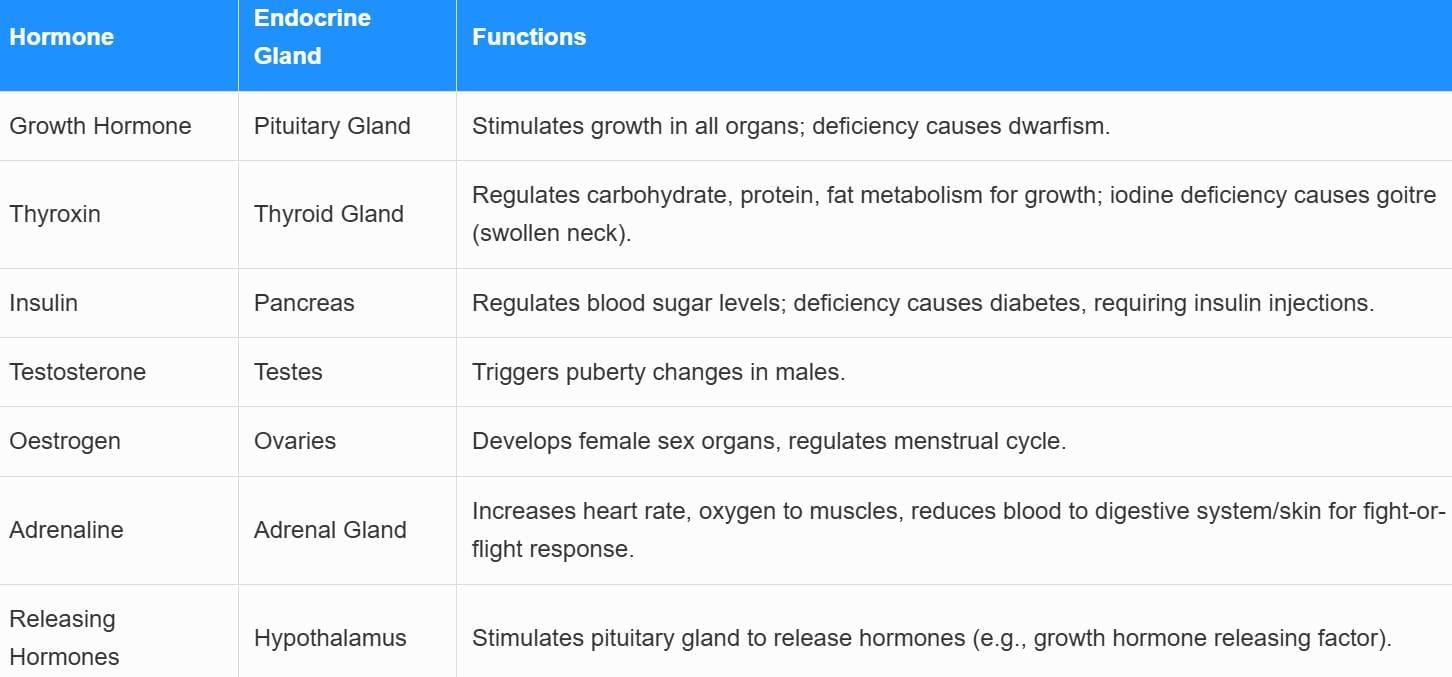
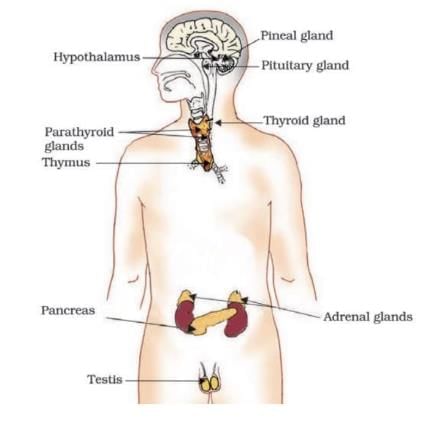
Endocrine System
Feedback Mechanism

Comparison with Nervous System

The document Cheat Sheet: Control and Coordination is a part of the Class 10 Course Science Class 10.
All you need of Class 10 at this link: Class 10
FAQs on Cheat Sheet: Control and Coordination
| 1. What are the main components of the nervous system in animals? |  |
Ans. The main components of the nervous system in animals include the brain, spinal cord, and peripheral nerves. The brain serves as the control center for processing information and coordinating responses, while the spinal cord transmits signals between the brain and the rest of the body. Peripheral nerves connect the central nervous system to limbs and organs, facilitating communication throughout the body.
| 2. How do plants coordinate their responses to environmental stimuli? | |
Ans. Plants coordinate their responses to environmental stimuli through a process known as tropism. They utilize growth hormones such as auxins, gibberellins, and cytokinins to regulate growth and movement toward or away from stimuli like light (phototropism) and gravity (gravitropism). This hormonal response allows plants to adapt to their surroundings effectively.
| 3. What role do hormones play in the control and coordination of animal functions? | |
Ans. Hormones act as chemical messengers in animals, regulating various physiological processes such as growth, metabolism, and reproduction. They are secreted by glands and travel through the bloodstream to target organs, where they bind to specific receptors and trigger a response. This system helps maintain homeostasis and coordinate complex bodily functions.
| 4. Can you explain the difference between the nervous system and the hormonal system in animals? | |
Ans. The nervous system operates through electrical impulses and neurotransmitters to provide quick and precise control of body functions, often resulting in immediate responses. In contrast, the hormonal system involves slower chemical signaling through hormones, which can have prolonged effects on various body functions. While the nervous system is suited for rapid communication, the hormonal system is better for regulating long-term changes.
| 5. What are some examples of plant hormones and their functions? | |
Ans. Some examples of plant hormones include auxins, which promote cell elongation and are involved in phototropism; gibberellins, which stimulate seed germination and stem growth; and abscisic acid, which plays a role in stress responses and closing stomata to reduce water loss. Each hormone has specific functions that help plants adapt to their environment and regulate growth.
About this Document

2.6K Views

4.85/5 Rating

Apr 29, 2026 Last updated
Document Description: Cheat Sheet: Control and Coordination for Class 10 2026 is part of Science Class 10 preparation. The notes and questions for Cheat Sheet: Control and Coordination have been prepared according to the Class 10 exam syllabus. Information about Cheat Sheet: Control and Coordination covers topics like and Cheat Sheet: Control and Coordination Example, for Class 10 2026 Exam. Find important definitions, questions, notes, meanings, examples, exercises and tests below for Cheat Sheet: Control and Coordination.
Introduction of Cheat Sheet: Control and Coordination in English is available as part of our Science Class 10 for Class 10 & Cheat Sheet: Control and Coordination in Hindi for Science Class 10 course. Download more important topics related with notes, lectures and mock test series for Class 10 Exam by signing up for free. Class 10: Cheat Sheet: Control and Coordination
Description
Cheat Sheet: Control & Coordination of Science Class 10 to help you remember important concepts with short tricks. Start learning for Class 10 exam & improve retention with EduRev.
Information about Cheat Sheet: Control and Coordination
In this doc you can find the meaning of Cheat Sheet: Control and Coordination defined & explained in the simplest way possible. Besides explaining types of Cheat Sheet: Control and Coordination theory, EduRev gives you an ample number of questions to practice Cheat Sheet: Control and Coordination tests, examples and also practice Class 10 tests



Related Searches
mock tests for examination, Extra Questions, Cheat Sheet: Control and Coordination, shortcuts and tricks, Summary, Free, Important questions, ppt, Cheat Sheet: Control and Coordination, Exam, Objective type Questions, past year papers, Sample Paper, pdf , MCQs, Semester Notes, Previous Year Questions with Solutions, video lectures, Cheat Sheet: Control and Coordination, practice quizzes, study material, Viva Questions;