Weekly Current Affairs (1st to 7th July 2025) - 1


10 Years of Digital India
Why in News?
- On July 1st, 2025, India celebrated a decade of the Digital India initiative, a flagship program launched in 2015 aimed at bridging the digital divide and empowering citizens through technology. Over the past ten years (2015-2025), this initiative has revolutionized internet access, governance, financial inclusion, and digital infrastructure, positioning India as the world's third-largest digital economy.
Key Takeaways
- Digital India has significantly improved internet access and digital services across the nation.
- The initiative has led to a massive increase in the number of internet users and mobile connections.
- Innovations like UPI and Aadhaar have transformed digital finance and citizen empowerment.
- While achievements are notable, challenges such as the digital divide and cybersecurity remain prevalent.
Additional Details
- Digital Infrastructure: Between 2014 and 2025, telephone connections increased from 933 million to 1.2 billion, with internet users growing by 285% and broadband connections surging by 1,452%.
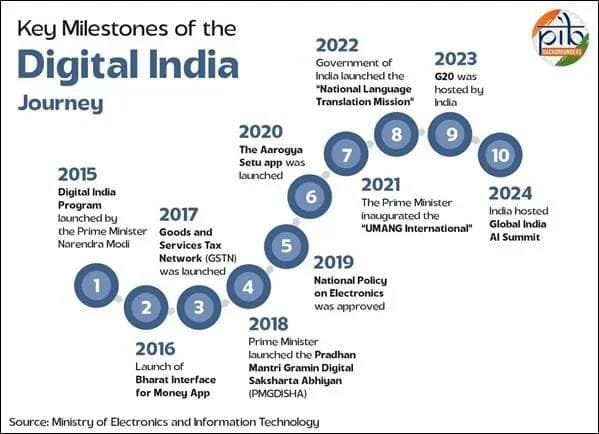
- 5G Revolution: In just 22 months, 4.74 lakh 5G towers were installed, covering 99.6% of districts, while data costs dropped from Rs 308/GB in 2014 to Rs 9.34/GB in 2022.
- BharatNet for Rural India: 2.18 lakh Gram Panchayats were connected through 6.92 lakh km of optical fiber, with 4G connectivity reaching over 615,000 villages.
- Unified Payments Interface (UPI): As of April 2025, UPI facilitated 1,867.7 crore transactions worth Rs 24.77 lakh crore, accounting for 49% of global real-time transactions.
- Aadhaar & Direct Benefit Transfer (DBT): By April 2025, 1.42 billion Aadhaar IDs were generated, enabling Rs 44 lakh crore to be transferred, while eliminating 5.87 crore fake ration cards.
- AI and Semiconductors: The IndiaAI Mission has deployed over 34,000 GPUs to enhance AI innovation, and the India Semiconductor Mission supports chip and display manufacturing with significant capital assistance.
- Citizen Empowerment: Platforms like DigiLocker and the UMANG App have improved digital access, with UMANG offering over 2,300 services in 23 languages.
The Digital India initiative has made significant strides in service delivery, economic empowerment, and enhancing citizen participation. However, persistent challenges such as the digital divide, cybersecurity threats, and data privacy concerns need to be addressed. With continued reforms, inclusive infrastructure, and robust regulation, Digital India can further its vision of a Viksit Bharat, enabling equitable and sustainable digital growth.
What is the Digital India Initiative?
- About: Launched in July 2015, the Digital India initiative aims to transform India into a digitally empowered society and knowledge-based economy.
- Objective: The initiative focuses on bridging the digital divide, ensuring inclusive digital access, driving economic growth, and improving the quality of life for citizens.
Nine Pillars of Digital India Initiative
- Broadband Highways: Expanding high-speed internet access nationwide.
- Universal Mobile Access: Ensuring mobile coverage in remote areas.
- Public Internet Access: Establishing Common Service Centres in underserved regions.
- E-Governance: Streamlining efficiency and transparency in citizen engagement.
- E-Kranti: Delivering government services online.
- Information for All: Digitization of records and open data for innovation.
- Electronics Manufacturing: Boosting local production to create jobs.
- IT for Jobs: Building youth IT skills through various missions.
- Early Harvest Programs: Addressing urgent digital needs like public Wi-Fi.
Key Issues Associated with the Digital India Initiative
- Uneven Digital Growth: Rural internet penetration is only 37% (2023), highlighting significant disparities.
- Cybersecurity Threats: A rise in cyber incidents, with a shortage of professionals to combat these threats.
- Data Privacy: Concerns over enforcement of the DPDP Act and data misuse persist.
- Infrastructure Bottlenecks: Low broadband speeds and patchy 5G coverage limit access, especially in rural areas.
- Regulatory Challenges: Frequent policy shifts and delays hinder the rollout of new technologies.
- Public Digital System Issues: Platforms like CoWIN face challenges in scalability and accuracy.
- Environmental Impact: Increased e-waste and energy consumption in data centers pose sustainability challenges.
Measures to Strengthen the Digital India Initiative
- Expand Internet Access: Enhance connectivity in rural areas through PM-WANI and promote regional language content.
- Enhance Cybersecurity: Develop comprehensive strategies and support indigenous cybersecurity R&D.
- Strengthen Data Privacy: Enforce the DPDP Act effectively and establish regional data protection offices.
- Promote Digital Literacy: Extend PMGDISHA to cover cyber awareness and skills training.
- E-Waste Management: Create a national framework for e-waste collection and eco-friendly technology.
- Integrate Digital Public Goods: Link platforms for better service delivery and reduce bureaucratic delays.
In conclusion, the Digital India initiative has made remarkable progress in enhancing service delivery and empowering citizens. However, addressing the ongoing challenges through strategic reforms and inclusive practices will be essential for fostering sustainable digital growth in the future.
Mains Question:
- Digital India has bridged technological gaps but faces persistent challenges. Critically analyze this statement with reference to India's digital transformation (2015-2025).
QUAD At Sea Ship Observer Mission
 Why in News?
- The Coast Guards of QUAD nations-India, Japan, the United States, and Australia-have initiated the 'QUAD At Sea Ship Observer Mission'. This mission aligns with the Wilmington Declaration (2024), which was adopted during the 6th QUAD Summit held in Delaware, USA.
Key Takeaways
- The mission is a pioneering maritime cooperation initiative.
- It aims to enhance interoperability, maritime domain awareness (MDA), and operational coordination.
- The initiative supports a rules-based order in the Indo-Pacific region.
Additional Details
- QUAD At Sea Ship Observer Mission: This initiative involves cross-embarkation, where officers, including women, are deployed on partner nations' Coast Guard vessels, such as the USCGC Stratton, on its route to Guam.
- Mission Objectives: The mission focuses on joint training, developing Standard Operating Procedures (SOPs), conducting patrolling and search and rescue (SAR) operations, promoting maritime diplomacy, and ensuring gender inclusion. It aligns with India's SAGAR Vision and MAHASAGAR Doctrine.
The Wilmington Declaration represents a collective vision for a free, open, inclusive, and rules-based Indo-Pacific region, reinforcing QUAD as a "force for good" and emphasizing cooperation across strategic, security, health, technological, and economic domains.
What is the Wilmington Declaration?
- The declaration was adopted at the QUAD Leaders' Summit in Wilmington, USA, in September 2024.
- It emphasizes the QUAD's commitment to a free and open Indo-Pacific, launching initiatives such as MAITRI for interoperability and maritime domain awareness.
- Other initiatives include the Quad Logistics Network and the Ports of the Future Partnership.
What is the QUAD?
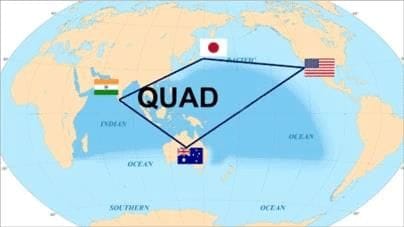
The Quadrilateral Security Dialogue (QUAD) is a strategic forum composed of India, Australia, Japan, and the United States, aimed at ensuring peace, stability, and prosperity in the Indo-Pacific region. It promotes a free, open, inclusive, and rules-based order while enhancing regional resilience and cooperation.
Origin of the QUAD
- The QUAD was formed in the aftermath of the 2004 Indian Ocean tsunami, where India, Japan, the US, and Australia coordinated humanitarian assistance.
- It was formally proposed in 2007 by Japanese PM Shinzo Abe but became dormant after Australia withdrew in 2008 due to Chinese pressure.
- The dialogue was revitalized in 2017 due to rising concerns over China's assertiveness in the Indo-Pacific, culminating in the first Leaders' Summit in 2021.
Objectives of QUAD
- The QUAD aims to tackle regional and global challenges through cooperation in areas such as:
- Climate and clean energy
- Infrastructure
- Emerging technologies
- Maritime security
- Counter-terrorism
- Humanitarian Assistance and Disaster Relief (HADR)
- Expansion Potential: "QUAD-plus" meetings have included nations such as South Korea, New Zealand, and Vietnam, indicating a potential for future expansion.
In conclusion, the QUAD At Sea Ship Observer Mission represents a significant step in enhancing maritime cooperation among member nations, reinforcing their commitment to a stable and inclusive Indo-Pacific region.
Hul Diwas
 Why in News?
- The Prime Minister recently paid a heartfelt tribute on Hul Diwas (30th June), marking the anniversary of the Santhal uprising and honoring the legacy of notable tribal leaders like Sido-Kanhu, Chand-Bhairav, Phulo-Jhano, and other tribal martyrs who courageously resisted colonial oppression.
Key Takeaways
- The Santhal Uprising, also known as Santhal Hul, was a significant tribal revolt against British rule in India.
- It began in 1855, two years before the major 1857 Revolt, aiming to combat economic exploitation and land alienation.
Additional Details
- Leaders & Unity: The uprising was led by Sidhu and Kanhu, who united 32 castes and communities, demonstrating remarkable tribal solidarity against colonial forces.
- Roots of Rebellion: The rebellion was triggered by the 1832 Damin-i-Koh settlement in the Rajmahal hills, where the Santhals faced land-grabbing and bonded labor due to systemic oppression from British-backed zamindars.
- Impact: The uprising led to the enactment of the Santhal Parganas Tenancy Act of 1876 (SPT Act), which prohibited the transfer of Adivasi land to non-Adivasis, thereby securing Santhal land rights. This was followed by the Chota Nagpur Tenancy Act of 1908 (CNT Act) that restricted land transfers only within the same caste and area with the collector's approval.
The Santhal Tribe originally hails from Birbhum and Manbhum (now in West Bengal) and migrated due to the 1770 Bengal famine and British policies. They later settled in Damin-i-Koh (Jharkhand) under the Permanent Settlement Act of 1790 focused on revenue farming.
Demographically, they are the third-largest Scheduled Tribe in India, following the Gonds and Bhils, primarily residing in Bihar, Odisha, and West Bengal.
In terms of culture and religion, the Santhals celebrate agriculture-related festivals such as Sohrai, Baha, and Karam. They communicate in Santhali, a language included in the 8th Schedule of the Indian Constitution, and they utilize the Ol Chiki script.
Debate Over 'Socialist' and 'Secular' in the Preamble

Why in News?
- A renewed debate has emerged over the inclusion of the words "socialist" and "secular" in the Preamble of the Indian Constitution. These terms were added during the Emergency via the 42nd Amendment Act of 1976. Critics argue that their insertion lacked broad consultation and may not align with India's inherently secular civilizational ethos. This discussion has reignited questions about their constitutional legitimacy and contemporary relevance.
Key Takeaways
- The Preamble outlines the core values and guiding principles of the Constitution of India.
- Terms "socialist" and "secular" were added during a politically tumultuous period, raising concerns over their legitimacy.
- The debate centers on the balance between original constitutional intent and evolving democratic values.
Additional Details
- Preamble: The Preamble serves as an introductory statement of the Constitution, reflecting the aspirations of the people and the spirit of the Constitution.
- Insertion of 'Socialist' and 'Secular': Originally, the Constitution declared India a Sovereign Democratic Republic, committed to Justice, Liberty, Equality, and Fraternity. The 1976 amendment added these terms, signifying the state's commitment to reducing inequality and ensuring distributive justice.
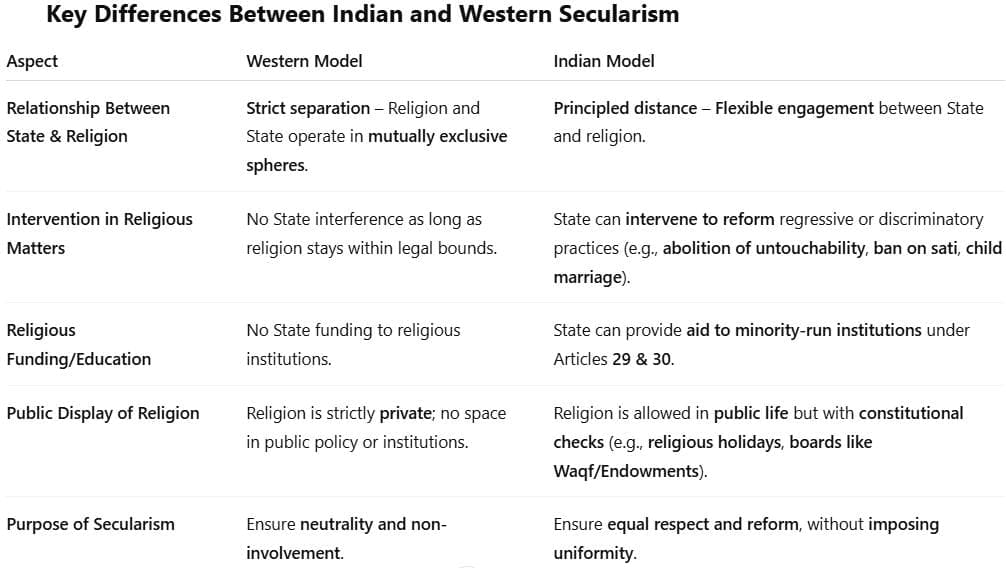
- Secularism in India: Indian secularism is an inclusive model, promoting equal respect for all religions and preventing domination while maintaining state neutrality. It upholds pluralism and constitutional morality.
- Key Dilemmas: The inclusion of the term 'secular' faced challenges such as concerns over ideological imposition and the risk of misinterpretation, as well as the need for legislative flexibility.
The inclusion of 'socialist' and 'secular' in the Preamble remains a point of constitutional debate, reflecting the dynamic tension between original intent and evolving democratic values. While the Supreme Court has upheld these terms as part of the basic structure doctrine, concerns regarding procedural legitimacy and ideological imposition persist.
Employment Linked Incentive Scheme
Why in News?
- The Union Cabinet has approved the Employment Linked Incentive (ELI) Scheme, which was announced in the Union Budget 2024-25 as part of a larger Rs 2 lakh crore youth employment initiative. The ELI Scheme has a budget of approximately Rs 1 lakh crore and will run from August 2025 until July 31, 2027.
Key Takeaways
- The scheme aims to support 1.92 crore first-time employees registered with the Employees' Provident Fund Organization (EPFO).
- Employers hiring additional workers will receive financial incentives for each new employee hired.
- It is designed to create approximately 2.6 crore jobs across various sectors, particularly in manufacturing.
- Payments will be facilitated through a Direct Benefit Transfer (DBT) mechanism.
Additional Details
- Part A: Incentives for First-Time Employees: The scheme targets first-time EPFO-registered employees by providing a one-month EPF wage (up to Rs 15,000), distributed in two installments after 6 and 12 months of service. The second installment is conditional upon completing a financial literacy program. A portion of the funds will be deposited into a fixed savings account to encourage long-term savings.
- Part B: Support to Employers: Employers hiring additional workers with a salary of less than or equal to Rs 1 lakh will be eligible for up to Rs 3,000 per month for a period of two years. Firms with fewer than 50 employees must hire at least 2 new employees, while those with 50 or more employees must hire at least 5 new employees, with a minimum retention period of 6 months.
- Incentive Payment Mechanism: Payments for first-time employees will be processed through the Aadhar Bridge Payment System (ABPS) via DBT. Employers will receive their incentives directly into their Permanent Account Number (PAN)-linked accounts.
The Employment Linked Incentive Scheme is significant as it aims to boost private sector hiring by reducing the costs associated with recruitment, particularly for first-time jobseekers. The focus on youth employment aims to provide wage support and social security coverage to fresh graduates and new entrants into the workforce. Additionally, the scheme encourages job retention and upskilling by linking incentives to both retention and financial literacy, while also promoting the formalization of employment through EPFO-linked payments. This initiative prioritizes economically disadvantaged youth, thereby supporting inclusion and upward mobility in the labor market.
Earth's Oldest-Known Rocks
 Why in News?
- A volcanic rock formation located in Quebec, Canada, specifically in the Nuvvuagittuq Greenstone Belt, has been recognized as the oldest-known rock on Earth. This rock is dated to approximately 4.16 billion years old, originating from the Hadean eon, which spans from 4.5 to 4.03 billion years ago. This period is significant as it marks the time when Earth itself was formed, around 4.6 billion years ago.
Key Takeaways
- The rocks are metamorphosed volcanic basalt, formed from magma that solidified beneath the Earth's surface.
- They provide vital insights into Earth's early crust, primordial oceans, and environments possibly conducive to the origin of life.
Additional Details
- Dating Methods: The age of these rocks has been confirmed through two radioactive dating methods, particularly the samarium-neodymium decay technique, marking them as the oldest-known intact rocks on the planet.
- Although zircon crystals found in Australia are older (about 4.4 billion years), the Quebec rocks are notable for being the oldest intact geological formations available for study.
- Previous beliefs suggested that early Earth was a molten hellscape, but new evidence indicates a cooling crust, the presence of shallow oceans, and an early atmosphere that may have supported life.
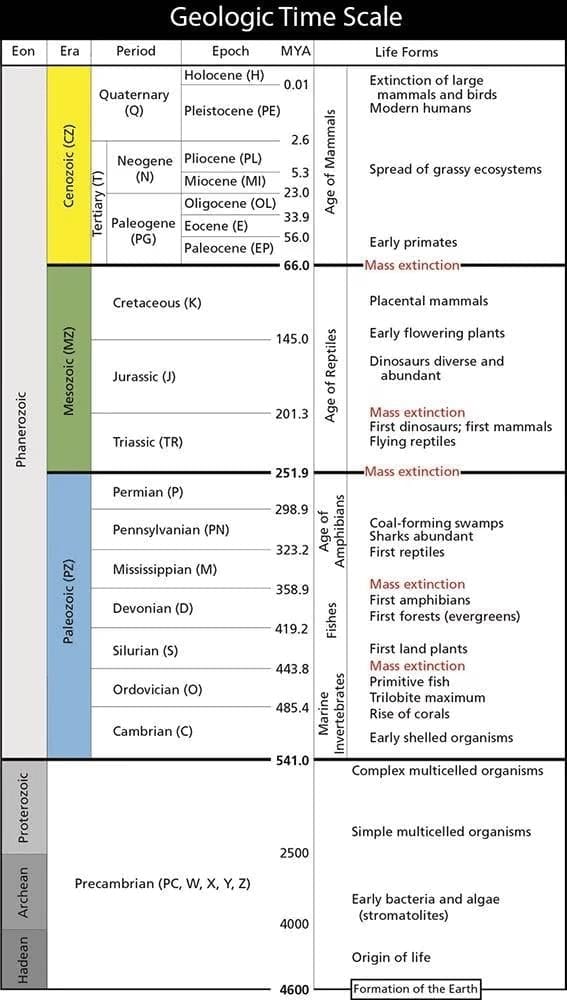
This discovery sheds light on the conditions of early Earth and the processes that shaped its geological history, enhancing our understanding of the planet's formation and the potential for life in its formative years.
8 Years of GST
 Why in News?
- As the Goods and Services Tax (GST) completes 8 years since its launch on 1st July 2017, experts recognize its achievements in enhancing tax integration and digitization. However, they also stress the need for simplification, rate rationalization, and a reduction in compliance burdens.
Key Takeaways
- Record Revenue Growth: GST revenues have shown continuous growth, reaching a gross collection of Rs 22.08 lakh crore in FY 2024-25.
- Digital Transformation: The system has evolved from manual filings to e-invoicing, enhancing compliance and efficiency.
- Expanded Taxpayer Base: Over 1.51 crore active GST registrations as of April 30, 2025, marking significant formalization of the economy.
- Ease of Doing Business: GST has removed inter-state tax barriers, improving logistics efficiency.
- Efficient Refund Processing: Automated IGST refunds have increased speed and liquidity for exporters.
Additional Details
- What is GST? The 101st Amendment Act of 2016 introduced a unified indirect tax system in India, replacing multiple central and state taxes with a value-added tax on goods and services.
- Main Features:
- Supply-Based Taxation: GST is levied on the supply of goods and services.
- Destination-Based System: Operates as a consumption tax, replacing the origin-based model.
- Multiple Tax Slabs: Five different rates (0%, 5%, 12%, 18%, and 28%) exist based on product classification.
- Dual Structure: Both the Centre (CGST) and States (SGST) levy tax on the same transaction.
- Key Challenges:
- Exclusion of items like petroleum and alcohol, leading to tax cascading and cash flow issues.
- Delay in GST Appellate Tribunal's functionality causing backlog of appeals.
- Complex rate structure resulting in disputes and litigation.
- Procedural challenges despite digital advancements.
In conclusion, while GST has significantly transformed India's tax landscape, challenges such as the exclusion of certain sectors, rate complexity, and dispute delays remain. Addressing these issues through phased inclusion, rationalization of rate slabs, and enhancing digital integration is vital to achieving a truly effective "One Nation, One Tax" system and supporting India's ambition of becoming a USD 5 trillion economy.
FAQs on Weekly Current Affairs (1st to 7th July 2025) - 1
| 1. What is the significance of the Digital India initiative? |  |
| 2. What role does the QUAD have in maritime security? | |
| 3. What is the importance of Hul Diwas in Indian history? | |
| 4. How do the terms 'Socialist' and 'Secular' in the Preamble of the Indian Constitution affect governance? | |
| 5. What is the Employment Linked Incentive Scheme and its objectives? | |




