Weekly Current Affairs (29th September 2025 to 5th October 2025)


GS3/Economy
The Indian Ports Act, 2025
Why in News?
The Indian Ports Act, 2025, was enacted in August 2025, replacing the outdated Indian Ports Act of 1908. This new legislation aims to create a modern legal and institutional framework for India's port sector, enhancing efficiency and competitiveness.
Key Takeaways
- The Act integrates port law, tariff regulation, safety, environmental standards, and Centre-State cooperation into a comprehensive legal framework.
- It aligns with broader maritime reforms alongside the Merchant Shipping Act, 2025 and Carriage of Goods by Sea Act, 2025.
- The Act positions India's port sector for global competitiveness through transparency, sustainability, and efficient regulation.
Additional Details
- Maritime State Development Council (MSDC): A statutory consultative body that coordinates between the Centre and States, advising on the national port strategy, tariff transparency, data standards, and connectivity planning.
- State Maritime Boards: Each coastal state is required to establish or recognize a board within 6 months to oversee non-major ports, including management of licensing, tariffs, development, safety, and environmental compliance.
- Tariff Setting: Major Ports have tariffs fixed by Port Authority Boards, while Non-Major Ports have tariffs set by State Maritime Boards or concessionaires, which must be electronically published for transparency.
- Dispute Resolution: States must establish Dispute Resolution Committees, with appeals directed to High Courts; arbitration and Alternative Dispute Resolution (ADR) are permitted.
- Environmental Norms: The Act mandates waste management, pollution control, disaster preparedness, ballast water restrictions, and penalties for violations.
- Applicability: The Act covers all existing and future ports, navigable channels, and vessels within port limits, with exceptions for those serving armed forces, Coast Guard, or customs.
In summary, the Indian Ports Act, 2025, represents a significant step toward modernizing India's port governance, enhancing efficiency, and ensuring compliance with global standards.
UPSC 2023 Question
With reference to India, consider the following pairs:
- Port : Well Known as
- 1. Kamarajar Port : First major port in India registered as a company
- 2. Mundra Port : Largest privately owned port in India
- 3. Visakhapatnam Port : Largest container port in India
How many of the above pairs are correctly matched?
- (a) Only one pair
- (b) Only two pairs*
- (c) All three pairs
- (d) None of the pairs
GS3/Economy
RBI Holds Rates, Focuses on Growth with Regulatory Easing
 Why in News?
The Reserve Bank of India (RBI) has kept the repo rate steady at 5.5% during its Monetary Policy Committee (MPC) meeting on October 1, 2025. This decision follows a reduction of 100 basis points earlier in the year. With retail inflation projected to average 2.6% for 2025-26, which is significantly below the 4% target, the RBI has the flexibility for future rate cuts but has opted to remain cautious. Instead of solely relying on interest rate adjustments, the RBI introduced 22 structural measures aimed at stimulating growth through regulatory easing and reforms. Economists interpreted this as a clear signal that the RBI is focused on long-term stability and resilience, extending growth support beyond mere interest rate changes.
Key Takeaways
- Repo rate held at 5.5% with a neutral stance, balancing inflation control and growth support.
- GDP growth forecast increased to 6.8% for FY 2025-26, driven by strong consumption and investments.
- Consumer inflation projected at 2.6%, creating room for future monetary easing.
- Global agencies reaffirm positive growth outlook amidst external uncertainties.
Additional Details
- Inflation Projections: CPI inflation forecast reduced to 2.6% for FY 2025-26, down from 3.1%, influenced by a decline in food prices and effective GST rationalization.
- Global Economic Context: Current account deficit narrowed to 0.2% of GDP in Q1 FY 2025-26, supported by robust services exports and significant remittances.
- Future Growth Drivers: Anticipated growth supported by strong domestic demand, structural reforms, and a buoyant services sector.
In summary, the RBI's recent policy decisions reflect a careful balancing act between supporting growth and maintaining financial stability. The central bank's approach indicates a proactive stance towards fostering long-term resilience in the economy while remaining vigilant about external risks.
GS2/Polity
Monument Conservation in India - Policy Shift
 Why in News?
The Indian government has initiated a significant change in its heritage conservation policy, allowing private entities to collaborate with the Archaeological Survey of India (ASI) in the conservation of monuments through the National Culture Fund.
Key Takeaways
- India is home to over 3,700 protected monuments, with ASI previously holding exclusive responsibility for their conservation.
- The new policy introduces private participation in monument conservation, aiming to enhance conservation capacity and efficiency.
- Private players can now directly finance and manage conservation projects, under the supervision of ASI.
Additional Details
- Public-Private Partnership Model: Private corporations and donors can finance conservation projects through the National Culture Fund (NCF) and enjoy 100% tax exemptions.
- Empanelled Conservation Architects: The Ministry of Culture will create a list of qualified architects, allowing donors to choose an architect for their project.
- Checks and Balances: ASI will maintain supervisory authority. Detailed Project Reports (DPRs) must be aligned with the National Policy for Conservation, 2014.
- Initial Pilot List: 250 monuments will be opened for private participation in the first phase of the policy implementation.
This landmark policy shift aims to accelerate conservation efforts and improve the management of India's rich cultural heritage. While there are concerns about potential commercialization, the involvement of private entities is expected to enhance the overall conservation landscape, enabling more efficient restoration and maintenance of historical sites.
GS3/Economy
World's Highest Bridge Opens to Traffic in China
 Why in News?
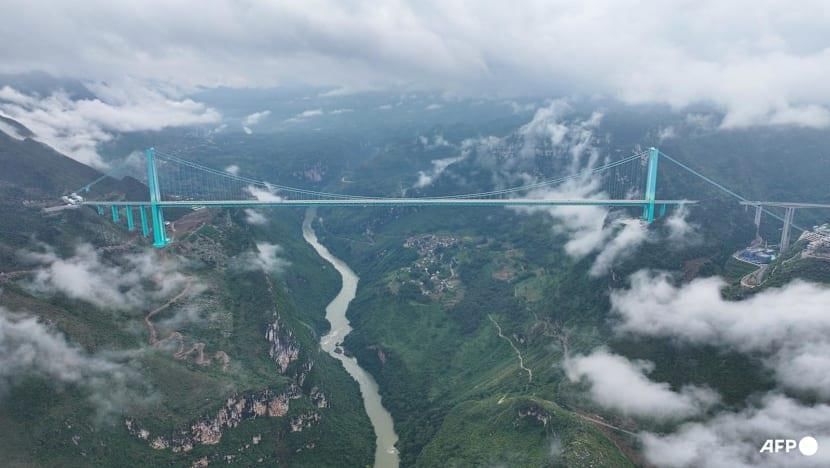
The Huajiang Grand Canyon Bridge, located in Guizhou province, China, has officially become the tallest bridge in the world, towering at 625 meters above the Beipan River. This monumental structure symbolizes significant advancements in engineering and infrastructure development in China.
Key Takeaways
- The bridge surpasses the previous record-holder, the Beipanjiang Bridge, which stands at 565 meters.
- It connects the Liuzhi Special District and the Anlong Special District, drastically reducing travel time from 2 hours to just 2 minutes.
- The bridge is part of the Guizhou S57 Expressway and the 190 km Shantian-Puxi Expressway, enhancing transport, economic growth, and tourism in the region.
- Guizhou has earned the title of the "bridge museum of the world," hosting nearly half of the world's 100 tallest bridges, showcasing China's expertise in high-altitude civil engineering.
Additional Details
- Height Record: The bridge boasts a deck-to-water clearance that exceeds most skyscrapers, marking a significant achievement in bridge construction.
- Span & Length: It has a total length of 2,890 meters, featuring a suspension span of 1,420 meters, which is the longest in any mountainous region worldwide.
- Construction Timeline: Work on the bridge commenced in January 2022 and was completed in just over three years, with the final truss installed in January 2025. The structure was load-tested with 96 trucks to ensure safety and stability.
The Huajiang Grand Canyon Bridge not only sets a new record but also enhances connectivity and economic prospects in the region, reflecting China's advancements in engineering and infrastructure.
GS2/Governance
Reclaim the District as a Democratic Commons
 Why in News?
The context of societal fragmentation and polarization is increasingly relevant as technological, ecological, and demographic changes reshape human life globally. In India, with a significant youth population, the challenge lies in integrating young people into economic and democratic frameworks, which is crucial for the country's growth and democratic vitality.
Key Takeaways
- India's growth is uneven, with urban areas accounting for a disproportionate share of GDP.
- There is a centralization in governance that undermines local political agency.
- Reimagining districts as democratic commons could enhance accountability and civic engagement.
- Shared responsibility among elites is essential for achieving inclusive growth.
Additional Details
- Unequal Geography of Growth: Despite aspirations for equitable growth, over 60% of GDP is generated by cities, which occupy only 3% of India's land. Most Indians reside in semi-urban or rural areas, leading to a dual crisis of underutilized talent and stagnated wages.
- Centralization and its Discontents: The heavily centralized governance model has led to diminished local political agency, where elected representatives act more as mediators of state services rather than leaders. This has resulted in political fatigue, particularly among the youth.
- Democratic Transformation: Shifting the perception of districts from administrative units to civic spaces can improve governance by making it more accountable and locally responsive. A district-first framework can illuminate disparities and foster civic engagement.
- Shared Responsibility: For this transformation to succeed, the top 10% of India's socio-economic leaders must actively participate in local governance. This approach bridges the gap between policy and lived experiences, fostering a shared national purpose.
In conclusion, India is at a pivotal moment where the potential of its youth can be harnessed effectively only if governance and opportunities are extended beyond urban centers. Reimagining districts as democratic commons is not only a necessary reform but also a moral imperative to rebuild trust and expand opportunities, thereby preventing the erosion of democratic foundations.
GS3/Defence & Security
BRO Project Swastik Marks 65 Years of Service
 Why in News?
The Border Roads Organisation (BRO) Project Swastik celebrated its 65th Raising Day on October 1, 2025, highlighting its long-standing commitment to infrastructure development in strategic regions.
Key Takeaways
- Established in 1960, originally named Project DRAGON and renamed on October 1, 1963.
- Part of the Ministry of Defence, focusing on constructing and maintaining strategic roads, bridges, and tunnels.
- Covers areas in North and East Sikkim and parts of North Bengal, characterized by challenging geographic and climatic conditions.
Additional Details
- Area of Responsibility: Project Swastik operates in regions prone to landslides and extreme weather, ensuring critical connectivity for the Armed Forces and local communities.
- Strategic Role: Plays a vital role in enhancing mobility for Armed Forces, disaster relief operations, and improving socio-economic conditions for remote areas.
- Major Accomplishments: Over 1,412 km of roads and 80 major bridges have been constructed since its inception, with significant achievements in the last decade including 350 km of new roads, 26 bridges, and 1 tunnel.
- Key Road Links: Important routes like the Gangtok-Chungthang and Gangtok-Nathula roads are crucial for both defense logistics and civilian movement.
- Disaster Response: Demonstrated effectiveness in restoring connectivity after major disasters, including the 2023 Sikkim flash floods.
In summary, BRO Project Swastik's 65 years of dedicated service underscores its significance in national security and community support through robust infrastructure development.
GS3/Science and Technology
Government Withdraws Approval of 11 Biostimulants Citing Religious and Dietary Concerns
 Why in News?
The Union Agriculture Ministry has revoked approval for 11 biostimulants derived from animal sources, such as chicken feathers, pig tissue, bovine hide, and cod scales. These products, which were previously cleared for use in crops like paddy, tomato, potato, cucumber, and chilli, were withdrawn following complaints regarding "religious and dietary restrictions."
Key Takeaways
- The withdrawal affects biostimulants intended for various crops.
- Concerns raised were primarily ethical, religious, and dietary.
- Regulatory changes are ongoing in the biostimulant sector in India.
Additional Details
- Biostimulants: These are natural or synthetic substances that enhance plant growth, nutrient uptake, and stress tolerance without acting as traditional fertilizers or pesticides.
- Biostimulants can be derived from various sources, including plant extracts, microorganisms, and animal by-products.
- Examples of Biostimulants:
- Seaweed extracts: Improve root growth, enhance flowering, and increase resistance to drought and salinity.
- Humic & fulvic acids: Boost nutrient absorption and soil fertility.
- Protein hydrolysates & amino acids: Promote early plant growth, increase yield, and improve fruit quality.
- Microbial inoculants (e.g., Azotobacter, Mycorrhizae): Aid in nitrogen fixation, phosphorus solubilization, and soil health.
- Chitosan (from crustacean shells): Enhances plant defense mechanisms against pests and diseases.
- Regulation of Biostimulants in India: These products are regulated under the Fertilizer Control Order (FCO), 1985, with formal inclusion through a 2021 amendment requiring manufacturers to provide detailed data on safety and efficacy.
- Market Overview: India's biostimulants market was valued at US$ 355.53 million in 2024 and is projected to reach US$ 1,135.96 million by 2032, with major producers including Coromandel International, Syngenta, and Godrej Agrovet.
The recent revocation of these approvals highlights the need for regulatory oversight in the biostimulant market, especially considering ethical, religious, and dietary implications. As the market evolves, it is crucial for stakeholders to align with regulations to ensure safety and efficacy in agricultural practices.
GS2/ International Relations
India-EFTA Free Trade Agreement
 Why is it News?
The Free Trade Agreement (FTA) between India and the European Free Trade Association (EFTA) bloc, consisting of Switzerland, Norway, Iceland, and Liechtenstein, has officially come into effect. This marks a significant development in enhancing trade and investment relations between India and the EFTA countries. The FTA underscores India's increasing involvement in global value chains and its strategy to broaden market access while attracting foreign investments.
What is the India-EFTA FTA?
Background: The India-EFTA FTA, also known as the Trade and Economic Partnership Agreement (TEPA), was finalized in March 2024 and came into effect on October 1, 2025. This agreement aims to strengthen India's trade ties with the EFTA bloc and complements India's recent FTAs with countries like the UAE, Australia, and the UK.
Objectives of the Agreement:Enhanced Market Access: The EFTA countries have granted 100% market access for India's industrial and non-agricultural products. Additionally, tariff concessions have been provided on processed agricultural products. Investment and Job Creation: EFTA nations have committed to a binding investment of USD 100 billion over 15 years, which is expected to generate 1 million direct jobs in India. Trade Facilitation Mechanism:. dedicated EFTA Desk has been established to facilitate investment and trade, providing support to EFTA businesses looking to invest, expand, and operate in India.
Understanding Free Trade Agreements
Free Trade Agreements (FTAs) are agreements between two or more countries aimed at reducing or eliminating barriers to trade, such as tariffs and quotas, on goods and services. India has FTAs with various countries and groups, including Japan, Australia, the UAE, Mauritius, the European Free Trade Association (EFTA), Singapore, and Sri Lanka. Negotiations for an India-EU FTA are also in advanced stages.
Benefits of FTAs for India
- Market Access: FTAs help expand India's exports by reducing tariffs and non-tariff barriers. For example, the India-UAE Comprehensive Economic Partnership Agreement (CEPA) provided duty-free access to 90% of exports, leading to a 12% increase in exports in the first year.
- Investment Boost: FTAs attract stable foreign direct investment (FDI). The India-Australia Economic Cooperation and Trade Agreement (ECTA) resulted in a 25% surge in FDI inflows.
- Agricultural Gains: FTAs open new export markets for Indian farmers. The India-Mauritius Comprehensive Economic Cooperation and Partnership Agreement (CECPA) increased agricultural exports such as sugar and tea.
- Technology Transfer: FTAs facilitate access to advanced technologies. The India-Australia ECTA in the renewable energy sector is aiding India's energy transition.
- Support for Small and Medium Enterprises (SMEs): FTAs help integrate SMEs into global value chains. The India-Singapore Comprehensive Economic Cooperation Agreement (CECA) is benefiting SMEs in information technology and engineering sectors.
- Regulatory Alignment: FTAs promote the harmonization of standards, reducing compliance costs for businesses. The India-EFTA TEPA aligns product certifications, making it easier for Indian products to enter EFTA markets.
Concerns with India's FTAs
- Trade Deficits: There is a concern about rising trade deficits where imports increase significantly compared to exports. For instance, the India-ASEAN FTA has led to a substantial rise in imports, reaching $44 billion in FY23.
- Limited Access to Developed Markets: Non-tariff barriers can restrict access to developed markets. The delay in finalizing a trade agreement with the EU is partly due to issues related to intellectual property rights and data protection.
- Impact on Small Farmers and MSMEs: There is a risk that small farmers and micro, small, and medium enterprises (MSMEs) may face intense competition from cheaper imports. For example, rubber farmers in India have been affected by the ASEAN FTA.
- Labor and Environmental Clauses: Binding clauses in FTAs, such as the EU's Carbon Border Adjustment Mechanism, could negatively impact Indian exports by imposing stricter standards.
- Weak Dispute Resolution Mechanisms: The dispute resolution processes in some FTAs are perceived as slow and unbalanced. Issues in the India-ASEAN FTA regarding palm oil and machinery tariffs are examples where dispute resolution has been problematic.
Measures India Can Adopt to Strengthen Its Position in Global Trade
- Enhance Export Competitiveness: Focus on improving the quality, branding, and technological advancements in manufacturing and agriculture to make Indian products more competitive globally.
- Diversify Trade Partnerships: Expand FTAs to include emerging markets in regions such as Africa, Latin America, and the Asia-Pacific to reduce dependence on a limited number of trade partners.
- Support for MSMEs and Startups: Simplify and improve access to credit, logistics, and e-commerce platforms for small and medium enterprises and startups that are oriented towards exports. This can help them scale and compete effectively in international markets.
- Infrastructure Development: Invest in expanding and upgrading infrastructure such as ports, logistics hubs, freight corridors, and cold chain facilities. This can help reduce transaction costs and improve the efficiency of moving goods.
- Enhance Compliance and Standards: Provide capacity-building support for exporters to help them meet international standards related to quality, labor, and environmental norms. This can facilitate smoother entry into foreign markets.
- Leverage Digital Trade Platforms: Promote the use of digital platforms for trade, such as virtual trade shows, e-marketplaces, and online utilization of FTAs, to reach a wider audience and simplify trade processes.
Conclusion
The India-EFTA Free Trade Agreement represents a crucial advancement in enhancing India's global trade relationships. It aims to boost exports, attract foreign investments, and promote economic integration. However, it also necessitates careful management of domestic industry challenges and a strategic approach to diversifying trade.
GS2/ Governance
Empowering Women in Agriculture
 Why in News?
As per the Periodic Labour Force Survey (PLFS) 2023-24, women's participation in agriculture has increased significantly, however, nearly half of them continue to remain unpaid, reflecting deep-rooted gender disparities in farm employment.
What is the Status of Women in Agriculture Across India?
- Feminisation of Agriculture: Women now make up over 42% of India's agricultural workforce, a 135% increase in the past decade. Two out of three rural women work in agriculture.
- Prevalence of Unpaid Work: Nearly half of women in agriculture are unpaid family workers, rising from 23.6 million to 59.1 million over eight years (2017-18 to 2024-25).
- Regional Concentration: In states like Bihar and Uttar Pradesh, more than 80% of women workers are in agriculture, however, over half remain unpaid.
- Government Support: Mahila Kisan Sashaktikaran Pariyojana, Kisan Credit Cards, and Self-Help Groups collectively empower women farmers through skill development, access to formal credit, sustainable agriculture, and strengthened collective bargaining.
What Factors are Leading to Feminisation of Agriculture in India?
- Male Out-Migration: Men are leaving rural areas for better job opportunities in cities or more lucrative rural jobs, such as construction, services, transport, and government work. This shift is compelling women to take over family farms and agricultural responsibilities.
- Growth of Contract Farming: Sectors like floriculture, horticulture, and tea/coffee plantations are increasingly relying on women for labor-intensive tasks. Women are perceived as reliable, skilled, and willing to accept lower wages, making them preferred laborers in these sectors.
- Patriarchal Norms: Societal expectations dictate that women should handle both household and light farm work. Women's agricultural labor is often viewed as an extension of their domestic duties, reinforcing the idea that they are assisting men rather than being primary workers.
- Limited Alternative Opportunities: Women face barriers such as low literacy levels, restricted mobility, and social norms that limit their access to non-farm employment. As a result, agriculture becomes one of the few viable and socially acceptable livelihoods for them in rural areas.
What are the Systemic Barriers Limiting Women's Progress in Agriculture?
Mnemonic: WOMEN
- W - Wage Discrimination: Women in India earn 20-30% less than men, highlighting gender wage gaps and economic inequality, which limit economic empowerment.
- O - Omission from Decision-Making: Agricultural extension officers are predominantly male, excluding women from knowledge on seeds, pesticides, and sustainable practices, while their opinions are often overlooked in Gram Panchayats and farmer cooperatives.
- M - Machinery and Tool Mismatch: Farm machinery such as tractors, harvesters, and threshers is designed for male physiques, while women often lack the strength, training, or financial means to operate or access it.
- E - Entrenched Domestic Double Burden: Restricted mobility and time poverty from domestic chores, and childcare limit women's access to markets, skill development, and community participation.
- N - Negation of Land and Identity Rights: Women own only 13-14% of land holdings, and without land titles, they are seen as cultivators rather than farmers, limiting access to credit, government schemes, and independent decision-making.
What Measures can Effectively Ensure the Empowerment of Women Farmers in India?
Mnemonic: GROW
- G - Guarantee Market Access: Free Trade Agreement (FTAs) like the one with the UK, expected to raise agricultural exports by 20%, should focus on women-intensive sectors such as tea, spices, and dairy, and support women in exporting premium products like organic foods and GI-tagged goods, using their traditional knowledge.
- R - Resource Rights and Reforms: Promote joint or individual land ownership for women to enhance access to credit, insurance, and government support, and systematically scale proven women-led Farmer Producer Organizations (FPOs) and SHGs to achieve economies of scale.
- O - Open Digital Gateways: Scale up digital platforms like e-NAM, promote voice-first AI like BHASHINI, Jugalbandi, and Digital Sakhi for digital and financial literacy.
- W - Well-being and Social Support: Provide creche facilities near farms, water supply, and clean energy to reduce women's time poverty, while using media campaigns and awards to brand women farmers as role models.
Conclusion
To harness the potential of feminising agriculture, India must transition from recognizing women's labor to empowering them as economic agents. This requires dismantling systemic barriers like land rights denial and wage gaps while actively promoting their access to technology, markets, and decision-making roles for inclusive growth.
GS3/Science and Technology
Siphon-Based Thermal Desalination System
Why in News?
Researchers at the Indian Institute of Science (IISc) have developed an innovative siphon-based thermal desalination system. This new system effectively addresses siltation issues, providing a low-cost and scalable solution to freshwater scarcity.
Key Takeaways
- Developed to enhance the efficiency of conventional solar stills.
- Designed as a sustainable freshwater source for off-grid and water-stressed regions.
Additional Details
- Principle: The system operates on siphonage, utilizing a fabric wick that draws salty water while gravity ensures a continuous flow.
- Innovation: A grooved metallic surface effectively flushes away salt deposits before crystallization, thereby preventing clogging.
- Process: Salty water is evaporated as a thin film on a heated surface and subsequently condenses just 2 mm away on a cooler surface, achieving high efficiency.
- High Efficiency: Produces over 6 liters of freshwater per square meter per hour under sunlight - significantly outperforming traditional solar stills.
- Multistage Design: Incorporates stacked evaporator-condenser pairs to recycle heat, enhancing overall output.
- Salt Resistance: Capable of handling up to 20% salinity without clogging, making it suitable for brine treatment.
- Affordable Materials: Constructed from aluminum and fabric, which helps in keeping production costs low.
- Energy Flexibility: Can operate on solar power or waste heat, making it adaptable to various environments.
- Scalable Applications: Ideal for use in villages, disaster zones, and island communities.
- Sustainability: Provides a clean and low-maintenance approach to desalination without dependence on complex machinery.
This siphon-based thermal desalination system represents a significant advancement in water purification technology, promising to deliver sustainable solutions for regions facing freshwater shortages.
UPSC 2008
Where was the first desalination plant in India to produce one lakh liters of freshwater per day based on low-temperature thermal desalination principle commissioned?
- (a) Kavaratti
- (b) Port Blair
- (c) Mangalore
- (d) Valsad
GS2/Polity
Delhi Relaxes Loudspeaker Rules for Festivals
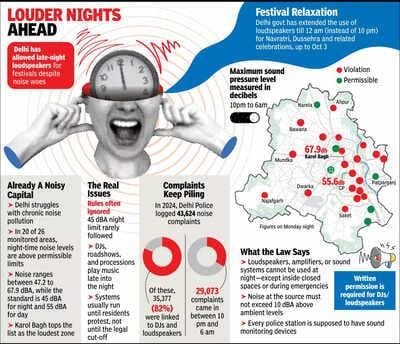 Why in News?
Delhi Chief Minister Rekha Gupta announced that during cultural events such as Ramlila and Durga Puja, the use of loudspeakers will be permitted until midnight, extending the usual 10 PM limit by two hours. This decision is in accordance with legal provisions that allow state governments to relax loudspeaker restrictions during festivals and cultural occasions, while still adhering to India's Noise Pollution (Regulation and Control) Rules, 2000.
Key Takeaways
- Loudspeakers can now be used until midnight during specific festivals.
- Rules require written permission for loudspeaker use, particularly in residential areas.
- Legal provisions allow exemptions for up to 15 days a year for cultural or religious events.
Additional Details
- Legal Framework: The Environment (Protection) Act, 1986 regulates the use of loudspeakers. Rule 5(1) mandates written permission from authorities, while Rule 5(2) prohibits their use between 10 PM and 6 AM, except in closed premises.
- Noise Levels:The rules categorize noise levels based on area types:
- Residential areas: 55 dB (daytime) and 45 dB (nighttime).
- For context, a whisper measures about 30 dB, while normal conversation is around 60 dB.
- Delhi's extension of the loudspeaker deadline for festivals is justified under Rule 5(3), allowing such use till midnight for up to 15 days yearly.
Over the past two decades, Indian courts have developed significant jurisprudence on noise pollution, balancing the right to religious freedom with the right to a peaceful environment. The Supreme Court ruled that the use of loudspeakers is not a fundamental right under Article 25, emphasizing that religious practices should not disturb others. Recent high court rulings have upheld this principle, with various courts enforcing strict regulations on loudspeaker use.
Environmental experts have raised concerns over Delhi's decision, arguing it undermines established noise pollution rules aimed at protecting public health. Activists note that excessive noise from various sources already affects residents, as evidenced by over 40,000 noise complaints related to loudspeakers received by the Delhi Police in 2024.
GS3/Environment
Geoengineering Proposals for Polar Regions Found Flawed
Why in News?
A recent study conducted by the University of Exeter has identified significant flaws in five major geoengineering methods proposed for the polar regions. These methods have been deemed ineffective and potentially risky, failing to meet the necessary criteria for responsible climate intervention.
Key Takeaways
- Five geoengineering methods were found ineffective for polar climate interventions.
- Each method poses significant risks and challenges for environmental safety and efficacy.
Geoengineering in Polar Regions: Study Findings
- Stratospheric Aerosol Injection (SAI):This method involves releasing aerosols such as sulphur particles into the stratosphere to reflect sunlight.
- Intended to reduce surface temperatures by blocking solar radiation.
- Found ineffective during polar winters and limited in summers due to high ice reflectivity.
- Risk of "termination shock" leading to rapid global warming if abruptly halted.
- Potential disruptions to global weather patterns, which could threaten food and water security.
- Estimated cost of $55 million per year per country if shared among 30 nations.
- Sea Curtains / Sea Walls:These are massive floating barriers aimed at blocking warm currents from reaching ice sheets.
- Designed to slow glacier melting by insulating them from warm water.
- Technically challenging in remote areas such as Antarctica's Amundsen Sea.
- Costs could exceed $1 billion per kilometer; installation only feasible for a few months each year due to harsh conditions.
- Risks include disruption of marine circulation and potential leaching of toxic materials into the ocean.
- Sea Ice Management (Microbeads):Involves spreading glass microbeads over sea ice to enhance reflectivity and increase ice thickness.
- Aims to preserve summer ice and slow down warming.
- Requires an unsustainable 360 million tonnes of beads annually, comparable to global plastic production.
- Logistical challenges and significant emissions associated with production and deployment.
- Beads dissolve quickly, diminishing effectiveness, and could potentially contribute to warming.
- Estimated cost of $500 billion per year for Arctic deployment, necessitating extensive infrastructure.
- Basal Water Removal:This method involves pumping subglacial meltwater from beneath Antarctic glaciers to reduce glacier sliding.
- Intended to slow sea-level rise by decreasing glacier movement.
- Critiqued for flawed logic as subglacial water is replenished by geothermal heating.
- Highly emissions-intensive and demanding in terms of energy and infrastructure.
- Long-term sustainability of this method is questionable.
- Ocean Fertilisation:Adding nutrients such as iron to stimulate phytoplankton growth for enhanced carbon absorption.
- Goal is to sequester more carbon in the oceans.
- Lacks control over phytoplankton species, potentially disrupting food chains.
- Could harm marine biodiversity and alter nutrient cycles globally.
- Requires impractical large-scale deployment; risks outweigh uncertain benefits.
In summary, while geoengineering methods present potential solutions to climate change, the findings indicate that their implementation in polar regions may lead to more harm than good. Responsible consideration and further research are crucial before any strategies are adopted.
UPSC 2020
Consider the following activities:
- Spreading finely ground basalt rock extensively on farmlands
- Increasing the alkalinity of oceans by adding lime
- Capturing carbon dioxide released by various industries and pumping it into abandoned subterranean mines in the form of carbonated waters
How many of the above activities are often considered and discussed for carbon capture and sequestration?
- Options: (a) Only one (b) Only two (c) All three* (d) None
GS3/Science and Technology
Laser Interferometer Lunar Antenna (LILA) Project
 Why in News?
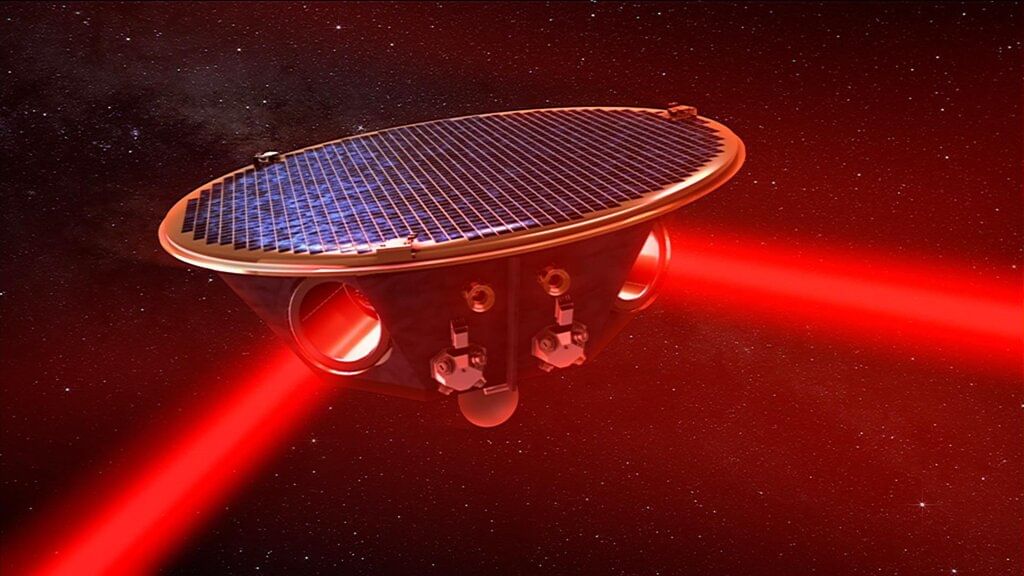
Scientists are initiating the Laser Interferometer Lunar Antenna (LILA) Project on the Moon. This project aims to overcome the limitations of seismic noise, atmospheric interference, and frequency constraints faced by Earth-based gravitational wave detectors like the Laser Interferometer Gravitational-wave Observatory (LIGO).
Key Takeaways
- The LILA project will utilize the Moon's unique environment for enhanced gravitational wave detection.
- Gravitational waves are ripples in spacetime generated by massive celestial events.
- Existing Earth-based detectors face challenges from seismic and atmospheric noise.
Additional Details
- What are Gravitational Waves: Gravitational waves are disturbances in the spacetime continuum formed when massive objects, like black holes or neutron stars, collide. They travel at the speed of light and can subtly stretch and compress spacetime.
- First Detection: The first gravitational waves were detected by LIGO in 2015, originating from two colliding black holes located 1.3 billion light-years away, confirming the existence of these waves.
- Challenges on Earth: Ground observatories such as LIGO (USA), Virgo (Italy), KAGRA (Japan), and GEO600 (Germany) use laser interferometry to detect minute changes in light due to gravitational waves, but they are hindered by seismic noise, atmospheric conditions, and human activity.
- Future Missions: Upcoming missions like LISA (Laser Interferometer Space Antenna) in the 2030s and SKA (Square Kilometre Array) aim to explore different frequency ranges of gravitational waves.
- LILA's Focus: The LILA project will specifically target sub-hertz gravitational waves, crucial for understanding intermediate-mass black holes and the early universe.
The LILA project signifies a monumental step toward exploring the universe's gravitational wave spectrum, allowing for a comprehensive understanding of cosmic events. By utilizing the Moon's advantageous conditions, scientists aim to advance our knowledge of the universe's formation and the properties of gravitational waves.
GS2/Polity
Commission for Air Quality Management in National Capital Region and Adjoining Areas (CAQM)
Why in News?
The Commission for Air Quality Management in the National Capital Region and Adjoining Areas (CAQM) has intensified its efforts to address stubble burning, a significant factor contributing to winter air pollution in the Capital, particularly as the paddy harvest season begins in northern India.
Key Takeaways
- The CAQM is a statutory body established under the Commission for Air Quality Management in National Capital Region (NCR) and Adjoining Areas, Act 2021.
- It is responsible for the prevention and control of air pollution in Delhi-NCR and surrounding areas.
- The Commission coordinates with the governments of Delhi and adjacent states to monitor air quality.
Additional Details
- Mandate: The Commission focuses on better coordination, research, and addressing issues related to the air quality index, including actions to prevent and control air pollution.
- Powers:
- Restricting activities that adversely affect air quality.
- Conducting research and investigations on environmental pollution.
- Issuing binding directions for inspections and regulations to ensure compliance.
- The Commission is accountable to the Parliament and its directives must be adhered to by all concerned parties.
- Composition:
- Chairperson: A government official of the rank of Secretary or Chief Secretary, serving a term of three years or until the age of 70.
- Five ex-officio members from state governments dealing with environment protection.
- Three full-time technical members and three representatives from non-governmental organizations.
- Technical members from the Central Pollution Control Board (CPCB), Indian Space Research Organisation (ISRO), and NITI Aayog.
The CAQM plays a crucial role in addressing air quality issues in the National Capital Region, particularly through its proactive measures during critical periods like the paddy harvest season.
GS3/Economy
India Needs Double Growth to Escape Jobs Trap
 Why in News?
Recently, Morgan Stanley, a prominent global financial services firm, highlighted the urgent need for India to nearly double its growth rate to effectively address rising employment demands and combat underemployment. The analysis indicates that a stable unemployment rate requires an average GDP growth of 7.4%, assuming consistent labor participation. If labor participation increases to 63%, a growth rate of 9.3% is necessary. To significantly alleviate unemployment, growth must reach 12.2%. Currently, India's GDP growth averages 6.1% over the past decade, with the Reserve Bank of India (RBI) projecting a growth rate of 6.5% for the current fiscal year, although recent data indicates a stronger growth of 7.8% for the April-June 2025 quarter.
Key Takeaways
- India's youth unemployment rate is alarmingly high despite being the fastest-growing major economy.
- The all-India unemployment rate stands at 5.1%, but youth unemployment for ages 15-29 is significantly higher at 14.6%.
- Female youth unemployment in urban areas has reached 25.7%, surpassing that of young urban males.
- Demographic pressures with a median age of 28.4 years contribute to a mismatch between youth population and job creation.
- India's workforce is expected to grow by 8.4 crore over the next decade, increasing the urgency for job creation.
Additional Details
- Weak Employment Creation: Recent years have seen subdued job creation, with modest improvements noted. Despite GDP growth averaging 6.5% over the next decade, it may not suffice to create the necessary jobs.
- Unemployment and Underemployment Crisis: India faces a dual challenge of high unemployment and widespread underemployment, with youth unemployment reaching 17.6%, the highest in South Asia. The rise in farm employment indicates a return to agriculture, often reflecting underemployment where skills are underutilized.
- Poverty and Economic Urgency: Approximately 603 million Indians live below the $3.65 per day income threshold, emphasizing the critical need for job creation and economic transformation to prevent social unrest.
- Regional Context: Youth unemployment is not unique to India; it is a widespread issue across Asia, with a youth unemployment rate of 16%, significantly higher than the 10.5% in the US.
- Future Challenges: The potential adoption of artificial intelligence (AI) may further displace jobs unless proactive reforms are implemented to enhance investment and reskilling.
- Industrial and Export Growth: India's share in global exports is only 1.8%, indicating substantial untapped potential for job creation. Urgent reforms in industrial and export sectors are essential for economic growth.
In summary, while India is on a path of significant economic growth, it is crucial to implement robust measures to enhance job creation, particularly for the youth. Without these changes, the country risks deepening its unemployment and underemployment crisis, which could have far-reaching social implications.
GS3/Science and Technology
India Secures Second Deep-Sea Mineral Exploration Contract in Indian Ocean
 Why in News?
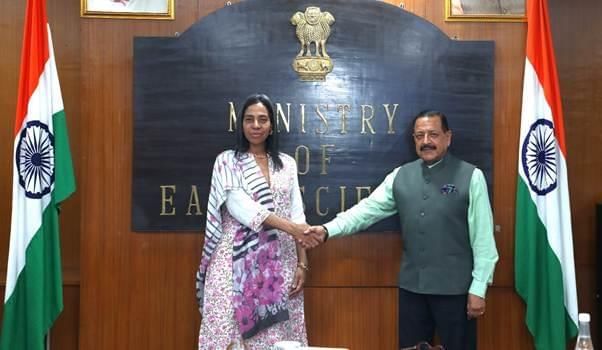
India has recently signed a contract with the International Seabed Authority (ISA) that grants it exclusive rights to explore Polymetallic Sulphides (PMS) in the Carlsberg Ridge of the Indian Ocean. With this agreement, India becomes the first nation globally to hold two contracts from the ISA, thereby commanding the largest seabed area allocated for PMS exploration.
Key Takeaways
- India's National Centre for Polar and Ocean Research (NCPOR) will initiate exploration in 2026 through various surveys.
- The contract covers a sizable area of 10,000 sq km in the Carlsberg Ridge.
- This new contract builds upon India's prior exploration contract from 2016 for the Central and Southwest Indian Ridges.
Additional Details
- Polymetallic Sulphides (PMS): These are rich deposits found on the ocean floor that contain valuable metals such as copper, zinc, lead, gold, silver, and trace amounts of rare elements. They form near hydrothermal vents when seawater interacts with magma and solidifies as mineral-rich hot water.
- Importance of PMS Exploration: For India, exploring PMS is crucial due to limited land-based mineral reserves, thus enhancing resource security for strategic industries and renewable energy applications.
- Exploration Plan: NCPOR follows a three-phase plan that includes reconnaissance surveys, near-seabed surveys, and resource evaluation.
- Geographical Significance: The Carlsberg Ridge is a mid-ocean ridge formed approximately 40 million years ago and is strategically located closer to India than other explored areas, enhancing its relevance for resource security.
- Complexity of PMS Exploration: Exploring PMS deposits is technically demanding due to their location at depths of 2,000-5,000 metres and requires advanced technology and a multidisciplinary approach.
- ISA's Role: The ISA, established under the UNCLOS framework, oversees mineral exploration in international waters, allowing nations to apply for exploration rights.
India continues to pursue additional exploration opportunities under its Blue Economy initiatives, further aiming to secure vital minerals essential for technology and renewable energy, thereby enhancing its long-term resource security.
GS3/Environment
Climate Models and Their Accuracy
Why in News?
The US President Donald Trump referred to climate change as the "greatest con job ever," expressing skepticism about the predictions derived from climate models that are central to climate science.
Key Takeaways
- Climate models are essential for predicting future climate conditions.
- These models differ from weather models by focusing on long-term climate patterns.
Additional Details
- What are Climate Models: Climate models are computer simulations that utilize mathematical equations to mimic the Earth's climate system, which includes the atmosphere, oceans, land surfaces, and ice.
- Purpose: Their primary aim is to forecast changes in temperature, rainfall, humidity, sea-level rise, and extreme weather events under various scenarios, particularly those involving high greenhouse gas emissions.
- Difference from Weather Models: Unlike weather models that predict short-term local events, climate models analyze long-term regional and global climate patterns.
How do Climate Models Work?
- Grid System: The Earth is divided into a 3D grid of cells across land, atmosphere, and oceans.
- Equations: Each grid cell is governed by equations that describe energy movement, air, ice, and land processes.
- Data Input: Observational data, such as greenhouse gas concentrations and ocean conditions, are fed into these models.
- Interactions: The equations simulate changes within each cell and their impacts on neighboring cells.
- Outputs: The models provide projections for temperature, precipitation, sea levels, ice cover, and extreme climate events.
Evolution of Climate Models
How Accurate are Climate Models?
- Modern climate models predict key factors like sea-level rise and temperature changes with high accuracy.
- Validation of these models is done by comparing predictions against historical climate records.
- However, there are limitations due to a lack of precise data on clouds and volcanic activity, as well as challenges in predicting urban flooding and extreme weather in the Global South.
- Grid resolution (100-250 km per cell) may oversimplify land-atmosphere interactions.
Implications of Wet-Bulb Temperature Report
The World Bank has warned that India could become one of the first regions where wet-bulb temperatures regularly exceed 35°C. Which of the following statements best reflect the implications of this report?
I. Peninsular India will most likely suffer from flooding, tropical cyclones, and droughts.
II. The survival of animals, including humans, will be affected as shedding body heat through perspiration becomes difficult.
Select the correct answer using the code given below:
- (a) I only
- (b) II only
- (c) Both I and II
- (d) Neither I nor II
In conclusion, climate models play a critical role in understanding and predicting the impacts of climate change. Their continuous evolution and refinement are essential for effective climate action and policy-making.
GS2/International Relations
Kokrajhar-Gelephu and Banarhat-Samtse Railway Lines to Bhutan
Why in News?
India and Bhutan have inaugurated their first-ever railway links, connecting Kokrajhar-Gelephu (69 km, Assam-Bhutan) and Banarhat-Samtse (20 km, West Bengal-Bhutan). This initiative marks a significant milestone in enhancing connectivity between the two nations.
Key Takeaways
- Agreements for the railway links were signed during Prime Minister Modi's visit to Bhutan in March 2024 and were formalized in 2025.
- The Kokrajhar-Gelephu line includes 6 stations and is designed to accommodate Vande Bharat trains, with an expected completion time of 4 years.
- The Banarhat-Samtse line features 2 stations and various infrastructures such as bridges and underpasses, with a completion timeline of 3 years.
- Both railway lines will be fully electrified, providing Bhutan direct access to India's extensive railway network.
Additional Details
- Bilateral Relations: This project strengthens ties with Bhutan, which is India's closest neighbor and the largest recipient of Indian development assistance.
- Strategic Security: The railway lines enhance regional security and serve as a counterbalance to China's growing influence in South Asia.
- Economic Integration: Supports Bhutan's trade (with 80% of it being with India), boosts hydropower exports, and aids in industrial development.
- Tourism & Culture: Facilitates improved people-to-people exchanges, particularly linking Gelephu's Mindfulness City to Samtse's industrial hub.
- Act East Policy: This initiative advances India's policy through cross-border infrastructure in the eastern and northeastern regions.
- Rail Diplomacy: Positions Indian Railways as a strategic enabler of connectivity and diplomacy in the region.
The introduction of these railway lines not only enhances transportation and trade but also symbolizes the deepening of India-Bhutan relations, paving the way for future collaborative ventures.
UPSC 2023 - With reference to India's projects on connectivity, consider the following statements:
- 1. East-West Corridor under Golden Quadrilateral Project connects Dibrugarh and Surat.
- 2. Trilateral Highway connects Moreh in Manipur and Chiang Mai in Thailand via Myanmar.
- 3. Bangladesh-China-India-Myanmar Economic Corridor connects Varanasi in Uttar Pradesh with Kunming in China.
How many of the above statements are correct?
- Options: (a) Only one (b) Only two (c) All three (d) None*
GS2/International Relations
India-EFTA Free Trade Agreement
Why in News?
- India's Free Trade Agreement (FTA) with the EFTA bloc, consisting of Switzerland, Norway, Iceland, and Liechtenstein, has officially come into effect. This marks a significant advancement in strengthening trade and investment relations between India and the EFTA countries.
- The agreement highlights India's increasing involvement in global value chains and its strategy to broaden market access while attracting foreign investment.
What is India-EFTA FTA?
About: The India-EFTA FTA (Trade and Economic Partnership Agreement (TEPA) was finalized in March 2024, and came into effect on 1st October 2025.
It strengthens India's global trade ties, complementing recent FTAs with UAE, Australia, and the UK.
Objectives:
- Enhanced Market Access: EFTA has provided 100% market access for India's industrial and non-agricultural products, along with tariff concessions on processed agricultural products.
- Investment & Jobs: EFTA nations are committed to a binding investment of USD 100 billion over 15 years, expected to generate 1 million direct jobs in India.
- Dedicated Institutional Mechanism for Trade Facilitation: An EFTA Desk, operational since February 2025, serves as a single-window investment facilitation mechanism, assisting EFTA businesses in investing, expanding, and operating in India.
What are Free Trade Agreements?
- About: FTAs are agreements between two or more countries aimed at reducing or eliminating trade barriers, such as tariffs and quotas, on goods and services.
- India has FTAs with countries and groups like Japan, Australia, the UAE, Mauritius, the European Free Trade Association (EFTA), Singapore, and Sri Lanka.
- The India-EU FTA is currently in advanced negotiations.
India's Gains from Free Trade Agreements
- Market Access: Expanding exports by reducing tariffs or non-tariff barriers, such as the India-UAE CEPA which provided duty-free access to 90% of exports and resulted in a 12% increase in exports in the first year of implementation.
- Investment Boost: Attracting stable Foreign Direct Investment (FDI), exemplified by the India-Australia ECTA which led to a 25% surge in FDI inflows.
- Agriculture Gains: Creating new export markets for farmers, as seen in the India-Mauritius CECPA which increased agricultural exports like sugar and tea.
- Technology Transfer: Gaining access to advanced technology, such as the India-Australia ECTA in renewable energy which supports the energy transition.
- SME Support: Facilitating wider integration into global value chains for small and medium-sized enterprises (SMEs), like the benefits seen by SMEs in IT and engineering under the India-Singapore CECA.
- Regulatory Alignment: Harmonizing standards and reducing compliance costs, as demonstrated by the India-EFTA TEPA which aligns product certifications.
Concerns with India's FTAs:
- Trade Deficits: The issue of rising imports compared to stagnant exports, highlighted by the India-ASEAN FTA which significantly increased imports to $44 billion in FY23.
- Limited Developed Market Access: Non-tariff barriers that restrict entry into developed markets, such as the delay in the trade agreement with the EU due to intellectual property rights and data issues.
- Small Farmers & MSMEs at Risk: The impact of competition from cheap imports on vulnerable sectors, exemplified by rubber farmers affected under the ASEAN FTA.
- Labor & Environmental Clauses: The potential negative impact of binding conditions, like the EU's Carbon Border Adjustment Mechanism, on Indian exports.
- Weak Dispute Resolution: The effectiveness of dispute resolution mechanisms, with examples such as the India-ASEAN disputes regarding palm oil and machinery tariffs.
What Measures can India Adopt to Strengthen its Position in Global Trade?
- Strengthen Export Competitiveness: Emphasizing quality, branding, and technological advancements in manufacturing and agriculture to enhance export capabilities.
- Diversify Trade Partners: Expanding Free Trade Agreements (FTAs) to encompass emerging markets in regions like Africa, Latin America, and the Asia-Pacific to reduce dependency on a few markets.
- Support MSMEs and Startups: Simplifying access to essential resources such as credit, logistics, and e-commerce platforms for small and medium-sized enterprises (MSMEs) and startups focused on export-oriented activities.
- Improve Infrastructure: Upgrading and expanding infrastructure facilities including ports, logistics hubs, freight corridors, and cold chain facilities to lower transaction costs and enhance efficiency.
- Enhance Compliance and Standards: Facilitating capacity-building initiatives for exporters to meet international standards related to quality, labor, and environmental norms to boost their competitiveness.
- Leverage Digital Trade Platforms: Promoting the use of digital platforms for trade such as virtual trade shows, e-marketplaces, and online utilization of FTAs to reach a broader audience and streamline processes.
Conclusion
- The India-EFTA FTA represents a crucial advancement in enhancing India's global trade relationships, aimed at increasing exports, attracting investments, and fostering economic integration.
- However, it also necessitates careful management of domestic industry challenges and strategic diversification of trade to maximize benefits and mitigate potential risks.
GS3/Environment
What an Empty Plate of Food Should Symbolise
Why in News?
Every year on September 29, the world observes the International Day of Awareness of Food Loss and Waste (IDAFLW). This day highlights a critical issue that significantly impacts global food security and climate stability, as nearly one-third of all food produced worldwide is either lost or wasted. This waste not only deprives people of nourishment but also represents a significant drain on natural resources. In India, a major food producer, post-harvest losses pose substantial economic, social, and environmental challenges.
Key Takeaways
- India faces high post-harvest food losses, estimated at ₹1.5 trillion annually.
- Food loss contributes significantly to greenhouse gas emissions, with over 33 million tonnes of CO₂-equivalent emissions each year.
- Improving infrastructure and adopting innovative technologies are crucial for reducing food waste.
Additional Details
- Food Loss in India: India's agricultural sector suffers from severe post-harvest losses across various commodities, particularly fruits and vegetables with spoilage rates of 10-15%. Even staple crops like wheat and paddy experience losses of 4.2% and 4.8%, respectively.
- Climate Impact: Research indicates that food loss contributes significantly to greenhouse gas emissions, particularly from cereals and livestock products, emphasizing the need for systemic changes to reduce waste.
- Infrastructure Solutions: Strengthening cold chain infrastructure, such as refrigerated transport and modern storage facilities, is essential for preserving perishable goods.
- Technological Innovations: Affordable technologies and digital platforms, like IoT sensors and AI-driven tools, can help smallholders manage and reduce food losses effectively.
- Community Efforts: Redirecting surplus food to food banks and community kitchens can ensure that nutritional needs are met while minimizing waste.
The observance of IDAFLW serves as a reminder and a call to action. Tackling food loss is vital not only for securing nutrition for people in India but also for achieving climate goals and conserving precious resources. An empty plate should symbolize nourishment shared, not waste.




