Science and Technology - 1


Genome India Project: Decoding India's Genetic Blueprint

Why in News?
The Genome India Project has recently gained attention as Prime Minister Narendra Modi announced the completion of the sequencing of the genomes of 10,000 Indians. This is viewed as a major milestone in India's biotechnology sector, with the sequencing data now accessible to researchers through the Indian Biological Data Centre (IBDC).
Key Takeaways
- The project aims to create a comprehensive catalogue of genetic variations within the Indian population.
- Access to the genomic data will facilitate advancements in personalized medicine and targeted therapies.
- The initiative seeks to identify genetic risk factors for chronic diseases prevalent in India.
Additional Details
- Genome Sequencing: This is the process of determining the complete DNA sequence of an organism's genome, crucial for understanding genetic information. The most common method used today is next-generation sequencing (NGS).
- Significance of the Project: The Genome India Project allows researchers to study genetic variants specific to Indian populations, which can lead to customized drug therapies and better understanding of diseases like diabetes, hypertension, and cancer.
- Data Security: The project includes a framework for data management ensuring privacy through anonymization and controlled access for research institutes.
In summary, the Genome India Project is a transformative initiative that will significantly enhance the understanding of genetic diversity in India, paving the way for advancements in tailored healthcare solutions for the Indian population.
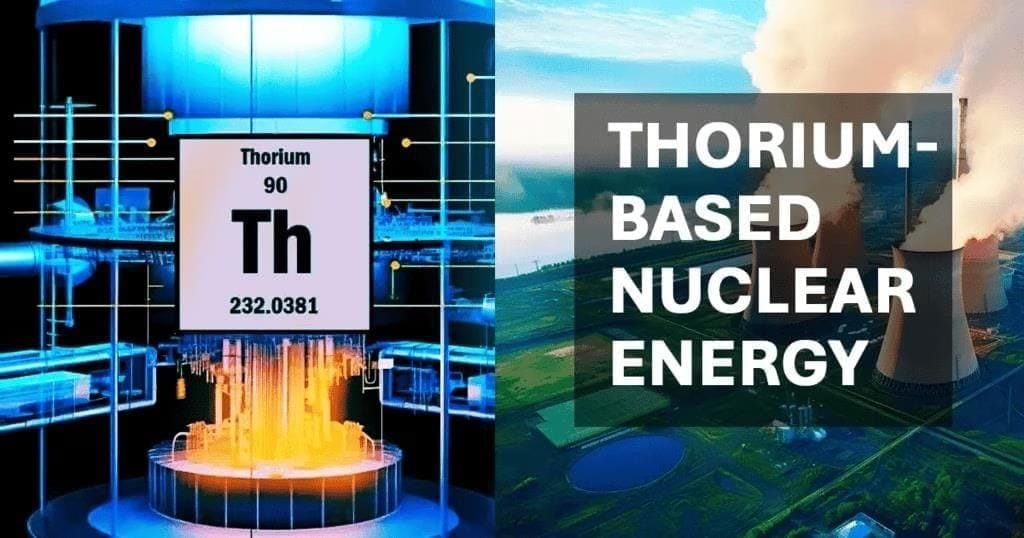
Thorium-based Nuclear Energy Production
Why in News?
India's largest power generator, National Thermal Power Corporation (NTPC) Limited, has recently signed a strategic agreement with US-based Clean Core Thorium Energy (CCTE) to explore the development and deployment of advanced nuclear energy for enriched life (ANEEL), utilizing thorium-based fuel. The ANEEL program involves pressurized heavy water reactors (PHWRs) and is part of India's long-term strategy to leverage its abundant thorium reserves in its three-stage nuclear power program.
Key Takeaways
- NTPC and CCTE are collaborating on thorium-based nuclear energy development.
- ANEEL is a patented nuclear fuel incorporating High Assay Low Enriched Uranium (HALEU).
- The Department of Atomic Energy (DAE) aims to integrate thorium into India's nuclear power framework.
Additional Details
- About ANEEL: ANEEL is a patented nuclear fuel that combines High Assay Low Enriched Uranium (HALEU), enriched between 5% and 20%, which is essential for many advanced reactor designs. Currently, HALEU is produced primarily in Russia and China, with limited production in the US.
- ANEEL fuel is compatible with existing PHWRs, which are integral to India's nuclear power infrastructure, consisting of 22 operational reactors with a total capacity of 6780 MWe.
- ANEEL provides an easier and quicker alternative for deploying thorium by leveraging imported HALEU, in contrast to India's traditional method of creating thorium blankets around uranium or plutonium reactors.
- Benefits: The ANEEL fuel boasts a burn-up efficiency of 60,000 MW-days per tonne, significantly reducing operational costs and waste volume in comparison to conventional natural uranium.
- Thorium and spent ANEEL fuel are non-weaponizable, alleviating proliferation concerns for international uranium suppliers.
- Economic and Environmental Impact: The use of ANEEL fuel aligns with India's clean energy goals and supports global commitments to enhance nuclear capacity.
- India's nuclear strategy, based on its three-stage program, aims to utilize abundant thorium reserves for sustainable energy generation. The collaboration with CCTE signifies a promising future for efficient, low-waste nuclear power.
- Despite challenges, thorium presents significant potential in addressing India's energy requirements.
Mains Question
Q: Discuss the significance of thorium-based nuclear reactors in India's energy strategy. How does the 3-stage nuclear power program align with this objective?
Sovereign AI

Why in News?
Denmark has become the latest country to actively pursue sovereign AI, in a bid to boost domestic research and competitiveness. Following this example and leveraging the momentum of Digital India, India's leadership will be instrumental in driving the nation's Sovereign AI ambition.
What is Sovereign AI?
- Sovereign AI refers to a nation's autonomous ability to develop, deploy, and regulate Artificial Intelligence (AI) technologies that align with its unique data, values, and governance priorities.
- It ensures national control over AI systems, protecting economic and national security interests while fostering innovation.
Key Features of Sovereign AI include:
- Self-reliance: Develops AI systems tailored to national requirements, ensuring minimal dependency on external technologies.
- National Security: Protects critical data and infrastructure from external threats or misuse.
- Cultural Alignment: Embeds a nation's values, language, and societal norms into AI frameworks.
- Global Competitiveness: Enhances economic growth and innovation through domestic AI capabilities.
About the Proposed AI Strategy for India (GovAI Private AI = Sovereign AI):
- India's proposed AI strategy focuses on leveraging Digital Public Infrastructure (DPI) like Aadhaar and UPI to develop GovAI (Government AI) for efficient and predictive public services.
- It emphasizes data sovereignty, transforming anonymized DPI data into AI training material while ensuring national control.
- The strategy promotes public-private collaboration to build domain-specific Small Language Models (SLMs) that evolve into advanced Large Language Models (LLMs).
- Skill development through Regional Centres of Excellence (RCoE) aims to create a robust AI talent pool.
- This strategy aligns with India's vision of becoming a global leader in trusted and inclusive AI, enhancing economic growth and national security.
India's Initiatives for Sovereign AI:
- India's initiative for Sovereign AI builds on its Digital India framework, leveraging platforms like Aadhaar, UPI, and DigiLocker to create GovAI (Government AI) for efficient public services.
- It utilizes DPI platforms such as Aadhaar, UPI, DigiLocker, and CoWIN.
Domain-Specific AI Models that India seeks to build:
- Builds Small Language Models (SLMs) for specific public service areas like education, healthcare, agriculture, and social welfare.
- SLMs evolve into Large Language Models (LLMs) for advanced, intersectional governance insights.
- The India Datasets Programme transforms anonymized data into resources for AI training while ensuring data sovereignty.
India as Global Hub For Data Centres
Why in News?
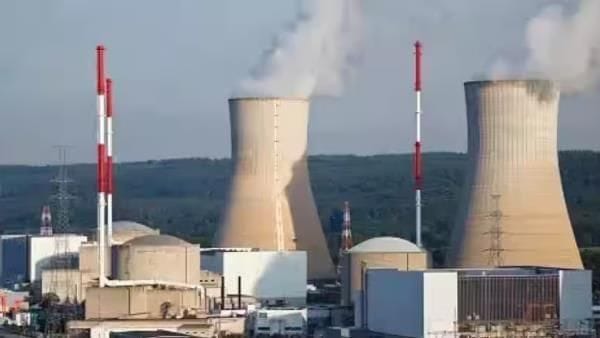
India's data centre sector is experiencing remarkable growth, with expectations to double its capacity by FY27. This expansion is largely fueled by factors such as digitalization, the integration of Artificial Intelligence (AI), the deployment of 5G, and the introduction of data localization laws. However, the sector faces challenges including infrastructure deficits, the necessity for sustainable energy solutions, and competition from international players like China.
Key Takeaways
- India's data centre capacity is projected to increase significantly, presenting vast growth opportunities.
- Challenges such as infrastructure constraints and regional disparities need addressing for sustainable growth.
- Key drivers for growth include digitalization, AI, 5G, and regulatory mandates.
Additional Details
- What are Data Centres: Data centres are specialized facilities designed to store, manage, and process substantial amounts of electronic data. They house critical Information Technology (IT) components, including servers, storage devices, and networking equipment, alongside systems for cooling, power supply, and security.
- Components of a Data Centre:
- Servers and Storage Systems: Handle workloads for hosting websites and cloud storage.
- Networking Equipment: Includes routers, switches, and firewalls for communication.
- Power Supply Systems: Ensures uninterrupted power with UPS and generators.
- Cooling Systems: Necessary to prevent overheating of servers through air conditioning or liquid cooling.
- Security Infrastructure: Encompasses both physical and cybersecurity measures to protect against data breaches.
- Current Status of Data Centres in India: India's data centre market is anticipated to grow from USD 4.5 billion in 2023 to USD 11.6 billion by 2032, indicating a CAGR of 10.98%.
- Geographical Distribution: Over 50% of India's data centre capacity is in Mumbai, with emerging hubs in Ahmedabad, Pune, and Vizag.
Rise of India's Private Space Industry
Why in News?
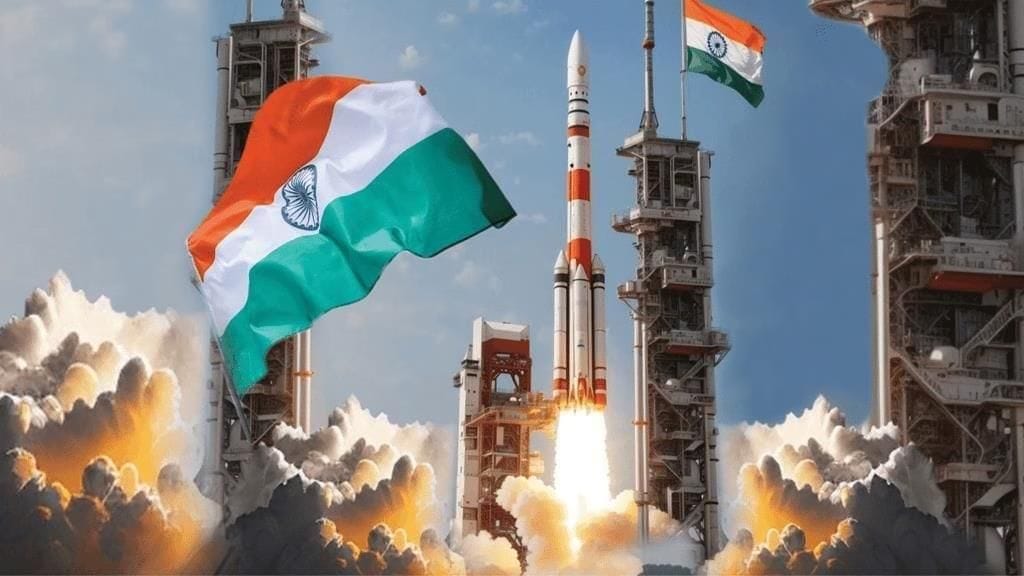
ISRO's upcoming launch of a US-based AST Space Mobile communication satellite marks a pivotal moment in India's emergence as a global player in the satellite launch industry. Already distinguished by achievements like the SpaDeX mission, Chandryaan-3's lunar landing, and cryogenic engine development, ISRO is now breaking into the lucrative commercial satellite market. This commercial expansion represents a crucial step toward India becoming self-reliant and profitable in the international space economy.
What are the Key Recent Developments Related to India's Space Sector?
- Advancing Solar Research: India's first solar observatory, Aditya-L1, successfully reached its halo orbit at Lagrange Point-1 (L1) in January, 2024.
- The data from Aditya-L1 will enhance India's space weather forecasting, crucial for satellite protection and communication systems.
- This marks a major step in India's deep-space research, putting it in league with NASA and ESA.
- India is now one of only four countries to have a dedicated solar mission, alongside the US, Europe, and China (ISRO, 2024).
- Advancements in Reusable Launch Vehicles (RLV): ISRO conducted two successful Reusable Launch Vehicle (RLV) Landing Experiments-RLV-LEX-02 (March 2024) and RLV-LEX-03 (June 2024).
- Reusability can cut launch costs by 80%, making space more accessible for commercial and scientific missions (ISRO, 2024).
- The winged prototype 'Pushpak' was dropped from a Chinook helicopter at 4.5 km altitude before autonomously landing, proving the feasibility of future reusable rocket technology.
- The RLV tests bring ISRO closer to developing a fully reusable spaceplane, similar to SpaceX's Starship and NASA's Dream Chaser.
- India's First Space Docking Experiment (SpaDeX) and Future Space Station Plans: India achieved a breakthrough in space docking technology with the SpaDeX (Space Docking Experiment) mission in December 2024.
- Mastering space docking is critical for long-duration space missions, in-orbit refueling, and space habitat construction.
- This milestone strengthens India's future in deep-space exploration and interplanetary logistics.
- India is now the fourth country globally (after the US, Russia, and China) to achieve space docking independently.
- ISRO plans to launch the Bharatiya Antariksh Station (BAS-1) by 2035, starting with an initial modular space station segment.
- Progress in the Gaganyaan Human Spaceflight Mission: Significant advancements have been made in India's first crewed spaceflight mission, Gaganyaan, scheduled for 2025.
- This mission aims to send a three-member crew to low-Earth orbit (LEO) for three days, marking a historic milestone for India's space program.
- The Test Vehicle Abort Demonstration-1 (TV-D1) successfully tested crew escape systems in case of launch failure.
- ISRO has trained four Indian astronauts at Russia's Gagarin Cosmonaut Training Center and is setting up a crew training facility in Bengaluru.
- Strengthening India's Weather and Disaster Monitoring Capabilities: The launch of INSAT-3DS has significantly improved weather forecasting, cyclone tracking, and disaster management.
- Designed for a 10-year operational lifespan, the satellite provides real-time weather data, including temperature, humidity, and atmospheric conditions.
- This enhances India's ability to predict extreme weather events, mitigating damage from cyclones, floods, and heatwaves.
- INSAT-3DS played a key role in tracking Cyclone Michaung in December 2023, enabling early evacuations.
- India's Growing Role in International Space Collaborations: ISRO launched ESA's Proba-3 mission, strengthening its reputation as a trusted global launch partner.
- This mission, designed to simulate a total solar eclipse using precision formation flying, demonstrates India's expertise in small satellite launches and scientific missions.
- India is working with NASA for the NISAR mission (2024), a satellite to monitor climate change and natural disasters.
- Expansion of India's Private Space Sector: With the introduction of IN-SPACe and the New Space Policy (2023), India's private space sector has seen a rapid rise in startups, satellite manufacturing, and launch services.
- Companies like Skyroot Aerospace, Agnikul Cosmos, and Pixxel are developing indigenous launch vehicles and advanced payloads.
- Skyroot's Vikram-S (November 2022) became India's first private rocket launch, marking a shift towards commercial space activities.
- Green Propulsion and Sustainable Space Technologies: ISRO is actively developing eco-friendly propulsion systems, including liquid methane-LOX engines and solar-electric thrusters for deep-space missions.
- The Vikram-1 rocket (by Skyroot Aerospace) and ISRO's future missions aim to use green propellants to minimize environmental impact.
- The Chandrayaan-3 lander used non-toxic propulsion, aligning with ISRO's commitment to green space technologies.
- Approval of Chandrayaan-4 and India's Upcoming Lunar Ambitions: Following the success of Chandrayaan-3, ISRO has secured approval for Chandrayaan-4, a sample return mission to the Moon.
- This mission aims to leverage India's expertise in precision landing and in-situ lunar studies, contributing to global lunar science.
- Chandrayaan-4 will be India's first robotic mission to return samples from the Moon, similar to China's Chang'e-5.
What are the Key Issues Associated with India's Space Sector?
- Limited Budget Allocation: Despite ISRO's achievements, India's space sector operates on a relatively small budget compared to global counterparts, limiting the scale of deep-space missions and technology development.
- Most funding still comes from the government, restricting private sector-led innovation and commercialization.
- ISRO's budget for 2024-25 is Rs 13,042.75 crore (about $1.95 billion). In contrast, NASA operates with a much larger budget of around $25 billion, without any reductions.
- India's space economy is only 2% of the global space market.
- Slow Development of Reusable and Cost-Effective Launch Technologies: While ISRO has made progress with Reusable Launch Vehicle (RLV) experiments, it lags behind private companies like SpaceX (Falcon 9) and Blue Origin (New Shepard) in operational reusable rockets.
- High launch costs limit India's ability to compete in the global commercial satellite launch market, which demands low-cost, frequent, and reusable launch systems.
- Accelerating the development of fully reusable rockets is crucial to maintaining global competitiveness.
- Rising Space Debris and Orbital Congestion: With increasing satellite launches, space debris management has become a critical challenge, posing risks to operational satellites and future missions.
- India lacks an independent space traffic management system, making it reliant on international organizations for debris tracking.
- With thousands of satellites planned for Low Earth Orbit (LEO) mega constellations, collision risks and orbital congestion will intensify, requiring urgent regulatory and technological interventions.
- A total of 3143 objects originating from 212 launches and on-orbit break-up events were added to the space object population in 2023, highlighting the growing threat of space debris.
- Delayed Implementation of Space Policy and Regulatory Frameworks: India's New Space Policy 2023 was a major step in opening the sector to private players, but implementation delays and bureaucratic hurdles have slowed its impact.
- IN-SPACe, meant to regulate and facilitate private sector participation, is still evolving its framework, leading to uncertainty for startups and investors.
- A clear legal framework on space activities, satellite licensing, and liability in case of damages is necessary to attract global investments.
- India has over 150 space startups, but most struggle with funding, regulatory approvals, and global market access
- Cybersecurity Threats and Space Asset Protection: With growing reliance on satellites for communication, defense, and navigation, cyber threats targeting space assets pose national security risks.
- India lacks an independent Space Cybersecurity Command to protect against satellite hacking, GPS spoofing, and space-based espionage.
- ISRO currently lacks an autonomous cybersecurity division, making its satellites potential targets for hostile cyber intrusions.
- Climate Change Impact on Space Infrastructure: Extreme weather events, rising temperatures, and increasing humidity levels are posing risks to ISRO's launch sites and ground stations.
- Coastal launch sites like Sriharikota (SHAR) and Thumba are vulnerable to cyclones and sea-level rise, potentially affecting future launch schedules and infrastructure durability.
- Climate adaptation strategies, including hardened launch complexes and alternative inland launch sites, are needed to mitigate these risks.
- Growing Competition from Emerging Space Powers: India faces increasing competition from China, UAE, and South Korea, which are advancing in lunar exploration, deep-space missions, and private sector growth.
- China's Chang'e program is targeting lunar colonization by 2035, while the UAE's Mars and Moon missions are attracting global partnerships.
- To maintain leadership, India must accelerate Chandrayaan-4, Venus missions, and interplanetary exploration projects.
- Delays in Strategic Military Space Capabilities: India has been slow in developing dedicated military space assets, lagging behind China's Space Force and weaponized satellite capabilities.
- While India has anti-satellite (ASAT) capabilities, it lacks dedicated space-based missile defense and electronic warfare satellites.
- Establishing an integrated space command and defense satellite constellation is critical for national security.
- China has over 300 military satellites, while India operates with fewer for defense and surveillance.
What Strategic Measures can India Adopt to Enhance the Space Sector?
- Increasing Budget Allocation and Sustainable Funding Models: India must increase public investment in space technology while promoting private and foreign investments through Public-Private Partnerships (PPP).
- Establishing a dedicated Space Development Fund (SDF) can ensure continuous financing for deep-space missions, satellite manufacturing, and human spaceflight programs.
- Expanding ISRO's commercial wing, NSIL (NewSpace India Limited), can drive revenue generation through global satellite launches.
- Accelerating Reusable Launch Vehicle (RLV) and Cost-Effective Launch Technologies: India must prioritize RLV development to reduce launch costs, increase frequency, and compete with private players like SpaceX.
- Strengthening Pushpak RLV technology, integrating AI-driven autonomous landing systems, and developing Methane-LOX propulsion systems can improve reusability.
- Enhancing hypersonic flight research and scramjet engine testing will enable cost-effective space travel. A dedicated RLV test center should be established for high-speed aerodynamic research.
- Expanding Private Sector and Startup Participation in Space Economy: India must fully implement the New Space Policy 2023 to enable private players to develop launch vehicles, satellites, and deep-space technologies.
- Strengthening IN-SPACe (Indian National Space Promotion and Authorization Center) will streamline approvals and reduce bureaucratic delays.
- Tax incentives, regulatory ease, and venture capital support can encourage more startups to enter the space manufacturing, propulsion systems, and AI-driven satellite services sectors.
- Fast-tracking licensing processes for private satellite launches will boost India's competitiveness.
- Strengthening Space Traffic Management and Space Debris Mitigation: India should establish an independent Space Traffic Management (STM) system to monitor, track, and mitigate space debris following the Convention on International Liability for Damage Caused by Space Objects.
- Deploying active debris removal (ADR) satellites, using laser ablation and robotic arms, can help clear defunct satellites from orbit.
- AI-powered collision avoidance systems should be integrated into India's growing satellite fleet.
- Strengthening international cooperation under UNOOSA and IADC (Inter-Agency Space Debris Coordination Committee) will enhance India's role in global space sustainability.
- Fast-Tracking Space Infrastructure for Human Spaceflight Missions: To sustain long-term human spaceflight programs, India must develop space habitats, advanced crew modules, and deep-space life support systems.
- Establishing a dedicated Human Spaceflight Research Center (HSRC) will drive innovations in space medicine, astronaut training, and microgravity research.
- The Bhartiya Antriksh Station (BAS-1) roadmap should be fast-tracked for operational readiness by 2035.
- Enhancing Cybersecurity and Space Asset Protection: India must create a dedicated Space Cybersecurity Command under ISRO and DRDO to protect satellites, GPS systems, and defense space assets from cyber threats.
- Strengthening quantum encryption, AI-driven anomaly detection, and satellite firewalls will safeguard critical infrastructure.
- Implementing real-time threat monitoring systems for space-based assets will reduce vulnerabilities to hacking, GPS spoofing, and electromagnetic attacks.
- Strengthening Deep-Space and Interplanetary Exploration Capability: India must expedite missions to the Moon, Mars, and Venus, enhancing its global space leadership.
- Chandrayaan-4 (Lunar Sample Return Mission) and Mangalyaan-2 (Mars Orbiter Mission-2) should be prioritized with advanced robotic rovers, AI-driven navigation, and in-situ resource utilization (ISRU) experiments.
- Establishing an Interplanetary Research Center (IRC) will boost scientific collaboration and innovation.
- Expanding India's Satellite-Based Applications and Digital Connectivity: India must expand its satellite fleet for earth observation, navigation, and broadband internet to strengthen disaster management, agriculture, and national security.
- Deploying next-generation NavIC satellites will enhance independent satellite navigation and geospatial intelligence.
- Strengthening satellite-based quantum communication will enhance secure data transmission and defense applications.
- Climate-Resilient Space Infrastructure and Alternate Launch Sites: To mitigate risks from climate change, sea-level rise, and extreme weather, India must develop inland launch sites beyond Sriharikota.
- Establishing a second launch complex in central India will provide operational redundancy during adverse weather conditions.
- Strengthening ISRO's weather monitoring satellites with advanced hyperspectral imaging and AI-driven climate modeling will improve India's disaster response.
- Implementing eco-friendly, non-toxic green propulsion technologies will align India's space program with global sustainability goals.
Conclusion
India's space sector is at a transformative juncture, with ISRO making significant strides in commercial satellite launches, reusable launch vehicles, deep-space exploration, and human spaceflight. With sustained efforts, ISRO can drive technological innovation, boost economic opportunities, and contribute to global space exploration, ensuring India's long-term leadership in the space economy.
Antibiotics Resistance
Why in News?
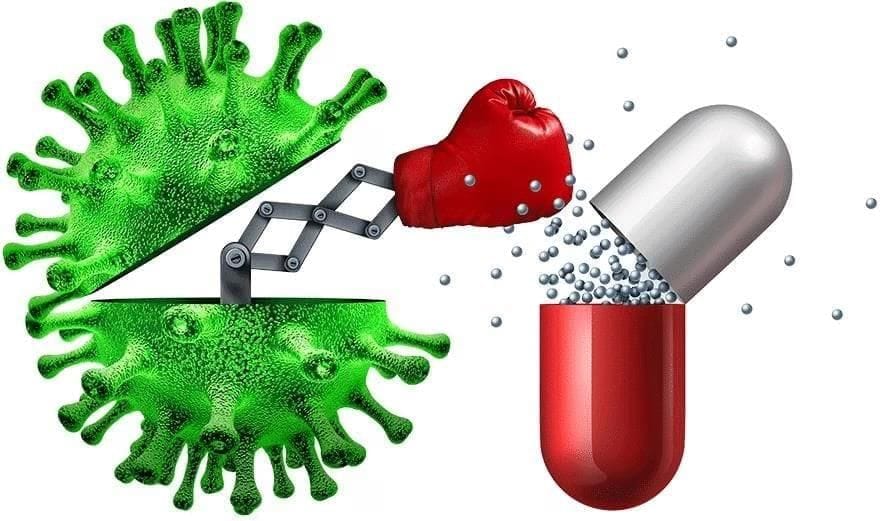
The growing use of antibiotics in healthcare settings has significantly contributed to the emergence of drug-resistant bacteria. In 2021, antimicrobial resistance (AMR) was responsible for approximately 1.2 million deaths worldwide. Reports from Indian hospitals indicate a concerning 13% mortality rate associated with infections caused by these drug-resistant organisms.
Key Takeaways
- Widespread antibiotic usage is leading to increased rates of drug resistance.
- AMR poses a serious health threat, causing millions of deaths globally.
Additional Details
- About Antibiotics: Antibiotics are medications designed to treat bacterial infections in both humans and animals. They work by either killing bacteria or inhibiting their growth and reproduction with minimal effects on human cells.
- Mechanism of Action: Antibiotics target specific bacterial structures or processes. For example, bacterial cells possess a protective cell wall made of peptidoglycan, which is essential for their survival. Antibiotics like Penicillin weaken these cell walls by disrupting peptide crosslinks, ultimately leading to bacterial death.
- Development of Antibiotic Resistance:Antibiotic resistance arises when bacteria undergo mutations or acquire resistance genes, making infections increasingly difficult to treat. They can evolve resistance through various mechanisms such as:
- Producing enzymes, like penicillinase, that break down antibiotic molecules.
- Altering their structural components to evade the effects of antibiotics.
- New Survival Strategy: Recent studies have shown that bacteria can adapt by compensating for lost functions, which enhances their resilience and makes combating antibiotic resistance even more challenging.
In conclusion, the rise of antibiotic resistance is a critical global health issue that requires urgent attention. Understanding the mechanisms behind resistance and the impact of antibiotic usage is vital for developing effective strategies to combat this growing threat.
In-Vitro Gametogenesis (IVG)
Why in News?
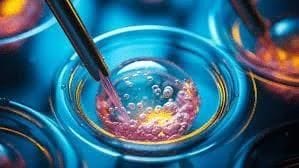
Researchers have developed In-Vitro Gametogenesis (IVG) that enables lab-based reproduction from stem cells that has many benefits compared to In-Vitro Fertilization (IVF).
What is In-Vitro Gametogenesis (IVG)?
- About: IVG is a new reproductive technology that creates eggs and sperm from stem cells collected from skin, hair, or blood.
- These lab-grown gametes can be fertilized to create an embryo, which is implanted into a surrogate to carry the pregnancy.
- Scientific Breakthroughs: Scientists in Japan successfully produced mice using IVG, while the UK researchers expect human trials within three years.
- It could allow same-sex couples, older individuals, and infertile people to have biological children without the need of a donor as in case of IVF.
Significance for India: Due to several socio-biological factors IVG can be helpful in case of India like:
- Indian women's reproductive age (ovarian function) is declining six years earlier than Western women.
- Men's sperm count has declined over 50 years and may reach minimal levels in four decades.
- India's population has fallen below the 2.1 replacement level, risking an aging crisis.
Difference Between IVG and In-Vitro Fertilisation (IVF):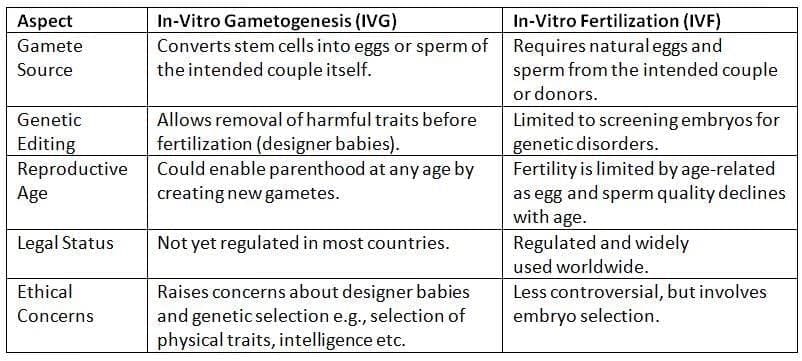
National Science Day 2025

Why in News?
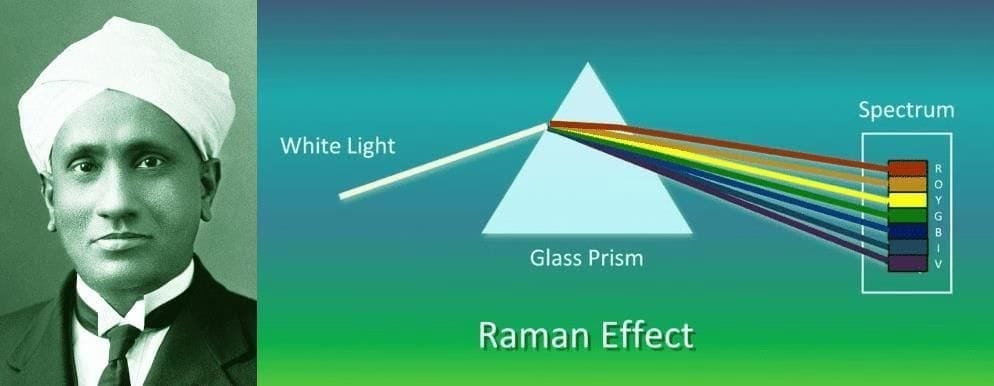
India celebrates National Science Day (NSD) on 28th February annually to honor Sir Chandrasekhara Venkata (CV) Raman's discovery of the Raman Effect in 1928.
- The 2025 theme, "Empowering Indian Youth for Global Leadership in Science and Innovation for Viksit Bharat", highlights the role of scientific innovation and youth leadership and aligns with the Viksit Bharat 2047 vision.
What are the Key Facts About CV Raman?
- Early Life: CV Raman was born on 7th November 1888, in Tiruchirappalli, Tamil Nadu. He earned his M.A. in Physics from Presidency College, Madras and contributed significantly to atomic physics and optics.
- He founded the Raman Research Institute (1948), Indian Journal of Physics (1926), and Indian Academy of Sciences (1934).
- His research spanned optics, light scattering, X-rays, acoustics, and sea colors, leading to the discovery of the Raman Effect.
- Honors & Recognition: Knighted in 1929 by the British government, CV Raman won the 1930 Nobel Prize in Physics for Raman Effect, making him the first Asian to receive a Nobel Prize in science.
- He was also honored with the Bharat Ratna in 1954, India's highest civilian award.
- Raman Effect: It refers to the phenomenon where incoming excitation light interacts with a sample, undergoes a change in wavelength, and generates scattered light due to interactions with molecular vibrations. This phenomenon is known as Raman scattering.
- Applications of Raman Effect: It forms the basis of Raman Spectroscopy (analyzing molecular vibrations), widely used to study material properties.
- Its applications expanded after the advent of lasers in the 1960s, aiding chemical analysis by identifying substances without breaking them. It also helps forensic science detect drugs in sealed evidence bags and enables safe nuclear waste analysis using fiber-optic probes.
FAQs on Science and Technology - 1
| 1. What is the Genome India Project and its significance in understanding India's genetic diversity? |  |
| 2. How does thorium-based nuclear energy differ from traditional uranium-based nuclear energy? | |
| 3. What role does Sovereign AI play in India's technological landscape? | |
| 4. What factors contribute to India becoming a global hub for data centres? | |
| 5. What are the implications of antibiotic resistance on public health, and how can it be addressed? | |




