Weekly Current Affairs (3rd November 2025 to 9th November 2025)


GS3/Environment
Eradication of Senna spectabilis from Mudumalai Tiger Reserve
Why in News?
The Tamil Nadu Forest Department has successfully undertaken the removal of Senna spectabilis, a highly invasive tree species, from an area of 1,963 hectares within the Mudumalai Tiger Reserve (MTR).
Key Takeaways
- Location: Nilgiris District, Tamil Nadu, at the tri-junction of Tamil Nadu, Kerala, and Karnataka.
- Area: The reserve spans 321 sq. km, forming part of India's first biosphere reserve, the Nilgiri Biosphere Reserve.
- Terrain: Characterized by an undulating landscape with elevations ranging from 960 to 1266 meters.
- Rivers: The Moyar River flows through the reserve, contributing to its rich biodiversity.
Additional Details
- Flora: The reserve features diverse vegetation, including evergreen, moist and dry deciduous forests, teak, bamboo, and grasslands (vayals).
- Fauna: Home to a variety of wildlife, including tigers, elephants, gaurs, sambars, leopards, blackbucks, wild dogs, and 8% of India's bird species.
- Boundaries: Shares borders with Bandipur Tiger Reserve (Karnataka) and Wayanad Wildlife Sanctuary (Kerala).
- Cultural Note: The Oscar-winning documentary "The Elephant Whisperers" was filmed at the Theppakadu Elephant Camp inside MTR.
About Senna spectabilis
- Origin: A fast-growing deciduous tree native to tropical America, introduced in India as an ornamental and shade plant.
- Issues: Can grow up to 15-20 meters and produces thousands of seeds annually, leading to rapid spread.
- Invasive Impact: Its dense canopy suppresses native trees and grasses, which leads to food scarcity for herbivores and reduced biodiversity.
- IUCN Status: Although listed as 'Least Concern', it is considered ecologically harmful in Indian forests.
Eradication Strategy
- Method: A threefold strategy was employed, including debarking mature trees, uprooting saplings with weed pullers, and mechanically clearing seedlings.
- Duration: Large trees will dry up approximately 18 months after debarking.
- Post-Removal Use: The felled trees are being utilized for paper production.
- Objective: The aim is to restore native flora, enhance wildlife forage, and ensure long-term ecosystem recovery.
The eradication of Senna spectabilis represents a significant step towards the conservation of biodiversity within the Mudumalai Tiger Reserve, affirming the commitment to restoring the ecological balance of this critical habitat.
GS3/Environment
The Case for Energy Efficiency
Why in News?
The expansion of clean energy capacity in India has been significant, with non-fossil fuel sources accounting for approximately 50% of the total installed electricity capacity as of June 2025. However, the grid emission factor has increased, indicating that the electricity consumed today is more carbon-intensive than it was five years ago. This paradox of rising renewable capacity alongside increasing emissions emphasizes the complexities of India's decarbonization efforts.
Key Takeaways
- India's renewable energy capacity is increasing, yet emissions are also rising.
- There exists a capacity-generation mismatch where renewable sources supply only 22% of actual electricity.
- Energy efficiency plays a crucial role in addressing the challenges of decarbonization.
Additional Details
- Capacity-Generation Mismatch: Despite half of India's installed capacity being non-fossil, renewables operate at only 15-25% of their capacity due to intermittency, while coal and nuclear plants function at 65-90% efficiency.
- Temporal Demand-Supply Challenges: Solar energy peaks in the afternoon but demand surges in the evening, necessitating coal-based power plants to act as backups.
- Energy Efficiency as a Strategic Necessity: Known as the first fuel, energy efficiency reduces demand, thus alleviating reliance on fossil fuels. Efficient technologies and practices can significantly contribute to lowering overall emissions.
- Policy Directions: Complementary policies are essential for maximizing renewable capacity, including dynamic electricity pricing and higher efficiency standards.
In conclusion, merely increasing renewable energy capacity is insufficient. A holistic approach that integrates energy efficiency into India's decarbonization strategy is vital. By prioritizing efficiency and enhancing grid flexibility, India can transition towards a truly sustainable and low-carbon future.
GS3/Environment
Panel Seeks Higher Protection for Rhesus Macaque under Wildlife Act
Why in News?
The Standing Committee of the National Board for Wildlife (SC-NBWL), chaired by the Union Environment Minister, has recommended that the Rhesus Macaque (Macaca mulatta) be reinstated under Schedule II of the Wildlife (Protection) Act, 1972, which provides legal protections for species that require conservation monitoring but are not critically endangered.
Key Takeaways
- The Rhesus Macaque is currently proposed for reclassification under Schedule II of the Wildlife Act.
- Schedule II prohibits hunting, capture, or trade of the species except under extraordinary circumstances.
Additional Details
- Schedule II of the Wildlife (Protection) Act, 1972: This schedule provides legal protection for species requiring conservation monitoring. It allows for limited regulation and control measures, differentiating it from Schedule I, which offers stricter protections.
- Legal Provisions: Under Section 11, Chief Wildlife Wardens can grant exceptions for specific circumstances. Penalties for violations include imprisonment up to 3 years and fines up to ₹25,000.
- About Rhesus Macaque: This species is native to South, Central, and Southeast Asia, known for its adaptability and social behavior within troops. It has been widely used in biomedical research.
- IUCN Status: Classified as Least Concern due to its extensive distribution and adaptability.
- Human Conflict: Increasing interactions with humans have led to crop raids and urban aggression, resulting in its classification as vermin in some regions.
This recommendation for higher protection highlights the importance of conserving the Rhesus Macaque amidst growing human-wildlife conflict and the need for legal frameworks that balance conservation with human interests.
GS3/Environment
High Seas Treaty: Challenges in Global Ocean Governance
Why in News?
The High Seas Treaty is facing significant implementation challenges as nations deliberate on funding mechanisms, governance frameworks, and equitable benefit-sharing related to marine resources.
Key Takeaways
- The treaty aims to protect marine biodiversity in the high seas, which are areas beyond national jurisdiction.
- It promotes sustainable use of ocean resources and addresses critical threats such as overfishing, pollution, and climate change.
- Despite its ratification by over 60 countries, the treaty encounters obstacles due to geopolitical tensions and ambiguities in governance.
Additional Details
- Marine Genetic Resources (MGRs): Considered the "common heritage of humankind," MGRs encompass genetic materials from marine organisms that can be utilized for scientific and commercial purposes, including the pharmaceutical industry.
- Area-Based Management Tools (ABMTs): The treaty enables the establishment of Marine Protected Areas (MPAs) to safeguard biodiversity hotspots, relying on scientific data and traditional knowledge for their identification.
- Environmental Impact Assessments (EIAs): Mandatory EIAs are required for activities that may impact the marine environment, ensuring preventive measures are taken to mitigate potential damage.
- Capacity Building and Technology Transfer: The treaty emphasizes the need for capacity building to support equal participation in ocean governance, particularly for developing nations.
The High Seas Treaty represents a monumental step forward for international marine conservation. Its success hinges on finalizing operational guidelines, fostering cooperation among global maritime bodies, and encouraging comprehensive ratification by key maritime nations. By balancing conservation and development, the treaty aims to facilitate equitable access to ocean resources and enhance global resilience against climate change.
GS2/International Relations
Compound Effect: On Digital Arrest Scams
 Why in News?
The recent directive by the Supreme Court of India for a thorough investigation into the surge of digital scams highlights the increasing scale and complexity of cyber fraud affecting Indian citizens. This directive specifically targets "digital arrest" scams, where criminals impersonate law enforcement to extort money, revealing a troubling evolution in global cybercrime involving industrial-scale operations based in Southeast Asian conflict zones.
Key Takeaways
- The Supreme Court has taken unprecedented steps to address the global nature of digital scams targeting Indian citizens.
- Scam operations linked to human trafficking and organized crime are prevalent in regions like Myanmar and Cambodia.
- Victims are often trafficked and coerced into perpetrating scams under dire conditions.
Additional Details
- Scam Compounds: These operations are often located in conflict-affected areas such as Myanmar, Cambodia, and Laos, taking advantage of weak governance and law enforcement.
- Cross-Border Networks: These scams are not isolated incidents; they are part of coordinated transnational crime involving local militias and corrupt officials.
- Digital Slavery: Trafficked individuals are subjected to severe coercion, forced to engage in various types of scams, including "digital arrest" and cryptocurrency investment frauds.
- State Complicity: In some instances, local regimes, such as Myanmar's military, are believed to support these scam operations, turning them into profitable ventures for their military campaigns.
The situation presents both a national security threat and a humanitarian crisis, necessitating immediate multilateral efforts to combat these crimes. As India navigates this dual crisis-protecting its citizens and addressing international trafficking-coordinated responses at both national and international levels are essential.
GS2/Polity
What Constitutes Contempt of Court in India
Why in News?
Recent statements directed at the Chief Justice of India and the Supreme Court have ignited a national debate on whether such remarks amount to contempt of court. This situation is critical as it not only involves personal attacks but also challenges the authority of India's highest court. It raises important questions regarding the balance between free speech and judicial independence. The rapid dissemination of these remarks through social media amplifies their significance, leading to discussions on how to protect the dignity of the judiciary while ensuring democratic accountability.
Key Takeaways
- The term contempt of court is referenced in Article 19(2) of the Constitution as a permissible limitation on the right to free speech.
- The Contempt of Courts Act, 1971 delineates the legal framework for contempt proceedings.
- Contempt is categorized into civil and criminal based on the nature of the act.
- Maintaining a balance between legitimate criticism and judicial dignity is essential.
- Recent controversies highlight the need for clearer definitions of contempt, especially in the digital age.
Additional Details
- Constitutional Reference: The term contempt of court appears in Article 19(2), allowing reasonable restrictions on freedom of speech and expression.
- Lack of Procedural Guidelines: The Constitution does not provide specific procedures for contempt proceedings; these are instead outlined by statutory provisions.
- Civil Contempt: This involves willful disobedience of a court judgment, decree, direction, or undertaking.
- Criminal Contempt: Defined as any publication or act that scandalizes or lowers the authority of the court, prejudices judicial proceedings, or obstructs the administration of justice.
- The broader implications of contempt extend to the disruption of justice delivery and a decrease in public confidence in the judiciary.
- Legitimate Criticism: Fair criticism of judicial decisions is permissible and does not constitute contempt, but it becomes contemptuous when it crosses the boundaries of fairness and undermines the authority of the court.
In conclusion, contempt of court serves as a constitutional safeguard for maintaining judicial integrity and authority. However, in a democracy, it is crucial to ensure that constructive criticism is permitted for institutional reform. The challenge lies in ensuring that such criticism is responsible, reasoned, and respectful. As public discourse increasingly takes place online, it is essential for India's legal framework to reassess the parameters of contempt to protect both judicial dignity and freedom of speech, which are vital components of constitutional morality.
PYQ Relevance
[UPSC 2019] Do you think that the Constitution of India does not accept the principle of strict separation of powers rather it is based on the principle of checks and balances? Explain.
This topic is relevant for both Prelims and Mains examinations. While direct questions can appear in both formats, in the Mains, it can be integrated into various judicial topics. For instance, in the 2019 question, contempt jurisdiction fits within the framework of checks and balances, as judicial contempt powers serve as internal mechanisms for checks within the democratic structure.
GS2/Governance
Pradhan Mantri Kaushal Vikas Yojana
Why in News?
Recent investigations have uncovered significant irregularities in the implementation of the Pradhan Mantri Kaushal Vikas Yojana (PMKVY). As a result, the Ministry of Skill Development and Entrepreneurship has blacklisted 178 training partners associated with the program.
Key Takeaways
- PMKVY is a skill development initiative launched by the Government of India in 2015.
- The program aims to empower India's youth by providing industry-relevant skill training to enhance employability.
Additional Details
- Implementing Agency: The initiative is implemented by the National Skill Development Corporation in collaboration with various stakeholders.
- Eligibility Criteria:
- Age Limit: Candidates aged 14 to 35 years are generally eligible for training programs.
- Nationality: Applicants must be Indian citizens.
- Educational Qualifications: The program is open to individuals from diverse educational backgrounds, including those with no formal education.
- Employment Status: Priority is given to unemployed or underemployed individuals to improve their job prospects.
- Aadhar Card: Possession of an Aadhar card is often a mandatory requirement for application.
- Features of PMKVY:
- Regular consultations with industry experts ensure that training programs are aligned with current industry demands.
- Short-term training courses enable individuals to acquire new skills quickly.
- Recognition of Prior Learning (RPL) allows for certification based on skills acquired through experience rather than formal training.
- The program also offers placement assistance to all candidates who complete their training.
This initiative plays a crucial role in enhancing the skill set of the youth in India, thereby contributing to their employability and economic development.
GS2/Polity
Mayor in India
Why in News?
Zohran Mamdani, of Indian origin, has been elected as the Mayor of New York City, highlighting the significance of mayoral roles globally, including in India.
Key Takeaways
- The Mayor is the head of a Municipal Corporation, overseeing urban governance and local service delivery.
- Established under the 74th Constitutional Amendment Act, 1992, which provided constitutional status to Urban Local Bodies (ULBs).
Additional Details
- Administrative Framework: Municipal corporations operate under state municipal laws and are supervised by state urban development departments.
- Historical Context: The first municipal corporation was established in Madras in 1688, followed by Bombay and Calcutta in 1762 during British rule.
- Evolution of the Office: The idea of an elected municipal President was introduced through Lord Mayo's Resolution in 1870, and further shaped by Lord Ripon's Resolution in 1882, earning the latter the title "Father of Local Self-Government in India."
- Election and Tenure:
- Direct Election: In cities like Bhopal, Indore, and Jaipur, citizens directly elect the Mayor.
- Indirect Election: In cities like Mumbai, Delhi, and Bengaluru, elected councillors choose the Mayor.
- Tenure varies from 1 to 5 years, depending on state-specific legislation.
- Powers and Functions:
- Ceremonial Role: Acts as the first citizen of the city and represents it at official and public events.
- Presiding Officer: Chairs meetings and ensures smooth deliberations.
- Limited Executive Power: The Municipal Commissioner, an IAS officer appointed by the state government, holds the administrative authority.
- Policy and Representation: Acts as a political leader and civic advocate, addressing urban development issues.
- Comparison with Mayors in the U.S.:
- System Type: India follows a parliamentary model under state supervision, while the U.S. operates on an executive or presidential city model.
- Election Method: Mayors in India are usually indirectly elected by councillors, whereas U.S. Mayors are directly elected by citizens.
- Tenure: In India, terms vary between 1 to 5 years, while U.S. Mayors typically serve a fixed 4-year term, renewable once.
- Administrative Power: Indian Mayors have limited executive power, while U.S. Mayors have full executive control over departments and budgets.
- Financial Authority: Indian Mayors rely on state approval for budgets, whereas U.S. Mayors have autonomous budgetary powers.
- Legislative Role: Indian Mayors chair council meetings, while U.S. Mayors can veto bills and issue executive orders.
- Autonomy: Indian Mayors are subordinate to state authority, while U.S. Mayors are semi-autonomous within city jurisdiction.
- Nature of Office: The role is largely symbolic and representational in India, whereas it is a powerful executive position in the U.S.
In summary, the role of a Mayor in India is pivotal in urban governance and local service delivery, shaped by historical resolutions and constitutional provisions, while differing significantly from the executive functions of a Mayor in the U.S.
[UPSC 2024]
Consider the following statements:
- Powers of the Municipalities are given in Part IX A of the Constitution.
- Emergency provisions are given in Part XVIII of the Constitution.
- Provisions related to the amendment of the Constitution are given in Part XX of the Constitution.
Select the answer using the code given below:
- (a) 1 and 2 only
- (b) 2 and 3 only
- (c) 1 and 3 only
- (d) 1, 2 and 3*
GS2/International Relations
KK Park Cyber Scam Hub in Myanmar
Why in News?
Around 500 Indian nationals who escaped the KK Park cybercrime compound in Myawaddy township, southeastern Myanmar, are being rescued by the Government of India.
Key Takeaways
- Location: Myawaddy township, Karen State, Myanmar, near the Thailand border.
- Operations: Managed by the Border Guard Force (BGF) under Saw Chit Thu, involved in cybercrime and human trafficking.
Additional Details
- Nature of Activities: Functions as a "scam city" employing trafficked workers for online fraud, including crypto scams and romance-investment schemes.
- Human Trafficking: Victims are lured through fake overseas job offers, imprisoned, tortured, and forced into cybercrimes.
- Scale: At its peak, housed over 20,000 trafficked workers, generating billions annually through global online fraud.
- Structure: Operated as a self-contained enclave with dormitories and armed security to prevent escapes.
Global Concern and UN Findings
- UN Reports: Identified by UNODC and GI-TOC as part of a network of cyber-scam compounds in Myanmar, Cambodia, and Laos.
- Economic Impact: The cyber-scam economy earns over USD 10 billion annually, affecting victims in 110 countries.
- Myanmar's 2025 Raid: Seizure of 30 Starlink terminals was viewed as a cosmetic crackdown, as leaders escaped.
- UN Appeal: Calls for cross-border enforcement, crypto tracking, and victim rehabilitation, recognizing scam hubs as a mix of trafficking and transnational crime.
Impact on Indians
- Victimisation: India is both a source and target of these scams, with hundreds trafficked under false IT job offers.
- Rescue Operations: Since 2022, over 1,600 Indians have been repatriated, including 500 from KK Park in 2025.
- Cyber Threats: There is a rise in crypto frauds, impersonation scams, and digital extortion targeting Indian citizens.
Government Response
- EAM S. Jaishankar: Confirmed coordination for repatriation and enhanced cyber-diplomacy efforts.
- Policy Imperative: Emphasizes the need for international law enforcement cooperation, increased cybersecurity awareness, and anti-trafficking vigilance across Southeast Asia.
GS2/Polity
Disclosure of Election Finance
Why in News?
A recent report by the Association for Democratic Reforms (ADR) highlighted that more than half of the registered unrecognised political parties (RUPPs) in Bihar have not adhered to the mandatory financial disclosure requirements for the fiscal year 2023-24.
Key Takeaways
- Over 59% of RUPPs in Bihar failed to submit their audit reports and donation statements, breaching the norms set by the Election Commission of India (ECI).
- Out of 275 RUPPs assessed, 184 were from Bihar and 91 from other states, with only 67 parties (24.36%) disclosing both audit and contribution reports.
Additional Details
- Political Funding in India: This refers to the financial resources collected by political parties or candidates to support their operations and election campaigns. It plays a vital role in ensuring democratic participation and electoral competitiveness.
- Sources of Funding:
- Individuals: Citizens can contribute voluntarily, benefitting from tax deductions under Section 80GGB of the Income Tax Act.
- Corporates: Donations are regulated under Section 182 of the Companies Act, 2013.
- State Support: Indirect subsidies like media access and tax exemptions are permitted, while direct funding is prohibited.
- Electoral Trusts (2013): These were established to facilitate transparent corporate contributions.
- Electoral Bonds (2018): Introduced to ensure donor anonymity; however, they were declared unconstitutional by the Supreme Court in 2024 for breaching transparency and citizens' right to information.
- Legal Framework:
- Representation of the People Act, 1951 (RPA): Governs election conduct, contributions, and maintenance of accounts.
- Income Tax Act, 1961: Section 13A exempts tax only for parties maintaining audited accounts and disclosing donations.
- Companies Act, 2013: Section 182 restricts corporate donations to 7.5% of the average net profits over the last three years and mandates annual contribution disclosures.
- Election Commission Guidelines: Require submission of audited accounts and contribution reports for amounts exceeding ₹20,000.
- Transparency Gaps: Approximately 60% of party income originates from "unknown sources," attributed to poor enforcement and existing loopholes. Issues like delayed submissions and lack of independent audits are common.
- Judicial Oversight: Supreme Court rulings, including the PUCL v. Union case (2003) and the 2024 judgment, have reinforced citizens' rights to be informed about funding sources.
In conclusion, addressing these issues through the implementation of reforms such as including political parties under the Right to Information Act, lowering the disclosure threshold from ₹20,000 to ₹2,000, and establishing a National Election Fund for equitable and state-audited funding can enhance transparency in political financing in India.
GS2/Polity
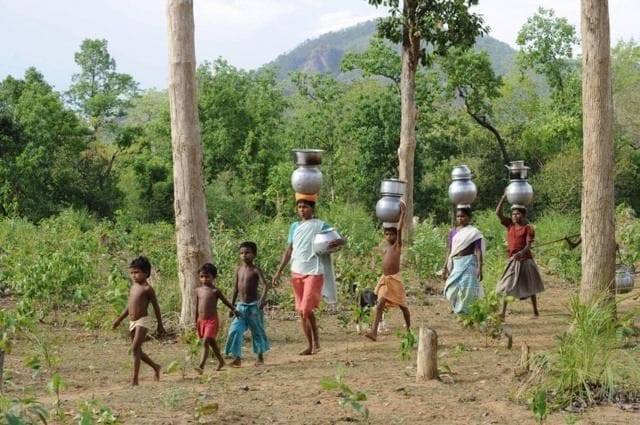
India's Approach to Forest Tribe Relocation
 Why in News?
The Union Ministry of Tribal Affairs has introduced a new policy framework that outlines the procedures for relocating forest-dwelling communities from tiger reserves. This framework aims to balance wildlife conservation with the rights of tribal communities, ensuring that any relocation is voluntary, transparent, and based on informed consent in accordance with existing laws such as the Wildlife Protection Act, 1972, and the Forest Rights Act, 2006.
Key Takeaways
- The policy framework is designed to ensure community-centered conservation and relocation.
- The National Framework for Community-Centered Conservation and Relocation will be managed jointly by the Environment and Tribal Affairs Ministries.
- A National Database on Conservation-Community Interface (NDCCI) will be established to monitor relocations and community welfare.
- Relocation should be a last resort, respecting the rights of forest-dwelling communities.
Additional Details
- Joint National Framework: The framework will set clear procedures, timelines, and accountability for all relocation efforts, ensuring effective management and cooperation between ministries.
- Consent and Rights Protection: The framework mandates that verifiable consent from both Gram Sabhas and individual households be obtained before declaring any area a tiger reserve.
- Current Situation: As of August 2025, approximately 5,166 families from 56 villages have been relocated, while 64,801 families remain within the core areas of tiger reserves, highlighting ongoing challenges.
- Implementation Issues: Despite relocation packages offering ₹15 lakh per family, many tribes report feeling pressured to move or lacking basic services if they choose to stay.
This new policy brief is crucial as it addresses the gaps in implementation regarding the rights of forest-dwelling communities, calling for improved monitoring and ensuring that relocations are carried out legally and ethically. The emphasis on voluntary relocation and community rights aims to foster a more balanced approach to conservation efforts in India.
GS3/Environment
Magnitude 6.3 Earthquake Strikes Afghanistan
 Why in News?
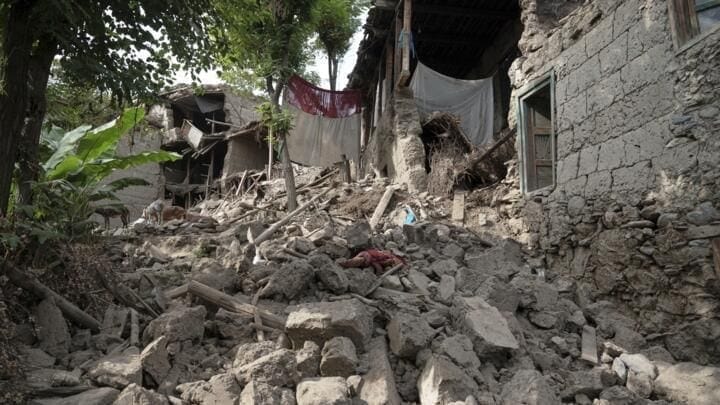
Recently, a 6.3-magnitude earthquake struck near Mazar-e-Sharif in northern Afghanistan, resulting in the tragic loss of at least 10 lives and injuring approximately 260 individuals. This tremor follows a series of devastating earthquakes in August that claimed over 2,200 lives, underscoring the region's ongoing susceptibility to seismic disasters.
Key Takeaways
- The earthquake occurred near Mazar-e-Sharif, a key urban center in northern Afghanistan.
- Afghanistan is highly vulnerable to seismic activity due to its geographical location at the convergence of multiple tectonic plates.
Additional Details
- Geographical Location: Mazar-e-Sharif is situated at an elevation of about 380 meters (1,250 ft) in the Amu Darya basin, close to the borders of Uzbekistan and Tajikistan.
- Seismic Vulnerability: Afghanistan experiences about 560 earthquake-related fatalities annually, with damages exceeding $80 million. Since 1990, the country has recorded over 355 earthquakes with magnitudes above 5.0, indicating extreme seismic vulnerability.
- Historical Context: Since 1900, Afghanistan has faced around 100 significant earthquakes. Notable events include a 6.0 magnitude quake in 2022 that killed about 1,000 people and a 7.5 magnitude earthquake in 2015 that resulted in 399 deaths across Afghanistan, Pakistan, and India.
- High-Risk Areas: The eastern and northeastern regions of Afghanistan, particularly near the borders with Pakistan, Tajikistan, and Uzbekistan, are the most susceptible to earthquakes. Kabul, the capital, incurs the highest financial losses from earthquake damage, averaging about $17 million each year.
- Landslide Risks: The mountainous terrain of Afghanistan exacerbates the impact of earthquakes, often triggering landslides that can block vital roads and hinder rescue efforts.
- Resilience Measures: Experts recommend that new constructions adhere to earthquake-resistant designs and existing buildings be retrofitted. Additionally, improved monitoring and early warning systems are essential for timely alerts.
This recent earthquake highlights the urgent need for enhanced disaster preparedness and infrastructure resilience in Afghanistan to mitigate the human and economic toll of future seismic events.
GS3/Environment
CITES Report Urges India to Halt Wildlife Imports Pending Stronger Checks
Why in News?
A verification mission from CITES (Convention on International Trade in Endangered Species) has recommended that India suspend imports of critically endangered species including gorillas, orangutans, chimpanzees, and snow leopards. This suspension is advised until India enhances its verification processes to prevent illegal wildlife trade.
Key Takeaways
- CITES has raised concerns over the illegal harvesting of wild animals falsely labeled as captive-bred.
- India is required to provide credible evidence of compliance with international wildlife trade regulations.
- The report highlights gaps in India's wildlife import procedures, particularly regarding imports to specific zoos.
Additional Details
- CITES: This global treaty, which includes 185 member countries, regulates international trade in protected species to ensure their survival.
- Appendices Classification:Species under CITES are classified into three categories:
- Appendix I: Species threatened with extinction; trade is only allowed in exceptional circumstances.
- Appendix II: Species not necessarily threatened but whose trade must be controlled to prevent overexploitation.
- Appendix III: Species protected in at least one country that has requested assistance from other parties to control trade.
- India's CITES Management: India became a CITES member in 1976, and no international wildlife trade is allowed without permits issued by designated authorities.
- Critical Findings: The CITES mission flagged concerns related to the origins and classifications of imported animals, suggesting that many were misclassified as captive-bred when they were actually wild-caught.
In summary, the CITES report calls for India to urgently review and strengthen its wildlife import procedures and ensure that all claims of captive-breeding are verified to protect endangered species and adhere to international regulations.
GS2/Polity
SC on Summons to Lawyers: Balancing Privilege and Procedure
Why in News?
Recently, the Supreme Court ruled that police and investigating agencies cannot summon advocates to disclose client communications shared during legal advice. This ruling addresses the issue of whether lawyers acting in their professional capacity can be summoned, and if their role extends beyond that, whether such summons should face judicial scrutiny.
Key Takeaways
- The Supreme Court upheld the confidentiality of attorney-client communications under the Bharatiya Sakshya Adhiniyam (BSA), 2023.
- Summons to lawyers can only occur under specific conditions, emphasizing the need for judicial oversight.
- In-house counsels have limited privilege compared to external advocates.
Additional Details
- Background: The issue escalated after the Enforcement Directorate (ED) issued summons to senior advocates in a case related to ESOP allotments, which drew criticism from legal bodies regarding the independence of the legal profession.
- Attorney-Client Communication: Under the BSA, 2023, communications between advocates and clients are privileged and cannot be disclosed, ensuring fair legal representation.
- Exceptions to Privilege (Section 132):An advocate may disclose client communications only if:
- There is client consent for disclosure.
- The communication is made for an illegal purpose.
- The advocate witnesses a crime being committed during employment.
- The Supreme Court reiterated that this privilege exists to protect the right to effective legal representation, not to shield lawyers from legitimate investigations concerning unlawful acts.
- Proposed Safeguards by the Bar: Suggestions include a two-tier mechanism for summons, requiring both judicial approval and peer review from a committee of lawyers to assess the legitimacy of the communication.
The Supreme Court emphasized that while the privilege protects client communications, it does not exempt lawyers from testifying when communications are tied to criminal activities. Furthermore, it clarified that in-house counsels do not enjoy the same level of privilege as private practitioners due to their employment status.
GS2/Governance
The Malleable Code of Conduct
Why in News?
The discussion surrounding the Model Code of Conduct (MCC) highlights the challenges of enforcing ethical governance during elections in India. Despite its intent to ensure fairness, the MCC faces consistent violations that expose shortcomings in political ethics and institutional enforcement.
Key Takeaways
- The MCC is a set of norms aimed at guiding political conduct during elections.
- It is not legally enforceable, relying instead on the goodwill of political actors.
- Recent examples, such as the MMRY scheme in Bihar, illustrate the ethical dilemmas associated with welfare initiatives in election periods.
Additional Details
- Model Code of Conduct (MCC): A framework developed by political parties, enforced by the Election Commission, to ensure a level playing field during elections. It prohibits using government resources for electoral gain and restricts policy announcements during the electoral period.
- Ethical Implications: The MCC's moral authority often clashes with political realities, leading to practices that undermine its purpose, such as the timing of welfare schemes that can influence voters.
- Enforcement Challenges: The MCC lacks legal backing, making it vulnerable to circumvention by politicians, who often exploit loopholes for electoral advantage.
- Reform Discussions: There are ongoing debates about making the MCC legally binding, though concerns about the practicality and effectiveness of such measures persist.
The repeated violations of the MCC signify a broader moral crisis in Indian politics. For the MCC to serve its intended role as a guardian of electoral fairness, there must be a revitalization of political ethics. The health of democracy hinges not only on regulatory frameworks but also on the ethical commitment of its leaders and the vigilance of its citizens.
GS2/International Relations
Reassessing India's Nuclear Restraint in a Changing Global Order
Why in News?
The recent announcement by U.S. President Donald Trump regarding the potential resumption of nuclear testing has reignited discussions around the stability of the post-Cold War nuclear restraint regime. This situation prompts India to reconsider the viability of its voluntary moratorium on nuclear testing amidst a shifting strategic and technological landscape.
Key Takeaways
- The post-Cold War consensus on nuclear testing is weakening, with key global powers like the U.S., China, and Russia not ratifying the Comprehensive Nuclear-Test-Ban Treaty (CTBT).
- India's nuclear policy, established post-Pokhran-II in 1998, emphasizes restraint and credibility but faces new challenges in technological advancements and regional security dynamics.
Additional Details
- Global Nuclear Landscape: The voluntary moratorium on nuclear testing, upheld for nearly three decades, has been more about political convenience than legal obligation. The erosion of this consensus is evident as countries like Russia renew testing activities and question the reliability of simulations.
- India's Nuclear Policy: Since its nuclear tests in 1998, India has maintained a stance of credible minimum deterrence (CMD) and a No First Use (NFU) doctrine, which has bolstered its image as a responsible nuclear power. However, emerging challenges, such as technological obsolescence and evolving regional threats, necessitate a reassessment of this policy.
- Ethical and Political Dimensions: The need for transparency and public debate on India's nuclear strategy is critical. Maintaining moral authority while adapting to new realities is essential for India's strategic maturity.
In conclusion, while India's nuclear restraint has showcased its maturity and responsibility, the changing global landscape requires a strategic flexibility that balances ethical considerations with the necessity of credible deterrence. India must be prepared not only to maintain its moral standing but also to adapt its nuclear capabilities in response to external pressures and technological advancements.
GS3/Economy
Reforming India's SEZ Policy Amid US Tariff Pressures
Why in News?
A government panel consisting of officials from the Commerce and Industry Ministry, NITI Aayog, and exporters is developing new Special Economic Zone (SEZ) regulations. This initiative aims to rejuvenate manufacturing and assist exporters who have been adversely affected by significant US tariffs. The proposal arises in response to increasing requests for the de-notification of SEZ units and calls for a reverse job work policy to enhance integration with the domestic market.
Key Takeaways
- The new SEZ norms aim to support exporters facing challenges due to US tariffs.
- There is a growing demand for policy changes, including a reverse job work policy.
- SEZs are vital for promoting exports and attracting investments in India.
Additional Details
- SEZs in India: These are designated duty-free enclaves treated as foreign territory for trade operations, aimed at enhancing exports, attracting investment, and generating employment.
- Objectives of SEZs: Designed to create a stable and business-friendly environment, SEZs provide various incentives to promote exports and improve infrastructure.
- Historical Context:
- 1965: Establishment of India's first Export Processing Zone (EPZ) in Kandla, Gujarat.
- 2000: Introduction of the SEZ policy to boost exports and attract Foreign Direct Investment (FDI).
- 2005: Passage of the SEZ Act, formalizing the regulation of SEZs.
- 2006: Notification of SEZ rules which led to rapid approval of SEZs across the country.
- Operational Framework: SEZs operate under a three-tier management structure involving the Board of Approval (BoA), Unit Approval Committee (UAC), and Development Commissioner (DC).
- Current Challenges: India's SEZs exported $172 billion in FY25, but only 2% of production served the domestic market, indicating a comparative lag in performance against models like China's SEZ.
In summary, the restructuring of India's SEZ policies in light of US tariff pressures offers a crucial opportunity to enhance the competitiveness and resilience of SEZs. It is essential to adapt these policies to not only retain existing jobs but also to foster growth in the manufacturing sector.
GS3/Economy
SC Relief on AGR Dues Offers Vodafone Idea a Lifeline
Why in News?
Recently, the Supreme Court has allowed the government to reassess and recalculate the adjusted gross revenue (AGR) dues of Vodafone Idea up to the fiscal year 2016-17, which includes interest and penalties. This decision is a significant relief for the financially troubled telecom company as it could potentially lessen its financial obligations.
Key Takeaways
- The Supreme Court's clarification allows for a comprehensive review of Vodafone Idea's AGR liabilities.
- The company's total AGR dues amount to approximately ₹83,400 crore, which includes an additional demand of ₹5,600 crore from the Department of Telecommunications (DoT).
- The government's investment in Vodafone Idea now stands at nearly 49%, making it the largest shareholder.
Additional Details
- AGR (Adjusted Gross Revenue): This is the key metric on which telecom operators calculate their license fees and spectrum usage charges payable to the government.
- The recent court ruling is crucial as it permits a full reassessment of Vodafone Idea's AGR dues and not just the additional demand, providing a significant financial advantage.
- The company's stock price increased nearly 10% following the Supreme Court's announcement, indicating renewed investor confidence in its financial outlook.
- Vodafone Idea faces severe financial challenges, with a total debt burden of approximately ₹2.3 lakh crore, which includes ₹77,000 crore in AGR dues and ₹1.4 lakh crore in spectrum liabilities.
- Without substantial capital and ongoing financial support, Vodafone Idea warned of potential operational failure beyond FY 2025-26.
The Supreme Court's decision to allow a reassessment of AGR dues provides Vodafone Idea a crucial opportunity to restructure its debts, attract new investments, and stabilize its operations. This aligns with the government's goal to maintain a competitive telecom market in India by supporting one of the nation's key private operators.




