Chapter Notes: Unlock Your Imagination


Introduction
In this Chapter, you will learn how writers use blurbs, stories and language to make reading exciting. You will read about a boy called Harry and a very clever parrot named Madison, and also meet Doctor Dolittle, who can talk to animals. You will learn how to use direct speech (speech marks), adverbs, apostrophes and verb tenses. You will also explore how stories are built, how to perform a dramatic reading, and how to plan a fable using a storyboard.
Read a Blurb?
Meaning of a blurb
- A blurb is a short description of a book.
- It is usually found on the back cover.
- It is written to make people want to read the book.
Why do we read the blurb?
- Choosing the right book can be difficult.
- A blurb tells you a little about:
- the tone (funny, serious, scary, etc.),
- the characters,
- the plot (what happens),
- without spoiling the story.
- It helps you decide if the book matches your interests and if you want to try that genre.
Features of a good blurb
- Acts like an advertisement for the book.
- May include:
- a short review or quote from someone who has read it,
- what kind of book it is (funny, mystery, adventure),
- a brief extract (small part) from the book,
- an illustration or picture.
- Gives "just enough" information to catch your interest.
Reading tip
When you meet an unfamiliar word:
- break it into parts,
- look at the sentence around it (context),
- try to guess the meaning,
- then check with a dictionary if needed.
Example Blurb - Harry's Mad
This blurb tells us about Harry and his strange legacy from Great Uncle George.
- Harry hopes to get a fortune (a lot of money).
- Instead, he gets a parrot named Madison.
- At first, Harry is disappointed and thinks the parrot is boring.
- Soon he discovers that Madison:
- speaks perfect American English,
- is good at crosswords and board games,
- is full of useful information,
- can impersonate (copy the voices of) all the family,
- even helps with homework.
- The story promises funny adventures ("escapades") full of "ripping" (exciting) and "outrageous humour".
This blurb shows that the story will be lively, comic (funny) and full of action and imagination.
Language Focus - Direct Speech Punctuation
Rules for direct speech:
- A comma often comes before the spoken words if we mention the speaker first.
- The first letter inside the speech marks is capitalised.
- A new paragraph begins whenever a new person speaks.
- A comma, question mark or exclamation mark goes inside the closing speech marks, if needed.
Examples:
- 'What do you want?' he asked.
- Sibongile replied, 'A new basketball, please.'
- 'I think I can do that,' said Anwar, smiling.
Harry's Mad
Words that show humour and energy
The blurb of Harry's Mad uses words like:
- ripping yarn
- fizzing
- outrageous humour
These words show that the story is very funny, full of movement and action, and light-hearted and playful.
Understanding the Plot
Main stages of a story
- Introduction
- We meet the characters.
- We find out the setting (where and when).
- Build-up / Development
- Events start happening.
- A problem begins to appear.
- Complication / Climax
- The most exciting or tense part.
- We are not sure what will happen next.
- Resolution / Ending
- The problem is solved (in some way).
- The ending can be happy, sad or unclear (ambiguous).
Using the story recipe for Harry's Mad
- Take jumbled events from the story.
- Put them in a sensible order.
- Match them to Introduction, Development, Complication, Climax and Resolution.
- Explain (justify) why each event belongs in that stage.
Read more about Harry and Mad
Story Extract - Harry's Mad
What happens in the scene?
- Harry repeats, "My name is Madison," to teach the parrot to speak.
- To his surprise, Madison answers in clear American English.
- Harry feels a mixture of amazement, embarrassment and excitement.
- They discover that:
- both are called Madison,
- Madison lived with a professor of linguistics in America,
- Great Uncle George left Madison to Harry in his will.
What we learn about Harry
- He is patient and tries hard to teach the parrot.
- He is shocked but curious when Madison speaks.
What we learn about Madison
- He is clever and talkative.
- He has travelled from America.
- He uses American words like "buddy" and "sure".
Language focus - different English words
- Different countries use different words:
- friend → buddy
- sweets → candy
- holiday → vacation
- Countries also borrow words from local languages. Example:
- In South Africa, braai means barbecue (from Afrikaans).
Presenting a Dramatic Reading
Preparing for performance
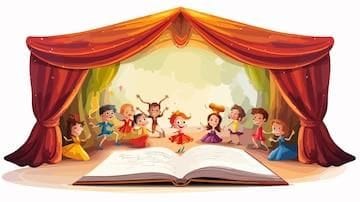
- Think about how each character feels.
- Write small notes:
- where to pause,
- where to raise or lower your voice,
- where to add actions or body language.
- Notice new paragraphs that show a new speaker.
- Plan simple props (like a toy parrot or a chair as a cage).
Tips for a good dramatic reading
- Read all words accurately; underline any you do not know.
- Use punctuation to guide your voice.
- Speak clearly and not too fast.
- Look up from the page sometimes to face your audience.
Improve with feedback
- Perform for another group and ask what they liked.
- Ask how you can improve expression, volume or clarity.
- Perform again using their suggestions.
Check Your Understanding
Writing task
- Write a short paragraph: "How would you react if an animal could talk to you?"
- Then:
- check spelling,
- improve weak adjectives and verbs,
- swap work with a partner for feedback.
Working with Adverbs
What is an adverb?
- An adverb gives more information about a verb.
- It often tells us how, when or where something is done.
- Many adverbs end in -ly.
Forming adverbs
- Add -ly to many adjectives:
- quick → quickly
- careful → carefully
- If an adjective ends in -y, change y to i and add -ly:
- pretty → prettily
- If an adjective ends in -ble, usually drop the e before adding -ly:
- terrible → terribly
Example sentences
- Madison speaks clearly.
- Harry watches the parrot carefully.
- The family listens excitedly.
Learn more about Apostrophes
Contractions
- A contraction shows where letters are left out.
- Examples:
- cannot → can't
- do not → don't
- I will → I'll
- Contractions are common in speech and informal writing.
Apostrophes for possession
- Show that something belongs to someone or something.
- Examples:
- the cage of the parrot → the parrot's cage
- the house of the family → the family's house
- the parrot of Great Uncle George → Great Uncle George's parrot
- If the plural word already ends in s, add the apostrophe after s:
- the games of the boys → the boys' games
- Students can practise changing phrases with "of" into possessive forms and back again.
The story of Doctor Dolittle
About the Doctor Dolittle books
- Written by Hugh Lofting.
- First published in the early twentieth century.
- Set in the "olden days", using older language and settings.
- They are historical because they take place in the past and show life from long ago.
The extract "Are you a good noticer?"
- Tommy Stubbins, a cobbler's son, meets Doctor Dolittle.
- He talks to Polynesia, the parrot.
- Tommy wants to know if he can learn the language of animals.
- Polynesia explains that, to learn animal language, you must:
- watch small movements and signals,
- notice tails, breath and body language,
- be patient and practise.
Focus on Language
Verb tenses in stories
- Many stories are told in the past tense.
- Examples: "I answered", "I was drying off", "he said".
Subject-verb agreement
The verb must match the subject:
- I talk, she talks.
- They play, he plays.
Verb "to be"
- Present: I am, you are, he/she/it is.
- Past: I was, you were, he/she/it was.
Future tense
- Use will with all subjects: I will go, he will go, they will go.
Students can practise rewriting contractions in full, finding past tense verbs in the text, and checking other stories to see which tense is used.
Make notes on a Story
What is a fable?
- A fable is a short story, usually with animal characters, that teaches a moral or lesson.
- Aesop's fables are famous examples.
- Many fables come from different cultures and languages.
Making notes on a picture story
- Record the story in a reading log:
- who the characters are,
- what they do,
- how they feel.
- Note:
- questions the characters ask,
- replies,
- tone of voice,
- how the animals' actions show their personality.
Writing and Presenting a Storyboard
Creating the storyboard
- Tell the story frame by frame, as if it were a comic strip.
- In each frame, write what the character says (dialogue).
- Imagine speech bubbles.
Turning the storyboard into a story
- Add narrative sentences between the speech.
- Use speech marks around spoken words.
- Add interesting adverbs:
- "said Madison cheerfully,"
- "asked Harry nervously."
Sharing and performing
- Share the draft with a partner.
- Edit for:
- spelling,
- grammar,
- punctuation,
- sense and interest.
- Perform a short role play using only dialogue and body language.
- End with a suitable proverb that fits the lesson of your fable.
Important Terms
- Blurb:A short description of a book written to make people want to read it.
- Genre: A type of story or book (such as mystery, fantasy, adventure).
- Plot: The main events of a story, in order.
- Characters: The people or animals in a story.
- Illustrations: Pictures in a book.
- Legacy: Money or things you receive after someone dies.
- Leave (a legacy): To give possessions to someone in a will after you die.
- Fortune: A very large amount of money or valuable property.
- Cherished: Loved very much and carefully looked after.
- Foisted: Forced onto someone when they do not really want it.
- Impersonate: To copy how someone looks or speaks, often to make people laugh.
- Tuition: Teaching, usually for one person or a small group.
- Ripping (story): A very exciting and enjoyable story.
- Sequence: A particular order in which things follow each other.
- Justify: To give good reasons to support a choice or opinion.
- Climax: The most exciting or important part of a story or event.
- Foreigner: A person from another country.
- Scaly: Covered with small flat pieces (like a fish's or lizard's skin).
- Coincidence: When similar things happen at the same time by chance.
- Embarrassment: A feeling of shame or discomfort.
- Hoarse: Having a rough or croaky voice.
- Professor of linguistics: A teacher who studies and teaches about language.
- Heathrow: A large airport in London.
- Homophones: Words that sound the same but have different spellings and meanings (e.g., hoarse and horse).
- Wince: To move slightly because of pain or shock.
- Historical: Related to the past, especially a long time ago.
- Cobbler: A person who makes or repairs shoes.
- Hearth: The floor area in front of a fireplace.
- Powers of observation: The skill of noticing small details.
- Olden days: A time long ago in the past.
- Fable: A short story, often with animals, that teaches a lesson.
- Contraction: A short form of words made by leaving out letters (e.g., don't).
- Subject-verb agreement: Ensuring the verb form matches the subject (e.g., I talk, she talks).
FAQs on Chapter Notes: Unlock Your Imagination
| 1. What is the main theme of "Harry's Mad"? |  |
| 2. How does the author use humour in the story? | |
| 3. What kind of character is Harry in the story? | |
| 4. What role does Mad play in Harry's life? | |
| 5. How can readers relate to the characters in "Harry's Mad"? | |