UPSC Daily Current Affairs: 24th November 2025


GS3/Health
The Future of Health Lies in Harmony
 Why in News?
The contemporary world is grappling with multiple crises, including the rise of lifestyle diseases, environmental degradation, and social fragmentation, which challenge traditional health and development models. In response, there is a global movement aimed at restoring balance among individuals, the environment, progress, and sustainability. This shift recognizes the importance of traditional medicine as a crucial resource for holistic well-being, supported by scientific research and global policy frameworks.
Key Takeaways
- Health is conceptualized as harmony within the body and between humans and nature.
- Traditional medicine emphasizes prevention, balance, and lifestyle regulation rather than merely treating diseases.
- Approximately 90% of WHO member states utilize traditional medicine, especially in low- and middle-income countries.
- India is a leader in traditional medicine, particularly through its AYUSH sector, which promotes preventive and integrative care.
- The WHO's Global Traditional Medicine Centre aims to optimize traditional medicine's role in global health.
Additional Details
- Health as Harmony: Traditional medicine systems from various cultures assert that true health arises from achieving balance within oneself and with the natural world.
- Rediscovering Ancient Knowledge: The science of well-being is increasingly validated by contemporary research, confirming the relevance of traditional practices in today's health landscape.
- Global Relevance: Traditional medicine not only serves healthcare needs but also contributes to biodiversity conservation, nutrition, and economic livelihoods.
- India's AYUSH Sector: Valued at approximately $43.4 billion, this sector reflects a shift towards preventive and personalized healthcare, driven by consumer demand and policy support.
- WHO's Global Traditional Medicine Centre: Located in Jamnagar, Gujarat, it focuses on evidence-based research and aims to enhance the global integration of traditional medicine.
- Global Collaboration: The WHO Global Summit on Traditional Medicine in 2023 and the upcoming 2025 summit in New Delhi emphasize the integration of traditional medicine into broader health strategies.
The resurgence of interest in traditional medicine represents not just a cultural revival but a strategic response to modern health and environmental challenges. As nations pursue holistic well-being, traditional medical knowledge offers valuable insights into achieving balance and sustainability. India's leadership, alongside WHO initiatives, is poised to validate traditional medicine through scientific and ethical frameworks.
GS2/International Relations
Bangladesh at a Crossroads After Hasina Verdict
Why in News?
Bangladesh's former Prime Minister Sheikh Hasina has been sentenced to death by the International Crimes Tribunal for crimes against humanity committed during the 2024 student-led protests. Living in India since her government collapsed in August 2024, Hasina was convicted for ordering the killing of 12 unarmed protesters in Dhaka and Ashulia on August 5, 2024. Five of the victims were burned after death, and one was allegedly burned alive. She also received a life-term sentence for inciting violence, directing the use of lethal weapons, and authorizing attacks using helicopters and drones. The verdict has triggered intense political reactions across Bangladesh and is expected to shape the run-up to the February 2026 national elections.
Key Takeaways
- Sheikh Hasina has been convicted for her role in violent protests, resulting in significant political ramifications.
- The verdict could influence the political landscape leading up to the 2026 elections in Bangladesh.
Additional Details
- International Crimes Tribunal (ICT): This special Bangladeshi court was established in 2009 by then PM Sheikh Hasina to try individuals accused of atrocities during the 1971 Liberation War. The ICT has faced criticism from international rights groups for potential political bias and issues with judicial independence.
- Hasina has dismissed her death sentence as politically motivated, claiming it stems from her crackdown on protests that resulted in the deaths of 1,400 people.
- The Awami League is currently in a leadership crisis following Hasina's departure, with interim leader Muhammad Yunus presenting himself as a reformist and welcoming the verdict as a legal victory.
- The Bangladesh Nationalist Party (BNP) views the verdict as an opportunity to regain political power, despite facing internal challenges.
- Jamaat-e-Islami has unexpectedly called for Hasina's return, aiming to capitalize on nationalist sentiments and potentially join forces with the BNP.
- India's response has been cautious, emphasizing its commitment to the people of Bangladesh rather than the current regime, and refraining from extraditing Hasina despite calls for her return.
The political future in Bangladesh remains uncertain as different parties maneuver in the wake of Hasina's conviction, shaping the landscape ahead of the upcoming national elections.
GS3/Economy
Inside the Mid-Cap Boom: What's Fueling Inflows Now
Why in News?
Mid-cap stocks are currently experiencing significant investor interest, as they have generated impressive returns in recent years. Recent performance has led to record highs for Nifty midcap indices, driven by steady inflows from retail investors and robust earnings growth.
Key Takeaways
- Mid-cap stocks have outperformed large-cap stocks, with Nifty Midcap indices achieving record highs.
- Retail investors have invested approximately ₹8,892 crore in mid-cap funds from September to October 2025.
- Current P/E ratios for mid-caps have become stretched, prompting caution from analysts.
Additional Details
- Mid-Cap Stocks: Defined by SEBI as companies ranked 101 to 250 by market capitalization, typically valued between ₹5,000 crore and ₹20,000 crore. They present higher return potential than large-cap stocks but also come with increased risk.
- Investor Sentiment: Despite a bullish outlook, analysts warn of potential risks due to high valuations and herd behavior among investors.
- Current Performance: Since the beginning of 2025, mid-cap indices have delivered returns of 8-11%, outperforming the Nifty 50's 6.5% return. Major mid-cap stocks like BSE, Federal Bank, and Vodafone Idea have drawn significant investments due to positive financial outcomes.
- Valuation Concerns: The P/E ratio for mid- and small-caps is around 33, compared to 22 for large-caps, raising concerns about potential overvaluation.
- Advice for Retail Investors: Experts suggest being selective with stock choices, entering positions gradually, and focusing on high-quality stocks or mutual funds for safer diversified exposure.
In summary, while mid-cap stocks are currently favored by many investors due to their strong performance and growth potential, caution is advised due to elevated valuations and market volatility. Investors should approach with a strategy that prioritizes quality and gradual investment.
GS1/Indian Society
Ultra-Processed Food Epidemic in India
Why in News?
A recent three-paper series published in The Lancet highlights the alarming increase in the consumption of ultra-processed foods (UPF) around the globe, including India. This rise is closely linked to escalating rates of obesity, diabetes, cardiovascular diseases, and premature mortality. A notable case is that of an 18-year-old Indian youth suffering from obesity and early-onset metabolic disorders, underscoring the urgent public health crisis.
Key Takeaways
- Significant rise in UPF consumption in India.
- Strong correlation between UPF intake and non-communicable diseases (NCDs).
What are Ultra-Processed Foods?
- Definition: According to the NOVA classification, ultra-processed foods are industrial formulations containing multiple chemical and cosmetic ingredients.
- Characteristics:
- Made using ingredients like high-fructose corn syrup, hydrogenated oils, flavor enhancers, emulsifiers, preservatives, and colors.
- Designed for long shelf life, hyper-palatable taste, and convenience.
- Examples: Soft drinks, chips, packaged noodles, biscuits, sugary beverages, chocolates, breakfast cereals, frozen pizzas, ready-to-heat meals, chicken nuggets, and processed meats.
Difference from Processed Foods
- Processed Foods: Involve minimal changes (e.g., washing, canning, cooking).
- Ultra-Processed Foods: Involve extensive industrial formulations, are low in nutrients, and high in calories.
Note: The NOVA classification system was developed by the University of São Paulo (Brazil) and categorizes foods based on the extent and purpose of industrial processing, rather than their nutrient content.
India's UPF Consumption - Why It's a Concern?
- Surge in Consumption: Retail sales of UPFs in India increased dramatically from USD 0.9 billion in 2006 to USD 38 billion in 2019, representing an approximate 40-fold increase.
- Rising NCD Burden:According to the ICMR-INDIAB (2023) report:
- Obesity: 28.6%
- Diabetes: 11.4%
- Prediabetes: 15.3%
- Abdominal obesity: 39.5%
- Childhood obesity has risen from 2.1% to 3.4% (NFHS).
Question:
A company marketing food products advertises that its items do not contain trans-fats. What does this campaign signify to the customers?
- (2011)
- The food products are not made out of hydrogenated oils.
- The food products are not made out of animal fats/oils.
- The oils used are not likely to damage the cardiovascular health of the consumers.
Select the correct answer using the code given below:
- (a) 1 only
- (b) 2 and 3 only
- (c) 1 and 3 only
- (d) 1, 2 and 3
This growing trend of UPF consumption poses serious health risks, emphasizing the need for public awareness and policy action to address dietary habits in India.
GS2/Polity
Presidential Reference on Governors & State Bills (2025)
 Why in News?
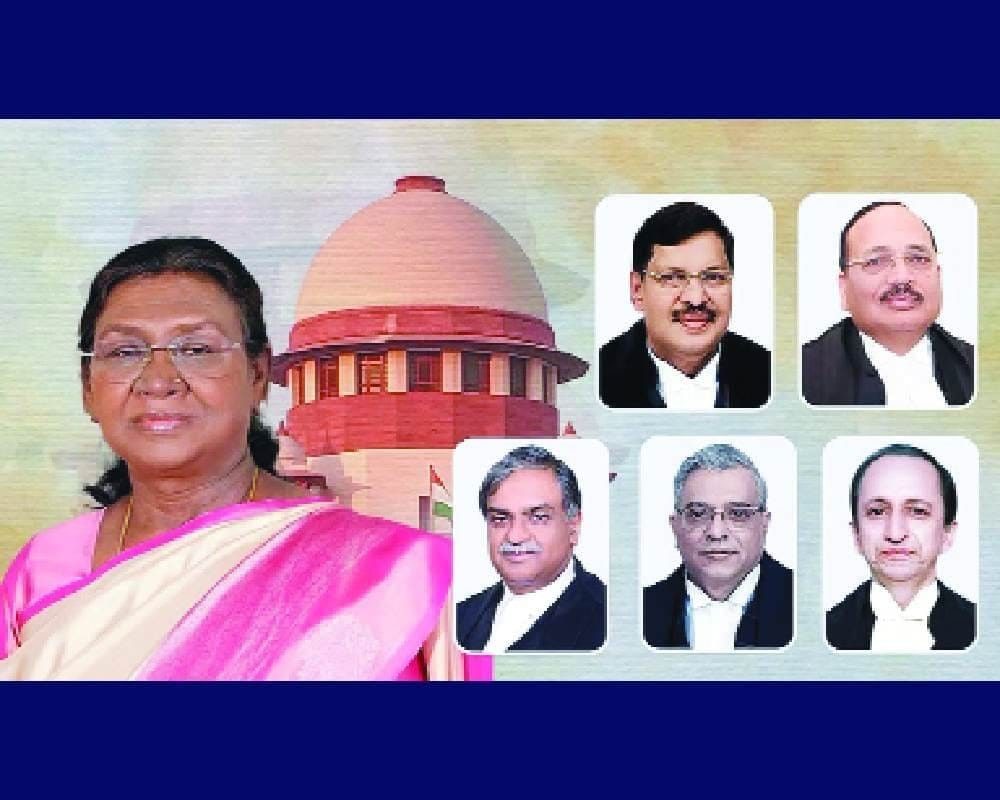
On November 23, 2025, Chief Justice of India B.R. Gavai clarified the Supreme Court's advisory opinion regarding the timelines for Governors and the President in granting assent to State Bills, following the 2025 Presidential Reference.
Key Takeaways
- The Supreme Court's advisory opinion is not a judicial review judgment.
- Governors and the President must act on pending Bills within a "reasonable period".
- The April 8, 2025 Supreme Court judgment introduced a timeline for action on Bills, which was not explicitly stated in the Constitution.
- The concept of a "reasonable period" remains undefined, leading to ongoing legal interpretations.
Additional Details
- Presidential Reference: Made under Article 143 of the Constitution, allowing the President to seek the Supreme Court's opinion on legal questions of public importance. While the opinion is not binding, it holds significant persuasive value.
- Key Constitutional Provisions Involved:
- Article 200: Outlines the Governor's options on State Bills, including the authority to give or withhold assent, return non-Money Bills, or reserve Bills for the President's consideration.
- Article 201: Details the President's powers regarding reserved Bills, with no fixed timelines for action.
- Article 143: Governs Presidential References to the Supreme Court.
- Judicial Clarifications: CJI Gavai emphasized that the Constitution does not mandate specific timelines, and the judiciary cannot impose such timelines. However, it acknowledged that excessive delays in processing Bills may be subject to judicial review.
This advisory opinion is crucial for understanding the separation of powers, federalism, and the role of constitutional authorities. It is particularly relevant for the UPSC Prelims, as questions may pertain to the powers of the Governor, assent procedures for Bills, and the nature of advisory jurisdiction.
Additional notable statements from CJI Gavai include the distinction between advisory opinions and judgments, affirming that advisory opinions cannot overturn judgments, and emphasizing the importance of judicial independence without necessitating conflict with the government.
Question for Consideration:
Which of the following are the discretionary powers given to the Governor of a State? (PYQ 2014)
- 1. Sending a report to the President of India for imposing the President's rule
- 2. Appointing the Ministers
- 3. Reserving certain bills passed by the State Legislature for consideration of the President of India
- 4. Making the rules to conduct the business of the State Government
Select the correct answer using the code given below:
- (a) 1 and 2 only
- (b) 1 and 3 only
- (c) 2, 3 and 4 only
- (d) 1, 2, 3 and 4
GS2/Polity
The Constitution (131st Amendment) Bill 2025 - Chandigarh Under Article 240
 Why in News?
The Union Home Ministry has clarified that the Central Government has no plans to introduce the Constitution (131st Amendment) Bill 2025 in the upcoming Winter Session of Parliament. This proposal aimed to bring Chandigarh under Article 240, which sparked significant political backlash in Punjab, reviving longstanding tensions regarding the status of Chandigarh that originated from the Punjab Reorganisation Act of 1966.
Key Takeaways
- The Constitution (131st Amendment) Bill 2025 was listed for introduction in the Lok Sabha.
- The Bill aimed to place Chandigarh under Article 240, allowing presidential regulations for the Union Territory.
- Punjab has historically viewed Chandigarh as its rightful capital, leading to political opposition against the Bill.
Additional Details
- Proposed Change: The objective of the Bill was to include Chandigarh under Article 240, which would allow the President to issue regulations for the UT, thereby enabling the appointment of an independent Administrator/Lieutenant Governor.
- Article 240: This provision empowers the President to frame regulations for certain Union Territories, such as Andaman & Nicobar Islands and Puducherry, which can override existing Acts of Parliament for those UTs.
- If applied to Chandigarh, it would mean direct administrative control by the Centre, removing the Punjab Governor's role as Administrator.
- Centre's Clarification: The government stated that the proposal was intended to streamline law-making for Chandigarh but emphasized that no decision had been finalized and no Bill would be presented in the 2025 Winter Session.
- Political Opposition: Punjab views Chandigarh as its capital, with current Chief Minister Bhagwant Mann and other opposition parties criticizing the Bill as a move to undermine Punjab's claims.
The ongoing debate over the status of Chandigarh illustrates the complex historical, political, and constitutional sensitivities surrounding the city. It underscores the necessity for careful federal negotiations and a balanced approach that respects the commitments made to both Punjab and Haryana while ensuring effective governance.
GS3/Environment
Low-Pressure Area in Bay of Bengal (November 2025)
 Why in News?
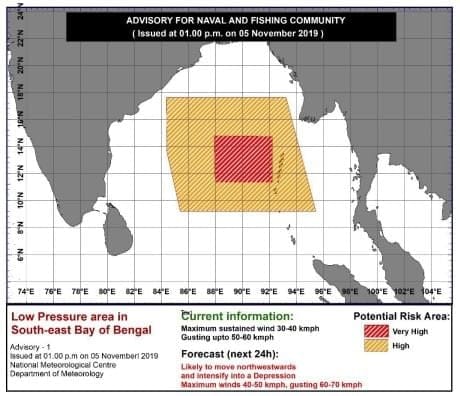
The India Meteorological Department (IMD) has reported the formation of a low-pressure area over the Bay of Bengal on November 22, 2025. This system is expected to strengthen into a depression by November 24 and move west-northwestward.
Key Takeaways
- A low-pressure area formed near the Malacca Strait in the South Andaman Sea due to cyclonic circulation.
- The system is expected to intensify over the southeast Bay of Bengal and adjoining South Andaman Sea.
Additional Details
- Further Intensification: The system may intensify further in the southwest Bay of Bengal within 48 hours after its formation. However, the IMD is uncertain about its development into a cyclonic storm.
- State Impact (Odisha & Coastal Areas): As the system is currently far from the Odisha coast, dry weather persists. Farmers in coastal and southern regions are beginning to harvest mature paddy in anticipation of potential heavy rains, although the State Agriculture Department has not issued any advisories yet.
In summary, while the low-pressure area is developing, its exact impact on local weather patterns remains uncertain. Residents and farmers are advised to stay updated on further developments from the IMD.
GS3/Environment
Thermal Power Plants Near Delhi Operating Without FGD
 Why in News?
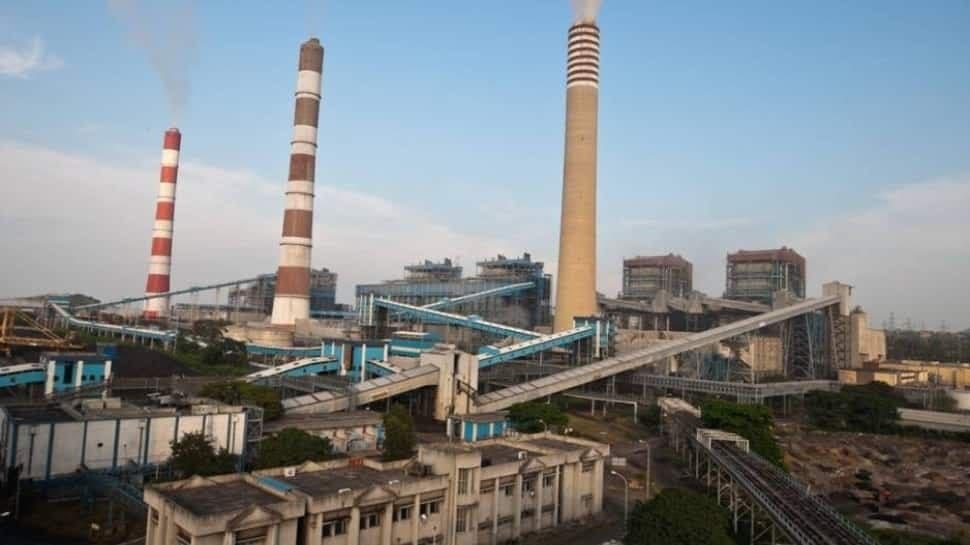
In November 2025, Delhi experienced a significant decline in air quality. A key factor contributing to this deterioration is the ongoing operation of several thermal power plant units located within a 300-km radius of Delhi that lack Flue Gas Desulphurisation (FGD) systems.
Key Takeaways
- Delhi's air quality worsened in November 2025.
- Several thermal power plants are operating without FGD systems.
Additional Details
- Flue Gas Desulphurisation (FGD): This is a pollution-control technology implemented in thermal power plants and industrial facilities to eliminate sulphur dioxide (SO2) from exhaust flue gases before they are emitted into the atmosphere.
- Status of FGD Installation: Within a 300 km radius of Delhi, there are 11 thermal power plants with a total of 35 units. As of April 2025, 13 units are equipped with FGD, while 22 units do not have FGD. Currently, as of November 2025, 15 units are still operating without FGD, and 6 units are shut down or in reserve.
- States & Operators:Key states and operators include:
- Haryana (HPGCL): Panipat TPS, Yamuna Nagar TPS.
- Punjab (PSPCL): Guru Hargobind TPS and Ropar TPS.
- Private: Talwandi Sabo (Vedanta).
- Importance of SO2 Emissions:Sulphur dioxide can transform into secondary PM2.5, which is the most harmful pollutant affecting human health. The consequences include:
- Respiratory diseases
- Acid rain
- Reduction in visibility (smog)
According to the Environmental Protection Agency (EPA), the largest source of sulphur dioxide emissions is attributed to power plants using fossil fuels. This highlights the pressing need for implementing FGD technologies to mitigate air pollution.
GS3/Economy
Safe Processing Matters More Than Zesty Flavours
Why in News?
India's food culture is facing a significant crisis of trust due to high-profile cases of food adulteration. This has raised public concern about hygiene standards, particularly in the informal food sector, prompting a need for reform and regulatory oversight.
Key Takeaways
- The appeal of street food is overshadowed by safety and sanitation concerns.
- High rates of food-borne illnesses highlight the risks associated with informal food vendors.
- The packaged food industry operates under strict regulations, fostering consumer confidence.
- National initiatives aim to improve safety standards for street food without marginalizing it.
Additional Details
- Crisis of Trust: Recent raids on panipuri stalls in Chennai revealed unsafe practices, emphasizing a systemic regulatory gap in monitoring informal vendors.
- Food Safety Statistics: An estimated 100 million food-borne illnesses and 120,000 deaths occur annually in India due to contaminated food.
- Packaged Food Advantages: Packaged foods are subject to a structured regulatory framework, ensuring traceability and consistent hygiene standards, which reduces microbial contamination.
- Technological advancements, like vacuum sealing and pasteurisation, enhance food safety and shelf life, catering to India's growing urban population.
- Community Initiatives: Programs like the Eat Right India movement and Clean Street Food Hub aim to improve hygiene practices among street food vendors and certify their compliance.
- Collaboration between regulatory bodies and local governments is crucial for effective oversight and gradual improvements in food safety.
As India modernizes and urbanizes, it is essential that safe and hygienic food becomes a national priority. While packaged foods benefit from scientific processing and oversight, the cultural significance of street food necessitates thoughtful reforms to enhance safety without displacing traditional practices.
GS1/History & Culture
Guru Tegh Bahadur Ji: Martyrdom Day
Why in News?
On the eve of the 350th Martyrdom Day, the President of India, Smt. Droupadi Murmu, paid tribute to the ninth Sikh Guru, Guru Tegh Bahadur Ji. This tribute highlighted his supreme sacrifice in the defense of righteousness, humanity, and freedom of faith.
Key Takeaways
- Guru Tegh Bahadur was the ninth Guru of Sikhism, serving from 1621 to 1675.
- He was the youngest son of Guru Hargobind Sahib, the sixth Guru.
- Revered as "Hind di Chadar" (Shield of India) for his defense of religious freedom.
- His teachings are recorded in the Guru Granth Sahib, focusing on detachment, courage, and equality.
Significance of His Martyrdom
- Opposed forced conversions under Mughal Emperor Aurangzeb.
- Defended the rights of Kashmiri Pandits seeking his protection.
- Arrested and executed on 24 November 1675, in Chandni Chowk, Delhi.
- His martyrdom symbolizes:
- Protection of freedom of conscience
- Defense of pluralism and interfaith harmony
- Upholding justice and truth
President of India's 2025 Message: Key Highlights
- Tributed to Guru Tegh Bahadur's valour, sacrifice, and principles.
- Emphasized his role in preserving:
- Righteousness
- Humanity
- Truth
- Called upon citizens to embody his values to strengthen harmony and unity in India.
Guru Tegh Bahadur's Contributions
- Spiritual Teachings: Advocated for nirbhau (fearlessness) and nirvair (compassion), stressing spiritual liberation through humility and service.
- Establishment of Sikh Centres: Founded the city of Anandpur Sahib in 1665 and traveled extensively to spread Sikh philosophy.
- Guru Granth Sahib Contribution: Composed 116 hymns (shalok) on themes of detachment and moral courage.
Quiz Question
With reference to the cultural history of medieval India, consider the following statements:
- 1. Siddhas (Sittars) of the Tamil region were monotheistic and condemned idolatry.
- 2. Lingayats of the Kannada region questioned the theory of rebirth and rejected the caste hierarchy.
Which of the statements given above is/are correct?
- (a) 1 only
- (b) 2 only
- (c) Both 1 and 2
- (d) Neither 1 nor 2
This structured overview highlights the legacy and significance of Guru Tegh Bahadur Ji, encouraging a deeper understanding of his contributions to spirituality and social justice in India.
GS2/Polity
Reforming State PSCs - Addressing Structural Gaps
Why in News?
The 2025 National Conference of State Public Service Commissions (PSCs), hosted by the Telangana State PSC, has brought renewed focus on the longstanding challenges affecting State PSCs.
Key Takeaways
- The evolution of Public Service Commissions (PSCs) in India highlights historical demands for merit-based civil service entry.
- State PSCs face significant structural and procedural challenges compared to the Union Public Service Commission (UPSC).
- Proposed reforms aim to enhance the efficiency and credibility of State PSCs.
Additional Details
- Evolution of Public Service Commissions:The origins of PSCs in India can be traced back to the struggle for self-governance. Key milestones include:
- The Montagu-Chelmsford Reforms, which proposed an independent office for service regulation.
- The establishment of the first Public Service Commission in 1926.
- Provisions in the Government of India Act, 1935, mandating PSCs for each province, now retained in the Constitution.
- Structural Differences Between UPSC and State PSCs:
- UPSC operates in a politically insulated environment, ensuring independence and professionalism.
- In contrast, State PSCs function in a "politically osmotic environment," leading to appointments based on political ties rather than merit.
- Procedural Challenges:
- Irregular updates to syllabi and heavy reliance on limited academic resources.
- Complex reservation calculations leading to legal disputes, particularly in states like Telangana and Andhra Pradesh.
- Recurring controversies such as paper leaks and judicial interventions, contributing to a loss of faith in State PSCs.
- Reform Measures:
- Institutional reforms to provide a five-year roadmap for vacancies and ensure predictable exam cycles.
- Proposed constitutional amendments to raise the age limit for PSC members and establish minimum qualifications.
- Improvements in examination processes for fairness, including regular syllabus updates and objective-type testing.
The ongoing discussions and proposed reforms underscore the need for a comprehensive overhaul of State PSCs to restore their credibility and efficiency, aligning them closer to the standards set by the UPSC.
FAQs on UPSC Daily Current Affairs: 24th November 2025
| 1. What are the implications of the Hasina verdict for Bangladesh's political landscape? |  |
| 2. What factors are contributing to the mid-cap boom in the market? | |
| 3. What health concerns are associated with the ultra-processed food epidemic in India? | |
| 4. How does the Constitution (131st Amendment) Bill impact governance in Chandigarh? | |
| 5. Why is safe processing of food more critical than flavour enhancement? | |




