UPSC Daily Current Affairs: 28th November 2025


GS2/Governance
Enabling a Modern and Future-Ready Labour Ecosystem
 Why in News?
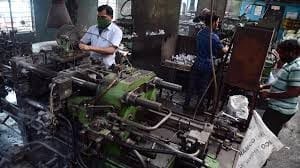
On November 21, 2025, India achieved a significant milestone with the implementation of the Four Labour Codes, marking a crucial step towards Viksit Bharat. These reforms are aimed at modernizing India's labour governance framework, ensuring both worker protection and enterprise competitiveness while reflecting the aspirations of Aatmanirbhar Bharat and inclusive growth.
Key Takeaways
- The Four Labour Codes consolidate numerous existing labour laws into broader functional codes to address complexities and inconsistencies.
- India's workforce is one of the largest and youngest globally, with significant job creation and a drop in unemployment.
- The Codes enhance worker protections, including minimum wage standards and improved social security for unorganised workers.
- Businesses benefit from simplified compliance mechanisms, encouraging formalization and reducing administrative burdens.
- The Labour Codes aim to balance worker rights with business needs, supporting economic growth and investment attraction.
Additional Details
- Core Objective of Labour Codes: The primary aim is to strengthen worker protections through measures such as universal minimum wages, mandatory appointment letters, and a defined workweek of 48 hours to enhance work-life balance.
- Significance of the Social Security Code: This code extends social security to gig and platform workers, which is vital as this segment is expected to grow significantly in the coming years.
- Women's Participation: The Codes address barriers to women's participation in the workforce by reinforcing equal pay, enhancing maternity benefits, and allowing women to work night shifts with appropriate safety measures.
- Future of Work: The rise of digital platforms and flexible work arrangements necessitates the inclusion of gig workers under the Social Security Code, promoting sustainable livelihoods.
- Implementation Challenges: The success of these reforms will depend on effective state-level implementation, coordination, and investment in digital systems for compliance and enforcement.
In conclusion, the implementation of the Four Labour Codes has the potential to significantly enhance job creation, expand social security, and strengthen India's economic growth trajectory. Effective execution and ongoing stakeholder engagement will be crucial for realizing the full benefits of these reforms.
GS2/Polity
Regulating User-Generated Content (UGC) - SC Pushes for Robust Framework to Balance Free Speech and Protection
Why in News?
The Supreme Court of India has raised significant concerns about the rapid dissemination of harmful content on social media platforms. This includes content that is obscene, defamatory, and potentially "anti-national." The Court emphasized the necessity for autonomous regulation, age-verification mechanisms, and preventive measures, alongside potential amendments to the IT Rules 2021, all while ensuring compliance with Article 19(1)(a) and Article 19(2) of the Indian Constitution.
Key Takeaways
- The Supreme Court highlighted the virality of harmful UGC before any takedown actions can be implemented.
- Existing warnings regarding adult content were deemed insufficient by the Court.
- The need for an impartial and autonomous regulatory authority was strongly emphasized.
- The Court aims to protect individuals from harm without infringing on free speech rights.
Additional Details
- Proposed Regulatory Measures:The Court suggested several measures, including:
- Age Verification: Use of Aadhaar or PAN for age verification before accessing sensitive content.
- Stricter Oversight: Establishment of an autonomous body to regulate UGC, rejecting ineffective self-styled bodies.
- AI-Enabled Moderation: Platforms are encouraged to use AI for content moderation and early detection of harmful materials.
- Expanded IT Rules, 2021:Proposed amendments include:
- Defining "obscene content" by its potential to deprave or corrupt audiences.
- Prohibitions on content that offends decency, promotes violence, or derogates vulnerable groups.
- Implementation of a content rating framework to guide access based on age appropriateness.
- Key Concerns Raised:
- Risk of pre-censorship due to vague definitions of terms like "anti-national."
- Need for public consultations to gather stakeholder feedback, as mandated by prior Supreme Court directions.
- Challenges posed by the rapid virality of content and its implications for victim protection.
The intervention of the Supreme Court represents a pivotal moment in India's approach to digital governance. While it upholds freedom of speech under Article 19(1)(a), the Court underscores the urgent need for effective, accountable, and technology-driven measures to protect citizens from harmful user-generated content. The proposed amendments to the IT Rules 2021 and the establishment of an independent regulatory body aim to balance digital rights with safety, fostering a responsible online environment.
GS2/Polity
The Kamalesan Case and Its Simple Lesson
 Why in News?
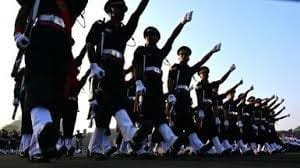
The dismissal of Lieutenant Samuel Kamalesan from the Indian Army for refusing to participate in ritual worship at his regiment's temple or gurdwara raises important questions about the balance between individual conscience and institutional cohesion. The Delhi High Court and the Supreme Court upheld this decision, framing his refusal as disobedience rather than a matter of religious freedom, invoking military discipline and Article 33 of the Constitution.
Key Takeaways
- The case highlights the tension between personal beliefs and military obligations.
- Judicial restraint in military matters can sometimes overlook the need for inclusion and accommodation.
- The Army's ethos emphasizes unity through rituals, which may conflict with individual religious practices.
Additional Details
- Military Necessity: The courts justified the Army's actions by emphasizing the need for discipline and cohesion within military ranks.
- Inclusivity in the Military: The Indian Army has a history of integrating soldiers from diverse religious backgrounds, aiming for equal opportunity and representation.
- Opportunity for Pragmatism: Kamalesan's request to refrain from entering the sanctum during worship was a small accommodation that could have upheld both discipline and personal dignity.
- Impact of Dismissal: The loss of Kamalesan not only costs an officer but also risks alienating minority soldiers, potentially undermining trust within the institution.
The Kamalesan case serves as a reminder that the intersection of duty and personal belief is complex. Effective leadership should strive to create an environment where both can coexist, affirming that every soldier, regardless of faith, is equal while serving their country. As noted by Justice Chinnappa Reddy, true tolerance is essential in upholding constitutional values.
GS3/Environment
Why India's Air Pollution Crisis Persists
 Why in News?
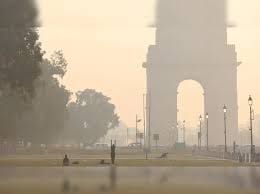
Every winter, Delhi becomes engulfed in toxic smog, prompting India to resort to familiar yet ineffective short-term solutions such as cloud seeding, smog towers, water sprinkling, odd-even vehicle rules, and festival crackdowns. While these measures create a facade of action, they fail to bring about meaningful improvements in air quality.
Key Takeaways
- Public discourse on air pollution often deteriorates, with blame directed towards scientists, politicians, and administrators.
- Protests have emerged from public frustration, highlighting a disconnect between governance and citizen concerns.
Additional Details
- Fragmented Governance: Air quality management in India is divided among multiple agencies, including the Environment Ministry, CPCB, SPCBs, CAQM, DPCC, and various municipal bodies. This fragmentation leads to a lack of clear authority and accountability.
- Governance Constraints: Institutional weaknesses stem from shared constitutional powers, varying budgets, and judicial pressures that favor quick responses over long-term solutions.
- Short-Term Measures: Political incentives favor high-visibility actions that allow governments to demonstrate responsiveness without addressing the core issues related to pollution sources.
- Western Trap: India often borrows pollution control strategies from developed nations without adapting them to local contexts, which can lead to ineffective implementation.
- Need for Leadership: Clear leadership and accountability are crucial for effective air-quality governance, requiring a modern clean-air law to streamline roles and reduce overlaps.
- Science Managers: Establishing a professional cadre of science managers is essential for translating scientific knowledge into actionable policies and bridging the gap between scientific models and governance.
- Implementation Capacity: Successful policies must align with local capacities and realities, focusing on what can be realistically enforced and accepted by communities.
In summary, India's ongoing air pollution crisis is compounded by fragmented governance, reliance on short-term fixes, and a lack of localized solutions. Addressing these systemic issues requires coordinated long-term strategies and a clear framework for accountability and action.
GS3/Economy
Tex-RAMPS Scheme - Boosting Innovation in the Textile Sector
 Why in News?
The Union Government has recently approved the Textiles Focused Research, Assessment, Monitoring, Planning and Start-up (Tex-RAMPS) Scheme, aimed at enhancing innovation within the textile sector.
Key Takeaways
- The Tex-RAMPS Scheme has an outlay of Rs. 305 crore, set to be implemented from 2025-26 to 2030-31.
- It aims to strengthen India's textile sector by enhancing innovation capacity, improving data systems, and increasing global competitiveness.
Additional Details
- Textile Sector Importance: The textile and apparel sector is vital to India's economy, contributing over 2% to GDP, nearly 11% to industrial output, and around 13% to total export earnings.
- This sector employs more than 45 million people, making it the second-largest employer after agriculture.
- Challenges Faced: The sector struggles with slow technology adoption, limited research and development capacity, and rising competition from countries like China and Vietnam.
- Aims of Tex-RAMPS: The scheme focuses on building a robust ecosystem for textile research and innovation, promoting sustainability, and fostering entrepreneurship.
- Key Components: The scheme includes initiatives for research and innovation, data systems enhancement, capacity development, and support for start-ups.
In conclusion, the Tex-RAMPS Scheme represents a significant step towards revitalizing the Indian textile sector, fostering innovation, and enhancing its global competitiveness. By addressing existing challenges and creating a supportive ecosystem, the initiative is expected to generate employment and deepen collaborations across various stakeholders.
GS2/ International Relations
3rd India-Indonesia Defence Ministers' Dialogue
Why in News?
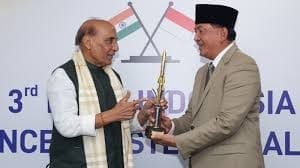
India's Defence Minister co-chaired the third India-Indonesia Defence Ministers' Dialogue with the Indonesian Defence Minister in New Delhi. The dialogue assessed regional security, addressed multilateral issues, and identified new defence cooperation avenues, highlighting the strengthening strategic commitment between India and Indonesia.
Key Outcomes:
- Indo-Pacific Cooperation: India and Indonesia reaffirmed their commitment to a free and open Indo-Pacific, recognizing the alignment between the ASEAN Outlook on the Indo-Pacific and India's Indo-Pacific Oceans Initiative. They agreed to enhance cooperation in maritime awareness, cyber resilience, and through multilateral bodies like the Indian Ocean Rim Association.
- Defence and Industry Collaboration: Indonesia welcomed India's proposal to establish a Joint Defence Industry Cooperation Committee aimed at strengthening technology transfer, joint research and development, certification harmonization, and supply-chain linkages.
- Military-to-Military Engagements: Both countries highlighted the progress in joint military exercises across land, maritime, and air forces, including Super Garuda Shield, Ex Garuda Shakti, Ex Samudra Shakti, MILAN, and upcoming Air Manoeuvre Exercises.
India-Indonesia Relations:
- Indonesia's strategic position in the Indo-Pacific, overseeing crucial sea lanes such as the Malacca, Sunda, and Lombok Straits, makes it a vital partner for maritime security and regional trade flow.
- Bilateral trade between India and Indonesia reached USD 38.8 billion in 2022-23, highlighting the depth of their economic engagement.
- Prospects like the USD 450 million BrahMos missile deal and expanding defence collaboration further illustrate the strengthening economic and strategic ties between the two nations.
GS3/ Defence and Security
India's Evolving Counterterror Response Since 26/11 Attacks
Introduction
26/11 Mumbai attacks were a series of coordinated terrorist attacks carried out by 10 members of the terrorist organization Lashkar-e-Taiba (LeT). The attacks were planned in response to the Indian government's crackdown on the LeT and its leaders, and were aimed at instilling fear and creating instability in India. The attackers arrived by sea and targeted multiple locations in Mumbai, including hotels, a train station, and a Jewish community center. The attacks lasted for about 60 hours and resulted in the deaths of 166 people, including 18 security personnel.
The 26/11 attacks prompted significant reforms in India's counter-terrorism framework, including the establishment of the National Investigation Agency (NIA), amendments to the Unlawful Activities (Prevention) Act (UAPA), and the creation of the National Intelligence Grid (NATGRID). Despite these reforms, challenges remain, such as the lack of a national counter-terrorism doctrine, fragmented intelligence sharing, legal and judicial weaknesses, technological gaps, and manpower shortages. To strengthen counter-terrorism efforts, India needs to deepen technology integration, enhance police capabilities, strengthen legal provisions, disrupt terror financing, and improve international cooperation.
Major Reforms in India's Counter-Terrorism Framework Post 26/11
1. Legal Reforms:
- National Investigation Agency (NIA) Act, 2008: This act established the NIA as a federal body to investigate terror cases, addressing inter-state coordination issues.
- Amendments to the Unlawful Activities (Prevention) Act, 1967 (UAPA): The amendments broadened the definition of a terrorist act, enhancing the legal framework for counter-terrorism.
2. Bolstering Intelligence:
- National Intelligence Grid (NATGRID): Established in 2010, NATGRID creates a secure, integrated database for security agencies to share information and track suspects using data from multiple government sources.
- Strengthening Multi-Agency Centre (MAC): Enhancements to MAC have improved real-time information coordination among intelligence agencies.
3. Coastal Security Reinforcement:
- Implementation of a multi-layered coastal defense system, with the Indian Navy overseeing maritime security and the Indian Coast Guard managing territorial waters.
- Establishment of a Coastal Surveillance Network with radar sensors along the coastline to monitor vessel movement in real-time.
4. Modernization of Police and Special Forces:
- Creation of state-level Special Forces for faster response, such as Force One in Maharashtra.
- Decentralization of the National Security Guard (NSG) with regional hubs in Mumbai, Chennai, Hyderabad, and Kolkata for rapid deployment.
5. Soft Target Protection:
- Upgradation of security protocols for major soft targets like hotels and airports, including enhanced CCTV coverage and access control measures.
- Strengthening of cyber security measures by empowering the Computer Emergency Response Team-India (CERT-In) to counter digital threats.
Key Limitations Impeding India's Counter-Terrorism Capabilities
1. Lack of a National Counter-Terrorism Doctrine:
- Absence of a unified, long-term counter-terrorism strategy leads to a reactive approach, intensifying only after major attacks.
- Varying policies with political leadership prevent a consistent and bipartisan national security approach.
2. Fragmented Intelligence Apparatus:
- Persistent stove-piping of intelligence among agencies like the Intelligence Bureau (IB), Research and Analysis Wing (R&AW), and state police hinders effective coordination.
- Coordination gaps were evident in incidents like the November 2025 Red Fort car blast, where prior intelligence was not shared effectively.
3. Legal and Judicial Lacunas:
- Weak prosecution in terror cases due to shoddy investigations and witness intimidation leads to case collapses despite strong evidence.
- High-profile acquittals, such as in the 2008 Malegaon blast case, highlight deficiencies in the judicial process.
4. Technological Lacunas:
- Inadequate counter-narrative strategies against extremist propaganda and uneven cyber forensics capabilities hinder tracking of online terror activities.
- Terror groups employing sophisticated methods like dead-drop techniques and peer-to-peer crypto transfers evade traditional surveillance, exacerbating the need for skilled cyber-intelligence analysts.
5. Manpower & Capacity Crises:
- Significant staff shortages in agencies like the NIA, with critical operational posts undermanned, affecting overall effectiveness.
- State Anti-Terrorism Squad (ATS) units lacking modern equipment and training, as highlighted by CAG audits, impair their operational capabilities.
Measures to Strengthen Counter-Terrorism Efforts
1. Deepen Tech Integration with MAC:
- Integrate Artificial Intelligence (AI) and Machine Learning (ML) with MAC data feeds to analyze intercepted data.
- Identify patterns, predict potential attacks, and flag suspicious networks more efficiently.
2. Strengthen Police at the Last Mile:
- Continuous funding for state police to acquire modern equipment and specialized counter-terrorism training.
- Establish seamless intel-sharing systems between MAC/SMAC for timely responses.
3. Strengthen Legal Provisions:
- Establish fast-track courts for counter-terrorism trials to act as a deterrent.
- Regularly review and amend laws like UAPA to address modern threats while ensuring safeguards.
4. Cripple Terror Financing:
- Enhance the Financial Intelligence Unit (FIU) to monitor hawala transactions, cryptocurrency payments, and shell companies funding terrorism.
- Strengthen international cooperation with FATF to target safe havens for terror financing.
5. International Cooperation:
- Deepen intelligence sharing with key partners like the USA, Israel, France, and Gulf countries for real-time actionable exchanges.
- Apply diplomatic pressure through multilateral forums such as the UN, G20, BRICS, and SCO to isolate state sponsors of terrorism.
GS2/ Polity and Governance
Passive Euthanasia and the Right to Die with Dignity
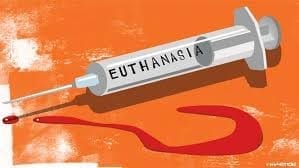
Why in News?
The Supreme Court has directed a hospital to form a medical board to evaluate a petition requesting passive euthanasia for a 32-year-old individual who has been in a "persistent vegetative state" for the last 12 years.
A Persistent Vegetative State (PVS) is a medical condition where a person loses higher brain functions such as awareness, thinking, and purposeful movement but retains basic bodily functions like breathing, circulation, sleep-wake cycles, and reflexes.
What is Euthanasia?
About: Euthanasia involves the intentional act of hastening a person's death to alleviate suffering from an incurable or terminal condition. It is a painless and deliberate action aimed at relieving physical, emotional, or spiritual distress. Euthanasia can be categorized into two types:
- Active Euthanasia: This involves the deliberate ending of a patient's life and can take various forms:
- Voluntary Euthanasia: Where the patient actively chooses to end their life.
- Non-voluntary Euthanasia: Where the decision is made on behalf of an incompetent patient.
- Involuntary Euthanasia: Where death is induced without the patient's consent, which is illegal in most countries.
- Passive Euthanasia: This involves allowing a terminally ill patient to die naturally by withdrawing or withholding life-sustaining treatment. The aim is to respect the right to die with dignity and to prevent prolonged suffering in cases of irreversible medical conditions.
Legal Standing in India:
- Active Euthanasia: Indian law prohibits active euthanasia. The Bharatiya Nyaya Sanhita (BNS), 2023, classifies any deliberate act causing death as an offense, punishable under sections related to culpable homicide (Section 100) or murder (Section 101).
Supreme Court on Euthanasia
- Passive Euthanasia: The Supreme Court has acknowledged passive euthanasia under specific conditions, ensuring it serves the patient's best interests and adheres to legal standards.
- Article 21: This article protects the right to life and personal liberty, as interpreted by the Supreme Court to encompass health, privacy, and dignity. However, it does not inherently include the right to die, except in situations that permit a dignified death.
Law Commission's Perspective
- The Law Commission's 241st Report in 2012 clarified that competent patients have the right to refuse life-sustaining treatment without facing legal repercussions. Doctors acting in accordance with a patient's informed wishes are not liable for abetment or culpable homicide.
Judicial Pronouncements
Maruti Shripati Dubal v. State of Maharashtra (1987): The Bombay High Court recognized the right to die as part of the right to life under Article 21, advocating for the choice of terminally ill individuals to end their suffering.
Gian Kaur v. State of Punjab (1996): The Supreme Court ruled that the right to life does not encompass the right to die, stressing the preservation of life as a natural imperative.
Aruna Shanbaug v. Union of India (2011): The Supreme Court permitted the withholding or withdrawal of life-sustaining treatment under stringent legal and medical conditions, even for patients unable to make decisions.
Common Cause v. Union of India (2018): The Supreme Court differentiated between active and passive euthanasia, recognizing the fundamental right of terminally ill patients to die with dignity, including the option to refuse medical treatment through advance directives.
Supreme Court Directives on Euthanasia
- Original 2018 Directives: The guidelines mandated a two-stage medical review involving a Primary Medical Board and a Secondary Medical Board, each comprising experienced specialists from relevant fields.
- 2023 Modifications: The Supreme Court revised the directives by reducing the experience requirement for board members and streamlining the composition and appointment process of both medical boards.
Global Position on Euthanasia
- Netherlands, Luxembourg, and Belgium: These countries permit both euthanasia and assisted suicide for individuals enduring unbearable suffering with no prospect of recovery.
- Switzerland: While active euthanasia is illegal, non-physicians can assist terminally ill individuals in committing suicide.
- Australia: Both euthanasia and assisted suicide are allowed, restricted to adults with full decision-making capacity facing terminal illnesses.
Ethical Considerations
The variations in global practices of euthanasia underscore its ethical nature, influenced more by societal moral principles and philosophical traditions than by medical capabilities.
Distinction between Euthanasia and Assisted Suicide
- Euthanasia involves a medical professional directly ending a patient's life, while assisted suicide entails providing the means or guidance for an individual to end their own life.
- Suicide Tourism: This phenomenon occurs when patients travel to countries where euthanasia or assisted suicide is legal, with Switzerland being a prominent destination for patients from the UK, Germany, and France.
Conclusion
The Supreme Court's involvement signifies India's progressive stance on the right to die with dignity, balancing legal protections with compassionate care through a regulated process of passive euthanasia.
FAQs on UPSC Daily Current Affairs: 28th November 2025
| 1. What is the significance of regulating User-Generated Content (UGC) in the context of free speech and protection? |  |
| 2. What lessons can be drawn from the Kamalesan Case? | |
| 3. How does India's air pollution crisis continue to persist despite various measures? | |
| 4. What is the Tex-RAMPS Scheme and how does it benefit the textile sector? | |
| 5. How has India's counterterror response evolved since the 26/11 attacks? | |




