Economic Development: November 2025 UPSC Current Affairs


GS3/Economy
Tex-RAMPS Scheme - Boosting Innovation in the Textile Sector
 Why in News?
The Union Government has recently approved the Textiles Focused Research, Assessment, Monitoring, Planning and Start-up (Tex-RAMPS) Scheme, aimed at enhancing innovation within the textile sector.
Key Takeaways
- The Tex-RAMPS Scheme has an outlay of Rs. 305 crore, set to be implemented from 2025-26 to 2030-31.
- It aims to strengthen India's textile sector by enhancing innovation capacity, improving data systems, and increasing global competitiveness.
Additional Details
- Textile Sector Importance: The textile and apparel sector is vital to India's economy, contributing over 2% to GDP, nearly 11% to industrial output, and around 13% to total export earnings.
- This sector employs more than 45 million people, making it the second-largest employer after agriculture.
- Challenges Faced: The sector struggles with slow technology adoption, limited research and development capacity, and rising competition from countries like China and Vietnam.
- Aims of Tex-RAMPS: The scheme focuses on building a robust ecosystem for textile research and innovation, promoting sustainability, and fostering entrepreneurship.
- Key Components: The scheme includes initiatives for research and innovation, data systems enhancement, capacity development, and support for start-ups.
In conclusion, the Tex-RAMPS Scheme represents a significant step towards revitalizing the Indian textile sector, fostering innovation, and enhancing its global competitiveness. By addressing existing challenges and creating a supportive ecosystem, the initiative is expected to generate employment and deepen collaborations across various stakeholders.
GS3/Economy
Fully Accessible Route (FAR) of Investment
Why in News?
In 2025, foreign investment in Indian government bonds has reached only about ₹69,000 crore ($7.8 billion), which is nearly half of the expected amount. This is notable despite the Reserve Bank of India's efforts to simplify and make the rules more flexible under the Fully Accessible Route (FAR) to attract greater investment.
Key Takeaways
- FAR was launched by the Reserve Bank of India in March 2020 to facilitate foreign investment in Indian government securities (G-secs).
- The framework aims to liberalize India's debt market and enhance foreign participation.
Additional Details
- Overview: FAR is a special investment framework designed to open up Indian government securities to foreign investors.
- Eligible Investors: The route is available to Foreign Portfolio Investors (FPIs), Non-Resident Indians (NRIs), and Overseas Citizens of India (OCIs) without any investment caps.
- Key Feature: It allows unlimited foreign investment in designated government bonds with free buy-sell access and no quantitative ceiling.
- Liquidity & Integration: FAR is intended to improve bond market depth, diversify funding sources, and enhance India's visibility in global debt indices.
- Repatriation Freedom: Investors can freely repatriate capital and profits back to their home countries, enhancing the attractiveness of investment.
- Global Milestone: In June 2024, JP Morgan included 29 Indian G-secs under FAR in its Emerging Market Bond Index (EMBI), marking India's entry into major global bond benchmarks.
- Comparison with Other Routes: FAR operates alongside Medium Term Framework (MTF) and Voluntary Retention Route (VRR), which have different conditions and limits for foreign investments.
- Projected Inflows: The inclusion in global indices was expected to attract $20-25 billion from institutional and index-tracking investors in 2024-25.
- Actual Outcome: Only $10.7 billion was realized during 2024-25, significantly below expectations due to global monetary uncertainties and domestic caution.
- Significance: Despite lower inflows, FAR represents a structural reform that strengthens India's position as a globally accessible and competitive bond market.
Overall, while the FAR framework aims to attract foreign investment into Indian government bonds by enhancing flexibility and accessibility, the actual inflows have been hindered by various global and domestic factors.
Consider the following statements:
- 1. In India, Non-Banking Financial Companies can access the Liquidity Adjustment Facility window of the Reserve Bank of India.
- 2. In India, Foreign Institutional Investors can hold the Government Securities (G-Secs).
- 3. In India, Stock Exchanges can offer separate trading platforms for debts.
Which of the statements given above is/are correct?
- Options: (a) 1 and 2 only (b) 3 only (c) 1, 2 and 3 (d) 2 and 3 only
GS3/Economy
National Beekeeping & Honey Mission (NBHM)
Why in News?
The National Beekeeping and Honey Mission (2020-21 to 2025-26) is nearing its conclusion this fiscal year, marking a significant phase in India's agricultural development and rural income enhancement efforts.
Key Takeaways
- NBHM aims to promote scientific beekeeping under the Atmanirbhar Bharat Abhiyan.
- It has a financial outlay of ₹500 crore for the period from FY 2020-21 to 2025-26.
- The mission is executed by the National Bee Board (NBB) under the Ministry of Agriculture & Farmers Welfare.
- Focus areas include honey production, pollination, and empowerment of farmers.
Additional Details
- Implementation Structure:The mission is divided into three mini missions:
- Mini Mission-I: Enhances honey and hive product production along with scientific beekeeping.
- Mini Mission-II: Focuses on post-harvest management, including collection, processing, storage, and marketing.
- Mini Mission-III: Supports research, innovation, and capacity building for technology-driven solutions.
- Institutional Network: Involves coordination with entities such as NDDB, NAFED, TRIFED, ICAR, KVIC, and MSME bodies at both national and state levels.
- Achievements & Progress:
- India produced 1.4 lakh MT of honey in 2024 and exported 1.07 lakh MT worth USD 177.55 million in FY 2023-24, moving up to 2nd globally from 9th in 2020.
- Infrastructure development includes 6 world-class labs, 47 mini labs, and 26 processing units.
- A research hub, the National Centre of Excellence in Beekeeping, has been established at IIT Roorkee.
- Empowerment initiatives have led to 167 SHG projects and 97 FPOs, supporting livelihood diversification.
- The Madhukranti Portal integrates digital technologies, hosting 14,859 beekeepers and ensuring blockchain-based traceability for exports.
- Policy Support: A Minimum Export Price (MEP) of USD 2,000/MT has been set until December 2024 to prevent the dumping of inferior honey and protect domestic producers.
The National Beekeeping & Honey Mission serves as a key initiative in enhancing rural livelihoods, promoting sustainable agricultural practices, and positioning India as a leader in honey production.
GS3/Economy
Rare Earth Magnet Scheme to Build Domestic Supply Chain
Why in News?
The Union Cabinet has given the green light to a substantial Rs. 7,280-crore scheme aimed at creating India's first integrated manufacturing ecosystem for Sintered Rare Earth Permanent Magnets (REPMs).
Key Takeaways
- India currently relies heavily on imports for rare earth permanent magnets, despite possessing the fifth-largest global reserves.
- The scheme aims to boost domestic production to meet the growing demand, particularly from the electric vehicle (EV) and renewable energy sectors.
Additional Details
- Rationale:India imports around 900 tonnes of REPMs annually, critical for various high-tech applications including:
- EV traction motors
- Wind turbine generators
- Consumer electronics
- Aerospace and defence technology
- Key Features:
- The scheme has a dual incentive structure: Rs. 6,450 crore in sales-linked incentives and Rs. 750 crore as a capital subsidy.
- Five manufacturers will be selected through global competitive bidding, each receiving a capacity allocation of 1,200 MTPA out of a total of 6,000 MTPA.
- Strategic Importance: The initiative is critical for strengthening India's clean-tech and defence capabilities, aligning with the nation's Net Zero target by 2070 and the National Critical Minerals Mission.
This scheme not only aims to reduce import dependency but also enhances India's position in the global supply chain for essential technologies, reinforcing both economic and geopolitical stability.
GS3/Economy
Export Promotion Mission (EPM) - Strengthening India's Export Competitiveness
Why in News?
In light of increasing global trade uncertainties and the recent announcement of a steep 50% tariff by the US on Indian goods, the Union Cabinet has approved a comprehensive Export Promotion Mission (EPM) with a financial commitment of ₹25,060 crore. This initiative aims to enhance India's export competitiveness, particularly in labor-intensive sectors such as textiles, leather, gems & jewellery, engineering goods, and marine products.
Key Takeaways
- The EPM is a strategic response to safeguard employment and maintain export momentum.
- It consolidates key export support schemes to provide better financial assistance to exporters.
- The initiative is crucial for addressing the challenges posed by recent US tariffs.
Additional Details
- Background: The US, being India's largest export market, imposed a 50% tariff effective from August 27, 2025, leading to a 12% decline in Indian exports to the US in September 2025.
- EPM Objectives:
- Enhance credit availability and reduce costs for exporters, especially MSMEs.
- Address non-tariff barriers and logistics challenges.
- Facilitate diversification into new markets.
- Implementation Framework:The Directorate General of Foreign Trade (DGFT) will oversee the mission, which includes two sub-schemes:
- Niryat Protsahan (₹10,401 crore): Focuses on financial interventions, including interest subvention and credit guarantees.
- Niryat Disha (₹14,659 crore): Involves non-financial support for branding, logistics, and capacity building.
- Credit Guarantee Scheme for Exporters (CGSE): Provides collateral-free loans and aims to enhance liquidity for exporters.
The Export Promotion Mission (EPM) and the Credit Guarantee Scheme for Exporters represent a significant step toward reinforcing India's export resilience against global protectionism and tariff barriers. These strategies signal a shift towards sustainable and competitive export growth in the post-pandemic global economy.
GS3/Economy
Flexible Inflation Targeting: A Good Balance
Why in News?
As India approaches the 2026 deadline for reviewing its Flexible Inflation Targeting (FIT) framework, currently aimed at maintaining inflation at 4% ± 2%, the Reserve Bank of India (RBI) is engaging in a comprehensive discussion about the future direction of its monetary policy.
Key Takeaways
- The review is guided by three core questions regarding inflation targeting.
- Inflation control is crucial for macroeconomic stability and household welfare.
- Targeting headline inflation may offer broader protection for households compared to core inflation.
Additional Details
- Inflation Control as a Policy Priority: High inflation acts as a regressive consumption tax, disproportionately affecting poorer households and leading to eroded real savings and increased economic uncertainty.
- Headline vs Core Inflation: The debate centers on whether to target total CPI (headline inflation) or exclude food and fuel (core inflation). Evidence suggests that food inflation can influence general price levels, supporting the argument for targeting headline inflation to ensure broader economic stability.
- Acceptable Level of Inflation: Based on empirical data, an inflation rate around 4% is suggested to support growth, while levels above 6% can significantly harm economic growth.
- Inflation Band Reconsideration: The current ±2% inflation band allows the RBI some flexibility, but prolonged inflation near the upper limit may undermine the credibility of the FIT framework.
In conclusion, India's review of the FIT framework is a vital opportunity to refine its monetary policy approach. Targeting headline inflation is essential for maintaining household welfare and ensuring macroeconomic stability. The acceptable inflation rate should align closely with the empirical growth-inflation dynamics observed in India, and while the current ±2% inflation band provides necessary flexibility, caution is required to avoid extended periods near the upper limit to uphold credibility.
GS3/Economy
Foreign Debt Inflows Fall Short Despite Easier FAR Norms
Why in News?
Foreign debt inflows into India have not met expectations in 2025, despite relaxed regulations under the Fully Accessible Route (FAR) and the inclusion of Indian bonds in global indices.
Key Takeaways
- Foreign portfolio investor (FPI) inflows into Indian debt for 2025 are only Rs. 69,073 crore ($7.8 billion), significantly below the anticipated $20-25 billion.
- The FAR policy aims to liberalize foreign investment in Indian government securities, allowing unrestricted investments without caps or sectoral restrictions.
Additional Details
- Fully Accessible Route (FAR): This policy framework, introduced by the Reserve Bank of India (RBI) and SEBI, allows foreign portfolio investors to invest freely in specified government securities (G-secs) to deepen the Indian debt market and attract stable foreign capital.
- Investment distribution for 2025 includes Rs. 66,528 crore ($7.5 billion) under FAR, Rs. 12,083 crore ($1.3 billion) in the Debt-General Category, and an outflow of Rs. 9,538 crore from the Debt-VRR (Voluntary Retention Route).
- Despite favorable conditions, cumulative inflows from 2024 to 2025 reached only $10.7 billion, less than half of what was projected.
- The government and RBI's strategic move in August 2024 to exclude long-term bonds from FAR aimed to prevent market destabilization.
- Global uncertainties, interest rate volatility, and currency fluctuations have contributed to the cautious behavior of investors in 2025.
In summary, while India has made efforts to attract foreign debt investments through policy liberalization and global index inclusion, actual inflows have fallen short of expectations due to a combination of cautious investor sentiment and strategic policy decisions. Analysts remain optimistic about the medium-term outlook, anticipating that improved global conditions could enhance inflows into Indian bonds.
GS3/Economy
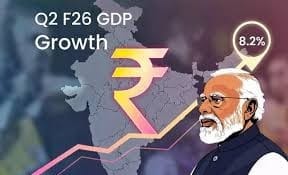
India's Q2 FY26 GDP Growth Accelerates to 8.2%
 Why in News?
India's GDP growth for the second quarter of FY26 (July-September 2025) has increased to 8.2%, reaching a six-quarter high. This growth is attributed to robust performance in the manufacturing, construction, and financial services sectors.
Key Takeaways
- GDP growth surpassed expectations, significantly higher than the forecast of 7.3%.
- This marks the fourth consecutive quarter of economic acceleration.
- Growth is supported by government reforms, public investment, and rising private consumption.
Additional Details
- Sectoral Performance:
- Manufacturing GVA increased by 9.1%, reflecting improved industrial output and demand.
- The services sector expanded by over 9%, with significant contributions from financial services and public administration.
- Agriculture GVA grew by 3.5%, benefiting from stable food inflation.
- Consumption Trends:
- Private Final Consumption Expenditure (PFCE) rose by 7.9%, boosted by lower food inflation and GST rationalisation.
- Gross Fixed Capital Formation (GFCF) grew 7.3%, supported by increased government capital expenditure.
- Fiscal Concerns:
- Despite strong real growth, nominal GDP growth decreased to 8.7%, raising concerns about fiscal sustainability.
- The government needs to achieve a 22.3% growth in revenues to meet budget targets for the remainder of FY26.
- Revised Growth Outlook:
- The Chief Economic Advisor has revised the GDP growth projection for FY26 to at least 7% due to the strong Q2 performance.
- However, growth is expected to moderate to 6.1% in the second half of FY26 due to global economic challenges.
- Macroeconomic Implications:
- With retail inflation at a record low of 0.25%, the RBI is expected to consider rate cuts, influenced by the strong GDP growth.
- Global risks, including geopolitical tensions and trade conditions, may impact export-linked sectors.
This notable growth in India's GDP, driven by strong performances in key sectors, highlights the resilience of the economy amid global uncertainties and sets a positive tone for future economic policies.
GS3/Economy
GST Collections Reveal State-Wise Revenue Trends
Why in News?
The Government of India announced that GST collections for October 2025 reached ₹1,95,936 crore, representing a 4.6% increase compared to the same month last year. This growth, largely attributed to Diwali-related festive spending, was described by the Finance Ministry as a sign of strong economic activity, with GST revenues continuing to rise.
Key Takeaways
- India's GST system, implemented in 2017, replaced multiple indirect taxes to simplify taxation.
- October 2025 GST collections reached a record high driven by festive demand.
- PRS study indicates that GST revenues are lagging behind pre-GST levels.
- There are significant disparities in state-wise revenue performance.
Additional Details
- GST System: The Goods and Services Tax (GST) was introduced to unify India's fragmented tax structure, replacing various indirect taxes like excise duty and VAT. It operates on a destination-based model, ensuring tax revenue accrues to the state where goods or services are consumed.
- Economic Impact: The GST has facilitated a common market and improved logistics by removing border checkpoints, leading to reduced transit times and enhanced efficiency. Digital compliance measures like e-way bills and e-invoicing have improved transaction tracking and compliance.
- State Performance: While industrial states like Maharashtra and Karnataka dominate GST collections, 20 states and union territories experienced revenue declines compared to October 2024, highlighting uneven growth across the country.
- Financial Disparities: A study revealed that aggregate GST revenues are still below pre-GST levels, with some states worse off financially. The average SGST collections during the GST period have been lower than the share from subsumed taxes before GST.
The overall trend in GST collections is positive, reflecting increased consumption during festivals. However, the significant revenue disparities among states indicate the need for reforms to enhance equity and ensure that the benefits of GST are more evenly distributed across the federation.
GS3/Economy
Reforming India's SEZ Policy Amid US Tariff Pressures
Why in News?
A government panel consisting of officials from the Commerce and Industry Ministry, NITI Aayog, and exporters is developing new Special Economic Zone (SEZ) regulations. This initiative aims to rejuvenate manufacturing and assist exporters who have been adversely affected by significant US tariffs. The proposal arises in response to increasing requests for the de-notification of SEZ units and calls for a reverse job work policy to enhance integration with the domestic market.
Key Takeaways
- The new SEZ norms aim to support exporters facing challenges due to US tariffs.
- There is a growing demand for policy changes, including a reverse job work policy.
- SEZs are vital for promoting exports and attracting investments in India.
Additional Details
- SEZs in India: These are designated duty-free enclaves treated as foreign territory for trade operations, aimed at enhancing exports, attracting investment, and generating employment.
- Objectives of SEZs: Designed to create a stable and business-friendly environment, SEZs provide various incentives to promote exports and improve infrastructure.
- Historical Context:
- 1965: Establishment of India's first Export Processing Zone (EPZ) in Kandla, Gujarat.
- 2000: Introduction of the SEZ policy to boost exports and attract Foreign Direct Investment (FDI).
- 2005: Passage of the SEZ Act, formalizing the regulation of SEZs.
- 2006: Notification of SEZ rules which led to rapid approval of SEZs across the country.
- Operational Framework: SEZs operate under a three-tier management structure involving the Board of Approval (BoA), Unit Approval Committee (UAC), and Development Commissioner (DC).
- Current Challenges: India's SEZs exported $172 billion in FY25, but only 2% of production served the domestic market, indicating a comparative lag in performance against models like China's SEZ.
In summary, the restructuring of India's SEZ policies in light of US tariff pressures offers a crucial opportunity to enhance the competitiveness and resilience of SEZs. It is essential to adapt these policies to not only retain existing jobs but also to foster growth in the manufacturing sector.
GS3/Economy
India's First Household Income Survey
Why in News?
India is preparing to launch its inaugural Household Income Survey (HIS) in 2026. This initiative aims to directly measure household incomes, providing essential data for policymakers to assess income distribution and inequality more accurately.
Key Takeaways
- The HIS will be the first comprehensive effort to directly measure household incomes in India.
- It aims to address critical data gaps that currently hinder accurate assessments of socio-economic conditions.
- The survey will link income data with social, occupational, and demographic variables.
Additional Details
- Need for Reliable Income Data: Historically, India has relied on indirect methods to estimate household income. Existing surveys like the Periodic Labour Force Survey (PLFS) focus on employment patterns, while the Household Consumption Expenditure Survey (HCES) uses spending patterns as a proxy for income, often leading to inaccuracies.
- Survey Components: The HIS will collect detailed data on household characteristics, assets, and income components, including salaries, casual work wages, and self-employment earnings. This comprehensive dataset will facilitate direct income measurement and allow cross-comparison with expenditures.
- Challenges Identified: Pilot testing revealed issues such as reluctance to disclose income, recall errors, and varying comfort levels among respondents, particularly in urban areas. To address these, the government is considering options like self-compilation of income data for affluent households.
- Significance for Policymaking: The findings from the HIS will assist in mapping income across different demographics, assessing welfare impacts, and enabling data-driven policymaking in areas like taxation and poverty alleviation.
The Household Income Survey 2026 represents a pivotal step towards building a robust and reliable income database, essential for informed economic planning and policy formulation in India.
GS3/Economy
National Social Assistance Programme
 Why in News?
The National Social Assistance Programme (NSAP) plays a crucial role in India's social security framework, providing essential financial support to vulnerable populations living below the poverty line.
Key Takeaways
- The NSAP was launched in 1995 as a fully funded Centrally Sponsored Scheme.
- It is managed by the Ministry of Rural Development and encompasses five key sub-schemes.
- The program aims to assist various groups, including the elderly, widows, and persons with disabilities.
Additional Details
- Indira Gandhi National Old Age Pension Scheme: This scheme provides financial assistance to elderly individuals aged 60 years and above from BPL families. Recipients aged 60-79 receive Rs. 200 per month, while those aged 80 and above receive Rs. 500.
- Indira Gandhi National Widow Pension Scheme: Offers financial aid to widows aged 40-79, providing Rs. 300 per month, and Rs. 500 for those aged 80 and above.
- Indira Gandhi National Disability Pension Scheme: Supports individuals aged 18-79 with severe disabilities from BPL families, providing Rs. 300 monthly, with increased support for those aged 80 and above.
- National Family Benefit Scheme: Provides a lump sum of Rs. 20,000 to families upon the death of the primary breadwinner, specifically if the deceased was between 18 and 59 years of age.
- Annapurna Scheme: Supplies 10 kg of food grains per month at no cost to senior citizens who are eligible for the Old Age Pension but do not receive it.
The National Social Assistance Programme is vital for enhancing the welfare of marginalized groups in India, ensuring that they receive the necessary support to improve their quality of life.
GS3/Economy
Index of Industrial Production to Undergo Major Changes
Why in News?
The Government of India is set to implement a significant overhaul of the Index of Industrial Production (IIP) to enhance its accuracy and relevance in reflecting the current industrial landscape.
Key Takeaways
- The IIP is a crucial macroeconomic indicator, measuring production changes across mining, manufacturing, and electricity sectors.
- Approximately 8.9% of the current IIP sample includes inactive factories, which distorts the accuracy of industrial growth data.
- A new automatic substitution mechanism for non-operational factories will be introduced to improve data reliability.
- The base year for the IIP will be updated from 2011-12 to 2022-23, incorporating modern industrial dynamics.
Additional Details
- Understanding the Index of Industrial Production (IIP): The IIP is a key indicator released monthly by the Ministry of Statistics and Programme Implementation (MoSPI). It tracks production across three sectors: mining, manufacturing, and electricity, based on data from 14 agencies covering 407 items or item groups.
- Rationale Behind the Overhaul: The inclusion of closed or non-operational factories has led to inaccuracies in the IIP. To rectify this, MoSPI plans to implement an automatic substitution mechanism to replace inactive factories with active ones, thereby ensuring more accurate data representation.
- How the Substitution Mechanism Will Work: If a factory reports zero production for three consecutive months, its status will be verified. If confirmed inactive, it will be replaced by a new factory that has been operational for at least 12 months and has a comparable Gross Value Added (GVA).
- Updating the Base Year to 2022-23: This update will reflect the latest industrial trends and include emerging sectors such as electric vehicles and green technologies, ensuring the IIP remains relevant in today's economy.
- Importance of the IIP: The IIP serves as an essential tool for policymakers and investors to assess economic health and make informed decisions regarding monetary policy, fiscal planning, and private sector investments.
- Challenges Ahead: The implementation of the new mechanism will require timely verification of factory status and maintaining comparability between old and new data, which may present logistical challenges.
In summary, the overhaul of the IIP aims to create a more accurate and responsive statistical system that better reflects the realities of India's industrial sector, crucial for effective economic planning and policy formulation.
GS3/Economy
Excessive Dependence: India's External Trade Landscape
 Why in News?
India has reported a record goods trade deficit of $41.68 billion in October, marking a sharp increase from September's deficit of $32.15 billion. This decline in exports is primarily attributed to steep tariffs imposed by the U.S.. Additionally, there has been a significant rise in gold and silver imports, alongside a depreciating rupee and substantial portfolio outflows. These factors have raised concerns about India's reliance on the U.S. market, highlighting potential economic and diplomatic vulnerabilities.
Key Takeaways
- Record trade deficit of $41.68 billion signals a major disruption in India's trade balance.
- Exports fell significantly due to U.S. tariffs, affecting India's largest export market.
- Unprecedented spike in gold and silver imports indicates economic uncertainty.
Additional Details
- Record Deficit: The deficit of $41.68 billion reflects a concerning monthly increase from $32.15 billion in September, indicating a worrying trend in trade.
- Export Decline: Goods exports decreased by 11.8% year-on-year, dropping to $34.38 billion from $38.98 billion in 2024, largely due to U.S. tariffs.
- Import Surge: The rise in bullion imports and cheaper imported intermediate goods has significantly contributed to the trade imbalance.
- Impact of U.S. Tariffs: The 50% tariff imposed in August has severely impacted key sectors where the U.S. has been a major market since 2018-19.
- Gold Imports: Tripled to $4.92 billion compared to last October, driven by economic uncertainties.
- Sector-Wise Stress: Key sectors such as cotton yarn, readymade garments, and engineering goods are facing substantial declines in exports.
In conclusion, India's record trade deficit not only underscores the risks associated with a concentrated export dependence but also reveals deeper structural weaknesses within its trade dynamics. Addressing these challenges will necessitate ongoing policy interventions, market diversification, and a comprehensive reevaluation of India's trade strategies to enhance resilience against such vulnerabilities.
GS3/Economy
Trade Intelligence and Analytics Portal
 Why in News?
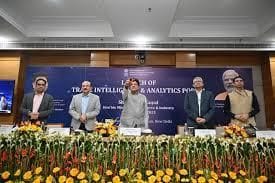
The Union Minister of Commerce and Industry recently inaugurated the Trade Intelligence & Analytics (TIA) Portal in New Delhi, marking a significant step towards enhancing trade data accessibility and analytics in India.
Key Takeaways
- The TIA Portal is a comprehensive trade intelligence platform developed by the Department of Commerce.
- It integrates multiple global and national databases into a single digital hub.
- Offers over 270 interactive visualizations across more than 28 dashboards.
- Provides real-time insights on trade, commodities, and sectoral analytics.
Additional Details
- Centralized Digital Hub: The TIA Portal serves as a one-stop platform that consolidates diverse trade databases, improving access to crucial trade information.
- Automated Trade Reports: Users can track trade trends, particularly in production-linked incentive (PLI) sectors and critical minerals.
- Comparative Tools: The portal includes tools to compare macroeconomic and trade indicators across different countries, aiding in strategic decision-making.
- Trade Indices:The portal incorporates several indices, such as:
- Trade Complementarity Index: Assesses the alignment of India's export profile with the import needs of partner countries.
- Revealed Comparative Advantage Index: Highlights products where India has a competitive edge.
- Trade Intensity Index: Measures the strength of bilateral trade relationships relative to global flows.
The launch of the TIA Portal significantly enhances the accessibility and usability of trade data, providing stakeholders with valuable insights and tools for better trade analysis and decision-making.
GS3/Economy
Time to Sort Out India's Cereal Mess
 Why in News?
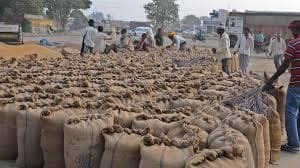
The current situation in Tamil Nadu regarding the procurement of kuruvai paddy has highlighted significant systemic issues within India's agricultural procurement framework. Despite being a country with surplus stocks of rice and wheat, India is paradoxically facing a rising dependence on imports for pulses and edible oils, which further complicates the national food security scenario.
Key Takeaways
- India has an excess of rice and wheat, leading to mismanagement of cereal stocks.
- Current procurement practices are skewed, with a focus on paddy that discourages crop diversification.
- High import dependence for pulses and edible oils poses risks to food security.
- Systemic issues such as corruption and inefficiencies affect procurement processes.
Additional Details
- Excessive Paddy Procurement: In Tamil Nadu, delays and corruption have been reported in the procurement system, leading farmers to favor rice for its assured returns, thereby neglecting diversification.
- High Central Pool Stocks: As of October 2024, rice stocks stood at 536.14 lakh tonnes, far exceeding the norm of 102.5 lakh tonnes. This indicates a procurement level that is unsustainable and misaligned with actual requirements.
- Stagnant Crop Diversification: Farmers are hesitant to shift from traditional crops due to unclear support systems and insufficient pricing guarantees, leading to a lack of diversification in crop production.
- Import Dependence: India meets 55% of its edible oil demand through imports, with rising import bills impacting the economy significantly.
- Need for Reforms: There is an urgent need for procurement reforms to address inefficiencies, support farmers transitioning to diverse crops, and improve market access.
In conclusion, India's cereal management crisis is not centered on a shortage of food but rather on a profound imbalance within its agricultural system. The coexistence of surplus rice and wheat, alongside deficits in pulses and edible oils, underscores the necessity for structural reforms in procurement and crop diversification strategies to ensure sustainable food security.
GS3/Economy
Centre Proposes Rs. 30,000-Crore Modified UDAN Scheme
 Why in News?
The Government of India has announced a proposed outlay of Rs. 30,000 crore for a revamped version of the UDAN (Ude Desh Ka Aam Nagrik) regional air connectivity scheme. This initiative aims to extend the program beyond April 2027, enhancing air access to underserved and remote regions across the country.
Key Takeaways
- The modified UDAN scheme focuses on developing regional aviation infrastructure and making air travel more affordable.
- It aims to target hilly regions, aspirational districts, North-Eastern states, and small towns with limited air connectivity.
- Overall funding includes Rs. 18,000 crore for new airport development and Rs. 12,000 crore for Viability Gap Funding (VGF).
Additional Details
- UDAN Scheme Background: Launched in October 2016 under the National Civil Aviation Policy, UDAN was designed to democratize air travel for the common citizen. The first flight under this scheme commenced from Shimla to Delhi in April 2017, with an initial budget of Rs. 8,000 crore.
- Objectives of the Modified Scheme: The revamped scheme aims to connect 120 additional destinations and enable four crore passengers to benefit from regional flights over the next decade.
- The scheme will also support the development of helipads and water aerodromes, ensuring comprehensive coverage across diverse geographic areas.
- Challenges Addressed: The modified scheme seeks to overcome challenges such as land unavailability, operational constraints at small airports, and low passenger demand in remote areas by providing a more flexible funding model.
- Incentives for Operators: Airport operators and state governments will offer reduced fuel taxes, lower airport charges, and priority parking bays to encourage participation.
- Expected Economic Benefits: The scheme is anticipated to boost regional connectivity, generate jobs, improve emergency access, and strengthen the development of the North-Eastern and hilly areas.
In conclusion, the revamped UDAN scheme represents a significant step towards enhancing regional air connectivity in India, addressing previous challenges while promoting economic growth and accessibility for remote areas.
GS3/Economy
India's Proposed CAFE 3 Norms and the Auto Industry Split
 Why in News?
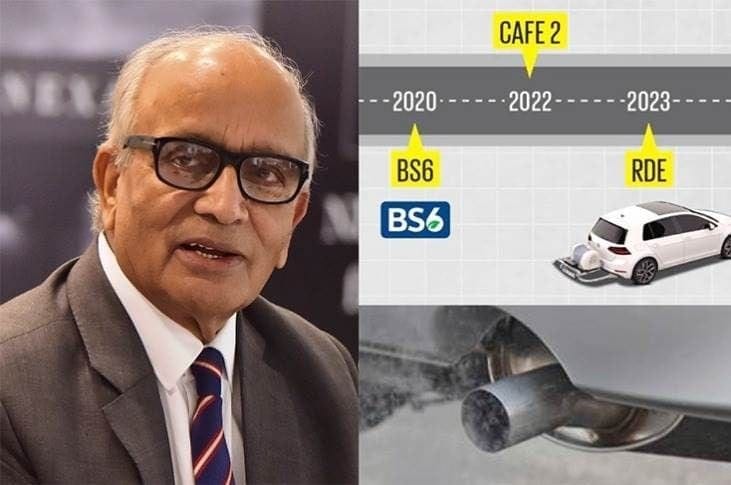
India is set to implement the third phase of the Corporate Average Fuel Efficiency (CAFE 3) norms from FY28 to FY32. This initiative aims to enhance fuel efficiency and mitigate carbon emissions from passenger vehicles. However, the introduction of a weight-based structure in these norms has sparked considerable disagreement within the auto industry, particularly between manufacturers focusing on small cars and those specializing in heavier SUVs.
Key Takeaways
- CAFE 3 norms aim to improve fuel efficiency and lower emissions.
- The weight-based formula may unfairly burden small car manufacturers.
- Concerns regarding market distortion and affordability for consumers are prevalent.
Additional Details
- CAFE Norms: These norms regulate the average fuel consumption and CO₂ emissions across a manufacturer's fleet. The transition from the Modified Indian Driving Cycle (MIDC) to the Worldwide Harmonised Light Vehicles Test Procedure (WLTP) reflects a move towards more stringent standards, adopted by the European Union since 2018.
- Weight-Based Formula: The new efficiency formula is defined as 0.002 × (W - 1170) + c, where 'W' is the average fleet weight. The variable 'c' decreases annually from FY28 to FY32, indicating progressively stricter regulations.
- Impact on Small Cars: Lighter vehicles are facing steeper efficiency improvement requirements than heavier models. For instance, a car weighing 740 kg must achieve a 48% increase in efficiency by FY32, while a 2,500 kg SUV needs only a 25% improvement.
- Industry Division: Small car manufacturers express concerns over disproportionate impacts due to low profit margins, making it hard to adopt hybrid systems or electrification. This could lead to increased prices for entry-level cars, potentially discouraging first-time buyers.
- Support from Some Automakers: Companies like Tata Motors argue that they can meet the new norms without issue, while opposing the preferential treatment of lighter cars, citing safety concerns.
The proposed CAFE 3 norms represent a significant step towards India's transition to low-carbon mobility. However, their weight-based structure poses risks of market distortion, potentially compromising the affordability of small cars for first-time buyers. A balanced, evidence-based approach is essential to ensure that environmental objectives are met while protecting the small-car segment and promoting inclusive mobility.
GS3/Economy
Redraw Welfare Architecture, Place a Universal Basic Income in the Centre
 Why in News?
As India experiences a widening wealth gap exacerbated by rapid technological advancements, the nation confronts multiple crises such as automation-induced job losses, precarious gig economy conditions, and climate-driven displacements. In this context, the concept of Universal Basic Income (UBI), once viewed as unrealistic, is gaining serious consideration as a policy measure to provide economic security and restore dignity in a swiftly evolving society.
Key Takeaways
- Universal Basic Income (UBI) is proposed as a foundational element for a renewed social contract in the 21st century.
- The widening economic inequality highlights the moral imperative for implementing UBI in India.
- UBI promotes inclusivity by tying entitlement to citizenship rather than poverty, thus enhancing the welfare system's efficiency.
- Empirical evidence from various trials indicates that UBI can lead to positive outcomes in health, education, and economic stability.
- UBI has the potential to reshape the citizen-state relationship, fostering accountability and democratic engagement.
Additional Details
- Economic Inequality: The richest 1% in India owns 40% of national wealth, with the top 10% controlling 77%. This inequity underscores the need for UBI as a means to provide a basic income floor that empowers individuals.
- Empirical Evidence: Trials in regions like Madhya Pradesh and countries such as Finland and Kenya show that unconditional cash transfers improve nutrition, education, and productivity, countering fears that UBI discourages work.
- Philosophical Significance: UBI redefines welfare by establishing a rights-based guarantee, promoting dignity and autonomy rather than dependency.
- Funding Challenges: Implementing UBI involves significant fiscal planning and may require tax reforms and phased rollouts to ensure sustainability and inclusivity.
In conclusion, Universal Basic Income is more than just a financial proposal; it represents a vision for equitable citizenship in the face of automation and increasing inequality. By embedding dignity and security at the core of welfare policies, UBI can transform the social contract in India, promoting both economic stability and a more engaged democratic process. The pressing question shifts from whether India can afford UBI to whether it can afford the consequences of not implementing it.
GS3/Economy
Redraw Welfare Architecture, Place a UBI in the Centre
Why in News?
The ongoing discourse highlights India's pressing economic disparities, with the wealth gap reaching a 75-year high. As technological advancements, particularly automation, outpace job creation, the call for a Universal Basic Income (UBI) emerges as a stabilizing solution for an economy grappling with job losses and consumption inequality.
Key Takeaways
- India's welfare model requires urgent rethinking amidst rising automation and inequality.
- Universal Basic Income (UBI) is proposed as a means to ensure economic stability and social security.
- Existing welfare subsidies suffer from inefficiencies; UBI could streamline these processes.
Additional Details
- Concept of UBI: A periodic, unconditional cash transfer to all citizens, ensuring a basic level of income regardless of employment status.
- Economic Foundation: UBI acts as a consumption floor, stabilizing demand during economic downturns.
- Global Relevance: Countries like Finland, Kenya, and Iran have tested variations of basic income to combat issues related to automation and inequality.
- Challenges: Implementing UBI may face fiscal trade-offs, inflationary pressures, and political resistance due to existing patronage networks.
- Behavioral Economics Perspective: Unconditional cash transfers can enhance human capital investment in areas like education and nutrition, as evidenced by the Madhya Pradesh SEWA UBI Pilot.
In conclusion, UBI represents not just a moral imperative but also an economic necessity in a future increasingly influenced by automation and climate challenges. By aligning welfare expenditures with digital infrastructure, India has the opportunity to foster economic dignity and stability for its citizens.
GS3/Economy
National Marine Fisheries Census, 2025
Why in News?
The National Marine Fisheries Census (MFC) 2025 was officially launched by Union Minister of State for Fisheries, Animal Husbandry, and Dairying, George Kurian, at the ICAR-Central Marine Fisheries Research Institute (CMFRI).
Key Takeaways
- The census aims to collect comprehensive data on fishermen demographics, fishing crafts, gear, livelihoods, and welfare indicators.
- This is the fifth national enumeration of India's marine fisheries sector, following previous censuses in 1980, 1998, 2005, and 2010.
Additional Details
- Implementing Agencies: The census will be conducted by the Department of Fisheries (DoF) under the Ministry of Fisheries, Animal Husbandry & Dairying, coordinated by ICAR-CMFRI, with the Fishery Survey of India (FSI) as the operational partner.
- Coverage: It targets approximately 1.2 million fisher households across 4,000-5,000 marine fishing villages in nine coastal states and four Union Territories, including the Andaman & Nicobar Islands and Lakshadweep.
- Funding & Legal Basis: The census is financed under the Pradhan Mantri Matsya Sampada Yojana (PMMSY) with an allocation of ₹16.2 crore dedicated to digital census operations.
- Key Features:
- Digital Data Collection: This is the first paperless marine census utilizing apps such as VyAS Bharat, VyAS Sutra, and VyAS NAV for geo-tagged, real-time data capture and validation.
- Technological Integration: The census employs drone-based craft surveys and live dashboards at CMFRI, establishing a National Marine Fisheries Data Centre for analytics and data storage.
- Expanded Scope: It includes ornamental fisheries, seaweed farming, and post-harvest value chain activities, with data collection on credit, insurance, and welfare access.
- NFDP Linkage: Registration on the National Fisheries Digital Platform (NFDP) is mandatory to ensure Direct Benefit Transfer (DBT) based delivery of benefits under the PM Matsya Kisan Samridhi Sah-Yojana (PM-MKSSY).
- Inclusive Approach: The census involves over 1,000 trained enumerators, along with state departments and fisher cooperatives, to promote community participation for enhanced accuracy.
- Government Initiative: The initiative promotes safety tools such as vessel transponders and turtle excluder devices (TEDs), aligning with the vision of a "Smart Census, Smarter Fisheries."
In summary, the National Marine Fisheries Census 2025 represents a significant step towards enhancing the sustainability and effectiveness of India's marine fisheries sector, leveraging advanced technology and community involvement.
GS3/Economy
How India Could Become a $30 Trillion Economy in 25 Years
Why in News?
During the Berlin Global Dialogue, Commerce and Industry Minister Piyush Goyal expressed confidence that India will achieve a $30 trillion economy within the next 20 to 25 years. He highlighted that although the US economy is currently eight times larger, the gap is expected to narrow significantly, reflecting India's growing economic confidence and its strategic position in trade negotiations.
Key Takeaways
- India's GDP growth is pivotal for achieving the $30 trillion target.
- The comparison of GDP is crucial in understanding global economic standings.
- Challenges exist that may affect the targeted growth trajectory.
Additional Details
- Understanding GDP: The size of an economy is primarily measured by its Gross Domestic Product (GDP), which represents the total market value of all goods and services produced within a country in a year. A higher GDP indicates greater economic strength and prosperity.
- Current Economic Context: As of late 2024, the US GDP was approximately $29.2 trillion, while India's GDP for the 2023-24 financial year was around $3.9 trillion, illustrating the significant gap in current economic size.
- Future Projections: If India maintains a compounded annual growth rate (CAGR) of 11.9% and the rupee depreciates at 2.7%, it could surpass the $30 trillion mark by 2048, aligning with Goyal's predictions.
- Challenges to Growth: Since 2014, India's economic growth has slowed, with a recent CAGR of 10.3%. If this trend continues, reaching the $30 trillion target may be delayed until around 2055.
In conclusion, while the projection of a $30 trillion economy by 2048 appears feasible based on historical growth trends, sustaining a higher growth rate is crucial. Any slowdown could significantly impact India's economic trajectory and its global standing.
FAQs on Economic Development: November 2025 UPSC Current Affairs
| 1. What are the primary factors driving inflows into the mid-cap sector? |  |
| 2. Why is safe processing considered more important than flavour variety in recent food trends? | |
| 3. What implications do the royalty tweaks have on India's mineral bottlenecks? | |
| 4. How does the Tex-RAMPS scheme contribute to innovation in the textile sector? | |
| 5. What is the significance of the Madras HC's ruling on cryptocurrency as property? | |




