UPSC Daily Current Affairs: 2025-12-02


GS2/Governance
The New Action Plan on AMR Needs a Shot in the Arm
 Why in News?
The National Action Plan on Antimicrobial Resistance (NAP-AMR 2.0) for India, covering the years 2025-2029, is critical as antimicrobial resistance (AMR) poses significant threats to human health, veterinary practices, aquaculture, and food safety. This plan aims to strengthen governance and coordination between central and state governments to tackle AMR effectively.
Key Takeaways
- The NAP-AMR 2.0 emphasizes coordinated governance across various sectors to address the One Health challenge of AMR.
- It builds upon the achievements of the 2017 National Action Plan but faces challenges in implementation across different states.
- Key improvements include the recognition of the private sector's role in health services and a more detailed operational framework.
Additional Details
- One Health Approach: This framework links human, animal, and environmental health, acknowledging that antibiotic resistance impacts multiple sectors.
- State AMR Cells: The new plan mandates states to establish AMR Cells and prepare aligned Action Plans, which is vital for local implementation.
- Despite improvements, there is a lack of a formal mechanism for Centre-State accountability, which could hinder effective implementation.
- A proposed national-state AMR council could enhance governance by linking various health and environmental sectors.
To achieve success in combating AMR, it is crucial to ensure strong participation from state governments and to establish mechanisms for accountability. With a unified approach and political commitment, NAP-AMR 2.0 has the potential to serve as a transformative framework in the battle against AMR.
GS3/Economy
Shrinking Fiscal Space of States - Trends in Tax Devolution and Finance Commission Transfers
 Why in News?
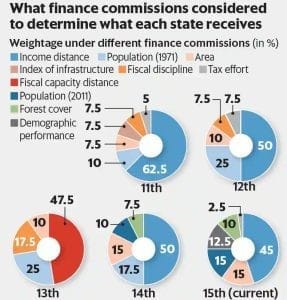
The discussion regarding the fiscal autonomy of states has become more prominent recently, particularly in light of the changes brought about by the 14th, 15th, and 16th Finance Commissions (FCs). States contend that their fiscal space is diminishing due to various factors, including the increase in non-sharable cesses and surcharges, modifications in devolution formulas, and complications arising from the Goods and Services Tax (GST) structure.
Key Takeaways
- States argue that their fiscal autonomy is under threat due to rising non-sharable levies and changing financial frameworks.
- Fiscal space encompasses states' own revenue and transfers from the Centre, including Finance Commission transfers.
- Recent Finance Commissions have altered the distribution of revenue, impacting states differently.
Additional Details
- Fiscal Space: This term refers to the financial capacity of states, which includes both their own revenue sources and the total transfers they receive from the central government.
- Finance Commission Transfers: These consist of tax devolution (the largest component) and various grants, which can be tied or untied. Non-FC grants are given at the discretion of the Centre.
- 14th Finance Commission Changes: The 14th FC significantly increased states' share in the divisible pool from 32% to 42%, leading to a rise in their share of combined revenue receipts from 15% to 19.2%.
- 15th Finance Commission Outcomes: The 15th FC saw a slight contraction, with states' share dropping from 68.08% to 67.39%, primarily due to reduced tax devolution and an increase in non-sharable cesses.
- Impact on High-Income States: States such as Haryana and Tamil Nadu experienced a decline in fiscal space, attributed to unfavorable changes in the transfer formula and increased reliance on non-sharable revenues.
- Challenges Ahead: Issues include rising non-sharable cesses, decreasing own revenue for states, and greater expenditure responsibilities, particularly in the wake of COVID-19.
In conclusion, the interplay of rising cesses, alterations in devolution formulas, and GST-related challenges has restricted the autonomy of states. As the 16th Finance Commission prepares its recommendations, it is crucial to establish a balanced and predictable system of fiscal transfers to enhance fiscal federalism and improve developmental outcomes for both the Union and states.
GS3/Environment
Bioremediation in India
 Why in News?
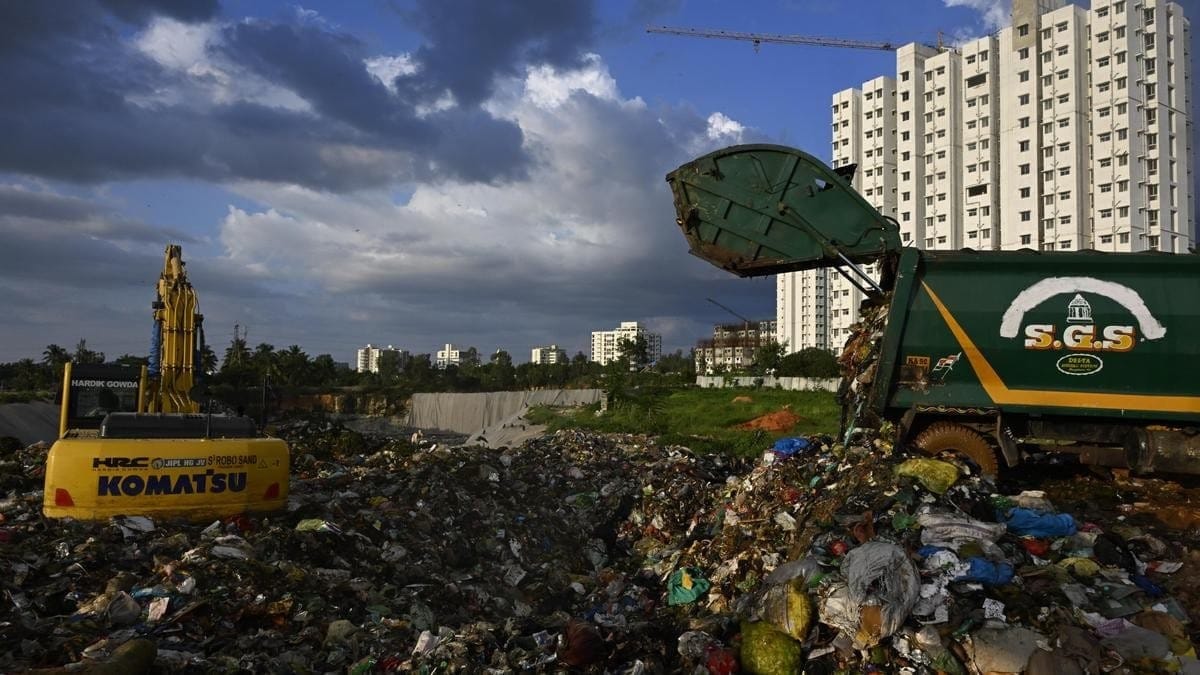
India is currently facing a significant environmental crisis due to years of excessive waste production, industrial pollution, pesticide build-up, oil spills, and contamination from heavy metals.
Key Takeaways
- Bioremediation involves using microorganisms to break down hazardous pollutants.
- There is an urgent need for bioremediation in India due to severe ecological degradation.
- India's biodiversity offers unique advantages for bioremediation efforts.
Additional Details
- Understanding Bioremediation: Bioremediation refers to the process of "restoring life through biology." It utilizes naturally occurring or engineered microorganisms, such as bacteria, fungi, algae, or plants, to decompose harmful pollutants into benign by-products, including water, carbon dioxide, or organic acids. Certain organisms can also convert toxic metals into safer forms.
- Types of Bioremediation Techniques:
- In Situ Bioremediation: Treatment occurs directly at the contaminated site, such as deploying oil-eating bacteria during ocean spills.
- Ex Situ Bioremediation: Contaminated materials are removed and treated in a facility before being returned, allowing control over complex pollutant mixtures.
- Modern Advances: The integration of traditional microbiology with biotechnology has led to the development of genetically modified (GM) microbes for degrading difficult pollutants like plastics and innovative biosensing organisms that signal the presence of toxins.
The urgent need for bioremediation in India stems from rapid industrialization and urbanization, leading to heavily polluted water bodies, untreated sewage, and widespread ecological harm. Traditional cleanup methods are often costly and can result in secondary pollution, making bioremediation a more sustainable and economical option. India's rich biodiversity offers additional potential, as indigenous microbes can be more effective than imported strains in local conditions.
Current Progress in Bioremediation in India
- Government Initiatives: The Department of Biotechnology (DBT) supports bioremediation projects through its Clean Technology Programme, fostering collaborations among universities, research institutes, and industries. The CSIR-NEERI is also tasked with developing bioremediation programs nationwide.
- Research Innovations: Researchers from IIT have developed a nanocomposite material from cotton for oil spill cleanup, and scientists have identified specific bacteria capable of degrading soil pollutants.
- Start-up Participation: Increasingly, companies are offering microbial formulations for wastewater and soil cleanup, indicating a growing commercial interest in bioremediation technologies.
Global Trends in Bioremediation
- Japan: Employs plant- and microbe-based systems in urban waste management strategies.
- European Union: Funds multinational collaborations aimed at oil spill cleanup and restoration of mining lands.
- China: Utilizes engineered bacteria to rehabilitate industrial wastelands under its soil pollution control program.
These global examples highlight the potential for bioremediation to be integrated into national environmental management frameworks.
Opportunities for India
- Bioremediation can play a crucial role in initiatives such as river rejuvenation (e.g., Namami Gange), sewage treatment infrastructure, land reclamation, and industrial cleanup efforts.
- Additionally, this field has the potential to create jobs in biotechnology research, waste management, environmental consulting, and local start-up ecosystems.
Risks and Regulatory Challenges
- While bioremediation offers many benefits, it also presents risks, particularly with the use of genetically modified organisms (GMOs). Poor containment or inadequate testing could have negative effects on ecosystems.
- India faces challenges including a lack of unified national standards for bioremediation, insufficient site-specific data, weak biosafety regulations, and a shortage of trained personnel.
To address these challenges, it is essential to establish national bioremediation standards and certification systems, create regional bioremediation hubs that connect academia, industry, and local governments, and support start-ups within the DBT-BIRAC ecosystem while engaging communities to foster acceptance of microbial cleanup technologies.
GS3/Economy
India's Push for Self-Reliance in REE Production
 Why in News?
The Indian government has recently sanctioned a scheme worth ₹7,280 crores to bolster domestic production of rare earth permanent magnets (REPMs). This move is primarily aimed at countering China's overwhelming dominance in the global rare earth magnet manufacturing sector, where it controls over 90% of the market. REPMs are essential components for various sectors, including electric vehicles (EVs), renewable energy systems, electronics, aerospace, and defense.
Key Takeaways
- India's dependency on China for REPMs makes it vulnerable to supply disruptions.
- The approved scheme aims to create a manufacturing capacity of 6,000 MTPA of REPMs by supporting five beneficiaries.
- The initiative includes significant financial incentives to encourage large-scale production.
Additional Details
- Importance of REPMs: Rare earth permanent magnets are crucial for the development of advanced technologies, particularly in clean energy and mobility sectors.
- Current Situation: India imports nearly all of its REPM needs, leading to a strategic vulnerability highlighted by recent Chinese export controls.
- Financial Incentives: Selected companies under the scheme will benefit from ₹6,450 crores in sales-linked incentives and ₹750 crores in capital subsidies for setting up integrated manufacturing facilities.
- Focus on NdFeB Magnets: The scheme prioritizes the production of neodymium-iron-boron (NdFeB) magnets, known for their strength and efficiency.
- Manufacturing Processes: The production process involves several stages, from mining to the conversion of alloys into magnets, with the scheme supporting the final three stages of this chain.
This initiative represents a significant strategic shift for India, aiming to reduce reliance on Chinese imports and build a resilient domestic supply chain for critical minerals. However, challenges such as raw material bottlenecks and cost competitiveness must be addressed to achieve true self-reliance.
GS3/Environment
The Need for 'Heart-Resilient' Urban Planning
 Why in News?
On October 8, 2025, India's Ministry of Housing and Urban Affairs (MoHUA) commemorated World Habitat Day with the theme "Urban Solutions to Crisis." This occasion highlights an urgent issue: the escalating prevalence of cardiovascular diseases and diabetes in urban India, which is now a major cause of urban mortality, particularly affecting individuals under 50.
Key Takeaways
- Cardiovascular diseases are significantly more prevalent in urban areas compared to rural regions.
- The design and planning of cities contribute to unhealthy lifestyles and increased health risks.
- Integrated urban planning can improve public health outcomes by addressing environmental and lifestyle factors.
- Equity in urban planning is essential to ensure all communities benefit from health improvements.
Additional Details
- Urban Living Paradox: Urban life offers opportunities but also leads to unhealthy routines due to long commutes, polluted air, and stress.
- Fragmented Urban Planning: Rapid urbanization has resulted in disconnected transport and housing systems that promote sedentary lifestyles.
- Health-Centred Urban Design: Initiatives like Healthy Cities show that integrating health into urban governance can reduce disease risks.
- Five Pillars of Heart-Healthy Urban Planning:
- Walkability and Active Mobility: Encouraging physical activity through safe walking paths and cycling lanes.
- Green Infrastructure: Increasing tree cover and parks to improve air quality and reduce heat stress.
- Mixed Land Use: Combining residential and commercial areas to shorten commutes and promote active living.
- Robust Public Transport: Developing clean-energy public transport systems to enhance connectivity.
- Healthy Food Ecosystems: Supporting local markets and community gardens to improve dietary choices.
- Invisible Threats: Urban risks like PM2.5 pollution and inadequate infrastructure need to be addressed to protect cardiovascular health.
- Equity in Health: Low-income communities face the highest disease burden; equitable planning is crucial for health improvements.
In conclusion, the prevalence of cardiovascular diseases is influenced by urban design and planning. The air quality, transportation routes, and public spaces significantly affect health outcomes. As India seeks solutions for urban challenges, creating cities that promote heart health is paramount.
GS3/Economy
Govt Plans Major Overhaul of India's Insurance Sector
 Why in News?
The government is set to introduce the Insurance Laws (Amendment) Bill, 2025 in the sixth session of the 18th Lok Sabha. This initiative aims to reform India's insurance sector, which currently has low penetration rates. Industry stakeholders view the Bill as a transformative step that could enhance growth, attract capital, and encourage innovation in the coming decade.
Key Takeaways
- The proposed Bill aims to increase the Foreign Direct Investment (FDI) limit in insurance from 74% to 100%.
- It includes provisions for composite licensing, allowing insurers to sell both life and non-life products under a single license.
- Lower capital requirements for new entrants and foreign reinsurers are expected to stimulate market competition.
- The Bill aims to improve India's insurance penetration, currently at 3.7%, which is significantly lower than the global average of 7%.
Additional Details
- Increase in FDI: On February 1, 2025, Finance Minister Nirmala Sitharaman announced the increase of FDI in insurance to 100%, allowing significant foreign capital inflow and enhancing competition among insurers.
- Composite Licensing: The Bill introduces a unified framework allowing insurers to operate across both life and non-life segments, promoting integrated insurance solutions that meet comprehensive customer needs.
- The proposal to lower the net owned funds requirement for foreign reinsurers from ₹5,000 crore to ₹500 crore is designed to attract new global players into the Indian market.
- The Bill supports India's long-term vision of achieving "insurance for all" by 2047, particularly focusing on underserved markets.
- Captive Insurance Entities: Large corporations will be allowed to set up captive insurance entities, enabling better risk management and efficiency in claims processing.
- Insurance intermediaries will benefit from one-time, perpetual registration, simplifying regulatory requirements and fostering a more competitive market.
This overhaul in the insurance sector is expected to create a robust ecosystem with a potential of having 1,000 insurers within the next decade, enhancing innovation and expanding consumer choice while addressing the affordability barrier that currently limits insurance adoption in India.
GS2/ Polity and Governance
World AIDS Day 2025
 Why in News?
The Ministry of Health and Family Welfare observed World AIDS Day 2025 with the theme "Overcoming disruption, transforming the AIDS response," emphasizing national progress in controlling AIDS.
- Historical Context: The first World AIDS Day was marked by WHO in 1998 to acknowledge the vital role of civil society in the global response to HIV/AIDS.
Understanding HIV/AIDS
- What is HIV? HIV (Human Immunodeficiency Virus) is a virus that attacks the immune system, specifically targeting CD4 cells (a type of white blood cell). This weakens the body's defense mechanisms, making it more susceptible to infections and certain cancers.
- How is HIV Transmitted? HIV is transmitted through direct contact with infected bodily fluids such as blood, semen, breast milk, and vaginal fluids. Common modes of transmission include unprotected sexual intercourse, sharing needles, and unsterilized tattooing. It is important to note that HIV is not spread through casual contact.
- What are the Symptoms of HIV? Early symptoms of HIV infection may include fever and rash. As the infection progresses, symptoms can include swollen lymph nodes, weight loss, and diarrhea. In severe cases, HIV can lead to opportunistic infections like tuberculosis, meningitis, and cancers such as lymphoma.
- Is there a Cure for HIV? There is currently no cure for HIV. However, lifelong Antiretroviral Therapy (ART), taken daily, can effectively control the virus and help individuals lead healthy lives.
- Global Response to HIV/AIDS The United Nations Sustainable Development Goal 3.3 aims to end the HIV epidemic as a public health threat by the year 2030.
India's National AIDS Control Programme (NACP)
Overview: The National AIDS Control Programme (NACP) is India's initiative for the prevention, control, and management of HIV/AIDS. It is implemented by the National AIDS Control Organisation (NACO) under the Ministry of Health and Family Welfare.
AIDS Definition: AIDS stands for Acquired Immunodeficiency Syndrome. It is the advanced, final stage of infection caused by the Human Immunodeficiency Virus (HIV).
Evolution of NACP:
- NACP I (1992-1999): Launched India's first comprehensive programme to slow the spread of HIV.
- NACP II (1999-2006): Focused on reducing transmission and strengthening national capacity.
- NACP III (2007-2012): Aimed to halt and reverse the epidemic by scaling up prevention and integrating services. Established District AIDS Prevention and Control Units (DAPCUs).
- NACP IV (2012-2017 & extended to 2021): Accelerated reversal and integrated care, targeting a 50% reduction in new infections compared to a 2007 baseline. Key initiatives included:
- The HIV/AIDS (Prevention and Control) Act, 2017, prohibiting discrimination.
- Mission Sampark to re-engage People Living with HIV (PLHIV) lost to follow-up.
- 'Test and Treat' policy and universal viral load monitoring.
- NACP V (2021-2026): A Central Sector Scheme with an outlay of over Rs 15,000 crore, aligning with SDG 3.3 to end AIDS as a public health threat by 2030.
Achievements of NACP
- India's HIV prevalence decreased from 0.33% in 2010 to 0.20% in 2024, significantly below the global average of 0.70%, indicating strong control over the epidemic.
- New HIV infections dropped from 1.25 lakh in 2010 to 64,500 in 2024, a 49% decline, surpassing the global reduction of 40%.
- India now represents only 5% of global new infections (1.3 million in 2024), reflecting effective government efforts and broader access to ART.
- Under NACP-V, HIV testing increased from 4.13 crore (2020-21) to 6.62 crore (2024-25), and the number of people on antiretroviral treatment rose from 14.94 lakh to 18.60 lakh.
GS2/Polity and Governance
Assam's Three-Tier Classification of STs
 Why in News?
Assam is currently experiencing unrest due to a proposal by a Group of Ministers (GoM) for a new three-tier classification of Scheduled Tribes (ST) status. This proposal aims to grant ST status to six communities, which has pleased the applicant groups but sparked strong opposition from existing tribal communities. As a result, protests have erupted across the state.
- The GoM's recommendation includes a three-tier ST structure with categories for the plains, hills, and a new valley category for the six communities seeking ST status.
What did Assam's GoM Recommend on ST Classification?
- The GoM's recommendation for the three-tier Scheduled Tribes (ST) classification in Assam aims to address the demands of various communities while maintaining the rights of existing tribal groups.
- The proposed structure includes:
- ST (Plains) : This category will continue to include the existing tribal communities in the plains.
- ST (Hills) : This category remains unchanged and will still apply to the existing hill tribes.
- ST (Valley) : This is a newly suggested category for the six communities that are demanding ST status. These communities are: Ahom, Chutia, Moran, Matak, Koch-Rajbongshi, and Tea Tribes/Adivasis.
- The GoM believes that this new structure will allow the state to reorganise reservations without diminishing the current entitlements of ST (Plains) and ST (Hills) communities.
- Under this proposal, there would be separate quotas for state jobs and education, but all groups would share a single ST list for central services.
- However, it is important to note that for the three-tier classification to be legally approved, special legislation must be passed by Parliament.
How are Scheduled Tribes Notified in India?
- Article 366(25) : Defines "Scheduled Tribes" as those tribes or tribal groups recognized as STs under Article 342 of the Constitution.
- Article 342 : Empowers the President to notify which tribes or tribal groups are recognized as Scheduled Tribes for each State or Union Territory, in consultation with the Governor.
- Legislative Authority : Any inclusion or removal from the ST list can only be done by Parliament through legislation, not by executive notification.
- Criteria for ST Identification : While the Constitution mentions "Scheduled Tribes," it does not provide criteria for their identification. The Lokur Committee in 1956 defined a tribe based on factors like primitive traits, distinctive culture, geographical isolation, social and economic backwardness, and shyness of contact with the wider community.
- Historical Context : Before independence, such groups were referred to as "backward tribes" in the 1931 Census, living in excluded or partially excluded areas.
- Legal Validation : In the case of State of Punjab v. Davinder Singh (2024), the Supreme Court upheld the validity of sub-classifying SCs and STs, allowing states to create sub-groups for fair distribution of benefits.
- Reservation in Services and Posts:
- Article 16(4) : Allows reservations for backward classes inadequately represented in state services.
- Article 46 : Mandates the state to promote the educational and economic interests of weaker sections, especially SCs and STs, and protect them from social injustice and exploitation.
- Article 335 : Requires consideration of claims of SCs and STs in appointments to Union or State services, while ensuring administrative efficiency.
FAQs on UPSC Daily Current Affairs: 2025-12-02
| 1. What is the significance of the New Action Plan on AMR in India? |  |
| 2. How is tax devolution impacting the fiscal space of states in India? | |
| 3. What role does bioremediation play in environmental management in India? | |
| 4. What initiatives is India taking to achieve self-reliance in Rare Earth Element (REE) production? | |
| 5. How does 'heart-resilient' urban planning contribute to public health? | |




