UPSC Daily Current Affairs: 2025-12-19


GS3/Science and Technology
Strengthening India's Semiconductor Self-Reliance - DHRUV64
 Why in News?
In December 2025, the Ministry of Electronics and Information Technology (MeitY) announced the launch of DHRUV64, a fully indigenous microprocessor developed by the Centre for Development of Advanced Computing (C-DAC). This processor is considered a significant milestone in India's efforts to establish a domestic semiconductor and processor ecosystem, aiming to reduce reliance on imported chip technologies.
Key Takeaways
- India is one of the largest consumers of electronic devices, yet it heavily depends on foreign-designed chips.
- DHRUV64 is a 64-bit, dual-core general-purpose microprocessor designed for various applications.
- The processor is based on the RISC-V open-source instruction set architecture.
- Concerns regarding performance metrics and deployment plans have been raised.
Additional Details
- India's Semiconductor Challenge: India is heavily reliant on imported processors, which exposes it to supply disruptions and cybersecurity vulnerabilities. The government recognizes the need for "homegrown processor technology" to enhance technological sovereignty.
- DHRUV64 Specifications: Operating at a clock speed of 1 GHz, DHRUV64 balances computational capability with energy efficiency. It can run modern operating systems and manage complex workloads, making it suitable for consumer electronics, industrial automation, and embedded systems.
- Role of RISC-V: DHRUV64 utilizes the RISC-V architecture, allowing India to design processors independently of foreign companies. This modular architecture enables customization for various applications including security and performance.
- Concerns and Information Gaps: Despite its significance, the announcement lacks detailed performance benchmarks and fabrication specifics. The term "fully indigenous" is also vague, requiring clarity on aspects like design and manufacturing.
- Way Forward: The success of DHRUV64 depends on developing a supportive ecosystem, including software tools and skilled manpower, along with government demand to foster industry adoption.
DHRUV64 represents a foundational step in India's semiconductor journey, with the potential to enhance domestic capabilities and reduce dependence on imports. To achieve long-term success, complementary initiatives such as the Chips to Startup Programme and the India Semiconductor Mission are essential for nurturing talent and building infrastructure.
GS2/Polity
Securities Markets Code (SMC) Bill 2025 - Towards a Unified, Principle-Based Securities Regulation
Why in News?
The Union Finance Minister recently introduced the Securities Markets Code Bill 2025 in the Lok Sabha, as was previously announced in the Union Budget 2021-22. This Bill has been forwarded to the Standing Committee on Finance for thorough examination.
Key Takeaways
- The Bill aims to consolidate and modernize India's securities market laws.
- It focuses on enhancing investor protection, simplifying business operations, and facilitating capital mobilization within a technology-driven financial ecosystem.
Additional Details
- Securities Market in India: The securities market is a crucial component of the country's financial system, enabling capital flow from savers to those seeking investment for productive purposes. It is primarily regulated by the Securities and Exchange Board of India (SEBI).
- Core Features of the Bill:
- Consolidation of Securities Laws: This Bill will replace three significant legislations: the Securities Contracts (Regulation) Act (SCRA) of 1956, the SEBI Act of 1992, and the Depositories Act of 1996. Its goal is to eliminate redundancies and create a unified framework for securities law.
- Expanded SEBI Board: The board size will increase from 9 to 15 members, including the Chairperson, 2 nominees from the Central Government, 1 nominee from the RBI, and 11 other members, with a minimum of 5 being whole-time members.
- Decriminalisation of Offences: Minor violations will incur civil penalties instead of criminal charges, reserving criminal punishment for severe violations such as insider trading.
- Time Limitation on Inspections: No inspections will be allowed after 8 years from the date of the contravention, ensuring legal certainty.
- Investor Protection Measures: SEBI will establish an investor charter and grievance redressal mechanisms to promote trust and participation among retail investors.
- Key Challenges and Way Forward:
- Concerns regarding the concentration of power in SEBI and the potential risks of over-centralization.
- The need for transparent and consultative processes in the formulation of subordinate legislation.
- Aiming for a balance between swift adjudication and effective deterrence while ensuring accountability in delegated regulatory powers.
The Securities Markets Code Bill 2025 represents a significant reform aimed at creating a simplified and coherent regulatory framework for securities. The success of the Bill will depend on comprehensive parliamentary oversight, transparent rule-making, and effective safeguards to prevent regulatory overreach.
GS2/International Relations
India Signs FTA with Oman
 Why in News?
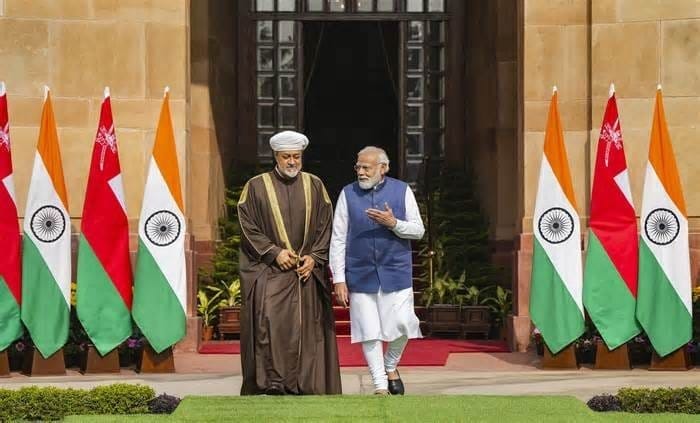
India has recently signed a Comprehensive Economic Partnership Agreement (CEPA) with Oman to enhance its export opportunities in West Asia. This move comes amid increasing trade barriers in the US and EU, such as tariffs and carbon taxes.
Key Takeaways
- The CEPA aligns with India's strategy to accelerate free trade agreements amid uncertainties regarding a US trade deal.
- This agreement is significant as it marks Oman as the second Gulf Cooperation Council (GCC) member to finalize a trade agreement with India, following the UAE.
- India and Oman aim for durable economic integration rather than temporary trade spikes.
- Bilateral trade between India and Oman is around $10.5 billion, primarily driven by energy imports.
Additional Details
- Market Access: Under the CEPA, Oman will provide duty-free access on 98.08% of tariff lines, which will cover 99.38% of India's exports to Oman. Conversely, India will liberalize tariffs on 77.79% of its tariff lines, covering 94.81% of imports from Oman.
- Export Opportunities: Indian exports to Oman have seen a significant increase, doubling over the last five years, with key exports including machinery, aircraft, rice, and petroleum products.
- Enhanced Mobility of Professionals: The CEPA includes provisions for increased intra-corporate transferees from 20% to 50% and extends the stay of contractual service suppliers from 90 days to 2 years, allowing for greater movement of skilled professionals.
- Services Sector Boost: Oman has committed to substantial access across key service sectors, enhancing opportunities for Indian companies in IT, education, and health services.
The CEPA with Oman represents a strategic advancement for India, not only diversifying its trade partnerships but also solidifying its economic ties in the Gulf region amidst a challenging global trade environment. This agreement, along with previous FTAs, reflects India's proactive approach to establishing robust trade networks, which are essential for sustaining economic growth.
GS2/Polity
Cutting off a Rural Lifeline and the Directive Principles
Why in News?
The central government's initiative to replace the Mahatma Gandhi Rural Employment Guarantee Act (MGNREGA) is seen as a significant threat to India's constitutional vision of social and economic justice. This proposed legislation, passed by the ruling party's majority in the Lok Sabha, fundamentally alters MGNREGA's rights-based and democratic framework, warranting careful examination by the Standing Committee of Parliament.
Key Takeaways
- The proposed Bill undermines the core principles of MGNREGA, which guaranteed 100 days of work per rural household.
- It shifts from a demand-driven approach to normative financial allocations, reducing the legal responsibilities of the central government.
- The Bill introduces extreme centralization, diminishing the role of States and local authorities in project implementation.
Additional Details
- Constitutional Foundations of the Right to Work: Article 41 of the Constitution mandates the State to secure the right to work, highlighting the tension between socialist and capitalist interests during the Constituent Assembly debates.
- Impact on Rural Workforce: The MGNREGA provided essential employment to marginalized communities, including Adivasis and Scheduled Castes, making it crucial for their economic survival.
- Digital Exclusion: The introduction of Aadhaar linkage and mandatory digital attendance risks excluding many from accessing their entitlements, thus turning rights into bureaucratic hurdles.
- Concerns regarding the Bill include the potential for increased exploitation of rural workers, particularly women, who already face harsh working conditions.
In conclusion, the proposed changes to MGNREGA threaten to dismantle its foundational principles, undermining the Directive Principles of the Constitution and the vision of economic democracy. Strengthening the right to work is essential for ensuring social justice for the rural poor, and the current proposal fails to uphold this mandate.
GS3/Environment
Identifying BS-VI Vehicles: Separating New-Emission Cars from Older Models
 Why in News?
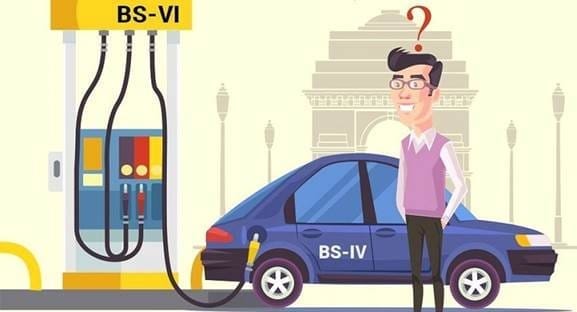
The Delhi government has intensified measures to control vehicular pollution due to deteriorating air quality. As a result, non-BS VI private vehicles registered outside of Delhi are now prohibited from entering the city. Additionally, fuel stations are mandated to sell fuel only to vehicles possessing a valid Pollution Under Control Certificate (PUCC). Non-compliant vehicles face fines of ₹20,000, while even BS-VI vehicles without a valid PUCC can incur a fine of ₹10,000. These actions aim to reduce emissions from older, more polluting vehicles as part of efforts to combat worsening air pollution in the Capital.
Key Takeaways
- The Delhi government has implemented strict regulations on vehicular emissions.
- Only vehicles with a valid PUCC are permitted to refuel in Delhi.
- Fines are imposed on both non-compliant and some compliant vehicles lacking a valid PUCC.
Why Delhi Has Mixed-Standard Vehicles?
- Implementation of Stricter Norms: Delhi adopted stricter Bharat Stage (BS) norms ahead of the national timeline to combat severe air pollution.
- Older vehicles, especially those adhering to BS I, II, or III, continue to operate in the city, leading to a mix of emission standards on the roads.
Why Older Vehicles Contribute More to Air Pollution?
- Older vehicles lack advanced emission-control technologies, resulting in significantly higher pollutant emissions.
- Diesel vehicles emit large quantities of nitrogen oxides and fine particulate matter, which contribute to smog and health issues.
- They also release volatile organic compounds that form secondary pollutants in the atmosphere.
BS VI vs BS IV: What Changed in Emission Standards
- Bharat Stage Emission Norms: These norms regulate air pollutants emitted by vehicles and are enforced by the Ministry of Environment, Forest and Climate Change (MoEFCC) and the Central Pollution Control Board (CPCB).
- BS VI, implemented in April 2020, vastly tightens emission limits compared to BS IV.
- For petrol vehicles, nitrogen oxide (NOx) limits are reduced by approximately 25%.
- For diesel vehicles, NOx emissions must decrease by nearly 68%, with particulate matter (PM) emissions cut by around 82%.
Pollutants Regulated
- Key pollutants include:
- Carbon Monoxide (CO)
- Hydrocarbons (HC)
- Nitrogen Oxides (NOx)
- Particulate Matter (PM)
Significance of Bharat Stage Norms
- These norms protect public health by reducing pollutants linked to respiratory and cardiovascular diseases.
- They also provide environmental benefits, including reduced smog formation and lower emissions of black carbon.
- Moreover, these regulations facilitate technological advancements in India's automobile industry and enhance the global competitiveness of Indian vehicles.
Scale of Older, High-Polluting Vehicles in Delhi-NCR
- A significant proportion of vehicles in Delhi-NCR are highly polluting, with approximately 37% of vehicles complying only with older Bharat Stage norms (I, II, or III).
- The introduction of BS VI norms marks a substantial improvement in pollution limits, enabling advanced emission-control technologies to function more effectively due to the use of cleaner, low-sulphur fuel.
In conclusion, the stringent measures taken by the Delhi government aim to significantly mitigate air pollution by targeting older, more polluting vehicles, while ensuring compliance with updated emission standards to improve public health and environmental quality.
GS3/Science and Technology
A Bold Step Amid an Ambitious Nuclear Energy Target
 Why in News?
The relationship between human development and energy consumption has been underscored by Earl Cook's 1971 study, demonstrating that as societies transition through various stages, their energy requirements increase. In today's context, the expanding digital economy intensifies these energy demands. This article discusses how India's goal of enhanced human development is tightly linked to the need for a substantial increase and decarbonisation of energy supply, placing nuclear power and the SHANTI Bill, 2025, at the forefront of its long-term development strategy.
Key Takeaways
- India aims for an HDI of 0.9 or higher, necessitating an annual energy generation of around 24,000 TWh.
- A significant portion (60%) of this energy will be required as electricity, with the remainder for hydrogen production.
- India's current electricity generation is approximately 1,950 TWh, requiring decades to meet future targets without major changes.
- Decarbonising the energy mix while increasing generation presents two major challenges.
Additional Details
- Energy Growth Required for Development: The Human Development Index (HDI) shows a strong correlation with per capita Final Energy Consumption (FEC). To achieve a higher HDI, India must significantly increase its energy production, particularly focusing on electricity and hydrogen.
- Decarbonisation Needs: Achieving development goals requires a shift from fossil fuels to renewable sources such as hydro, nuclear, solar, and wind power, alongside a systemic redesign of energy consumption.
- Nuclear Power's Role: Nuclear energy is essential for providing stable baseload power amidst the intermittent nature of renewable sources. Large-scale storage for renewable energy is often economically unfeasible.
- Indigenous Nuclear Capability: India has developed significant domestic capabilities in nuclear technology, including fuel fabrication and reactor design, despite needing to import uranium.
- SHANTI Bill, 2025: This legislation aims to streamline nuclear energy regulations and set ambitious targets for nuclear capacity expansion, reflecting a strategic shift towards a low-carbon economy.
In summary, India's ambitious energy goals, particularly through nuclear power expansion as outlined in the SHANTI Bill, are crucial for its transition to a developed, energy-secure, and low-carbon future. The integration of nuclear power into the energy mix is viewed as essential to overcoming current limitations of renewable energy sources.
GS3/ Defence and Security
AH-64E Apache Induction Strengthens India-US Defence Cooperation
 Why in News?
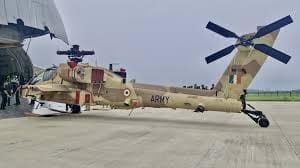
- The Indian Army has received the last batch of three AH-64E Apache Attack helicopters, completing its fleet of six under the 451 Army Aviation Squadron, based in Jodhpur, Rajasthan.
- This marks the full operational capability of the Army's first dedicated Apache squadron.
- The helicopters were part of a $600 million deal with the United States in February 2020.
About AH-64E Apache:
- The AH-64E Apache is considered one of the most advanced multi-role attack helicopters globally.
- It features state-of-the-art avionics, sensor suites, precision-guided weapons, and strong network-centric warfare capabilities.
- The helicopter is designed for high operational flexibility, capable of conducting missions day and night, in all-weather conditions, and across various terrains, including deserts and high-altitude mountainous regions.
Enhanced Capabilities:
- Deploying Apache helicopters along the western front facing Pakistan will significantly improve precision strike, anti-armour warfare, and close air support capabilities.
- This deployment also strengthens India's deterrence posture in a region prone to conflict.
Key Aspects of India-US Defence Cooperation:
- In October 2025, India and the US signed a new 10-year Defence Framework Agreement to enhance cooperation in military exercises, technology, and industrial collaboration.
- The relationship is supported by the "Major Defence Partner" status and foundational agreements such as:
- LEMOA (Logistics Exchange Memorandum of Agreement): Facilitates mutual access to military bases for logistics support, including fuel, repair, and supplies.
- COMCASA (Communications Compatibility and Security Agreement): Enables secure, encrypted communication systems and real-time information sharing between Indian and US forces.
- BECA (Basic Exchange and Cooperation Agreement): Promotes the sharing of high-end geospatial, satellite, and mapping data for improved military navigation and targeting.
Initiatives like iCET (Initiative on Critical and Emerging Technology) and INDUS-X are accelerating projects such as:
- Co-production of GE F414 jet engines in India.
- Procurement of MQ-9B Predator drones.
GS2/ International Relations
India-Jordan Relations
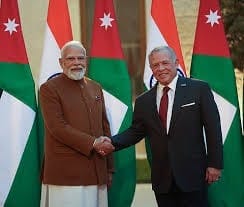
India's Prime Minister is on a significant visit to Jordan, marking his first comprehensive bilateral trip to the country. During this visit, he is engaging in extensive discussions with King Abdullah II of Jordan. This visit is noteworthy as it comes on the heels of his previous brief stop in Jordan in February 2018, when he was en route to Palestine.
What are the Key Outcomes of the Visit?
- MoUs Signed: Five agreements were signed between India and Jordan, covering areas such as technical cooperation in renewable energy, water resources management, cultural exchange, and digital solutions for population-scale digital transformation.
- Ambitious Trade Target: Both countries aim to increase bilateral trade to USD 5 billion over the next five years, with India being Jordan's third-largest trading partner.
- Regional and Global Alignment: Leaders from both countries reiterated their strong condemnation of terrorism and shared perspectives on ensuring regional peace and stability.
What is the Strategic Significance of Jordan for India's West Asia Policy?
- Geopolitical Bridge: Jordan plays a crucial role as a pro-Western Arab constitutional monarchy with a peace treaty with Israel. This positions Jordan as a diplomatic bridge for India, allowing it to balance relations with Israel, Arab states, and Iran without getting caught in sectarian conflicts.
- Humanitarian Role: Jordan's hosting of a large refugee population, particularly Syrians, enhances its role as a regional stabilizer and humanitarian actor.
- Counter-Terrorism Cooperation: India and Jordan have deepening military and counter-terrorism ties through various forums and agreements, such as the Aqaba Process and defence cooperation MoUs.
- Diplomatic Support: Jordan's influence in the Organisation of Islamic Cooperation (OIC) is beneficial for India, helping counter negative narratives and supporting India's multilateral interests.
- Regional Stability: Jordan's role in custodianship of Jerusalem is vital for de-escalation efforts, aligning with India's interests in regional stability and protection of its diaspora and trade routes.
- Corridor Logistics: Jordan is strategically positioned in the India-Middle East-Europe Economic Corridor (IMEC), enhancing trade connectivity and energy transition goals for India. It also offers opportunities for post-conflict reconstruction and logistics in Iraq and the Levant.
Jordan:
- Location & Borders: Jordan is strategically located in the Middle East, sharing borders with Syria, Iraq, Saudi Arabia, Israel, and the West Bank.
- Physical Features: Over 80% of Jordan's land is dominated by desert, with notable features including the fertile Jordan River Valley and rocky highlands.
- Population: The population is predominantly Arab, with a significant Palestinian refugee community constituting about one-third. The majority are Muslim, with a Christian minority. Approximately 75% of the population is urbanized, living in cities.
- Maritime Access: Jordan has access to the Red Sea via the port of Aqaba.
- Modern Formation: Jordan was established as Transjordan under a British mandate in 1920 and gained independence in 1946 under King Abdullah I of the Hashemite dynasty.
- Arab-Israeli Conflicts: Jordan fought wars against Israel in 1948 and 1967, during which it lost the West Bank and eastern Jerusalem, leading to a large influx of Palestinian refugees.
- Peace & Stability: In 1988, Jordan renounced its claims to the West Bank and signed a peace treaty with Israel in 1994, known as the Wadi Araba Treaty.
What are the Pillars of the India-Jordan Bilateral Relationship?
- Diplomatic Engagement: Diplomatic ties, established in 1950, are reinforced through regular summits, mutual support in counter-terrorism, and shared concerns for regional stability.
- Trade & Economic Integration: India ranks as Jordan's third-largest trading partner, with bilateral trade reaching USD 2.875 billion in FY 2023-24. Joint ventures like the Jordan India Fertiliser Company (JIFCO) position Jordan as a critical supplier of phosphates and potash for India's agricultural needs.
- Defence & Security Cooperation: The 2018 MoU on Defence Cooperation between India and Jordan strengthens security ties.
- Science & Technology Partnership: The India-Jordan Center of Excellence in IT at Al-Hussein Technical University aims to train 3,000 Jordanian IT professionals. Indian master trainers provide upskilling in Cyber Security, AI, and Big Data Analytics.
- People-to-People Ties: Around 17,500 Indians work in Jordan across various sectors, including healthcare, IT, and education. Cultural ties are fostered through Jordan's interest in Bollywood and participation in events like the Jerash Festival.
- Personal Diplomacy: The Jordanian Crown Prince Al Hussein bin Abdullah II's personal visit with the Indian Prime Minister to the Jordan Museum exemplifies the warm diplomatic relations between the two countries.
What Challenges Constrain the Partnership Between India and Jordan?
- Structural Trade Imbalance: The trade relationship is heavily reliant on a few commodities, with India importing phosphates and potash while exporting cereals and petroleum products. This reliance makes the relationship susceptible to price fluctuations, and high-value exchanges and advanced technology transfers are minimal.
- Economic Constraints in Jordan: Jordan faces significant economic challenges, including a high unemployment rate of around 21% and a public debt nearing 90% of GDP as of 2024. These factors limit fiscal flexibility and suggest that substantial trade expansion may be difficult in the near future.
- Geopolitical Sensitivities: Jordan's foreign policy is significantly influenced by the Palestinian issue and developments related to Israel. This sensitivity complicates its external alignments during regional crises and makes stable, long-term cooperation with external partners more difficult, especially during escalations in West Asia.
- Connectivity Issues: The limited connectivity between India and Jordan, exemplified by the single Amman-Mumbai flight, highlights a gap in people-to-people and business ties. This lack of robust connections, especially in comparison to India's strong links with Gulf states, constrains opportunities for growth in trade, investment, and tourism.
How can India and Jordan Build a more Robust Bilateral Relationship?
- Diversify Economic Relationship: Transitioning from commodity-based trade to value-chain integration is crucial. Establishing a Ministerial Strategic Economic & Technology Dialogue focusing on investment, MSMEs, startups, and supply chains can facilitate this shift. Sharing India's expertise in Digital Public Infrastructure (DPI) can enhance digital solutions in health and e-governance.
- Build a Green & Water-Secure Partnership: Collaborating on solar and green hydrogen technologies can address Jordan's water scarcity and energy transition challenges. Partnerships in water recycling, desalination, smart irrigation, and climate-resilient agriculture are also beneficial.
- Gateway for Regional Stabilisation: Jordan can be positioned as a base for humanitarian aid, skilling, and health missions, with India partnering in multilateral development initiatives for regional stabilization.
- Amplify Cultural Links: Joint cultural productions, film festivals, and archaeological collaborations can strengthen ties. Promoting Jordan as a film shooting destination for Bollywood and Indian OTT platforms can enhance cultural connections.
- Enhance Connectivity: Incentivizing direct flights between Amman and Indian cities like Delhi or Chennai can boost tourism and business linkages. Creating a digital platform for e-commerce, tech startups, and virtual collaboration can facilitate connections between businesses and academia in both countries.
Conclusion The Prime Minister's visit to Jordan marks a significant step in elevating the long-standing partnership into a strategic alliance. By focusing on trade diversification, digital integration, and enhanced security cooperation, India and Jordan aim to turn diplomatic goodwill into tangible outcomes for the future.
FAQs on UPSC Daily Current Affairs: 2025-12-19
| 1. What are the key objectives of strengthening India's semiconductor self-reliance? |  |
| 2. How does the Securities Markets Code (SMC) Bill aim to unify securities regulation in India? | |
| 3. What are the potential benefits of the Free Trade Agreement (FTA) signed between India and Oman? | |
| 4. What challenges are associated with identifying BS-VI vehicles from older models? | |
| 5. What is the significance of India's ambitious nuclear energy targets? | |




