International Relations – Current Affairs (December 2025)


GS2/International Relations
The Right Moment to Boost India-Ethiopia Ties
Why in News?
Ethiopia is emerging as a strategically significant partner for India, thanks to its fast-growing economy, strong manufacturing sector, and strategic location in the Horn of Africa. As Ethiopia navigates post-conflict recovery and seeks to enhance its international partnerships, the timing is ripe for strengthened India-Ethiopia relations.
Key Takeaways
- Ethiopia's population of about 109 million and its growing economy make it a key partner for India.
- India has a long-standing educational partnership with Ethiopia, contributing significantly to its education system.
- Indian investments in Ethiopia have surged, particularly since the mid-2000s, focusing on diverse sectors including mining and defense.
Additional Details
- Ethiopia's Strategic Importance: With a robust manufacturing base and potential as a renewable energy exporter, Ethiopia is becoming increasingly vital for India, especially in areas like hydropower.
- Educational Cooperation: India has played a crucial role in developing Ethiopia's education, with significant student exchanges and initiatives like the Pan-African e-Network.
- Investment Landscape: Indian investment in Ethiopia exceeds $4 billion, focusing on agriculture, mining, and industrial sectors, with a growing emphasis on mining critical resources.
- Defence Partnership: Historical ties in defense are being strengthened through new agreements and joint training programs, as Ethiopia seeks modern military capabilities.
- Trade Opportunities: India's duty-free tariff preference scheme is essential for Ethiopian exports, promoting further investment in export-oriented sectors.
The evolving partnership between India and Ethiopia is positioned for significant growth, driven by mutual interests in education, investment, and defense. Recent high-level meetings, such as between Prime Minister Modi and Prime Minister Abiy Ahmed at the G-20 summit, underscore the commitment to deepening these ties.
GS2/International Relations
India's FTA Push - From Trade Liberalisation to Strategic Insurance
Why in News?
India is actively pursuing the signing of Free Trade Agreements (FTAs) and Regional Trade Agreements (RTAs) with various countries, including a potential agreement with New Zealand, while continuing discussions with Oman, Chile, Israel, Canada, the EU, and the UK. This increase in FTA activity is occurring against a backdrop of global trade uncertainty, a weakening of the WTO, and shifting geopolitical dynamics, particularly following the US's retreat from multilateralism during Donald Trump's presidency.
Key Takeaways
- FTAs are increasingly viewed as strategic and political tools rather than just economic agreements.
- India's past FTAs have yielded limited economic gains, prompting a shift in approach.
- Strategic alignments in FTAs are crucial amid global trade tensions and geopolitical shifts.
Additional Details
- Sudden Spurt in FTAs: Although India's recent enthusiasm for FTAs might seem surprising due to limited past economic benefits, the underlying motivation is mainly strategic.
- FTAs Through the Lens of Trade Theory: Empirical evidence indicates that FTAs typically formalize existing trade rather than create new trade flows, benefiting export-oriented firms while disadvantaging domestic industries facing import competition.
- Limited Economic Outcomes: India's export share with FTA partners has often remained stagnant or declined, highlighting structural challenges.
- Structural Problems: Key issues include a focus on commodity trade, trade diversion, and underutilization of India's service sector advantages.
- Strategic Drivers: FTAs now serve as political safety nets and instruments for foreign policy, reinforcing strategic partnerships rather than merely enhancing market access.
- Challenges Ahead: India needs to shift focus from tariff reductions to services, digital trade, and investment to better leverage FTAs for economic gain.
In conclusion, India's evolving FTA strategy signifies a shift in approach, where FTAs are not just about expanding trade but also about securing strategic positions in an increasingly volatile global landscape.
GS2/International Relations
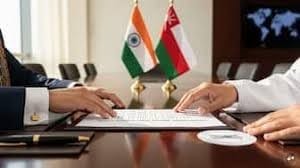
Cabinet Approves India-Oman Free Trade Pact
Why in News?
- The Union Cabinet has given its approval for the proposed Free Trade Agreement (FTA) between India and Oman.
About
- The approval for the Comprehensive Economic Partnership Agreement (CEPA) comes ahead of the Prime Minister's upcoming visit to Jordan, Ethiopia, and Oman.
- The agreement was also approved by the lower house of Parliament in Oman.
- The Prime Minister's visit to Oman will mark his second trip to the country and coincides with the 70th anniversary of diplomatic relations between India and Oman.
- Negotiations for the Free Trade Agreement officially began in 2023.
- In FTAs, trading partners significantly reduce or eliminate customs duties on a wide range of goods traded between them. They also ease regulations to promote trade in services and attract investments.
- India already has a similar agreement with the United Arab Emirates (UAE), another Gulf Cooperation Council (GCC) member, which came into effect in 2022.
Major Highlights of the FTA
- Under the Comprehensive Economic Partnership Agreement (CEPA), India will gain access to 98% of its products in Oman, along with significant access in services.
- Oman's import duties vary from 0 to 100%, along with the presence of specific duties.
- In addition to trade, investment flows between the two sides are also expected to benefit from the agreement.
India-Oman Ties
- Diplomatic Relations: India and Oman formalized their diplomatic relations in 1955, which were later elevated to a Strategic Partnership in 2008.
- Trade Relations: In FY 2023-2024, Oman ranked as India's 30th largest trading partner, with total trade amounting to US$ 8.947 billion. India is among Oman's top trading partners, and Oman is the third-largest export destination for India among Gulf Cooperation Council (GCC) countries. Notably, India is the fourth-largest market for Oman's crude oil exports in 2023, following South Korea.
- Defence Cooperation: India and Oman conduct regular biennial bilateral exercises involving all three armed services. The exercises include:
- Army exercise: Al Najah
- Air Force exercise: Eastern Bridge
- Naval Exercise: Naseem Al Bahr
- Maritime Cooperation: Oman plays a crucial role in the Strait of Hormuz, through which India imports about one-fifth of its oil. In 2018, India signed an agreement with Oman to access the Duqm port, strategically located on Oman's southeastern seaboard, near the Arabian Sea and the Indian Ocean. The Port of Duqm is also in close proximity to the Chabahar port in Iran, enhancing its strategic significance.
GS2/International Relations
India-New Zealand Free Trade Agreement Finalised
Key Takeaways
- India and New Zealand established diplomatic relations in 1952, with strong ties built on shared Commonwealth membership and democratic governance.
- The FTA negotiations began in March 2025 and were finalized within nine months, illustrating a strong political commitment from both nations.
Additional Details
- Bilateral Relations: India and New Zealand share enduring ties, reinforced by cultural connections such as cricket, hockey, and mountaineering, alongside a vibrant tourism sector.
- Strategic Vision: New Zealand's initiatives, including "Opening Doors to India" (2011) and the "NZ Inc. India Strategy," highlight India's status as a priority partner.
- Trade and Economic Ties: In 2023-24, total trade between India and New Zealand was valued at approximately US$ 1.75 billion, with major sectors including education, tourism, and pharmaceuticals.
- Defence Cooperation: The two countries have been expanding their defence ties through naval visits, leadership exchanges, and contributions to Combined Task Force-150, enhancing maritime security in the Indo-Pacific region.
- Education Partnerships: India is the second-largest source of international students in New Zealand, with significant collaborations in research and educational agreements.
The FTA is set to deepen economic engagement and strengthen cooperation across multiple sectors, including defence, education, and innovation. Key provisions include significant tariff reductions, investment opportunities, and access to services, which will facilitate greater mobility for professionals. This agreement marks a significant step in enhancing India-New Zealand relations and fostering mutual growth.
GS2/International Relations
BRICS in the Era of Geopolitical Shifts
Why in News?
- Brazil passed the BRICS presidency to India, symbolizing sustainability with a gavel made from recycled Amazon rainforest wood.
- Brazil highlighted BRICS' growing importance amid increasing distrust in multilateralism, reinforcing its role as a platform for dialogue and bridge-building.
Summary
- Brazil has transferred the BRICS presidency to India at a time when multilateralism is facing increasing skepticism.
- BRICS, which has expanded to include countries like Egypt and the UAE, advocates for multipolarity through institutions like the New Development Bank (NDB) and initiatives such as the Grain Exchange.
- Despite its growing role in a climate of global mistrust, BRICS faces challenges from internal divisions and economic disparities, necessitating stronger institutional and strategic coordination to enhance its effectiveness.
What is BRICS?
- About: BRICS is a collaborative intergovernmental organization of major emerging economies, established to enhance economic cooperation and amplify the global political and economic influence of its members. The acronym originally stood for Brazil, Russia, India, and China, with South Africa joining later in 2010.
- Key Purpose: Its core objectives include promoting trade and investment among members, reforming global governance institutions like the UN and IMF, and establishing alternative financial systems to reduce dollar dependency. It aims to counterbalance Western influence and advocate for a more multipolar world order.
- Foundation and Evolution: The term BRIC was first coined by economist Jim O'Neill in 2001. The group began formal cooperation at the 2006 G-8 Outreach Summit and held its first official summit in Russia in 2009.
- Expansion of Membership: The group expanded in 2024 with the addition of Egypt, Ethiopia, Iran, and the UAE. Indonesia joined in 2025. Saudi Arabia has accepted membership but has not yet formalized it, while Argentina opted out after initial consideration. In 2024, BRICS introduced a partner countries status, initially granted to Belarus, Bolivia, Cuba, Kazakhstan, Malaysia, Nigeria, Thailand, Uganda, and Uzbekistan. This allows them to attend summits without being full members.
- Sherpa System: BRICS Sherpas are designated leaders who represent their countries within the BRICS bloc and serve as the primary channel of communication among BRICS nations. India's current BRICS Sherpa is Sudhakar Dalela.
- New Development Bank (NDB): NDB is a multilateral development bank established by BRICS countries in 2015 to mobilize resources for infrastructure and sustainable development projects in emerging markets and developing countries (EMDCs). Membership is open to United Nations members, with Bangladesh (2021), United Arab Emirates (2021), Egypt (2023), and Algeria (2025) joining as new members. The NDB has an initial authorized capital of USD 100 billion. The five BRICS founding members each hold equal voting shares, with 20% of the capital each at establishment, and they are guaranteed to retain at least 55% of the institution's voting rights, even as new members join.
- Significance: BRICS represents about 45% of the world's population and accounts for 37.3% of global GDP (in purchasing power parity terms), collectively surpassing the economic share of the G7 (29.3%).
- Key Initiatives: Key initiatives are the New Development Bank (NDB, 2014), the Contingent Reserve Arrangement (CRA), the BRICS Grain Exchange, and the Science, Technology and Innovation (STI) Framework Programme (2015).
How has BRICS Increased its Relevance in an Era of Growing Mistrust Toward Multilateral Institutions?
- Pragmatic Response to Multilateral Paralysis: BRICS has become more relevant by addressing issues like food security, digital governance, technology sharing, vaccine equity during Covid-19, and climate finance through functional cooperation, especially in areas where traditional multilateral institutions like the WTO and UN Security Council have faced deadlocks.
- Rising Representativeness: The accession of Indonesia and the introduction of the BRICS partner-country model have expanded BRICS' footprint in the Global South, countering criticisms of limited regional representation while maintaining institutional flexibility.
- Material Economic and Energy Weight: BRICS members account for approximately 45% of the global population and over 35% of world GDP (PPP). The inclusion of energy-rich countries like Iran, the UAE, and potentially Saudi Arabia enhances BRICS' influence over global growth narratives, energy markets, and pricing politics.
- Institutional Alternatives to Western-Led Frameworks: The New Development Bank (NDB) and the Contingent Reserve Arrangement (CRA) offer support for development, climate, and liquidity needs outside the conditionalities typically associated with the IMF. This shift helps BRICS evolve from a mere consultative forum to a credible, solutions-oriented institutional platform.
- Multipolar Narrative and Diplomatic Adaptability: BRICS positions itself as a champion of a fairer multipolar order, maintaining dialogue during global crises such as the Covid-19 pandemic and the Ukraine War. This adaptability resonates with Global South countries seeking strategic autonomy and a non-aligned diplomatic space amidst geopolitical polarization.
What Steps can BRICS Take to Strengthen its Effectiveness and Strategic Influence?
- Institutional and Financial Deepening: Operationalize a unified digital payment platform like BRICS Pay, expand local-currency lending through the NDB, and establish dedicated funds for green energy and strategic sectors. This would reduce reliance on SWIFT, the US dollar, and IMF-centric financial channels.
- Trade Integration and Supply-Chain Stabilization: Develop a BRICS Common Market Framework focusing on tariff rationalization, mutual standards recognition, and seamless logistics. Operationalize the BRICS Grain Exchange to stabilize food supplies and strengthen trade in critical sectors such as pharmaceuticals and minerals.
- Coordinated Diplomacy and Global South Alignment: Formalize a unified BRICS voice on global governance reforms and establish a crisis-diplomacy mechanism for regional conflicts. Institutionalize BRICS+ dialogue with blocs like the African Union and ASEAN to enhance South-South cooperation and diplomatic influence.
- Permanent Institutional Architecture for Policy Delivery: Create a lean, technocrat-led BRICS Secretariat to ensure policy continuity across rotating presidencies, monitor implementation, and convert summit declarations into measurable outcomes. This addresses the grouping's execution deficit and enhances policy delivery.
- Strategic Autonomy Through Protection and Value-Chain Power: Develop collective legal and financial shield mechanisms, such as joint asset-protection funds, and coordinate investments in value-chain segments. This includes refining, processing, logistics, and standards-setting to enhance sanctions resilience and elevate BRICS from trade coordination to structural economic power.
Conclusion
BRICS has evolved into a crucial platform advocating for a multipolar world, leveraging its economic strength and institutional innovations. Its future relevance depends on addressing internal disparities and external challenges to deliver meaningful cooperation for the Global South.
GS2/International Relations
Putin's Visit: India-Russia Ties and the Road Ahead
Why in News?
India is set to welcome President Vladimir Putin for a two-day visit as the country navigates punitive U.S. tariffs on its imports of Russian oil. This visit marks the 23rd annual summit between India and Russia, highlighting New Delhi's commitment to strengthening ties with Moscow amid a shifting global landscape.
Key Takeaways
- Putin's visit underscores India's intent to deepen its partnership with Russia amidst geopolitical tensions.
- Both countries are navigating complex circumstances influenced by the U.S. and China.
Additional Details
- Putin's Historical Visits: Putin first visited India in October 2000, during a time of significant challenges for both nations, including India's Western sanctions and Russia's post-Soviet struggles.
- 2025 Context: Putin's upcoming visit takes place against the backdrop of severe Western sanctions on Russia and increased U.S. scrutiny of India's ties with Moscow.
- India's Defence Dependence: Approximately 60% of India's military equipment is of Russian origin, highlighting ongoing reliance despite diversification efforts.
- Oil Trade Dynamics: Bilateral trade reached a record $68.7 billion, largely driven by discounted Russian oil, but India's exports remain minimal.
- Strategic Challenges: India faces a delicate balancing act between strengthening ties with the U.S. and Europe while maintaining its relationship with Russia, especially given its border tensions with China.
Putin's visit is expected to yield significant discussions, including potential new defence deals and trade agreements, reinforcing the strategic cooperation between India and Russia even in the face of geopolitical pressures.
GS2/International Relations
India-Russia Summit - Strengthening Trade, Energy and Mobility Ties
Why in News?
Russian President Vladimir Putin's recent state visit to India has led to significant advancements in various sectors including labor mobility, trade expansion, nuclear energy collaboration, defense manufacturing, and tourism. These developments underscore the enduring strategic partnership between India and Russia amidst evolving global geopolitical dynamics.
Key Takeaways
- New labor mobility agreement to facilitate Indian workers' employment in Russia.
- Commitment to expand nuclear energy cooperation, including small modular reactors.
- Focus on enhancing defense production and technology sharing.
- Initiatives to balance trade, including Indian exports of diverse goods.
- Introduction of a free 30-day e-tourist visa for Russian nationals.
Additional Details
- Labour Mobility Agreement: This agreement will allow Indian workers, especially in construction, healthcare, and services, to find jobs in Russia through regulated frameworks. It aims to create safer migration routes and address labor shortages in Russia while providing employment opportunities for Indian youth.
- Nuclear Energy Cooperation: India and Russia aim to enhance collaboration in the nuclear sector, focusing on the joint development of small modular reactors (SMRs) and additional units at the Kudankulam facility. This partnership is crucial for India's low-carbon energy strategy.
- Defense Production: The summit resulted in proposals for co-production of military equipment in India, discussions on stabilizing supply chains for spare parts, and a roadmap for long-term industrial cooperation.
- Bilateral Trade Expansion: Efforts were made to diversify trade, addressing the current imbalance favoring Russia. Key discussions included increasing Indian exports in pharmaceuticals, textiles, and food products, along with establishing a bilateral payment mechanism.
- e-Tourist Visa Initiative: India announced a free, 30-day, double-entry e-tourist visa for Russian citizens, expected to boost tourism and strengthen cultural ties.
- Technology and Space Cooperation: Both nations discussed joint projects in cybersecurity, AI, and space research, reaffirming their commitment to ongoing collaboration in these critical areas.
- Energy Security: The discussions included long-term agreements for crude oil supply and LNG procurement, emphasizing energy as a cornerstone of bilateral relations.
In conclusion, the India-Russia summit not only highlights the strategic partnership between the two nations but also reflects India's approach to maintaining its strategic autonomy while balancing relations with other global powers. The agreements reached signify mutual interests in energy security, economic cooperation, and geopolitical stability.
GS2/International Relations
India-Oman Comprehensive Economic Partnership Agreement
Why in News?
- India and Oman have recently signed a Comprehensive Economic Partnership Agreement (CEPA), marking a significant achievement in India's trade relations within the Gulf region.
- This agreement is notable as it is Oman's first bilateral trade pact since 2006 and India's second CEPA in the Gulf Cooperation Council (GCC) region, following the agreement with the United Arab Emirates in 2022.
- In a gesture of appreciation, Prime Minister Narendra Modi was awarded the Order of Oman by Sultan Haitham bin Tarik for his outstanding contributions to strengthening India-Oman relations. This prestigious award, established in 1970, recognizes global leaders for their significant contributions to public life and bilateral relations.
Summary
- The India-Oman CEPA enhances India's economic and strategic influence in the Gulf by offering extensive duty-free access for exports, ambitious liberalization of services, improved professional mobility, and new opportunities in investment, AYUSH, and growth driven by MSMEs.
- Despite boosting trade facilitation and regional connectivity, challenges remain, including a structural trade deficit, underutilized services potential, and regional geopolitical risks. Addressing these issues will require focused diversification and deeper engagement in services in the future.
Key Features of the India-Oman CEPA
- Near-Universal Duty-Free Market Access: Oman has agreed to grant zero-duty access on 98.08% of its tariff lines, which covers 99.38% of India's exports by value.
- Boost to Labour-Intensive Sectors: Full tariff elimination for sectors such as textiles, leather, footwear, gems & jewellery, engineering goods, plastics, furniture, agricultural products, pharmaceuticals, medical devices, and automobiles.
- Balanced Tariff Concessions by India: India has offered tariff liberalisation on 77.79% of its total tariff lines, covering 94.81% of imports from Oman, while protecting sensitive sectors through exclusion lists and Tariff Rate Quotas (TRQs).
- Ambitious Services Liberalisation: Oman commits to liberalisation across 127 services sub-sectors, including IT, business and professional services, R&D, education, health, and audio-visual services.
- Enhanced Mobility of Indian Professionals: Oman has offered wide-ranging Mode 4 commitments, easing professional mobility for Indian professionals.
- 100% FDI in Services: The CEPA allows 100% Foreign Direct Investment by Indian companies in major services sectors in Oman.
- Landmark Provision on Traditional Medicine: The agreement includes a comprehensive commitment on Traditional Medicine, opening new avenues for India's AYUSH and wellness sectors.
- Trade Facilitation and Regulatory Cooperation: The CEPA addresses non-tariff barriers through various regulatory cooperation measures.
About Oman
- Oman, with its capital in Muscat, is the oldest independent state in the Arab world and a member of the Gulf Cooperation Council (GCC).
- The country is bordered by Yemen to the southwest, the UAE to the northwest, and Saudi Arabia to the west, with maritime boundaries along the Arabian Sea to the south and east and the Gulf of Oman to the north.
- Oman's geography includes the Rub al-Khali (Empty Quarter) desert, the Hajar and Dhofar mountain ranges, and it is rich in natural resources such as petroleum, natural gas, copper, limestone, and asbestos.
Significance of the India-Oman CEPA
- The CEPA positions Oman as a strategic gateway for India to the GCC, Eastern Europe, Central Asia, and Africa.
- It strengthens India's economic presence in West Asia and aligns with India's broader Free Trade Agreement (FTA) strategy.
- The agreement enhances trade facilitation, supply chain resilience, and investment confidence, supporting India's vision of inclusive and sustainable growth.
India-Oman Relations: An Overview
- Strategic and Political Relations: India and Oman have a long-standing and warm relationship that was elevated to a Strategic Partnership in 2008. Oman is India's oldest strategic partner in the Gulf region and plays a crucial role in the Gulf Cooperation Council (GCC), Arab League, and Indian Ocean Rim Association (IORA).
- Defence and Maritime Cooperation: Oman was the first Gulf country to conduct tri-service exercises with India, including the Al Najah (Army), Eastern Bridge (Air Force), and Naseem Al Bahr (Navy) exercises. This reflects the strong cooperation between the two countries in ensuring maritime security in the Indian Ocean.
- Economic and Trade Relations: Bilateral trade between India and Oman exceeded USD 10.6 billion in FY 2024-25. India ranked as Oman's 4th largest source of non-oil imports and the 3rd largest market for non-oil exports. In the same period, Oman was India's 29th largest export market, 25th largest import source, and 28th largest overall trading partner.
- Trade Profile: India exports petroleum products, aluminium oxide, rice, machinery, aircraft, electronics, plastics, and steel to Oman. In contrast, India imports crude oil, LNG, fertilisers, ammonia, chemicals, sulphur, and iron ore from Oman.
- People-to-People and Cultural Links: The Indian diaspora in Oman, numbering around 670,000, along with centuries-old cultural ties and strong institutional support, plays a vital role in strengthening the people-to-people connections between the two countries.
Challenges in India-Oman Relations
- Limited Utilisation of Services Potential: Despite Oman importing a significant amount of services globally, India's share is relatively low, indicating under-penetration of Indian services such as IT, professional, education, and healthcare services.
- Trade Imbalance: The bilateral trade is heavily dominated by energy and minerals, leading to a structural trade deficit for India. This limits diversification into high-value manufacturing and services sectors. In FY 2025, India exported goods worth USD 4.1 billion to Oman while importing USD 6.6 billion, resulting in a trade deficit of approximately USD 2.5 billion.
- Regional Geopolitical Risks: Instability in the West Asia region and potential disruptions in maritime trade routes pose risks to energy security, trade continuity, and the welfare of the Indian diaspora.
- Omanisation and Labour Market Sensitivities: Oman's policy focus on workforce nationalisation, known as Omanisation, creates periodic uncertainties for Indian professionals and skilled workers seeking employment in Oman.
Measures to Strengthen India-Oman Relations
- Deepen Services Engagement: India should actively leverage the CEPA commitments to expand its presence in Oman's service sectors such as IT, professional services, education, healthcare, and R&D. This will help address the current under-utilisation of Oman's large services import market.
- Diversify the Trade Basket: Both countries should promote trade beyond energy-led sectors, focusing on manufacturing, engineering goods, pharmaceuticals, medical devices, and agri-value chains. This will assist in reducing India's structural trade deficit with Oman.
- Strengthen Investment and Industrial Partnerships: Encourage Indian firms to establish manufacturing and logistics hubs in Oman targeting the Gulf and African markets, particularly in green hydrogen, renewable energy, logistics, and advanced manufacturing sectors.
- Forge a Strategic Maritime and Blue Economy Partnership: Utilize Oman's strategic location at the convergence of the Persian Gulf and the Arabian Sea to enhance maritime security and safeguard energy sea lanes. Collaborate on Blue Economy initiatives involving sustainable fisheries, deep-sea mining, marine research, and joint efforts in desalination and coastal management to tackle shared climate risks.
Conclusion
The India-Oman CEPA is a forward-looking trade agreement that not only enhances India's strategic presence in the Gulf region but also aligns with broader goals of inclusive growth, job creation, and resilient global economic engagement.
GS2/International Relations
India and the U.S.: 2005 versus 2025
Why in News?
The evolution of India-United States relations over the past two decades showcases a significant transformation in the strategic perspective of the U.S. In 2005, the relationship flourished with optimism and the belief that the rise of responsible powers would enhance global stability. However, the 2025 U.S. National Security Strategy (NSS) reveals a more introspective America, focused on minimizing external burdens while seeking validation of its global relevance. This shift carries substantial implications for India's strategic decisions and expectations.
Key Takeaways
- The strategic environment of 2005 was characterized by American confidence and a welcoming attitude towards the rise of other powers.
- The 2025 NSS represents a notable transition to a more defensive approach, emphasizing national reassurance over international engagement.
- India is increasingly viewed as a tactical asset in U.S. strategies rather than an independent civilizational power.
- There is a growing expectation for India to assume greater responsibility in regional affairs without guaranteed U.S. support.
Additional Details
- 2005 Strategic Landscape: The U.S. aimed to assist India in becoming a major global power, fostering a partnership based on mutual confidence and shared aspirations.
- 2025 National Security Strategy: This document reflects a shift towards a more inward-focused U.S., where engagement is viewed as a cost rather than an investment, and leadership roles are treated as conditional and transactional.
- India's Strategic Role: In 2005, India's rise was seen as a strategic objective; in 2025, it is perceived as a component of the U.S. strategy to counterbalance China, particularly in the Indo-Pacific region.
- This transition indicates a retreat from cooperative internationalism, with the U.S. now emphasizing its own vulnerabilities and reducing commitments to allies.
In conclusion, while the partnership between India and the U.S. remains significant, the basis of cooperation is evolving. India must recalibrate its strategic outlook, focusing on shared interests rather than assumptions of U.S. support for its rise. The era of expansive American assurances has shifted towards a landscape requiring India to enhance its own strategic capability and confidence in a more fragmented global order.
GS2/International Relations
The Real Story of the India-Russia Summit
Why in News?
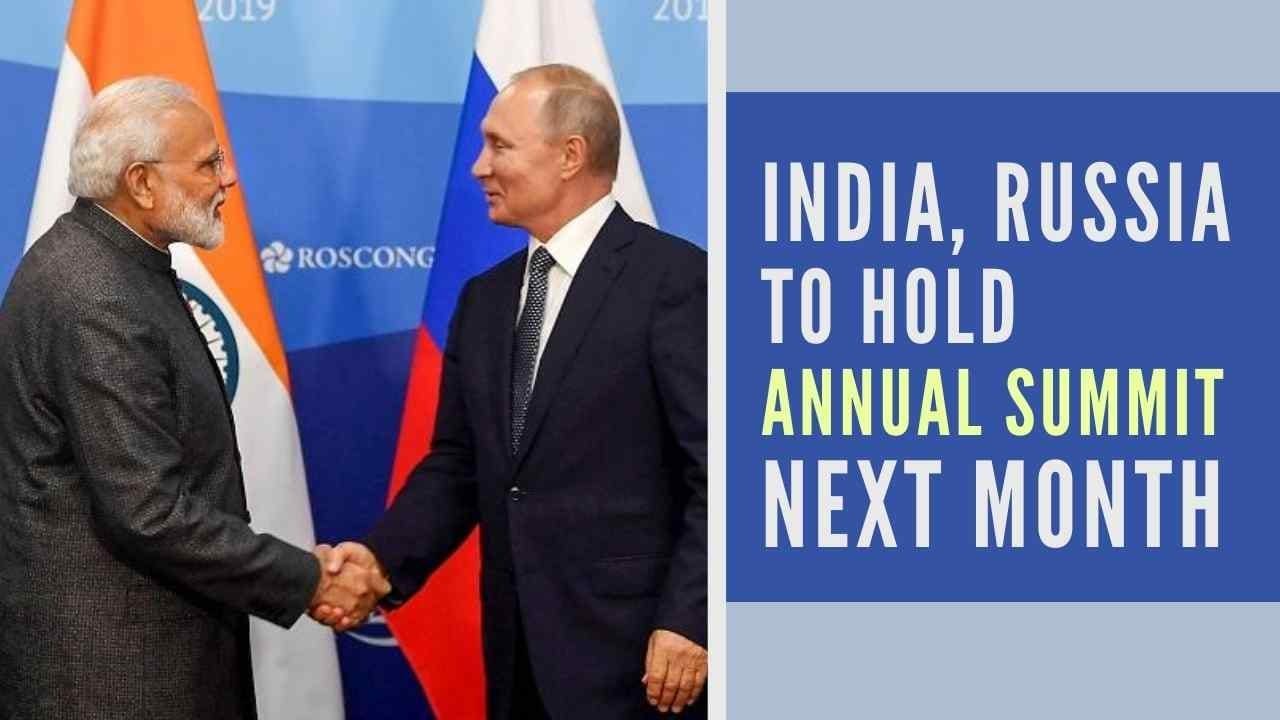
The 23rd India-Russia Summit held in New Delhi has brought to light the intricate geopolitical landscape that India must navigate, particularly in the context of the ongoing Ukraine war, which has strained relations between India's key allies-Russia on one side and the US and Europe on the other. This situation presents a diplomatic challenge for New Delhi as it strives to maintain strategic autonomy while balancing its relationships with both sides.
Key Takeaways
- India's strategic autonomy allows it to navigate complex international relationships.
- The summit reaffirmed the importance of India-Russia ties amidst global polarization.
- India aims to enhance economic cooperation with Russia through Programme 2030.
- Energy security remains a critical aspect of the partnership between India and Russia.
Additional Details
- Strategic Optics: The summit featured a warm welcome for President Vladimir Putin, signaling India's confidence in its long-standing partnership with Russia at a time when global relations are under strain.
- Programme 2030:This initiative aims to deepen economic cooperation, with goals including:
- Facilitating trade in national currencies
- Removing non-tariff barriers
- Diversifying the trade basket
- Boosting investments in non-energy sectors
- Energy Security: As the second-largest fossil fuel importer, India views affordable energy as a national security priority. Strengthening ties with Russia, which has vast energy reserves, is essential for India's energy future.
- Emerging Strategic Sectors: India and Russia are collaborating on maritime connectivity and Arctic cooperation, alongside agreements to facilitate the movement of skilled Indian workers to Russia, addressing labor shortages in certain sectors.
- Traditional Strengths: India-Russia cooperation in defense, space, and nuclear energy continues to be vital, with Russia providing crucial technology and support.
In conclusion, the India-Russia Summit represents not just a formal meeting but a strategic recalibration of ties aimed at adapting to evolving global dynamics. India is positioning itself as a balanced partner capable of maintaining relations with both Russia and the West, emphasizing the necessity for direct engagement in resolving global conflicts like the one in Ukraine.
GS2/International Relations
The Oman Visit is More Than a Routine Diplomatic Trip
Why in News?
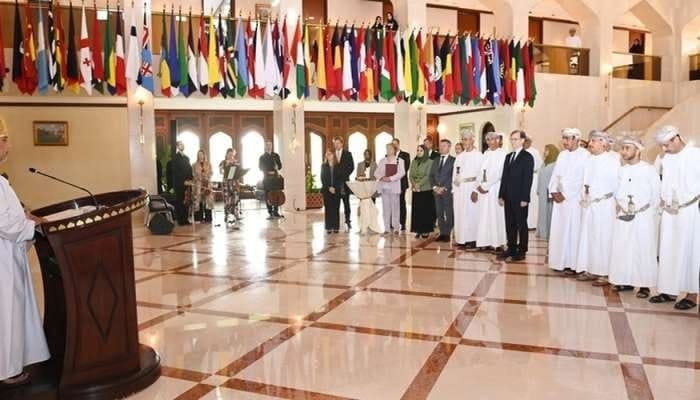
Prime Minister Narendra Modi's visit to Oman is part of a three-nation tour that includes Jordan and Ethiopia, occurring during a time of regional uncertainty, energy transitions, tariff tensions, and evolving connectivity corridors. This visit, marking 70 years of diplomatic relations between India and Oman, takes place against the backdrop of fragile peace following the Gaza ceasefire. It is significant as it follows Sultan Haitham bin Tarik's visit to India in December 2023, highlighting a renewed momentum in bilateral ties.
Key Takeaways
- Oman is a trusted partner for India amid regional instability.
- The visit aims to enhance cooperation in various sectors such as trade, defence, and technology.
- India and Oman are expected to sign a Comprehensive Economic Partnership Agreement (CEPA).
Additional Details
- Oman's Strategic Role: Oman has been a consistent ally for India, maintaining friendly ties even when other West Asian countries have been ambivalent. Its foreign policy emphasizes moderation and neutrality, making it a stable partner in the region.
- Defence Cooperation: Defence relations are guided by a 2005 Memorandum of Understanding (MoU) on military cooperation, marking Oman as the first Gulf nation to conduct joint exercises with India across all three military services.
- Economic Engagement: Bilateral trade between India and Oman reached $10.6 billion in FY 2024-25, with significant investments from Oman into India, reinforcing economic ties through initiatives like the Oman-India Joint Investment Fund.
- Fintech Innovations: The two nations have linked their payment systems, enabling the launch of the RuPay debit card in Oman, which extends India's Digital Public Infrastructure globally.
- Future Cooperation: Discussions during the visit may include expanding energy cooperation to encompass green technologies and potential strategic petroleum reserves in India.
This visit is not merely a diplomatic engagement; it signifies a deepening of India's oldest strategic partnership in the Gulf region amidst a transformative geopolitical landscape. As India seeks to bolster its economic and strategic footprint, Oman remains a pivotal partner, with promising advancements expected across various sectors including CEPA, green energy, and defence.
GS2/International Relations
India-Russia RELOS Agreement
Why in News?
The Reciprocal Exchange of Logistics Support (RELOS) agreement between India and Russia is about to be put into action. This defense logistics arrangement aims to enhance military cooperation between the two countries by allowing mutual access to each other's bases and logistical support. This includes areas as far-flung as the Arctic and the Indo-Pacific.
India-Russia RELOS
- The RELOS agreement will officially come into force once India and Russia exchange the necessary ratification instruments.
- This agreement facilitates the movement of troops, warships, and military aircraft between the two nations.
- It also permits mutual use of airspace and allows naval vessels from both countries to make port calls in each other's territories.
- Key logistical support covered by the agreement includes refueling, repairs, maintenance, and supplies.
- The agreement is applicable during joint military exercises, training sessions, and humanitarian assistance and disaster relief (HADR) operations.
- There is also potential for extending the agreement to other scenarios with mutual consent.
Strategic Significance for India
- The RELOS agreement provides India with access to Russian air and naval bases, ranging from Vladivostok in the Pacific Ocean to Murmansk in the Arctic region.
- It strengthens India's Indo-Pacific strategy by facilitating long-range deployments using Russia's extensive network of over 40 military bases.
- The agreement enhances the operational reach and endurance of the Indian Navy and Air Force, particularly for Russian-origin platforms.
- It also improves logistical readiness for distant operations.
Strategic Significance for Russia
- For Russia, the RELOS agreement grants access to Indian ports and airfields, thereby strengthening its presence in the Indian Ocean Region (IOR).
- The agreement also reinforces Russia's role in a multipolar global order.
RELOS and Similar Pacts with the US
- The RELOS agreement is similar to existing logistics agreements between the United States and India, such as the Logistics Exchange Memorandum of Agreement (LEMOA), the Communications Compatibility and Security Agreement (COMCASA), and the Basic Exchange and Cooperation Agreement (BECA).
- However, RELOS has been specifically tailored to fit the unique dynamic between India and Russia.
GS2/International Relations
Putin's Visit: Strategic Gains for India
Why in News?
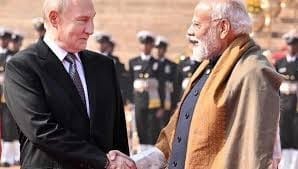
The visit of Russian President Vladimir Putin to India was marked by a warm reception, with Prime Minister Modi personally welcoming him at the Delhi airport. This visit included a private dinner hosted by Modi and a state banquet held by President Droupadi Murmu. Modi characterized the India-Russia relationship as stable and dependable, likening it to a "pole star."
Key Takeaways
- The summit's outcomes were seen as modest, with limited breakthroughs beyond reaffirming bilateral ties.
- Focus shifted from defense to economic cooperation, emphasizing a long-term engagement strategy.
Additional Details
- Defence Cooperation: Speculation about major defense deals, including aircraft and missiles, did not materialize. The meeting between the Defence Ministers of India and Russia concluded without significant announcements.
- Economic Cooperation: A 2030 roadmap for enhancing India-Russia economic ties was a focal point, indicating a shift towards strengthening economic engagements.
- Labour Mobility Agreement: A significant outcome was the signing of this agreement, which allows skilled Indian workers to find jobs in Russia, addressing a predicted shortage of three million workers in Russia by the decade's end.
- Fertilizer Supply Chain Investments: An MoU was signed between Indian and Russian fertilizer companies to establish a urea production plant in Russia, which is crucial for India's fertilizer security.
- Maritime and Customs Cooperation: Agreements were made to enhance trade through better maritime collaboration and customs cooperation, facilitating trade flows through key corridors.
- Rupee-Ruble Trade Settlement: India and Russia agreed to increase trade settlements in their national currencies, aiming to reduce reliance on the U.S. dollar and enhance resilience against sanctions.
- Absence of Breakthroughs: No announcements were made regarding significant areas such as oil procurement, space cooperation, or nuclear energy collaboration, contributing to perceptions of limited progress.
The geopolitical context of the Ukraine war influenced discussions, with both leaders expressing a desire for peace. However, the impact of Western sanctions on Russia loomed over the summit, affecting India's oil imports and defense considerations. As India navigates its relationships with both Russia and the West, the visit underscores the delicate balance it seeks to maintain between its long-standing partnership with Russia and its growing ties with Western nations.
GS2/International Relations
Unlocking the Potential of India-Africa Economic Ties
Why in News?
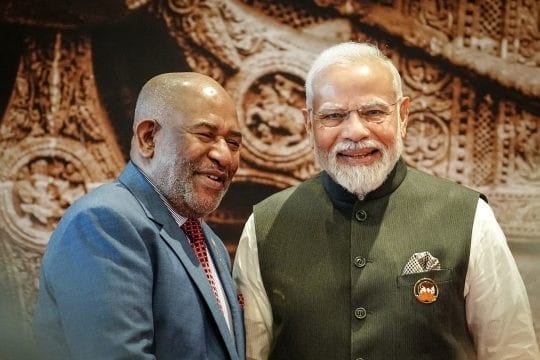
India's engagement with Africa has entered a renewed and strategically significant phase, driven by global economic uncertainty and evolving geopolitical realities. Prime Minister Narendra Modi's visits to African nations in 2025 highlight Africa's increasing importance in India's foreign economic policy. While cultural and political ties have long existed, the relationship is now increasingly centered on economic collaboration amidst restructuring global supply chains and the rise of a multipolar world.
Key Takeaways
- India's exports to traditional Western markets are under threat, necessitating diversification.
- Africa's expanding markets present opportunities for India to reduce dependence on the West.
- India is currently the fourth-largest trading partner of Africa, with bilateral trade nearing $100 billion.
- India's trade dynamics lag behind China, which has surpassed $200 billion in trade with Africa.
Additional Details
- Trade Barriers: The first pillar of India's strategy focuses on reducing trade barriers through preferential trade agreements and economic partnerships, particularly with African regional communities. Engaging with the African Continental Free Trade Area (AfCFTA) can enhance market access for Indian exporters.
- Value Added Manufacturing: The second pillar emphasizes transitioning from low-value exports to value-added manufacturing. Establishing manufacturing units in Africa can provide Indian firms preferential access to Western markets and participation in Africa's growing industrial base.
- Trade Finance: The third pillar prioritizes scaling up trade finance and Lines of Credit to support micro, small, and medium enterprises (MSMEs), which face significant barriers in accessing finance and entering African markets.
- Infrastructure Development: The fourth pillar aims at reducing logistics costs through investments in port modernization and connectivity, making trade more competitive.
- Digital Cooperation: The fifth pillar highlights the relevance of services trade, digital connectivity, and people-to-people ties, leveraging India's strengths in IT, healthcare, and skill development for African economies.
In conclusion, India's engagement with Africa should evolve beyond mere transactional trade towards establishing long-term, sustainable partnerships. As global supply chains are realigned and economic power becomes more diverse, Africa is poised to remain central to India's global ambitions. The current moment presents an opportunity for India to recalibrate its economic diplomacy and deepen its economic footprint across the continent, requiring effective execution and a sustained commitment to policy coherence.
GS2/International Relations
A Template for Security Cooperation in the Indian Ocean
Why in News?
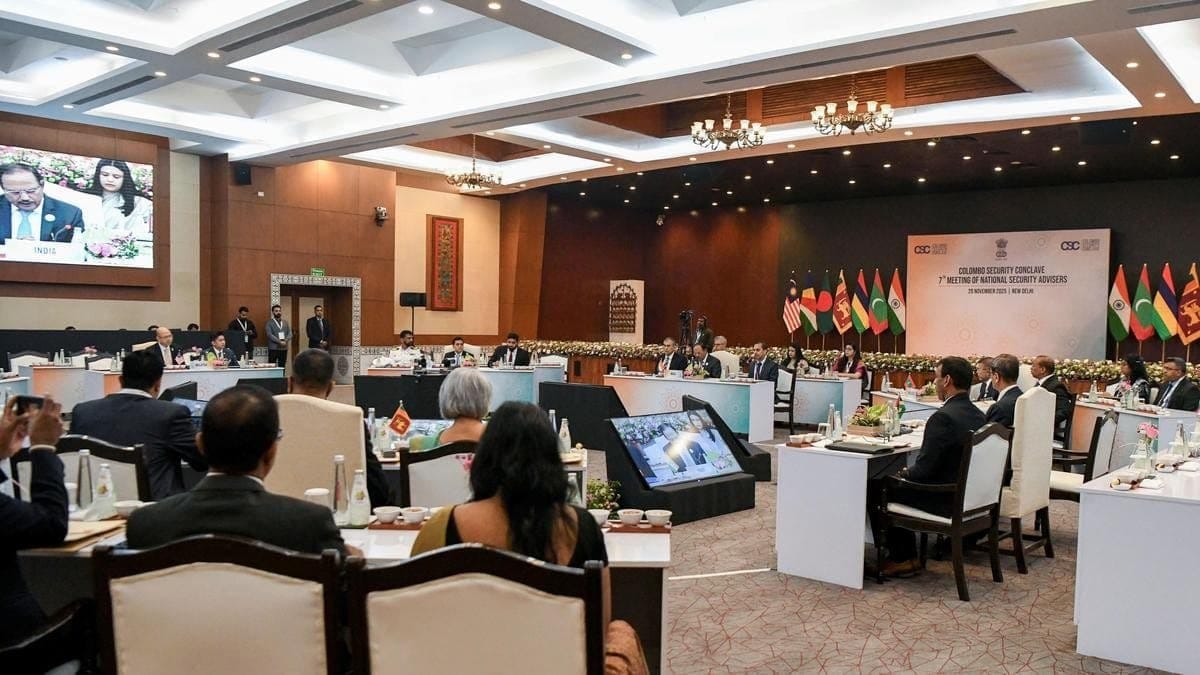
The 7th National Security Advisor-level summit of the Colombo Security Conclave (CSC) took place on November 20, 2025. Hosted by India and chaired by National Security Adviser Ajit Doval, this summit highlighted the CSC's increasing importance as a regional security forum focused on cooperative strategies in the Indian Ocean.
Key Takeaways
- The CSC was originally formed in 2011 by India, Sri Lanka, and the Maldives but faced challenges in maintaining momentum.
- Since its revival in 2020, the CSC has expanded its focus to include maritime security, counterterrorism, trafficking, organized crime, and cybersecurity.
- New members, including Mauritius, Bangladesh, and Seychelles, reflect growing regional confidence in the CSC's objectives.
- The summit underscored the CSC's role amid significant geopolitical shifts in the Indo-Pacific region.
Additional Details
- Origins of the CSC: Initially a trilateral grouping, the CSC struggled due to political changes but saw revitalization in 2020, broadening its mission to address multiple security challenges.
- Geopolitical Context: The 2025 summit occurred against a backdrop of shifting maritime security frameworks and increasing competition among great powers, particularly related to China's influence.
- Development-Security Nexus: Security issues are intertwined with developmental priorities for littoral states, impacting trade and economic growth due to maritime threats.
- Key Outcomes: Seychelles' accession as a full member strengthened the CSC's mandate, while India's consolidation of ties with maritime neighbors was crucial amid geopolitical uncertainties.
- Challenges Ahead: Diverging perceptions of China among member states pose a challenge, alongside the CSC's limited institutional framework and domestic uncertainties in countries like Bangladesh.
In conclusion, the CSC has positioned itself as a vital platform for enhancing security cooperation in the Indian Ocean. Its expanding membership and focus on non-traditional security threats underscore its potential to address regional challenges. However, achieving greater cohesion and resilience will be crucial for its future success in a rapidly transforming Indo-Pacific landscape.
GS2/International Relations
India Signs FTA with Oman
Why in News?
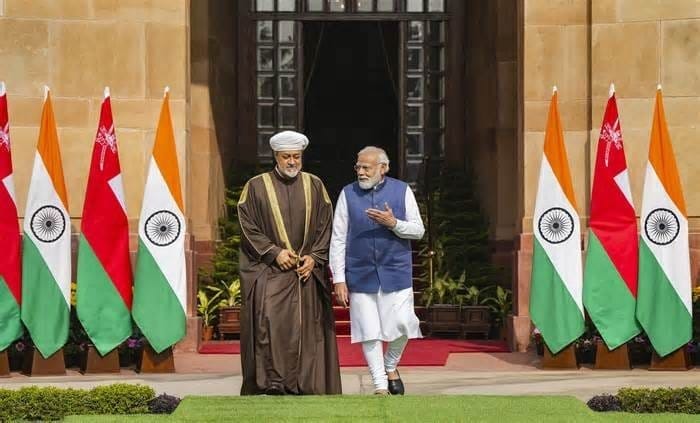
India has recently signed a Comprehensive Economic Partnership Agreement (CEPA) with Oman to enhance its export opportunities in West Asia. This move comes amid increasing trade barriers in the US and EU, such as tariffs and carbon taxes.
Key Takeaways
- The CEPA aligns with India's strategy to accelerate free trade agreements amid uncertainties regarding a US trade deal.
- This agreement is significant as it marks Oman as the second Gulf Cooperation Council (GCC) member to finalize a trade agreement with India, following the UAE.
- India and Oman aim for durable economic integration rather than temporary trade spikes.
- Bilateral trade between India and Oman is around $10.5 billion, primarily driven by energy imports.
Additional Details
- Market Access: Under the CEPA, Oman will provide duty-free access on 98.08% of tariff lines, which will cover 99.38% of India's exports to Oman. Conversely, India will liberalize tariffs on 77.79% of its tariff lines, covering 94.81% of imports from Oman.
- Export Opportunities: Indian exports to Oman have seen a significant increase, doubling over the last five years, with key exports including machinery, aircraft, rice, and petroleum products.
- Enhanced Mobility of Professionals: The CEPA includes provisions for increased intra-corporate transferees from 20% to 50% and extends the stay of contractual service suppliers from 90 days to 2 years, allowing for greater movement of skilled professionals.
- Services Sector Boost: Oman has committed to substantial access across key service sectors, enhancing opportunities for Indian companies in IT, education, and health services.
The CEPA with Oman represents a strategic advancement for India, not only diversifying its trade partnerships but also solidifying its economic ties in the Gulf region amidst a challenging global trade environment. This agreement, along with previous FTAs, reflects India's proactive approach to establishing robust trade networks, which are essential for sustaining economic growth.
GS2/International Relations
Putin's Visit to India and the Aftermath
Why in News?
Russian President Vladimir Putin's visit to India in early December for the 23rd India-Russia Annual Summit garnered significant international attention. While India viewed the visit as a continuation of a long-standing bilateral relationship, Western nations interpreted it through the lens of the ongoing Russia-Ukraine conflict and the diplomatic sanctions on Moscow that began in 2022. The visit reaffirmed India's commitment to strategic autonomy and highlighted both the continuity and subtle adjustments in India-Russia relations.
Key Takeaways
- The visit underscored India's strategic autonomy amidst global geopolitical tensions.
- The Joint Statement emphasized the Special and Privileged Strategic Partnership, marking 25 years of formal cooperation.
- Defence cooperation, historically a cornerstone of India-Russia ties, was notably absent from the Joint Statement.
Additional Details
- Historical Foundations: India-Russia relations are built on deep historical trust, exemplified by the 1971 India-Soviet Treaty of Peace, Friendship and Cooperation, which shifted South Asia's strategic balance.
- Strategic Autonomy: India maintained neutrality during the Russia-Ukraine conflict, resisting Western pressure to isolate Russia, which has led to tensions with the U.S. and EU.
- Joint Statement Insights: The statement reiterated mutual respect for core national interests and the intention to strengthen existing collaborations, especially in connectivity and technological cooperation.
- Defence Cooperation: Despite the absence of specific defence agreements in the Joint Statement, India continues to rely on Russian military technology for its security needs.
In conclusion, President Putin's visit highlighted the resilience and adaptability of the India-Russia relationship in a complex global landscape. While the partnership remains robust, the reduced emphasis on defence cooperation suggests a nuanced recalibration, with India prioritizing its strategic autonomy and long-term national interests.
FAQs on International Relations – Current Affairs (December 2025)
| 1. What is the significance of the India-Ethiopia relationship in the context of recent developments? |  |
| 2. How does India's Free Trade Agreement (FTA) initiative reflect its broader economic strategy? | |
| 3. What are the key components of the India-Oman Comprehensive Economic Partnership Agreement? | |
| 4. How has the Russia-India summit impacted their bilateral relations? | |
| 5. What parallels can be drawn between India's relations with the U.S. in the past and present? | |




