UPSC Daily Current Affairs: 2026-01-10


GS2/Governance
Samagra Shiksha 3.0 - Reimagining School Education Framework
 Why in News?
The Union government has commenced nationwide consultations with States and stakeholders to devise a roadmap for the academic cycle of 2026-27.
Key Takeaways
- Samagra Shiksha is an integrated scheme for school education from pre-primary to senior secondary levels.
- Launched in 2018, it focuses on a holistic approach to education by unifying several previous schemes.
- Samagra Shiksha 3.0 aligns with the National Education Policy (NEP) 2020 and aims for a Viksit Bharat by 2047.
Additional Details
- Core Objectives:
- Achieve universal enrolment up to Class XII.
- Reduce dropout rates significantly.
- Enhance foundational and grade-level learning outcomes.
- Strengthen teacher capacity and school leadership.
- Promote equity for socio-economically disadvantaged groups.
- Key Focus Areas:
- Access and Infrastructure: Address regional and social gaps in schooling facilities.
- Quality of Learning: Establish age-appropriate learning benchmarks, curriculum equivalence, and competency-based assessments.
- Teacher Capacity Building: Implement continuous professional development and pedagogical reforms.
- Digital Education: Integrate technology and Artificial Intelligence in classrooms.
- Equity and Inclusion: Support for girls, children with disabilities, SC/ST students, and aspirational districts.
- Governance Approach: Emphasizes consultative, bottom-up planning with States and UTs creating robust annual plans aligned with national priorities.
- The scheme encourages collaboration among Ministries, States, and civil society for effective implementation.
- A high-level consultation in New Delhi aimed to create a clear national roadmap for future school education reforms.
As we move forward, States are urged to regard the 2026-27 planning cycle as a national movement, emphasizing the importance of best practices, technological innovation, and cooperative federalism to enhance India's school education ecosystem in the coming decade.
GS2/International Relations
Trump's Russia Sanctions Bill: A Potential Chokehold on India-US Trade
 Why in News?
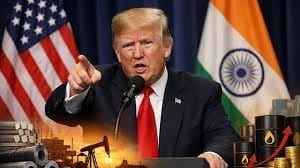
President Donald Trump has enacted a comprehensive Russia sanctions bill that imposes a staggering 500% tariffs on all goods and services imported from countries that knowingly engage in trade involving Russian-origin uranium and petroleum products. This legislation also introduces new restrictions targeting Vladimir Putin and specific Russian military leaders, along with imposing similar tariffs on direct Russian imports into the United States.
Key Takeaways
- The sanctions bill could have severe repercussions for India, which has yet to finalize a trade agreement with the US.
- India's ongoing purchases of discounted Russian energy may trigger punitive tariffs, jeopardizing Indian exports to the US.
- The bill aims to bypass legal challenges faced by the Trump administration regarding tariff imposition.
Additional Details
- Impact on India: The proposed sanctions could effectively shut down India's exports to the US, which are valued at over $85 billion. The scope of the bill is potentially extensive, raising concerns that it could encompass previously excluded products like electronics and pharmaceuticals.
- Trade experts indicate that India may be more adversely affected than China due to its less diversified export portfolio. While China has multiple strategies to counter tariff pressures, India remains vulnerable as its exports are often less technology-intensive.
- India is currently engaged in trade discussions with various entities, including the European Union and ASEAN. However, the sanctions bill could weaken India's negotiating position, leading to steeper demands from trade partners.
In conclusion, the Russia sanctions bill poses significant risks to India-US trade relations, potentially leading to heightened tariffs and reduced export opportunities. This uncertainty could further deter investment in India and amplify existing macroeconomic challenges.
GS2/Polity
The Phaltan Case is Also About a Victim's Dignity
 Why in News?
The recent suicide of a young doctor in Phaltan, Maharashtra, who alleged rape and harassment, highlights the inadequacies of India's criminal justice system in safeguarding women's dignity. Despite progressive reforms, the case underscores a systemic failure, leading to a second crime against victims through societal and institutional betrayal.
Key Takeaways
- The first crime involves the failure of state mechanisms to protect victims.
- The second crime occurs through public shaming and character assassination of the victim.
- Legal reforms exist, but the implementation often falls short due to societal attitudes.
- The Phaltan case exemplifies the need for a shift in both legal practice and societal mindset.
Additional Details
- Two Crimes: The first crime reflects the neglect by police and protective institutions, while the second crime is the moral judgment faced by the victim's family in the media.
- Legal Mandate: Key provisions, such as the ban on character evidence and the protection of victim identity, aim to preserve dignity and shift scrutiny away from the victim.
- Judicial Interpretation: The Supreme Court of India has emphasized that a woman's prior sexual history should not affect her credibility as a witness.
- Institutional Betrayal: The Phaltan case reveals a disconnect between laws and their actual enforcement, highlighting the need for comprehensive reform.
- Bridging the Gap: Effective training, ending victim-blaming, and expanding resources are crucial for transforming legal provisions into tangible support for victims.
The Phaltan tragedy compels a critical examination of whether criminal law can truly protect women when underlying societal and institutional biases remain entrenched. The evolution of laws must be matched by a cultural shift that prioritizes dignity, equality, and empathy, particularly among those in positions of authority.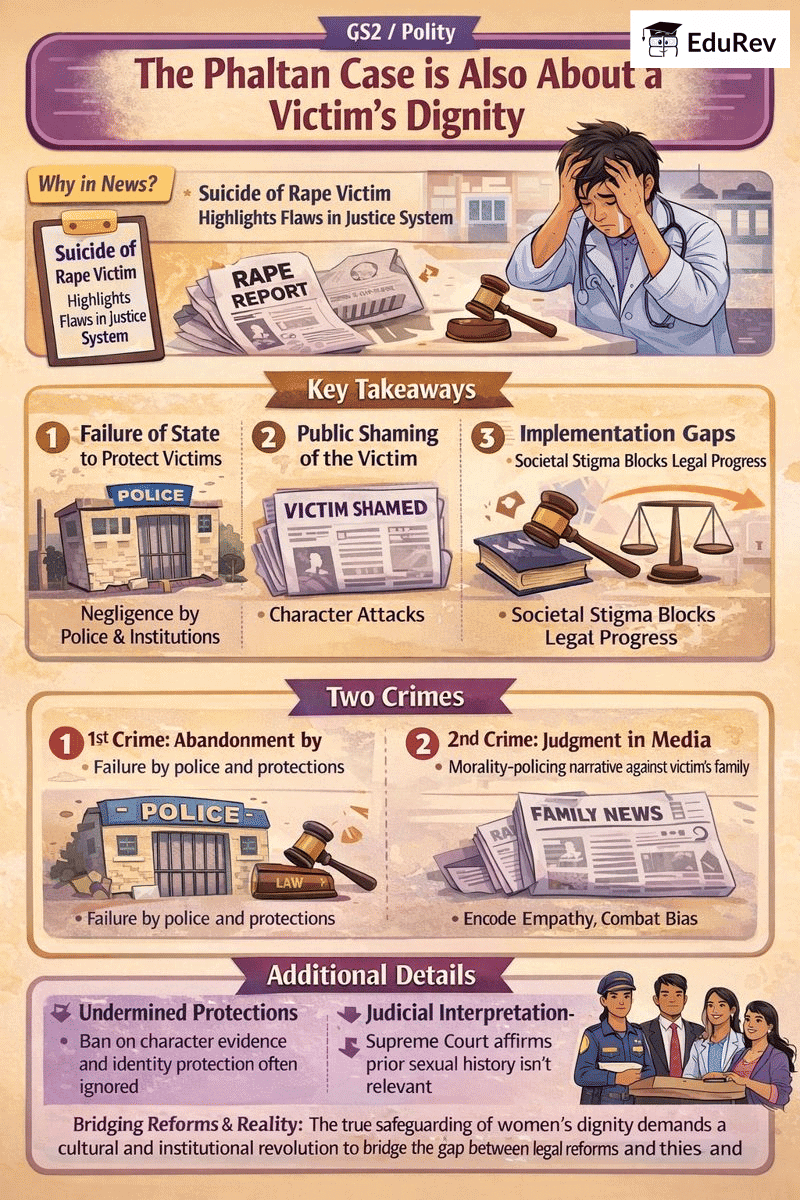
GS3/Environment
US Climate Body Exit: Mixed Relief and New Risks for India
 Why in News?
The United States has declared its withdrawal from the UN Framework Convention on Climate Change (UNFCCC) and over 60 international treaties and organizations it claims no longer align with American interests. This exit includes significant climate bodies such as the Intergovernmental Panel on Climate Change (IPCC), the International Solar Alliance (ISA), and the International Renewable Energy Agency (IRENA). Following the earlier decision by President Donald Trump to withdraw from the Paris Agreement, this move will become effective on January 20, after a mandatory one-year notice period. The Trump administration has also reduced funding and staffing for US climate research agencies, leading to a substantial disengagement from the global climate governance system, thereby raising concerns about the future effectiveness of multilateral climate efforts.
Key Takeaways
- The US ranks among the highest countries in terms of annual and per-capita carbon emissions.
- US territorial CO₂ emissions were approximately 4.9 billion tonnes in 2024, contributing about 12.7% of global emissions.
- The US is the largest cumulative emitter of CO₂, responsible for roughly 24% of historical global emissions.
- Previously engaged in climate agreements, the US has shifted towards disengagement under the Trump administration.
- The exit may provide short-term relief for India but poses long-term risks for climate cooperation and investment.
Additional Details
- US Emissions Profile: As of 2024, the US per-capita CO₂ emissions were around 14.6 tonnes, significantly above the global average.
- Impact on Global Climate Cooperation: The US withdrawal may weaken multilateral efforts to combat climate change, potentially allowing other nations, like China, to take the lead in renewable energy.
- India's Climate Cooperation: The US's exit from climate bodies may stall the previously strong partnership between India and the US in climate and clean energy initiatives.
- International Solar Alliance: The US had joined the ISA in 2021 but provided no financial support, raising concerns about future funding and engagement.
In summary, while the US withdrawal from climate bodies may ease immediate pressures on India regarding rapid decarbonization, it introduces uncertainties that could hinder India's ability to attract investments in clean technologies and affect its long-term climate strategy.
GS2/International Relations
Somaliland is No Longer a Diplomatic Endnote
 Why in News?
Israel's decision in December 2025 to recognize Somaliland as a sovereign state represents a significant shift in diplomatic relations within the Horn of Africa. This recognition raises concerns about escalating proxy rivalries, increased political and economic pressures, and heightened militarization in the strategically important Red Sea region.
Key Takeaways
- Israel's recognition elevates Somaliland from a marginal territory to a pivotal player in great-power rivalries.
- China faces a strategic dilemma regarding its principles of sovereignty and regional security interests in light of this recognition.
Additional Details
- China's Core Interests:Somaliland is crucial for China due to its strategic position concerning:
- Upholding the "One China" principle.
- Securing the Red Sea trade corridor.
- Managing great-power competition in Africa.
- Official Opposition: China has condemned Israel's recognition as a support for separatism, highlighting its long-standing commitment to sovereignty and territorial integrity.
- Stability Comparison: Somaliland has maintained peace and democratic institutions for over thirty years, contrasting sharply with Somalia's persistent instability.
- The Taiwan Factor: Somaliland's 2020 decision to establish ties with Taiwan complicates China's diplomatic landscape and challenges its "One China" stance.
- Strategic Importance of the Horn of Africa:
- The Bab el-Mandeb Strait is vital for Chinese trade, referred to as a "jugular vein" of global commerce.
- China's first overseas military base in Djibouti, established in 2017, reflects its commitment to securing these interests.
- Potential Challenges: Recognition of Somaliland could alter regional dynamics, presenting an alternative logistics hub and diminishing China's influence in Djibouti.
- Chinese Strategy: China may adopt a hybrid response-employing economic pressure, elite lobbying, and information campaigns to counteract Somaliland's recognition.
- Pro-Palestinian Stance: China's support for Palestinian rights adds another layer of complexity to its response to Israel's actions regarding Somaliland.
- Geopolitical Context: The evolving situation, including Ethiopia's recognition of Somaliland, indicates a potential shift in diplomatic relations in the region.
- Cost of Status Quo: Each new recognition of Somaliland complicates China's diplomatic isolation strategy and raises the stakes for maintaining its influence.
In conclusion, Israel's recognition of Somaliland has transformed it from a peripheral issue into a focal point in great-power competition, challenging China's approach to sovereignty and its interests in the Horn of Africa, a region vital for global trade and geopolitics.
GS2/Governance
Reimagining Indian Higher Education under National Education Policy (NEP)
Why in News?
The National Education Policy (NEP) in India is spearheading significant reforms in higher education, focusing on enhancing regulatory frameworks, increasing flexibility in educational pathways, strengthening research initiatives, and fostering a multidisciplinary and holistic approach to learning. With the largest youth population globally, the quality and structure of higher education in India are pivotal for its economic development, social progression, and international stature.
Key Takeaways
- The NEP 2020 emphasizes education, flexibility, research, innovation, and global engagement.
- India is experiencing a transformative phase in higher education, with substantial reforms and an increase in institutional recognition.
Additional Details
- NEP 2020: This policy stresses the importance of flexibility in educational pathways and the integration of research and innovation into higher education.
- Research Ecosystem: The establishment of the Anusandhan National Research Foundation (ANRF) aims to foster long-term scientific research and collaboration between industry and academia.
- Research and Development Initiatives: The ₹1-lakh-crore Research, Development and Innovation Scheme encourages private sector involvement and aims for market-ready innovations.
- Institutional Innovations: Introduction of new undergraduate programs and degree flexibility, including four-year undergraduate courses with exit options, enhancing global competitiveness.
- Global Metrics: In the QS World University Rankings 2026, 54 Indian universities are featured, marking a significant increase from previous years.
- Regulatory Reform: The proposed Viksit Bharat Shiksha Adhishthan Bill, 2025 aims to create a single apex regulatory framework to address fragmentation in education.
- Artificial Intelligence Integration: The Ministry of Education's establishment of AI Centres of Excellence in various sectors aims to modernize educational practices and administration.
India is at a crucial juncture in its higher education evolution, driven by NEP reforms. Success hinges on consistent application of these policies, fostering mutual trust, and a steadfast commitment to educational excellence, positioning India as a leader in global knowledge and education.
GS2/Indian Polity
Unlawful Activities (Prevention) Act 1967
 Why in News?
- The Supreme Court of India denied bail in the 2020 Delhi riots case, relying on the wide definition of a "terrorist act" under Section 15 of the Unlawful Activities (Prevention) Act, 1967.
- The decision has renewed debate on how the anti-terror law has expanded far beyond conventional notions of terrorism.
Summary
- The UAPA has evolved from a limited post-Independence law into a wide-ranging anti-terror framework, with Section 15's broad definition of terrorism and stringent bail norms extending the law far beyond conventional notions of terrorism.
- While the UAPA remains crucial for national security and global counterterror commitments, targeted reforms such as clearer definitions, fairer bail provisions, speedy trials, compensation for wrongful detention, and stronger oversight are essential to balance security with democratic values.
What is the Unlawful Activities (Prevention) Act (UAPA), 1967?
About: The UAPA,1967 is India's principal anti-terror and national security law to curb activities threatening sovereignty, unity, and integrity of India.
- The UAPA traces its origins to the National Integration Council formed under Jawaharlal Nehru, aimed at tackling communalism, regionalism, and linguistic chauvinism.
- Its recommendations led to the 16th Constitutional Amendment (1963), which imposed reasonable restrictions on free speech, assembly, and association in the interest of national integrity, and the UAPA was enacted to enforce these constitutional changes.
- Enacted in 1967, the law initially targeted unlawful activities threatening India's sovereignty and territorial integrity in the post-Independence period marked by secessionist and anti-national movements, and did not address terrorism in its original form.
Evolution of UAPA:
- 2004 Amendment:
- Introduced terrorism into the UAPA by adding Chapter IV (Sections 15-23) on terrorist acts and punishments.
- Defined terrorism as violent acts intended to threaten India's security or strike terror among people, and expanded the scope of "unlawful activity" to include acts causing disaffection against India.
- 2008 Amendment:
- After the 26/11 Mumbai terror attacks, Parliament widened Section 15 by adding the phrase "by any other means," expanding terrorism to a broad range of acts.
- Tightened bail norms by barring anticipatory bail, making regular bail extremely difficult, extending custody periods, and introducing a presumption of guilt in specified cases.
- 2012 Amendment:
- Expanded the definition of terrorism to include threats to economic security, covering financial, food, energy, livelihood, and environmental security.
- Classified counterfeit currency offences as terrorist acts and extended liability to companies, trusts, and societies, with office-bearers presumed responsible unless proven otherwise.
- 2019 Amendment:
- Permitted the designation of individuals as terrorists, not just organisations.
- Enhanced the National Investigation Agency (NIA) powers, including property seizure without state consent.
Definition of Terrorism:
- Under Section 15 of the UAPA,1967 a "terrorist act" is defined as any act committed with the intent to threaten the unity, integrity, sovereignty, security, or economic security of India, or to strike terror among people in India or in any foreign country.
- The law covers acts committed using explosives, firearms, poisons, chemicals, hazardous substances, or "any other means."
- Terrorist acts are punishable with imprisonment for a minimum term of five years, which may extend to life imprisonment, and where such acts result in death, the punishment may be death or life imprisonment.
- The broad wording allows acts likely to cause fear or disruption to be prosecuted as terrorism.
What are the Arguments in Favor and Arguments Against UAPA?
Arguments in Favor:
- Protection of National Security: Provides the legal basis for preventive action against terrorism, insurgency, and activities threatening India's sovereignty, integrity, and economic security, enabling the State to act before violence escalates.
- Preventive Detention as a Security Tool: Allows detention of suspects to pre-empt imminent threats, especially in cases involving riots, radicalisation, or organised extremist networks where waiting for attacks could cause mass harm.
- Alignment with International Conventions: Brings Indian law in line with global counterterror norms, including UN instruments such as the International Convention for the Suppression of Terrorist Bombings (1997), and International Convention for the Suppression of the Financing of Terrorism (1999), enabling international cooperation and compliance with UNSC resolutions.
- Deterrence Against Terror Activities: Stringent punishments and long sentences serve as a deterrent against participation in or support for terrorism, signalling zero tolerance for acts threatening national security.
- Disruption of Terror Financing: Criminalises terror funding, money laundering, and counterfeit currency operations, addressing the financial backbone of terrorism.
Arguments Against:
- Violation of Article 21 (Right to Life and Liberty): UAPA enables prolonged detention, denial of bail, and reversal of the presumption of innocence, making personal liberty the exception rather than the rule, contrary to constitutional safeguards.
- Arbitrary Designation of Individuals as Terrorists: The state can label individuals as "terrorists" without prior conviction, undermining the presumption of innocence and damaging the right to reputation and privacy.
- Overbroad definition of terrorism: Terms like "likely to threaten" or "likely to strike terror" allow punishment for potential or anticipated acts, violating the principle of legal certainty and proportionality.
- Discretionary Police Powers: Searches, seizures, and arrests can be made based on the personal knowledge of police officers, with limited judicial oversight, increasing the risk of arbitrary state action.
- Criminalisation of Dissent and Free Speech: Peaceful protests, political speech, and questioning state policies risk being labelled as threats to national security, undermining Article 19, which protects free expression and association.
What Reforms are Needed to Strengthen the UAPA?
- Clarifying Vague Definitions: Terms such as terrorist act, unlawful activity, and conspiracy should be narrowly defined to prevent misuse.
- Reforming Stringent Bail Provisions: Stringent bail provisions under UAPA should be amended to reaffirm the presumption of innocence, a core principle flowing from Article 21 and settled criminal jurisprudence, with Article 20(3) reinforcing fair trial protections.
- Ensuring Speedy Trials: Prolonged trials undermine justice and drain public resources. A PUCL report (2022) noted that less than 3% of UAPA cases between 2015-2020 resulted in convictions, underscoring the need for fast-track courts and strict timelines.
- Introducing a Compensation Framework: Victims of wrongful arrest and prolonged detention must be compensated. In Rudul Sah v. State of Bihar (1983), the Supreme Court recognised compensation as a remedy for illegal detention, a principle that should be codified under UAPA.
- Strengthening Oversight and Transparency: Regular parliamentary review, public disclosure of UAPA data, and clear operational guidelines for agencies can ensure accountability and prevent arbitrary application.
Conclusion
The UAPA is vital for national security but its overbroad scope and harsh procedures threaten constitutional liberties. Without safeguards, it risks normalising detention and suppressing dissent. Targeted reforms are needed to balance security with democracy.
GS2/Indian Polity
Transgender Welfare in India
 Why in News?
Recent reports highlight that trans men and gender-diverse persons assigned female at birth (AFAB) continue to face systemic discrimination, medical ignorance, and structural barriers in accessing even basic healthcare. This has brought renewed attention to the gaps in affirmative, ethical, and evidence-based transgender welfare in India.
Summary
- Transgender persons in India face systemic discrimination in healthcare, education, and the economy despite landmark laws like the Transgender Persons (Protection of Rights) Act, 2019.
- Progressive judicial rulings and welfare schemes exist, but implementation gaps and societal stigma remain major hurdles.
- Empowerment requires convergent action in legal enforcement, affirmative socio-economic policies, and nationwide sensitization.
What are the Major Challenges Faced by the Transgender Community in India?
1. Healthcare Access and Medical Discrimination
- Refusal of Medical Care: Nearly 27% of transgender individuals report being denied medical care due to their gender identity. Basic treatments are often obstructed by judgmental attitudes, misgendering, and disrespect.
- Misgendering and Denial of Care: Healthcare providers often lack training on trans men, leading to misgendering and denial of care. This is exacerbated by a binary understanding of gender and the invisibility of certain identities.
- Unsafe Self-Medication: Barriers in accessing appropriate healthcare force individuals into unsafe self-medication practices, which pose serious health risks such as stroke and kidney disease. There are no standardized protocols or affirming specialists available across India.
2. Social Stigma and Mental Health Crisis
- Family Discrimination: Discrimination against transgender individuals often begins within their families and extends to all areas of public life, resulting in deep-seated isolation.
- High Suicide Rates: The pervasive stigma and abuse faced by transgender persons contribute to alarmingly high suicide rates, with 31% of transgender individuals dying by suicide and 50% attempting it before the age of 20.
3. Economic Exclusion
- Unemployment Rates: Economic exclusion is rampant, with 92% of transgender individuals affected and a 48% unemployment rate. This forces many into informal and precarious work situations.
- Denial of Financial Access: Access to finance and inheritance is often denied to transgender individuals. Banking access remains poor, and laws such as the Hindu Succession Act, 1956 exclude non-binary heirs from inheritance rights.
4. Barriers in Education
- Literacy Gap: There is a significant literacy gap, with the transgender community's literacy rate at 56.1% compared to the national average of 74%. This disparity is due to harassment, non-inclusive educational infrastructure, and high dropout rates.
- Lack of Representation: The community is nearly absent in universities and teaching staff, and there is a lack of a nationwide gender-sensitive educational framework. This perpetuates stigma and discrimination against transgender individuals in educational settings.
5. Ineffective Legal Implementation
- National Portal for Transgender Persons: Since its launch in November 2020, the National Portal for Transgender Persons has issued only 277 certificates of identity, with a low application processing rate of 16%.
- Supportive Initiatives: Initiatives like the Garima Greh shelter homes, which are meant to support transgender individuals, are hindered by inadequate funding, poor awareness, and limited coverage.
6. Political Under-Representation
- Minimal Political Representation: Transgender individuals have minimal representation in Parliament, State Assemblies, and local governance, which hampers their advocacy for inclusive policies.
- Increased Voter Turnout: While voter turnout for the third gender increased to 25% in the 2024 Lok Sabha polls, elder care systems and other support structures continue to largely exclude gender-diverse individuals.
Transgender
- About: A transgender person is an individual whose gender identity (internal sense of self) does not align with the sex assigned at birth. This is an umbrella term that includes people with diverse socio-cultural identities such as Hijra, Kinnar, Aravani, and Jogta, as well as those who identify as trans men, trans women, genderqueer, or non-binary.
- Demographics & Population: According to Census 2011, India has a transgender population of approximately 4.88 lakh. The top three states with the largest enumerated transgender populations are Uttar Pradesh, Andhra Pradesh, and Maharashtra.
- Legal Recognition: The Transgender Persons (Protection of Rights) Act, 2019 provides the formal legal definition and framework for the recognition of transgender identity in India. The Act acknowledges the right to self-perceived gender identity.
- Place within the LGBTQIA+ Community: Transgender persons are a core part of the LGBTQIA+ community, represented by the "T" in the acronym.
What Steps have been Taken to Ensure Transgender Welfare in India?
1. Judicial Interventions
- NALSA v. Union of India (2014): Legally recognized transgender persons as a third gender and affirmed their fundamental rights.
- Puttaswamy v. Union of India (2017): Declared the right to privacy as a fundamental right, including protection of sexual orientation and gender identity.
- Navtej Singh Johar v. Union of India (2018): Decriminalized consensual same-sex relations, indirectly advancing social acceptance of transgender and LGBTQ+ persons.
- Ms. X v. State of Karnataka (2024): Upheld the right of transgender persons to change their name and gender on birth certificates.
2. Legislative Framework
- Transgender Persons (Protection of Rights) Act, 2019: Prohibits discrimination in various sectors and allows for self-identification.
- Transgender Persons (Protection of Rights) Rules, 2020: Lays down procedures for identity certification and operationalizes non-discrimination mandates.
3. Electoral Measures
- Election Commission Directive (2009): Introduced an "Others" gender option in voter registration forms.
4. Welfare Schemes
- SMILE Scheme: Supports livelihood, education, health, and shelter for marginalized individuals.
- Ayushman Bharat TG Plus: Provides health insurance coverage for transgender persons.
- Transgender Pension Scheme: Covers transgender persons under disability pension schemes.
- National Portal for Transgender Persons: Enables online applications for identity certificates.
5. Administrative Measures
- Recognition in Prisons: Guidelines issued to ensure the privacy and dignity of transgender inmates.
6. State-Level Initiatives
- Kerala: Reservations for transgender students in universities and exclusive hostel facilities.
- Maharashtra: Transgender welfare cells in colleges.
- Tamil Nadu: Free gender-affirming surgeries and dedicated health clinics.
What Further Measures are Required for Transgender Empowerment in India?
1. Full Enforcement of Existing Laws: The 2019 Act requires full implementation through efficient grievance redressal cells, a centralized digital portal for certificates, and regular implementation audits.
2. Economic Inclusion & Livelihood Opportunities: Efforts must scale up successful state-level models, like job reservations and corporate diversity hiring, while expanding skilling and entrepreneurship programs.
3. Accessible & Affirmative Healthcare: Gender-affirming treatments must be covered under insurance schemes, and dedicated health centres and specialized mental health services need to be established.
4. Social Awareness & Cultural Change: Public awareness campaigns and respectful media representation are essential to challenge stigma, supported by cultural advocacy and inclusive platforms.
Conclusion
Despite progressive laws and judicial mandates, transgender persons in India face systemic exclusion in healthcare, education, and the economy. True empowerment requires convergent action-rigorous legal implementation, affirmative socio-economic policies, and nationwide sensitization to translate constitutional promises into lived equality.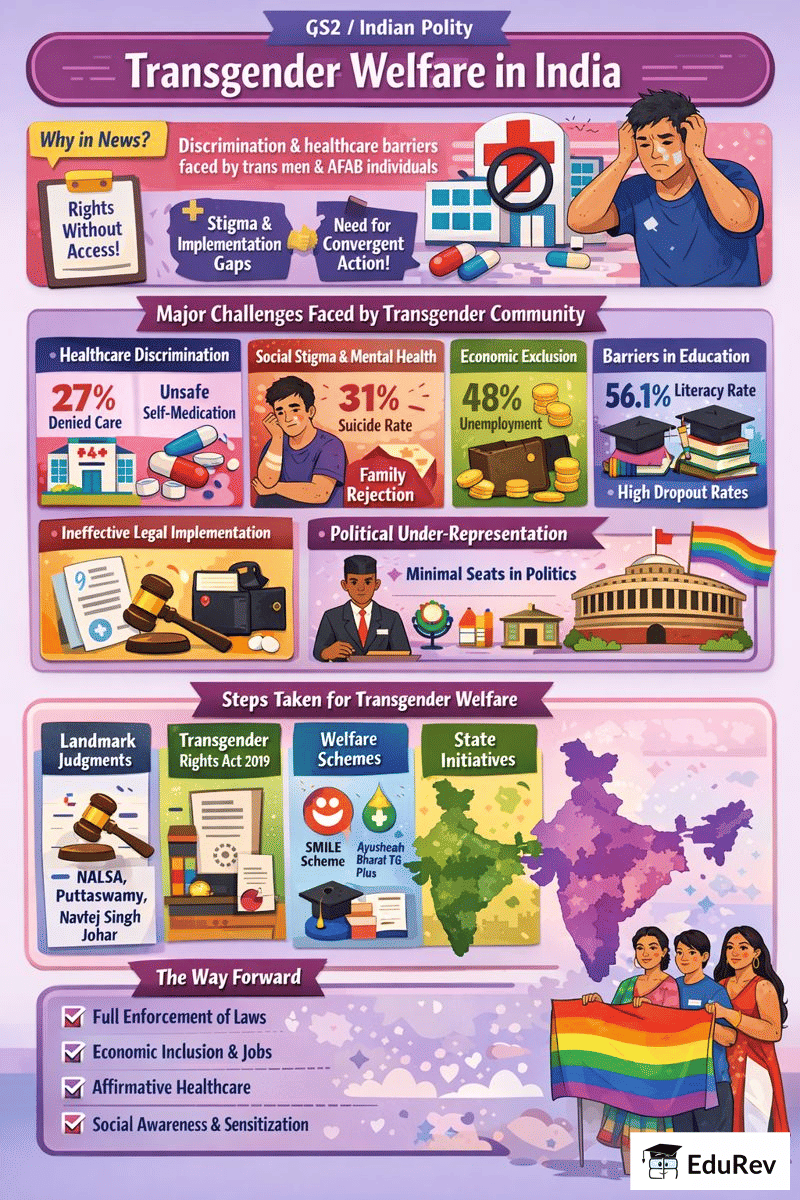
FAQs on UPSC Daily Current Affairs: 2026-01-10
| 1. What is the Samagra Shiksha 3.0 framework? |  |
| 2. How does the Samagra Shiksha 3.0 framework aim to enhance educational quality? | |
| 3. What are the key components of Samagra Shiksha 3.0? | |
| 4. How does Samagra Shiksha 3.0 address inclusivity in education? | |
| 5. In what ways does Samagra Shiksha 3.0 align with the National Education Policy? | |




