UPSC Daily Current Affairs: 2026-02-20


GS2/International Relations
Tehran Re-enters the Global Geopolitical Spotlight
 Why in News?
The ongoing debate surrounding Iran's nuclear program highlights a complex interplay of security issues, regional rivalries, and international power dynamics. What may seem like a technical discussion about nuclear capabilities is, in reality, a broader struggle for influence, deterrence, and political legitimacy in West Asia.
Key Takeaways
- The cycle of U.S. policy includes negotiation, withdrawal, coercion, and a return to diplomacy.
- Political bargaining is essential in managing adversarial relationships, as force alone cannot resolve these tensions.
- The challenge lies in balancing non-proliferation, deterrence, and regional stability without escalating to conflict.
Additional Details
- Origins of Diplomacy and the JCPOA: The Joint Comprehensive Plan of Action (JCPOA) was established in 2015 through negotiations among Iran and the P5+1 nations, which include the U.S., U.K., France, Russia, China, and Germany. The agreement aimed to limit Iran's nuclear capabilities while providing economic relief from sanctions.
- Trump Administration's Withdrawal: In 2018, President Trump exited the JCPOA, claiming it did not safeguard U.S. interests. This led to a policy of maximum pressure, employing sanctions and military actions against Iran, though it ultimately highlighted the necessity of returning to diplomatic negotiations.
- Israel's Security Perspective: Israel perceives Iran's nuclear ambitions as a severe threat, advocating for permanent restrictions on Iran's nuclear capabilities. This urgency differs from U.S. strategic calculations, emphasizing how alliances can shape international policy.
- Regional Dynamics: Gulf states, while rivals to Iran, prefer stability over conflict due to economic dependencies on trade and energy. They fear that a regional war would disrupt critical oil markets and maritime routes.
- India's Strategic Interests: For India, Iran is crucial for energy security and regional connectivity, particularly through the Chabahar Port project. However, sanctions have strained trade, making diplomatic solutions vital.
- Internal Iranian Politics: Domestic dynamics in Iran, including protests and economic pressures, significantly impact foreign policy decisions. External military pressures may unify conservative factions and complicate negotiations.
In conclusion, the Iran nuclear issue exemplifies a recurring theme in international relations: confrontation often leads back to negotiation. While agreements like the JCPOA may not be perfect, they mitigate immediate risks more effectively than ongoing conflicts. For regional and global actors alike, the stakes involve survival, economic stability, and strategic balance, underscoring the necessity of persistent diplomacy to avert escalation and war.
GS3/Science and Technology
India's Vision for Artificial Intelligence - Global Good and Inclusive Growth
 Why in News?
Prime Minister Narendra Modi articulated India's Artificial Intelligence Vision at the AI Impact Summit 2026, emphasising AI as a global common good and announcing the New Delhi Frontier AI Impact Commitments.
Key Takeaways
- India views AI as a transformative force for good, not with fear.
- The "MANAV" framework emphasizes ethical AI governance principles.
- India seeks to democratize AI and position itself as a leader for the Global South.
- Multilingual AI initiatives aim to enhance accessibility across diverse languages.
- AI's role in economic transformation and the need for workforce skilling were highlighted.
Additional Details
- India's Approach to AI: India sees AI as a tool for fortune and future, advocating for open-source development and collaboration rather than treating it as a strategic asset.
- MANAV Framework:This framework includes key principles such as:
- Moral and Ethical Systems: AI must adhere to ethical guidelines.
- Accountable Governance: Importance of transparent rules and oversight.
- National Sovereignty: Emphasizing data ownership rights.
- Accessible and Inclusive: AI should be a societal multiplier and not monopolized.
- Valid and Legitimate: AI applications must be lawful and trustworthy.
- AI as a Tool for Inclusion: The Prime Minister highlighted the necessity for AI to empower developing nations, pushing for a voluntary framework among global AI firms.
- Multilingual AI: The summit showcased AI-powered translations in multiple Indian languages, promoting digital public infrastructure for language inclusion.
- AI Governance: Concerns regarding deepfakes were raised, advocating for authenticity standards in digital content.
- Economic Transformation: AI is seen as a catalyst for innovation, necessitating skilling and reskilling to adapt to technological changes.
- Strategic Context: India emphasizes openness and collaboration in AI development, contrasting with other countries' approaches to national AI stacks.
India's vision for AI reflects its commitment to ethical governance and inclusive growth, positioning the country as a potential hub for innovative AI solutions tailored for diverse populations.
GS3/Economy
Transitioning to Green Steel
 Why in News?
India is aiming for net-zero emissions by 2070, and a crucial aspect of this goal is the increase in green steel production and consumption. The steel sector is a significant contributor to industrial emissions in the country. To address this challenge, the Ministry of Steel has established 14 task forces consisting of industry leaders and technical experts to develop a roadmap for decarbonisation and accelerate low-carbon steel production.
Key Takeaways
- The major challenge in transitioning to green steel is the "green premium," which refers to the higher initial costs associated with producing green steel.
- To support manufacturers in this transition, the roadmap suggests targeted fiscal support, including GST rationalisation and time-bound incentives.
- Despite the green steel premium, its overall impact on public infrastructure budgets is relatively small.
Additional Details
- Green Steel Premium: Although green steel incurs a premium, studies suggest that if it is exclusively used in public sector projects, the overall cost increase would be about 5.5%. With only 20% adoption, costs could rise by approximately 1.1%.
- Strategic Rationale: The incremental cost of green steel is considered manageable, especially in light of threats like the EU's Carbon Border Adjustment Mechanism and the volatility in fossil fuel prices. Green steel helps mitigate these risks.
- International Models: Japan and California serve as examples with frameworks that integrate procurement mandates with fiscal incentives, aiding industry transitions.
- India's Green Steel Framework: A Green Steel Taxonomy has been introduced, featuring a star rating system based on emission intensity to enhance transparency.
- The Ministry is working on embedding procurement mandates for green steel, though approval is pending due to cost and verification concerns.
- Verification and Transparency: A significant barrier to adopting green steel is the lack of reliable verification mechanisms. Integrating Green Star ratings into existing systems can help.
- Reforming Procurement Frameworks: Policies should adopt a "value for money" approach to include sustainability considerations.
- Aligning Incentives: Production-linked incentives must align with public procurement strategies to ensure market stability.
- Phased Standards: The policy should gradually increase standards post-2030 to promote deeper decarbonisation.
In conclusion, transitioning to green steel is essential for India's ambition to achieve net-zero emissions by 2070. Addressing the challenges of the green premium and enhancing verification and procurement frameworks will be critical in facilitating this transition.
GS3/Economy
Gold Rush: How India's Precious Metal Craze Is Straining the Economy
 Why in News?
Indian households are increasingly diversifying their investments, with a significant rise in mutual funds and equities, which have grown from 7% of financial assets in 2022-23 to 15% in 2024-25. However, the traditional preference for gold continues to dominate, as evidenced by a surge in gold imports, which reached $12.07 billion in January, nearly tripling from December. Gold exchange-traded funds (ETFs) have emerged as a popular investment channel, reflecting a trend towards the financialization of household savings while simultaneously increasing pressures on gold imports.
Key Takeaways
- Gold ETFs are increasingly favored due to their advantages over physical gold.
- Record inflows into gold ETFs were observed in January 2024.
- Concerns about speculation and its impact on the economy are rising.
Additional Details
- Gold ETFs: These funds operate similarly to mutual funds that invest in gold, eliminating worries about purity, storage, and security, while allowing investments in smaller increments. The fund manages gold purchases based on investor inflows.
- Record Inflows: In January 2024, Indian gold ETFs purchased a remarkable 15.52 tonnes of gold, nearly matching the total from the preceding three months. Additionally, net inflows into gold ETFs soared to an unprecedented ₹24,040 crore, outpacing a 14% decline in equity mutual fund inflows.
- Speculation and Economic Concerns: The increase in gold investments may indicate significant speculation in precious metals, raising fears that such investments could divert capital away from the domestic economy.
Historically, after the 2008 global financial crisis, factors like high inflation and a weakening rupee led Indian households to invest heavily in gold, prompting the government and RBI to impose restrictions on gold imports. The introduction of Sovereign Gold Bonds in 2015 provided returns linked to gold prices along with an annual interest of 2.5%. Although these bonds attracted investments equivalent to 147 tonnes of gold worth ₹72,274 crore, rising gold prices rendered the scheme financially burdensome, leading to its discontinuation in early 2024. With current moderate inflation but ongoing geopolitical tensions and policy uncertainty, interest in gold as a safe asset has surged again. The spike in gold ETF-driven imports has pushed India's goods trade deficit near $35 billion, underscoring significant macroeconomic risks. A restructured Sovereign Gold Bond scheme, potentially expanding to silver and other metals, could help manage imports while providing structured investment options to households.
GS3/Economy
India's Execution Deficit in the Age of AI
 Why in News?
The recent Artificial Intelligence (AI) Summit in Delhi, which took place shortly after the Union Budget 2026, has ignited a significant discussion regarding India's developmental path. Although India has bold ambitions in areas such as AI leadership, semiconductor manufacturing, and data-center growth, the summit revealed a crucial issue: the gap between announcements and actual implementation.
Key Takeaways
- India's policy ambitions are expansive but often lack execution.
- The Budget 2026 did not provide an adequate review of previous programs.
- Structural limitations in fiscal policy hinder transformative change.
- The AI Summit showcased India's ambition but revealed operational weaknesses.
- Significant reforms require a focus on execution rather than just policy announcements.
Additional Details
- Budget 2026: Despite new initiatives such as a 25-year tax holiday for semiconductor manufacturing and skill development programs, the budget presented by Finance Minister Nirmala Sitharaman lacked a detailed review of past flagship programs, signaling a trend where annual budgets indicate direction rather than transformative change.
- AI Summit: Intended to position India as a global AI leader, the summit was marred by logistical issues, such as cash-only counters at a digital event, highlighting deeper administrative inefficiencies.
- Execution Bottlenecks: Despite lower labor costs and various incentives, manufacturing stagnation persists due to project delays, regulatory hurdles, and compliance issues.
- Trust-Based Taxation: Emphasizing the need for a stable regulatory environment, effective administration, and judicial efficiency over mere fiscal incentives for sustainable economic growth.
- Institutional Reform: Proposes the establishment of an "Implementation Commission" to ensure effective delivery rather than merely designing schemes.
In conclusion, both the AI Summit and Budget 2026 underscore a critical reality: India does not lack ambition; it suffers from a consistent execution deficit. For transformative change to occur, it is essential that implementation becomes the focal point of the reform agenda. India's next developmental leap will ultimately depend on the effectiveness of delivery rather than mere declarations.
GS3/Science and Technology
GPUs Explained: The Powerhouse Behind AI
 Why in News?
In 1999, Nvidia introduced the GeForce 256 as the world's first GPU, designed primarily to enhance video game graphics and performance. Over the past 25 years, GPUs have evolved far beyond gaming, becoming essential components of the digital economy and powering core technologies such as artificial intelligence and large-scale computing.
Key Takeaways
- GPUs excel at parallel processing, making them ideal for tasks that require handling large volumes of repetitive computations.
- They have become integral to a variety of fields beyond graphics, including machine learning and scientific simulations.
Additional Details
- GPU Functionality: A Graphics Processing Unit (GPU) is specialized for performing many simple calculations simultaneously, which contrasts with a Central Processing Unit (CPU) that handles fewer, more complex tasks efficiently.
- Rendering Process:The GPU processes objects built from triangles through a four-step rendering pipeline:
- Vertex Processing: Calculates object placement on the screen using mathematical operations.
- Rasterisation: Determines which screen pixels each triangle covers.
- Fragment (Pixel) Shading: Calculates the final color of each pixel, applying textures and effects.
- Frame Buffer Output: Writes pixel colors to memory for display.
- Energy Consumption:
- During training, four Nvidia A100 GPUs consume about 12 kWh over 12 hours.
- In inference mode, a single GPU's consumption drops to approximately 2 kWh.
- Total system consumption, including CPU and other components, can reach around 6 kWh daily.
- Physical Structure:
- A GPU is built on a silicon die, similar to a CPU, and can be found integrated into systems-on-chip (SoCs) or as dedicated graphics cards.
- Microarchitecture differences between CPUs and GPUs allocate more space to compute units in GPUs for enhanced parallel processing.
GPUs have transformed from simple graphics enhancers to critical components in various tech domains, showcasing their versatility and power in modern computing.
GS3/Indian Economy
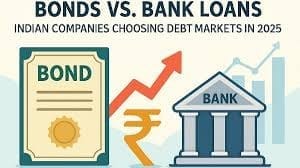
Bank-Centric to Corporate Bond-Based Finance
Why in News?
- The Union Budget 2026-27 has introduced various reforms in the financial sector with the aim of strengthening India's corporate bond market and alleviating the burden on banks.
- These reforms recognize the need to distribute risks more effectively, similar to practices in mature economies where financial markets play a larger role in absorbing and managing risks.
Summary of the Budget 2026
- The budget focuses on enhancing market-making, derivatives, and guarantee funds to address the shallow corporate bond market in India, which currently stands at 15-16% of GDP.
- Indian banks, holding 60-65% of corporate debt, are under strain and have required substantial recapitalisation since 2017.
- The proposed reforms aim to shift credit risk from banks to markets, improve liquidity, and unlock Central Public Sector Enterprises (CPSE) assets through Real Estate Investment Trusts (REITs) for sustainable infrastructure financing.
Key Reforms Introduced in the Union Budget 2026-27
1. Market-Making Framework
- Establishes designated intermediaries to provide continuous buy and sell quotes for corporate bonds.
- Supported by improved access to funding and derivatives on bond indices.
2. Total-Return Swaps (TRS)
- Introduces synthetic trading tools for investors to gain exposure to a bond's total return without owning the underlying asset.
- Facilitates risk hedging and enhances market participation.
3. Bond-Index Derivatives
- Broadens participation and supports risk management through derivatives on corporate bond indices.
- Contributes to greater depth in the fixed-income market.
4. Infrastructure Risk Guarantee Fund
- Provides partial credit guarantees to lenders during the development and construction phases of infrastructure projects.
- Aims to enhance lender confidence and facilitate project financing.
5. CPSE Asset Monetisation
- Accelerates capital recycling by unlocking underutilised real estate holdings of CPSEs through dedicated REITs.
- Aims to generate funds for sustainable infrastructure projects.
6. De-risking Infrastructure
- Strengthens private developer confidence and improves project bankability.
- Reduces financing hurdles to encourage private participation in high-risk infrastructure segments.
Key Challenges Faced by Banks
1. Structural Overburden of Risk
- Banks currently hold 60-65% of all non-financial corporate debt, acting as the primary warehouse for credit risk.
- In contrast, mature economies like the US have a more balanced distribution of credit risk between banks and financial markets.
2. Extreme Asset-Liability Mismatch
- Banks are financing long-term infrastructure projects with short-term deposits, leading to significant asset-liability mismatches.
- This mismatch increases systemic vulnerability and the risk of financial instability.
3. Recurring Fiscal Dependency
- Accumulated private-sector credit losses have necessitated substantial public recapitalisations of banks, exceeding Rs 3.2 lakh crore since 2017.
- This situation effectively transfers private sector losses onto the public balance sheet, straining public finances.
4. Constrained Lending Capacity (Opportunity Cost)
- Capital tied up in long-term corporate loans reduces the availability of funds for other productive sectors.
- Sectors such as small and medium enterprises (SMEs), exporters, and first-time borrowers face reduced access to credit, hindering economic growth.
5. Impaired Monetary Policy Transmission
- Banks burdened with long-term credit exposures are reluctant to adjust interest rates smoothly.
- This reluctance distorts the transmission of monetary policy signals, affecting overall economic stability and policy effectiveness.
Status of Corporate Bond Market in India
1. Impressive Growth Trajectory
- The corporate bond market in India has grown significantly, from Rs 17.5 trillion in FY2015 to Rs 53.6 trillion in FY2025, indicating a shift in corporate financing patterns.
2. Shallow by International Standards
- Despite its growth, the corporate bond market in India represents only 15-16% of GDP.
- This is significantly lower than countries like the United States (over 80%), South Korea (79%), Germany (55-60%), Malaysia (54%), and China (45-50%).
3. Concentrated Issuance Structure
- The market is dominated by private placements, which account for 98% of issuances.
- It is also largely focused on top-rated (AAA/AA) borrowers, reflecting limited depth and risk diversification in the market.
4. Narrow Participation Base
- Participation from key segments such as retail investors and foreign portfolio investors is minimal.
- Retail investors account for less than 2% of the market, and MSMEs (Micro, Small, and Medium Enterprises) are largely excluded from accessing the bond market.
5. Severe Liquidity Constraints
- The secondary market faces severe liquidity constraints, with a low annual turnover ratio of 0.3.
- This is due to a "buy-and-hold" strategy adopted by institutional investors like insurance companies and pension funds, which hampers price discovery and market efficiency.
6. Future Potential
- There is potential for the corporate bond market in India to exceed Rs 100-120 trillion by 2030.
- It is expected to become a critical pillar of financial stability and economic growth, contributing to a more robust financial system.
Steps Needed to Deepen the Corporate Bond Market
1. Create a Corporate Bond Repo Market
- Establish a dedicated, centrally cleared repo market for corporate bonds.
- This would allow holders to borrow against their bond portfolios, improving liquidity and transforming corporate bonds into active collateral.
2. Introduce "Greenium" Incentives for ESG Bonds
- Offer regulatory incentives for banks investing in certified green corporate bonds.
- This could include lower listing fees, faster approval pathways, or lower reserve requirements, tapping into global ESG demand.
3. Mandate "Bond-Only" Project Finance for Infrastructure
- Gradually mandate that a percentage of new infrastructure project financing must be raised through public bond issuances.
- This would create market-disciplined, rated, and tradable instruments from the project's inception.
4. Launch a "Corporate Bond Credit Default Swap (CDS)" Index
- This would allow investors to hedge broad market risk or take views on the corporate credit cycle without picking individual bonds.
- It would attract a new class of macro-oriented investors, enhancing market participation.
5. Create Retail-Focused "Corporate Bond Savings Certificates"
- Design a low-denomination corporate bond product with tax benefits, linked to a diversified pool of highly-rated corporates.
- This would directly channel household savings into corporate debt and create retail demand pull.
6. Encourage Greater Participation from Retail and Foreign Investors
- Implement measures to attract retail investors and foreign portfolio investors into the corporate bond market.
- This could include educational initiatives, incentives, and improved access to bond market information.
Conclusion
- The Budget 2026 represents a pivotal shift in addressing India's reliance on banks for long-term financing.
- By enhancing the corporate bond market through innovative financial instruments and risk-sharing mechanisms, the reforms aim to establish a more resilient and diversified financial architecture.
- Successful implementation and increased participation from retail and foreign investors will be crucial for the effectiveness of these reforms.
GS2/Polity and Governance
Rajya Sabha Elections
 Why is it News?
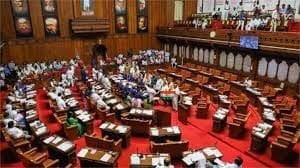
- The Election Commission of India (ECI) has set the timetable for the biannual elections to fill 37 Rajya Sabha seats spread across 10 States.
Key Facts About the Rajya Sabha
Overview of Rajya Sabha
- The Rajya Sabha, also known as the Council of States, is the Upper House of the Indian Parliament.
- It comprises representatives from States and Union Territories, along with members nominated by the President of India.
Constitutional Basis
- Article 80 of the Constitution sets the maximum number of members in the Rajya Sabha at 250.
- This includes 12 members nominated by the President for their expertise in fields like literature, science, art, and social service.
- Currently, there are 245 members in the House: 233 representing States and Union Territories (Delhi, Puducherry, and Jammu & Kashmir) and 12 nominated members.
Seat Allocation
- Seats in the Rajya Sabha are allocated to States and Union Territories based on their population, as outlined in the Fourth Schedule of the Constitution.
Eligibility Criteria
- Article 84 of the Constitution specifies the qualifications for becoming a member of Parliament.
- To be eligible for the Rajya Sabha, a candidate must be:
- A citizen of India
- At least 30 years old
- Must take an oath or affirmation before an authorized person as per the Third Schedule of the Constitution
- Must meet any additional qualifications set by Parliament through law
Tenure and Bye-elections
- The Rajya Sabha is a permanent body; it is not dissolved as a whole.
- One-third of its members retire every two years, with each member serving a six-year term.
- Bye-elections are conducted to fill vacancies arising from resignation, death, or disqualification. The elected member serves the remainder of the original term.
Chairperson
- The Vice-President of India serves as the ex-officio Chairperson of the Rajya Sabha.
Special Powers of Rajya Sabha
- Article 249: Allows Parliament to legislate on a State List subject in the "national interest" with a two-thirds majority in the Rajya Sabha.
- Article 312: Grants the exclusive authority to initiate the creation of new All-India Services.
- The Rajya Sabha also plays a crucial role in ensuring governance continuity during emergencies under Articles 352, 356, and 360.
Election Process for Rajya Sabha
Election Mechanism
- Members of the Rajya Sabha are elected through Indirect Election by the elected members of the Legislative Assemblies of States and Union Territories.
- The system used is proportional representation by means of the single transferable vote.
- In this system, MLAs rank candidates in order of preference on their ballot.
- A candidate must secure a specific quota of votes to be elected.
- If a candidate receives surplus votes beyond the quota, these surplus votes are transferred to the next preferred candidate at a reduced value.
- If seats remain vacant, the candidate with the lowest votes is eliminated, and their votes are redistributed to remaining candidates based on subsequent preferences.
Electoral College
- Only the elected members of the Legislative Assemblies (MLAs) of the States and Union Territories are eligible to vote in the election.
Domicile Requirement
- Pre-2003: A candidate had to be a resident of the state from which they were contesting.
- Post-2003: A candidate can be an elector from any parliamentary constituency in India. This change was made by the Representation of the People (Amendment) Act, 2003.
"Open Ballot" System
- Voting is not secret for MLAs belonging to political parties.
- Every MLA from a political party must show their marked ballot to the party's authorized agent before dropping it in the box.
- This system aims to prevent cross-voting and corruption.
- Independent MLAs do not have to show their ballot to anyone.
Anti-Defection Law
- The Supreme Court has ruled that voting against the party whip in a Rajya Sabha election does not lead to disqualification under the Anti-Defection Law (10th Schedule).
- While the party can take disciplinary action against the MLA, the MLA retains their assembly seat.
NOTA (None of the Above)
- The Supreme Court abolished the NOTA option for Rajya Sabha elections in 2018.
- The court found that NOTA undermines the principles of proportional representation and the single transferable vote.
FAQs on UPSC Daily Current Affairs: 2026-02-20
| 1. What are the major implications of Tehran re-entering the global geopolitical spotlight? |  |
| 2. How does India's vision for artificial intelligence aim at global good and inclusive growth? | |
| 3. What are the key strategies involved in transitioning to green steel production? | |
| 4. What are the economic effects of India's growing demand for gold? | |
| 5. How does the execution deficit in India relate to advancements in artificial intelligence? | |




