UPSC Daily Current Affairs: 2026-03-02


GS3/Economy
Skill India as Herculean Challenges, Galgotian Blunders

Why in News?
India is currently at a critical juncture in its development trajectory. The country has a significant demographic dividend that extends until 2040, presenting a unique chance to transform its youthful population into a productive workforce. However, this opportunity necessitates substantial reforms in vocational education and skill development to be realized effectively.
Key Takeaways
- India's demographic advantages could turn into a burden without systemic reforms.
- Current initiatives, like the 2020 National Education Policy, face challenges due to structural weaknesses.
- International comparisons show India lags behind in vocational education enrollment and funding.
Additional Details
- Historical Neglect of Vocational Education: India enrolls only 1.3% of secondary students in vocational education, contrasting sharply with nearly 50% in several EU countries and China.
- Fragmented Financing and Policy Instability: Skill initiatives often depend on annual Budget announcements, leading to inconsistent policies and inefficient fund utilization.
- Policy Ambition versus Ground Reality: The 2020 National Education Policy aims for 50% vocational exposure by 2025, but lacks integration and guaranteed employability.
- Accountability Concerns: Audits reveal governance failures in existing skill schemes, with only 41% of trainees securing placements due to a focus on enrollment over quality.
To harness India's demographic potential, bold structural reforms in vocational education and skill development are necessary. Sustainable financing, institutional accountability, and real-time labor market intelligence are crucial for transforming the current landscape into one that fosters long-term economic strength and global competitiveness.
GS3/Economy
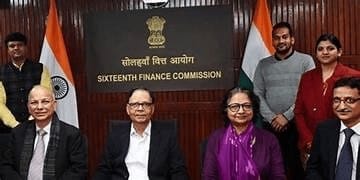
Sixteenth Finance Commission - Misses and Concerns
 Why in News?
The Sixteenth Finance Commission (SFC) has been a significant development in India's fiscal federalism, addressing key issues related to vertical and horizontal devolution of financial resources between the Centre and the States.
Key Takeaways
- The SFC maintained a 41% share for States in the divisible pool, emphasizing semi-permanence.
- Concerns over shrinking fiscal space led to increased reliance on non-shareable cesses and surcharges.
- Discontinuation of revenue deficit and sector-specific grants represents a major shift in support mechanisms for States.
- The introduction of a new contribution criterion raises questions about equity and efficiency in fiscal distribution.
Additional Details
- Vertical Devolution: The SFC kept the 41% devolution level established by the Fourteenth Finance Commission, which initially increased the States' share from 32% to 42%.
- Concerns over Cesses and Surcharges: The Centre's growing dependency on non-shareable cesses reduces the effective fiscal capacity of States, as these resources do not contribute to the divisible pool.
- Trends in Effective Transfers: Effective transfers to States have seen fluctuations, with a notable average of 34.4% under the Fifteenth Commission, now projected at 32.7% for 2026-27.
- Discontinuation of Revenue Deficit Grants: The elimination of these grants limits financial assistance for States facing structural cost disabilities.
- Horizontal Devolution: The SFC introduced a contribution criterion based on GSDP, which may favor wealthier States and complicate equitable distribution.
- Distributional Impact: Significant States experienced reductions in their shares compared to previous awards, raising concerns about equity among States.
- Equalisation Grants: The absence of well-designed equalisation grants risks exacerbating disparities among States, particularly in health and education.
In conclusion, while the Sixteenth Finance Commission preserved critical benchmarks for State devolution, its approach raises significant concerns regarding fiscal equity and the long-term implications for cooperative federalism and regional development in India.
GS3/Economy
GDP Revision and New Series
 Why in News?
The Ministry of Statistics and Programme Implementation (MoSPI) has released a new GDP series using 2022-23 as the base year. This change has resulted in a downward revision of nominal GDP estimates and an increase in fiscal deficit ratios.
Key Takeaways
- The base year for GDP calculations has shifted to 2022-23.
- Nominal GDP for recent years has been revised downward by approximately 3-4%.
- The fiscal deficit-to-GDP and debt-to-GDP ratios are adversely affected due to the reduction in nominal GDP.
- Achieving fiscal deficit targets may require significant nominal growth under the new estimates.
Additional Details
- Background of the New GDP Series: GDP rebasing is a common statistical practice aimed at incorporating structural economic changes and improving data collection methods. The latest series reflects enhanced databases and methodologies, resulting in lower nominal GDP estimates compared to previous calculations.
- Key Changes in Growth and Size: The real GDP growth rate for 2023-24 has been revised down from 9.2% to 7.2%. The nominal GDP for 2025-26 is now estimated at Rs. 345 lakh crore, which is about 3.3% lower than earlier predictions, indicating a smaller overall size of the Indian economy.
- Impact on Fiscal Deficit Ratios: The downward revision of nominal GDP results in higher fiscal deficit ratios. For instance, the fiscal deficit for 2025-26 is now expected to be 4.5% of GDP, up from the initially targeted 4.4%. Additionally, revisions for earlier years have also increased the fiscal deficit ratios.
- Debt-to-GDP Ratio and Fiscal Anchor: The revision is expected to raise the debt-to-GDP ratio from 56.2% to 58.1% by 2025-26, suggesting increased fiscal constraints.
- Implications for the $4-Trillion Economy Goal: The reduction in nominal GDP poses challenges to India's aim of becoming a $4-trillion economy. Current estimates suggest that with a stable exchange rate, India might reach this milestone in 2026-27, but currency fluctuations could impede this progress.
- Broader Significance of GDP Rebasing: GDP rebasing reflects improvements in statistical practices and has real implications for fiscal planning and economic credibility, influencing borrowing strategies and international economic standing.
In conclusion, the new GDP series introduced by MoSPI represents a significant recalibration of India's economic metrics, with far-reaching implications for fiscal policy and the overall economic landscape.
Related Reading for GS 3: Ramesh Singh Summary: GDP, GNP, ND, NNP and Revised Methods
GS2/Governance
From DONER to "OWNER" - Towards Emotional Integration of India's Northeast
 Why in News?
The silver jubilee of the Ministry of Development of North Eastern Region (DoNER) presents a chance to evaluate India's strategy for the development and unification of the Northeast. Established by Atal Bihari Vajpayee, this ministry was designed to combat the region's historical neglect. Although recent administrations have increased financial support, true national unity necessitates emotional and societal integration alongside economic development.
Key Takeaways
- The DoNER Ministry was founded in 2001 to address developmental gaps in Northeast India.
- Budget allocations for the ministry have surged by 152% from ₹2,332 crore (2014-15) to ₹5,892 crore (2023-24).
- Despite financial improvements, issues of cultural identity and social integration remain significant challenges.
Additional Details
- Need for Emotional Integration:Development transcends mere infrastructure; it demands recognition of cultural identity and dignity. Key issues include:
- Racial discrimination and stereotypes against individuals from the Northeast.
- Lack of awareness about Northeast India in the rest of the country.
- Weak sense of a shared national identity, as highlighted by recent incidents of racial abuse.
- Concept of "OWNER": This new vision promotes collective national ownership and emotional ties with the Northeast, emphasizing respect, cultural understanding, and integration.
- Policy Recommendations:
- Curriculum reform to include Northeast history and culture from Classes V-X.
- Establish Departments of Border Area Studies in universities.
- Mandatory civil service exposure for IAS and IPS officers to enhance cultural sensitivity.
- Develop partnerships between schools in border and non-border regions for cultural exchange.
- Recognize regional heroes to strengthen national identity and consciousness.
In conclusion, while the DoNER Ministry has made strides in improving conditions in Northeast India over the past 25 years, fostering true national integration requires more than just financial investment. The transformation of DoNER into the "OWNER" vision-founded on respect and emotional connection-can forge a more inclusive and unified India. Sustainable integration hinges on educational reforms, administrative exposure, and cultural acknowledgment, ensuring that border regions are integrated not just geographically, but emotionally into the fabric of the nation.
GS2/Health
Rare Disease Day 2026

Why in News?
- Rare Disease Day is observed globally on February 28th (or February 29th in leap years) to highlight the challenges faced by individuals with rare diseases. The choice of this date symbolizes the rarity of these conditions.
Objective of Rare Disease Day
- The primary goal of Rare Disease Day is to promote equity in social opportunities, healthcare, and access to diagnosis and therapies for patients with rare diseases.
Origin and Coordination of Rare Disease Day
- Rare Disease Day was established in 2008 and is coordinated by EURORDIS (European Organisation for Rare Diseases) in collaboration with over 70 national patient organizations.
Understanding Rare Diseases
- A rare disease is typically defined by its prevalence, with a global consensus suggesting it affects ≤ 1 in 2,000 individuals in a given region.
- A significant portion (50-75%) of rare diseases manifest during childhood or at birth, and around 80% have a genetic origin, such as Lysosomal storage disorders. The remaining include rare cancers, autoimmune conditions, and infectious diseases.
- There are an estimated 6,000-10,000 identified rare diseases globally, impacting 300-450 million people. However, ~95% of these diseases lack approved curative treatments, presenting a major public health challenge.
Rare Diseases in India
- India does not have a formal definition of rare diseases based on prevalence due to limited epidemiological data. Instead, the National Policy for Rare Diseases (NPRD) 2021 categorizes disorders based on treatability and clinical experience.
- Despite the lack of a formal definition, it is estimated that 72-96 million people in India are affected by rare diseases.
Policy Support for Rare Diseases in India
- Under the NPRD 2021, financial support of up to ₹50 lakhs is available for patients with any of the 63 included rare diseases at designated Centres of Excellence.
- The Union Budget 2026-27 has included additional rare diseases for exemption from import duties on personal imports of drugs, medicines, and food for special medical purposes.
- Rare diseases have also been included as a focus area under the Production Linked Incentive (PLI) Scheme for Pharmaceuticals.
GS1/Geography
Mars-Like Conditions in Salar de Pajonales
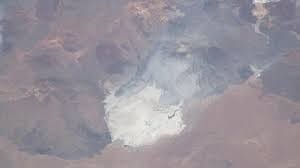
Scientists have found that in the Salar de Pajonales, a salt flat located in the Atacama Desert, gypsum plays a crucial role as a microscopic shield. It protects living microbes and helps preserve their ancient fossils.
Overview of Salar de Pajonales
- Location and Size: Salar de Pajonales is a vast salt flat in northern Chile, positioned on the western edge of the Altiplano-Puna plateau at an altitude of about 3,500 meters above sea level. It ranks as the third-largest salt flat in the Atacama region, following Salar de Atacama and Salar de Punta Negra.
- Environmental Conditions: The salt flat is situated in the hyperarid core of the Atacama Desert, where it endures extreme conditions such as high aridity, high altitude, intense solar and ultraviolet radiation, extreme temperature variations, and a mineral-rich environment with sulfates. These harsh conditions closely resemble those found on Mars.
- Hydrological and Geological Features: Salar de Pajonales is an endorheic basin, meaning it has no outflow and is sustained by groundwater. The surface is primarily covered by evaporitic deposits, including significant gypsum crusts and layered microbial structures known as stromatolites.
Astrobiological Importance as a Martian Analogue
- Recent studies have highlighted the role of gypsum deposits in preserving biosignatures, which are indicators of past life.
- Research has shown that active extremophile microbial communities, including halophilic bacteria and archaea, can survive in protected microhabitats within gypsum.
- Fossilized microbes and molecular biosignatures trapped within gypsum can date back thousands of years, providing a record of ancient life.
Implications for Mars Exploration
- Gypsum has the potential to act as a protective repository for biological material, shielding it from desiccation and radiation.
- Since gypsum is abundant on both Earth and Mars, the study suggests that orbiters and rovers exploring Mars should target these deposits. Gypsum-rich areas could be prime candidates for holding secrets of ancient Martian life.
GS2/Polity and Governance
Bulldozer Justice
Why in News?
The Allahabad High Court has expressed concerns about the increasing practice of "bulldozer justice" in Uttar Pradesh. This involves the demolition of properties linked to accused individuals shortly after a First Information Report (FIR) is filed.
Summary
- The Allahabad High Court and the Supreme Court have raised alarms about punitive demolitions, stating that they violate due process, the separation of powers, and fundamental rights. They emphasize that punishment should only come after a proper judicial process.
- To prevent the misuse of demolition powers and uphold the rule of law, there must be strict adherence to notice, hearing, proportionality, and accountability. Additionally, institutional reforms and alignment with international human rights standards are crucial.
Concerns Regarding "Bulldozer Justice"
1. Violation of Rule of Law and Due Process
- The foundation of Indian law is that the state must follow established legal procedures, not act on arbitrary discretion. Punitive demolitions disrupt the constitutional order of law enforcement, which includes Allegation, Investigation, Adjudication, and Punishment.
- By demolishing property immediately after a criminal accusation, the state bypasses the need for a trial, denying the accused their right to a fair hearing. The executive cannot take on the roles of judge, jury, and executioner, as this disturbs the constitutional balance of power and violates the rule of law.
- It involves a misuse of lawful authority for improper purposes, undermining due process, the separation of powers, and the presumption of innocence.
2. Infringement of Fundamental Rights
- Right to Shelter (Article 21) : The right to life includes the right to a dignified shelter. Sudden evictions destroy a family's socioeconomic security and livelihood.
- Right to Property (Article 300A) : The Constitution requires that no one be deprived of their property except by law, necessitating a fair procedure before any state seizure or destruction.
- Right to Equality (Article 14) : There are concerns about discriminatory targeting. When authorities selectively demolish properties of certain communities or political dissenters while ignoring similar violations nearby, it violates the right to equal protection under the law.
3. Collective Punishment Concern
- Demolishing shared homes punishes innocent family members for an individual's alleged crime, violating the principle of individual liability. This practice is foreign to Indian criminal law and contravenes the Geneva Convention 1949, which prohibits collective punishments.
- The International Covenant on Civil and Political Rights (ICCPR) affirms that everyone has the right to own property individually or with others, and no one shall be arbitrarily deprived of their property.
What is Bulldozer Justice?
"Bulldozer Justice" refers to the extrajudicial practice where state or municipal authorities use heavy machinery to demolish the homes, shops, or properties of individuals accused of crimes, bypassing established legal procedures.
Supreme Court Guidelines
- In November 2024, the Supreme Court, invoking Article 142, issued pan-India guidelines declaring punitive demolitions unconstitutional and mandating strict due process safeguards before any property demolition.
- Mandatory Notice: Authorities must serve a prior written notice of at least fifteen days to the property owner via registered post.
- Right to be Heard: The affected party must be granted a personal hearing to contest the demolition, and authorities must issue a reasoned, written order explaining why demolition is the only viable option.
- Accountability and Transparency: All demolition proceedings must be recorded on video. Any public official found violating these guidelines will face charges for contempt of court and will be held personally liable to pay for the restitution of the destroyed property from their own salary.
- Exception: SC clarified that its directions will not be applicable if there is any unauthorised structure in any public place such as roads, streets, or footpaths, abutting railway lines or any river or water body and also to cases where there is an order for demolition made by a court of law.
Judicial Pronouncements Related to Property Demolitions
- Maneka Gandhi Case, 1978: The SC expanded the scope of "procedure established by law" by ruling that it must be just, fair and reasonable, thereby introducing the principle of "due process of law." Therefore, demolitions based on suspicion or unfounded allegations contradict the principles of justice, fairness, and non-arbitrariness.
- Olga Tellis Case, 1985: The SC affirmed that Article 21, guaranteeing the right to life, also includes the right to livelihood and shelter. It means demolishing homes without due process violates constitutional rights.
- KT Plantation (P) Ltd Case, 2011: SC ruled that the legislation providing for deprivation of property under Article 300-A must be just, fair, and reasonable.
What Measures can Curb the Practice of Bulldozer Justice?
- Adopting United Nations Guidelines: India should adopt the United Nations Basic Principles and Guidelines on Development-Based Evictions and Displacement (2007). These guidelines prohibit forced evictions as a punitive measure and require comprehensive rehabilitation before any state-led demolition.
- Codification of the Proportionality Doctrine: State legislatures should amend municipal laws to include the test of proportionality, allowing demolition only as a last resort when the unauthorized structure poses an immediate public hazard.
- Creation of Independent Property Tribunals: Establish independent municipal tribunals to review final demolition orders, ensuring objective assessment of municipal authority claims.
- Suo Motu Judicial Intervention: Encourage High Courts and district judiciaries to issue preemptive stays on targeted demolitions following communal clashes or protests.
- Categorizing as a Corrupt Electoral Practice: Amend the Representation of the People Act, 1951 to classify extrajudicial demolitions endorsed by elected representatives as a corrupt practice.
Conclusion
Curbing Bulldozer Justice requires a cultural shift within law enforcement and administration. By legally protecting citizens from arbitrary state power and imposing strict penalties on errant officials, the state can ensure criminal justice remains the courts' responsibility, preserving democracy and the constitution.
FAQs on UPSC Daily Current Affairs: 2026-03-02
| 1. What are the main objectives of the Skill India initiative? |  |
| 2. What challenges does Skill India face in its implementation? | |
| 3. How does the Sixteenth Finance Commission address the concerns related to state finances? | |
| 4. What is the significance of GDP revision and the new series in economic analysis? | |
| 5. What are the implications of transforming the Ministry of DONER to "OWNER" for the Northeast region? | |




