Science and Technology - 3


GS3/Science and Technology
National Blockchain Framework (NBF)
Why in News?
The National Blockchain Framework (NBF) has been launched to establish a unified and secure architecture for blockchain technology in India, aiming to enhance governance and public service delivery.
Key Takeaways
- Launched in September 2024 with a budget of ₹64.76 crores by the Ministry of Electronics and Information Technology (MeitY).
- Aims to promote trust, transparency, and interoperability across digital systems via a permissioned blockchain network.
Additional Details
- Core Components: The NBF includes a modular platform called the Vishvasya Blockchain Stack, which provides distributed infrastructure and open APIs for e-Governance integration.
- NBFLite: A testing environment for startups and innovators to build and validate blockchain prototypes, preloaded with smart contract templates for governance applications.
- Praamaanik: A mobile app verification system that enhances digital trust and cybersecurity by authenticating legitimate applications.
- National Blockchain Portal: A digital interface for promoting blockchain adoption, serving as a repository of standards and policies.
The NBF is expected to significantly impact various sectors by enabling ministries and state governments to develop Blockchain-as-a-Service (BaaS) solutions, facilitating faster and tamper-proof transactions.
Applications in India's Governance
- Certificate & Document Chain: Secures government-issued documents to prevent forgery, with over 34 crore verifications completed.
- Property Chain: Ensures transparent recording of land transactions, reducing litigation and expediting updates.
- Judiciary Chain: Maintains immutable judicial records, facilitating the electronic delivery of legal documents.
- Inter-Operable Criminal Justice System (ICJS): Links police, prosecution, and judiciary databases for efficient case management.
- Logistics Chain (Aushada): Tracks pharmaceutical supply chains to ensure drug authenticity.
- RBI's Digital Rupee Pilot: Demonstrates a blockchain-based Central Bank Digital Currency for traceable transactions.
UPSC 2020 Question:
With reference to "Blockchain Technology," consider the following statements:
- It is a public ledger that everyone can inspect, but which no single user controls.
- The structure and design of blockchain is such that all the data in it are about cryptocurrency only.
- Applications that depend on basic features of blockchain can be developed without anybody's permission.
Which of the statements given above is/are correct?
- (a) 1 only
- (b) 1 and 2 only
- (c) 2 only
- (d) 1 and 3 only
GS3/Science and Technology
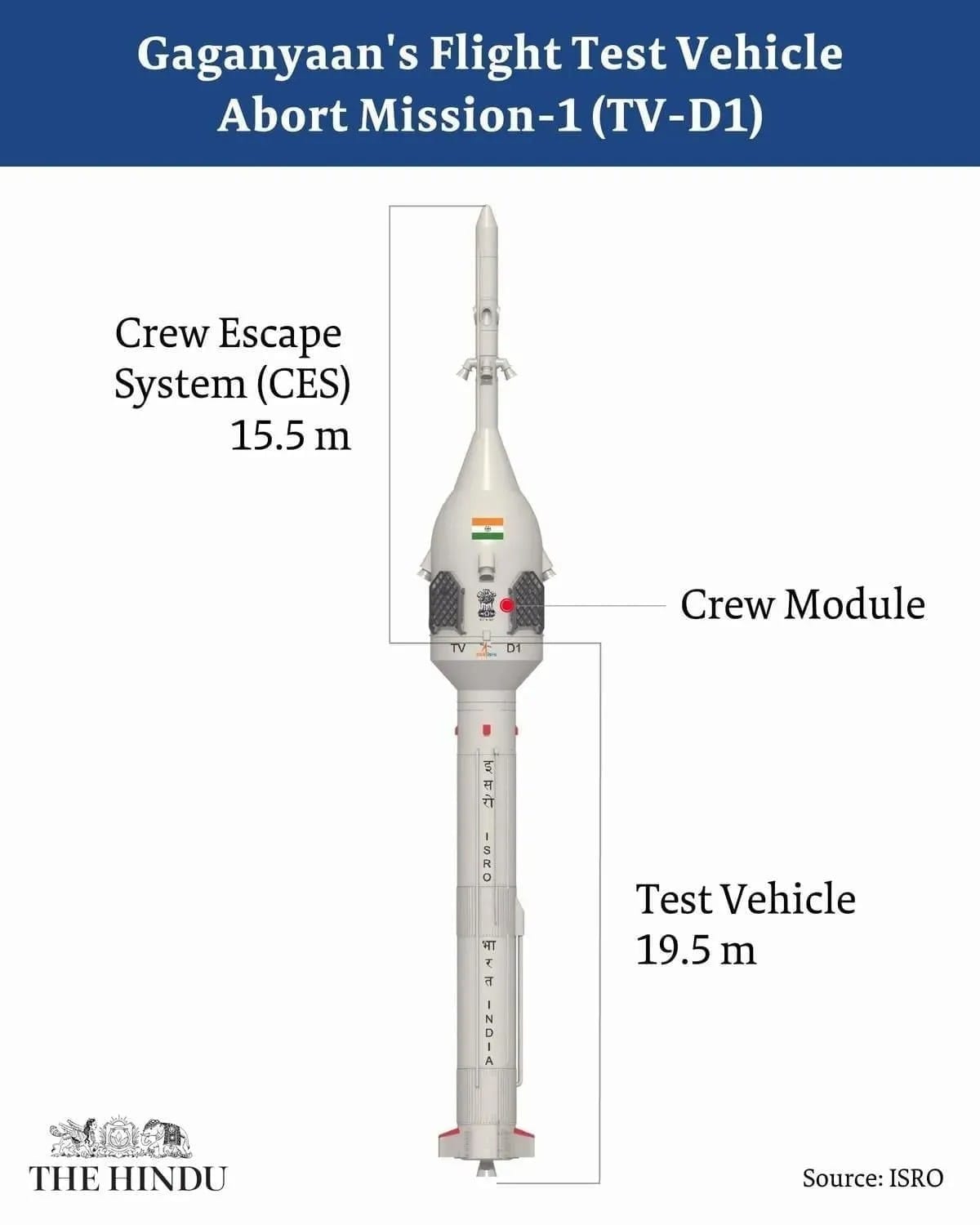
Crew Escape System (CES) in the Gaganyaan Mission
 Why in News?
The Crew Escape System (CES) represents ISRO's most critical safety advancement for the Gaganyaan mission. This information is derived from an article published in The Hindu, highlighting the importance of CES in ensuring astronaut safety during spaceflights.
Key Takeaways
- Gaganyaan is India's first human spaceflight mission, initiated in 2007.
- The mission aims to send 3 astronauts into Low Earth Orbit (400 km) for 3 days, followed by a splashdown in the Arabian Sea.
- ISRO will use a Human-Rated LVM3 (HLVM3) rocket, adapted from GSLV Mk3, certified for human use by 2025.
- India aims to become the 4th nation with crewed spaceflight capability, after the US, Russia, and China.
- Upcoming timeline includes uncrewed missions in late 2025 and early 2027 for crewed flights.
Additional Details
- Purpose of CES: The Crew Escape System is a vital safety mechanism designed to facilitate astronaut rescue in the event of a launch vehicle failure during ascent.
- Placement & Function: CES is mounted atop the rocket and uses high-thrust solid motors to rapidly separate the crew module, propelling it to safety.
- Performance: The escape motors can generate acceleration up to 10 g, utilizing high burn-rate propellants to ensure faster thrust than the launcher.
- Safety Systems: The system includes redundant subsystems and real-time health monitoring through the Integrated Vehicle Health Management (IVHM) network, allowing for millisecond-level response times.
- Types of CES:
- Puller-Type: Utilizes solid-fuel motors to pull the crew module away from the rocket, as seen in missions like Russia's Soyuz and China's Long March.
- Pusher-Type: Employs liquid-fuel thrusters to push the capsule away, exemplified by SpaceX's Crew Dragon on the Falcon 9.
- Operational Sequence & Recovery:
- Automatic Activation: The IVHM system triggers CES upon detecting anomalies, firing the escape motors to clear the crew module from the rocket.
- Separation & Descent: After achieving a safe distance, CES detaches, allowing the module to descend under a multistage parachute system.
- Splashdown & Safety: The module lands in the sea, ensuring impact forces remain within safe physiological limits for quick recovery.
The Crew Escape System serves as the core life-saving mechanism of India's human spaceflight program, ensuring the safety and survival of astronauts during potential launch failures.
UPSC 2025
Consider the following space missions:
- I. Axiom-4
- II. SpaDeX
- III. Gaganyaan
How many of the space missions given above encourage and support microgravity research?
- (a) Only one
- (b) Only two
- (c) All three*
- (d) None
GS3/Science and Technology
CMS-03 Satellite Launch by ISRO
 Why in News?
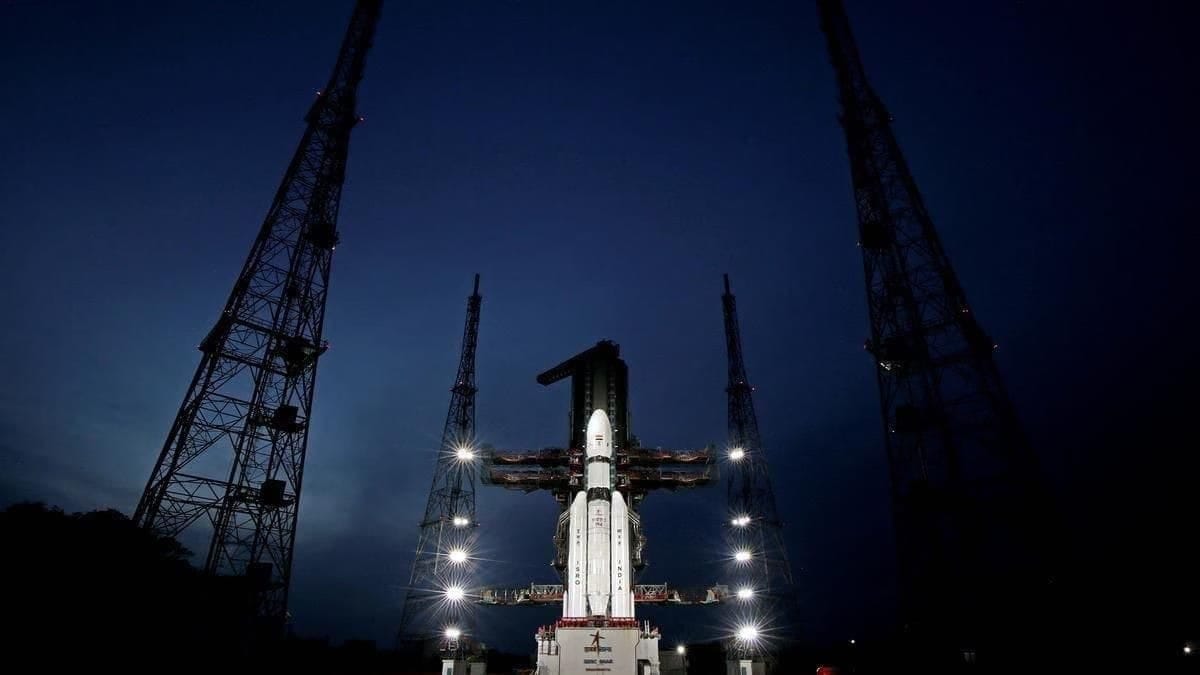
The Indian Space Research Organisation (ISRO) is set to launch the military communications satellite CMS-03, also known as GSAT-7R, from the Satish Dhawan Space Centre located in Sriharikota.
Key Takeaways
- CMS-03 is a communication satellite that will enhance military communications.
- It will be launched using the Launch Vehicle Mark 3 (LVM3).
- Weighing approximately 4400 kg, it will be the heaviest communication satellite launched by ISRO.
- The satellite will be placed into a Geosynchronous Transfer Orbit (GTO).
Additional Details
- Multi-band Communication: CMS-03 will offer services across a wide oceanic region, including the Indian landmass, providing sharper connectivity and increased bandwidth for civil, strategic, and maritime users.
- Geosynchronous Orbit: This orbit is characterized by its prograde direction (matching Earth's rotation), low inclination, and high altitude. A satellite in this orbit maintains a constant longitude above the Earth, making it ideal for communication purposes.
- The geosynchronous orbit is also referred to as the Clarke orbit, named after the science fiction writer Arthur C. Clarke, who popularized the concept.
The launch of the CMS-03 satellite is significant for enhancing the communication capabilities of the armed forces and is scheduled for next week.
GS3/Science and Technology
Govt Mandates Sound Alert Devices for EVs to Enhance Road Safety
 Why in News?
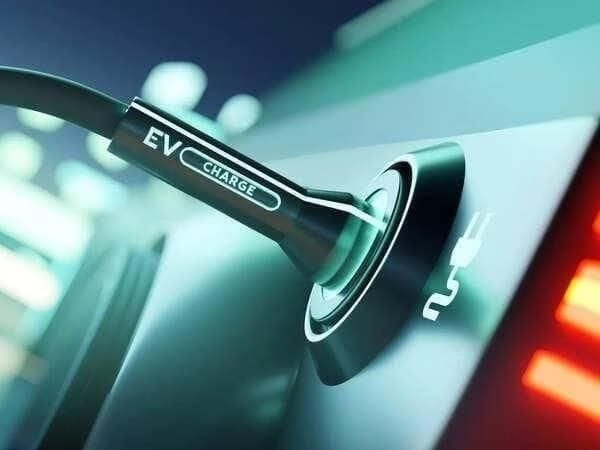
The Ministry of Road Transport and Highways (MoRTH) has proposed the implementation of mandatory Acoustic Vehicle Alerting Systems (AVAS) in electric vehicles (EVs) including cars, buses, and trucks. This initiative aims to reduce road accidents by alerting pedestrians and other road users of an EV's presence, particularly at low speeds where these vehicles operate quietly.
Key Takeaways
- New regulations require AVAS in all new EV models by October 1, 2026.
- Existing EV models must comply with AVAS requirements by October 1, 2027.
- EVs moving below 20 km/h produce minimal sound, increasing accident risks.
Additional Details
- Acoustic Vehicle Alerting System (AVAS): AVAS is designed to emit an audible warning sound for electric and hybrid vehicles, which are often nearly silent at low speeds. This feature helps to alert vulnerable road users such as pedestrians and cyclists.
- Activation: The system activates when the vehicle is moving at low speeds (0-20 km/h) or when in reverse, ensuring safety in areas with high pedestrian traffic.
- Sound Generation: AVAS uses an external speaker to produce a continuous sound resembling that of traditional internal combustion engine vehicles or a distinctive warning sound.
- Speed Synchronization: The AVAS is connected to the vehicle's electronic control unit (ECU) to adjust the sound's pitch and volume based on the vehicle's speed.
- Deactivation: The system deactivates when the vehicle exceeds the low-speed threshold, as the natural sounds of the vehicle become sufficient to alert others.
This regulation comes in response to the rapid increase in EV adoption in India, where the share of EVs sold has jumped from 0.01% in 2014-15 to 7.31% in 2024-25, with 19.5 lakh EVs sold in 2024 alone. The government recognizes the importance of AVAS, especially as EVs are increasingly used in urban and suburban areas. However, it's important to note that the current rules do not apply to two- and three-wheelers, which could pose additional safety risks in densely populated environments.
GS3/Science and Technology
Google's Willow Processor Demonstrates Verifiable Quantum Advantage
 Why in News?
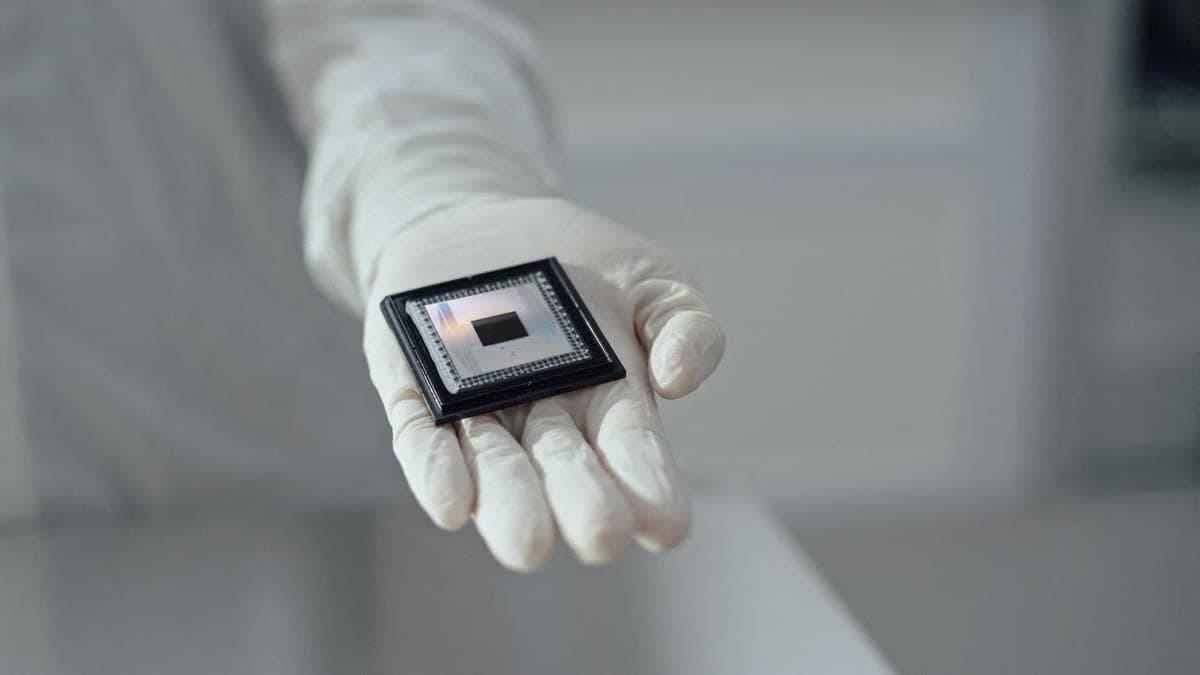
Recently, two significant studies published in the journal Nature by a collaboration of researchers from Google, MIT, Stanford, and Caltech have claimed a verifiable demonstration of quantum advantage using Google's Willow quantum processor. These studies represent a notable advancement in the pursuit of practical quantum computing, showcasing that quantum systems can surpass classical supercomputers in specific computational tasks.
Key Takeaways
- Working of Quantum Computers: Utilizing the principles of superposition and interference.
- Study 1 - Decoded Quantum Interferometry (DQI): An algorithm that optimizes solutions efficiently.
- Study 2 - Measuring Quantum Information Scrambling: Investigating how information disperses across qubits.
- Connection with Google's 2019 Claim: Transition from claiming quantum supremacy to demonstrating verifiable quantum advantage.
- Significance: Strengthening the foundations of quantum simulation and future applications.
Additional Details
- Working of Quantum Computers: Quantum computers utilize the wave-like properties of subatomic particles. They apply the principle of interference to enhance correct answers through constructive interference while negating incorrect ones. Quantum bits, or qubits, can exist in multiple states simultaneously (known as superposition), allowing for extensive parallel processing compared to classical bits.
- Study 1 - Decoded Quantum Interferometry (DQI): This paper introduced DQI, a quantum algorithm aimed at solving optimization problems. By employing a quantum Fourier transform to control interference patterns, it effectively identifies optimal solutions much faster than classical algorithms, which is particularly beneficial in fields such as logistics and finance.
- Study 2 - Measuring Quantum Information Scrambling: Information scrambling refers to how data from one qubit spreads across all qubits in a quantum system, similar to how dye disperses in water. Researchers simulated this phenomenon through a disturbance (termed a "kick") and monitored the information's dispersal, revealing the extent of scrambling.
- Verification: Unlike the 2019 Sycamore experiment, which lacked full verification, the Willow experiment addresses a scientifically meaningful problem, allowing for cross-checks with classical computers or other quantum systems.
- Connection to 2019 Google Claim: Google previously asserted "quantum supremacy" with its Sycamore processor; however, the task was of limited scientific relevance. The Willow studies now indicate a more substantial and verifiable advancement in quantum computing.
- Scientific and Technological Significance: The findings are built on principles laid out by Michel Devoret, a recognized figure in quantum computing. These advancements could pave the way for Hamiltonian learning and enhance quantum simulation and error correction techniques.
- Way Forward: Future challenges include error correction, achieving scalability with thousands of qubits, developing verification frameworks, exploring interdisciplinary applications, and fostering public-private collaborations to accelerate progress in quantum technologies.
The Willow quantum processor's achievements represent a critical leap toward practical quantum computing by demonstrating verifiable quantum advantage in addressing meaningful physical problems. While challenges in scalability and validation remain, these studies mark a significant progression from theoretical concepts to experimental realities, with far-reaching implications for science and technology.
GS3/Science and Technology
Rashtriya Vigyan Puraskar (RVP)
Why in News?
The Government of India has announced the Rashtriya Vigyan Puraskar, a prestigious national award akin to the Padma awards, aimed at recognizing excellence in science, technology, and innovation.
Key Takeaways
- Vigyan Ratna: Jayant Vishnu Narlikar (posthumously) - renowned astrophysicist and cosmologist known for the Hoyle-Narlikar theory.
- Vigyan Shri: Eight distinguished scientists, including Gyanendra Pratap Singh and Yusuf M. Shaikh.
- Vigyan Yuva: Fourteen young scientists recognized across various domains such as biology, physics, and data science.
- Vigyan Team: CSIR Aroma Mission awarded for significant contributions to India's flavor and fragrance sector.
Additional Details
- Establishment: The RVP was instituted in January 2024 as a national award to honor scientists, technologists, and innovators of Indian origin, whether based in India or abroad.
- Purpose: This award was created to modernize and replace legacy awards like the Shanti Swarup Bhatnagar Prize, promoting transparency, inclusivity, and a broader scientific domain coverage.
- Governing Authority: The award is administered by the Rashtriya Vigyan Puraskar Committee (RVPC), chaired by the Principal Scientific Adviser (PSA) to the Government of India, consisting of 17 members from major science ministries and research councils.
- Award Calendar: Announcements occur every May 11 (National Technology Day), with conferment on August 23 (National Space Day) at Rashtrapati Bhavan by the President of India.
- Award Categories:
- Vigyan Ratna (VR): For lifetime achievement; up to 3 awards annually.
- Vigyan Shri (VS): For distinguished contributions; up to 25 awards.
- Vigyan Yuva - Shanti Swarup Bhatnagar (VY-SSB): For scientists under 45 years; up to 25 awards.
- Vigyan Team (VT): For collaborative research groups (minimum 3 members); up to 3 awards.
- Coverage & Eligibility: Open to Indian citizens and Persons of Indian Origin (PIOs) across thirteen scientific fields, including physics, chemistry, biology, and engineering. Self-nominations are not allowed; nominations must come from institutions, departments, or peers.
- Award Components: Each recipient receives a Sanad signed by the President, a medallion, and a citation booklet. Posthumous awards are transferred to the next of kin.
In conclusion, the Rashtriya Vigyan Puraskar represents a significant step toward recognizing and honoring scientific achievements in India, fostering innovation and excellence across various domains.
GS3/Science and Technology
Bordetella holmesii: Emerging Threat in North India
Why in News?
A recent study by a team at the Postgraduate Institute of Medical Education and Research (PGIMER), Chandigarh has highlighted a notable increase in infections caused by Bordetella holmesii, a lesser-known bacterium that exhibits symptoms similar to whooping cough in northern India.
Key Takeaways
- Bordetella holmesii: Recognized in 1995, it is a gram-negative coccobacillus.
- Infections from Bordetella holmesii are now more prevalent than those from Bordetella pertussis in North India.
- This bacterium can lead to serious health conditions including endocarditis, pneumonia, cellulitis, suppurative arthritis, and pyelonephritis.
About Whooping Cough
- Definition: Whooping cough, or pertussis, is a highly contagious respiratory infection caused by Bordetella pertussis.
- Symptoms: It begins with mild cold-like symptoms and a low-grade fever, progressing to severe coughing fits characterized by a "whooping" sound.
- Risk Groups: Particularly severe in infants, it can lead to complications such as pneumonia and even death.
Transmission of Whooping Cough
- The bacterium spreads through respiratory droplets from coughs or sneezes of an infected person.
- Once inhaled, it attaches to the lining of the throat and releases toxins that damage the cilia, leading to inflammation and severe coughing fits.
Treatment and Prevention
- Vaccination: The Diphtheria, Tetanus, and Pertussis (DTaP) vaccine is crucial for prevention.
This rise in infections from Bordetella holmesii emphasizes the need for increased awareness and monitoring of respiratory infections in the region, particularly given the serious implications for vulnerable populations.
GS3/Science and Technology
Redefining the Narrative of TB Eradication Worldwide
 Why in News?
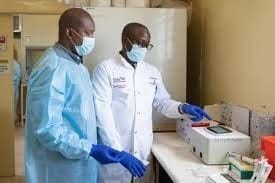
The control of tuberculosis (TB) has experienced significant advancements, particularly with the development of point-of-care molecular diagnostics. These innovations have revolutionized TB detection, overcoming limitations of traditional methods that often delayed diagnosis and treatment, especially in remote areas.
Key Takeaways
- Introduction of portable PCR platforms has enhanced TB diagnosis accessibility.
- Rapid molecular diagnostics like Truenat play a crucial role in global TB control.
- India's innovations in diagnostics are recognized globally, contributing significantly to TB eradication efforts.
- Holistic approaches are necessary for effective TB care, addressing socio-economic factors alongside medical treatment.
Additional Details
- Point-of-Care Diagnostics: These systems, such as Truenat, provide results in under an hour, allowing for immediate treatment decisions, which is critical in managing TB effectively. For instance, Nigeria's integration of Truenat has nearly doubled the detection of rifampicin-resistant cases.
- Innovative Testing Approaches: Nigeria's use of stool-based testing for children highlights a significant advancement in diagnosing pediatric TB, which has historically been challenging due to difficulties in obtaining sputum samples.
- Global Recognition: The Kochon Prize awarded to Molbio Diagnostics underscores the importance of Indian innovations in TB diagnostics and their influence on global health.
- India's National TB Elimination Programme (NTEP): This initiative has been essential in deploying molecular testing units across India, leading to faster diagnosis and treatment initiation.
- Need for Comprehensive Care: Addressing TB requires more than just diagnostics; it involves tackling malnutrition and socio-economic inequities that contribute to the disease's prevalence.
As the world confronts the challenge of TB, it is vital to sustain momentum through continued investment in integrated health solutions. By combining diagnostics with treatment access, social support, and addressing structural determinants, we can make significant strides toward TB elimination.
GS3/Science and Technology
Indigenous Gene-Editing Tech Set to Boost Affordable GE Agriculture
 Why in News?
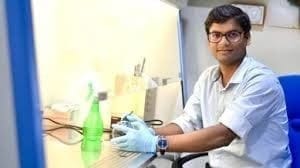
Indian scientists have developed a homegrown, "miniature" alternative to the globally patented CRISPR-Cas system, which is used for precise genome editing in plants. The CRISPR-Cas system is a natural bacterial defense mechanism that has been adapted for genome editing purposes. It employs guide RNA to direct a Cas enzyme, like Cas9, to a specific DNA sequence, where it cuts the DNA at that precise location. The cell's repair mechanisms then allow for the insertion, deletion, or modification of genes.
Key Takeaways
- Development of a new indigenous genome-editing technology using TnpB proteins.
- Strengthens India's ability to produce genome-edited crops at a lower cost.
- Reduces dependence on foreign proprietary tools for gene editing.
Additional Details
- Gene Modification vs Gene Editing:
- Gene Modification: Involves introducing foreign DNA from a different species into an organism. For example, inserting a gene from another plant species to enhance disease resistance.
- Gene Editing: Makes precise alterations to an organism's existing DNA without adding foreign genes. This process can include deletions or corrections at specific DNA sites, analogous to correcting a word in a document.
- India's First GE Rice Varieties:The Indian Council of Agricultural Research (ICAR) has announced two CRISPR-edited rice varieties:
- Samba Mahsuri (IIRR): Edited the cytokinin oxidase 2 gene using CRISPR-Cas12a for higher yield.
- MTU-1010 (IARI): Edited the DST gene using CRISPR-Cas9 for drought and salinity tolerance.
- TnpB Technology:The newly developed tool utilizes transposon-associated TnpB proteins, which function similarly to Cas9/Cas12a as molecular scissors. Key benefits include:
- Smaller size (400-500 amino acids) compared to Cas9 (1,000-1,400) and Cas12a (1,300).
- Facilitated delivery via viral vectors, bypassing the need for tissue-culture-based delivery.
- Utilizes TnpB derived from Deinococcus radiodurans, a bacterium known for its resilience in harsh environments.
- Impact of TnpB-Based Editing:This indigenous tool offers advantages such as:
- Freedom from foreign intellectual property control.
- Lower costs for developing GE crops.
- Easier DNA delivery due to the compact size of the protein.
- Potentially alleviates concerns regarding foreign corporate dominance in agriculture.
The development of TnpB technology represents a significant advancement in India's agricultural biotechnology sector, enabling the country to enhance its agricultural productivity while minimizing reliance on international patents and licensing fees.
GS3/Science and Technology
The INO that wasn't and the JUNO that is
Why in News?
The completion of China's Jiangmen Underground Neutrino Observatory (JUNO) represents a significant advancement in global particle physics. However, this achievement is juxtaposed with the stalled progress of India's Neutrino Observatory (INO), highlighting contrasting trajectories in scientific endeavors influenced by public trust, planning, and political dynamics.
Key Takeaways
- JUNO's success underscores a sustained national commitment to scientific research.
- INO's stagnation illustrates the impact of administrative challenges and community engagement failures.
- Neutrino experiments are crucial for understanding fundamental questions in physics, such as neutrino mass ordering.
Additional Details
- Neutrinos: These are among the most elusive particles in the universe, capable of passing through matter with minimal interaction. Their study requires large underground detectors shielded from background noise.
- Progress Comparison: While JUNO has achieved significant milestones, including a high-precision measurement of θ₁₂, INO's progress has been hampered by community opposition and bureaucratic delays.
- Consequences for INO: The project's ambitious design and location have led to local fears, insufficient engagement, and environmental concerns, which have stifled funding and international collaboration.
- Future of Neutrino Physics: Missing the current opportunities may lead India to lag in upcoming scientific advancements, necessitating greater investment and international cooperation.
In conclusion, the contrasting fates of JUNO and INO reflect how national policies and community involvement shape the future of scientific exploration. For India to regain its place in fundamental physics, it must enhance public engagement, establish long-term planning, and streamline its administrative processes to support its talented scientists.
GS3/Science and Technology
Visible Emission Line Coronagraph (VELC) onboard Aditya-L1
Why in News?
Scientists at the Indian Institute of Astrophysics (IIA), in collaboration with NASA, have achieved a significant milestone by making the first spectroscopic observations of a Coronal Mass Ejection (CME) in the visible wavelength range using the Visible Emission Line Coronagraph (VELC) aboard the Aditya-L1 mission.
Key Takeaways
- The VELC is India's first solar observatory mission and serves as its primary scientific payload.
- It is designed to study various solar phenomena, including coronal mass ejections (CMEs) and solar wind dynamics.
- Aditya-L1 is positioned at the Lagrange Point 1 (L1) for continuous solar observation.
Additional Details
- VELC Overview: The VELC is an internally occulted coronagraph capable of imaging, spectroscopy, and spectro-polarimetry of the solar corona, the outermost layer of the Sun's atmosphere.
- Objectives: The mission aims to investigate coronal mass ejections (CMEs), solar wind acceleration, coronal temperature, plasma velocity, and magnetic field dynamics near the solar limb.
- Capabilities: VELC can observe the corona as close as 1.05 solar radii from the Sun's surface, equipped with a spectrograph and polarimeter for high-resolution data collection.
- Significance: This mission provides the first-ever spectroscopic data of CMEs near the Sun, enhancing our understanding of space weather and solar activity.
- Key Findings:
- Electron Density: ~370 million electrons per cubic centimetre within the CME, significantly higher than the ambient solar corona.
- Energy Released: ~9.4 × 10²¹ joules, equivalent to nearly 100 trillion times the energy released by the Hiroshima bomb.
- Mass of CME: ~270 million tonnes, approximately 180 times the mass of the iceberg that sank the Titanic.
Overall, the Aditya-L1 mission is a groundbreaking initiative that positions India at the forefront of heliophysics research, providing crucial insights into solar activities that impact space weather and Earth's technological systems.
Back2Basics: Aditya-L1 Mission
- India's first space-based solar mission, developed by the Indian Space Research Organisation (ISRO).
- Launched in 2023 and located at the Lagrange Point 1 (L1), approximately 1.5 million km from Earth, allowing for uninterrupted solar observation.
- The mission's objectives include studying the Sun's outer atmosphere, solar radiation, magnetic storms, and space weather phenomena.
Scientific Payloads
- Visible Emission Line Coronagraph: Solar corona imaging.
- SUIT: Solar Ultraviolet Imaging Telescope.
- SoLEXS: Solar Low Energy X-ray Spectrometer.
- HEL1OS: High Energy L1 Orbiting X-ray Spectrometer.
- ASPEX: Aditya Solar Wind Particle Experiment.
- PAPA: Plasma Analyser Package for Aditya.
- Magnetometer: Measures magnetic fields at L1.
This mission enhances India's capabilities in solar observation and strengthens its role in global heliophysics research, providing vital early warnings for geomagnetic storms that could affect satellites and power grids.
UPSC 2022 Question:
If a major solar storm (solar flare) reaches the Earth, which of the following are the possible effects on the Earth?
- 1. GPS and navigation systems could fail.
- 2. Tsunamis could occur at equatorial regions.
- 3. Power grids could be damaged.
- 4. Intense auroras could occur over much of the Earth.
- 5. Forest fires could take place over much of the planet.
- 6. Orbits of the satellites could be disturbed.
Select the correct answer using the code given below:
- (a) 1 and 2 only
- (b) 3 and 4 only
- (c) 1, 3, 4 and 6 only*
- (d) 2, 5 and 6 only
GS3/Science and Technology
Altermagnetism: A New Class of Magnetic Order
Why in News?
In 2024, scientists confirmed the existence of a new type of magnetism known as altermagnetism, which integrates characteristics of both ferromagnetism and antiferromagnetism.
Key Takeaways
- Altermagnetism combines features of ferromagnetism and antiferromagnetism.
- It has been experimentally validated in 2024 after initial discovery in 2019.
- Significant implications for future electronics and materials science.
Additional Details
- Overview: Altermagnetism is a novel form of magnetism that was first identified in 2019 and confirmed through experiments in 2024. It merges traits of both ferromagnetic and antiferromagnetic behaviors.
- Mechanism: In altermagnets, atoms exhibit opposite (antiparallel) spins similar to antiferromagnets, yet their alignment adheres to mirror or rotational symmetry rather than a simple alternating pattern.
- Magnetic Effect: This phenomenon occurs without an external magnetic field, causing electrons to display differing energy levels between spin-up and spin-down states.
- Discovery: The first observation was made in manganese telluride (MnTe) using advanced techniques such as photoemission and X-ray imaging.
- Scientific Relevance: Altermagnetism introduces a new class of materials that are magnetically neutral but electronically active, which could be pivotal for the development of next-generation electronic devices.
Distinctive Properties
- Zero External Magnetism: Altermagnets do not generate an external magnetic field but exhibit significant internal spin asymmetry.
- Spin-Polarised Currents: They are capable of transmitting electric currents that behave like magnetic currents without generating stray magnetic fields.
- Ultrafast Response: These materials can operate at terahertz (THz) frequencies, making them around 1000 times faster than standard magnetic devices.
- Stable Performance: Altermagnets maintain their magnetic order even when environmental conditions vary.
- Crystal-Based Symmetry: Their magnetic properties originate from the atomic structure rather than external magnetic influences.
How does it differ from other Magnetisms?
- Ferromagnetism: In ferromagnetic materials, all spins align in the same direction, resulting in a strong external magnetic field.
- Antiferromagnetism: Antiferromagnetic materials have spins that align in opposing directions, completely canceling out magnetism while maintaining equal energy levels between the spins, leading to no net external field, but still exhibiting internal magnetic effects.
Applications
- Spintronics: Altermagnetism enables compact, energy-efficient data storage and logic devices.
- Quantum Computing: It provides magnetically quiet materials, enhancing the stability of qubits.
- High-Speed Electronics: Supports the development of ultrafast processors that can operate at terahertz frequencies.
- Advanced Sensors: Useful for accurate and low-noise magnetic detection technologies.
In conclusion, altermagnetism represents a significant advancement in the field of magnetism, with promising applications in various high-tech domains, including electronics and quantum computing.
GS3/Science and Technology
ISRO's LVM3 Rocket Launches GSAT-7R
 Why in News?
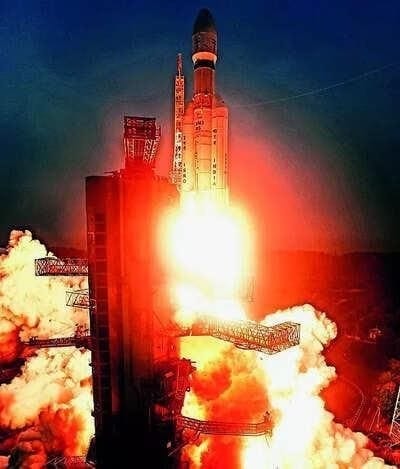
The Indian Space Research Organisation (ISRO) has successfully launched the GSAT-7R (CMS-03) communication satellite for the Indian Navy from the Satish Dhawan Space Centre in Sriharikota.
Key Takeaways
- The LVM3 rocket is ISRO's heaviest and most powerful launch vehicle.
- GSAT-7R enhances secure communications and maritime domain awareness for the Indian Navy.
- This launch marks a significant step towards India's self-reliance in defense space infrastructure.
Additional Details
- Launch Vehicle Mark-3 (LVM3): Formerly known as GSLV Mk-III, LVM3 is designed to carry payloads of up to 4 tonnes to Geostationary Transfer Orbit (GTO) and 8 tonnes to Low Earth Orbit (LEO).
- Configuration: It features a 3-stage system, including S200 solid boosters, an L110 liquid core, and a C25 cryogenic upper stage, providing high thrust and precision.
- Mission Legacy: LVM3 has successfully launched various missions, including Chandrayaan-2, Chandrayaan-3, and OneWeb satellites.
- Future Upgrade: Plans are in place to enhance its efficiency by replacing the current stages with a semi-cryogenic kerosene-liquid oxygen stage.
- GSAT-7R (CMS-03): This advanced satellite weighs approximately 4,410 kg and is the heaviest communication satellite launched from Indian soil, designed for secure communications across the Indian Ocean Region.
This launch not only reinforces India's capabilities in heavy launch vehicles but also strengthens its position within the global space economy.
GS3/Science and Technology
Potential Amendments in India's Nuclear Power Sector
 Why in News?
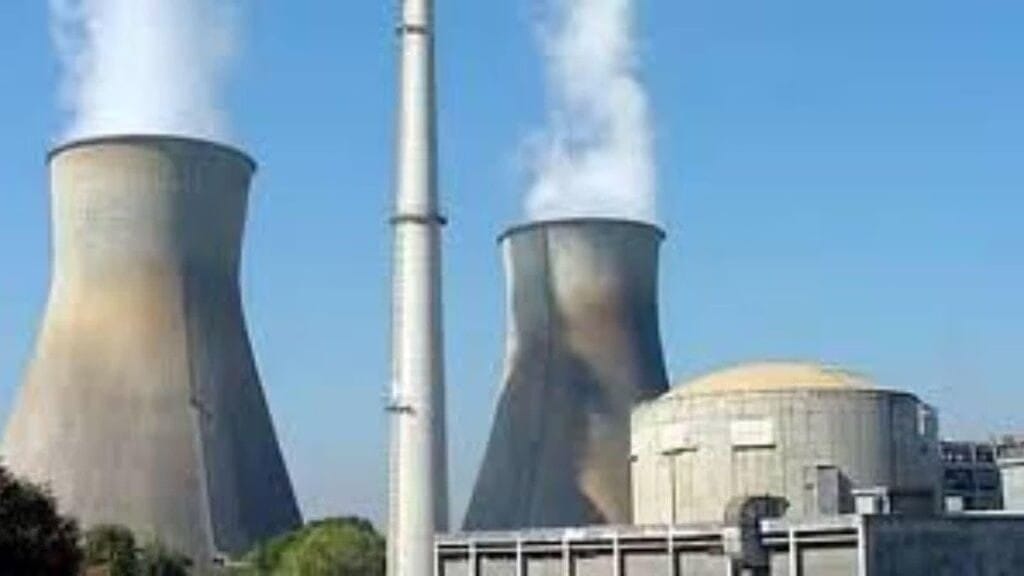
The Indian government is poised to introduce significant changes in the nuclear sector, which has been historically hindered by strict regulations and liability issues. Two proposed amendments to the Civil Liability for Nuclear Damage Act (CLNDA), 2010, and the Atomic Energy Act, 1962, aim to revitalize India's atomic energy policy by facilitating private and foreign investment, thereby addressing the urgent need for reliable energy sources amidst the growing reliance on renewable energy.
Key Takeaways
- Proposed amendments aim to ease legal constraints on nuclear energy, promoting private sector participation.
- Focus on Small Modular Reactors (SMRs) as a modern solution to energy needs.
- Potential for significant foreign investment and advanced technology integration.
Additional Details
- Current Challenges: India's nuclear sector has faced a state monopoly and stringent liability laws that have deterred private investments.
- Amendments Overview:
- The CLNDA is expected to be amended to ease supplier liability, which currently restricts foreign companies from engaging in the Indian nuclear market.
- The Atomic Energy Act, 1962, may be revised to allow private entities to participate in nuclear power generation, marking a historic shift.
- Small Modular Reactors (SMRs): These are compact, transportable nuclear reactors that can be built more efficiently and with enhanced safety features. Their development aligns India with global leaders in nuclear technology.
In summary, the anticipated amendments signal a transformative phase for India's nuclear energy policy, merging private investment with public interests to ensure a sustainable, secure, and carbon-neutral energy future.
GS3/Science and Technology
Rising Energy Demand of AI Data Centres
Introduction
India is looking into the use of Small Modular Reactors (SMRs) to meet the increasing electricity demand from AI-driven and data-intensive data centres.
Rising Power Demand from Data Centres
- The demand for data centres in India is being fueled by the need for data storage due to the Digital India initiative, data-localisation policies, a growing number of internet users, and the rollout of 5G.
- Global electricity supplied to data centres is expected to rise significantly, from about 460 TWh in 2024 to over 1,000 TWh by 2030 and approximately 1,300 TWh by 2035.
- AI workloads in data centres require a large number of Graphic Processing Units (GPUs), with individual racks consuming 80-150 KW compared to 15-20 KW for traditional enterprise servers.
- This computational intensity drives a huge demand for electricity, making AI the biggest driver of increased energy consumption in the data centre sector.
- Major tech companies like Google and Microsoft are turning to nuclear power solutions for reliable and carbon-free energy to meet this rising demand.
Need for Small Modular Reactors (SMRs)
- AI-driven data centres require sustainable and clean energy solutions to meet their rapidly increasing power demand.
- While renewable energy has been the initial choice for companies, it faces challenges of intermittency and insufficient storage. Nuclear power presents a viable solution by offering a clean, round-the-clock power supply.
- SMRs are preferred because they enhance safety, flexibility, scalability for incremental capacity addition, adaptability to remote or off-grid applications, and cost-effective construction through prefabrication.
What are Small Modular Reactors (SMRs)?
- Small modular reactors (SMRs) are advanced nuclear reactors with a power capacity of up to 300 MW(e) per unit, roughly one-third the generating capacity of traditional nuclear power plants.
- Small - physically a fraction of the size of a conventional nuclear power reactor.
- Modular - making it possible for systems and components to be factory-assembled and transported as a unit to a location for installation.
- Reactors - harnessing nuclear fission to generate heat to produce energy.
- There are four main types of SMR i.e., light water, high temperature gas, liquid metal, and molten salt.
- At present, only two Small Modular Reactor projects have become operational worldwide;
- Russia's Akademik Lomonosov floating power unit, equipped with two 35 MWe modules and in commercial use since 2020, and
- China's HTR-PM demonstration project, which was grid-connected in 2021 and achieved full commercial operations in 2023.
What are the Concerns?
- Regulatory Challenges: The current nuclear regulatory framework is primarily designed for large-scale reactors. The possibility of using SMRs to produce materials for nuclear warheads and co-locating them with military sites raises non-proliferation concerns.
- Legal Hurdles: India's Civil Liability for Nuclear Damage Act, 2010, channels operators' liability to equipment suppliers, deterring foreign investors due to financial risk concerns.
- High Initial Costs: Although SMRs are designed to be more cost-effective in the long run, the initial capital investment is significant.
- Waste Management: Handling and disposing of nuclear waste remains a significant challenge.
- Supply Chain and Manufacturing: Developing a robust supply chain for the components of SMRs and ensuring quality manufacturing processes are critical for their success.
Global SMR regulatory reforms
To address the challenges associated with Small Modular Reactors (SMRs), countries worldwide are reforming their regulations in six main ways:
- Technology-neutral frameworks: These frameworks replace large reactor-specific rules, allowing for a more flexible approach to SMR regulation.
- Streamlined licensing: This includes fleet approvals and combined construction-operating licences, making the licensing process more efficient.
- Modular manufacturing accommodation: This involves factory fabrication certification, allowing for the factory-based production of SMR components.
- International harmonisation: This is achieved through International Atomic Energy Agency (IAEA) standards and mutual design recognition, ensuring a consistent regulatory approach across countries.
- Risk-informed requirements: These adjust emergency planning zones and staffing requirements proportionate to the smaller facility risks associated with SMRs.
- Accelerated deployment pathways: This facilitates follow-on units, speeding up the deployment of SMRs.
India's efforts towards SMRs
- Research and development on SMRs are ongoing at the Bhabha Atomic Research Centre (BARC) in Mumbai.
- The Bharat Small Reactor (BSR) is a notable project under this initiative, aiming to re-engineer existing reactors with enhanced safety features and improved efficiency.
- India had announced a Rs 20,000 crore R&D mission for the development of small modular reactors (SMRs).
- India is also targeting the deployment of at least five indigenously developed reactors by 2033.
- India and France have launched a cooperation program focused on SMRs and advanced modular reactors (AMRs).
Way Ahead
- Data centres play a crucial role in India's digital economy and AI future, but their high energy consumption poses a sustainability challenge.
- Small Modular Reactors (SMRs) offer a strategic solution by providing reliable and green power, while also promoting domestic nuclear manufacturing and international collaborations.
- To realise this potential, it is essential to implement legislative reforms, address liability concerns, and ensure safety and public trust in SMR technology.
GS3/Science and Technology
Bharat NCAP 2.0
 Why in News?
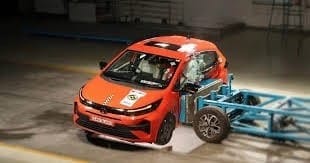
The Ministry of Road Transport and Highways has released a revised draft of the Bharat New Car Assessment Programme (Bharat NCAP), updating the 2023 version, which is valid until September 2027. This new draft significantly expands the programme's scope by introducing new mandatory crash tests, revised scoring criteria, and additional assessment areas. A notable change is the inclusion of Vulnerable Road User (VRU) protection tests, particularly focusing on pedestrian safety, which accounts for over 20% of road accident fatalities in India. For the first time, vehicles will be evaluated on their pedestrian safety features, including impact protection, braking systems, and design elements aimed at reducing injury risks. The overall goal of the revised Bharat NCAP is to enhance road safety by incentivizing manufacturers to produce vehicles that are more crashworthy and provide better protection for both occupants and pedestrians.
Key Takeaways
- Bharat NCAP 2.0 introduces mandatory crash tests and a revised star rating system.
- Focus on pedestrian safety with new assessments for VRUs.
- Expanded safety assessment framework covering five areas instead of three.
Additional Details
- Bharat NCAP: This is a voluntary vehicle safety rating system that evaluates cars beyond basic roadworthiness. It employs India-specific crash protocols, awarding a five-star safety rating to the best performers.
- Expanded Safety Assessment Framework:The Bharat NCAP 2025 now evaluates vehicles across five assessment areas:
- Safe Driving - 10%
- Accident Avoidance - 10%
- Crash Protection - 55%
- Vulnerable Road User Protection - 20%
- Post-Crash Safety - 5%
- More Comprehensive Crash Tests: The new version mandates five crash tests, including frontal and side impacts at various speeds, to assess real-world injury risks.
- Enhanced Injury Assessment: Utilizes Anthropomorphic Test Devices (ATDs) to evaluate injury risks for adult and child occupants across all seating positions.
- Protection for Vulnerable Road Users: Incorporates tests for assessing pedestrian and cyclist safety measures, addressing high pedestrian fatalities in India.
- Mandatory Impact Tests: Assess vehicle designs to minimize injuries during collisions, focusing on pedestrian legform and headform impacts.
- Post-Crash Safety Measures: Ensures that vehicles are designed to protect occupants after an accident, evaluating energy management for fire and electrical hazards.
- Revised Star Rating System: The thresholds for 4-star and 5-star ratings have been raised, and a minimum Adult Occupant Protection (AOP) score of 55% is required to qualify for 3 stars or above.
The Bharat NCAP 2.0 aims to establish stricter safety standards and enhance vehicle safety ratings, ultimately promoting safer driving conditions and reducing road fatalities.
FAQs on Science and Technology - 3
| 1. What is the National Blockchain Framework (NBF)? |  |
| 2. What is the Crew Escape System (CES) in the Gaganyaan Mission? | |
| 3. What are the key objectives of the CMS-03 satellite launch by ISRO? | |
| 4. Why has the government mandated sound alert devices for electric vehicles (EVs)? | |
| 5. What is significant about Google's Willow processor in the context of quantum computing? | |




