Last lesson Class 12 English Flamingo

Key Points of the Story
- The last lesson is by the author Alphonse Daudet.
- In the Last Lesson summary, the author narrates events about the year 1870 when France was captured by Bismarck led Prussian forces.
- Furthermore, the Lorraine and Alsace districts went under Prussian rule.
- There was the discontinuation of teaching French in these two districts.
- There was an order for the French teachers to leave. Consequently, M. Hamel was not able to stay in his old school.
- In spite of this, the last lesson from him was full of devotion and sincerity.
- One student of M. Hamel was afraid of him.
- There was an anticipation of punishment from this student when he came to school that day.
- However, he learnt that this will be his last lesson.
- Soon, he realized the importance of this subject.
- This story shows us how people feel when they don’t learn their language.
Detailed Summary
The story is narrated by a French boy named Franz, who is known for his laziness but has a sensitive nature and enjoys playing. Despite his aversion to studying French and his dislike for his teacher, M. Hamel, something significant occurs in their village in Alsace and Lorraine. The German authorities have ordered that German should replace French as the language of instruction in the local schools. This news coincides with M. Hamel's last day as a teacher, marking his retirement after a 40-year tenure.
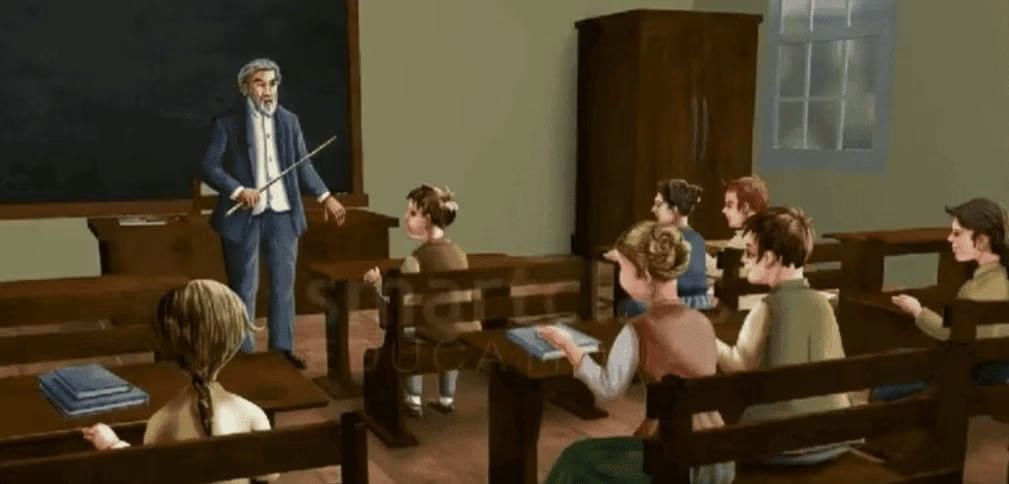 M. Hamel, the devoted French teacher, is deeply patriotic, nostalgic, and sorrowful on his final day. Villagers gather to honor and show respect for him. The village regrets not learning their mother tongue, French, when they had the chance.
Franz is shocked to discover that this is his last French lesson because he has not been diligent in learning the language. However, the realization of M. Hamel's departure ignites a sudden interest in him to learn French. He pays close attention and absorbs everything taught during this last lesson. As a result, Franz starts to admire and respect M. Hamel, replacing his prior feelings of hatred.
M. Hamel takes responsibility for the lack of enthusiasm in teaching and criticizes himself for not instilling a love for French in his students. He passionately praises the French language as the most logical and beautiful in the world, reflecting his deep patriotism and emotions. He urges the class to protect their language, emphasizing that it is a key to resisting oppression and regaining their freedom from the Germans. The people begin to recognize the importance of their mother tongue and attribute their defeat to their own illiteracy.
Franz realizes that a person's language is an inherent part of them, and it cannot be easily taken away, no matter how hard others may try.
Theme/ Message
The story highlights the importance of one's mother tongue as a symbol of identity, heritage, and resistance against oppression. It emphasizes the value of education and the regret that comes from neglecting it. Through M. Hamel’s patriotism and Franz’s realization, the story conveys that a language is not just a means of communication but a powerful tool for preserving culture and freedom.
Difficult Words
Word - Meaning
- Sawmill - a factory for cutting wood
- Drilling - exercising
- Tempting - attracting
- Resist - to stay away
- bulletin-board - a notice board for putting up the latest news and communication
- Apprentice - trainee
- a great bustle - a lot of noise created by many people
- in unison - at the same time
- rapping - striking
- counted on - depended upon
- commotion - noise and confusion
- Blushed - face turned red in colour due to shame
- Solemn - serious.
- Primer - basic reader of any language
- Thumbed - torn and damaged
- Gesture - a signal
- Thunderclap - used in comparison to refer to something startling or unexpected
- Wretches - here, it refers to an unfortunate happening
- Saar - a river which passes through France
- Nuisance - problem, burden
- Cranky - strange, short – tempered
- Sunday clothes - the best dress that a person has.
- Dreadful - frightening
- mixed up - confused
- Pretend - showto
- reproach - blame
- beetles - a large sized insect
- Cooed - the sound made by the pigeons
- Gazing - looking intently
- twined - twisted
- Trumpets - a musical instrument.
- Choked - became unable to speak due to strong emotions
|
30 videos|338 docs|100 tests
|
FAQs on Last lesson Class 12 English Flamingo
| 1. What are some common themes found in Humanities/Arts? |  |
| 2. How do Humanities and Arts intersect with each other? | |
| 3. Why are Humanities/Arts considered important in education? | |
| 4. How can studying Humanities/Arts benefit individuals in their career paths? | |
| 5. How can one incorporate Humanities/Arts into their daily life? | |





Exam
,past year papers
,Sample Paper
,mock tests for examination
,Last lesson Class 12 English Flamingo
,study material
,shortcuts and tricks
,practice quizzes
,ppt
,Free
,Last lesson Class 12 English Flamingo
,Objective type Questions
,Extra Questions
,Summary
,Viva Questions
,Previous Year Questions with Solutions
,video lectures
,Semester Notes
,Last lesson Class 12 English Flamingo
,Important questions
,MCQs
;



Summary - Last lesson Free PDF Download
Importance of Summary - Last lesson
Summary - Last lesson Notes
Summary - Last lesson Class 12 Questions
Study Summary - Last lesson on the App
|
© EduRev
|
Education Revolution
|


|




within 7 days!