Class 12 Exam > Class 12 Notes > English Class 12 > Summary: Poem 1 - My Mother at Sixty Six
Poem 1 - My Mother at Sixty Six Class 12 English Flamingo

Key Points of the Poem
- Authored by the renowned poet Kamala Das, My Mother at Sixty-Six of Class 12 English is a poem depicting human relationship.
- Human relationships are complicated and this poem does a brilliant job of eliciting the same through its verses.
- The summary of My Mother at Sixty-Six for Class 12 English will depict how the author has captured the nurtured bond between a daughter and her mother.
- The poem dwells on the feelings of the daughter who fears losing her mother.
- My Mother at Sixty-Six Summary provides an overview of the poem and what the author is trying to portray with the words.
Detailed Summary
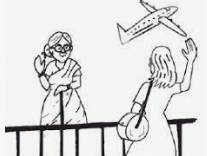
The sudden realization pangs at the heart of the daughter and she chooses to shift her attention by looking outside the window of the car. The scenery outside provides an upliftment to the daughter’s mood. The huge trees with the freshly sprinted green leaves, children playing cheerfully represented life, energy and vigor. Here, we see that the narrator is drifted back to her own childhood days where she remembers her mother as beautiful and young. This is in sharp contrast to the present scenario and this makes the daughter’s heart heavy.
As we read through the poem, we know that the daughter has reached the airport, where she is saddened by the fact that she has to depart from her mother. The author sees her mother in the backdrop of the dusky evening as begins to bid farewell. Here, the narrator compares the mother’s smile to the winters’ late-night moon. The poet has beautifully illustrated the sense by comparing the image of the aging mother with the light of the moon being obstructed by the haze and the fog. This metaphor is a representation of the old age of the mother.
We then see that the pain of separation makes the daughter more vulnerable as she is terrified of losing her mother unexpectedly. The daughter’s heart is filled with emotions of grief and she is overwhelmed at the thought of separating from her dear mother. However, we see that the daughter puts on a brave face and quietly smiles. She keeps her hopes up of seeing her mother and bids farewell to her mother with the words, “See You Soon, Amma”.
The narrator thus prevents the environment from getting too emotional and painful. Also, she does not want to leave her mother teary-eyed. The author says that the daughter wishes that her mother also lives her life fully and happily.
To summarize, My Mother of Sixty-Six is a beautiful poem describing the beautiful bond between a daughter and her mother. The key takeaway from the summary of My Mother at Sixty-Six is that aging is a process that is bound to happen inevitably. The journey of an individual starts in the womb of the mother. As a child, a person is full of life and is energetic and gradually the child becomes an adult. Eventually, the person moves towards his/her old age and then embraces death. This is the cycle of life. The author of My Mother at Sixty-Six does a great job of depicting how relationships between individuals become more consolidated with age. The thought of losing someone dear and close is unbearable and the author has beautifully depicted the same through the words of her poem.
Conclusion
Here, we have provided you with a summary of My Mother at Sixty-Six. The poem is an ode to the deep emotional bond shared by a daughter with her mother. My Mother at Sixty-Six Summary highlights the fear of separation in the mind of the narrator as she is confronted with the fact that her mother is approaching old age. The poem concludes on a high note as the daughter is hopeful that she will be reunited with her mother soon. The feelings of fear, anxiety, grief and hope have been vividly portrayed by the author in the poem.
Literary Devices
Imagery
Merry children spilling out of their homes: youthful and exuberant, spring of life-contrast to the morbid atmosphere inside the car – the old mother weak, frail, inactive.
Personification
Young trees sprinting – the sprinting movement of the trees rushing past signify youth, life or passage of time. The mother – travelling in the car-lifeless, helpless decayed by age. Her instinctive awareness leads to the familiar ache-painful realization of helplessness (cannot share her fears with her mother-fear stemmed out of unknown-didn’t want to worry her)-fear of separation-that childhood fear-inherent in all children-of losing one’s loved ones-fear of death.
RePetition
Smile and smile and smile: emphasis on the fact that she made a desperate effort to cover UP her guilt, anxiety and agonizing thought of her mother’s impending death by putting up a smile to bid her a cheerful adieu.
We highly appreciate your feedback regarding My Mother at Sixty-Six Poetic Devices. Please feel free to share your thoughts how you feel about this.
Difficult Words
Word - Meaning
- Driving - operating a car, steering
- Doze - nap, snooze
- Open-mouthed - agape, gaping
- Ashen - very pale, greyish
- Corpse - dead body, remains
- Realised - understood, grasped
- Pain - ache, discomfort
- Sprinting - dashing, rushing
- Merry - joyful, happy
- Children - kids, youngsters
- Spilling out - emerging, overflowing
- Standing - upright, on feet
- Yards - units of length, 3 feet
- Wan - pale, weak
- Pale - light in color, not dark
- Late - not on time, delayed
- Old - not young, aged
- Familiar - known, recognized
- Ache - pain, discomfort
The document Poem 1 - My Mother at Sixty Six Class 12 English Flamingo is a part of the Class 12 Course English Class 12.
All you need of Class 12 at this link: Class 12
|
29 videos|314 docs|82 tests
|
FAQs on Poem 1 - My Mother at Sixty Six Class 12 English Flamingo
| 1. What is the theme of the poem "My Mother at Sixty Six"? |  |
Ans. The theme of the poem "My Mother at Sixty Six" is the pain of separation and the fear of losing a loved one.
| 2. Who is the speaker in the poem "My Mother at Sixty Six"? | |
Ans. The speaker in the poem "My Mother at Sixty Six" is the daughter of the mother who is at the age of sixty-six.
| 3. What is the significance of "dark trees" in the poem "My Mother at Sixty Six"? | |
Ans. The "dark trees" in the poem "My Mother at Sixty Six" symbolize the unknown and the fear of the future. The daughter is afraid of losing her mother and is uncertain about what the future holds.
| 4. What is the emotional tone of the poem "My Mother at Sixty Six"? | |
Ans. The emotional tone of the poem "My Mother at Sixty Six" is one of sadness and fear. The daughter is afraid of losing her mother and is overwhelmed by her emotions.
| 5. What literary devices are used in the poem "My Mother at Sixty Six"? | |
Ans. The poem "My Mother at Sixty Six" uses several literary devices, including imagery, symbolism, and repetition. Imagery is used to create vivid descriptions of the scene, while symbolism is used to convey deeper meaning. The repetition of the phrase "I'm tired" emphasizes the daughter's emotional exhaustion and fear.
About this Document

131.7K Views

4.63/5
Rating

Oct 24, 2025
Last updated
Related Exams
Document Description: Summary: Poem 1 - My Mother at Sixty Six for Class 12 2025 is part of English Class 12 preparation.
The notes and questions for Summary: Poem 1 - My Mother at Sixty Six have been prepared according to the Class 12 exam syllabus. Information about Summary: Poem 1 - My Mother at Sixty Six covers topics
like and Summary: Poem 1 - My Mother at Sixty Six Example, for Class 12 2025 Exam. Find important definitions, questions, notes, meanings, examples, exercises and tests below for Summary: Poem 1 - My Mother at Sixty Six.
Introduction of Summary: Poem 1 - My Mother at Sixty Six in English is available as part of our English Class 12
for Class 12 & Summary: Poem 1 - My Mother at Sixty Six in Hindi for English Class 12 course.
Download more important topics related with notes, lectures and mock test series for Class 12
Exam by signing up for free. Class 12: Poem 1 - My Mother at Sixty Six Class 12 English Flamingo
Description
Full syllabus notes, lecture & questions for Poem 1 - My Mother at Sixty Six Class 12 English Flamingo - Class 12 | Plus excerises question with solution to help you revise complete syllabus for English Class 12 | Best notes, free PDF download
Information about Summary: Poem 1 - My Mother at Sixty Six
In this doc you can find the meaning of Summary: Poem 1 - My Mother at Sixty Six defined & explained in the simplest way possible. Besides explaining types of
Summary: Poem 1 - My Mother at Sixty Six theory, EduRev gives you an ample number of questions to practice Summary: Poem 1 - My Mother at Sixty Six tests, examples and also practice Class 12
tests


Related Searches
ppt
,past year papers
,Sample Paper
,Poem 1 - My Mother at Sixty Six Class 12 English Flamingo
,video lectures
,Previous Year Questions with Solutions
,Extra Questions
,mock tests for examination
,Important questions
,study material
,practice quizzes
,Poem 1 - My Mother at Sixty Six Class 12 English Flamingo
,Summary
,Exam
,MCQs
,shortcuts and tricks
,Objective type Questions
,Poem 1 - My Mother at Sixty Six Class 12 English Flamingo
,Semester Notes
,Viva Questions
,Free
;




Additional Information about Summary: Poem 1 - My Mother at Sixty Six for Class 12 Preparation
Summary: Poem 1 - My Mother at Sixty Six Free PDF Download
The Summary: Poem 1 - My Mother at Sixty Six is an invaluable resource that delves deep into the core of the Class 12 exam.
These study notes are curated by experts and cover all the essential topics and concepts, making your preparation more efficient and effective.
With the help of these notes, you can grasp complex subjects quickly, revise important points easily,
and reinforce your understanding of key concepts. The study notes are presented in a concise and easy-to-understand manner,
allowing you to optimize your learning process. Whether you're looking for best-recommended books, sample papers, study material,
or toppers' notes, this PDF has got you covered. Download the Summary: Poem 1 - My Mother at Sixty Six now and kickstart your journey towards success in the Class 12 exam.
Importance of Summary: Poem 1 - My Mother at Sixty Six
The importance of Summary: Poem 1 - My Mother at Sixty Six cannot be overstated, especially for Class 12 aspirants.
This document holds the key to success in the Class 12 exam.
It offers a detailed understanding of the concept, providing invaluable insights into the topic.
By knowing the concepts well in advance, students can plan their preparation effectively.
Utilize this indispensable guide for a well-rounded preparation and achieve your desired results.
Summary: Poem 1 - My Mother at Sixty Six Notes
Summary: Poem 1 - My Mother at Sixty Six Notes offer in-depth insights into the specific topic to help you master it with ease.
This comprehensive document covers all aspects related to Summary: Poem 1 - My Mother at Sixty Six.
It includes detailed information about the exam syllabus, recommended books, and study materials for a well-rounded preparation.
Practice papers and question papers enable you to assess your progress effectively.
Additionally, the paper analysis provides valuable tips for tackling the exam strategically.
Access to Toppers' notes gives you an edge in understanding complex concepts.
Whether you're a beginner or aiming for advanced proficiency, Summary: Poem 1 - My Mother at Sixty Six Notes on EduRev are your ultimate resource for success.
Summary: Poem 1 - My Mother at Sixty Six Class 12 Questions
The "Summary: Poem 1 - My Mother at Sixty Six Class 12 Questions" guide is a valuable resource for all aspiring students preparing for the
Class 12 exam. It focuses on providing a wide range of practice questions to help students gauge
their understanding of the exam topics. These questions cover the entire syllabus, ensuring comprehensive preparation.
The guide includes previous years' question papers for students to familiarize themselves with the exam's format and difficulty level.
Additionally, it offers subject-specific question banks, allowing students to focus on weak areas and improve their performance.
Study Summary: Poem 1 - My Mother at Sixty Six on the App
Students of Class 12 can study Summary: Poem 1 - My Mother at Sixty Six alongwith tests & analysis from the EduRev app,
which will help them while preparing for their exam. Apart from the Summary: Poem 1 - My Mother at Sixty Six,
students can also utilize the EduRev App for other study materials such as previous year question papers, syllabus, important questions, etc.
The EduRev App will make your learning easier as you can access it from anywhere you want.
The content of Summary: Poem 1 - My Mother at Sixty Six is prepared as per the latest Class 12 syllabus.
|
© EduRev
|
Education Revolution
|


|




Signup to see your scores
go up within 7 days!
Access 1000+ FREE Docs, Videos and Tests
Takes less than 10 seconds to signup