Political & Social Condition during Vedic Period | History for UPSC CSE PDF Download
| Table of contents |

|
| Political ConditionRig Vedic Period |
|
| Later Vedic Period |
|
| Social Condition |
|
| Position of Women |
|
| Education |
|
| Costumes and Jewellery |
|

Political Condition
Rig Vedic Period
Political Condition
- The earliest Aryan kingdoms were founded by four kings, Iksaku, Pramsu, Sudyunma and Saryata, all stated to be the sons of Manu Vaivasvata.
- The word rajan or raja in the Rigveda denoted a tribal chief and not a monarchical king.
- Kingship was generally hereditary but elected monarchies were not unknown.
- The chiefs received from the people voluntary offerings called bali.
- The king did not maintain any regular or standing army. But during the period of war different tribal groups called vrata, gana, grama, sardha formed a militia.
- In the Atharvaveda both the Sabha and Samiti are noted as two daughters of Prajapati.
- Sabha is mentioned in the Rig Veda and Atharva Veda as a hall of gambling.
- The term ‘Vidatha’ is found in the Rig Veda and also in the Athavaveda but its meaning is not clear.
- The term 'Parisad' literally means ‘sitting round’ is available in the earlier Vedic literature.
- The ‘jana’ was the highest political or social unit among the Vedic Aryans. ‘Jana’ was used in the Rigveda and in later literature in a collected sense i.e., to denote a people or a tribe.
Later Vedic Period
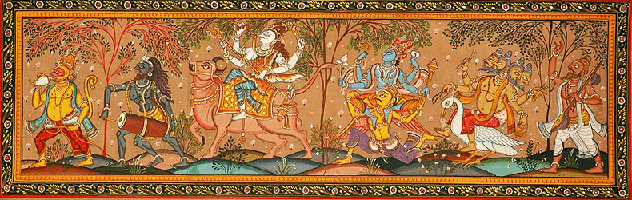 Later Vedic Period
- There was a greater demand for military leadership.
- Laid the foundation for the state powers and kingship.
- On the evidence of Nirukta, it is known that these were elected kings even in the later Vedic age.
- It is stated in the Gautama Dharmasastra that the king was the Lord of all, but not of Brahmanas.
- The Bharatas of the Rigveda now had lost its political strength and their place was taken by the Kurus and Panchalas
- Divine theory of kingship was widely accepted by the subjects.
- The king performed sacrifices like the vajapeya, the rajasuya, and the ashwamedha, to symbolise the degree of success achieved in realising their ambitions.
- Raja was used for an ordinary ruler, and adhiraja, samrat, virat, ekarat and sarvabhauma denoted various gradations of suzerains.
- Considerable decrease in the importance and function of the popular assemblies. i.e., sabha, samiti, etc.,
- The Samiti, which gradually began to disappear from the time of the Samhitas, completely faded out in the later Vedic age.
- Parisad evolved itself into a selected body of scholars dominated by priests.
Few More Information
- Aitareya Brahmana, one of the later Vedic texts, tells us how the gods and demons decided to have a raja (king) to lead them against their enemies. The gods appointed Soma (Indra) as their king. Thus the kingship came into existence in India as a military necessity.In the Atharva Veda the king Parikshit was described as a god among men.
- The Satapatha Brahmana describes the king as the invisible symbol of god Prajapati himself.
- In the Tandya Brahmana a sacrifice is mentioned whereby the officiating Brahmana would help the subjects to destroy the king.
The term ‘Vidatha’ is found in the Rig Veda and also in the Atharvaveda.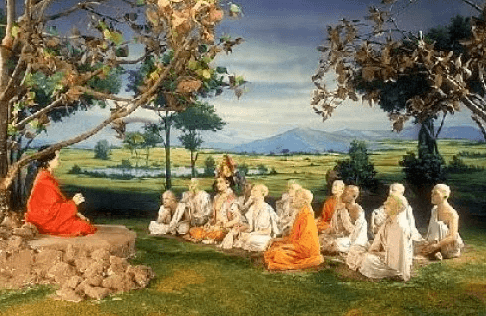 Aryans in Vedic period
- On the evidence of Nirukta, it is known that there were elected kings even in the later Vedic period.
- It is stated in the Gautama Dharmasutra that the king was the lord of all, but not of the Brahmanas.
- Suta and Gramani were also known as Raja Kartri or kingmaker.
- According to the Prasna Upanishad, one of the lowest rung of the ladder stood the village officials (adhikari) appointed by the king.
- ‘Gana’ the technical word for the republic, is found at forty-six places in the Rig Veda.
- There is at least one reference in the Rig Veda in which the leader of the gana is given the title of ‘Rajan’.
- The term Ibhas and Ibbyas apply to the class of king’s retainers.
- The terms upastis and stis apply to the group of king’s clients or dependents.
Social Condition
Rig Vedic Period
- There is nowhere in the Rig-veda any indication of the castes.
- The foundation of the Hindu social system based on the classes has to be traced from the Purusasukta of the Rigveda which divides society into four major classes. i.e. brahmana, rajanya, vaisya and sudra.
"I am a poet, my father is a doctor, and my mother is a grinder of corn" —RigVeda. - Food & Dress
- Besides wheat and barley, milk was the chief article of food.
- Meat of sheep and goats were rarely eaten by the people.
- The cow was deemed ‘aghnya’ (not to be slaughtered) because of her usefulness.
- Soma and Sura were the two intoxicating drinks.
- They generally used garments consisted of three parts, namely nivi or undergarment, vasa or a garment, and an adhivasa or an overgerment.
Eighteen Puranas
- Vishnu, Bhagavata, Naradiya, Garuda, Padma, and Varaha (all are Sauvika Puranas)
- Brahmanda, Brahmavaivanta, Markandya, Bhavishya and Vamana (all are Rajas Puranas)
- Siva, Linga, Skanda, Agni, Matsya and Kurma (all are Tamasa Puranas)
Position of Women
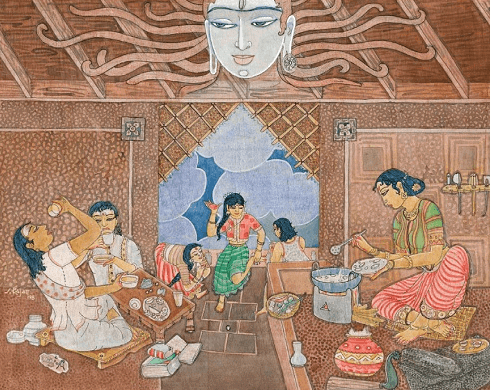 The journey of Indian Women
- In the Vedic period, women enjoyed a very respectable position in the society.
- The women took part in Vedic discussions, and mixed with men in popular festives.
- Non-Aryan women appear to have joined the army in large numbers.
- From the use of the words ‘Parividana’ and ‘Parivitta’ we may surmise that the brothers and sisters were married according to seniority.
- Widows were allowed to remarry, probably in such cases where the dead had left no son.
- The customs of child marriage, sati and slavery were unknown.
Later Vedic Period - The later Vedic Society was divided into four varnas called the brahmanas, rajanya or kshatriyas, vaishyas and shudras
- All the three higher varnas were entitled to upanayana.
- The Nishadas were non-Aryan lived in their villages.
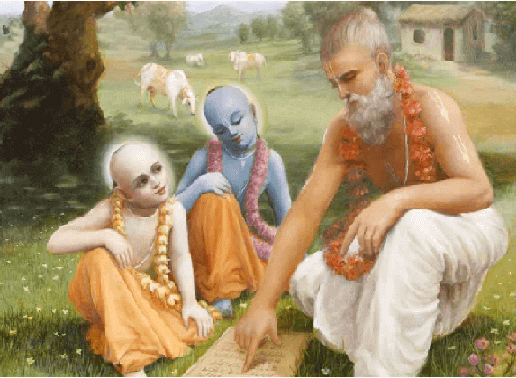 Rig vedic society
- The Vratyas were the members of the Aryan race but led nomadic life.
- Varna ashrama dharma was not well established in Vedic times. In the post Vedic texts we hear of four stages of life.
- The institution of gotra appeared in the later Vedic times.
- Gotra, Vis, and Jana may be corresponding to the viz., Zantu and Dagun of the Iranian world.
- In the Taittriya Aranyaka and the Aitareya Upanishads, ladies are directed to leave the hall of learning where some principles of gynaecology were explained, which are indelicate for the female ear.
- Women were excluded from inheriting the property.
- The Vedic chaturvarna (four castes) concept of social order came from the basic human tendencies and practices which were categorised under four major divisions for constitution of effective social bodies and proper distribution of social work among them.
The said four categories are based on the following tendency.
(a) Brahmanic tendency: thinking and practices of knowledge and understanding;
(b) Kshatriya tendency: aggression, establishment of power structure and order;
(c) Vaishya tendency: trade, production, technological pursuits and wealth; and
(d) Shudra tendency: service orientation, willingness to continue and fulfil the necessary functions.
- Purusasukta states that Brahmanas, Kshatriyas, Vaishyas and Shudras originated respectively from the mouth, arms, thighs and feet of the creator.
- In the Aitareya Brahmana the Vaisya is described as a cultivator or merchant who lived on his source of profit in trade.
- In the Aitareya Brahmana it has been said that the Shudra was not so much fortunate. He was servant of another, who could be expelled or punished at will.
- Varnashrama: The life of an individual Aryan was divided into four stages:
(a) Brahmacharya (b) Grirhasta
(c) Vanaprastha (d) Sanyasa
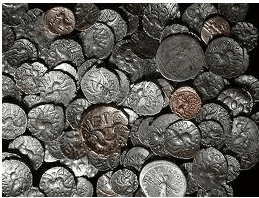 Coins used for tradingThe series of these four stages of an ideal span of life cover the study, the family life, the asceticism and the renunciation in a single life-time. The entire life passed through karma to take a perfect shape.
- The Family
- The ancient Hindu family included parents, children, grandchildren, uncles and their decendents, the adopted children, a number of servants and clients.
- The Child
- The jatakarma took place immediately after the birth by cutting the umbilical cord, by whispering sacred mantras and by placing a mixture of honey and ghee into his mouth.
- When the child became six months, the annaprasana ceremony (first feeding of solid food) was held.
- At the age of three, the kshura karma (tonsure) took place in case of the male child where the scalp of the child head being shaved.
- At the age of five, the child is taught the alphabets by a Brahmana priest or teacher.
- With his upanayana (sacred thread ceremony) at the age of nine, the boy attained the status of dvija or Brahmacharin. The Yajnopavita or Yajna Sutra (sacred thread) consisted of nine twisted strands made of cotton.
- The ceremony included the whispering of the sacred gayatri mantra into the ears of the dwija. The gayatri mantra runs thus:
“Let us meditate on the beautiful splendour of the god savitri (sun) that he may purify our souls.”
Education
The education of the boy or girl started with upanayana or the ceremonial initiation in Vedic studies. It was similar to the Indo-Iranian ceremony of navjot.
The first lessons of the Brahmana student was the performance of trisandhya (devotion for three times a day).
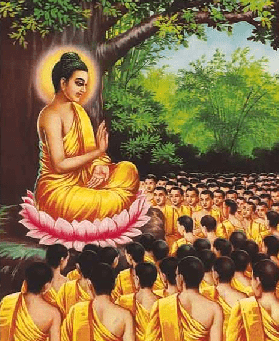 Ceremony was performed after the completion of 12 years of education The main subject of study was actually the Vedas. The other fields of study:
(a) Vedangas (commentaries on the Vedas)
(b) Kalpa (injunction)
(c) Shiksha (education)
(d) Chhandas (metrical composition)
(e) Nirukta (etymology)
(f) Jyotisa (astrology)
(g) Vyakarana (grammar)
(h) Jyotirvidya (astronomy)
(i) Aastrovidya (archery)
(j) Ganitshasra (mathematics)
(k) Sahitya (literature)
Costumes and Jewellery
- The lower paridhana or vasana was usually a piece of cloth fastened round the waist with a string. It is known as mekhala.
- The upper garment was called uttariya or chadar, a thin cotton shawl dropped over the shoulders. Later on dhoti and sari became popular.
- Vadhuya was a special garment worn by the bride at the marriage ceremony.
- Kuriya was a kind of head-ornament worn by females, specially brides.
- Nyochani was another type of bride’s ornament.
- Khadi was a kind of ring, worn as an armlet or an anklet.
- Mani was a kind of jewel worn round the neck.
- Rukma was an ornament worn on the breast.
|
216 videos|856 docs|219 tests
|
FAQs on Political & Social Condition during Vedic Period - History for UPSC CSE
| 1. What were the political conditions like during the Later Vedic Period? |  |
| 2. How were women positioned in the society during the Later Vedic Period? | |
| 3. What was the educational system like during the Later Vedic Period? | |
| 4. What were the typical costumes and jewellery worn during the Later Vedic Period? | |
| 5. How did the social structure evolve during the Later Vedic Period? | |




study material
,Semester Notes
,practice quizzes
,Political & Social Condition during Vedic Period | History for UPSC CSE
,Extra Questions
,Political & Social Condition during Vedic Period | History for UPSC CSE
,ppt
,MCQs
,Objective type Questions
,Free
,Political & Social Condition during Vedic Period | History for UPSC CSE
,mock tests for examination
,video lectures
,Previous Year Questions with Solutions
,Viva Questions
,shortcuts and tricks
,Sample Paper
,Exam
,Summary
,past year papers
,Important questions
;




Political & Social Condition during Vedic Period Free PDF Download
Importance of Political & Social Condition during Vedic Period
Political & Social Condition during Vedic Period Notes
Political & Social Condition during Vedic Period UPSC Questions
Study Political & Social Condition during Vedic Period on the App
|
© EduRev
|
Education Revolution
|


|




