CLAT Exam  >  CLAT Test  >  Logical Reasoning  >  Test: Logical Reasoning- 1 - CLAT MCQ

Logical Reasoning- 1 - CLAT Reasoning Free MCQ Test with solutions


MCQ Practice Test & Solutions: Test: Logical Reasoning- 1 (24 Questions)

You can prepare effectively for CLAT Logical Reasoning for CLAT with this dedicated MCQ Practice Test (available with solutions) on the important topic of "Test: Logical Reasoning- 1". These 24 questions have been designed by the experts with the latest curriculum of CLAT 2026, to help you master the concept.

Test Highlights:

  • - Format: Multiple Choice Questions (MCQ)
  • - Duration: 30 minutes
  • - Number of Questions: 24

Sign up on EduRev for free to attempt this test and track your preparation progress.

Test: Logical Reasoning- 1 - Question 1

Which of the following is a correct expression of the author’s opinion as stated in the passage regarding the nature of waiting?

Detailed Solution: Question 1

Option (b) is correct. The passage reflects on the difficult nature of waiting but also identifies it as an opportunity to focus on the present moment. The author discusses how the pandemic has forced a reevaluation of waiting, leading to a deeper appreciation of the present despite the stresses and griefs it brings. Option (a) is incorrect because the author does not claim that waiting is universally positive; rather, it is acknowledged as challenging. Option (c) is incorrect as the passage criticizes, rather than praises, the commercialization of annihilating waiting. Option (d) is incorrect because the author does not advocate for the eradication of waiting; instead, they discuss learning from the experience of waiting during the pandemic. Hence (b).

Test: Logical Reasoning- 1 - Question 2

Which of the following judgements most closely conforms to the principle stated above regarding the role of advent in modem society?

Detailed Solution: Question 2

Option (b) is correct. The passage discusses advent as a period of codified waiting that involves various rituals and traditions, both religious and secular. It suggests that advent offers a time for reflection and anticipation of both Christmas and the change in seasons, serving as a reminder and providing solace during the winter months. This conforms to the principle that advent holds meaning and offers a period of contemplation for people regardless of their religious beliefs. Option (a) is incorrect because the passage does not advocate for secularizing advent but discusses its importance to both believers and non-believers. Option (c) is incorrect because the passage values the tradition of advent, highlighting its role in modern society rather than suggesting its replacement. Option (d) is incorrect because the passage criticizes the commercialization of advent, suggesting it undermines rather than enhances its relevance. Hence (b).

Test: Logical Reasoning- 1 - Question 3

Based on the author’s discussion of the pandemic’s impact on societal behavior, which of the following must necessarily be true about the experience of waiting during the pandemic?

Detailed Solution: Question 3

Option (c) is correct. The passage reflects on the imposed waits during the pandemic and how they have led to a forced reevaluation of the concept of waiting. The author discusses how this situation has brought both benefits, such as a focused appreciation of the present, and challenges, such as dealing with uncertain waits without a clear endpoint. Option (a) is incorrect as the passage explicitly states that, despite technological conveniences, the pandemic has reintroduced the experience of waiting in various forms. Option (b) is incorrect because the passage does not claim that all waits have been universally embraced; it acknowledges that some waits have been aggravating. Option (d) is incorrect because it suggests uniformily in the experience of waiting, whereas the passage indicates that the waits have varied in their manageability and impact. Hence (c).

Test: Logical Reasoning- 1 - Question 4

Which of the following would support the author’s conclusion that good things come to those who wait, but only if waiting is viewed as a process rather than an outcome?

Detailed Solution: Question 4

Option (b) is correct. It aligns with the author’s nuanced view of waiting, as mentioned in the passage. The author suggests that waiting can be beneficial if treated as a valuable process that enhances personal growth and mindfulness, rather than merely anticipating an end result. Studies indicating that individuals who embrace the process of waiting develop resilience and a greater appreciation for outcomes directly support this view, reinforcing the idea that the act of waiting itself can be enriching. Option (a) is incorrect because it contradicts the author’s premise that there is value in waiting. Option (c) is incorrect as it presents a general dislike for waiting, which does not support the author’s conclusion about the benefits of embracing the waiting process. Option (d) is incorrect because it suggests that waiting has no impact, while the author argues that the process of waiting is beneficial when properly appreciated. Hence (b).

Test: Logical Reasoning- 1 - Question 5

What can be logically concluded from the sentence 'the production, which first premiered in London in November 1995, ruffled feathers in many ways, because the swans, until then female roles, were played by male dancers.*?

Detailed Solution: Question 5

Option (b) is correct. The sentence states that the production "ruffled feathers," meaning it caused controversy or challenged expectations. The reason given is that male dancers played roles traditionally performed by females, indicating a break from the convention that likely sparked discussion or debate. Options (a) and (d) do not reflect that controversy and discussion that is expressed in the phrase ‘ruffled feathers’. Hence (b) .

Test: Logical Reasoning- 1 - Question 6

What can be inferred from the line, "But, I knew I wasn’t going to do that. I knew I had a good idea. Whether people would like it or not, that I didn't know*.

Detailed Solution: Question 6

Option (b) is correct. The sentence shows that the speaker was confident in his idea ("I knew I had a good idea") but was uncertain about whether others would like it. This suggests self-assurance in his concept while acknowledging the unpredictability of public reception. Option (a) with ‘unsure ‘and ‘abandoning’ is incorrect. Similarly option (c) is ruled out. Option (d) is contrary to what is expressed in the passage. Hence (b).

Test: Logical Reasoning- 1 - Question 7

Based on the information given in the passage, what cannot be rightly concluded about Matthew Bourne?

Detailed Solution: Question 7

Option (b) is correct. The last few lines of the passage establish options (a), (c) and (d) to be correct. The underlined parts indicate these, ‘a lot of people thought it was a folly". "No one could really imagine what it would be like, I think," he says. "If you'd been asked what ballet looks like, I think the image of female swans, the dancers, the tutus, was the classical look anyone would imagine."(this shows that he was a maverick, option (c) is established) "They said things like 'he's not the right person to do a new version of Swan Lake, (this indicates that he did not work according to the public expectations and preferences, option (b) contradicted) he’s known for humour and a jokey approach (this establishes option (d)) to things, for parody.' I was called 'the bad boy of the ballet’ - I'm not even from the ballet world - and 'the Damien Hirst of Dance'. They thought it was going to be a big send up and there were a lot of people who were either doubting it, or excited that this funny piece was going to happen. "But I knew I wasn't going to do that. I knew I had a good idea. Whether people would like it or not, that I didn't know.” (Option fa) is rightly established). Hence (b).

Test: Logical Reasoning- 1 - Question 8

With which of the following will the author least likely agree?

Detailed Solution: Question 8

Option (b) is correct. This is in contradiction to what is conveyed in the passage about the people’s expectations. As is given in the second last paragraph, When it was announced that Bourne was bringing his own version, he remembers that "a lot of people thought it was a folly". Option (a) is what the author believes that the first premier ruffled feathers, same as ‘raised eyebrows’ which means surprised and disapproving of something that happens not according to the ordinary and normal. This also establishes option (c) to be in agreement with the author’s opinions. Hence (b).

Test: Logical Reasoning- 1 - Question 9

Which of the following is the likely assumption made in the sentence, 'His big idea he recalls' was that all the swans would be male. Eveiything else about the production flowed from that one simple idea.?

Detailed Solution: Question 9

Option (b) is correct. The sentence suggests that the concept of male swans was the foundation of the entire production, meaning all other creative choices were influenced by this decision. This implies that it was a defining and central element rather than a minor or secondary choice. On this basis the rest of the options can be eliminated. Hence (b).

Test: Logical Reasoning- 1 - Question 10

Based on the passage, which of the following would support the author’s conclusion that regional theatres play a crucial role in fostering community bonds?

Detailed Solution: Question 10

Option (d) is correct. The passage emphasizes the role of regional theatres as community hubs that engage with various local groups, enhancing community bonds through diverse activities. This directly supports the author’s conclusion about their crucial role in fostering community connections. Option (a) is incorrect as it focuses on the financial aspect rather than the community-building role of theatres. Option (b) is incorrect because the closure of theatres would weaken, not support, the author’s argument about their importance. Option (c) is incorrect as it describes a disparity in investment rather than directly supporting the idea that regional theatres foster community bonds. Hence (d).

Test: Logical Reasoning- 1 - Question 11

Which of the following, if true, would most strengthen the author’s argument about the necessity of adequate resources for regional theatres to serve their communities effectively?

Detailed Solution: Question 11

Option (a) is correct. It aligns with the author’s assertion that regional theatres struggle to present new works and maintain facilities due to financial constraints. If it’s true that those receiving adequate funding can host new productions and maintain their facilities, it directly supports the necessity of adequate resources for these theatres to serve their communities effectively. Option (b) is incorrect as it contradicts the passage’s emphasis on regional theatres engaging in community-oriented activities. Option (c) is incorrect because it undermines the author’s claim about the impact of reduced funding on theatre operations. Option (d) is incorrect as it opposes the author’s viewpoint on the importance of regional theatres, suggesting they are not worth funding. Hence (a).

Test: Logical Reasoning- 1 - Question 12

How does the author suggest that regional theatres have adapted to financial and cultural challenges in the UK?

Detailed Solution: Question 12

Option (b) is correct. The passage details how regional theatres have adapted to challenges by increasingly involving themselves with local groups and hosting a variety of community activities, thus reinventing themselves as crucial community hubs. This adaptation helps them weave more intimately into the social fabric despite financial hardships. Option (a) is incorrect because it oversimplifies the adaptation strategies by focusing only on traditional productions, which the passage does not specifically endorse as the primary strategy. Option (c) is incorrect as the passage indicates that reliance on government funding is problematic due to cuts, not a solution. Option (d) is incorrect because it directly contradicts the passage’s emphasis on community engagement as a key adaptation strategy for regional theatres. Hence (b).

Test: Logical Reasoning- 1 - Question 13

Which of the following is a correct expression of the author’s opinion as stated in the passage regarding the impact of reduced funding on regional theatres?

Detailed Solution: Question 13

Option (b) is correct. The passage explicitly states that regional theatres face difficulties in presenting new works and maintaining their facilities due to recent financial constraints, including reduced capital grants and decreased local arts funding. This directly reflects the author’s opinion on the negative impact of reduced funding. Option (a) is incorrect because, while suggesting a decline in quality, it is not explicitly supported by the passage which focuses more on the variety and maintenance of productions. Option (c) is incorrect as it contradicts the passage’s clear statement about the detrimental effects of reduced funding. Option (d) is incorrect because the passage suggests that while theatres are finding innovative solutions, the overall tone indicates that reduced funding is a challenge rather than a benefit. Hence (b).

Test: Logical Reasoning- 1 - Question 14

Based on the author’s arguments, which of the following must necessarily be true about the cultural disparity between London and other regions in the UK?

Detailed Solution: Question 14

Option (a) is correct. The passage discusses a growing disparity between the bustling stages of London and the rest of the country, implying that London’s arts scene is more robust, likely due to better funding or more attention. This aligns with the stated cultural disconnect that might isolate London’s artistic life from broader national narratives. Option (b) is incorrect as the passage does not claim that regional arts scenes are entirely dependent on London for support or creativity. Option (c) is incorrect because the passage actually praises regional theatres for their efforts to engage with communities and host diverse activities, suggesting they do value producing quality events. Option (d) is incorrect as the passage specifically notes a disparity, not a uniform decline, indicating that London’s arts scene might be less affected by economic challenges compared to other regions. Hence (a).

Test: Logical Reasoning- 1 - Question 15

What can be inferred about the relationship between auditor hesitancy to issue going concern warnings and the financial stability of the audited companies?

Detailed Solution: Question 15

Option (d) is correct. It aligns with the discussion on how auditors' hesitancy to issue warnings can lead to a worsening of financial uncertainties, potentially harming the company further by not addressing underlying issues early. Option (a) suggests a direct contribution to failures, which is too strong a conclusion without evidence of direct causation. Option (b) is incorrect as it inaccurately posits that hesitancy in disclosure correlates with financial stability, which the passage does not support. Option (c) incorrectly interprets hesitancy as a sign of confidence, whereas the passage implies that such hesitancy often stems from auditors' difficulties in assessing future threats or potential conflicts of interest. Hence (d).

Test: Logical Reasoning- 1 - Question 16

Which of the following is an assumption underlying the argument that the implementation of a stronger audit watchdog could reduce the number of corporate collapses?

Detailed Solution: Question 16

Option (b) is correct. It implies an assumption that strengthening the audit watchdog would enhance auditor performance, thus potentially reducing corporate collapses, which aligns with the concern over inadequate audit performance and regulation. Option (a) is incorrect as it contradicts the underlying premise of needing a stronger watchdog. Option (c) is misleading because it diverts the focus to external causes of collapses, which does not directly relate to the effectiveness of audit oversight. Option (d) falsely assumes auditors' general negligence, which is not suggested as a systemic issue in the passage. Hence (b).

Test: Logical Reasoning- 1 - Question 17

Which of the following, if true, would most strengthen the argument that increasing auditor skepticism could lead to more accurate identification of potential corporate failures?

Detailed Solution: Question 17

Option (c) is correct. It directly links increased skepticism with tangible outcomes (a decline in corporate fraud), thereby supporting the argument that such skepticism helps in more accurately identifying potential corporate failures. Option (a), while relevant, does not directly link training in critical analysis to the effectiveness of identifying failures but rather suggests improved general skills. Option (b) introduces a perception of trust, which, although positive, does not directly substantiate the argument about the accuracy of identifying failures. Option (d) focuses on the effects of regulations rather than the direct impact of auditor skepticism. Hence (c).

Test: Logical Reasoning- 1 - Question 18

What evidence might weaken the claim that high pay for audit partners is justified by their performance in detecting financial discrepancies?

Detailed Solution: Question 18

Option (b) is correct. It directly challenges the justification for high pay based on performance by highlighting an increase in penalties for failures in their primaiy duty— detecting financial discrepancies. Option (a) is misleading because higher firm profitability does not necessarily correlate with individual partner performance in detecting discrepancies. Option (c) introduces information about salary growth relative to inflation, which is a concern but does not directly address performance in their auditing roles. Option (d) is misleading, suggesting high client satisfaction might justify high pay, but it doesn’t specifically address the effectiveness of detecting discrepancies, which is the core issue. Hence (b).

Test: Logical Reasoning- 1 - Question 19

Which of the following best represents the summary of the passage?

Detailed Solution: Question 19

Option (c) is correct. It encapsulates the main points about the issues with auditor performance and regulatoiy effectiveness leading to corporate failures, as outlined in the passage. Option (a) misleads by suggesting that enhanced scrutiny is already mandated, which the passage critiques as necessary but unimplemented. Option (b) focuses only on the relationship between auditor hesitancy and corporate collapses, which is a specific aspect rather than a comprehensive summary. Option (d) narrows the focus to the relationship between pay and performance, omitting broader regulatory and performance issues discussed in the passage. Hence (c).

Test: Logical Reasoning- 1 - Question 20

Who among the following faces C?

Detailed Solution: Question 20


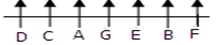
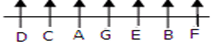
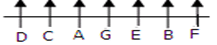
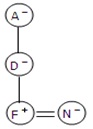
Step 3: Three persons sit between B and F, who do not face G

Step 4: J sits immediately left of D but does not face C


Step 5 : Two persons sit between I and G, none of them sits at the end.

Step 6: The one who faces K sits 2nd right to L. C sits at one of the ends. (HERE THE SECOND SEQUENCE IS RULED OUT)

Test: Logical Reasoning- 1 - Question 21

How many persons sit to the right of H ?

Detailed Solution: Question 21


Step 3: Three persons sit between B and F, who do not face G

Step 4: J sits immediately left of D but does not face C


Step 5 : Two persons sit between I and G, none of them sits at the end.

Step 6: The one who faces K sits 2nd right to L. C sits at one of the ends. (HERE THE SECOND SEQUENCE IS RULED OUT)

Test: Logical Reasoning- 1 - Question 22

Three of the following four form a group, who among the following does not belong to that group?

Detailed Solution: Question 22

Option (b) is correct. Because all except K are sitting at the comers.


Step 3: Three persons sit between B and F, who do not face G

Step 4: J sits immediately left of D but does not face C


Step 5 : Two persons sit between I and G, none of them sits at the end.

Step 6: The one who faces K sits 2nd right to L. C sits at one of the ends. (HERE THE SECOND SEQUENCE IS RULED OUT)

Test: Logical Reasoning- 1 - Question 23

If in a certain way, A is related to J, K is related to H, then who among the following is related to D?

Detailed Solution: Question 23


Step 3: Three persons sit between B and F, who do not face G

Step 4: J sits immediately left of D but does not face C


Step 5 : Two persons sit between I and G, none of them sits at the end.

Step 6: The one who faces K sits 2nd right to L. C sits at one of the ends. (HERE THE SECOND SEQUENCE IS RULED OUT)

Test: Logical Reasoning- 1 - Question 24

Who among the following sits 3rd to left of K ?

Detailed Solution: Question 24


Step 3: Three persons sit between B and F, who do not face G

Step 4: J sits immediately left of D but does not face C


Step 5 : Two persons sit between I and G, none of them sits at the end.

Step 6: The one who faces K sits 2nd right to L. C sits at one of the ends. (HERE THE SECOND SEQUENCE IS RULED OUT)

39 videos|158 docs|75 tests
Information about Test: Logical Reasoning- 1 Page
In this test you can find the Exam questions for Test: Logical Reasoning- 1 solved & explained in the simplest way possible. Besides giving Questions and answers for Test: Logical Reasoning- 1, EduRev gives you an ample number of Online tests for practice
39 videos|158 docs|75 tests
Download as PDF