


All Exams > NEET > 1 Year Dropper's Course for NEET > All Questions
All questions of Progress Tests for NEET Exam
Consider the following-
(a) Neural signals through the sympathetic nerves can increase cardiac output
(b) Parasympathetic neural signal decrease heart beat
How many CORRECT?- a)Only a
- b)Both correct
- c)Only b
- d)Both wrong
Correct answer is option 'B'. Can you explain this answer?
Consider the following-
(a) Neural signals through the sympathetic nerves can increase cardiac output
(b) Parasympathetic neural signal decrease heart beat
How many CORRECT?
(a) Neural signals through the sympathetic nerves can increase cardiac output
(b) Parasympathetic neural signal decrease heart beat
How many CORRECT?
a)
Only a
b)
Both correct
c)
Only b
d)
Both wrong
 | Rohit Jain answered |
Both statements are correct.
(a) Neural signals through the sympathetic nerves can increase cardiac output by increasing the heart rate and stroke volume. The sympathetic nervous system is activated in response to stress, exercise, and other factors that require increased blood flow to the body.
(b) Parasympathetic neural signals, which are mediated by the vagus nerve, decrease heart rate by slowing down the firing rate of the SA node. This is also known as vagal tone. Parasympathetic activity is highest during periods of rest and relaxation when the body does not require as much blood flow.

The outer pleural membrane of lungs are in close contact with the ______________ and the inner pleural membrane is in contact with the___________.- a)lungs surface, pleural lining
- b)pleural lining, lung surface
- c) thoracic lining, lung surface
- d)cardiac surface, lung surface
Correct answer is option 'C'. Can you explain this answer?
The outer pleural membrane of lungs are in close contact with the ______________ and the inner pleural membrane is in contact with the___________.
a)
lungs surface, pleural lining
b)
pleural lining, lung surface
c)
thoracic lining, lung surface
d)
cardiac surface, lung surface
 | Meera Singh answered |
A fluid filled double membranous layer that surrounds the lungs is called pleura, and fluid is pleural fluid in between them. The outer pleural membrane is in close contact with the thoracic lining whereas, the inner pleural membrane is in contact with the lung surface. These collectively reduce friction on lung's surface. 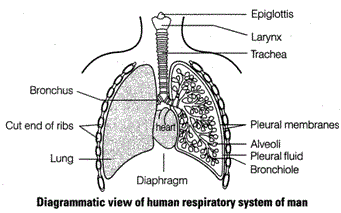
Nissl’s granules are absent in-- a)Dendrons and cyton
- b)Axon
- c)Cyton and Axon
- d)Cyton
Correct answer is option 'B'. Can you explain this answer?
Nissl’s granules are absent in-
a)
Dendrons and cyton
b)
Axon
c)
Cyton and Axon
d)
Cyton
| | Sadiya Siddique answered |
Nissl's granules are only present in cyton and dendrons and not in axons . they help mainly in protein synthesis. thus, op B.
Which condition is not Require for erythroblastosis foetalis to develop-- a)Mother Rh –ve
- b)First child Rh +ve
- c)Mother Rh +ve
- d)second child Rh –ve
Correct answer is option 'C'. Can you explain this answer?
Which condition is not Require for erythroblastosis foetalis to develop-
a)
Mother Rh –ve
b)
First child Rh +ve
c)
Mother Rh +ve
d)
second child Rh –ve
 | Ved Patidar answered |
Mother Rh+ve,,because when mother has Rh +ve then erythroblastosis foetalis is not complete or second progeny is not die. And for erythroblastosis foetalis required condition is mother has Rh-ve and Father has Rh+ve.
Which is correct regarding basophils -- a)Most abundant cell
- b)involve in blood clotting
- c)secrete heparin ,histamine and serotonin
- d)non of the above
Correct answer is option 'C'. Can you explain this answer?
Which is correct regarding basophils -
a)
Most abundant cell
b)
involve in blood clotting
c)
secrete heparin ,histamine and serotonin
d)
non of the above
 | Supriya Senapati answered |
The answer is C.becauae basophills are least common of granulocytes which are involved for inflammatory reactions during immune response. when these are activated ,these granulate to secrete heparin, histamine and seretonin.
Consider the following-
(a) striation is due to distribution pattern of actin and myosin
(b) each dark band have both actin and myosin
how many correct- - a)only a
- b)only b
- c)both correct
- d)both wrong
Correct answer is option 'C'. Can you explain this answer?
Consider the following-
(a) striation is due to distribution pattern of actin and myosin
(b) each dark band have both actin and myosin
how many correct-
(a) striation is due to distribution pattern of actin and myosin
(b) each dark band have both actin and myosin
how many correct-
a)
only a
b)
only b
c)
both correct
d)
both wrong
 | Ved Patidar answered |
Both are correct because striation is due to distribution of two proteins actin and myosin(contractive protein). And dark band is also known as A band.
Which of the following is not conducting part in respiratory system- - a)bronchi
- b)terminal bronchiole
- c)alveoli
- d)secondary bronchiole
Correct answer is option 'C'. Can you explain this answer?
Which of the following is not conducting part in respiratory system-
a)
bronchi
b)
terminal bronchiole
c)
alveoli
d)
secondary bronchiole
 | Vijay Bansal answered |
Human Respiratory System
The respiratory system consists of all the organs involved in breathing. These include the nose, pharynx, larynx, trachea, bronchi and lungs. The respiratory system does two very important things: it brings oxygen into our bodies, which we need for our cells to live and function properly; and it helps us get rid of carbon dioxide, which is a waste product of cellular function. The nose, pharynx, larynx, trachea and bronchi all work like a system of pipes through which the air is funnelled down into our lungs. There, in very small air sacs called alveoli, oxygen is brought into the bloodstream and carbon dioxide is pushed from the blood out into the air. When something goes wrong with part of the respiratory system, such as an infection like pneumonia, it makes it harder for us to get the oxygen we need and to get rid of the waste product carbon dioxide. Common respiratory symptoms include breathlessness, cough, and chest pain.
Consider the following matched about number of bones-
(1) thoracic vertebrae- 12
(2) floating ribs – 11th and 12th
(3) ankle bones - 8
(4) phalanges - 15
How many are correctly matched-- a)one
- b)two
- c)three
- d)four
Correct answer is option 'B'. Can you explain this answer?
Consider the following matched about number of bones-
(1) thoracic vertebrae- 12
(2) floating ribs – 11th and 12th
(3) ankle bones - 8
(4) phalanges - 15
How many are correctly matched-
(1) thoracic vertebrae- 12
(2) floating ribs – 11th and 12th
(3) ankle bones - 8
(4) phalanges - 15
How many are correctly matched-
a)
one
b)
two
c)
three
d)
four
 | Simran Rajput answered |
Thoracic consists of 12 bones and the bones of last pair (11th and 12th ) are called floating ribs or false bones 1 and 2 options are right. options 3 and 4 are wrong because phalanges are 14 and ankle bones are 7 suming up all answer is 'b'
Which of the following is wrongly matched-- a)Alveolar air- pO2 – 104mmHg
- b)Systemic vein pO2 – 40mmHg
- c)Systemic artery pO2 – 95mmHg
- d)Tissue pO2 – 45mmHg
Correct answer is option 'D'. Can you explain this answer?
Which of the following is wrongly matched-
a)
Alveolar air- pO2 – 104mmHg
b)
Systemic vein pO2 – 40mmHg
c)
Systemic artery pO2 – 95mmHg
d)
Tissue pO2 – 45mmHg
 | Rajni Kokate answered |
Correct option is d) . bcoz tissue pO2 - 40mmHg.
refer NCERT textbook
refer NCERT textbook
Consider the following-
(a) In cortical nephron loop of henle is very long and runs deep into medulla
(b) A fall in GFR can activate the JG cells to release renin which can stimulate the Glomerular blood flow and bring GFR normal
Which of the above statement is correct?- a)Only a
- b)Only b
- c)Both correct
- d)Both wrong
Correct answer is option 'B'. Can you explain this answer?
Consider the following-
(a) In cortical nephron loop of henle is very long and runs deep into medulla
(b) A fall in GFR can activate the JG cells to release renin which can stimulate the Glomerular blood flow and bring GFR normal
Which of the above statement is correct?
(a) In cortical nephron loop of henle is very long and runs deep into medulla
(b) A fall in GFR can activate the JG cells to release renin which can stimulate the Glomerular blood flow and bring GFR normal
Which of the above statement is correct?
a)
Only a
b)
Only b
c)
Both correct
d)
Both wrong
 | Nuzhat Fateema answered |
Option a_ cortical nephron are present in cortex region (outer) and loop of henle is short not run deep into medulla
option b is correct becoz low BP decreases gfr which release renin from JG cell
option b is correct becoz low BP decreases gfr which release renin from JG cell
A particle A of mass 10/7 kg is moving in the positive direction of x. Its initial position is x = 0 & initial velocity is 1 m/s. The velocity at x = 10 is: (use the graph given)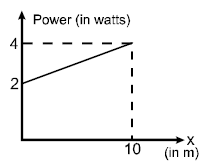
- a)4 m/s
- b)2 m/s
- c)3√2 m/s
- d)100/3 m/s
Correct answer is option 'A'. Can you explain this answer?
A particle A of mass 10/7 kg is moving in the positive direction of x. Its initial position is x = 0 & initial velocity is 1 m/s. The velocity at x = 10 is: (use the graph given)
a)
4 m/s
b)
2 m/s
c)
3√2 m/s
d)
100/3 m/s
| | Wahid Khan answered |
Area under P –x graph =
=
from graph ;
∴ v = 4 m/s
ALITER : from graph
P = 0.2 x + 2 or
or mv2 dv = (0.2 x + 2) dx
Now integrate both sides,
⇒ v = 4 m/s
=
from graph ;
∴ v = 4 m/s
ALITER : from graph
P = 0.2 x + 2 or
or mv2 dv = (0.2 x + 2) dx
Now integrate both sides,
⇒ v = 4 m/s
The GFR/day in a healthy adult is-- a)5 L
- b)180 L
- c)200 L
- d)20 L
Correct answer is option 'B'. Can you explain this answer?
The GFR/day in a healthy adult is-
a)
5 L
b)
180 L
c)
200 L
d)
20 L
| | Archisha Sharma answered |
It is 180L/day .. It is given in NCERT and in terms of ml it is 125 ml /day ..
A coin is released inside a lift at a height of 2 m from the floor of the lift. The height of the lift is 10 m. The lift is moving with an acceleration of 11 m/s2 downwards. The time after which the coin will strike the lift is : - a)4 s
- b)2 s
- c)

- d)

Correct answer is option 'A'. Can you explain this answer?
A coin is released inside a lift at a height of 2 m from the floor of the lift. The height of the lift is 10 m. The lift is moving with an acceleration of 11 m/s2 downwards. The time after which the coin will strike the lift is :
a)
4 s
b)
2 s
c)
d)
 | Bs Academy answered |
Relative to lift initial velocity and acceleration of coin are 0 m/s and 1 m/s2 upwards
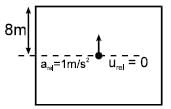
∴ or t = 4 second
∴
or t = 4 secondA weightless rod of length 2l carries two equal masses 'm', one tied at lower end A and the other at the middle of the rod at B. The rod can rotate in vertical plane about a fixed horizontal axis passing through C. The rod is released from rest in horizontal position. The speed of the mass B at the instant rod, become vertical is :
- a)

- b)

- c)

- d)

Correct answer is option 'C'. Can you explain this answer?
A weightless rod of length 2l carries two equal masses 'm', one tied at lower end A and the other at the middle of the rod at B. The rod can rotate in vertical plane about a fixed horizontal axis passing through C. The rod is released from rest in horizontal position. The speed of the mass B at the instant rod, become vertical is :
a)
b)
c)
d)
 | New Words answered |
Let v be the speed of B at lowermost position, the speed of A at lowermost position is 2v. From conservation of energy

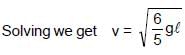
Which is wrongly matched- - a)monocytes – 6-8 percent
- b)eosinophils – 8-10 percent
- c)basophils – 0.5 -1 percent
- d)lymphocyte – 20-25 percent
Correct answer is option 'B'. Can you explain this answer?
Which is wrongly matched-
a)
monocytes – 6-8 percent
b)
eosinophils – 8-10 percent
c)
basophils – 0.5 -1 percent
d)
lymphocyte – 20-25 percent
 | Rajni Kokate answered |
Eosinophils are 2 - 3 percent and resist infections and associated with allergic reactions....refer ncert..
ECG is graphical representation of - a) electrical activity of atriumb) electrical activity of heartc) Instrumentation amplifierd) non of the above Correct answer is option 'B'. Can you explain this answer?
 | Anjali Sharma answered |
Graphic record of the electrocardiography is called electrocardiogram (ECG, EKG). It is based on recording of electric potential generated by heart on body surface.
Which is wrong about hormonal control of kidney –- a)fall in GFR can activate JG cells to release renin
- b)ANF can cause vaso-constriction
- c)Angiotensin ii activate adrenal cortex to release aldosterone
- d)ADH increase water reabsorption
Correct answer is option 'B'. Can you explain this answer?
Which is wrong about hormonal control of kidney –
a)
fall in GFR can activate JG cells to release renin
b)
ANF can cause vaso-constriction
c)
Angiotensin ii activate adrenal cortex to release aldosterone
d)
ADH increase water reabsorption
 | Nuzhat Fateema answered |
"release of ANF cause blood vessels dilation ( vasodilation) "
fall in gfr release renin by activating jg cells
angiotensin ii release aldosterone which increases water and sodium ion absorption
ADH acts on dct and cd and increase water reabsorption
fall in gfr release renin by activating jg cells
angiotensin ii release aldosterone which increases water and sodium ion absorption
ADH acts on dct and cd and increase water reabsorption
A large open tank has two small holes in its vertical wall as shown in figure. One is a square hole of side 'L' at a depth '4y' from the top and the other is a circular hole of radius 'R' at a depth ‘y’ from the top. When the tank is completely filled with water, the quantities of water flowing out per second from both holes are the same. Then, 'R' is equal to :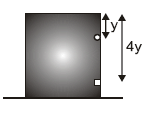
- a)

- b)2πL
- c)

- d)L/2π
Correct answer is option 'C'. Can you explain this answer?
A large open tank has two small holes in its vertical wall as shown in figure. One is a square hole of side 'L' at a depth '4y' from the top and the other is a circular hole of radius 'R' at a depth ‘y’ from the top. When the tank is completely filled with water, the quantities of water flowing out per second from both holes are the same. Then, 'R' is equal to :
a)
b)
2πL
c)
d)
L/2π
| | Raghav Bansal answered |
Let v1 and v2 be the velocity of efflux from square and circular hole respectively.
S1 and S2 be cross-section areas of square and circular holes.
 and
and 
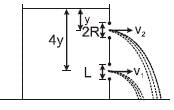
The volume of water coming out of square and circular hole per second is
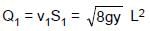

∵ Q1 = Q2
∴
S1 and S2 be cross-section areas of square and circular holes.
and The volume of water coming out of square and circular hole per second is
∵ Q1 = Q2
∴
Which of the following statement is false?- a)Erythryocytes are the most abundant of all the cells in blood
- b)The number of RBCs in adult man per millimeter cube of blood is 5 million to 5.5 million
- c)RBS are formed in the red bone marrow in the adults
- d)RBCs are enucleated in mammals but have mitochondria
Correct answer is option 'D'. Can you explain this answer?
Which of the following statement is false?
a)
Erythryocytes are the most abundant of all the cells in blood
b)
The number of RBCs in adult man per millimeter cube of blood is 5 million to 5.5 million
c)
RBS are formed in the red bone marrow in the adults
d)
RBCs are enucleated in mammals but have mitochondria
 | Devansh Mehra answered |
Explanation- 11th class ncert page- 279
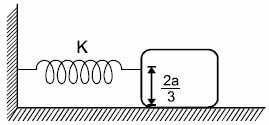


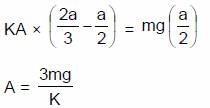
A transverse periodic wave on a string with a linear mass density of 0.200 kg/m is described by the following equation y = 0.05 sin(420t – 21.0 x) where x and y are in metres and t is in seconds. The tension in the string is equal to :- a)32 N
- b)42 N
- c)66 N
- d)80 N
Correct answer is option 'D'. Can you explain this answer?
A transverse periodic wave on a string with a linear mass density of 0.200 kg/m is described by the following equation y = 0.05 sin(420t – 21.0 x) where x and y are in metres and t is in seconds. The tension in the string is equal to :
a)
32 N
b)
42 N
c)
66 N
d)
80 N
 | Lavanya Menon answered |
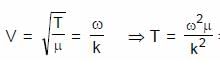
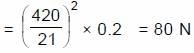
(μ = mass per unit length)
A motor car is going due north at a speed of 50 km/h. It makes a 90º left turn without changing the speed. The change in the velocity of the car is about - a)50 km/h towards west
- b)70 km/h towards south-west
- c)50√2 km/h towards north-west
- d)Zero
Correct answer is option 'B'. Can you explain this answer?
A motor car is going due north at a speed of 50 km/h. It makes a 90º left turn without changing the speed. The change in the velocity of the car is about
a)
50 km/h towards west
b)
70 km/h towards south-west
c)
50√2 km/h towards north-west
d)
Zero
 | Tejas Chavan answered |
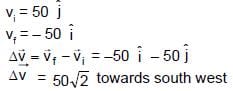
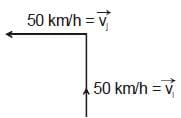
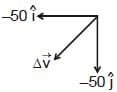
Type of junction which prevent substance leaking across tissue-- a)tight junction
- b)adhering junction
- c)Gap junction
- d)none
Correct answer is option 'A'. Can you explain this answer?
Type of junction which prevent substance leaking across tissue-
a)
tight junction
b)
adhering junction
c)
Gap junction
d)
none
 | Subham Chavan answered |
The purpose of tight junctions is to keep liquid from escaping between cells, allowing a layer of cells (for instance, those lining an organ) to act as an impermeable barrier. For example, the tight junctions between the epithelial cells lining your bladder prevent urine from leaking out into the extracellular space
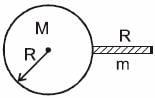


Which is correct regarding hormone-- a)non-nutrient
- b)generate intracellular messengers
- c)produced in trace amounts
- d)all
Correct answer is option 'D'. Can you explain this answer?
Which is correct regarding hormone-
a)
non-nutrient
b)
generate intracellular messengers
c)
produced in trace amounts
d)
all
| | Rajeev Saxena answered |
Hormones are non nutrient chemicals, which act as intracellular messengers and are produced in trace amounts. Endocrine cells are present in different parts of the gastrointestinal tract, e.g., gastrin, secretin, GIP. Atrial wall of our heart secretes a peptide hormone called ANF (Atrial Natriuretic Factor), RH/IH are produced by hypothalamus. Adenohypophysis is not directly under neural control, it is under the control of hypothalamic hormones, brought by portal system.
In pelvic girdle point of fusion of coxal bone - - a)acetabulum
- b)glenoid cavity
- c)ilium
- d)ischium
Correct answer is option 'A'. Can you explain this answer?
In pelvic girdle point of fusion of coxal bone -
a)
acetabulum
b)
glenoid cavity
c)
ilium
d)
ischium
| | Rohan Singh answered |
Coxal Bones
Each coxal bone is formed by three fused bones-ilium, ischium, and pubis that join at the acetabulum, the cup-shaped socket on the lateral surface. The ilium is the broad superior portion whose superior margin forms the iliac crest, the prominence of the hip.
Each coxal bone is formed by three fused bones-ilium, ischium, and pubis that join at the acetabulum, the cup-shaped socket on the lateral surface. The ilium is the broad superior portion whose superior margin forms the iliac crest, the prominence of the hip.
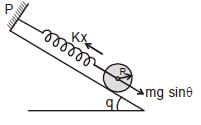
A uniform cylinder of mass M and radius R rolls without slipping down a slope of angle θ to the horizontal. The cylinder is connected to a spring constant K while the other end of the spring is connected to a rigid support at P. The cylinder is released when the spring is unstretched. The maximum distance that the cylinder travels is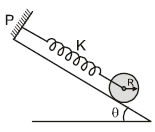
- a)

- b)

- c)

- d)

Correct answer is option 'C'. Can you explain this answer?
A uniform cylinder of mass M and radius R rolls without slipping down a slope of angle θ to the horizontal. The cylinder is connected to a spring constant K while the other end of the spring is connected to a rigid support at P. The cylinder is released when the spring is unstretched. The maximum distance that the cylinder travels is
a)
b)
c)
d)
 | Mohit Rajpoot answered |
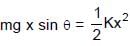
Potential energy of spring

Workdone by gravity = mg sineθx.
By energy conservations,

If loop of Henle were absent in mammalian nephrons, which of the following is to be expected? - a)The urine will be more dilute
- b)There will be no urine formation
- c)The urine will have more concentrated
- d)There will be hardly any change in quality and quantity if urine formed
Correct answer is option 'A'. Can you explain this answer?
If loop of Henle were absent in mammalian nephrons, which of the following is to be expected?
a)
The urine will be more dilute
b)
There will be no urine formation
c)
The urine will have more concentrated
d)
There will be hardly any change in quality and quantity if urine formed
 | Deepigaa Narendran answered |
Loop of henle reabsorbs water and concentrates the ultra filtrate .so if loop of henle is absent the urine will be more dilute.
The figure shows a hollow cube of side 'a' of volume V. There is a small chamber of volume V/4 in the cube as shown. This chamber is completely filled by m kg of water. Water leaks through a hole H. Then the work done by gravity in this process assuming that the complete water finally lies at the bottom of the cube is :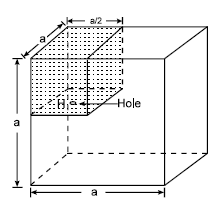
- a)

- b)

- c)

- d)

Correct answer is option 'C'. Can you explain this answer?
The figure shows a hollow cube of side 'a' of volume V. There is a small chamber of volume V/4 in the cube as shown. This chamber is completely filled by m kg of water. Water leaks through a hole H. Then the work done by gravity in this process assuming that the complete water finally lies at the bottom of the cube is :
a)
b)
c)
d)
 | Gaurav Kumar answered |
Let h be the height of water surface, finally
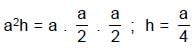
∴ C. M. gets lowered by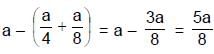
∴ Work done by gravity
∴ C. M. gets lowered by
∴ Work done by gravity
Consider the following-
(a) Both SA node and AV node located in right atrium
(b) Number of action potential that could be generated in a minute vary at different parts of nodal system
How many correct- - a)only a
- b)only b
- c)both correct
- d)both wrong
Correct answer is option 'C'. Can you explain this answer?
Consider the following-
(a) Both SA node and AV node located in right atrium
(b) Number of action potential that could be generated in a minute vary at different parts of nodal system
How many correct-
(a) Both SA node and AV node located in right atrium
(b) Number of action potential that could be generated in a minute vary at different parts of nodal system
How many correct-
a)
only a
b)
only b
c)
both correct
d)
both wrong
 | Prashant Kumar answered |
SA Node: The Sino-Atrial Node (SA Node) is present in the right upper corner of the right atrium.
AV Node: The atrio-ventricular node is present in the lower left corner of the right atrium; close to the atrio-ventricular septum.
The number of action potentials which could be generated per minute varies at different parts of the nodal system. The SA Node can generate the maximum number of action potentials, i.e. 70-75 per minute. The SA Node is responsible for initiating and maintaining the rhythmic contractile activity or beating of the heart. Due to this, the SA Node is called the pacemaker. The human heart normally beats 70-75 times per minute.
AV Node: The atrio-ventricular node is present in the lower left corner of the right atrium; close to the atrio-ventricular septum.
The number of action potentials which could be generated per minute varies at different parts of the nodal system. The SA Node can generate the maximum number of action potentials, i.e. 70-75 per minute. The SA Node is responsible for initiating and maintaining the rhythmic contractile activity or beating of the heart. Due to this, the SA Node is called the pacemaker. The human heart normally beats 70-75 times per minute.
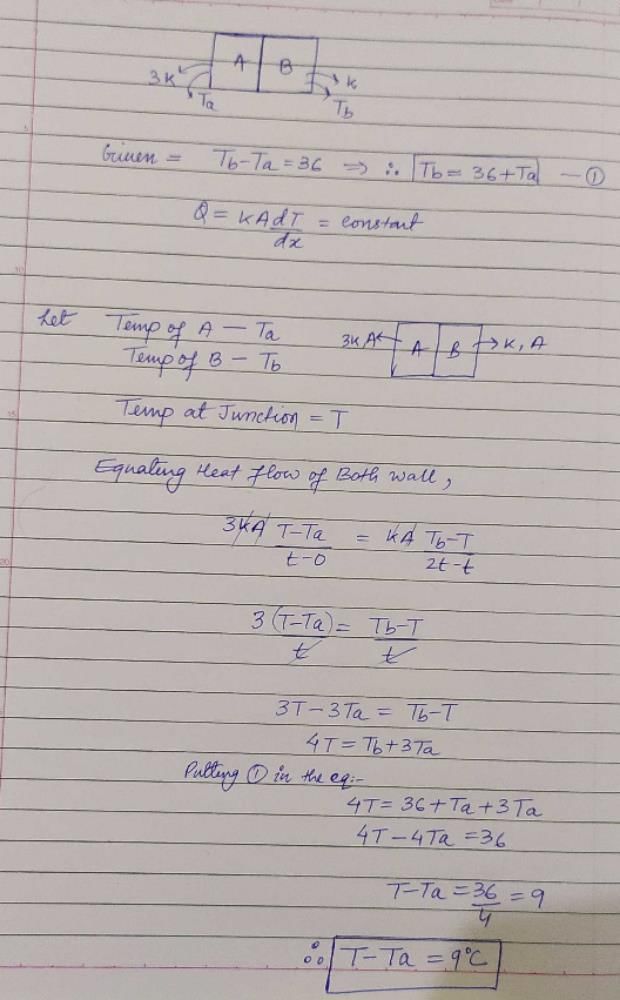
A wall is made of two layers A and B of the same thickness but different materials as shown. The thermal conductivity of A is thrice that of B. In steady state, the temperature difference across the wall is 360C. The temperature difference across the layer A is :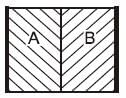
- a)60 C
- b)90 C
- c)180 C
- d)270 C
Correct answer is option 'B'. Can you explain this answer?
A wall is made of two layers A and B of the same thickness but different materials as shown. The thermal conductivity of A is thrice that of B. In steady state, the temperature difference across the wall is 360C. The temperature difference across the layer A is :
a)
60 C
b)
90 C
c)
180 C
d)
270 C
| | Lalita Jha answered |
Mark the incorrect –- a)erythropoietin is steroid hormone
- b)erythropoietin is released from JG cells of kidney
- c)Epinephrin is amino acid derivative
- d)Gastrin,secretin, CCK and GIP all are peptide
Correct answer is option 'A'. Can you explain this answer?
Mark the incorrect –
a)
erythropoietin is steroid hormone
b)
erythropoietin is released from JG cells of kidney
c)
Epinephrin is amino acid derivative
d)
Gastrin,secretin, CCK and GIP all are peptide
 | Smrity answered |
Erythropoietin hormone is not steroid hormone it is produced mainly in kidney , which maintenance the production of red blood cells.
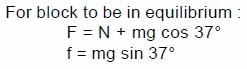
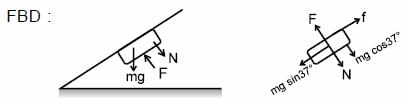
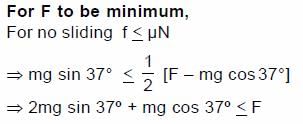

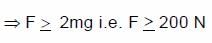
A stationary body explodes into two fragments of masses m1 and m2. If momentum of one fragment is p, the energy of explosion is : - a)
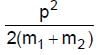
- b)

- c)
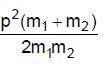
- d)
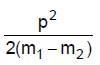
Correct answer is option 'C'. Can you explain this answer?
A stationary body explodes into two fragments of masses m1 and m2. If momentum of one fragment is p, the energy of explosion is :
a)
b)
c)
d)
| | Wahid Khan answered |
By momentum conservation, the momentum of other fragment will be –p Total KE
Figure shows the roller coaster track. Each car will start from rest at point A and will roll with negligible friction. It is important that there should be at least some small positive normal force exerted by the track on the car at all points, otherwise the car would leave the track. With the above fact, the minimum safe value for the radius of curvature at point B is (g = 10 m/s2) :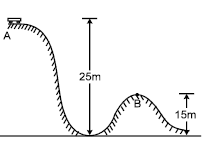
- a)20 m
- b)10 m
- c)40 m
- d)25 m
Correct answer is option 'A'. Can you explain this answer?
Figure shows the roller coaster track. Each car will start from rest at point A and will roll with negligible friction. It is important that there should be at least some small positive normal force exerted by the track on the car at all points, otherwise the car would leave the track. With the above fact, the minimum safe value for the radius of curvature at point B is (g = 10 m/s2) :
a)
20 m
b)
10 m
c)
40 m
d)
25 m
 | Swara Desai answered |

A water tank stands on the roof of a building as shown. Then the value of 'h' for which the distance covered by the water 'x' is greatest is - 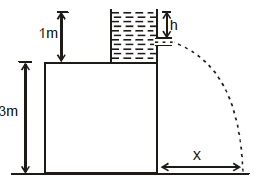
- a)0.5 m
- b)0.67 m
- c)1 m
- d)none of these
Correct answer is option 'C'. Can you explain this answer?
A water tank stands on the roof of a building as shown. Then the value of 'h' for which the distance covered by the water 'x' is greatest is -
a)
0.5 m
b)
0.67 m
c)
1 m
d)
none of these
 | Divya Khanna answered |
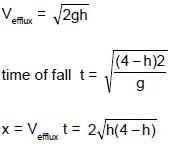
The roots of x are (0,4) and the maximum of x is at h = 2.
The permitted value of h is 0 to 1 clearly h = 1 will give the maximum value of x is this interval.
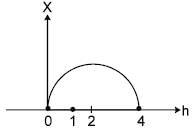
Aliter : If the column of water itself were from ground upto a height of 4m, h = 2m would give the maximum range x. Farther the hole is from this midpoint, lower the range. Here the nearest point possible to this midpoint is the base of the container. Hence h = 1 m.
A wall is moving with constant velocity u towards a fixed source of sound of frequency 'f'. The velocity of sound is 'v'. The wavelength of the sound reflected by the wall is
- a)

- b)

- c)

- d)

Correct answer is option 'D'. Can you explain this answer?
A wall is moving with constant velocity u towards a fixed source of sound of frequency 'f'. The velocity of sound is 'v'. The wavelength of the sound reflected by the wall is
a)
b)
c)
d)
| | Rohit Jain answered |
Frequency of sound reflected by wall f' = 
∴ Wave length of sound reflected by wall = 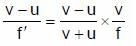
The extension in a uniform rod of length l, mass m, cross section radius r and young’s modulus Y when it is suspended at one of its end is : 
- a)

- b)

- c)

- d)

Correct answer is option 'B'. Can you explain this answer?
The extension in a uniform rod of length l, mass m, cross section radius r and young’s modulus Y when it is suspended at one of its end is :
a)
b)
c)
d)
| | Suresh Iyer answered |
Tension at point P in the rod is 
Extension of width dx length of rod is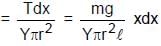
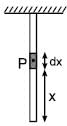
Total extension in road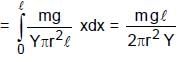
Extension of width dx length of rod is
Total extension in road
Which of the following factor can activate the JG cells to release renin?- a)A fall in glomerular blood pressure (GBP)
- b)A fall in glomerular blood flow (GBF)
- c)A Fall In GFR
- d)all of the above
Correct answer is option 'D'. Can you explain this answer?
Which of the following factor can activate the JG cells to release renin?
a)
A fall in glomerular blood pressure (GBP)
b)
A fall in glomerular blood flow (GBF)
c)
A Fall In GFR
d)
all of the above
 | Divya Pol Divya Pol answered |
Option D is correct
A fall in GFR , BV (blood volume) , BP ( blood pressure) activates JG cells to release renin for GFR regulation.
A fall in GFR , BV (blood volume) , BP ( blood pressure) activates JG cells to release renin for GFR regulation.
A spherical soap bubble of radius 1.0 cm is formed inside another of radius 2 cm. If a single soap bubble is formed which maintains the same pressure difference as inside the smaller and outside the larger bubble, the radius of this bubble is - - a)0.005 m
- b)0.05 m
- c)0.0067 m
- d)0.067 m
Correct answer is option 'C'. Can you explain this answer?
A spherical soap bubble of radius 1.0 cm is formed inside another of radius 2 cm. If a single soap bubble is formed which maintains the same pressure difference as inside the smaller and outside the larger bubble, the radius of this bubble is -
a)
0.005 m
b)
0.05 m
c)
0.0067 m
d)
0.067 m
 | Priya Menon answered |
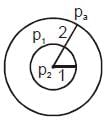
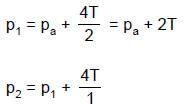
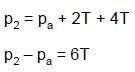
 r = 4/6 cm = 0.0067 m
A large open tank has two small holes in its vertical wall as shown in figure. One is a square hole of side 'L' at a depth '4y' from the top and the other is a circular hole of radius 'R' at a depth ‘y’ from the top. When the tank is completely filled with water, the quantities of water flowing out per second from both holes are the same. Then, 'R' is equal to :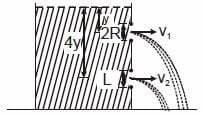
- a)

- b)

- c)

- d)

Correct answer is option 'C'. Can you explain this answer?
A large open tank has two small holes in its vertical wall as shown in figure. One is a square hole of side 'L' at a depth '4y' from the top and the other is a circular hole of radius 'R' at a depth ‘y’ from the top. When the tank is completely filled with water, the quantities of water flowing out per second from both holes are the same. Then, 'R' is equal to :
a)
b)
c)
d)
| | Rohit Jain answered |
Let v1 and v2 be the velocity of efflux from square and circular hole respectively. S1 and S2 be cross - section areas of square and circular holes.
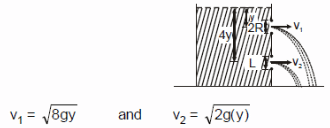
The volume of water coming our of square and circular hole per second is


Which is not true about myasthenia gravis– - a)autoimmune disorder
- b)weakening of skeletal muscle
- c)lead to paralysis
- d)degeneration of skeletal muscle
Correct answer is option 'D'. Can you explain this answer?
Which is not true about myasthenia gravis–
a)
autoimmune disorder
b)
weakening of skeletal muscle
c)
lead to paralysis
d)
degeneration of skeletal muscle
| | Rajni Kokate answered |
Myasthenia gravis is a neuromuscular disorder that is usually caused by an AUTOIMMUNE problem. In this condition, antibodies attack the neuromuscular junctions of own body mistakenly. damage to neuromuscular junctions reduces communication b/w nerve cells & muscles. this results in MUSCLE WEAKNESS also causes droopy eyelids and mouth that may lead to PARALYSIS. BUT degeneration of muscle does not occurs .....
At the middle of the mercury barometer tube there is a little column of air with the length  and there is vacuum at the top as shown. Under the normal atmospheric pressure and the temperature of 300 kelvin,
  = 10 cm. Neglect expansion of the tube. The length of the air column if the temperature rises to 330 kelvin will be -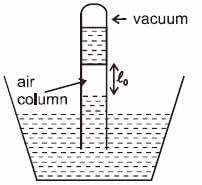
- a)

- b)11 cm
- c)10 cm
- d)12 cm
Correct answer is option 'B'. Can you explain this answer?
At the middle of the mercury barometer tube there is a little column of air with the length and there is vacuum at the top as shown. Under the normal atmospheric pressure and the temperature of 300 kelvin, = 10 cm. Neglect expansion of the tube. The length of the air column if the temperature rises to 330 kelvin will be -
and there is vacuum at the top as shown. Under the normal atmospheric pressure and the temperature of 300 kelvin, = 10 cm. Neglect expansion of the tube. The length of the air column if the temperature rises to 330 kelvin will be -a)
b)
11 cm
c)
10 cm
d)
12 cm
 | Pioneer Academy answered |
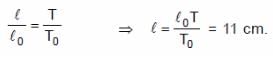
Pressure in the air inside the column of merucry is equal to the weight of mercury ove the air divided by the internal cross sectional area of the tube. when the temprature increase, the weight of the upper part of the mercury column does not change. That is why the pressure in the air is also constant. For the isobaric process, the change in volume is proportional to the change in temperature. The same is true for the lengths of the air column.
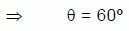
An aircraft moving with a speed of 972 km/h is at a height of 6000 m, just overhead of an anti-aircraft gun. If the muzzle velocity of the gun is 540 ms, the firing angle θ for the bullet to hit the aircraft should be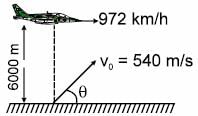
- a)730
- b)300
- c)600
- d)450
Correct answer is option 'C'. Can you explain this answer?
An aircraft moving with a speed of 972 km/h is at a height of 6000 m, just overhead of an anti-aircraft gun. If the muzzle velocity of the gun is 540 ms, the firing angle θ for the bullet to hit the aircraft should be
a)
730
b)
300
c)
600
d)
450
| | Rohit Jain answered |
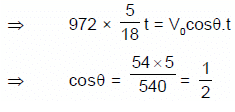
Displacement of airctaft in time t = horizontal displacement of projectile
Nacl is transported by the ascending limb of Henle’s loop which is exchanged with- - a)DCT
- b)PCT
- c)Ascending limb of vasa recta
- d)Descending limb of vasa recta
Correct answer is option 'D'. Can you explain this answer?
Nacl is transported by the ascending limb of Henle’s loop which is exchanged with-
a)
DCT
b)
PCT
c)
Ascending limb of vasa recta
d)
Descending limb of vasa recta
 | Barsa Swain answered |
It can be explained by osmotic pressure consideration.
A train is standing on a platform , a man inside a compartment of a train drops a stone . At the same instant train starts to move with constant acceleration . The path of the particle as seen by the person who drops the stone is :- a)parabola
- b)straight line for sometime & parabola for the remaining time
- c)straight line
- d)variable path that cannot be defined
Correct answer is option 'C'. Can you explain this answer?
A train is standing on a platform , a man inside a compartment of a train drops a stone . At the same instant train starts to move with constant acceleration . The path of the particle as seen by the person who drops the stone is :
a)
parabola
b)
straight line for sometime & parabola for the remaining time
c)
straight line
d)
variable path that cannot be defined
 | Mahi Shah answered |

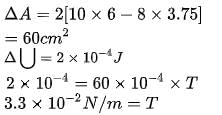
The work done in increasing the size of a rectangular soap film with dimensions 8 cm × 3.75 cm to 10 cm × 6 cm is 2 × 10⁻⁴ J. The surface tension of the film in N/m is : - a)1.65 × 10⁻²
- b)3.3 × 10⁻²
- c)6.6 × 10⁻²
- d)8.25 × 10⁻²
Correct answer is option 'B'. Can you explain this answer?
The work done in increasing the size of a rectangular soap film with dimensions 8 cm × 3.75 cm to 10 cm × 6 cm is 2 × 10⁻⁴ J. The surface tension of the film in N/m is :
a)
1.65 × 10⁻²
b)
3.3 × 10⁻²
c)
6.6 × 10⁻²
d)
8.25 × 10⁻²
 | Bhavana Desai answered |
Chapter doubts & questions for Progress Tests - 1 Year Dropper's Course for NEET 2026 is part of NEET exam preparation. The chapters have been prepared according to the NEET exam syllabus. The Chapter doubts & questions, notes, tests & MCQs are made for NEET 2026 Exam. Find important definitions, questions, notes, meanings, examples, exercises, MCQs and online tests here.
Chapter doubts & questions of Progress Tests - 1 Year Dropper's Course for NEET in English & Hindi are available as part of NEET exam. Download more important topics, notes, lectures and mock test series for NEET Exam by signing up for free.
1 Year Dropper's Course for NEET472 videos|1727 docs|590 tests |
