


All Exams >
NEET >
30-Day Revision Course for NEET >
All Questions
All questions of Evolution for NEET Exam
Fossils are generally found in:- a)Metamorphic rocks
- b)Igneous rocks
- c)Sedimentary rocks
- d)Any type of rock
Correct answer is option 'C'. Can you explain this answer?
Fossils are generally found in:
a)
Metamorphic rocks
b)
Igneous rocks
c)
Sedimentary rocks
d)
Any type of rock

|
Geetika Shah answered |
Fossils are generally found in sedimentary rocks.

Tendrils in plants are an example of
- a)Adaptive radiation
- b)Convergent evolution
- c)Divergent evolution
- d)Co-evolution
Correct answer is option 'C'. Can you explain this answer?
Tendrils in plants are an example of
a)
Adaptive radiation
b)
Convergent evolution
c)
Divergent evolution
d)
Co-evolution

|
Ayush Singh answered |
Yes answer should be convergent because no thorns were asked in ques tendrils are many types originating from leaf,stem,stipule which are different in origin
Evolution is- a)Progressive development of race
- b)History of race
- c)History and development of a race along with variations
- d)Development of race
Correct answer is 'C'. Can you explain this answer?
Evolution is
a)
Progressive development of race
b)
History of race
c)
History and development of a race along with variations
d)
Development of race

|
Pooja Mehta answered |
The term evolution was coined by Herbert Spencer, an English philosopher which means unrolling or unfolding of nature that brings about an orderly change from one form or condition to another resulting in descendants becoming different from ancestors. Thus, it is history and development of race along with variations.
Darwin judged the fitness of an individual by- a)Dominance over other individual
- b)Strategy to obtain food
- c)Ability to defend itself
- d)Number of offspring
Correct answer is option 'D'. Can you explain this answer?
Darwin judged the fitness of an individual by
a)
Dominance over other individual
b)
Strategy to obtain food
c)
Ability to defend itself
d)
Number of offspring

|
Rajeev Saxena answered |
Darwin realised that under the intense competition of members in a population, any variation which favoured survival in a particular environment would increase the individuals ability to reproduce and leave fertile offsprings. While less favourable variations decrease the chance of successful reproduction. Hence, Darwin judged the fitness of an individual by reproducing ability and the number of offsprings.
It is believed that the first organisms which inhabitated earth's surface were
[MP PMT 01]
- a)Autotrophs
- b)Mixotrophs
- c)Bacteria
- d)Chromatotrophs
Correct answer is option 'C'. Can you explain this answer?
It is believed that the first organisms which inhabitated earth's surface were
[MP PMT 01]
a)
Autotrophs
b)
Mixotrophs
c)
Bacteria
d)
Chromatotrophs

|
Srishti Shah answered |
The first organisms that inhabited Earth's surface were bacteria. This is supported by several lines of evidence.
Fossil Record:
The oldest fossils found on Earth are of bacteria-like organisms. These fossils date back to 3.5 billion years ago. These bacteria were anaerobic, which means that they did not require oxygen to survive.
Chemical Evidence:
The chemical composition of rocks that are 3.8 billion years old suggests that they were formed by bacteria. These rocks contain isotopes of carbon that are only produced by living organisms.
Evolutionary History:
Bacteria are the most ancient and diverse group of organisms on Earth. They have been evolving for billions of years and have adapted to almost every environment on the planet.
Autotrophs and Mixotrophs:
Autotrophs are organisms that can produce their own food using energy from the sun or from inorganic compounds. Mixotrophs are organisms that can switch between being autotrophic and heterotrophic (consuming other organisms for food). While these types of organisms are important in the history of life on Earth, they did not appear until much later in evolution.
Chromatotrophs:
Chromatotrophs are bacteria that use chemicals as their source of energy. While these types of bacteria are also ancient, they are not believed to be the first organisms on Earth.
In conclusion, the first organisms that inhabited Earth's surface were bacteria. They have been evolving for billions of years and have adapted to almost every environment on the planet.
Fossil Record:
The oldest fossils found on Earth are of bacteria-like organisms. These fossils date back to 3.5 billion years ago. These bacteria were anaerobic, which means that they did not require oxygen to survive.
Chemical Evidence:
The chemical composition of rocks that are 3.8 billion years old suggests that they were formed by bacteria. These rocks contain isotopes of carbon that are only produced by living organisms.
Evolutionary History:
Bacteria are the most ancient and diverse group of organisms on Earth. They have been evolving for billions of years and have adapted to almost every environment on the planet.
Autotrophs and Mixotrophs:
Autotrophs are organisms that can produce their own food using energy from the sun or from inorganic compounds. Mixotrophs are organisms that can switch between being autotrophic and heterotrophic (consuming other organisms for food). While these types of organisms are important in the history of life on Earth, they did not appear until much later in evolution.
Chromatotrophs:
Chromatotrophs are bacteria that use chemicals as their source of energy. While these types of bacteria are also ancient, they are not believed to be the first organisms on Earth.
In conclusion, the first organisms that inhabited Earth's surface were bacteria. They have been evolving for billions of years and have adapted to almost every environment on the planet.
According to abiogenesis life originates from ______.- a)Pre-exiting life
- b)Extra-terrestrial matter
- c)Non-living matter
- d)Chemicals
Correct answer is 'C'. Can you explain this answer?
According to abiogenesis life originates from ______.
a)
Pre-exiting life
b)
Extra-terrestrial matter
c)
Non-living matter
d)
Chemicals

|
Hansa Sharma answered |
According to abiogenesis theory of origin of life, life originated from non-living matter like gases, inorganic substance and water at particular temperature and pressure.
- a)Geographical evolution
- b)Convergent evolution
- c)Divergent evolution
- d)Adaptive radiation
Correct answer is 'D'. Can you explain this answer?
|
|
Rajat Kapoor answered |
The diversification of an ancestral group into two or more species in different habitats is called divergent evolution. When this involves large number of species to occupy different ritches, this is called adaptive radiation. Adaptive radiation is the process of evolution of different species in a given geographical area starting from a species of animals or plants and literally radiating to other areas of geography (habitats). Darwin's finches represent one of best examples of this phenomenon. Australian marsupials are another example of adaptive radiation.
Fossils are most commonly preserved in______.- a)Sedimentary rocks
- b)Igneous rocks
- c)Metamorphic rocks
- d)Any type of rock
Correct answer is option 'A'. Can you explain this answer?
Fossils are most commonly preserved in______.
a)
Sedimentary rocks
b)
Igneous rocks
c)
Metamorphic rocks
d)
Any type of rock

|
Prerana M N answered |
Sedimentary rocks are mostly involved in forming fossils, owing to the way in which they are formed.
Links between organisms that show branching pattern of evolutionary relationships are shown by- a)Phylogenetic trees
- b)Living fossils
- c)Comparative embryology
- d)Two fossil layers
Correct answer is option 'A'. Can you explain this answer?
Links between organisms that show branching pattern of evolutionary relationships are shown by
a)
Phylogenetic trees
b)
Living fossils
c)
Comparative embryology
d)
Two fossil layers
|
|
Krithika Kumar answered |
Phylogenetic trees are diagrams that show the evolutionary relationships between different organisms. They are used to display the branching pattern of evolutionary relationships between organisms. The diagram looks like a tree with branches that represent different groups of organisms. These branches are called clades, and they represent groups of organisms that have descended from a common ancestor.
Phylogenetic trees are constructed based on a variety of data, including:
1. Morphological characteristics: The physical features of organisms, such as their shape, size, and structure.
2. Molecular data: DNA and RNA sequences are used to compare the genetic makeup of different organisms.
3. Fossil records: The study of fossils provides evidence of the evolutionary history of organisms.
Phylogenetic trees are an important tool for understanding the relationships between organisms and how they have evolved over time. They can be used to answer questions about the origins of different species and how they are related to one another.
In conclusion, phylogenetic trees are diagrams that show the branching pattern of evolutionary relationships between organisms. They are constructed based on a variety of data, including morphological characteristics, molecular data, and fossil records. They are an important tool for understanding the evolutionary history of organisms.
Phylogenetic trees are constructed based on a variety of data, including:
1. Morphological characteristics: The physical features of organisms, such as their shape, size, and structure.
2. Molecular data: DNA and RNA sequences are used to compare the genetic makeup of different organisms.
3. Fossil records: The study of fossils provides evidence of the evolutionary history of organisms.
Phylogenetic trees are an important tool for understanding the relationships between organisms and how they have evolved over time. They can be used to answer questions about the origins of different species and how they are related to one another.
In conclusion, phylogenetic trees are diagrams that show the branching pattern of evolutionary relationships between organisms. They are constructed based on a variety of data, including morphological characteristics, molecular data, and fossil records. They are an important tool for understanding the evolutionary history of organisms.
By studying analogous structures we look for ______.- a)Similarities in appearance but differences in functions
- b)Similarities in appearance and function but different in structure
- c)Similarities in organ structure
- d)Similarities in cell make up
Correct answer is option 'B'. Can you explain this answer?
By studying analogous structures we look for ______.
a)
Similarities in appearance but differences in functions
b)
Similarities in appearance and function but different in structure
c)
Similarities in organ structure
d)
Similarities in cell make up
|
|
Usha Lakshmi answered |
Analogous structures are examples of convergent evolution that is evolution of structures from different organisms for the sake of similar functions. Thus analogous structures are those which perform similar function... but the basic origin is different. hope it helps you!!!
Mortality in babies is an example of ______- a)Stabilizing selection
- b)Directional selection
- c)Disruptive selection
- d)Abortion selection
Correct answer is option 'A'. Can you explain this answer?
Mortality in babies is an example of ______
a)
Stabilizing selection
b)
Directional selection
c)
Disruptive selection
d)
Abortion selection

|
EduRev NEET answered |
- Mortality in babies is an example of stabilizing selection.
- It is all depended on the baby’s birth weight.
- The optimum birth weight is 7.3 pounds which favor this selection.
- Newborn infants with less than 5.5 pounds and more than 10 pounds have the highest mortality rate.

According to the Hardy-Weinberg principle, what condition indicates that evolution is occurring in a population?- a)Allele frequencies remain constant across generations.
- b)The frequency of homozygous dominant individuals equals p².
- c)Allele frequencies change due to factors like genetic drift or natural selection.
- d)The sum of p² + 2pq + q² equals 1 in all scenarios.
Correct answer is option 'C'. Can you explain this answer?
a)
Allele frequencies remain constant across generations.
b)
The frequency of homozygous dominant individuals equals p².
c)
Allele frequencies change due to factors like genetic drift or natural selection.
d)
The sum of p² + 2pq + q² equals 1 in all scenarios.
|
|
Nitya Menon answered |
Understanding the Hardy-Weinberg Principle
According to the Hardy-Weinberg principle, a population is in genetic equilibrium when specific conditions are met, resulting in constant allele frequencies across generations. However, if these conditions are violated, evolution is indicated.
Key Indicators of Evolution
- Allele Frequencies Change: The correct answer is option 'C', which states that allele frequencies change due to factors like genetic drift or natural selection. This change signifies that evolutionary processes are at work.
- Genetic Drift: Random fluctuations in allele frequencies can lead to significant changes in small populations, potentially resulting in evolution.
- Natural Selection: Differential survival and reproduction of individuals based on their phenotypic traits can alter allele frequencies over time, driving evolutionary change.
Other Options Explained
- Option A: This suggests that allele frequencies remain constant, which indicates that evolution is not occurring. This aligns with the Hardy-Weinberg equilibrium.
- Option B: The frequency of homozygous dominant individuals being equal to p² is a specific outcome of the Hardy-Weinberg equation but does not indicate evolution.
- Option D: The sum of p² + 2pq + q² equals 1 under Hardy-Weinberg equilibrium. This condition being satisfied does not imply evolution is occurring.
Conclusion
In summary, option 'C' accurately reflects that changes in allele frequencies due to mechanisms such as natural selection or genetic drift signify that evolution is occurring in a population. Understanding these concepts is crucial for interpreting population genetics and evolutionary biology.
According to the Hardy-Weinberg principle, a population is in genetic equilibrium when specific conditions are met, resulting in constant allele frequencies across generations. However, if these conditions are violated, evolution is indicated.
Key Indicators of Evolution
- Allele Frequencies Change: The correct answer is option 'C', which states that allele frequencies change due to factors like genetic drift or natural selection. This change signifies that evolutionary processes are at work.
- Genetic Drift: Random fluctuations in allele frequencies can lead to significant changes in small populations, potentially resulting in evolution.
- Natural Selection: Differential survival and reproduction of individuals based on their phenotypic traits can alter allele frequencies over time, driving evolutionary change.
Other Options Explained
- Option A: This suggests that allele frequencies remain constant, which indicates that evolution is not occurring. This aligns with the Hardy-Weinberg equilibrium.
- Option B: The frequency of homozygous dominant individuals being equal to p² is a specific outcome of the Hardy-Weinberg equation but does not indicate evolution.
- Option D: The sum of p² + 2pq + q² equals 1 under Hardy-Weinberg equilibrium. This condition being satisfied does not imply evolution is occurring.
Conclusion
In summary, option 'C' accurately reflects that changes in allele frequencies due to mechanisms such as natural selection or genetic drift signify that evolution is occurring in a population. Understanding these concepts is crucial for interpreting population genetics and evolutionary biology.
Praying mantis is a good example of- a)Warning colouration
- b)Social insects
- c)Mullerianmimcry
- d)Camouflage
Correct answer is option 'D'. Can you explain this answer?
Praying mantis is a good example of
a)
Warning colouration
b)
Social insects
c)
Mullerianmimcry
d)
Camouflage

|
Lakshmi Khanna answered |
< b="">Camouflage<>
The correct answer for the given question is option 'D' - Camouflage. A praying mantis is a perfect example of an organism that uses camouflage as a defense mechanism. Camouflage refers to the ability of an organism to blend in with its surroundings, making it difficult for predators to detect or capture it. Praying mantises have evolved unique adaptations that allow them to effectively camouflage in their environment, making them highly successful predators themselves.
Adaptations for Camouflage
Praying mantises have several physical adaptations that help them camouflage effectively:
1. Body Shape: Praying mantises have an elongated body shape that resembles sticks or plant stems, allowing them to blend in with the surrounding vegetation. Their thin bodies and elongated legs further aid in mimicking plant structures.
2. Coloration: Praying mantises come in a range of colors including green, brown, and even pink. These colors help them match the color of their surroundings, whether it be leaves, twigs, or flowers. Some species can even change their coloration to match their environment.
3. Texture: The texture of a praying mantis' exoskeleton also contributes to its camouflage. The rough and uneven surface helps break up its outline, making it harder for predators to spot them.
Benefits of Camouflage
Camouflage provides several benefits to praying mantises, including:
1. Predator Avoidance: By blending in with their surroundings, praying mantises can avoid being detected by predators such as birds, lizards, and even other insects. This allows them to hide in plain sight and increases their chances of survival.
2. Ambush Predation: Praying mantises are ambush predators, relying on their camouflage to remain undetected by their prey. They patiently wait for unsuspecting insects to come within striking distance, using their cryptic coloration and immobility to remain hidden until the opportune moment.
3. Reproductive Success: Camouflage also plays a role in the reproductive success of praying mantises. Females, in particular, benefit from their camouflage as it allows them to hide from males after mating, reducing the risk of cannibalism.
In conclusion, the praying mantis is an excellent example of an organism that utilizes camouflage as a defense mechanism. Its unique adaptations in body shape, coloration, and texture allow it to blend seamlessly with its surroundings, providing benefits such as predator avoidance and successful predation.
The correct answer for the given question is option 'D' - Camouflage. A praying mantis is a perfect example of an organism that uses camouflage as a defense mechanism. Camouflage refers to the ability of an organism to blend in with its surroundings, making it difficult for predators to detect or capture it. Praying mantises have evolved unique adaptations that allow them to effectively camouflage in their environment, making them highly successful predators themselves.
Adaptations for Camouflage
Praying mantises have several physical adaptations that help them camouflage effectively:
1. Body Shape: Praying mantises have an elongated body shape that resembles sticks or plant stems, allowing them to blend in with the surrounding vegetation. Their thin bodies and elongated legs further aid in mimicking plant structures.
2. Coloration: Praying mantises come in a range of colors including green, brown, and even pink. These colors help them match the color of their surroundings, whether it be leaves, twigs, or flowers. Some species can even change their coloration to match their environment.
3. Texture: The texture of a praying mantis' exoskeleton also contributes to its camouflage. The rough and uneven surface helps break up its outline, making it harder for predators to spot them.
Benefits of Camouflage
Camouflage provides several benefits to praying mantises, including:
1. Predator Avoidance: By blending in with their surroundings, praying mantises can avoid being detected by predators such as birds, lizards, and even other insects. This allows them to hide in plain sight and increases their chances of survival.
2. Ambush Predation: Praying mantises are ambush predators, relying on their camouflage to remain undetected by their prey. They patiently wait for unsuspecting insects to come within striking distance, using their cryptic coloration and immobility to remain hidden until the opportune moment.
3. Reproductive Success: Camouflage also plays a role in the reproductive success of praying mantises. Females, in particular, benefit from their camouflage as it allows them to hide from males after mating, reducing the risk of cannibalism.
In conclusion, the praying mantis is an excellent example of an organism that utilizes camouflage as a defense mechanism. Its unique adaptations in body shape, coloration, and texture allow it to blend seamlessly with its surroundings, providing benefits such as predator avoidance and successful predation.
Evolution of different species in a given area starting from a point and spreading to other geographical areas is known as- a)Migration
- b)Divergent evolution
- c)Adaptive radiation
- d)Natural selection
Correct answer is option 'C'. Can you explain this answer?
Evolution of different species in a given area starting from a point and spreading to other geographical areas is known as
a)
Migration
b)
Divergent evolution
c)
Adaptive radiation
d)
Natural selection
|
|
Mansi Deshpande answered |
Adaptive Radiation:
Adaptive radiation is the evolution of different species in a given area starting from a point and spreading to other geographical areas. It is a type of divergent evolution that occurs when a single ancestral species evolves into many different species to adapt to different ecological niches. The term "adaptive radiation" was coined by the American evolutionary biologist Henry Fairfield Osborn in 1897.
Factors that contribute to adaptive radiation:
1. Ecological opportunity: When new habitats or resources become available, organisms can exploit them and evolve to fill new niches.
2. Morphological innovation: Morphological innovation can allow organisms to exploit new resources or habitats.
3. Competition: Competition for resources can drive organisms to evolve different adaptations, leading to adaptive radiation.
Examples of adaptive radiation:
1. Darwin's finches: The Galápagos Islands are home to a number of different finch species that evolved from a common ancestor. Each species has a specialized beak that allows it to feed on different types of food.
2. Hawaiian honeycreepers: The Hawaiian Islands are home to a diverse group of birds known as honeycreepers. These birds evolved from a single ancestral species and have adapted to different ecological niches on the islands.
3. Australian marsupials: Australia is home to a number of different marsupial species that evolved from a common ancestor. These marsupials have adapted to different ecological niches, such as the kangaroo, koala, and Tasmanian devil.
Conclusion:
Adaptive radiation is an important process in the evolution of new species. It allows organisms to adapt to new environments and resources and can lead to the development of new ecological niches. The study of adaptive radiation can provide insights into the mechanisms of evolution and the factors that contribute to biodiversity.
Adaptive radiation is the evolution of different species in a given area starting from a point and spreading to other geographical areas. It is a type of divergent evolution that occurs when a single ancestral species evolves into many different species to adapt to different ecological niches. The term "adaptive radiation" was coined by the American evolutionary biologist Henry Fairfield Osborn in 1897.
Factors that contribute to adaptive radiation:
1. Ecological opportunity: When new habitats or resources become available, organisms can exploit them and evolve to fill new niches.
2. Morphological innovation: Morphological innovation can allow organisms to exploit new resources or habitats.
3. Competition: Competition for resources can drive organisms to evolve different adaptations, leading to adaptive radiation.
Examples of adaptive radiation:
1. Darwin's finches: The Galápagos Islands are home to a number of different finch species that evolved from a common ancestor. Each species has a specialized beak that allows it to feed on different types of food.
2. Hawaiian honeycreepers: The Hawaiian Islands are home to a diverse group of birds known as honeycreepers. These birds evolved from a single ancestral species and have adapted to different ecological niches on the islands.
3. Australian marsupials: Australia is home to a number of different marsupial species that evolved from a common ancestor. These marsupials have adapted to different ecological niches, such as the kangaroo, koala, and Tasmanian devil.
Conclusion:
Adaptive radiation is an important process in the evolution of new species. It allows organisms to adapt to new environments and resources and can lead to the development of new ecological niches. The study of adaptive radiation can provide insights into the mechanisms of evolution and the factors that contribute to biodiversity.
Assertion: The earliest organisms that appeared on the earth were non-green and presumably anaerobes.Reason: The first autotrophic organisms were the chemo-autotrophs that never released oxygen.- a)Both Assertion and Reason are true and the Reason is the correct explanation of the Assertion
- b)Assertion is true statement but Reason is false
- c)Both Assertion and Reason are false statements
- d)Both Assertion and Reason are true and the Reason is not the correct explanation of the Assertion
Correct answer is option 'D'. Can you explain this answer?
Assertion: The earliest organisms that appeared on the earth were non-green and presumably anaerobes.
Reason: The first autotrophic organisms were the chemo-autotrophs that never released oxygen.
a)
Both Assertion and Reason are true and the Reason is the correct explanation of the Assertion
b)
Assertion is true statement but Reason is false
c)
Both Assertion and Reason are false statements
d)
Both Assertion and Reason are true and the Reason is not the correct explanation of the Assertion
|
|
Gaurav Kumar answered |
The earliest organisms that appeared on the earth were non-green and presumably anaerobes. The first autotrophic organisms were the chemo-autotrophs that never released oxygen. Both the statements are correct but reason does not explain the assertion.
What did Charles Darwin conclude from his observations during his voyage on the H.M.S. Beagle?- a)All species were created simultaneously and remain unchanged.
- b)Existing living forms share similarities with life forms from millions of years ago and have evolved gradually.
- c)The earth is only a few thousand years old.
- d)Natural selection does not play a role in evolution.
Correct answer is option 'B'. Can you explain this answer?
a)
All species were created simultaneously and remain unchanged.
b)
Existing living forms share similarities with life forms from millions of years ago and have evolved gradually.
c)
The earth is only a few thousand years old.
d)
Natural selection does not play a role in evolution.
|
|
Shraddha Pillai answered |
Darwin's Observations on the H.M.S. Beagle
Charles Darwin's voyage on the H.M.S. Beagle (1831-1836) was a pivotal moment in the development of his theory of evolution. His extensive observations led him to conclude that:
Evolutionary Change
- Darwin noted that various species exhibited adaptations to their environments, suggesting they were not static but rather dynamic.
- He observed diverse life forms in different geographical locations, particularly in the Galápagos Islands, where he found unique species that were closely related to mainland species but adapted to their specific habitats.
Common Ancestry
- The similarities between species suggested that they shared common ancestors, indicating that life forms have evolved over millions of years through gradual changes.
- Fossils he examined showed a progression of life forms, supporting the idea that living organisms have evolved from earlier ones.
Natural Selection
- Darwin proposed that natural selection is a mechanism driving evolution, where individuals with advantageous traits are more likely to survive and reproduce.
- This led to the gradual adaptation of species over time, as those traits become more common in a population.
Conclusion
- The conclusion that existing living forms share similarities with ancient life forms and have evolved gradually encapsulates the essence of Darwin’s findings.
- This perspective laid the groundwork for modern evolutionary biology, highlighting the interconnectedness of life and the processes that shape it.
In summary, Darwin’s observations during his voyage led him to understand that species evolve over time, influenced by their environment and through natural selection, fundamentally reshaping our understanding of life on Earth.
Charles Darwin's voyage on the H.M.S. Beagle (1831-1836) was a pivotal moment in the development of his theory of evolution. His extensive observations led him to conclude that:
Evolutionary Change
- Darwin noted that various species exhibited adaptations to their environments, suggesting they were not static but rather dynamic.
- He observed diverse life forms in different geographical locations, particularly in the Galápagos Islands, where he found unique species that were closely related to mainland species but adapted to their specific habitats.
Common Ancestry
- The similarities between species suggested that they shared common ancestors, indicating that life forms have evolved over millions of years through gradual changes.
- Fossils he examined showed a progression of life forms, supporting the idea that living organisms have evolved from earlier ones.
Natural Selection
- Darwin proposed that natural selection is a mechanism driving evolution, where individuals with advantageous traits are more likely to survive and reproduce.
- This led to the gradual adaptation of species over time, as those traits become more common in a population.
Conclusion
- The conclusion that existing living forms share similarities with ancient life forms and have evolved gradually encapsulates the essence of Darwin’s findings.
- This perspective laid the groundwork for modern evolutionary biology, highlighting the interconnectedness of life and the processes that shape it.
In summary, Darwin’s observations during his voyage led him to understand that species evolve over time, influenced by their environment and through natural selection, fundamentally reshaping our understanding of life on Earth.
Which of the following is not an example of placental mammals?- a)Mole
- b)Tasmanian tiger cat
- c)Mouse
- d)Anteater
Correct answer is option 'B'. Can you explain this answer?
Which of the following is not an example of placental mammals?
a)
Mole
b)
Tasmanian tiger cat
c)
Mouse
d)
Anteater

|
Stepway Academy answered |
Tasmanian tiger cat belongs to Australian marsupials. The remaining options belong to placental mammals. The Tasmanian tiger cat resembles bobcat of placental mammals. They show convergent evolution.
Primitive atmosphere was made up of the mixture of : [CPMT 81]- a)Oxygen, ammonia, methane, water
- b)Hydrogen, ammonia, methane, oxygen
- c)Hydrogen, steam, methane, ammonia
- d)Oxygen, methane, water, nickel
Correct answer is option 'C'. Can you explain this answer?
Primitive atmosphere was made up of the mixture of :
[CPMT 81]
a)
Oxygen, ammonia, methane, water
b)
Hydrogen, ammonia, methane, oxygen
c)
Hydrogen, steam, methane, ammonia
d)
Oxygen, methane, water, nickel

|
Anirudh Datta answered |
The primitive atmosphere of earth was reducing atmosphere with little or no oxygen but was rich in water vapour, carbon monoxide, carbon dioxide, nitrogen and hydrogen. Thus, oxygen was not present in primitive atmosphere. The high temperature, UV light and lightening provided energy for chemical reactions between hydrogen and free oxygen, nitrogen and carbon to form, ammonia, methane and cyanides. Owing to the high temperature of earth, water was present in form of superheated steam and ammonia, methane and cyanides were present in gaseous form.
Therefore, the correct answer is option C.
Which ape is closely related to the man?- a)Orangutan
- b)Chimpanzee
- c)Gibbon
- d)Gorilla
Correct answer is option 'B'. Can you explain this answer?
Which ape is closely related to the man?
a)
Orangutan
b)
Chimpanzee
c)
Gibbon
d)
Gorilla

|
Lead Academy answered |
- Chimpanzee is closely related to man. DNA content and DNA matching are the same in both.
- This similarity is more than 99% with chimpanzee whereas 94% with a gibbon.
Statement I: When more than one adaptive radiation appeared in isolated geographical area it called a convergent evolution.
Statement II: Bats and birds are example of adaptive radiation.
Statement III: Tiger cat, kangaroo, wombat and sugar gliders are example of Australian marsupials.- a)Statement I and II is correct
- b)Statement I and III is correct
- c)Statement II and III is correct
- d)All statements are correct
Correct answer is option 'B'. Can you explain this answer?
Statement I: When more than one adaptive radiation appeared in isolated geographical area it called a convergent evolution.
Statement II: Bats and birds are example of adaptive radiation.
Statement III: Tiger cat, kangaroo, wombat and sugar gliders are example of Australian marsupials.
Statement II: Bats and birds are example of adaptive radiation.
Statement III: Tiger cat, kangaroo, wombat and sugar gliders are example of Australian marsupials.
a)
Statement I and II is correct
b)
Statement I and III is correct
c)
Statement II and III is correct
d)
All statements are correct
|
|
Saurabh Pratap Singh answered |
Statement (1) is as it is given in Ncert , means when to adaptive radiation occurs simultaneously in an isolated geographical area it becomes convergent evolution.for eg.adaptive radiation in placental mammals divergent evolution and adaptI've radiation in marsupoals is divergent evolution , but together , it show convergent evolution
and in option (3) these all are examples of adaptive radiation in marsupials
but 2nd is wrong
and in option (3) these all are examples of adaptive radiation in marsupials
but 2nd is wrong
Which of the following factors influence the Hardy-Weinberg equilibrium?
i. Gene migration
ii. Genetic drift
iii. Mutation
iv. Reproduction
v. Genetic recombination- a)Only iii, iv and v
- b)Only ii, iii, and iv
- c)Only i, ii, iii and v
- d)Only i, ii, iii and iv
Correct answer is option 'C'. Can you explain this answer?
Which of the following factors influence the Hardy-Weinberg equilibrium?
i. Gene migration
ii. Genetic drift
iii. Mutation
iv. Reproduction
v. Genetic recombination
i. Gene migration
ii. Genetic drift
iii. Mutation
iv. Reproduction
v. Genetic recombination
a)
Only iii, iv and v
b)
Only ii, iii, and iv
c)
Only i, ii, iii and v
d)
Only i, ii, iii and iv
|
|
Awantika Gupta answered |
Picture shown below is example of:-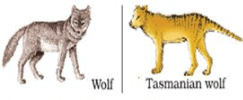
- a)Convergent evolution of Australian marsupials and placental mammals
- b)Homologous organs of both animals
- c)Divergent evolution of Australian marsupials and placental mammals
- d)Analogous organs of both animals
Correct answer is option 'A'. Can you explain this answer?
Picture shown below is example of:-
a)
Convergent evolution of Australian marsupials and placental mammals
b)
Homologous organs of both animals
c)
Divergent evolution of Australian marsupials and placental mammals
d)
Analogous organs of both animals

|
Dipanjan Chawla answered |
Wolf and Tasmania Wolf are examples of convergent evolution of placental mammals and Australian marsupials. They are evolved differently due to different in climatic and geographic regions.
Theory of 'Saltations' was given by - a)G Mendel
- b)Hugo de Vries
- c)J B S Haldane
- d)H J Miller
Correct answer is option 'B'. Can you explain this answer?
Theory of 'Saltations' was given by
a)
G Mendel
b)
Hugo de Vries
c)
J B S Haldane
d)
H J Miller
|
|
Shanaya Basak answered |
Introduction to the Theory of Saltations
The Theory of Saltations, proposed by Hugo de Vries, significantly contributed to the understanding of evolution and genetic variation. De Vries introduced this concept in the early 20th century, challenging the gradualism of Darwinian evolution.
Key Concepts of Saltation Theory
- Definition of Saltation:
Saltation refers to sudden and large evolutionary changes, as opposed to gradual changes over time.
- Mutation as a Driver:
De Vries emphasized mutations as the primary mechanism of saltation, suggesting that new species can arise rapidly due to significant genetic changes.
- Experiments with Evening Primrose:
De Vries conducted experiments on *Oenothera lamarckiana* (evening primrose) to observe how mutations could lead to new forms, supporting his theory.
Impact on Evolutionary Biology
- Revolutionized Understanding:
Saltation theory provided an alternative view to Darwin's gradualism, leading to discussions about the pace of evolutionary change.
- Foundation for Modern Genetics:
De Vries' work laid the groundwork for the field of genetics, influencing later researchers like J.B.S. Haldane and others who explored genetic variations in populations.
Conclusion
Hugo de Vries' Theory of Saltations highlights the importance of mutations in the evolutionary process, offering a perspective that complements traditional evolutionary theories. Understanding this theory is crucial for comprehending the mechanisms of evolution, especially in the context of genetic diversity and speciation.
The Theory of Saltations, proposed by Hugo de Vries, significantly contributed to the understanding of evolution and genetic variation. De Vries introduced this concept in the early 20th century, challenging the gradualism of Darwinian evolution.
Key Concepts of Saltation Theory
- Definition of Saltation:
Saltation refers to sudden and large evolutionary changes, as opposed to gradual changes over time.
- Mutation as a Driver:
De Vries emphasized mutations as the primary mechanism of saltation, suggesting that new species can arise rapidly due to significant genetic changes.
- Experiments with Evening Primrose:
De Vries conducted experiments on *Oenothera lamarckiana* (evening primrose) to observe how mutations could lead to new forms, supporting his theory.
Impact on Evolutionary Biology
- Revolutionized Understanding:
Saltation theory provided an alternative view to Darwin's gradualism, leading to discussions about the pace of evolutionary change.
- Foundation for Modern Genetics:
De Vries' work laid the groundwork for the field of genetics, influencing later researchers like J.B.S. Haldane and others who explored genetic variations in populations.
Conclusion
Hugo de Vries' Theory of Saltations highlights the importance of mutations in the evolutionary process, offering a perspective that complements traditional evolutionary theories. Understanding this theory is crucial for comprehending the mechanisms of evolution, especially in the context of genetic diversity and speciation.
The difference between Homo sapiens and the Homo erectus was ____.- a)Homo erectus was much smaller in size than Homo sapiens
- b)Homo sapiens originated in Africa while Homo erectus was in Asia
- c)Homo erectus stayed in Africa while Homo sapiens did not
- d)The size of their brain of Homo erectus was smaller to homo sapiens
Correct answer is option 'D'. Can you explain this answer?
The difference between Homo sapiens and the Homo erectus was ____.
a)
Homo erectus was much smaller in size than Homo sapiens
b)
Homo sapiens originated in Africa while Homo erectus was in Asia
c)
Homo erectus stayed in Africa while Homo sapiens did not
d)
The size of their brain of Homo erectus was smaller to homo sapiens

|
Jhanvi Menon answered |
The correct answer is option 'D': The size of their brain of Homo erectus was smaller than that of Homo sapiens.
Explanation:
Homo sapiens and Homo erectus are two distinct species of hominins that lived during different periods of human evolution. There are several differences between these two species, but one of the most significant differences lies in the size of their brains.
1. Homo erectus:
- Homo erectus is an extinct species of hominin that lived from about 1.9 million years ago to about 143,000 years ago.
- They had a relatively larger cranial capacity compared to earlier hominins, but their brain size was still smaller than that of Homo sapiens.
- The average cranial capacity of Homo erectus was about 900 to 1100 cubic centimeters.
- Homo erectus is known for its robust physical features, including a thick skull, prominent brow ridges, and a long, low skull shape.
2. Homo sapiens:
- Homo sapiens, also known as anatomically modern humans, emerged around 300,000 years ago and are the only surviving species of hominins.
- They have a significantly larger brain size compared to Homo erectus.
- The average cranial capacity of Homo sapiens is about 1200 to 1600 cubic centimeters.
- Homo sapiens have a more rounded skull shape and less pronounced brow ridges compared to earlier hominins.
Importance of brain size:
- The size of the brain is often correlated with cognitive abilities, such as problem-solving, language, and complex social interactions.
- A larger brain size generally indicates a higher level of cognitive development and intelligence.
- The increase in brain size throughout human evolution is believed to be associated with the development of complex behaviors and cultural advancements.
In summary, the main difference between Homo sapiens and Homo erectus is that the size of the brain of Homo erectus was smaller compared to that of Homo sapiens.
Explanation:
Homo sapiens and Homo erectus are two distinct species of hominins that lived during different periods of human evolution. There are several differences between these two species, but one of the most significant differences lies in the size of their brains.
1. Homo erectus:
- Homo erectus is an extinct species of hominin that lived from about 1.9 million years ago to about 143,000 years ago.
- They had a relatively larger cranial capacity compared to earlier hominins, but their brain size was still smaller than that of Homo sapiens.
- The average cranial capacity of Homo erectus was about 900 to 1100 cubic centimeters.
- Homo erectus is known for its robust physical features, including a thick skull, prominent brow ridges, and a long, low skull shape.
2. Homo sapiens:
- Homo sapiens, also known as anatomically modern humans, emerged around 300,000 years ago and are the only surviving species of hominins.
- They have a significantly larger brain size compared to Homo erectus.
- The average cranial capacity of Homo sapiens is about 1200 to 1600 cubic centimeters.
- Homo sapiens have a more rounded skull shape and less pronounced brow ridges compared to earlier hominins.
Importance of brain size:
- The size of the brain is often correlated with cognitive abilities, such as problem-solving, language, and complex social interactions.
- A larger brain size generally indicates a higher level of cognitive development and intelligence.
- The increase in brain size throughout human evolution is believed to be associated with the development of complex behaviors and cultural advancements.
In summary, the main difference between Homo sapiens and Homo erectus is that the size of the brain of Homo erectus was smaller compared to that of Homo sapiens.
Which of the following is the example of adaptive radiation?- a)Only Australian marsupials
- b)Only Darwin finches
- c)Darwin finches and Australian marsupials
- d)Light and dark winged moths
Correct answer is option 'C'. Can you explain this answer?
Which of the following is the example of adaptive radiation?
a)
Only Australian marsupials
b)
Only Darwin finches
c)
Darwin finches and Australian marsupials
d)
Light and dark winged moths
|
|
Kushagra Budhgaya answered |
Refer ncert u'll get the explanation
Which theory explains the origin of universe?- a)Molecular theory
- b)Darwin theory
- c)Lamarck theory
- d)Big bang theory
Correct answer is option 'D'. Can you explain this answer?
Which theory explains the origin of universe?
a)
Molecular theory
b)
Darwin theory
c)
Lamarck theory
d)
Big bang theory

|
Nayanika Reddy answered |
Origin of universe is explained by big bang theory. According to this theory, whole universe was concentrated into single sphere. Due to same unknown region, there was explosion in it that forms different galaxies still moving away from each other.
Who demonstrated that life originated from pre-existing cells?- a)Louis Pasteur
- b)Hugo de Vries
- c)Charles Darwin
- d)Stanley Miller
Correct answer is option 'A'. Can you explain this answer?
Who demonstrated that life originated from pre-existing cells?
a)
Louis Pasteur
b)
Hugo de Vries
c)
Charles Darwin
d)
Stanley Miller
|
|
EduRev NEET answered |
- Louis Pasteur in his swan neck flask experiment, found out that life originated from pre-existing life.
- He prepared sterilized syrup of sugar and later killed yeast by boiling them in flasks.
Lamarck theory of organic evolution is usually known as- a)Natural selection
- b)Inheritance of acquired characters
- c)Descent with change
- d)Continuity of germplasm
Correct answer is option 'B'. Can you explain this answer?
Lamarck theory of organic evolution is usually known as
a)
Natural selection
b)
Inheritance of acquired characters
c)
Descent with change
d)
Continuity of germplasm
|
|
Shathananda Varanasi answered |
Correct answer is B because, as you know, lamarck in his theory talked only about the inheritance of the acquired characters from the parents to progeny. He told that, giraffes has acquired the long neck from the ancestors in which the long neck was not present at the time of birth, but aquired during their course of development.
What observation about moths in England supports the concept of natural selection?- a)White-winged moths increased in number after industrialization.
- b)Dark-winged moths became more common in polluted areas after industrialization.
- c)Moth populations remained unchanged regardless of environmental conditions.
- d)Predators preferred dark-winged moths in all conditions.
Correct answer is option 'B'. Can you explain this answer?
a)
White-winged moths increased in number after industrialization.
b)
Dark-winged moths became more common in polluted areas after industrialization.
c)
Moth populations remained unchanged regardless of environmental conditions.
d)
Predators preferred dark-winged moths in all conditions.
|
|
EduRev NEET answered |
Before industrialization, white-winged moths were more common against lichen-covered trees. After industrialization, tree trunks darkened with soot, and dark-winged moths became more common as they camouflaged better, surviving predation. This shift demonstrates natural selection favoring better-adapted variants.
Adaptive radiation does not confirm _______- a)Convergent evolution
- b)Homology
- c)Divergent evolution
- d)Evolution of new forms
Correct answer is option 'A'. Can you explain this answer?
Adaptive radiation does not confirm _______
a)
Convergent evolution
b)
Homology
c)
Divergent evolution
d)
Evolution of new forms
|
|
EduRev NEET answered |
- It is not adaptive radiation that confirms convergent evolution.
- It is an adaptive convergence that confirms convergent evolution.
- The remaining options are applicable to adaptive radiation.
The extinct human who lived 1,00,000 to 40,000 years ago, in Europe, Asia and parts of Africa, with short stature, heavy eye brows, retreating foreheads, large jaws with heavy teeth, stocky bodies, a lumbering gait and stooped posture was- a)Neanderthal human
- b)Ramapithecus
- c)Cro-Magnon human
- d)Homo habilis
Correct answer is option 'A'. Can you explain this answer?
The extinct human who lived 1,00,000 to 40,000 years ago, in Europe, Asia and parts of Africa, with short stature, heavy eye brows, retreating foreheads, large jaws with heavy teeth, stocky bodies, a lumbering gait and stooped posture was
a)
Neanderthal human
b)
Ramapithecus
c)
Cro-Magnon human
d)
Homo habilis
|
|
Meghana Mehta answered |
The correct answer is option 'A' - Neanderthal human.
Explanation:
Neanderthals were a species of extinct humans who lived from approximately 100,000 to 40,000 years ago in Europe, Asia, and parts of Africa. They are known for their distinct physical features and characteristics.
Physical Features:
1. Short Stature: Neanderthals had a relatively short average height compared to modern humans, with males averaging around 5'5" and females around 5'1".
2. Heavy Eye Brows: They had prominent brow ridges and heavy eyebrows, giving them a unique facial appearance.
3. Retreating Foreheads: Neanderthals had low and sloping foreheads.
4. Large Jaws with Heavy Teeth: They had robust jaws and large teeth, which were adapted for a diet that included tough and coarse foods.
5. Stocky Bodies: Neanderthals had a robust and stocky body build, with strong bones and muscles.
6. Lumbering Gait and Stooped Posture: Due to their body structure, Neanderthals had a distinctive gait and posture, often described as stooped or hunched.
Differences from Modern Humans:
Despite some similarities to modern humans, Neanderthals had several distinct features that set them apart:
1. Cranial Capacity: Neanderthals had a larger cranial capacity than modern humans, suggesting a different pattern of brain development.
2. Tool Use: Neanderthals were skilled toolmakers and used a variety of stone tools for hunting and other activities.
3. Cultural Behavior: They had their own unique cultural behaviors, including burying their dead and creating symbolic objects.
4. Genetic Differences: Genetic studies have shown that Neanderthals interbred with early modern humans, and some individuals of non-African descent today carry a small percentage of Neanderthal DNA.
Conclusion:
Neanderthals were an extinct human species that lived in Europe, Asia, and parts of Africa. They had distinct physical features such as short stature, heavy eyebrows, retreating foreheads, large jaws with heavy teeth, stocky bodies, a lumbering gait, and a stooped posture. Neanderthals had their own unique cultural behaviors and interbred with early modern humans.
Explanation:
Neanderthals were a species of extinct humans who lived from approximately 100,000 to 40,000 years ago in Europe, Asia, and parts of Africa. They are known for their distinct physical features and characteristics.
Physical Features:
1. Short Stature: Neanderthals had a relatively short average height compared to modern humans, with males averaging around 5'5" and females around 5'1".
2. Heavy Eye Brows: They had prominent brow ridges and heavy eyebrows, giving them a unique facial appearance.
3. Retreating Foreheads: Neanderthals had low and sloping foreheads.
4. Large Jaws with Heavy Teeth: They had robust jaws and large teeth, which were adapted for a diet that included tough and coarse foods.
5. Stocky Bodies: Neanderthals had a robust and stocky body build, with strong bones and muscles.
6. Lumbering Gait and Stooped Posture: Due to their body structure, Neanderthals had a distinctive gait and posture, often described as stooped or hunched.
Differences from Modern Humans:
Despite some similarities to modern humans, Neanderthals had several distinct features that set them apart:
1. Cranial Capacity: Neanderthals had a larger cranial capacity than modern humans, suggesting a different pattern of brain development.
2. Tool Use: Neanderthals were skilled toolmakers and used a variety of stone tools for hunting and other activities.
3. Cultural Behavior: They had their own unique cultural behaviors, including burying their dead and creating symbolic objects.
4. Genetic Differences: Genetic studies have shown that Neanderthals interbred with early modern humans, and some individuals of non-African descent today carry a small percentage of Neanderthal DNA.
Conclusion:
Neanderthals were an extinct human species that lived in Europe, Asia, and parts of Africa. They had distinct physical features such as short stature, heavy eyebrows, retreating foreheads, large jaws with heavy teeth, stocky bodies, a lumbering gait, and a stooped posture. Neanderthals had their own unique cultural behaviors and interbred with early modern humans.
Which fossil of the ape was known as the connecting link between apes and man?- a)Ramapithecus
- b)Dryopithecus
- c)Australopithecus
- d)Shivapithecus
Correct answer is option 'C'. Can you explain this answer?
Which fossil of the ape was known as the connecting link between apes and man?
a)
Ramapithecus
b)
Dryopithecus
c)
Australopithecus
d)
Shivapithecus
|
|
Lead Academy answered |
- Australopithecus was known as the connecting link between apes and man.
- They had complete erect posture and showed bipedal locomotion.
- It was the first man to stand erect.
Which of the following is not a similarity between man and apes?
- a)Smaller head, less cranial capacity
- b)Erect posture
- c)none
- d)Grasping hands
Correct answer is option 'A'. Can you explain this answer?
Which of the following is not a similarity between man and apes?
a)
Smaller head, less cranial capacity
b)
Erect posture
c)
none
d)
Grasping hands
|
|
Lead Academy answered |
- Smaller head, less cranial capacity is not a similarity between man and apes.
- Actually, they had a larger head and more cranial capacity.
- The remaining options share similarities between man and apes.
Human being belongs to the species of_____.- a)Homo erectus
- b)Hominidae
- c)Homo sapiens
- d)Homo habillis
Correct answer is option 'C'. Can you explain this answer?
Human being belongs to the species of_____.
a)
Homo erectus
b)
Hominidae
c)
Homo sapiens
d)
Homo habillis

|
Debolina Chopra answered |
Human being belongs to the species of Homo sapiens.
Homo sapiens is the scientific name for modern humans. The classification of humans as Homo sapiens is based on several factors, including physical characteristics, genetic similarities, and cultural attributes.
Here is a detailed explanation of why humans are classified as Homo sapiens:
1. Classification System:
- Humans are classified within the animal kingdom, specifically in the class Mammalia, order Primates, and family Hominidae.
- The family Hominidae includes great apes (orangutans, gorillas, and chimpanzees) and humans.
- Within the family Hominidae, humans are further classified into the genus Homo.
2. Genus Homo:
- The genus Homo includes several extinct species such as Homo habilis, Homo erectus, and Homo neanderthalensis, as well as the modern humans Homo sapiens.
- These species share common characteristics and evolutionary traits.
3. Homo sapiens:
- Homo sapiens is the only surviving species of the genus Homo.
- The term "sapiens" means "wise" or "intelligent" in Latin, reflecting the cognitive abilities and complex societies of modern humans.
- Homo sapiens have distinct physical features, including an upright posture, large brain size, and a highly developed capacity for language and abstract thinking.
- Humans also exhibit unique cultural and behavioral traits, such as the ability to use tools, create art, and engage in symbolic communication.
4. Genetic Similarities:
- Humans share a significant amount of their genetic material with other members of the Hominidae family, particularly with chimpanzees.
- DNA analysis has revealed a high degree of genetic similarity between humans and chimpanzees, supporting the classification of humans as part of the Hominidae family.
In conclusion, humans belong to the species Homo sapiens, which is a result of their unique physical characteristics, genetic similarities to other members of the Hominidae family, and distinctive cognitive and cultural attributes.
Homo sapiens is the scientific name for modern humans. The classification of humans as Homo sapiens is based on several factors, including physical characteristics, genetic similarities, and cultural attributes.
Here is a detailed explanation of why humans are classified as Homo sapiens:
1. Classification System:
- Humans are classified within the animal kingdom, specifically in the class Mammalia, order Primates, and family Hominidae.
- The family Hominidae includes great apes (orangutans, gorillas, and chimpanzees) and humans.
- Within the family Hominidae, humans are further classified into the genus Homo.
2. Genus Homo:
- The genus Homo includes several extinct species such as Homo habilis, Homo erectus, and Homo neanderthalensis, as well as the modern humans Homo sapiens.
- These species share common characteristics and evolutionary traits.
3. Homo sapiens:
- Homo sapiens is the only surviving species of the genus Homo.
- The term "sapiens" means "wise" or "intelligent" in Latin, reflecting the cognitive abilities and complex societies of modern humans.
- Homo sapiens have distinct physical features, including an upright posture, large brain size, and a highly developed capacity for language and abstract thinking.
- Humans also exhibit unique cultural and behavioral traits, such as the ability to use tools, create art, and engage in symbolic communication.
4. Genetic Similarities:
- Humans share a significant amount of their genetic material with other members of the Hominidae family, particularly with chimpanzees.
- DNA analysis has revealed a high degree of genetic similarity between humans and chimpanzees, supporting the classification of humans as part of the Hominidae family.
In conclusion, humans belong to the species Homo sapiens, which is a result of their unique physical characteristics, genetic similarities to other members of the Hominidae family, and distinctive cognitive and cultural attributes.
What is another name of human evolution?- a)Neogenesis
- b)Anthropogenesis
- c)Metagenesis
- d)Fossilizes
Correct answer is option 'B'. Can you explain this answer?
What is another name of human evolution?
a)
Neogenesis
b)
Anthropogenesis
c)
Metagenesis
d)
Fossilizes
|
|
Stepway Academy answered |
- Human evolution or anthropogenesis is part of biological evolution which studies the emergence of Homo sapiens sapiens.
- They were the distinct species from other hominids, great apes and placental mammals.
A type of natural selection in which more individuals acquire peripheral character value at both ends of distribution curve is- a)Directional selection
- b)Disruptive selection
- c)Balancing selection
- d)Stabilising selection
Correct answer is option 'B'. Can you explain this answer?
A type of natural selection in which more individuals acquire peripheral character value at both ends of distribution curve is
a)
Directional selection
b)
Disruptive selection
c)
Balancing selection
d)
Stabilising selection
|
|
Dhruba Patel answered |
Understanding Disruptive Selection
Disruptive selection is a fascinating form of natural selection that leads to the enhancement of extreme traits within a population. This process plays a crucial role in evolutionary biology.
What is Disruptive Selection?
- Disruptive selection occurs when individuals at both extremes of a trait distribution have a higher fitness than those with intermediate traits.
- This can lead to a bimodal distribution of traits, where the population diverges into two distinct groups.
Key Characteristics
- Enhanced Extremes: Individuals with extreme traits, such as very large or very small sizes, tend to survive and reproduce more successfully than those with average traits.
- Environmental Factors: This selection often arises in heterogeneous environments where resources are split among different niches, favoring specialized adaptations.
Examples of Disruptive Selection
- Bird Beak Size: In a habitat with two types of seeds (large and small), birds with either very large or very small beaks are more successful in feeding than those with average-sized beaks.
- Coloration in Animals: If a species of fish has two distinct color patterns that provide camouflage against predators, individuals displaying these extremes are more likely to survive.
Conclusion
Disruptive selection can lead to speciation by promoting the divergence of populations. This process is essential in understanding the dynamics of evolution and biodiversity, illustrating how environmental pressures shape the traits of organisms over time.
Disruptive selection is a fascinating form of natural selection that leads to the enhancement of extreme traits within a population. This process plays a crucial role in evolutionary biology.
What is Disruptive Selection?
- Disruptive selection occurs when individuals at both extremes of a trait distribution have a higher fitness than those with intermediate traits.
- This can lead to a bimodal distribution of traits, where the population diverges into two distinct groups.
Key Characteristics
- Enhanced Extremes: Individuals with extreme traits, such as very large or very small sizes, tend to survive and reproduce more successfully than those with average traits.
- Environmental Factors: This selection often arises in heterogeneous environments where resources are split among different niches, favoring specialized adaptations.
Examples of Disruptive Selection
- Bird Beak Size: In a habitat with two types of seeds (large and small), birds with either very large or very small beaks are more successful in feeding than those with average-sized beaks.
- Coloration in Animals: If a species of fish has two distinct color patterns that provide camouflage against predators, individuals displaying these extremes are more likely to survive.
Conclusion
Disruptive selection can lead to speciation by promoting the divergence of populations. This process is essential in understanding the dynamics of evolution and biodiversity, illustrating how environmental pressures shape the traits of organisms over time.
Which of the following is an example of homologous structures indicating common ancestry?- a)Wings of butterflies and birds.
- b)Flippers of penguins and dolphins.
- c)Forelimbs of whales, bats, and humans.
- d)Sweet potato roots and potato stems.
Correct answer is option 'C'. Can you explain this answer?
a)
Wings of butterflies and birds.
b)
Flippers of penguins and dolphins.
c)
Forelimbs of whales, bats, and humans.
d)
Sweet potato roots and potato stems.

|
Infinity Academy answered |
Homologous structures, like the forelimbs of whales, bats, and humans, have similar anatomical structures (humerus, radius, ulna, etc.) despite different functions, indicating divergent evolution from a common ancestor. The other options represent analogous structures due to convergent evolution.

Which event marks the transition from reptiles to mammals in the evolutionary timeline?- a)Appearance of lobe-finned fish around 350 mya.
- b)Evolution of dinosaurs dominating the earth around 200 mya.
- c)Emergence of small, shrew-like mammals after the decline of dinosaurs around 65 mya.
- d)Development of jawless fish around 350 mya.
Correct answer is option 'C'. Can you explain this answer?
a)
Appearance of lobe-finned fish around 350 mya.
b)
Evolution of dinosaurs dominating the earth around 200 mya.
c)
Emergence of small, shrew-like mammals after the decline of dinosaurs around 65 mya.
d)
Development of jawless fish around 350 mya.
|
|
EduRev NEET answered |
Around 65 million years ago (mya), after dinosaurs disappeared, small, shrew-like mammals emerged and diversified, marking the transition from reptile dominance to mammals. These early mammals were viviparous and adapted to new niches, unlike earlier fish or dinosaur stages.
Embryological support for evolution was proposed by- a)Ernst Heckel
- b)Karl Ernst von Baer
- c)Charles Darwin
- d)Alfred Wallace
Correct answer is option 'A'. Can you explain this answer?
a)
Ernst Heckel
b)
Karl Ernst von Baer
c)
Charles Darwin
d)
Alfred Wallace
|
|
Niti Das answered |
Embryological Support for Evolution
The concept of embryological support for evolution is closely associated with the work of Ernst Haeckel, who popularized the idea that embryonic development reflects the evolutionary history of an organism.
Key Contributions of Ernst Haeckel
- Biogenetic Law: Haeckel proposed the biogenetic law, often summarized as "ontogeny recapitulates phylogeny." This means that the development of an individual organism (ontogeny) mirrors the evolutionary history (phylogeny) of that organism's species.
- Embryonic Similarities: He observed that embryos of different vertebrates exhibit significant similarities during early stages of development. For instance, the embryos of fish, birds, and mammals all share similar features, such as pharyngeal arches and tail structures.
- Evolutionary Evidence: Haeckel argued that these similarities indicate a common ancestry among species. The embryological stages serve as evidence of evolutionary relationships, suggesting that species have diverged from common ancestors over time.
Impact on Evolutionary Theory
- Support for Darwin: Haeckel's ideas provided strong support for Charles Darwin's theory of evolution by natural selection. By linking embryology to evolutionary processes, Haeckel helped to elucidate how complex traits could evolve.
- Controversy and Criticism: While Haeckel's ideas were influential, they have also been criticized for oversimplifying the relationship between development and evolution. Modern biology recognizes that while there are developmental similarities, they do not always indicate direct evolutionary paths.
Conclusion
Overall, Ernst Haeckel's contributions to understanding the relationship between embryology and evolution have had a lasting impact on the field of evolutionary biology, highlighting the significance of developmental processes in understanding the history of life on Earth.
The concept of embryological support for evolution is closely associated with the work of Ernst Haeckel, who popularized the idea that embryonic development reflects the evolutionary history of an organism.
Key Contributions of Ernst Haeckel
- Biogenetic Law: Haeckel proposed the biogenetic law, often summarized as "ontogeny recapitulates phylogeny." This means that the development of an individual organism (ontogeny) mirrors the evolutionary history (phylogeny) of that organism's species.
- Embryonic Similarities: He observed that embryos of different vertebrates exhibit significant similarities during early stages of development. For instance, the embryos of fish, birds, and mammals all share similar features, such as pharyngeal arches and tail structures.
- Evolutionary Evidence: Haeckel argued that these similarities indicate a common ancestry among species. The embryological stages serve as evidence of evolutionary relationships, suggesting that species have diverged from common ancestors over time.
Impact on Evolutionary Theory
- Support for Darwin: Haeckel's ideas provided strong support for Charles Darwin's theory of evolution by natural selection. By linking embryology to evolutionary processes, Haeckel helped to elucidate how complex traits could evolve.
- Controversy and Criticism: While Haeckel's ideas were influential, they have also been criticized for oversimplifying the relationship between development and evolution. Modern biology recognizes that while there are developmental similarities, they do not always indicate direct evolutionary paths.
Conclusion
Overall, Ernst Haeckel's contributions to understanding the relationship between embryology and evolution have had a lasting impact on the field of evolutionary biology, highlighting the significance of developmental processes in understanding the history of life on Earth.
Which of the following best describes the mechanism of evolution proposed by Hugo de Vries?- a)Gradual changes through small, directional variations.
- b)Evolution through sudden, large mutations called saltation.
- c)Evolution driven by the use and disuse of organs.
- d)Stabilizing selection maintaining population traits.
Correct answer is option 'B'. Can you explain this answer?
a)
Gradual changes through small, directional variations.
b)
Evolution through sudden, large mutations called saltation.
c)
Evolution driven by the use and disuse of organs.
d)
Stabilizing selection maintaining population traits.
|
|
Lead Academy answered |
Hugo de Vries proposed that evolution occurs through sudden, large mutations (saltation), contrasting with Darwin’s gradual, small variations. He based this on his work with evening primrose, suggesting speciation happens in single, significant steps.
On Galapagos island, Darwin observed variation in beaks of birds (Darwin's finches) and he concluded:- a) Inter species variation
- b) Intraspecies variation
- c) Natural selection according to food
- d) Inheritance of acquired characters
Correct answer is option 'C'. Can you explain this answer?
On Galapagos island, Darwin observed variation in beaks of birds (Darwin's finches) and he concluded:
a)
Inter species variation
b)
Intraspecies variation
c)
Natural selection according to food
d)
Inheritance of acquired characters

|
Mohit Rajpoot answered |
- All the varieties, he conjectured, evolved on the island itself.
- From the original seed eating features, many other forms with altered beaks arose, enabling them to become insectivorous and vegetarian finches
What is genetic equilibrium?- a)When all the alleles of a gene are present in a population in equal frequencies
- b)When the number of heterozygotes in a population are not equal to the number of either of the homozygote
- c)When the number of heterozygotes in a population are equal to the number of either of the homozygote
- d)When the frequency of particular genes or alleles remain constant in a population through generations
Correct answer is option 'D'. Can you explain this answer?
What is genetic equilibrium?
a)
When all the alleles of a gene are present in a population in equal frequencies
b)
When the number of heterozygotes in a population are not equal to the number of either of the homozygote
c)
When the number of heterozygotes in a population are equal to the number of either of the homozygote
d)
When the frequency of particular genes or alleles remain constant in a population through generations
|
|
Stepway Academy answered |
This principle says that allele frequencies in a population are stable and is constant from generation to generation.
_______ was the name of the ship in which Darwin sailed around the world.- a)H.M.S Beagle
- b)H.S.S Beagle
- c)H.P.S Beagle
- d)H.M.S Eagle
Correct answer is option 'A'. Can you explain this answer?
_______ was the name of the ship in which Darwin sailed around the world.
a)
H.M.S Beagle
b)
H.S.S Beagle
c)
H.P.S Beagle
d)
H.M.S Eagle

|
Top Rankers answered |
- Charles Darwin had set voyage around the world in a ship named H.M.S Beagle.
- He traveled to different islands to research about evolution.
- He found out that the existing living organisms had many similarities with life forms that existed millions of years ago.
This diagram represents which selection?
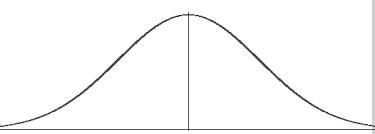
- a)Disruptive selection
- b)Stabilizing selection
- c)Directional selection
- d)Artificial selection
Correct answer is option 'B'. Can you explain this answer?
This diagram represents which selection?
a)
Disruptive selection
b)
Stabilizing selection
c)
Directional selection
d)
Artificial selection
|
|
EduRev NEET answered |
- This graph indicates stabilizing selection. As we can see, the peak gets higher and narrower.
- In this selection, most of the individuals acquire mean character value.
Stanley Mille synthesized in his experiment : [CPMT 79]- a)Virus
- b)Protein
- c)Amino acid
- d)Cell
Correct answer is option 'C'. Can you explain this answer?
Stanley Mille synthesized in his experiment :
[CPMT 79]
a)
Virus
b)
Protein
c)
Amino acid
d)
Cell
|
|
Ishita Rane answered |
Stanley Miller's Experiment
In 1953, Stanley Miller, an American chemist, conducted an experiment to simulate the conditions believed to be present on early Earth. The purpose of this experiment was to investigate the origin of life and the formation of organic molecules.
Procedure
Miller set up a closed system that mimicked the early Earth's atmosphere, consisting of water vapor, methane, ammonia, and hydrogen. He then applied an electric spark to simulate lightning, which was believed to be a common occurrence in the early atmosphere. This high-energy spark provided the necessary energy to drive chemical reactions.
Results
After running the experiment for a week, Miller analyzed the contents of the system. He found that a variety of organic molecules had formed, including amino acids, the building blocks of proteins.
Significance of Amino Acids
Amino acids are organic compounds that contain an amino group (-NH2) and a carboxyl group (-COOH). They are the basic units that link together to form proteins, which are essential for the structure and function of living organisms.
The discovery of amino acids in Miller's experiment was significant because it provided experimental evidence that the basic building blocks of life could arise spontaneously under conditions similar to those on early Earth. This supported the theory of abiogenesis, which postulates that life can originate from non-living matter.
Furthermore, the formation of amino acids in Miller's experiment suggested that the early Earth's atmosphere could have been a rich source of organic compounds. These organic molecules may have subsequently interacted to form more complex biomolecules, eventually giving rise to the first living cells.
Conclusion
Stanley Miller's experiment demonstrated that under the simulated conditions of the early Earth's atmosphere, amino acids, the building blocks of proteins, could be synthesized. This experiment provided valuable insights into the origin of life and supported the theory of abiogenesis.
Who gave experimental proof that hydrogen methane water and ammonia gave rise to amino acids : [NCERT 82]- a)Stanley Miller
- b)Charles Darwin
- c)Lamarck
- d)Oparin
Correct answer is option 'A'. Can you explain this answer?
Who gave experimental proof that hydrogen methane water and ammonia gave rise to amino acids :
[NCERT 82]
a)
Stanley Miller
b)
Charles Darwin
c)
Lamarck
d)
Oparin
|
|
Kunal Nambiar answered |
**Answer:**
Experimental proof that hydrogen, methane, water, and ammonia gave rise to amino acids was provided by Stanley Miller.
**Stanley Miller's Experiment:**
In 1953, Stanley Miller, a graduate student working under the supervision of Harold Urey, conducted an experiment to simulate the conditions thought to be present on early Earth. The aim of the experiment was to test the hypothesis that the building blocks of life, such as amino acids, could have been formed under these conditions.
**Setup:**
Miller set up a closed system consisting of a flask containing a mixture of gases representing the atmosphere of early Earth. He used a mixture of hydrogen (H2), methane (CH4), ammonia (NH3), and water vapor (H2O). The flask was connected to a series of glass tubes representing the ocean or a water source. The purpose of the water vapor was to simulate the presence of water on early Earth.
**Electric Discharge:**
Miller then passed electric sparks through the mixture of gases to simulate the energy provided by lightning or volcanic activity. The sparks provided an energy source that could have driven chemical reactions, leading to the formation of complex molecules.
**Analysis:**
After running the experiment for about a week, Miller analyzed the contents of the flask. He found that the mixture contained a variety of organic compounds, including amino acids, which are the building blocks of proteins. This was a significant discovery because it showed that simple organic molecules, like amino acids, could be formed under the conditions thought to be present on early Earth.
**Significance:**
Miller's experiment provided experimental evidence that supported the hypothesis that the building blocks of life could have formed under the conditions of early Earth. It demonstrated that simple organic molecules, including amino acids, could be produced from basic components like hydrogen, methane, water, and ammonia in the presence of an energy source.
Miller's experiment played a crucial role in supporting the concept of chemical evolution, which suggests that the complex molecules necessary for life could have arisen from simpler compounds through natural processes. It provided a plausible explanation for the origin of life on Earth and opened up new avenues of research in the field of prebiotic chemistry.
Experimental proof that hydrogen, methane, water, and ammonia gave rise to amino acids was provided by Stanley Miller.
**Stanley Miller's Experiment:**
In 1953, Stanley Miller, a graduate student working under the supervision of Harold Urey, conducted an experiment to simulate the conditions thought to be present on early Earth. The aim of the experiment was to test the hypothesis that the building blocks of life, such as amino acids, could have been formed under these conditions.
**Setup:**
Miller set up a closed system consisting of a flask containing a mixture of gases representing the atmosphere of early Earth. He used a mixture of hydrogen (H2), methane (CH4), ammonia (NH3), and water vapor (H2O). The flask was connected to a series of glass tubes representing the ocean or a water source. The purpose of the water vapor was to simulate the presence of water on early Earth.
**Electric Discharge:**
Miller then passed electric sparks through the mixture of gases to simulate the energy provided by lightning or volcanic activity. The sparks provided an energy source that could have driven chemical reactions, leading to the formation of complex molecules.
**Analysis:**
After running the experiment for about a week, Miller analyzed the contents of the flask. He found that the mixture contained a variety of organic compounds, including amino acids, which are the building blocks of proteins. This was a significant discovery because it showed that simple organic molecules, like amino acids, could be formed under the conditions thought to be present on early Earth.
**Significance:**
Miller's experiment provided experimental evidence that supported the hypothesis that the building blocks of life could have formed under the conditions of early Earth. It demonstrated that simple organic molecules, including amino acids, could be produced from basic components like hydrogen, methane, water, and ammonia in the presence of an energy source.
Miller's experiment played a crucial role in supporting the concept of chemical evolution, which suggests that the complex molecules necessary for life could have arisen from simpler compounds through natural processes. It provided a plausible explanation for the origin of life on Earth and opened up new avenues of research in the field of prebiotic chemistry.
Chapter doubts & questions for Evolution - 30-Day Revision Course for NEET 2026 is part of NEET exam preparation. The chapters have been prepared according to the NEET exam syllabus. The Chapter doubts & questions, notes, tests & MCQs are made for NEET 2026 Exam. Find important definitions, questions, notes, meanings, examples, exercises, MCQs and online tests here.
Chapter doubts & questions of Evolution - 30-Day Revision Course for NEET in English & Hindi are available as part of NEET exam.
Download more important topics, notes, lectures and mock test series for NEET Exam by signing up for free.
30-Day Revision Course for NEET
85 videos|301 docs|171 tests
|
