


All Exams >
Class 8 >
Geography for Class 8 >
All Questions
All questions of Agriculture for Class 8 Exam
Name the oldest occupation known to humans- a)Agriculture
- b)Trading
- c)Mining
- d)Hunting
Correct answer is option 'A'. Can you explain this answer?
Name the oldest occupation known to humans
a)
Agriculture
b)
Trading
c)
Mining
d)
Hunting

|
Mona Ghosh answered |
1 Agriculture bcz.A poor person can also do.
2 A non educational person also can do.
3 In a traditional manner they can do.

Name the term given to the commercial rearing of silk worms to supplement the income of the farmer.- a)Horticulture
- b)Viticulture
- c)Sericulture
- d)Pisciculture
Correct answer is option 'C'. Can you explain this answer?
Name the term given to the commercial rearing of silk worms to supplement the income of the farmer.
a)
Horticulture
b)
Viticulture
c)
Sericulture
d)
Pisciculture

|
Maitri Patel answered |
Sericulture
Sericulture is the term given to the commercial rearing of silk worms to supplement the income of the farmer. It is a lucrative business and is practiced mainly in the rural areas of India. The practice of sericulture involves the cultivation of mulberry trees, which provide the food for the silk worms.
Process of Sericulture
The process involves the following steps:
1. Mulberry cultivation: Farmers cultivate mulberry trees to provide food for the silk worms.
2. Egg production: Female silk moths lay eggs which are collected and kept in a cool place until they hatch.
3. Rearing of silk worms: The eggs hatch into silk worms, which are then reared in trays. The silk worms are fed with fresh mulberry leaves every day.
4. Cocoon formation: After about 25-30 days, the silk worms stop eating and start spinning cocoons around themselves.
5. Silk extraction: After about 10-12 days, the cocoons are ready to be harvested. The silk is extracted from the cocoons by boiling them in water.
6. Weaving: The silk is then spun into thread and woven into fabric.
Benefits of Sericulture
Sericulture has several benefits:
1. It provides a source of income for farmers.
2. It is an eco-friendly activity as it involves the cultivation of mulberry trees.
3. It provides employment opportunities for rural communities.
4. It is a renewable resource as the silk worms can be reared again and again.
5. It is a high-value product that has a huge demand in both domestic and international markets.
Conclusion
Sericulture is an important activity that has the potential to transform the lives of farmers in rural areas. It is a sustainable and eco-friendly activity that provides a source of income and employment to rural communities. With proper training and support, sericulture can be a profitable business for farmers.
Sericulture is the term given to the commercial rearing of silk worms to supplement the income of the farmer. It is a lucrative business and is practiced mainly in the rural areas of India. The practice of sericulture involves the cultivation of mulberry trees, which provide the food for the silk worms.
Process of Sericulture
The process involves the following steps:
1. Mulberry cultivation: Farmers cultivate mulberry trees to provide food for the silk worms.
2. Egg production: Female silk moths lay eggs which are collected and kept in a cool place until they hatch.
3. Rearing of silk worms: The eggs hatch into silk worms, which are then reared in trays. The silk worms are fed with fresh mulberry leaves every day.
4. Cocoon formation: After about 25-30 days, the silk worms stop eating and start spinning cocoons around themselves.
5. Silk extraction: After about 10-12 days, the cocoons are ready to be harvested. The silk is extracted from the cocoons by boiling them in water.
6. Weaving: The silk is then spun into thread and woven into fabric.
Benefits of Sericulture
Sericulture has several benefits:
1. It provides a source of income for farmers.
2. It is an eco-friendly activity as it involves the cultivation of mulberry trees.
3. It provides employment opportunities for rural communities.
4. It is a renewable resource as the silk worms can be reared again and again.
5. It is a high-value product that has a huge demand in both domestic and international markets.
Conclusion
Sericulture is an important activity that has the potential to transform the lives of farmers in rural areas. It is a sustainable and eco-friendly activity that provides a source of income and employment to rural communities. With proper training and support, sericulture can be a profitable business for farmers.
Name the type of farming practiced to meet the needs of the farmer's family i.e.- a)Mixed Farming
- b)Subsistence Farming
- c)Commercial Farming
- d)Plantation agriculture
Correct answer is option 'B'. Can you explain this answer?
Name the type of farming practiced to meet the needs of the farmer's family i.e.
a)
Mixed Farming
b)
Subsistence Farming
c)
Commercial Farming
d)
Plantation agriculture

|
Pooja Choudhury answered |
Subsistence farming, form of farming in which nearly all of the crops or livestock raised are used to maintain the farmer and the farmer's family, leaving little, if any, surplus for sale or trade.
Name the term given to the Breeding of Fish in specially constructed tanks and ponds- a)Sericulture
- b)Pisciculture
- c)Horticulture
- d)Viticulture
Correct answer is option 'B'. Can you explain this answer?
Name the term given to the Breeding of Fish in specially constructed tanks and ponds
a)
Sericulture
b)
Pisciculture
c)
Horticulture
d)
Viticulture

|
Anita Menon answered |
Pisciculture also known as fish farming is the rearing of fish for food in enclosures such as fish ponds or tanks. The fish are reared and raised in enclosures such as cages, open nets, tanks and ponds.
Analyse the following and identify which one among the following can be treated as Inputs to the agriculture system. 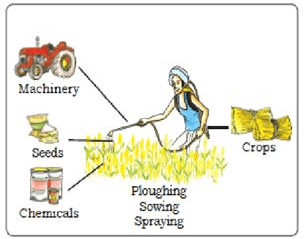
- a)Crops
- b)Machinery, Seeds,Chemicals
- c)Ploughing, Sowing, Spraying
- d)All of the above
Correct answer is option 'B'. Can you explain this answer?
Analyse the following and identify which one among the following can be treated as Inputs to the agriculture system.
a)
Crops
b)
Machinery, Seeds,Chemicals
c)
Ploughing, Sowing, Spraying
d)
All of the above
|
|
Priya Menon answered |
Agricultural inputs range from improved seeds, fertilizers and crop protection chemicals to machinery, irrigation and knowledge. Seeds are critical to successful crop production and inevitably, farm productivity and profitability. Fertilizer supplies nutrients to the soil that are essential for growth
Banking, Insurance sectors etc can be a good example of which of the following type of economic activity- a)Tertiary
- b)Primary
- c)Secondary
- d)Primary and Secondary
Correct answer is option 'A'. Can you explain this answer?
Banking, Insurance sectors etc can be a good example of which of the following type of economic activity
a)
Tertiary
b)
Primary
c)
Secondary
d)
Primary and Secondary
|
|
Aditi Saxena answered |
Tertiary Sector Refers to Commercial Services
The tertiary sector of the economy is the service industry. Service companies do not provide a physical good like the primary or secondary sectors do, but they still provide value. For example, banks, insurance and the police all are examples of the service industry. Industries included in the primary or secondary sectors will typically have employees that provide tertiary services such as advertising, accountants and warehousing employees. The tertiary sector is usually strongest in advanced market economies.
Name the term given to the land on which the crops are grown- a)Arable
- b)Pasture
- c)Meadow
- d)Barren
Correct answer is option 'A'. Can you explain this answer?
Name the term given to the land on which the crops are grown
a)
Arable
b)
Pasture
c)
Meadow
d)
Barren
|
|
Anjali Kapoor answered |
Arable land (from Latin arabilis, "able to be plowed") is, according to one definition, land capable of being ploughed and used to grow crops.In Britain, it was traditionally contrasted with pasturable land such as heaths which could be used for sheep-rearing but not farmland.
A quite different kind of definition is used by various agencies concerned with agriculture. In providing statistics on arable land, the FAO and the World Bank[2] use the definition offered in the glossary accompanying FAOSTAT: "Arable land is the land under temporary agricultural crops (multiple-cropped areas are counted only once), temporary meadows for mowing or pasture, land under market and kitchen gardens and land temporarily fallow (less than five years). The abandoned land resulting from shifting cultivation is not included in this category. Data for ‘Arable land’ are not meant to indicate the amount of land that is potentially cultivable."A more concise definition appearing in the Eurostat glossary similarly refers to actual, rather than potential use: "land worked (ploughed or tilled) regularly, generally under a system of crop rotation."
Which crop is primarily grown in black and alluvial soils?- a)Rice
- b)Cotton
- c)Wheat
- d)Maize
Correct answer is option 'B'. Can you explain this answer?
a)
Rice
b)
Cotton
c)
Wheat
d)
Maize

|
EduRev Class 8 answered |
Cotton grows best in black and alluvial soils. Major cotton producers, such as China, the USA, and India, have regions with these soil types, which support the high temperature and light rainfall cotton needs.
This type of farming is practiced in the arid and semi-arid regions of Sahara, Central Asia, and Rajasthan etc. Herdsmen move from place to place with their animals for fodder and water along defined routes due to climatic constraints and terrain. Which type of farming is being referred to ?- a)Plantation agriculture
- b)Shifting Cultivation
- c)Commercial Farming
- d)Nomadic Farming
Correct answer is option 'D'. Can you explain this answer?
This type of farming is practiced in the arid and semi-arid regions of Sahara, Central Asia, and Rajasthan etc. Herdsmen move from place to place with their animals for fodder and water along defined routes due to climatic constraints and terrain. Which type of farming is being referred to ?
a)
Plantation agriculture
b)
Shifting Cultivation
c)
Commercial Farming
d)
Nomadic Farming
|
|
Rajeev Sengupta answered |
The nomads techniques of agriculture. Nomads are people who travel around from place to place without having one settled place where they live. Most nomadic groups follow a fixed annual or seasonal pattern of movements and settlements.
Which agricultural method involves high yielding varieties (HYV) of seeds and mechanization?- a)Subsistence farming
- b)Organic farming
- c)Intensive farming
- d)Commercial farming
Correct answer is option 'C'. Can you explain this answer?
a)
Subsistence farming
b)
Organic farming
c)
Intensive farming
d)
Commercial farming
|
|
EduRev Class 8 answered |
Intensive farming involves the use of high yielding varieties (HYV) of seeds, mechanization, and other modern agricultural practices to increase crop production, especially in developing countries with large populations.
Which country is known for producing two to three crops of rice per year in favorable climatic conditions?
- a)China
- b)Egypt
- c)Sri Lanka
- d)Bangladesh
Correct answer is option 'D'. Can you explain this answer?
Which country is known for producing two to three crops of rice per year in favorable climatic conditions?
a)
China
b)
Egypt
c)
Sri Lanka
d)
Bangladesh
|
|
Mohit Gupta answered |
Rice Production in Bangladesh
Bangladesh is renowned for its agricultural practices, particularly in rice cultivation, which is a staple food for its population. The country's favorable climatic conditions and agricultural techniques allow for multiple rice harvests annually.
Climatic Advantages
- Bangladesh experiences a tropical monsoon climate, characterized by:
- Abundant rainfall.
- Warm temperatures conducive to rice growth.
- The monsoon season, coupled with irrigation facilities, supports consistent water supply for rice fields.
Multiple Cropping Seasons
- The country typically has three rice cropping seasons:
- **Aman Season:** Grown during the monsoon (June to November).
- **Boro Season:** Grown in the dry winter (December to April).
- **Aush Season:** A short-duration crop that can be sown in the pre-monsoon (April to June).
- This cycle allows farmers to maximize their yields and ensures food security.
Agricultural Practices
- The use of high-yield variety (HYV) seeds and modern farming techniques has revolutionized rice production.
- Farmers often practice intensive farming, utilizing fertilizers and irrigation to enhance productivity.
Conclusion
- Due to its favorable climatic conditions and effective agricultural practices, Bangladesh successfully produces two to three crops of rice each year, making it a key player in the global rice market and crucial for sustaining its population's food needs.
Bangladesh is renowned for its agricultural practices, particularly in rice cultivation, which is a staple food for its population. The country's favorable climatic conditions and agricultural techniques allow for multiple rice harvests annually.
Climatic Advantages
- Bangladesh experiences a tropical monsoon climate, characterized by:
- Abundant rainfall.
- Warm temperatures conducive to rice growth.
- The monsoon season, coupled with irrigation facilities, supports consistent water supply for rice fields.
Multiple Cropping Seasons
- The country typically has three rice cropping seasons:
- **Aman Season:** Grown during the monsoon (June to November).
- **Boro Season:** Grown in the dry winter (December to April).
- **Aush Season:** A short-duration crop that can be sown in the pre-monsoon (April to June).
- This cycle allows farmers to maximize their yields and ensures food security.
Agricultural Practices
- The use of high-yield variety (HYV) seeds and modern farming techniques has revolutionized rice production.
- Farmers often practice intensive farming, utilizing fertilizers and irrigation to enhance productivity.
Conclusion
- Due to its favorable climatic conditions and effective agricultural practices, Bangladesh successfully produces two to three crops of rice each year, making it a key player in the global rice market and crucial for sustaining its population's food needs.
Which crop needs moderate temperature, rainfall, and lots of sunshine, thriving in well-drained fertile soils?- a)Cotton
- b)none
- c)Maize
- d)Jute
Correct answer is option 'C'. Can you explain this answer?
Which crop needs moderate temperature, rainfall, and lots of sunshine, thriving in well-drained fertile soils?
a)
Cotton
b)
none
c)
Maize
d)
Jute
|
|
Ameya Banerjee answered |
Overview of Crop Requirements
When selecting crops for cultivation, understanding their environmental needs is crucial. Each crop has specific requirements for temperature, rainfall, sunshine, and soil type.
Temperature Needs
- Maize thrives best in moderate temperatures, typically ranging from 20°C to 30°C.
- Extreme heat or cold can stunt growth and reduce yields.
Rainfall Requirements
- Adequate rainfall is essential for maize, ideally between 500 mm to 800 mm annually.
- This amount of rainfall supports proper growth and helps in the development of kernels.
Sunshine Necessity
- Maize requires plenty of sunshine, ideally 6 to 8 hours of direct sunlight daily.
- Sufficient sunlight is vital for photosynthesis, which directly impacts growth and productivity.
Soil Type
- Well-drained fertile soils are ideal for maize cultivation.
- Soils rich in organic matter enhance nutrient availability and promote strong root development.
Comparison with Other Crops
- Cotton requires similar conditions but is more tolerant of higher temperatures.
- Jute prefers warmer and wetter conditions and does not thrive in moderate temperatures as effectively as maize.
- None does not fit as an answer since maize does meet the outlined requirements.
Conclusion
Given these factors, the correct answer is option 'C', maize, as it perfectly aligns with the needs for moderate temperature, adequate rainfall, abundant sunshine, and well-drained fertile soils. Understanding these requirements is essential for successful crop cultivation and maximizing yields.
When selecting crops for cultivation, understanding their environmental needs is crucial. Each crop has specific requirements for temperature, rainfall, sunshine, and soil type.
Temperature Needs
- Maize thrives best in moderate temperatures, typically ranging from 20°C to 30°C.
- Extreme heat or cold can stunt growth and reduce yields.
Rainfall Requirements
- Adequate rainfall is essential for maize, ideally between 500 mm to 800 mm annually.
- This amount of rainfall supports proper growth and helps in the development of kernels.
Sunshine Necessity
- Maize requires plenty of sunshine, ideally 6 to 8 hours of direct sunlight daily.
- Sufficient sunlight is vital for photosynthesis, which directly impacts growth and productivity.
Soil Type
- Well-drained fertile soils are ideal for maize cultivation.
- Soils rich in organic matter enhance nutrient availability and promote strong root development.
Comparison with Other Crops
- Cotton requires similar conditions but is more tolerant of higher temperatures.
- Jute prefers warmer and wetter conditions and does not thrive in moderate temperatures as effectively as maize.
- None does not fit as an answer since maize does meet the outlined requirements.
Conclusion
Given these factors, the correct answer is option 'C', maize, as it perfectly aligns with the needs for moderate temperature, adequate rainfall, abundant sunshine, and well-drained fertile soils. Understanding these requirements is essential for successful crop cultivation and maximizing yields.
Which factor is crucial for the development of plantations?- a)Low labor requirement
- b)Lack of capital investment
- c)Development of a transport network
- d)Subsistence farming techniques
Correct answer is option 'C'. Can you explain this answer?
a)
Low labor requirement
b)
Lack of capital investment
c)
Development of a transport network
d)
Subsistence farming techniques

|
C K Academy answered |
The development of a transport network is crucial for plantations, as it ensures the efficient processing and distribution of the single crop produced, whether on the farm itself or in nearby factories.
Which crop can be grown on less fertile and sandy soils and is known as a coarse grain?- a)Wheat
- b)Rice
- c)Millets
- d)Cotton
Correct answer is option 'C'. Can you explain this answer?
a)
Wheat
b)
Rice
c)
Millets
d)
Cotton

|
Amrutha Unni answered |
Understanding Coarse Grains
Coarse grains are a category of grains that are typically grown in less fertile soils and are more resilient to harsh environmental conditions. Among these grains, millets stand out as an excellent choice for sandy and less fertile soils.
Why Millets Thrive in Poor Soils?
- Adaptability: Millets are hardy crops that can grow in arid and semi-arid regions. They are well-suited for sandy soils, which often lack nutrients.
- Drought Resistance: These grains require significantly less water compared to other crops like wheat and rice. This makes them ideal for regions with low rainfall or water scarcity.
- Nutritional Value: Despite being grown in less fertile soils, millets are rich in essential nutrients, vitamins, and minerals, making them a valuable food source.
Characteristics of Millets
- Varieties: Common types of millets include pearl millet, finger millet, foxtail millet, and barnyard millet. Each variety has unique characteristics and growth requirements.
- Growing Conditions: Millets can thrive without intensive farming practices and can be cultivated with minimal input, making them an economically viable option for farmers in challenging soil conditions.
Conclusion
In summary, when considering crops suitable for less fertile and sandy soils, millets emerge as the optimal choice due to their adaptability, low water needs, and nutritional benefits. They are a practical solution for sustainable agriculture in regions facing soil fertility challenges.
Coarse grains are a category of grains that are typically grown in less fertile soils and are more resilient to harsh environmental conditions. Among these grains, millets stand out as an excellent choice for sandy and less fertile soils.
Why Millets Thrive in Poor Soils?
- Adaptability: Millets are hardy crops that can grow in arid and semi-arid regions. They are well-suited for sandy soils, which often lack nutrients.
- Drought Resistance: These grains require significantly less water compared to other crops like wheat and rice. This makes them ideal for regions with low rainfall or water scarcity.
- Nutritional Value: Despite being grown in less fertile soils, millets are rich in essential nutrients, vitamins, and minerals, making them a valuable food source.
Characteristics of Millets
- Varieties: Common types of millets include pearl millet, finger millet, foxtail millet, and barnyard millet. Each variety has unique characteristics and growth requirements.
- Growing Conditions: Millets can thrive without intensive farming practices and can be cultivated with minimal input, making them an economically viable option for farmers in challenging soil conditions.
Conclusion
In summary, when considering crops suitable for less fertile and sandy soils, millets emerge as the optimal choice due to their adaptability, low water needs, and nutritional benefits. They are a practical solution for sustainable agriculture in regions facing soil fertility challenges.
What is the primary goal of agricultural development in developing countries?- a)Increase in commercial agriculture
- b)Intensive agriculture for subsistence
- c)Decrease in farm mechanization
- d)Focus on export-oriented crops
Correct answer is option 'B'. Can you explain this answer?
a)
Increase in commercial agriculture
b)
Intensive agriculture for subsistence
c)
Decrease in farm mechanization
d)
Focus on export-oriented crops
|
|
Mohit Gupta answered |
Understanding Agricultural Development in Developing Countries
Agricultural development in developing countries primarily focuses on intensive agriculture for subsistence. This approach is essential for several reasons:
1. Food Security
- Intensive agriculture aims to increase the productivity of smallholder farms, ensuring that families have enough food to eat.
- By enhancing crop yields, communities can reduce hunger and improve nutritional outcomes.
2. Economic Stability
- Small-scale farmers often depend on subsistence farming for their livelihoods. Improving agricultural practices can lead to better income and economic stability for these families.
- It helps in reducing poverty by allowing farmers to sell surplus produce in local markets.
3. Sustainable Practices
- Intensive subsistence agriculture encourages the use of sustainable farming techniques, ensuring that the land remains fertile and productive for future generations.
- Practices such as crop rotation and organic farming can enhance soil health and biodiversity.
4. Local Resource Utilization
- This approach focuses on using local resources effectively, minimizing reliance on imports and external inputs.
- It fosters community resilience by promoting local food systems and reducing vulnerability to global market fluctuations.
5. Cultural Relevance
- Subsistence farming often aligns with traditional practices and cultural values, which helps preserve local knowledge and customs.
- Supporting these methods can strengthen community ties and promote social cohesion.
In summary, the primary goal of agricultural development in developing countries is to enhance intensive agriculture for subsistence. This strategy not only addresses immediate food needs but also supports economic growth, sustainability, and cultural preservation within communities.
Agricultural development in developing countries primarily focuses on intensive agriculture for subsistence. This approach is essential for several reasons:
1. Food Security
- Intensive agriculture aims to increase the productivity of smallholder farms, ensuring that families have enough food to eat.
- By enhancing crop yields, communities can reduce hunger and improve nutritional outcomes.
2. Economic Stability
- Small-scale farmers often depend on subsistence farming for their livelihoods. Improving agricultural practices can lead to better income and economic stability for these families.
- It helps in reducing poverty by allowing farmers to sell surplus produce in local markets.
3. Sustainable Practices
- Intensive subsistence agriculture encourages the use of sustainable farming techniques, ensuring that the land remains fertile and productive for future generations.
- Practices such as crop rotation and organic farming can enhance soil health and biodiversity.
4. Local Resource Utilization
- This approach focuses on using local resources effectively, minimizing reliance on imports and external inputs.
- It fosters community resilience by promoting local food systems and reducing vulnerability to global market fluctuations.
5. Cultural Relevance
- Subsistence farming often aligns with traditional practices and cultural values, which helps preserve local knowledge and customs.
- Supporting these methods can strengthen community ties and promote social cohesion.
In summary, the primary goal of agricultural development in developing countries is to enhance intensive agriculture for subsistence. This strategy not only addresses immediate food needs but also supports economic growth, sustainability, and cultural preservation within communities.
What climate conditions are best for growing wheat?- a)High temperature and heavy rainfall
- b)Moderate temperature and rainfall
- c)Low temperature and humidity
- d)Cool climate and high humidity
Correct answer is option 'B'. Can you explain this answer?
a)
High temperature and heavy rainfall
b)
Moderate temperature and rainfall
c)
Low temperature and humidity
d)
Cool climate and high humidity
|
|
C K Academy answered |
Wheat requires moderate temperature and rainfall during its growing season, with bright sunshine needed at the time of harvest. These conditions are typically found in regions like the USA, Canada, and parts of India.
Which country is the leading producer of coffee?- a)India
- b)Brazil
- c)Colombia
- d)Kenya
Correct answer is option 'B'. Can you explain this answer?
a)
India
b)
Brazil
c)
Colombia
d)
Kenya
|
|
Amrutha Unni answered |
Leading Producer of Coffee: Brazil
Brazil holds the title as the world’s leading producer of coffee. This status is attributed to several factors:
1. Ideal Climate Conditions
- Brazil has a diverse climate that is conducive to coffee cultivation.
- The combination of altitude, temperature, and rainfall is optimal for growing both Arabica and Robusta coffee beans.
2. Extensive Coffee Farms
- The country is home to vast coffee plantations, with the largest areas dedicated to coffee production.
- Regions like Minas Gerais, São Paulo, and Espírito Santo are particularly famous for their coffee farms.
3. Historical Significance
- Brazil has a long history of coffee cultivation, dating back to the 18th century.
- This history has allowed for the development of expertise in cultivation and processing techniques.
4. Economic Factors
- Coffee is a significant part of Brazil's economy, contributing to both domestic and export revenues.
- The country often produces around one-third of the world’s coffee supply, affecting global coffee prices and trade.
5. Innovation and Technology
- Brazilian coffee farmers utilize advanced agricultural techniques and technology to improve yield and quality.
- Research and development in coffee production have helped Brazil maintain its leading position.
In summary, Brazil's unique combination of climate, historical cultivation practices, extensive farms, economic importance, and innovative techniques solidifies its status as the leading coffee producer globally.
Brazil holds the title as the world’s leading producer of coffee. This status is attributed to several factors:
1. Ideal Climate Conditions
- Brazil has a diverse climate that is conducive to coffee cultivation.
- The combination of altitude, temperature, and rainfall is optimal for growing both Arabica and Robusta coffee beans.
2. Extensive Coffee Farms
- The country is home to vast coffee plantations, with the largest areas dedicated to coffee production.
- Regions like Minas Gerais, São Paulo, and Espírito Santo are particularly famous for their coffee farms.
3. Historical Significance
- Brazil has a long history of coffee cultivation, dating back to the 18th century.
- This history has allowed for the development of expertise in cultivation and processing techniques.
4. Economic Factors
- Coffee is a significant part of Brazil's economy, contributing to both domestic and export revenues.
- The country often produces around one-third of the world’s coffee supply, affecting global coffee prices and trade.
5. Innovation and Technology
- Brazilian coffee farmers utilize advanced agricultural techniques and technology to improve yield and quality.
- Research and development in coffee production have helped Brazil maintain its leading position.
In summary, Brazil's unique combination of climate, historical cultivation practices, extensive farms, economic importance, and innovative techniques solidifies its status as the leading coffee producer globally.
Which of the following crops requires high temperature, light rainfall, and bright sunshine?- a)Wheat
- b)Jute
- c)Cotton
- d)Rice
Correct answer is option 'C'. Can you explain this answer?
a)
Wheat
b)
Jute
c)
Cotton
d)
Rice

|
Trisha Vashisht answered |
Cotton needs high temperature, light rainfall, and bright sunshine for optimal growth. Leading producers include China, the USA, and India, where such climatic conditions are prevalent.
What type of soil is ideal for growing maize?- a)Sandy soil
- b)Clayey soil
- c)Well-drained fertile soil
- d)Black soil
Correct answer is option 'C'. Can you explain this answer?
a)
Sandy soil
b)
Clayey soil
c)
Well-drained fertile soil
d)
Black soil
|
|
EduRev Class 8 answered |
Maize grows best in well-drained fertile soil and requires moderate temperature, rainfall, and abundant sunshine. Major maize producers include North America, Brazil, and India.
Agriculture or farming can be looked at as a system. Which one among the following is not an important output of agriculture- a)Dairy products
- b)Poultry products
- c)Ploughing
- d)Wool
Correct answer is option 'C'. Can you explain this answer?
Agriculture or farming can be looked at as a system. Which one among the following is not an important output of agriculture
a)
Dairy products
b)
Poultry products
c)
Ploughing
d)
Wool

|
Vikas Choudhury answered |
Output: The outputs from the system include crops, wool, dairy, poultry products, etc. hence, ploughing is not an output.
What type of farming involves the cultivation of a single crop like tea or coffee?- a)Subsistence farming
- b)Mixed farming
- c)Plantation farming
- d)Organic farming
Correct answer is option 'C'. Can you explain this answer?
a)
Subsistence farming
b)
Mixed farming
c)
Plantation farming
d)
Organic farming
|
|
EduRev Class 8 answered |
Plantation farming focuses on the commercial cultivation of a single crop, requiring significant labor and capital. Examples include tea in India, coffee in Brazil, and rubber in Malaysia. This form of farming is typically found in tropical regions.
What type of climate is most suitable for growing coffee?- a)Warm and dry
- b)Cold and wet
- c)Warm and wet
- d)Cool and dry
Correct answer is option 'C'. Can you explain this answer?
a)
Warm and dry
b)
Cold and wet
c)
Warm and wet
d)
Cool and dry
|
|
Mainak Sharma answered |
Suitable Climate for Coffee Growth
Coffee is a delicate crop that thrives under specific climatic conditions. The most suitable climate for growing coffee is warm and wet, and here's why:
Temperature Requirements
- Coffee plants prefer a temperature range of 60°F to 70°F (15°C to 24°C).
- Extreme temperatures can negatively impact growth and bean quality.
Rainfall Needs
- Coffee requires substantial rainfall, ideally between 40 to 100 inches (1000 to 2500 mm) annually.
- Regular rainfall supports the growth of coffee plants and helps in the development of high-quality beans.
Humidity Levels
- High humidity levels, typically between 70% to 90%, are beneficial for coffee plants.
- Humidity aids in the flowering process and maintenance of soil moisture.
Altitude Considerations
- Coffee grows best at higher altitudes (around 2000 to 6000 feet or 600 to 1800 meters).
- Increased altitude results in cooler temperatures and slower maturation of coffee cherries, enhancing flavor.
Shade and Protection
- Coffee plants benefit from being grown under shade, which mimics their natural habitat in forests.
- Shade helps to maintain soil moisture and protects the plants from direct sunlight.
In summary, the ideal climate for coffee cultivation is characterized by warm temperatures, ample rainfall, high humidity, and suitable altitudes. These conditions foster healthy coffee plants and contribute to the production of premium coffee beans.
Coffee is a delicate crop that thrives under specific climatic conditions. The most suitable climate for growing coffee is warm and wet, and here's why:
Temperature Requirements
- Coffee plants prefer a temperature range of 60°F to 70°F (15°C to 24°C).
- Extreme temperatures can negatively impact growth and bean quality.
Rainfall Needs
- Coffee requires substantial rainfall, ideally between 40 to 100 inches (1000 to 2500 mm) annually.
- Regular rainfall supports the growth of coffee plants and helps in the development of high-quality beans.
Humidity Levels
- High humidity levels, typically between 70% to 90%, are beneficial for coffee plants.
- Humidity aids in the flowering process and maintenance of soil moisture.
Altitude Considerations
- Coffee grows best at higher altitudes (around 2000 to 6000 feet or 600 to 1800 meters).
- Increased altitude results in cooler temperatures and slower maturation of coffee cherries, enhancing flavor.
Shade and Protection
- Coffee plants benefit from being grown under shade, which mimics their natural habitat in forests.
- Shade helps to maintain soil moisture and protects the plants from direct sunlight.
In summary, the ideal climate for coffee cultivation is characterized by warm temperatures, ample rainfall, high humidity, and suitable altitudes. These conditions foster healthy coffee plants and contribute to the production of premium coffee beans.
Which country is the top producer of tea, along with India, China, and Sri Lanka?- a)Kenya
- b)Brazil
- c)Malaysia
- d)Colombia
Correct answer is option 'A'. Can you explain this answer?
a)
Kenya
b)
Brazil
c)
Malaysia
d)
Colombia
|
|
Amrutha Unni answered |
Understanding Tea Production
Tea is one of the most popular beverages worldwide, with several countries contributing significantly to its production. Among these, Kenya stands out as a top producer alongside India, China, and Sri Lanka.
Kenya's Position in Tea Production
- Kenya has rapidly emerged as one of the leading tea producers globally, primarily due to its favorable climate and suitable agricultural practices.
- The country’s diverse climates, especially in regions like Kericho and Nandi, allow for the cultivation of high-quality tea.
Contribution to Global Tea Supply
- Kenya's tea production accounts for a substantial portion of the world's supply, often ranking among the top exporters.
- The country is known for its black tea, which is highly sought after in international markets.
Comparison with Other Major Producers
- While India, China, and Sri Lanka are renowned for their rich tea histories and diverse varieties, Kenya's strategic agricultural innovations have propelled it into the top ranks.
- India is famous for its Assam and Darjeeling teas; China is known for its green and specialty teas; Sri Lanka is recognized for its Ceylon tea.
Conclusion
In conclusion, Kenya's rise in tea production is attributed to its ideal growing conditions and modern agricultural techniques. Its significant contributions alongside traditional producers like India, China, and Sri Lanka highlight the global importance of tea cultivation and trade.
Tea is one of the most popular beverages worldwide, with several countries contributing significantly to its production. Among these, Kenya stands out as a top producer alongside India, China, and Sri Lanka.
Kenya's Position in Tea Production
- Kenya has rapidly emerged as one of the leading tea producers globally, primarily due to its favorable climate and suitable agricultural practices.
- The country’s diverse climates, especially in regions like Kericho and Nandi, allow for the cultivation of high-quality tea.
Contribution to Global Tea Supply
- Kenya's tea production accounts for a substantial portion of the world's supply, often ranking among the top exporters.
- The country is known for its black tea, which is highly sought after in international markets.
Comparison with Other Major Producers
- While India, China, and Sri Lanka are renowned for their rich tea histories and diverse varieties, Kenya's strategic agricultural innovations have propelled it into the top ranks.
- India is famous for its Assam and Darjeeling teas; China is known for its green and specialty teas; Sri Lanka is recognized for its Ceylon tea.
Conclusion
In conclusion, Kenya's rise in tea production is attributed to its ideal growing conditions and modern agricultural techniques. Its significant contributions alongside traditional producers like India, China, and Sri Lanka highlight the global importance of tea cultivation and trade.
Fill up the missing blank after analyzing the given image : 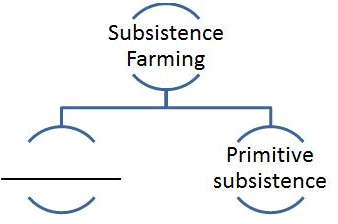
- a)Intensive Subsistence
- b)Primeval Subsistence
- c)Original Subsistence
- d)Traditional Subsistence
Correct answer is option 'A'. Can you explain this answer?
Fill up the missing blank after analyzing the given image :
a)
Intensive Subsistence
b)
Primeval Subsistence
c)
Original Subsistence
d)
Traditional Subsistence

|
Avi Mehra answered |
Subsistence agriculture is often divided into three different types, including intensive subsistence, which is the traditional method, shifting cultivation, which relies on clearing forest to create new farm plots every few years and pastoral nomadism, which relies on traveling with herds of animals.
Chapter doubts & questions for Agriculture - Geography for Class 8 2025 is part of Class 8 exam preparation. The chapters have been prepared according to the Class 8 exam syllabus. The Chapter doubts & questions, notes, tests & MCQs are made for Class 8 2025 Exam. Find important definitions, questions, notes, meanings, examples, exercises, MCQs and online tests here.
Chapter doubts & questions of Agriculture - Geography for Class 8 in English & Hindi are available as part of Class 8 exam.
Download more important topics, notes, lectures and mock test series for Class 8 Exam by signing up for free.
Geography for Class 8
24 videos|33 docs|21 tests
|

Signup to see your scores go up within 7 days!
Study with 1000+ FREE Docs, Videos & Tests
10M+ students study on EduRev
|
© EduRev
|
Education Revolution
|


|








Signup to see your scores
go up within 7 days!
Access 1000+ FREE Docs, Videos and Tests
Takes less than 10 seconds to signup