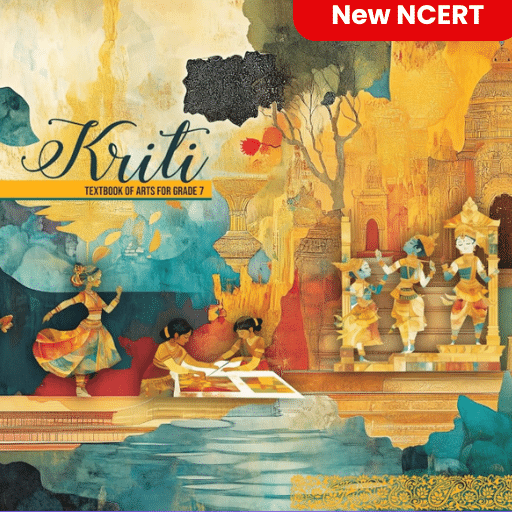
Arts  kriti  Class 7 - New NCERT
INFINITY COURSE

Class 7 Arts Kriti New NCERT Solutions, Notes & Projects

 ·  Last updated on Apr 07, 2026
Join for Free
Explore the vibrant world of Arts (kriti) Class 7 with the New NCERT Course designed for Class 7 students. This comprehensive course on Arts (kriti) C ... view more lass 7 introduces students to various artistic expressions and cultural heritage. Through engaging lessons, students will develop their creativity and appreciation for the arts. Join the Arts (kriti) Class 7 - New NCERT Course to enhance your understanding and skills in the fascinating realm of arts!

Class 7 Arts Kriti New NCERT Study Material

Trending Courses for Class 7

Complete Guide to Arts (Kriti) Class 7 New NCERT Curriculum

Arts (Kriti) is the official Arts Education textbook introduced by NCERT for Class 7 students as part of India's updated curriculum framework. This comprehensive course integrates multiple traditional and contemporary art forms, making it an essential subject for students seeking to develop creative skills and cultural understanding. Whether you're a student preparing for your Class 7 Arts examinations or a parent looking to support your child's creative development, this guide covers everything you need to know about the new NCERT Arts syllabus for Class 7.

The new NCERT Arts Class 7 curriculum has been thoughtfully designed to engage young learners with India's rich artistic heritage while encouraging creative expression across theatre, music, dance, and visual arts. With 20 comprehensive chapters, the course offers a holistic approach to arts education that goes beyond memorization and focuses on experiential learning and creative problem-solving.

Understanding the New NCERT Arts Syllabus for Class 7

The Arts (Kriti) Class 7 NCERT course is structured into four distinct domains, each covering specific art forms and creative practices. Understanding this structure will help you approach your Class 7 Arts preparation strategically and ensure comprehensive coverage of all topics.

Course Organization and Key Domains

The Class 7 Arts NCERT curriculum encompasses four main areas of study:

  • Theatre and Drama Arts - Including mime, stage technicals, and storytelling traditions
  • Music Education - Covering music fundamentals, Indian classical music, and folk traditions
  • Dance Education - Exploring dance vocabulary, techniques, and creative expression
  • Visual Arts - Including textiles, calligraphy, symbolism, and artistic expression

Each domain builds upon foundational concepts while introducing students to India's diverse artistic traditions. The New NCERT Arts Class 7 emphasizes how understanding emotions forms the basis of all artistic expression, making emotional intelligence a core learning objective.

Theatre and Drama in Class 7 Arts: Mime, Emotions and Storytelling

Theatre arts represent a crucial component of the Class 7 Arts syllabus. The curriculum explores how students can express complex ideas and emotions without using words or through traditional dramatic performance.

Non-Verbal Expression Through Mime

Say More without Speech — Mime is an engaging chapter that teaches students how to communicate stories, emotions, and ideas using only body language and facial expressions. Mime in Class 7 Arts develops observation skills and helps students understand that not all communication requires words.

Stage Design and Technical Elements

Understanding stage technicals is essential for anyone interested in theatre arts. Our comprehensive guide to stage technicals covers lighting, props, costumes, and scenery design that bring theatrical productions to life.

India's Storytelling Heritage

Class 7 Arts includes an exploration of India's storytelling tradition, introducing students to traditional forms like Kathakalakshepam, Pandavani, and other regional narrative traditions. These ancient art forms demonstrate how stories have been preserved and transmitted through generations in Indian culture.

Indian Classical Music for Class 7: Ragas, Talas and Folk Traditions

Music education in Class 7 Arts NCERT provides a structured introduction to Indian musical systems, from the complexities of classical music to the accessibility of folk traditions.

Fundamentals of Musical Creation

Making music as a chapter explores the basic principles of sound, rhythm, and melody. Students learn how to appreciate music and potentially create simple musical pieces.

Music, Emotions and Creativity Connection

ConceptDescription
Emotional ExpressionHow music conveys feelings and moods
Creative CompositionTechniques for creating original musical pieces
Musical VocabularyUnderstanding terms used in Indian music

Music, emotions and creativity examines the deep connection between how we feel and the music we create or appreciate. This chapter helps students understand why certain ragas are performed at specific times or in particular emotional contexts.

Indian Classical Music: Ragas and Talas

For Class 7 students diving deeper into Indian classical music, understanding ragas and talas/taal is fundamental. A raga is a melodic framework with specific rules and characteristics, while taal refers to the rhythmic cycle that structures musical pieces. These concepts form the backbone of Indian classical music traditions.

Folk Music and Community Traditions

The music of the people explores folk music traditions across India—songs that have emerged from communities and reflect their daily lives, celebrations, and struggles. Folk music Class 7 content demonstrates how music serves as a cultural connector and historical record.

Dance Education in Class 7: Vocabulary, Techniques and Creativity

Dance holds a special place in Indian culture, with classical and folk traditions spanning thousands of years. The Class 7 Arts curriculum introduces students to dance fundamentals through a blend of technical knowledge and creative expression.

Dance and Its Relationship with Sculpture

Dance and sculpture explores how classical Indian temple sculptures depict dance poses, revealing the intersection between static visual art and dynamic movement. This chapter helps students understand how dance positions have been recorded and celebrated in Indian artistic traditions.

Technical Dance Vocabulary and Postures

Dance vocabulary and techniques in Class 7 Arts introduces the specific terminology and physical movements used in classical and contemporary dance. Students learn about mudras (hand gestures), footwork patterns, and body positioning that form the grammar of dance expression.

Creative Development Through Dance

Dance, you and creativity encourages students to explore their own creative potential through movement. This chapter emphasizes how dance serves as a medium for personal expression and emotional development.

Visual Arts and Crafts: Textiles, Calligraphy and Symbolism

Visual arts encompass a diverse range of creative practices, from traditional textiles to contemporary visual expression. The Class 7 Arts syllabus provides comprehensive coverage of these areas.

Personalities and Artistic Representation

Personalities in art refers to how individual characteristics and identities are depicted through portraiture and character representation. Students learn techniques for capturing distinctive features and expressions in various artistic mediums.

Objects in Icons and Symbols

Objects in icons and symbols demonstrates how visual art communicates meaning through symbolic representation. Every object in traditional art carries significance—from religious iconography to cultural symbols that identify communities and beliefs.

Color and Natural Inspiration

Nature's Palette explores how artists draw inspiration from natural colors and textures. Students learn about color theory, natural dyes, and how environmental observation informs artistic practice.

Emotional Expression in Visual Arts

How you feel chapter teaches students to express emotions through visual art—using color, form, composition, and technique to communicate feelings that might be difficult to express verbally.

Traditional Textiles and Cultural Heritage

Textile TraditionRegion/CultureCharacteristics
Handwoven FabricsVarious Indian regionsTraditional patterns and natural fibers
Batik and Block PrintingRajasthan, Gujarat, OdishaResist-dye and stamped designs
Embroidery TechniquesRegional variationsDecorative needlework with cultural motifs

Textiles and traditions covers the rich heritage of Indian textile arts, including weaving, dyeing, embroidery, and printing techniques that have been perfected over centuries. Each region of India has distinctive textile traditions reflecting local culture and available materials.

The Written Art Form: Calligraphy

The art of calligraphy in Class 7 explores beautiful writing as an art form. Whether studying Devanagari script, Persian calligraphy, or regional variations, calligraphy Class 7 demonstrates how letters and words can be transformed into visual art. This ancient practice connects language with visual aesthetics.

India's Rich Storytelling and Performance Traditions

Performance as an art form brings together multiple elements—narrative, movement, music, and visual design—into a unified theatrical experience. The Class 7 Arts curriculum emphasizes how performance traditions have sustained Indian culture for millennia.

Natya, based on the ancient Natyashastra principles, represents the classical Indian theatre system. Students studying Natya learn about systematized approaches to dramatic expression that have influenced South Asian performance traditions.

Class 7 Arts Chapter-wise Notes and Study Material

Structured chapter-wise notes help students master the Class 7 Arts NCERT content systematically. Each of the 20 chapters builds upon previous learning while introducing new concepts and practices.

Recommended Study Approach

  • Read each chapter carefully, paying attention to vocabulary and concepts
  • Complete hands-on activities mentioned in your Arts Class 7 textbook
  • Create visual summaries and mind maps for complex topics
  • Practice the techniques described in performance-based chapters
  • Engage with cultural references and historical context provided

Effective Class 7 Arts study material includes both theoretical knowledge and practical engagement. Use your NCERT Arts Class 7 PDF resources alongside creative practice to develop genuine understanding rather than rote memorization.

Best Resources for Learning Arts (Kriti) Class 7 - Free PDF Download

While studying for your Class 7 Arts NCERT examination, having access to quality study resources significantly enhances your preparation. EduRev provides comprehensive Class 7 Arts study material covering all chapters of the new curriculum.

The platform offers chapter-wise notes, explanations, and additional resources to supplement your learning. For each topic you're studying—whether it's understanding emotions in arts Class 7, exploring mime techniques, or learning about Indian classical music—you'll find detailed resources that break down complex concepts into manageable learning segments.

Integration of Art Forms: A Holistic Approach to Arts Education

Integration of all art forms — sculptures come alive! serves as the culminating chapter of the Class 7 Arts course. This chapter brilliantly demonstrates how different artistic disciplines interconnect and enhance one another.

When sculptures come alive through movement and narrative, we see theatre and sculpture merging. When musical accompaniment supports dance performance, we experience the synthesis of multiple art forms creating something greater than any single discipline alone. This holistic approach to arts education reflects the reality of Indian artistic traditions, where forms rarely exist in isolation but rather enhance and celebrate one another.

Important Personalities in Indian Arts and Culture

Understanding the great personalities who have shaped Indian arts provides context and inspiration for young learners. Throughout your Class 7 Arts studies, you'll encounter references to influential artists, musicians, dancers, and theatre practitioners who have contributed to India's cultural heritage.

These artistic personalities demonstrate how individual creativity, combined with cultural knowledge and technical skill, can create works of lasting significance. Studying their contributions helps Class 7 students understand that arts education is not merely about learning techniques but about engaging with a living, evolving cultural tradition.

How to Approach Your Class 7 Arts Preparation

Success in Class 7 Arts requires a balanced approach combining theoretical understanding with practical engagement:

  • Engage actively with the hands-on activities provided in each chapter
  • Practice regularly the techniques described in performance-based chapters
  • Research deeply the cultural and historical contexts discussed in the syllabus
  • Create projects that demonstrate your understanding and creativity
  • Participate in performances or exhibitions if your school offers opportunities
  • Reflect critically on what you learn about different art forms and traditions

The new NCERT Arts Class 7 curriculum represents a thoughtful integration of artistic education with cultural learning. By engaging seriously with these chapters—from mime and storytelling through ragas and dance vocabulary to calligraphy and textile traditions—Class 7 students develop not only technical skills but also cultural awareness and creative confidence that will serve them well throughout their educational journey and beyond.

Arts (kriti) Class 7 - New NCERT CBSE Exam Pattern 2026-2027


Arts (Kriti) Class 7 - New NCERT Exam Pattern for Class 7


The Arts (Kriti) curriculum for Class 7 under the New NCERT framework is designed to foster creativity and appreciation for various art forms. Understanding the exam pattern is crucial for students to prepare effectively and excel in their assessments. Below is a detailed outline of the exam pattern.


Exam Structure


  • Subject Code: Each subject, including Arts, has a unique code that students must be familiar with.

  • Type of Questions: The exam typically includes a mix of objective, short answer, and long answer questions.

  • Duration: The total time allocated for the exam is usually 2-3 hours.


Marks Distribution


  • Objective Questions: 20-30% of total marks.

  • Short Answer Questions: 30-40% of total marks.

  • Long Answer Questions: 30-40% of total marks.


Sections in the Exam


  • Section A: This section consists of multiple-choice questions and fill-in-the-blank types that test basic knowledge.

  • Section B: Short answer questions that require concise explanations or descriptions.

  • Section C: Long answer questions that encourage students to elaborate on concepts and showcase their understanding.


Preparation Tips


  • Review NCERT Textbooks: Focus on the prescribed textbooks as they align closely with exam questions.

  • Practice Previous Year Papers: Solving past papers can help in understanding the format and types of questions.

  • Engage in Creative Projects: Hands-on projects related to the syllabus can enhance understanding and retention of artistic concepts.


Conclusion


Being aware of the exam pattern for Arts (Kriti) in Class 7 will help students strategize their study plans effectively. By focusing on the key areas outlined above, students can prepare thoroughly and perform confidently in their examinations.


Arts (kriti) Class 7 - New NCERT Syllabus 2026-2027 PDF Download


Class 7 Arts Syllabus (Kriti) - New NCERT

The Class 7 Arts syllabus, as part of the New NCERT curriculum, is designed to engage students in the world of creativity, emotions, and diverse art forms. This comprehensive syllabus encourages students to explore various artistic expressions and cultural traditions. Below are the key components of the Class 7 Arts syllabus.

Class 7 Understanding Emotions

  • Explore the concept of emotions through various artistic mediums.

  • Identify and express personal emotions through art.

  • Connect emotions with different art forms and their impact.


Class 7 Say More without Speech — Mime

  • Learn the fundamentals of mime as a form of expression.

  • Practice storytelling through body language and facial expressions.

  • Engage in group activities to develop teamwork and creativity.


Class 7 Let’s Design — Stage Technicals 2

  • Introduction to stage design and technical aspects of performances.

  • Understanding lighting, sound, and set design.

  • Hands-on projects to create stage designs for performances.


Class 7 Story of India’s Storytelling Tradition

  • Explore the rich storytelling traditions of India.

  • Study various narrative forms including folk tales, epics, and oral traditions.

  • Encourage students to create their own stories based on traditional themes.


Class 7 Making Music

  • Introduction to the basics of music creation.

  • Understanding rhythm, melody, and harmony.

  • Experiment with different musical instruments.


Class 7 Music, Emotions and Creativity

  • Explore the relationship between music and emotions.

  • Analyze how music influences mood and creativity.

  • Engage in activities that combine music with emotional expression.


Class 7 Ragas and Talas/Taal

  • Introduction to the concepts of ragas and talas in Indian music.

  • Learn to identify different ragas and their emotional expressions.

  • Practice rhythmic patterns using talas.


Class 7 The Music of the People

  • Explore various forms of folk music from different regions of India.

  • Understand the cultural significance of folk music.

  • Encourage students to perform and appreciate local musical traditions.


Class 7 Performance

  • Develop performance skills through practice and rehearsals.

  • Encourage participation in school events and cultural programs.

  • Focus on individual and group performances.


Class 7 Dance and Sculpture

  • Study the connection between dance and sculptural forms.

  • Explore various dance forms and their historical context.

  • Engage in creating sculptures inspired by dance movements.


Class 7 Dance Vocabulary and Techniques

  • Learn the terminology associated with different dance forms.

  • Practice basic dance techniques and movements.

  • Encourage creative expression through dance.


Class 7 Dance, You and Creativity

  • Explore personal creativity through dance.

  • Encourage improvisation and self-expression.

  • Integrate personal experiences into dance performances.


Class 7 Personalities

  • Study influential personalities in the arts and their contributions.

  • Encourage students to draw inspiration from these figures.

  • Discuss the impact of these personalities on contemporary art.


Class 7 Natya

  • Introduction to the art of Natya (theater) and its significance.

  • Engage in exercises to develop acting skills.

  • Explore different forms of theater from India.


Class 7 Objects in Icons and Symbols

  • Explore the meaning of symbols and icons in art.

  • Learn to interpret and create symbolic representations.

  • Connect symbols to cultural and historical contexts.


Class 7 Nature’s Palette

  • Study the use of natural elements in art.

  • Explore eco-friendly art techniques and materials.

  • Encourage outdoor activities to inspire creativity from nature.


Class 7 How You Feel

  • Encourage self-reflection on emotions and feelings.

  • Connect feelings to artistic expression.

  • Incorporate personal experiences into artistic projects.


Class 7 Textiles and Traditions

  • Explore the art of textiles and their cultural significance.

  • Learn about different textile techniques and patterns.

  • Engage in hands-on projects related to textile arts.


Class 7 The Art of Calligraphy

  • Introduction to calligraphy as an art form.

  • Practice various calligraphic styles and techniques.

  • Encourage personal expression through calligraphy projects.


Class 7 Integration of All Art Forms — Sculptures Come Alive!

  • Explore the interplay of different art forms.

  • Encourage collaborative projects that integrate multiple art disciplines.

  • Highlight how diverse art forms can enhance creativity and expression.


This detailed syllabus for Class 7 Arts (Kriti) offers an enriching experience that fosters creativity, emotional understanding, and cultural appreciation among students. The integration of multiple art forms ensures a holistic approach to learning, preparing students for a future in the arts.

This course is helpful for the following exams: Class 7

How to Prepare Arts (kriti) Class 7 - New NCERT?

Certainly! Here’s an article segment on how to prepare for the Arts (Kriti) Class 7 - New NCERT course offered by EduRev. The content is structured with appropriate headers and key points.


How to Prepare for Arts (Kriti) Class 7 - New NCERT

Preparing for the Arts (Kriti) Class 7 - New NCERT can be an enjoyable journey filled with creativity and learning. Here are some essential steps to guide your preparation effectively.

1. Understand the Syllabus
Before you dive into studying, it’s crucial to familiarize yourself with the syllabus of Arts (Kriti) Class 7 - New NCERT. This will give you a clear idea of the topics you need to focus on.

2. Gather Study Materials
Make sure you have all necessary materials, including:
- Arts (Kriti) Class 7 - New NCERT textbooks
- Reference books
- Art supplies for practical activities

3. Create a Study Schedule
A structured study schedule can greatly enhance your preparation. Allocate specific time slots for each topic within the Arts (Kriti) Class 7 - New NCERT syllabus to ensure comprehensive coverage.

4. Engage in Practical Activities
Art is best learned through practice. Spend time on hands-on activities that relate to the Arts (Kriti) Class 7 - New NCERT curriculum. This could include drawing, painting, or crafting, which helps reinforce theoretical concepts.

5. Revise Regularly
Make it a habit to revise the topics you’ve covered. Regular revision will help you retain information more effectively, especially in a creative subject like Arts (Kriti) Class 7 - New NCERT.

6. Seek Feedback
Share your work with teachers or peers and ask for constructive feedback. This will help you identify areas for improvement in your understanding of Arts (Kriti) Class 7 - New NCERT concepts.

7. Explore Additional Resources
Look for videos, tutorials, and online workshops related to Arts (Kriti) Class 7 - New NCERT. These resources can provide new perspectives and techniques that enhance your learning experience.

8. Practice Mindfulness and Creativity
Art is not just about technique; it's also about expression. Engage in activities that stimulate your creativity and mindfulness, which can significantly improve your approach to the Arts (Kriti) Class 7 - New NCERT course.

Conclusion
Preparing for the Arts (Kriti) Class 7 - New NCERT requires a mix of structured study and creative exploration. By following these steps, you can enhance your learning experience and enjoy the beauty of art.


This format presents the information clearly and effectively, emphasizing the keywords and making it easy to follow.

Importance of Arts (kriti) Class 7 - New NCERT


Importance of Arts (Kriti) Class 7 - New NCERT Course for Class 7


The study of arts plays a crucial role in the holistic development of students. The Arts (Kriti) course for Class 7 under the New NCERT curriculum emphasizes creativity, expression, and cultural understanding. Here are some key points highlighting its importance:


1. Encourages Creativity


Arts education nurtures the imaginative abilities of students, allowing them to explore their creative potential. By engaging in various art forms, students learn to think outside the box and express their unique ideas.


2. Enhances Emotional Intelligence


Through arts, students gain a deeper understanding of their emotions and those of others. This emotional literacy helps them develop empathy and improve their interpersonal skills, which are essential for personal and social development.


3. Fosters Cultural Awareness


The Arts (Kriti) course introduces students to diverse cultures and traditions. This exposure enhances their appreciation for global art forms, promoting respect and understanding of different perspectives and backgrounds.


4. Develops Critical Thinking Skills


Engaging in arts encourages students to analyze, interpret, and evaluate different artworks. This critical engagement helps them develop essential analytical skills that are beneficial in various academic subjects and real-life situations.


5. Boosts Confidence and Self-Esteem


Creating and showcasing art can significantly boost students' self-esteem. By expressing themselves through their artwork, students gain confidence in their abilities and learn to take pride in their accomplishments.


6. Improves Academic Performance


Research has shown that students who participate in arts education often perform better academically. The skills acquired through arts, such as discipline, focus, and perseverance, translate into improved performance in other subjects.


7. Provides a Relaxing Outlet


Arts serve as a therapeutic outlet for students, helping them manage stress and anxiety. Engaging in creative activities can promote relaxation and mental well-being, making it an essential part of a balanced education.


In conclusion, the Arts (Kriti) Class 7 course offered by EduRev is not just about learning artistic techniques; it is about fostering a well-rounded development that prepares students for the challenges of the future. By integrating arts into the curriculum, students are equipped with essential life skills that extend beyond the classroom.


Arts (kriti) Class 7 - New NCERT FAQs

1. What are the main chapters in Arts Kriti Class 7 NCERT textbook?
Ans. Arts Kriti Class 7 covers chapters on drawing fundamentals, colour theory, Indian art traditions, sculpture basics, and printmaking techniques. The textbook introduces students to visual expression through practical activities and cultural heritage exploration. Each chapter builds foundational skills in observation, composition, and creative thinking essential for artistic development.
2. How do I draw perspective and depth in Class 7 art exercises?
Ans. Perspective in Class 7 art involves using vanishing points, horizon lines, and overlapping shapes to create depth on flat surfaces. Students learn single-point and two-point perspective through step-by-step drawing practice. Begin by sketching guide lines, place objects smaller as they recede, and overlap shapes to show distance effectively in your artwork.
3. What is the importance of colour mixing and shading techniques in Class 7 art?
Ans. Colour mixing teaches students how primary colours create secondary and tertiary hues, while shading develops tonal value and dimension. These techniques enable artists to represent light, shadow, and texture realistically. Mastering colour theory and gradient shading strengthens observational skills and enhances the visual impact of drawings and paintings in creative projects.
4. What are the different types of Indian art forms covered in Class 7 Kriti?
Ans. Class 7 Kriti explores Mughal miniature painting, Warli art, Madhubani painting, and classical temple sculpture traditions. Students study regional art styles, their historical contexts, and cultural significance across Indian civilisations. Understanding these diverse forms develops appreciation for India's artistic heritage and inspires students to incorporate traditional elements into contemporary creative work.
5. How should I approach still life drawing for Class 7 art assessments?
Ans. Still life drawing requires observing objects' proportions, arrangement, and lighting carefully. Start by lightly sketching basic shapes, then refine details and add shading to show form. Focus on composition balance, accurate placement, and realistic texture representation. Practice capturing light effects and shadow patterns to create depth and visual interest in your final artwork.
6. What printmaking techniques are taught in Class 7 art curriculum?
Ans. Class 7 covers relief printing, block printing, and screen printing fundamentals. Relief printing involves carving designs into surfaces; block printing uses inked blocks to create repeated patterns. These hands-on techniques teach students about positive and negative space, image reversal, and mass production concepts while developing fine motor control and creative problem-solving abilities.
7. How do I create a character sketch or portrait for Class 7 art exams?
Ans. Portrait drawing requires understanding facial proportions, feature placement, and expression capture. Sketch the head oval first, locate eyes at the midline, then position nose and mouth proportionally. Study light and shadow on facial planes to add dimension. Practice capturing personality through eye direction, subtle expressions, and hair texture for compelling character representation in your artwork.
8. What is composition and how do I improve it in my Class 7 art work?
Ans. Composition involves arranging visual elements-line, shape, colour, and space-to create balanced, engaging artwork. Apply the rule of thirds, leading lines, and focal points to guide viewer attention. Experiment with symmetrical and asymmetrical balance, varied object placement, and strategic spacing. Strong composition transforms ordinary subjects into visually compelling pieces that communicate your artistic intent effectively.
9. How do I study for Class 7 art practical exams and assessments?
Ans. Prepare for art exams by practising drawing techniques regularly, maintaining a sketchbook for daily exercises, and reviewing completed projects. Study reference images, experiment with materials, and understand assessment criteria focusing on technique, creativity, and presentation. Access EduRev's visual worksheets and detailed notes on drawing fundamentals, colour theory, and art history to reinforce learning systematically.
10. What materials and tools do I need for Class 7 Kriti art class?
Ans. Essential art materials include graphite pencils, erasers, sharpeners, sketchbooks, coloured pencils, watercolours, brushes, rulers, and blending stumps. Quality paper supports different techniques-sketch paper for drawing, watercolour paper for wet media, and card stock for printmaking projects. Gather these basic supplies to complete textbook exercises effectively and develop proper handling habits across various artistic mediums.

Best Arts (kriti) Class 7 - New NCERT NCERT Solutions and Study Materials

Looking for the best Arts (kriti) Class 7 - New NCERT NCERT study materials and Arts (kriti) Class 7 - New NCERT NCERT Book solutions? EduRev has got you covered! Our platform offers comprehensive Class 7 NCERT Solutions and NCERT Study Materials that are tailored to fit the needs of Class 7 students. Our Arts (kriti) Class 7 - New NCERT NCERT Book Solutions are designed to help students understand the concepts and improve their grasp on the subject. We provide step-by-step solutions to all the questions in the Arts (kriti) Class 7 - New NCERT NCERT Tests, making it easy for students to follow along and grasp the concepts. EduRev’s chapter-wise NCERT Solutions for Class 7 are comprehensive and designed by a team of experienced teachers to cater to the learning needs of students. And the best part is - we offer our Arts (kriti) Class 7 - New NCERT NCERT Solutions and Study Materials for free to students. So, if you're looking for the best NCERT Book Solutions and Study Materials for Arts (kriti) Class 7 - New NCERT, look no further than EduRev. Our platform offers everything you need to excel in your studies and achieve your academic goals.
Course Description
Arts (kriti) Class 7 - New NCERT | NCERT Solutions, Tests, Revision Notes, CBSE, Videos for Class 7 2026-2027 is part of Class 7 preparation. The notes and questions for Arts (kriti) Class 7 - New NCERT | NCERT Solutions, Tests, Revision Notes, CBSE, Videos have been prepared according to the Class 7 exam syllabus. Information about Arts (kriti) Class 7 - New NCERT | NCERT Solutions, Tests, Revision Notes, CBSE, Videos covers all important topics for Class 7 2026-2027 Exam. Find important definitions, questions, notes,examples, exercises test series, mock tests and Previous year questions (PYQs) below for Arts (kriti) Class 7 - New NCERT | NCERT Solutions, Tests, Revision Notes, CBSE, Videos.
Preparation for Arts (kriti) Class 7 - New NCERT | NCERT Solutions, Tests, Revision Notes, CBSE, Videos in English is available as part of our Class 7 preparation & Arts (kriti) Class 7 - New NCERT | NCERT Solutions, Tests, Revision Notes, CBSE, Videos in Hindi for Class 7 courses. Download more important topics related with Arts (kriti) Class 7 - New NCERT | NCERT Solutions, Tests, Revision Notes, CBSE, Videos, notes, lectures and mock test series for Class 7 Exam by signing up for free.
Course Speciality
Arts (kriti) Class 7 - New NCERT | NCERT Solutions, Tests, Revision Notes, CBSE, Videos course offering 100+ video lectures & more, covering complete syllabus & important topics, created by experts. Joined by 306+ students.
Course Options
View your Course Analysis
Create your own Test
Related Exams
Arts  kriti  Class 7   New NCERT   NCERT Solutions  Tests  Revision Notes  CBSE  Videos
Arts (kriti) Class 7 - New NCERT | NCERT Solutions, Tests, Revision Notes, CBSE, Videos
Join course for Free
THIS COURSE INCLUDES:
Documents
20+
Ratings
4.73 (509+)
Get this course, and all other courses for Class 7 with EduRev Infinity Package.
Explore Courses for Class 7 exam
Signup for Free!
Signup to see your scores go up within 7 days! Learn & Practice with 1000+ FREE Notes, Videos & Tests.
10M+ students study on EduRev

Course Speciality

Arts (kriti) Class 7 - New NCERT | NCERT Solutions, Tests, Revision Notes, CBSE, Videos course offering 100+ video lectures & more, covering complete syllabus & important topics, created by experts. Joined by 306+ students.