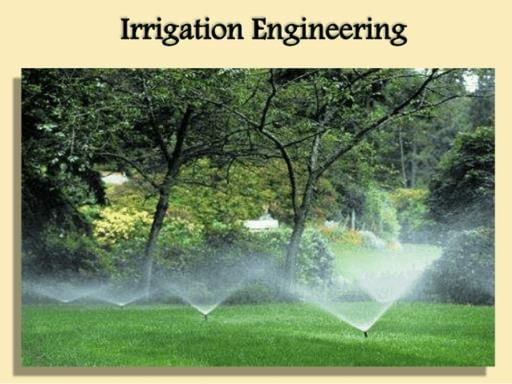
 | INFINITY COURSE Irrigation Engineering Agri Notes, MCQs & TestsMohan Singh · Last updated on Apr 14, 2026 |
Irrigation Engineering Agri Notes, MCQs Study Material


Trending Courses for Agricultural Engineering

Irrigation Engineering Notes for Agricultural Engineering Students
Irrigation Engineering is a fundamental subject in Agricultural Engineering that equips students with the knowledge and skills needed to design, manage, and optimize irrigation systems for agricultural water supply. Whether you're preparing for competitive examinations or looking to strengthen your agricultural engineering foundation, comprehensive irrigation engineering notes are essential for your success.
This subject covers everything from water resource management to advanced irrigation technologies, making it crucial for agricultural engineers who want to contribute to sustainable farming practices across India. The field has evolved significantly, and modern irrigation engineering now integrates IoT, solar-powered systems, and precision agriculture techniques that help farmers maximize crop productivity while conserving water resources.
Why Irrigation Engineering Matters
With India's agricultural sector depending heavily on efficient water management, irrigation engineering plays a vital role in:
- Ensuring optimal crop water requirements are met
- Reducing water losses during conveyance and application
- Improving overall irrigation efficiency and farm productivity
- Supporting sustainable agricultural practices and water conservation
- Enabling precision farming through modern technologies
Understanding Irrigation Water Conveyance Systems
Irrigation water conveyance systems form the backbone of any irrigation project. These systems transport water from the source to the farms and fields where crops need it. Understanding irrigation water conveyance methods is essential for designing efficient irrigation projects that minimize water losses and maximize agricultural output.
There are primarily two types of irrigation water conveyance systems: open channel systems and closed pipe systems. Open channels, commonly called canals, are traditional methods used extensively across India. They have lower initial costs but often experience significant seepage losses. In contrast, pipeline irrigation systems offer better efficiency by reducing water losses during conveyance, though they require higher capital investment.
Canal Irrigation System
Canal systems remain the most widely used irrigation infrastructure in India, particularly in regions like Punjab, Haryana, and Uttar Pradesh. These open channels carry water from dams and reservoirs to farmers' fields. Key aspects include proper canal design, maintenance of canal banks, and management of water distribution schedules.
Pipeline Irrigation and Water Losses
Pipeline conveyance systems significantly reduce seepage and evaporation losses compared to open channels. These systems are increasingly preferred in areas with water scarcity and for modern pressurized irrigation applications. For deeper insights into conveyance system design and water loss reduction, explore our detailed resource on Irrigation Water Conveyance Systems.
Irrigation Water Conveyance Systems
- Structures for Diversions and Channel Crossings, Irrigation Engineering
- Underground Pipeline Systems, Irrigation Engineering
- On Farm Structures for Water Conveyance, Irrigation Engineering
- Open Channel Flow, Irrigation Engineering
- Design and Operation of Underground Pipeline System, Irrigation Engineering
Water Resources Utilization and Irrigation Development in India
India faces unique challenges in water resources utilization and irrigation development due to seasonal rainfall patterns and varying water availability across regions. The irrigation development in India has been instrumental in transforming agricultural productivity, but sustainable approaches are now essential for long-term food security.
Modern water resources utilization focuses on integrated water management strategies that consider both surface and groundwater sources. With climate change affecting rainfall patterns, agricultural engineers must design irrigation systems that are resilient and adaptable to changing water availability scenarios.
Key Aspects of Irrigation Development
- Planning and design of irrigation projects at basin level
- Integration of surface and groundwater resources
- Sustainable management of water distribution networks
- Development of climate-resilient irrigation practices
- Community participation in irrigation project management
To understand the complete framework of water resources management in agricultural contexts, refer to our comprehensive guide on Water Resources Utilization & Irrigation Development.
Water Resources Utilization & Irrigation Development
Measurement of Irrigation Water: Methods and Instruments
Accurate measurement of irrigation water is critical for irrigation scheduling, determining irrigation efficiency, and managing water distribution equitably among farmers. Various methods and instruments are used to measure flow rates in irrigation channels and pipelines, each suited to different applications and conditions.
Water Measuring Devices
Several standardized water measuring devices are commonly used in irrigation systems:
| Device Type | Application | Accuracy Level |
|---|---|---|
| Parshall Flume | Open channel flow measurement | High precision |
| Cutthroat Flume | Rectangular channel measurement | Very accurate |
| Weirs | Small to moderate flow rates | Moderate precision |
| Current Meters | Open channel velocity measurement | Depends on operator skill |
| Volumetric Methods | Field-level flow measurement | Good for smaller outlets |
Flow Measurement in Irrigation
Flow measurement helps determine how much water is being delivered to farms and is essential for calculating irrigation efficiency. Modern flow measurement devices provide accurate data that aids in better irrigation management decisions. Learn more about these critical measurement techniques in our detailed resource on Measurement of Irrigation Water.
Land Grading Survey and Design for Efficient Irrigation
Land grading and leveling are foundational steps in establishing efficient surface irrigation systems. The topography of agricultural land significantly affects how water distributes across fields, influencing irrigation uniformity and overall efficiency. Modern land grading survey techniques now incorporate advanced technology for precise design and implementation.
Survey Techniques for Irrigation
Proper surveying forms the basis of good irrigation design. Engineers use various surveying methods to understand field topography, determine suitable irrigation methods, and design appropriate slope for gravity-fed systems. Laser land leveling technology has revolutionized this process, providing accuracy at centimeter levels and enabling precision agriculture applications.
Design of Land Leveling
Effective land leveling design considers:
- Natural field slopes and water flow patterns
- Soil characteristics and infiltration rates
- Crop requirements and irrigation method compatibility
- Cost-benefit analysis of leveling operations
- Environmental sustainability aspects
For comprehensive understanding of survey methodologies and design principles, explore our detailed guide on Land Grading Survey and Design.
Land Grading Survey and Design
Soil Water Plant Relationship in Irrigation Engineering
The interaction between soil, water, and atmosphere in relation to plant growth is fundamental to determining irrigation requirements. Understanding the soil water plant relationship helps engineers design irrigation schedules that provide optimal water availability for crops while minimizing water wastage.
Soil Moisture Characteristics
Soil holds water at different tension levels. The key moisture parameters include:
- Field Capacity: Maximum water soil can retain against gravitational forces
- Permanent Wilting Point: Soil moisture level below which plants cannot extract water
- Available Water Capacity: The difference between field capacity and wilting point
- Soil Moisture Content: Actual amount of water present in soil at any given time
Evapotranspiration and Crop Water Requirements
Evapotranspiration (ET) represents the combined water loss from soil evaporation and plant transpiration. Calculating crop water requirements accurately ensures irrigation is neither excessive nor deficient. This calculation forms the basis for proper irrigation scheduling and helps optimize both water use and agricultural productivity.
To master the complex interactions between soil, water, and plant systems, review our comprehensive resource on Soil, Water & Atmosphere: Plants Interaction.
Surface Irrigation Methods: Border, Furrow, and Basin Techniques
Surface irrigation methods are traditional techniques that remain widely used across Indian farms. These methods apply water directly to the soil surface and rely on gravity to distribute water across fields. Understanding different surface irrigation methods helps engineers select the most appropriate technique for specific crops, soils, and field conditions.
Border Irrigation
Border irrigation divides fields into parallel strips separated by small bunds. Water flows along the length of each border strip, gradually infiltrating into the soil. This method works well for crops like wheat, rice, and pulses.
Furrow Irrigation
Furrow irrigation channels water through small trenches between crop rows. This method is highly suitable for row crops like maize, sugarcane, and vegetables. It provides better water distribution control and reduces waterlogging risks compared to flood irrigation.
Basin Irrigation
Basin irrigation involves creating small, leveled basins that are flooded with water. The water is retained until it infiltrates completely. This method is ideal for orchards and trees where precise water application is important. The check basin method is a variation commonly used in Indian agriculture.
For detailed technical information about implementing these methods effectively, explore our comprehensive resource on Surface Irrigation Methods.
Surface Irrigation Methods
Pressurized Irrigation Systems: Drip and Sprinkler Technology
Pressurized irrigation systems represent modern, water-efficient alternatives to traditional surface irrigation. These systems deliver water directly to plant root zones or foliage through networks of pipes and emitters. Micro irrigation and pressurized systems are increasingly popular across India for water-scarce regions and high-value crops.
Drip Irrigation System
Drip irrigation, also called trickle irrigation, delivers water slowly and directly to individual plants through small emitters. This method achieves irrigation efficiency exceeding 85%, making it ideal for water conservation. Subsurface drip irrigation takes this further by placing drip lines below the soil surface, further reducing evaporation losses.
Sprinkler Irrigation System
Sprinkler systems apply water through overhead sprinklers that simulate rainfall. They're suitable for various crops and provide good irrigation uniformity. Micro-sprinkler systems offer a middle ground, delivering water more efficiently than conventional sprinklers while being less complex than drip systems.
Micro Irrigation Advantages
| Advantage | Impact |
|---|---|
| Water Conservation | 30-60% water savings compared to surface irrigation |
| Increased Yield | 15-40% higher productivity with uniform water distribution |
| Fertilizer Efficiency | Better nutrient management through fertigation |
| Labor Reduction | Automation reduces manual labor requirements |
| Reduced Diseases | Keeps foliage dry, reducing fungal infections |
Learn more about implementing pressurized irrigation systems in your agricultural engineering projects by reviewing our detailed guide on Pressurized Irrigation.
Pressurized Irrigation
Economic Evaluation of Irrigation Projects
Before implementing any irrigation project, thorough economic evaluation is essential to ensure viability and sustainability. Agricultural engineers must understand financial metrics and evaluation methods that determine whether irrigation investments will provide adequate returns.
Project Evaluation Criteria
Economic evaluation considers factors like initial capital costs, operational expenses, water charges, crop productivity increases, and maintenance requirements. Standard evaluation methods include benefit-cost ratio analysis, internal rate of return calculations, and payback period assessments. These tools help stakeholders make informed decisions about irrigation investments.
Best Irrigation Engineering PDF Notes Download Free
Quality study material is crucial for mastering irrigation engineering concepts. EduRev provides comprehensive irrigation engineering PDF notes and study materials that cover all essential topics in a structured, easy-to-understand format. These notes are organized by chapter, allowing you to study systematically and prepare effectively for examinations or practical applications.
Comprehensive agricultural engineering irrigation notes help students and professionals understand complex concepts clearly. Rather than searching across multiple sources, having consolidated study material saves time and ensures consistency in understanding core principles.
Participatory Irrigation Management: Modern Approaches
Participatory irrigation management involves farmer participation in irrigation project planning, design, implementation, and management. This modern approach recognizes that farmers are key stakeholders who understand local conditions and can contribute valuable insights to irrigation system development.
Benefits of Participatory Approach
- Better understanding of farmer water requirements and constraints
- Improved system maintenance through community responsibility
- Equitable water distribution among farming communities
- Sustainable long-term project viability
- Reduced conflicts over water allocation
For detailed information about participatory approaches in irrigation management, explore our resource on Economic Evaluation of Irrigation Project and Participatory Irrigation Management.
Micro Irrigation Systems: Advantages and Applications
Micro irrigation systems, encompassing drip irrigation and micro-sprinklers, represent the future of sustainable agriculture in India. These technologies deliver precise quantities of water and nutrients directly to crops, achieving remarkable water use efficiency while improving yields.
Applications of micro irrigation extend across diverse crops and regions. From vegetable cultivation in kitchen gardens to large-scale sugarcane and cotton production, these systems adapt to various agricultural scenarios. The integration of smart controllers and IoT sensors now enables automated irrigation scheduling based on real-time soil moisture and weather data.
Whether you're preparing for agricultural engineering examinations or seeking to enhance your professional knowledge, comprehensive irrigation engineering notes and study materials are essential tools. EduRev provides all the resources you need to master this critical subject and contribute effectively to India's agricultural development through sustainable water management practices.
Irrigation Engineering Notes - Agricultural Engineering Exam Pattern 2026-2027
In the field of Agricultural Engineering, Irrigation Engineering plays a vital role in ensuring efficient water management for agricultural practices. Understanding the principles and techniques of irrigation is crucial for professionals in this field. Here, we will discuss the exam pattern for the Agricultural Engineering section specifically focusing on Irrigation Engineering.
Exam Pattern:
1. Subject Coverage: The exam for Agricultural Engineering may include questions from various subjects related to agriculture, irrigation, and water management. However, a significant portion of the exam is dedicated to Irrigation Engineering.
2. Question Types: The questions can be of multiple-choice type, descriptive type, or a combination of both. It is essential to be well-prepared for both types of questions.
3. Marking Scheme: Each question may carry different marks, and negative marking may be applicable for incorrect answers. Understanding the marking scheme is crucial to strategize your approach and avoid unnecessary deduction of marks.
4. Syllabus: The syllabus for the Irrigation Engineering section may include topics such as:
- Principles of Irrigation Engineering
- Types of Irrigation Systems
- Irrigation Water Management
- Design and Layout of Irrigation Systems
- Irrigation Efficiency and Uniformity
- Measurement of Irrigation Water
- Drainage and Salinity Management
- Water Requirements of Crops
- Irrigation Methods and Techniques
Key Pointers:
- Understanding the principles of irrigation engineering is essential for efficient water management in agriculture.
- The exam pattern for Agricultural Engineering includes questions from various subjects, with a significant portion dedicated to irrigation engineering.
- It is important to be well-prepared for both multiple-choice and descriptive type questions.
- Familiarize yourself with the marking scheme to avoid unnecessary deduction of marks.
- The syllabus for the irrigation engineering section covers topics such as principles, types of systems, water management, design, and layout of systems, efficiency and uniformity, measurement of water, drainage, and salinity management, crop water requirements, and irrigation methods.
- Thoroughly studying and understanding these topics will help you excel in the Agricultural Engineering exam.
By following these pointers and having a strong grasp of the subject matter, you can confidently approach the Irrigation Engineering section in the Agricultural Engineering exam.


Irrigation Engineering Notes - Agricultural Engineering Syllabus 2026-2027 PDF Download
1. Agricultural Engineering Irrigation Engineering Notes - Agricultural Engineering
- Introduction to irrigation engineering in agricultural engineering
- Importance and principles of agricultural irrigation
- Types of irrigation systems and their applications
- Water requirements for different crops
- Design and operation of irrigation systems
- Use of irrigation scheduling techniques
2. Agricultural Engineering Water Resources Utilization & Irrigation Development
- Overview of water resources management in agricultural engineering
- Water availability and its utilization for irrigation
- Water management techniques for irrigation development
- Irrigation planning and design
- Environmental impact assessment in irrigation projects
3. Agricultural Engineering Measurement of Irrigation Water
- Measurement techniques for irrigation water
- Use of flow meters and gauges
- Calculation of water application rates
- Estimation of crop water requirements
4. Agricultural Engineering Irrigation Water Conveyance Systems
- Types of irrigation water conveyance systems
- Design and operation of canals and channels
- Pumping systems for water conveyance
- Maintenance and management of irrigation water conveyance systems
5. Agricultural Engineering Land Grading Survey and Design
- Importance of land grading in agricultural engineering
- Techniques for land grading survey
- Design and construction of land grading systems
- Benefits of proper land grading in irrigation
6. Agricultural Engineering Soil, Water & Atmosphere : Plants Interaction
- Understanding the relationship between soil, water, atmosphere, and plants
- Influence of soil properties on water availability for plants
- Effects of atmospheric conditions on plant water requirements
- Management practices for optimizing water use efficiency in agriculture
7. Agricultural Engineering Surface Irrigation Methods
- Introduction to surface irrigation methods
- Design and operation of furrow irrigation systems
- Basin irrigation techniques and management
- Irrigation scheduling for surface irrigation
8. Agricultural Engineering Pressurized Irrigation
- Overview of pressurized irrigation systems
- Design and operation of sprinkler irrigation systems
- Drip irrigation techniques and management
- Advantages and disadvantages of pressurized irrigation systems
9. Agricultural Engineering Economic Evaluation of Irrigation Project and Participatory Irrigation Management
- Economic analysis of irrigation projects
- Cost-benefit analysis and financial viability assessment
- Participatory irrigation management approaches
- Socio-economic considerations in irrigation planning and implementation
By following this syllabus, students of agricultural engineering will gain a comprehensive understanding of irrigation engineering principles, techniques, and management practices. They will be equipped with the knowledge and skills necessary for designing, implementing, and managing effective irrigation systems in agricultural settings.
This course is helpful for the following exams: Agricultural Engineering
How to Prepare Irrigation Engineering Notes - Agricultural Engineering?
When it comes to studying irrigation engineering in the field of agricultural engineering, it is important to have well-prepared notes that cover all the essential concepts and techniques. Here are some key points to keep in mind while preparing your irrigation engineering notes:
1. Understand the Course Structure: Familiarize yourself with the course structure of irrigation engineering in agricultural engineering. This will help you identify the important topics and prioritize your note-taking accordingly.
2. Organize Your Notes: Create a systematic structure for your notes. Divide them into different sections based on topics such as irrigation methods, water management, irrigation systems, etc. This will make it easier for you to locate and revise specific information when needed.
3. Take Comprehensive Notes: During lectures or while studying from textbooks, make sure to take comprehensive notes that cover all the important points. Include definitions, formulas, diagrams, and examples to ensure a thorough understanding of the concepts.
4. Use Visual Aids: Incorporate visual aids such as diagrams, flowcharts, and graphs in your notes. This will help you better understand and memorize complex concepts. Use different colors and highlighters to make your notes visually appealing and easily distinguishable.
5. Review and Revise: Regularly review and revise your notes to reinforce your understanding of the subject. This will also help you identify any gaps in your knowledge that need to be addressed.
6. Seek Clarification: If you come across any doubts or difficulties while preparing your notes, don't hesitate to seek clarification from your professors or classmates. Understanding the concepts thoroughly will ensure the accuracy and reliability of your notes.
7. Practice Problem Solving: Include practice problems and solutions in your notes. This will help you apply the theoretical knowledge to real-life scenarios and enhance your problem-solving skills.
8. Stay Updated: Stay updated with the latest advancements and trends in irrigation engineering. Include recent case studies and research findings in your notes to showcase your awareness of the field.
By following these guidelines, you can prepare effective irrigation engineering notes that will assist you in understanding and retaining the key concepts of agricultural engineering. Remember to regularly review and revise your notes to ensure a comprehensive grasp of the subject matter. Good luck with your studies!
Importance of Irrigation Engineering Notes - Agricultural Engineering
Irrigation engineering is a crucial aspect of agricultural engineering that focuses on the design, implementation, and management of irrigation systems in agriculture. It plays a vital role in ensuring the optimal use of water resources for crop production. Taking notes on irrigation engineering is highly beneficial for students pursuing agricultural engineering courses. Here are the key reasons why:
1. Comprehensive understanding:
Irrigation engineering notes provide students with a comprehensive understanding of the principles, concepts, and techniques involved in irrigation systems. These notes cover topics such as water requirements, irrigation methods, irrigation scheduling, and the design of irrigation systems. Through detailed explanations and examples, students can grasp the fundamental knowledge required to plan and manage efficient irrigation systems.
2. Practical application:
The notes on irrigation engineering focus on the practical application of concepts. Students learn about the various factors influencing the selection of irrigation methods, such as soil type, crop type, climate, and water availability. They also gain insights into the design and construction of irrigation structures, including canals, pipelines, and pumps. This practical knowledge equips students to implement irrigation systems effectively in real-world agricultural settings.
3. Water resource management:
Water scarcity is a significant concern in agriculture, and efficient irrigation practices are essential to optimize water use. The irrigation engineering course and its corresponding notes emphasize the importance of water resource management. Students learn about techniques like drip irrigation, sprinkler irrigation, and precision irrigation, which help in conserving water and minimizing wastage. These notes also cover strategies for water storage, reuse, and efficient distribution, enabling students to contribute to sustainable agricultural practices.
4. Crop yield and productivity:
Proper irrigation is critical for achieving high crop yield and productivity. The notes on irrigation engineering highlight the relationship between water availability and crop growth. Students learn about the irrigation requirements of different crops at various growth stages, allowing them to provide the necessary water and nutrients for optimal plant growth. Understanding these concepts helps in maximizing crop yield, reducing yield loss, and ensuring food security.
5. Problem-solving skills:
Irrigation engineering notes encourage students to develop problem-solving skills. They learn to analyze and evaluate irrigation system performance, identify potential issues, and propose solutions. By studying real-life case studies and examples, students gain the ability to troubleshoot common irrigation problems, such as waterlogging, salinity, and uneven water distribution. These problem-solving skills are invaluable for future agricultural engineers, as they will be responsible for designing and managing sustainable irrigation systems.
In conclusion, taking notes on irrigation engineering is highly beneficial for students pursuing agricultural engineering courses. These notes provide a comprehensive understanding of irrigation systems, emphasize practical application, promote water resource management, enhance crop yield, and develop problem-solving skills. By mastering the principles of irrigation engineering, students can contribute significantly to the sustainable growth of the agricultural sector.
Irrigation Engineering Notes - Agricultural Engineering FAQs
| 1. What is the difference between surface irrigation and sprinkler irrigation in agricultural engineering? |  |
| 2. How do I calculate the duty of water in irrigation engineering? | |
| 3. What are the main types of irrigation systems used in Indian agriculture? | |
| 4. What is the canal irrigation system and how does it work? | |
| 5. How do I determine the irrigation water requirement for different crops? | |
| 6. What is the concept of crop water requirement and how is it measured? | |
| 7. What are the methods to improve irrigation efficiency in agricultural farming? | |
| 8. How does the water table depth affect irrigation planning and groundwater management? | |
| 9. What is the role of soil texture and permeability in selecting irrigation methods? | |
| 10. How do I calculate the peak water demand and design canal capacity for irrigation networks? | |
- Detailed Docs for in-depth knowledge with easy illustrative examples
- Forum Support for each field to discuss and solve doubts with community
 | View your Course Analysis |  |
 | Create your own Test | |



|
 Documents
 Ratings
 | Explore Courses for Agricultural Engineering exam |  |
Course Speciality
- Detailed Docs for in-depth knowledge with easy illustrative examples
- Forum Support for each field to discuss and solve doubts with community


