


GMAT Exam > GMAT Questions > Set P consists of 10 positive integers arrang...
Start Learning for Free
Set P consists of 10 positive integers arranged in order of increasing magnitude. The difference between any two successive
terms of the set is 4. If the two largest terms of the set are removed, what is the decrease in the average(arithmetic mean) of
the set?
terms of the set is 4. If the two largest terms of the set are removed, what is the decrease in the average(arithmetic mean) of
the set?
- a)0
- b)2
- c)4
- d)6
- e)8
Correct answer is option 'C'. Can you explain this answer?

Verified Answer
Set P consists of 10 positive integers arranged in order of increasing...
Given:
- Set P is an arithmetic sequence with common difference(d) = 4 and number of terms(n) = 10
- Let the first term be a.
- So, the other 9 terms = {a+d, a+2d, ……a+9d}
- (a+9d) and (a+8d) are removed
To Find: Decrease in the average of the set after removal of (a+9d) and (a+8d)
Approach:
- To calculate the decrease in the average of the sequence, we need to calculate the average of the sequences before and after removal of the terms (a+9d) and (a+8d)
- Calculating Average of the original set P
- As we know all the terms of the set P in terms of a, we can calculate the sum of all the terms in set P using the sum of an arithmetic sequence formula.
- Once, we know the sum of an arithmetic sequence P, we can calculate the average of the arithmetic sequence by dividing the sum by the number of terms(i.e. 10)
- As we know all the terms of the set P in terms of a, we can calculate the sum of all the terms in set P using the sum of an arithmetic sequence formula.
- Calculating Average of set P after removal of (a+9d) and (a+8d)
- The new sum of the arithmetic sequence can be calculated by subtracting the sum of (a+9d) and (a+8d) from the original sum of the arithmetic sequence
- The new average can then be calculated by dividing the new sum by the remaining terms in the sequence(i.e. 8)
- The new sum of the arithmetic sequence can be calculated by subtracting the sum of (a+9d) and (a+8d) from the original sum of the arithmetic sequence
Working out:
- Calculating Average of the original set P
- Sum of the 10

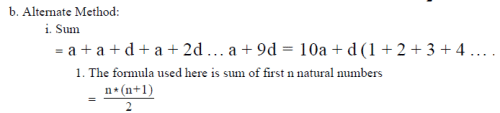


Hence, the average decreased by 4 units.
Answer : C
Most Upvoted Answer
Set P consists of 10 positive integers arranged in order of increasing...
Given information:
- Set P consists of 10 positive integers arranged in order of increasing magnitude.
- The difference between any two successive terms of the set is 4.
- The two largest terms of the set are removed.
To find:
The decrease in the average (arithmetic mean) of the set after removing the two largest terms.
Solution:
Let's assume the smallest term in the set as x. Since the difference between any two successive terms is 4, we can represent the set as follows:
x, x+4, x+8, x+12, x+16, x+20, x+24, x+28, x+32, x+36
Step 1: Find the sum of all terms in the original set.
Sum = x + (x+4) + (x+8) + (x+12) + (x+16) + (x+20) + (x+24) + (x+28) + (x+32) + (x+36)
Sum = 10x + 180
Step 2: Find the average of the original set.
Average = Sum/Number of terms = (10x + 180)/10 = x + 18
Step 3: Remove the two largest terms from the set.
Since the two largest terms are x+36 and x+32, the new set will be:
x, x+4, x+8, x+12, x+16, x+20, x+24, x+28
Step 4: Find the sum of all terms in the new set.
Sum = x + (x+4) + (x+8) + (x+12) + (x+16) + (x+20) + (x+24) + (x+28)
Sum = 8x + 120
Step 5: Find the average of the new set.
Average = Sum/Number of terms = (8x + 120)/8 = x + 15
Step 6: Find the decrease in the average.
Decrease in average = Original average - New average
Decrease in average = (x + 18) - (x + 15)
Decrease in average = 3
Therefore, the decrease in the average of the set after removing the two largest terms is 3.
- Set P consists of 10 positive integers arranged in order of increasing magnitude.
- The difference between any two successive terms of the set is 4.
- The two largest terms of the set are removed.
To find:
The decrease in the average (arithmetic mean) of the set after removing the two largest terms.
Solution:
Let's assume the smallest term in the set as x. Since the difference between any two successive terms is 4, we can represent the set as follows:
x, x+4, x+8, x+12, x+16, x+20, x+24, x+28, x+32, x+36
Step 1: Find the sum of all terms in the original set.
Sum = x + (x+4) + (x+8) + (x+12) + (x+16) + (x+20) + (x+24) + (x+28) + (x+32) + (x+36)
Sum = 10x + 180
Step 2: Find the average of the original set.
Average = Sum/Number of terms = (10x + 180)/10 = x + 18
Step 3: Remove the two largest terms from the set.
Since the two largest terms are x+36 and x+32, the new set will be:
x, x+4, x+8, x+12, x+16, x+20, x+24, x+28
Step 4: Find the sum of all terms in the new set.
Sum = x + (x+4) + (x+8) + (x+12) + (x+16) + (x+20) + (x+24) + (x+28)
Sum = 8x + 120
Step 5: Find the average of the new set.
Average = Sum/Number of terms = (8x + 120)/8 = x + 15
Step 6: Find the decrease in the average.
Decrease in average = Original average - New average
Decrease in average = (x + 18) - (x + 15)
Decrease in average = 3
Therefore, the decrease in the average of the set after removing the two largest terms is 3.

|
Explore Courses for GMAT exam
|

|
Top Courses for GMATView all





Question Description
Set P consists of 10 positive integers arranged in order of increasing magnitude. The difference between any two successiveterms of the set is 4. If the two largest terms of the set are removed, what is the decrease in the average(arithmetic mean) ofthe set?a)0b)2c)4d)6e)8Correct answer is option 'C'. Can you explain this answer? for GMAT 2025 is part of GMAT preparation. The Question and answers have been prepared according to the GMAT exam syllabus. Information about Set P consists of 10 positive integers arranged in order of increasing magnitude. The difference between any two successiveterms of the set is 4. If the two largest terms of the set are removed, what is the decrease in the average(arithmetic mean) ofthe set?a)0b)2c)4d)6e)8Correct answer is option 'C'. Can you explain this answer? covers all topics & solutions for GMAT 2025 Exam. Find important definitions, questions, meanings, examples, exercises and tests below for Set P consists of 10 positive integers arranged in order of increasing magnitude. The difference between any two successiveterms of the set is 4. If the two largest terms of the set are removed, what is the decrease in the average(arithmetic mean) ofthe set?a)0b)2c)4d)6e)8Correct answer is option 'C'. Can you explain this answer?.
Set P consists of 10 positive integers arranged in order of increasing magnitude. The difference between any two successiveterms of the set is 4. If the two largest terms of the set are removed, what is the decrease in the average(arithmetic mean) ofthe set?a)0b)2c)4d)6e)8Correct answer is option 'C'. Can you explain this answer? for GMAT 2025 is part of GMAT preparation. The Question and answers have been prepared according to the GMAT exam syllabus. Information about Set P consists of 10 positive integers arranged in order of increasing magnitude. The difference between any two successiveterms of the set is 4. If the two largest terms of the set are removed, what is the decrease in the average(arithmetic mean) ofthe set?a)0b)2c)4d)6e)8Correct answer is option 'C'. Can you explain this answer? covers all topics & solutions for GMAT 2025 Exam. Find important definitions, questions, meanings, examples, exercises and tests below for Set P consists of 10 positive integers arranged in order of increasing magnitude. The difference between any two successiveterms of the set is 4. If the two largest terms of the set are removed, what is the decrease in the average(arithmetic mean) ofthe set?a)0b)2c)4d)6e)8Correct answer is option 'C'. Can you explain this answer?.
Solutions for Set P consists of 10 positive integers arranged in order of increasing magnitude. The difference between any two successiveterms of the set is 4. If the two largest terms of the set are removed, what is the decrease in the average(arithmetic mean) ofthe set?a)0b)2c)4d)6e)8Correct answer is option 'C'. Can you explain this answer? in English & in Hindi are available as part of our courses for GMAT.
Download more important topics, notes, lectures and mock test series for GMAT Exam by signing up for free.
Here you can find the meaning of Set P consists of 10 positive integers arranged in order of increasing magnitude. The difference between any two successiveterms of the set is 4. If the two largest terms of the set are removed, what is the decrease in the average(arithmetic mean) ofthe set?a)0b)2c)4d)6e)8Correct answer is option 'C'. Can you explain this answer? defined & explained in the simplest way possible. Besides giving the explanation of
Set P consists of 10 positive integers arranged in order of increasing magnitude. The difference between any two successiveterms of the set is 4. If the two largest terms of the set are removed, what is the decrease in the average(arithmetic mean) ofthe set?a)0b)2c)4d)6e)8Correct answer is option 'C'. Can you explain this answer?, a detailed solution for Set P consists of 10 positive integers arranged in order of increasing magnitude. The difference between any two successiveterms of the set is 4. If the two largest terms of the set are removed, what is the decrease in the average(arithmetic mean) ofthe set?a)0b)2c)4d)6e)8Correct answer is option 'C'. Can you explain this answer? has been provided alongside types of Set P consists of 10 positive integers arranged in order of increasing magnitude. The difference between any two successiveterms of the set is 4. If the two largest terms of the set are removed, what is the decrease in the average(arithmetic mean) ofthe set?a)0b)2c)4d)6e)8Correct answer is option 'C'. Can you explain this answer? theory, EduRev gives you an
ample number of questions to practice Set P consists of 10 positive integers arranged in order of increasing magnitude. The difference between any two successiveterms of the set is 4. If the two largest terms of the set are removed, what is the decrease in the average(arithmetic mean) ofthe set?a)0b)2c)4d)6e)8Correct answer is option 'C'. Can you explain this answer? tests, examples and also practice GMAT tests.
|
|
Explore Courses for GMAT exam
|
|

Signup for Free!
Signup to see your scores go up within 7 days! Learn & Practice with 1000+ FREE Notes, Videos & Tests.


|
© EduRev
|
Education Revolution
|


|







Signup on EduRev and stay on top of your study goals
10M+ students crushing their study goals daily