Chapter Notes: Mahatma Gandhi & The Nationalist Movement


Introduction
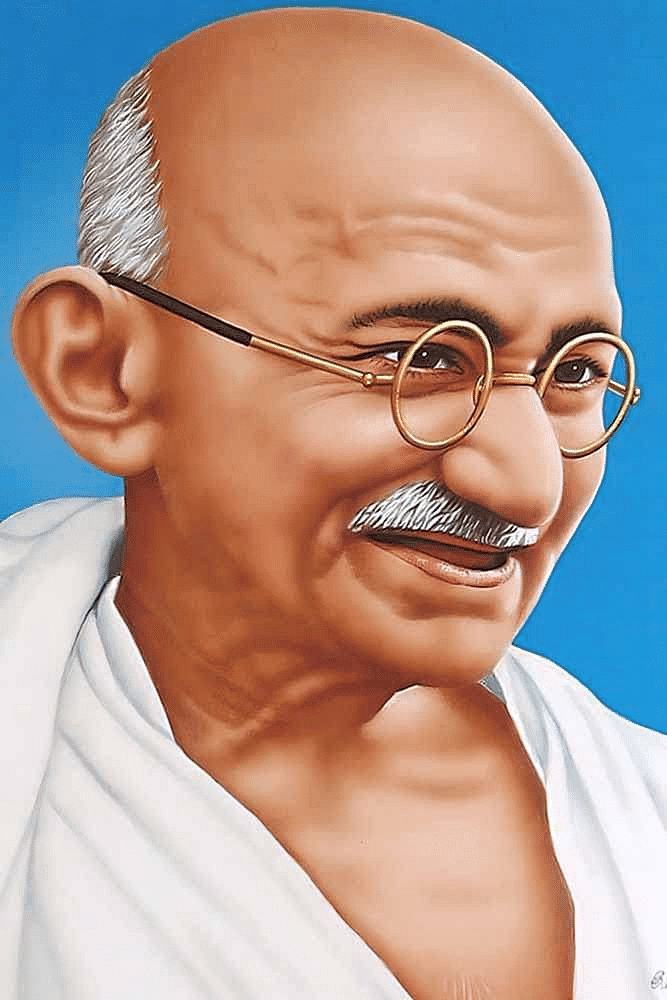
Mahatma Gandhi, often called the Father of the Nation, reshaped the Indian nationalist movement by making political struggle mass-based and by developing methods of non-violent protest. This chapter follows Gandhi's public life in India from his return in 1915 to his assassination in 1948, describes the major campaigns he led, explains the ideas that guided him, and examines how different sections of Indian society responded to his leadership.
A Leader Announces Himself
Return to India (1915)
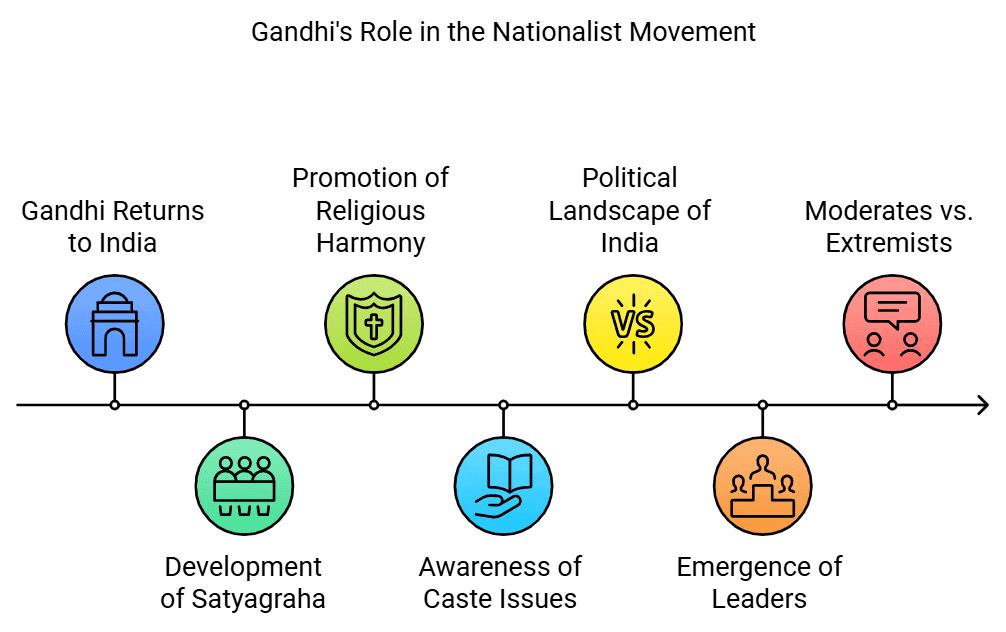
- Gandhi returned to India in January 1915 after nearly twenty years in South Africa, where he worked as a lawyer and emerged as a leader of the Indian community.
- In South Africa he developed and refined the technique of satyagraha-a method of non-violent resistance based on truth, moral courage and civil disobedience. He also campaigned for communal harmony and drew attention to social practices that harmed women and lower castes.
Political Landscape of India
- The Indian National Congress was active across many towns and cities; nationalism existed as both elite politics and a growing popular movement.
- Leaders such as Bal Gangadhar Tilak, Bipin Chandra Pal and Lala Lajpat Rai (the "Lal, Bal, and Pal" group) had given a more assertive tone to nationalist politics.
- The Moderates in the Congress - including figures like Gopal Krishna Gokhale - preferred gradual constitutional methods; Mohammad Ali Jinnah was then a prominent political figure who, at that stage, worked within constitutional channels.
First Major Public Appearance
Gandhi's early public appearances in India drew attention because his reputation rested on the work he had done in South Africa rather than on previous prominence in Indian politics.
- At a public gathering associated with Banaras Hindu University, Gandhi argued that Indian nationalism was largely an elite movement composed of lawyers, doctors and landlords and that it needed to be widened to include peasants, workers and artisans.
- He warned that political leadership which remained distant from the masses could not secure India's freedom: "there is no salvation for India unless you strip yourself of this jewellery and hold it in trust for your countrymen."
Gandhi's speech surprised many because he spoke with moral boldness about poverty and the responsibilities of the privileged.
The Making and Unmaking of the Non-cooperation Movement
Early Initiatives (1917-1918)
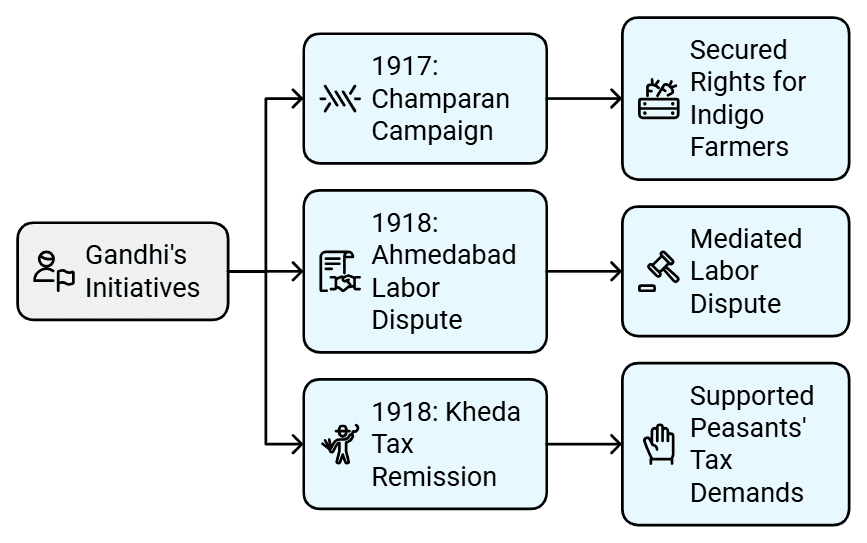
- Gandhi's first important successes were local campaigns in which he combined moral persuasion with organised action: the Champaran Satyagraha (1917) in Bihar secured relief for indigo cultivators forced into unfair contracts by planters.
- In 1918 he intervened in the Ahmedabad mill workers' dispute and later supported peasants in Kheda (Gujarat) who demanded tax relief after crop failures. Such campaigns built Gandhi's credibility among peasants and workers.
Rowlatt Act and Jallianwala Bagh Massacre
- The Rowlatt Act (1919) allowed the colonial government to detain people without trial and provoked widespread protests; Gandhi called for countrywide demonstrations and hartals (bandhs).
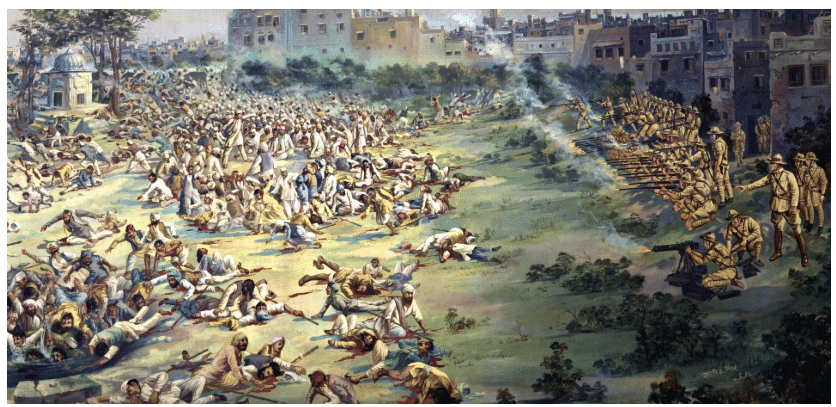
- The Jallianwala Bagh massacre (Amritsar, April 1919), where troops fired on an unarmed crowd, shocked public opinion and intensified the demand for political change.
Non-cooperation Movement (1920-1922)
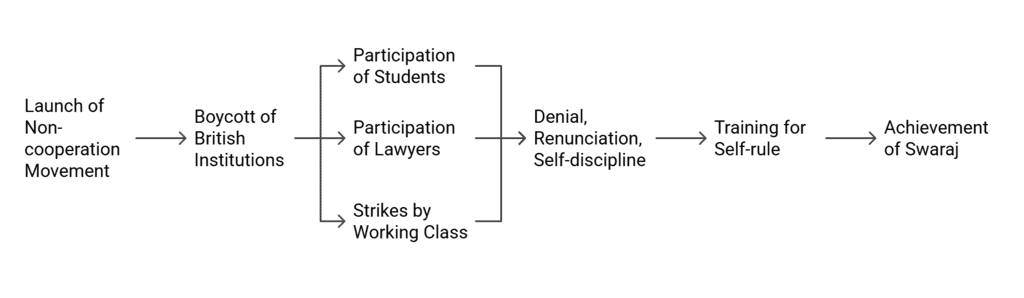
- Gandhi launched the Non-cooperation Movement to boycott British institutions and develop self-reliance: people were urged to withdraw from government schools and courts, to refuse to buy foreign goods and to wear Indian cloth.
- The movement mobilised students, lawyers, workers and peasants. Official records note a sharp rise in labour unrest in 1921 with many strikes and a large number of workdays lost.
- Gandhi described non-cooperation as a moral discipline involving denial and renunciation; he believed that properly followed, it could produce swaraj (self-rule) in a short time.
Knitting a Popular Movement
- Gandhi allied the Non-cooperation Movement with the Khilafat Movement (a campaign by Indian Muslims to support the Ottoman Caliphate after World War I) to build Hindu-Muslim unity and enlarge the social base of the struggle.
- This alliance drew wide participation and made the struggle appear as a united national demand rather than an exclusively elite campaign.
- The combined effort shook the confidence of colonial rule-the British found it hard to govern when many social groups joined a single movement of non-cooperation.
Chauri Chaura Incident
- In February 1922, violence at Chauri Chaura (United Provinces) where a police station was attacked and torched, led Gandhi to suspend the Non-cooperation Movement.
- Gandhi insisted that the movement must be strictly non-violent; when violence occurred he chose to call it off to preserve moral discipline.
- Gandhi was arrested subsequently and sentenced to six years in prison; he was released in 1924.
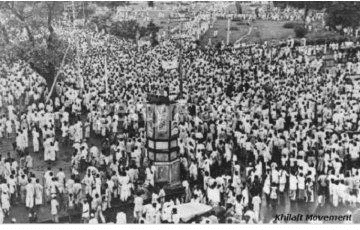
The Non-cooperation Movement saw students leave schools and lawyers give up courts as part of a broad withdrawal of consent from colonial institutions.
Challenges and Conclusion
- The suspension reduced the momentum gained by mass mobilisation, but Gandhi's policies had already transformed Indian politics by giving political voice to peasants, workers and artisans.
- After his release, Gandhi concentrated on social reform-promoting khadi and the use of the charkha, and campaigning against untouchability and other social evils.
A People's Leader
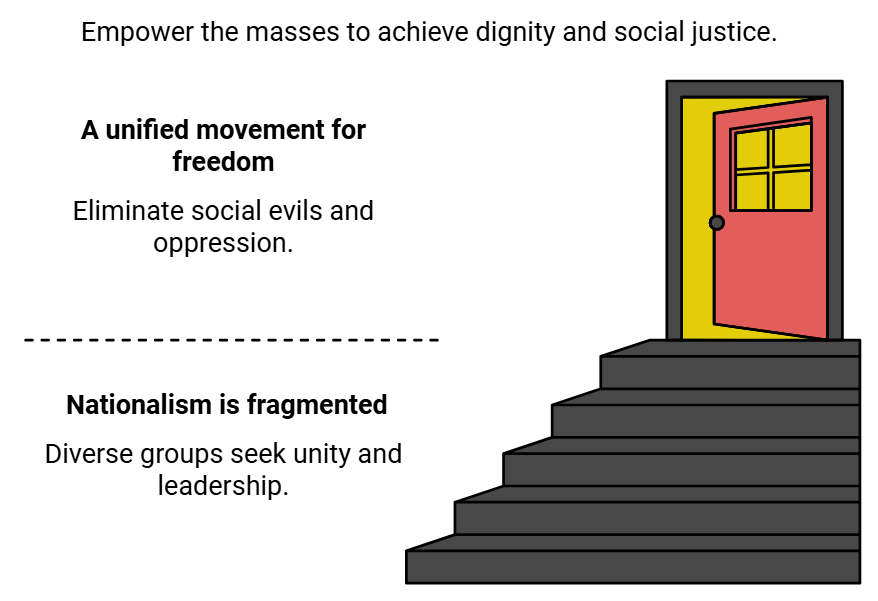
- Gandhi transformed Indian nationalism into a mass movement, involving peasants, workers, and artisans from his BHU speech in 1916 to the conclusion of the non-cooperation movement in 1922.
- Many had started referring to Gandhi as their "Mahatma".
- Gandhi seemed to the Indian peasants like a savior who would free them from heavy taxes and harsh officials and restore their dignity and control over their lives.
- His simple lifestyle, symbolized by the dhoti and charkha, resonated with the common people.
- Gaining popularity among the wealthy: Among the rich Indian businessmen and industrialists, some had openly started supporting Gandhi while others did it tactfully while hiding from the British authorities.
- After his release from imprisonment in 1924, Gandhi diverted his attention to the promotion of Indian-made cloth khadi and the abolition of untouchability.
- Getting rid of social evils: Gandhi believed that to enjoy freedom, Indians needed to eliminate social issues like child marriage and untouchability.
The nationalism Gandhi promoted is often called Gandhian nationalism because it combined political mobilisation with moral and social reform.
Key insight: Gandhi broadened the social base of Indian nationalism by bringing in marginalised groups and by insisting on ethical conduct in politics.
The Salt Satyagraha: A Case Study
Context and Strategy
- After his release from prison, Gandhi had focused solely on social reform work. By 1928, however, he started considering re-joining politics.
- Annual session of Congress in 1929: Jawaharlal Nehru was elected as President and the proclamation of commitment to "Purna Swaraj" was made
- On January 26, 1930, "Independence Day" was celebrated with the national flag raised at various locations and patriotic songs sung. Gandhiji provided detailed instructions on how the day should be observed.
- Soon after that day, Gandhi initiated the Salt Satyagraha to protest the British monopoly on salt production and sales.
Impact and Response
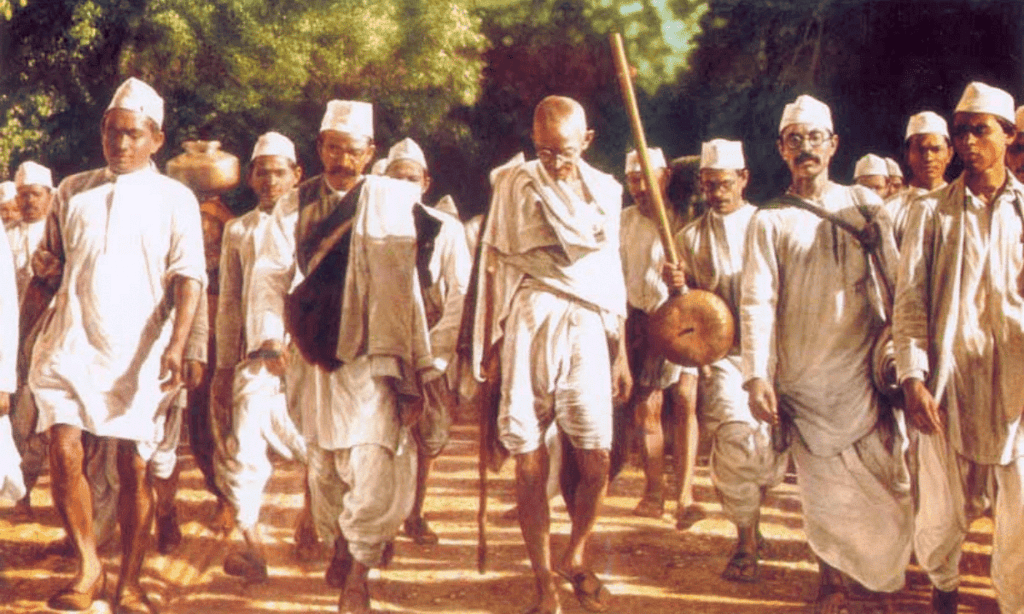
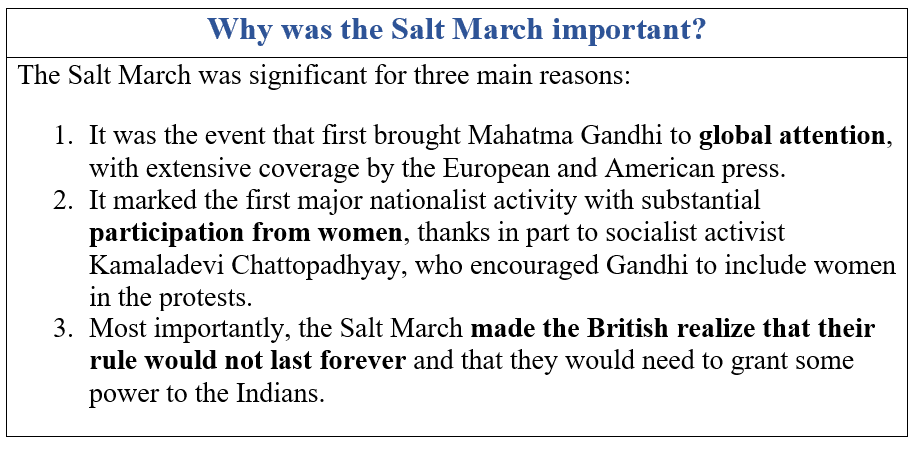
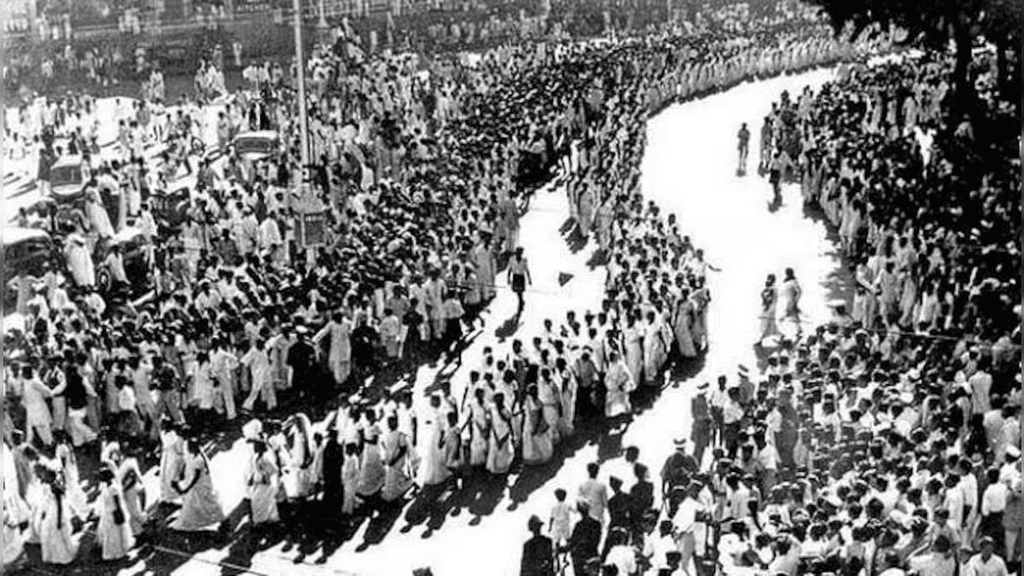
- The Dandi March, also known as the Salt March, began on March 12, 1930, and ended on April 6, 1930, with Gandhi making salt at Dandi. At the same time, similar salt marches were taking place in other parts of the country.
- The march to Dandi was a symbolic act to challenge British authority, as salt was a basic necessity for all Indians.
- The Salt March drew massive support and international attention, highlighting the unjust policies of the British Raj.
- The British response was severe, with mass arrests, including Gandhi himself.
Why the Salt Satyagraha?
- Salt was crucial, and the British monopoly on its production was widely hated. By focusing on the salt tax, Gandhi brought together people from various regions and social backgrounds, making it a central issue against British rule.
- This was significant as it marked the first major nationalist movement with considerable female participation, further expanding the movement's reach.
Progress of the March
- Gandhi's march from Sabarmati to Dandi attracted widespread attention.
- The police reports and international media coverage documented the growing support for the movement.
- There are reports of Gandhi being unwell but still gathering strength to march further, as well as documentation of his powerful speeches along the way.
 Importance of Salt (Dandi) March
Gandhi and his followers walked 240 miles during the Dandi March, gathering supporters and attention along the way.
Dialogues and Political Developments after 1930
- The Gandhi-Irwin Pact was signed in 1931, which led to stopping the civil disobedience movement and the release of political prisoners. One of its terms allowed for salt production along the coast.
- The first Round Table Conference took place in November 1930, but it was ineffective as the main political leader in India was absent. Gandhi attended the Second Round Table Conference in London in 1931, but since it did not achieve any results, he returned to India and resumed civil disobedience.
- In 1935, a new Government of India Act was established, leading to Congress "Prime Ministers" in eight out of 11 provinces, under the direction of a British Governor. When talks with the Viceroy failed in October 1939, the Congress ministries resigned.
- In 1940, the Muslim League called for autonomy for regions with a Muslim majority, highlighting the increasing political divide in India.
Quit India (1942)
Background
- After the British government's Cripps Mission (April 1942) failed to offer satisfactory terms for Indian sovereignty, the Congress launched the Quit India Movement in August 1942, demanding an immediate end to British rule.
- The movement called for mass protests, strikes, and non-cooperation; its slogan "Do or Die" captured the intensity of the demand.
Government Response and Outcomes
- The British responded with severe repression: thousands of activists were arrested (including Gandhi and the entire Congress working leadership), public meetings were banned and many protests were crushed.
- Despite the crackdown, the movement increased popular resistance to colonial rule and weakened the legitimacy of British authority.
Independent Governments
- In some districts, notably Satara and Medinipur, local leaders set up parallel administrations which took over certain local functions-demonstrating popular readiness for self-government at the local level.
Rise of the Muslim League and Communal Tensions
- With many Congress leaders imprisoned, Mohammad Ali Jinnah and the Muslim League expanded their organisational base. On release from prison in 1944, political manoeuvring intensified.
- The 1946 provincial elections deepened political divisions; on 16 August 1946 Jinnah called for a "Direct Action Day" which led to communal violence in many parts of the country.
Division Announced and Transfer of Power
- Lord Mountbatten (viceroy from February 1947) attempted final talks between Congress and the League, but when negotiations failed a decision was taken to transfer power and to partition British India into two dominions.
- The formal transfer of power was scheduled for 15 August 1947, and partition led to widespread communal violence and large population movements.
The slogan "Do or Die" became associated with the Quit India Movement and inspired many to join mass actions against colonial rule.
The Last Heroic Days
Efforts for Communal Harmony during Partition
- Gandhi worked hard to bring peace between Hindus and Muslims during the partition of India. He went on a fast to promote reconciliation and protect minorities.
- At the suggestion of Gandhi and Nehru, the Congress passed a resolution regarding the rights of minorities.
- In September and October, as noted by his biographer D.G. Tendulkar, Gandhi visited hospitals and refugee camps to comfort distressed individuals.
- He urged Sikhs, Hindus, and Muslims to let go of their past grievances and to unite in a spirit of fellowship and peace.
Assassination and Legacy
- On 30 January 1948 Gandhi was assassinated by Nathuram Godse. His death was mourned across India and around the world.
- Gandhi's methods-non-violence, civil disobedience and moral persuasion-and his concern for social justice and communal harmony continued to influence social and political movements globally.
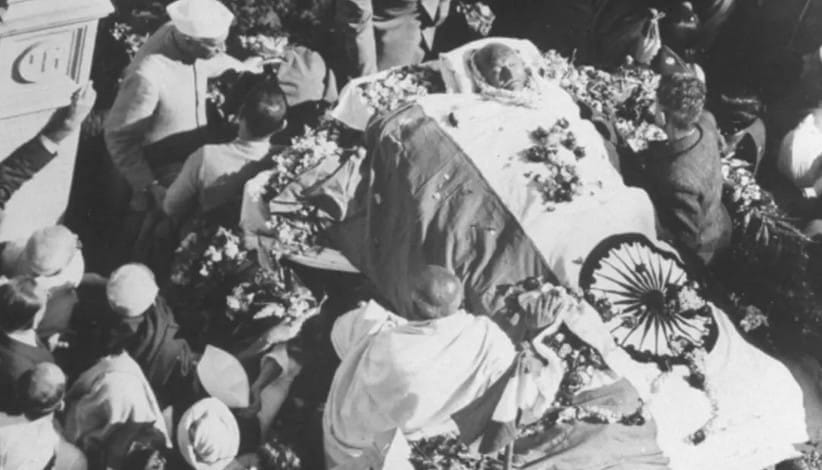
Gandhi's reputed last words, "Hey Ram," reflect the religious and spiritual dimension that marked much of his life.
Knowing Gandhi
Public Voice and Private Writings
- Gandhi wrote extensively-letters, speeches and articles-that reveal both his public programmes and private thinking about strategy, ethics and social reform.
- His correspondence with political colleagues and critics shows the negotiations and compromises involved in mass politics.
Framing a Picture
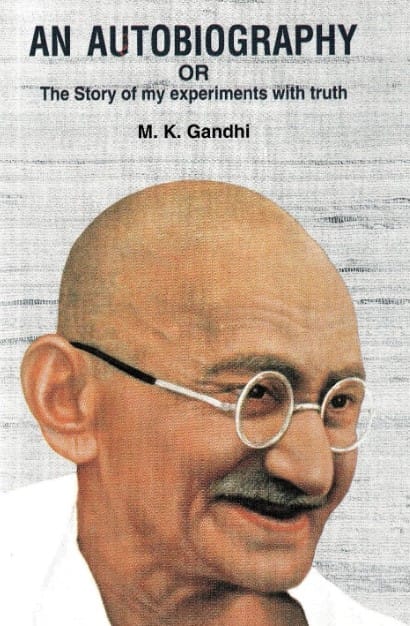
- Gandhi's autobiography, The Story of My Experiments with Truth, is a key primary source for his life and ideas; it presents a personal narrative shaped by his moral outlook and memory.
- Autobiographies and memoirs of contemporaries help construct a fuller picture but must be read critically because every writer has a perspective and emphasis.
Through Police Eyes and the Press
- Official government records and police reports provide an administrative view of Gandhi's activities and the colonial response; they show how authorities assessed the threat posed by mass mobilisation.
- Contemporary newspapers-both Indian and international-covered Gandhi's campaigns and public reactions, providing valuable evidence of how events were perceived at the time.
Timeline
- 1915: Gandhi returns to India from South Africa.
- 1917: Champaran Satyagraha.
- 1918: Ahmedabad mill strike and Kheda Satyagraha.
- 1919: Opposition to the Rowlatt Act and the Jallianwala Bagh massacre.
- 1920-1922: Non-cooperation Movement.
- 1930: Salt Satyagraha (Dandi March).
- 1942: Quit India Movement.
- 1947: Indian independence and partition.
- 1948: Gandhi's assassination.
Conclusion
Mahatma Gandhi transformed Indian politics by linking moral persuasion with mass mobilisation. His insistence on non-violence and his efforts to include peasants, workers, artisans and women broadened the nationalist movement's base. Though his strategies sometimes produced controversy and had limits, his influence on India's struggle for independence and on global movements for civil rights and social justice remains profound.
FAQs on Chapter Notes: Mahatma Gandhi & The Nationalist Movement
| 1. Who was Mahatma Gandhi and what was his role in India's freedom struggle? |  |
| 2. What is satyagraha and how did Gandhi use it in the nationalist movement? | |
| 3. How did the Salt March impact India's independence movement and British rule? | |
| 4. What were the main differences between Gandhi's non-violent approach and other nationalist leaders' methods? | |
| 5. What key campaigns and movements did Gandhi lead during India's struggle for independence? | |