Detailed Summary: Nelson Mandela - Long Walk to Freedom

Key Points of the Story
- The story is from Nelson Mandela's autobiography, highlighting the struggle against apartheid.
- On 10 May 1994, Mandela became South Africa's first Black President.
- The event marked the end of white rule and the beginning of democracy.
- The inauguration in Pretoria was attended by many international leaders.
- Mandela promised equality, justice, and no discrimination for all.
- Two national anthems were sung to symbolize unity.
- He recalled the suffering of black people under apartheid.
- Stated that hatred is learned, and love is natural.
- True courage is facing and overcoming fear.
- Everyone has duties to their family and nation.
- Freedom was once an illusion for black South Africans.
- Freedom is for all-both oppressed and oppressor need to be freed.
Detailed Summary
Nelson Mandela: Long Walk to Freedom is an extract from the autobiography of Nelson Rolihlahla Mandela that describes the struggle for freedom of black people in South Africa. On 10th May 1994, Nelson Mandela took the oath as South Africa's first Black President after more than three centuries of White rule. His party had won 252 out of the 400 seats in the first democratic elections in the history of South Africa.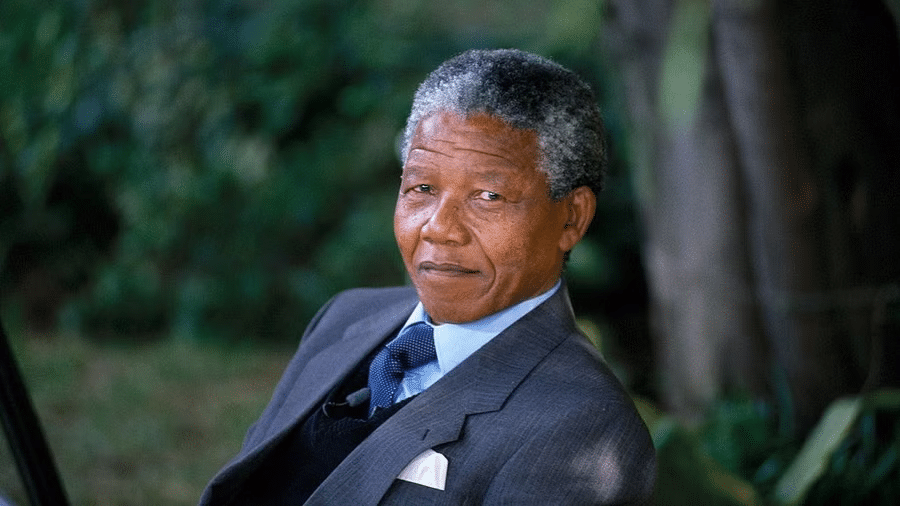 Nelson Mandela
Many dignitaries and political figures from several countries attended the inauguration ceremony that took place in the Union Buildings amphitheatre in Pretoria. In his speech, Mandela addressed all dignitaries respectfully and assured his fellow countrymen that his country would never experience similar suppression by one group over another. While taking his vow as the first black President, he established democracy in the country and said there would be no discrimination against people, irrespective of caste, colour, creed or race. He assured that the government would always treat all the people of the country with due respect and equality.
The lovely day of inauguration was symbolic for Mandela as the South African people sang two national anthems - the vision of whites sang 'Nkosi Sikelel -iAfrika' and the blacks sang 'Die Stem', the old anthem of the Republic. All these events reminded Mandela of how black-skinned people were exploited by white people earlier. He deeply felt the pain of his race and said that this type of suppression and racial domination of the white-skinned people against the dark-skinned people on their own land gave rise to one of the harshest and most inhumane societies the world had ever seen or known. He strongly believed that no person is born to hate the other person on the basis of skin colour, background or religion. However, people must learn to hate because if they learn to hate, they can be taught to love as well, as love comes more naturally to humans than hate. He also mentioned how a person becomes brave, not because he does not feel afraid, but because he knows how to conquer his fears.
Try yourself: What historic event did Nelson Mandela reflect on during his inauguration as the first black President of South Africa?
Furthermore, Mandela stated that every man in life has two major obligations. The first one is his obligation towards his family, which includes his parents, wife and children, and the second is towards his motherland, countrymen and his community. Everyone is able to fulfil those obligations according to his own interests and inclinations. However, it was difficult to fulfil both these obligations as a black man in a country like South Africa before the democratic wave took over the nation by storm. When Mandela became an adult, he realised that freedom was merely an illusion and temporary in nature for the black-skinned people of his country. He felt that they were treated as slaves of exploitation, and all the people of his race were treated unfairly by the white-skinned people.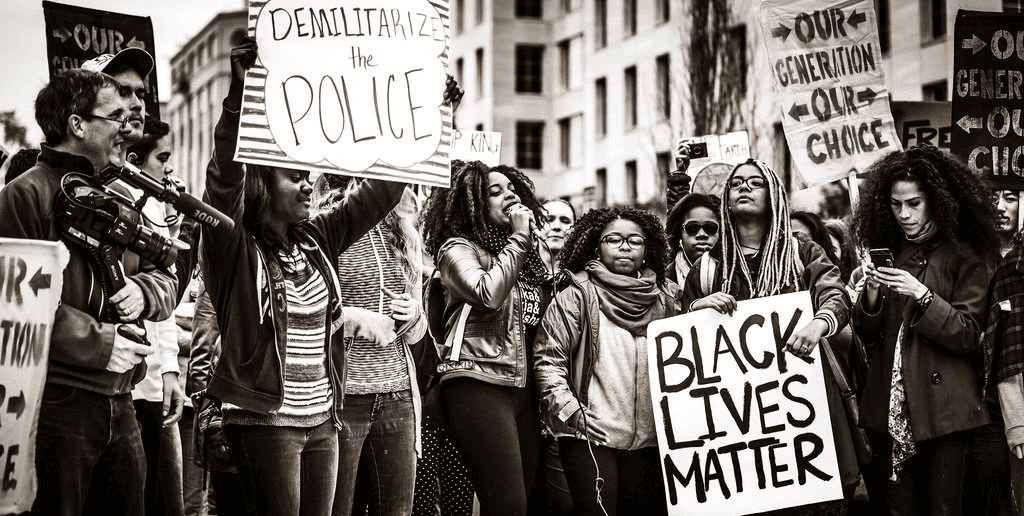 Racial Domination
According to Mandela, freedom was indivisible for all. But the people of his colour and race were bound in chains of oppression and tyranny. He knew that the oppressor must be liberated just like the oppressed because a person who snatches another's freedom is also a prisoner of similar oppression. Thus, the oppressor is not free too and feels shackled in the chains of oppression himself.
Theme:
The central theme of the chapter revolves around courage, resilience, and the struggle for justice. Nelson Mandela's life exemplifies unwavering willpower and determination in the face of adversity. Despite enduring years of imprisonment and oppression, Mandela's story reflects the power of forgiveness, unity, and love in the fight against injustice. His journey serves as an inspiring example of how one can transform personal suffering into a broader movement for freedom and equality. The theme also stresses that courage and resilience are vital traits for achieving one's goals and challenging societal wrongs.
Message:
The story delivers a powerful message that both the oppressor and the oppressed are dehumanized by the system of injustice-one through hatred and the other through suffering. True liberation, therefore, means freeing both parties from the chains of inhumanity. It also conveys that real and lasting change is possible only through collective action, where individuals unite despite their differences. The narrative underscores the importance of forgiveness, collaboration, and moral courage in building a just and equal society.
Glossary
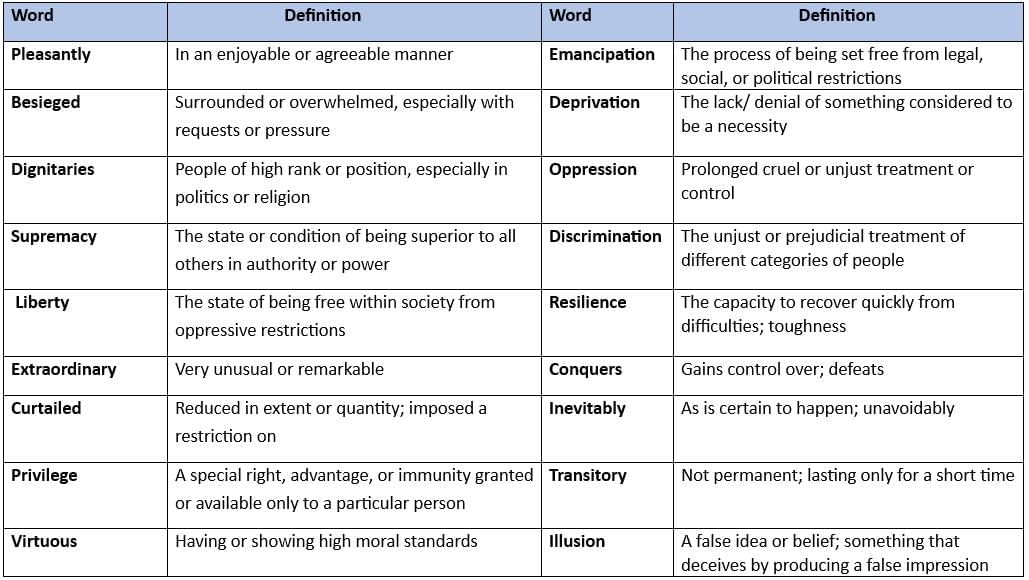
You can practice questions from this chapter here: Very Short Questions: Nelson Mandela - Long Walk to Freedom
FAQs on Detailed Summary: Nelson Mandela - Long Walk to Freedom
| 1. What were the main events that shaped Nelson Mandela's early life and childhood? |  |
| 2. How did Nelson Mandela's relationship with the ANC and armed resistance develop over time? | |
| 3. What was Mandela's life like during his 27 years imprisoned on Robben Island? | |
| 4. How did Mandela's negotiation strategy change apartheid and lead to South Africa's democratic transformation? | |
| 5. What lessons about perseverance and forgiveness can Class 10 students learn from Mandela's Long Walk to Freedom narrative? | |