Introduction
Western economies had already completed large-scale industrialisation before India attained independence. At independence India inherited an economy that required urgent revival: widespread poverty, food shortages, inadequate healthcare and education, and underdeveloped industry and infrastructure. Restoring and modernising industry, infrastructure, science and technology, and higher education therefore became immediate priorities that required substantial public investment because of long periods of colonial neglect.
The strategy adopted was to accelerate growth by treating the industrial sector as the prime moving force. The state took an active role in directing economic development, expanding government-owned enterprises and using industrial policy to shape the structure and direction of the economy. This heavy state involvement persisted for decades and strongly influenced policy choices until the reforms of the early 1990s.
 Industry & Infrastructure
- Challenges included poverty, food insecurity, health and education deficits and a severe shortage of capital and modern industry.
- Industrialisation was prioritised to generate rapid economic growth and employment.
- The state adopted a mixed economy model where the government played a dominant role in key industries while allowing private enterprise in other areas.
- Public Sector Undertakings (PSUs) were expanded to build heavy industry and infrastructure.
- Industrial policies framed by successive governments determined licensing regimes, reservation of industries, and the role of foreign and private investment.
Review of Industrial Policies up to 1986
Industrial Policy Resolution, 1948
- Announced on 8 April 1948, this was India's first industrial policy statement and formally established the mixed economy model.
- Certain key industries were placed under the Central (Union) list: coal, power, railways, civil aviation, arms and ammunition, defence, etc.
- Some industries of medium importance were left to the states (e.g., paper, medicines, textiles, cycles, two-wheelers).
- Other industries were left open to private enterprise, though many were subject to compulsory licensing.
Industrial Policy Resolution, 1956
- The government was encouraged by the impact of the industrial policy of 1948.
- The 1956 resolution codified a stronger role for the public sector and introduced a three-tier classification of industries (also called the Reservation of Industries):
- Schedule A contained 17 industries reserved entirely for the Centre and led to the formation of Central Public Sector Undertakings (CPSUs).
- Schedule B listed 12 industries for state initiative with scope for private participation under state guidance.
- Schedule C included the remaining industries where private enterprise could operate but under regulation and licensing.
- The policy institutionalised compulsory licensing for many industries and established the "Licence-Quota-Permit" regime, which regulated entry, capacity and expansion.
- There was a clear emphasis on heavy industries and expansion of the public sector to achieve rapid industrialisation.
Industrial Policy Resolution, 1969
- This was basically a licencing policy which aimed at solving the shortcomings of the licencing policy started by the Industrial Policy of 1956.
- The experts and industrialists (new comers) complained that the industrial licencing policy was serving just the opposite purpose for which it was mooted.
- A powerful industrial house was always able to procure fresh licences at the cost of a new budding entrepreneur.
- The committees on industrial licencing policy review not only pointed out several shortcomings of the policy, but also accepted the useful role of industrial licencing.
Industrial Policy Statement, 1973
- The 1973 statement introduced the concept of core industries (also called basic or infrastructure industries) such as iron and steel, cement, coal, crude oil, oil refining and electricity.
- Private sector participation in some core industries was allowed subject to conditions; firms with assets of ₹20 crore or more were eligible to apply for licences in certain areas.
- The policy promoted the joint sector-collaborations involving the Centre, state and private firms-while retaining government discretion to exit such ventures.
- To manage a chronic foreign exchange shortage the Foreign Exchange Regulation Act (FERA), 1973 was enacted to tightly control foreign exchange and foreign companies' operations.
- Limited permission for foreign investment and technology transfer was permitted, but under restrictive terms.
Industrial Policy Resolution, 1977
- The 1977 statement reflected a shift in political orientation with emphasis on small and village industries, decentralised industrialisation and support to khadi and rural industries.
- Some restrictions were placed on foreign investment and capital-intensive industry in favour of employment-oriented and small-scale units.
Industrial Policy Resolutions, 1980, 1985 & 1986
- The 1980 policy reversed some of the 1977 restrictions: foreign investment via technology transfer was again permitted, industrial licensing was simplified, and the threshold for the MRTP (Monopolies and Restrictive Trade Practices) scrutiny was increased to ₹50 crore to encourage larger private firms.
- The policies of 1985-86 continued this liberalising trend: the MRTP limit was raised to ₹100 crore; licensing was drastically simplified so that compulsory licensing applied to a smaller list of industries (around 64 industries); and foreign equity and technology inflows were facilitated with limited relaxations under FERA.
- There was growing attention on emerging sectors such as telecommunications, electronics and computerisation, and on modernisation and profitability of PSUs.
New Industrial Policy, 1991
- By the early 1990s India faced a balance of payments crisis and a need to redesign the structure of the economy. The New Industrial Policy, 1991 began the process of market-oriented reforms and liberalisation.
- Key features included:
- De-reservation of industries-many industries previously reserved for the public or small sector were opened to private participation.
- De-licencing-licensing requirements were removed for most industries, ending much of the Licence-Quota-Permit regime.
- Abolition of the MRTP limits-restrictions that constrained the growth of large firms were removed.
- Promotion of foreign investment-policy measures were adopted to attract FDI, including allowing higher foreign equity in many sectors.
- FERA replaced by FEMA-the regulatory framework for foreign exchange was later rationalised (FERA's restrictive controls were gradually eased and were formally replaced by the Foreign Exchange Management Act (FEMA), 1999).
- Other measures abolished compulsion on phased production and compulsion to convert loans into equity; overall the policy marked the start of a gradualist liberalisation process.
Disinvestment
- Disinvestment is the process by which the government sells part or all of its equity in public sector undertakings (PSUs), transferring ownership to private investors.
- PSUs and public sector enterprises (PSEs) had been central to India's development strategy. By the time liberalisation started the government had invested around ₹2.4 lakh crore in 244 firms. The stock of government investment and number of firms continued to grow and by 2019 government investments stood at around ₹16.41 lakh crore in 348 firms (figures indicate cumulative investment and number of firms).
- The government began deliberate disinvestment to improve efficiency, raise resources and allow the state to focus on areas where private participation is limited.
Types of disinvestment:
- Token (minority) disinvestment-selling a minority stake (often up to 49 per cent historically) to signal private participation while retaining majority control.
- Strategic disinvestment-selling a substantial or controlling stake (50 per cent or more) so that private ownership and control are transferred to improve efficiency and competitiveness.
- Institutional framework and current practice:
- The Department of Investment and Public Asset Management (DIPAM) (under the Ministry of Finance) now manages disinvestment policy and transactions.
- Strategic disinvestment decisions are taken through consultation among ministries, with advice from bodies such as NITI Aayog, scrutiny by the Core Group of Secretaries on Disinvestment (CGD), and final approval by the Cabinet Committee on Economic Affairs (CCEA).
MSME Sector
- The Micro, Small and Medium Enterprises sector (MSMEs) is formally governed by the MSMED Act, 2006 and historically classified enterprises in manufacturing and service categories based on investment in plant and machinery or equipment.
- MSMEs are critical for employment, exports, and inclusive growth. There are about 3.6 crore MSME units providing employment to around 8.05 crore people and contributing roughly 37.5 per cent to India's GDP (estimates as given).
- MSMEs help address structural problems such as unemployment, regional disparities and unequal income distribution because they are relatively low-capital and have strong forward and backward linkages.
- Recent policy and support measures (as notified in 2015):
- UAM (Udyog Aadhaar Memorandum)-notified September 2015 to simplify registration and provide a unique Udyog Aadhaar Number (UAN) to entrepreneurs, improving ease of doing business.
- Employment Exchange for Industries-an initiative (June 2015) to match job seekers and employers using digital platforms in line with Digital India goals.
- Framework for Revival and Rehabilitation of MSMEs-introduced May 2015, requiring banks to form Committees for Distressed MSMEs to prepare Corrective Action Plans (CAPs).
- ASPIRE (A Scheme for Promoting Innovation, Rural Industries and Entrepreneurship)-launched March 2015 to set up technology and incubation centres to accelerate entrepreneurship, especially in rural and agriculture-based industries.
Industrial Sector - Selected Subsectors
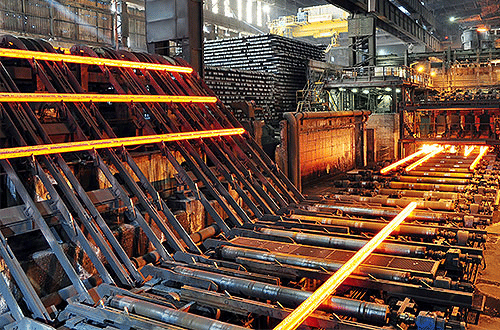
Steel Industry
- India is the second largest producer of steel after China, but its share in global production (about 6 per cent) is much smaller than China's (over 50 per cent).
- Global and domestic pressures have led to increased steel imports into India, creating challenges for domestic producers who face competition from cheap foreign steel.
- Recent concerns include a surge in steel imports and the resultant pressure on domestic capacity utilisation and profitability.
Aluminium Industry
- India is a major aluminium producer and a significant consumer. Current production is around 4.5 million tonnes (China: 22 million tonnes) while domestic consumption is roughly 3.8 million tonnes.
- Global aluminium prices are cyclical and sensitive to world industrial growth; forecasting prices is difficult and depends on global demand conditions.
- Policymakers often balance protection through tariffs with the competitiveness of downstream industries (power, transport and construction) that rely on aluminium inputs.
Apparel and Footwear Sectors
- Industrial growth that generates large-scale employment is essential for India's demographic dividend. Apparel, leather and footwear industries are labour-intensive and have strong export potential.
- These sectors can create formal jobs, absorb semi-skilled labour, and provide linkages to small and medium enterprises across regions.
 Apparel & Footwear Sector
PLI Scheme (Production-Linked Incentive)
- The government launched the PLI Scheme in March 2020 to boost domestic manufacturing, attract investment, and reduce import dependence.
- Under the scheme, eligible companies receive incentives on incremental sales of products manufactured in India over a specified base year, usually across a five-year period.
- By April 2023 the scheme covered multiple sectors (the list of covered sectors has been expanded over time) including mobile manufacturing, specified electronic components, active pharmaceutical ingredients, medical devices, advanced chemistry cell batteries, automobile and auto components, textiles, food products, high-efficiency solar PV modules, white goods (ACs and LED), specialty steel, drones and drone components, telecom and networking products, and select pharmaceutical and chemical inputs.
- Incentives are typically calculated as a percentage of incremental production turnover or certain qualifying investments (excluding land and building) and are paid over multiple years to encourage scale and integration into global value chains.
- Impact-the PLI is expected to increase manufacturing capital expenditure, strengthen supplier ecosystems (including MSMEs), promote domestic value addition, and make Indian manufacturing more globally competitive.
FDI Policy Measures
- Foreign Direct Investment (FDI) is an important source of capital, technology, managerial skills and access to international markets that can raise productivity and generate employment.
- The government has progressively liberalised and simplified FDI policy to improve the ease of doing business and attract long-term investment.
- Several sectors have been liberalised over time, including defence, construction, broadcasting, civil aviation, plantation, trading, private sector banking, satellite services and credit information companies.
- Policy measures have focused on clarifying routes for investment, reducing approval requirements, and allowing larger foreign ownership where it is judged to support growth, exports and technology transfer.
Conclusion
India's industrial policy history shows an evolution from a state-led, licence-driven model to a progressively liberalised, market-oriented approach. Early policies emphasised public sector expansion, licensing, and reservation of industries; reforms since 1991 have removed many regulatory barriers, encouraged private and foreign investment, and introduced targeted incentives such as the PLI scheme to promote manufacturing and integration into global value chains. Continued attention to MSME support, disinvestment of non-strategic PSUs, and sectoral policies will remain important to realise higher investment, employment generation and inclusive industrial growth.