UPSC Exam > UPSC Notes > Famous Books for UPSC Exam (Summary & Tests) > Sources of Nutrients and Deficiency diseases
Sources of Nutrients and Deficiency diseases | Famous Books for UPSC Exam (Summary & Tests) PDF Download

Nutrients
By definition, a nutrient is any substance that is absorbed and either provides you with energy or enables growth, repair or proper functioning of your body.
- There are seven main classes of nutrients that the body needs. These are carbohydrates, proteins, fats, vitamins, minerals, fibre and water.
- It is important that everyone consumes these seven nutrients on a daily basis to help them build their bodies and maintain their health.
- Deficiencies, excesses and imbalances in diet can produce negative impacts on health, which may lead to diseases.
- This list of nutrients, their sources, constituents and deficiency diseases will help you prepare for the Competitive Examination.
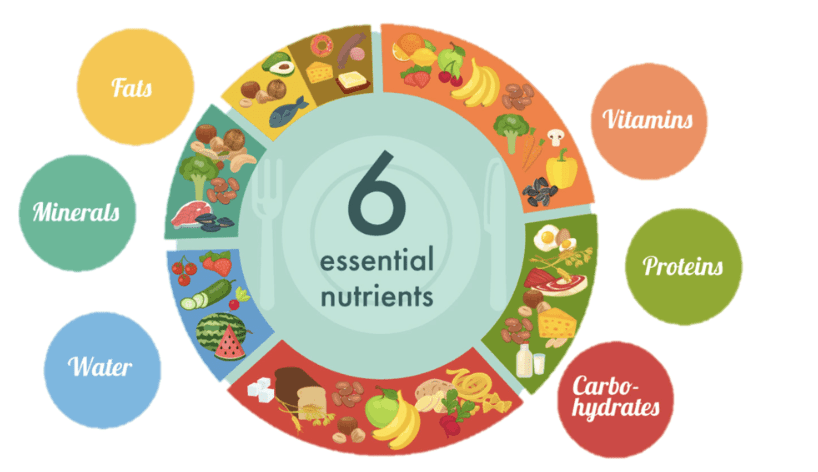
Essential Nutrients
List of Nutrient Sources and their Deficiency diseases
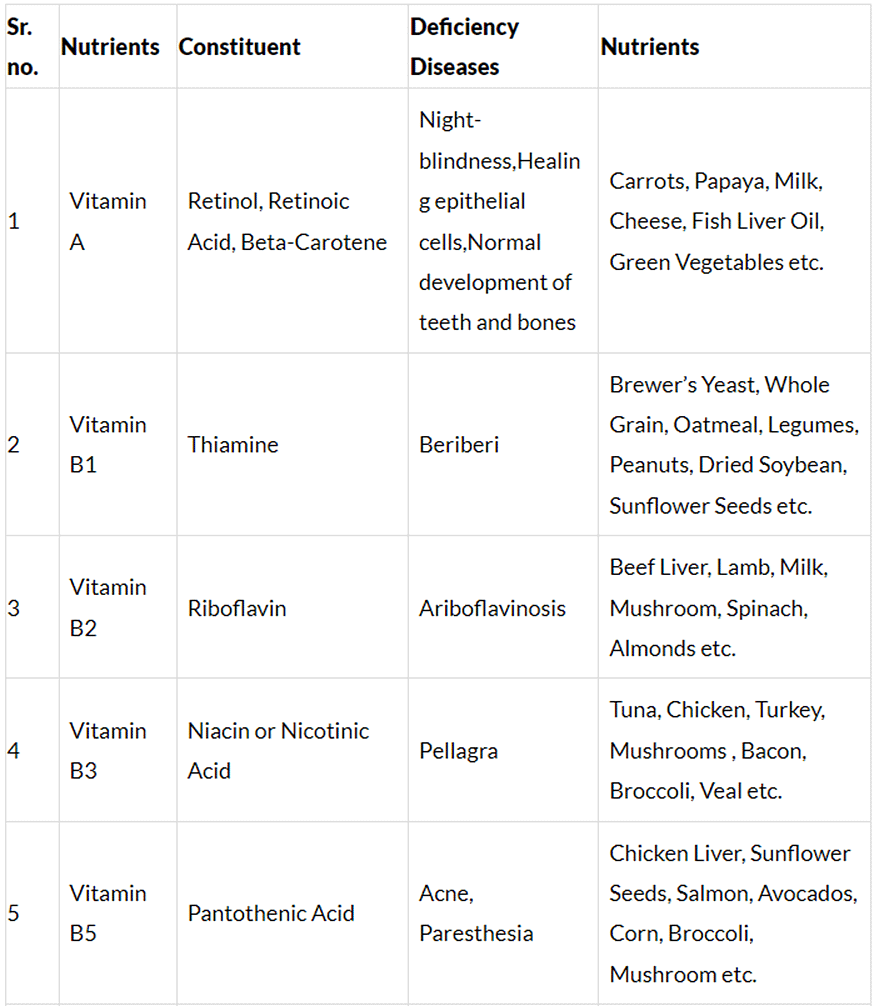
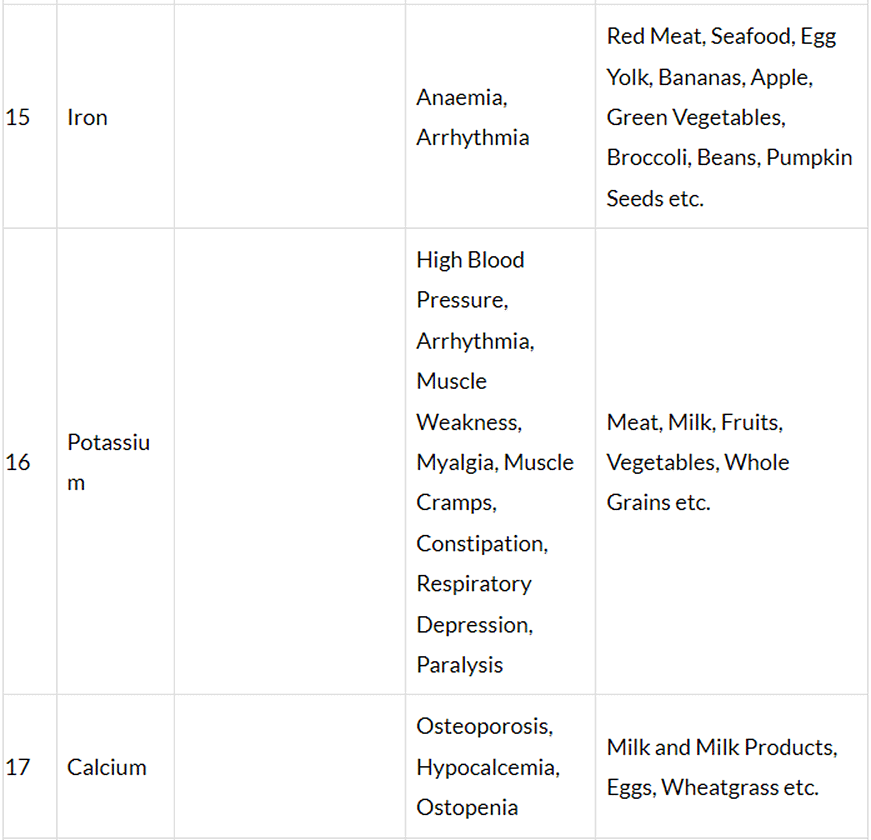
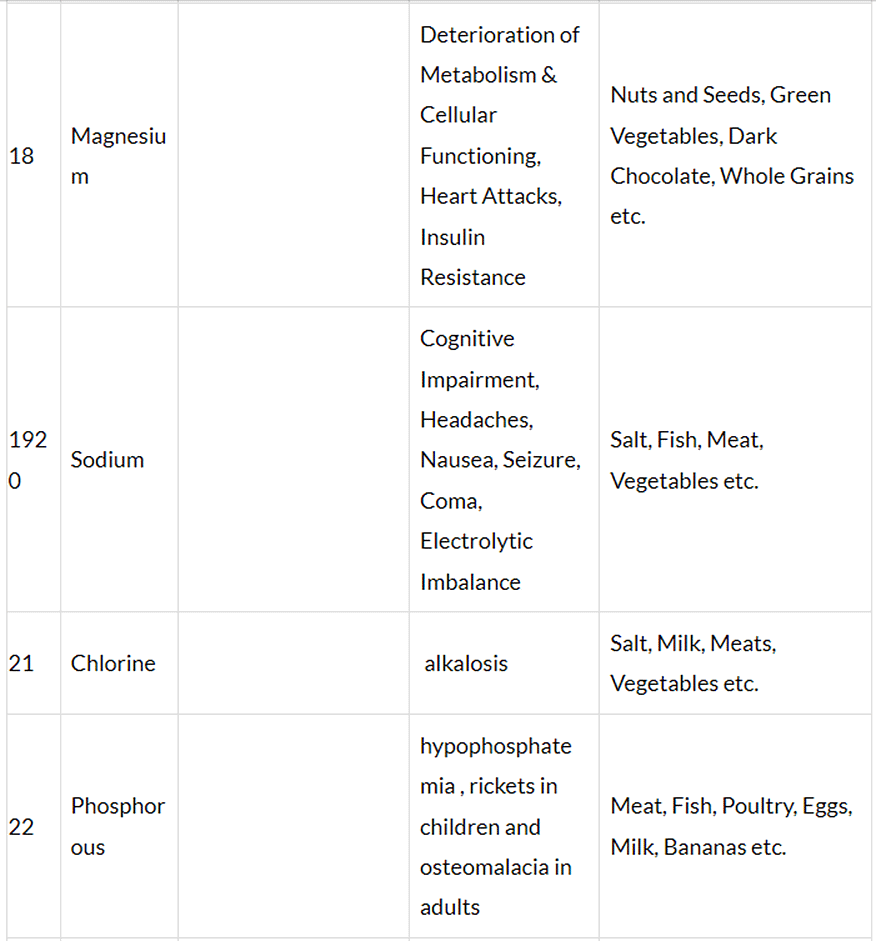
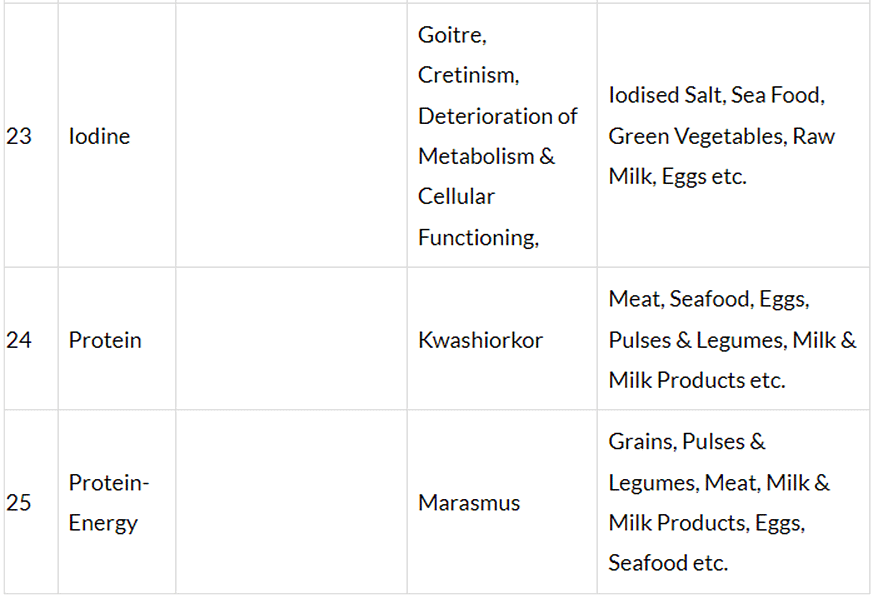
The document Sources of Nutrients and Deficiency diseases | Famous Books for UPSC Exam (Summary & Tests) is a part of the UPSC Course Famous Books for UPSC Exam (Summary & Tests).
All you need of UPSC at this link: UPSC
|
743 videos|1444 docs|633 tests
|
FAQs on Sources of Nutrients and Deficiency diseases - Famous Books for UPSC Exam (Summary & Tests)
| 1. What are nutrients and why are they important for our body? |  |
Ans. Nutrients are essential substances found in food that are necessary for the proper functioning of our body. They provide energy, support growth and development, regulate bodily functions, and maintain overall health. Without adequate nutrients, our body may not be able to carry out its functions efficiently, leading to various health problems.
| 2. What are some common sources of nutrients? | |
Ans. Nutrients can be obtained from a variety of food sources. Some common sources of nutrients include fruits, vegetables, whole grains, lean meats, fish, dairy products, nuts, and seeds. These foods are rich in vitamins, minerals, carbohydrates, proteins, and fats, which are all essential for our body's optimal functioning.
| 3. What are deficiency diseases and how are they related to nutrient sources? | |
Ans. Deficiency diseases occur when our body lacks certain nutrients that are necessary for its proper functioning. Each nutrient deficiency can lead to a specific deficiency disease. For example, a deficiency of vitamin C can lead to scurvy, which causes fatigue, bleeding gums, and joint pain. Adequate intake of nutrient-rich foods helps prevent deficiency diseases by providing the necessary nutrients to our body.
| 4. How can a nutrient deficiency be diagnosed? | |
Ans. A nutrient deficiency can be diagnosed through various methods. Blood tests can measure the levels of specific nutrients in the body. Symptoms and medical history can also provide valuable information for diagnosing nutrient deficiencies. In some cases, a healthcare professional may recommend a dietary assessment to identify any nutrient gaps in an individual's diet.
| 5. What are some strategies to prevent nutrient deficiencies? | |
Ans. Preventing nutrient deficiencies involves maintaining a balanced and varied diet that includes a wide range of nutrient-rich foods. Some strategies to prevent nutrient deficiencies include eating a variety of fruits and vegetables, choosing whole grains over refined grains, consuming lean proteins, including dairy or dairy alternatives, and incorporating healthy fats into the diet. Regularly monitoring nutrient levels through blood tests and seeking guidance from a healthcare professional can also help in preventing nutrient deficiencies.
About this Document

1.8K Views

4.97/5
Rating

Sep 20, 2025
Last updated
Related Exams
Document Description: Sources of Nutrients and Deficiency diseases for UPSC 2025 is part of Famous Books for UPSC Exam (Summary & Tests) preparation.
The notes and questions for Sources of Nutrients and Deficiency diseases have been prepared according to the UPSC exam syllabus. Information about Sources of Nutrients and Deficiency diseases covers topics
like Nutrients, List of Nutrient Sources and their Deficiency diseases and Sources of Nutrients and Deficiency diseases Example, for UPSC 2025 Exam. Find important definitions, questions, notes, meanings, examples, exercises and tests below for Sources of Nutrients and Deficiency diseases.
Introduction of Sources of Nutrients and Deficiency diseases in English is available as part of our Famous Books for UPSC Exam (Summary & Tests)
for UPSC & Sources of Nutrients and Deficiency diseases in Hindi for Famous Books for UPSC Exam (Summary & Tests) course.
Download more important topics related with notes, lectures and mock test series for UPSC
Exam by signing up for free. UPSC: Sources of Nutrients and Deficiency diseases | Famous Books for UPSC Exam (Summary & Tests)
Description
Full syllabus notes, lecture & questions for Sources of Nutrients and Deficiency diseases | Famous Books for UPSC Exam (Summary & Tests) - UPSC | Plus excerises question with solution to help you revise complete syllabus for Famous Books for UPSC Exam (Summary & Tests) | Best notes, free PDF download
Information about Sources of Nutrients and Deficiency diseases
In this doc you can find the meaning of Sources of Nutrients and Deficiency diseases defined & explained in the simplest way possible. Besides explaining types of
Sources of Nutrients and Deficiency diseases theory, EduRev gives you an ample number of questions to practice Sources of Nutrients and Deficiency diseases tests, examples and also practice UPSC
tests


Related Searches
Summary
,Sources of Nutrients and Deficiency diseases | Famous Books for UPSC Exam (Summary & Tests)
,mock tests for examination
,Objective type Questions
,video lectures
,Sources of Nutrients and Deficiency diseases | Famous Books for UPSC Exam (Summary & Tests)
,shortcuts and tricks
,Sources of Nutrients and Deficiency diseases | Famous Books for UPSC Exam (Summary & Tests)
,Exam
,MCQs
,practice quizzes
,study material
,Extra Questions
,Semester Notes
,Previous Year Questions with Solutions
,Free
,Important questions
,Viva Questions
,past year papers
,ppt
,Sample Paper
;




Additional Information about Sources of Nutrients and Deficiency diseases for UPSC Preparation
Sources of Nutrients and Deficiency diseases Free PDF Download
The Sources of Nutrients and Deficiency diseases is an invaluable resource that delves deep into the core of the UPSC exam.
These study notes are curated by experts and cover all the essential topics and concepts, making your preparation more efficient and effective.
With the help of these notes, you can grasp complex subjects quickly, revise important points easily,
and reinforce your understanding of key concepts. The study notes are presented in a concise and easy-to-understand manner,
allowing you to optimize your learning process. Whether you're looking for best-recommended books, sample papers, study material,
or toppers' notes, this PDF has got you covered. Download the Sources of Nutrients and Deficiency diseases now and kickstart your journey towards success in the UPSC exam.
Importance of Sources of Nutrients and Deficiency diseases
The importance of Sources of Nutrients and Deficiency diseases cannot be overstated, especially for UPSC aspirants.
This document holds the key to success in the UPSC exam.
It offers a detailed understanding of the concept, providing invaluable insights into the topic.
By knowing the concepts well in advance, students can plan their preparation effectively.
Utilize this indispensable guide for a well-rounded preparation and achieve your desired results.
Sources of Nutrients and Deficiency diseases Notes
Sources of Nutrients and Deficiency diseases Notes offer in-depth insights into the specific topic to help you master it with ease.
This comprehensive document covers all aspects related to Sources of Nutrients and Deficiency diseases.
It includes detailed information about the exam syllabus, recommended books, and study materials for a well-rounded preparation.
Practice papers and question papers enable you to assess your progress effectively.
Additionally, the paper analysis provides valuable tips for tackling the exam strategically.
Access to Toppers' notes gives you an edge in understanding complex concepts.
Whether you're a beginner or aiming for advanced proficiency, Sources of Nutrients and Deficiency diseases Notes on EduRev are your ultimate resource for success.
Sources of Nutrients and Deficiency diseases UPSC Questions
The "Sources of Nutrients and Deficiency diseases UPSC Questions" guide is a valuable resource for all aspiring students preparing for the
UPSC exam. It focuses on providing a wide range of practice questions to help students gauge
their understanding of the exam topics. These questions cover the entire syllabus, ensuring comprehensive preparation.
The guide includes previous years' question papers for students to familiarize themselves with the exam's format and difficulty level.
Additionally, it offers subject-specific question banks, allowing students to focus on weak areas and improve their performance.
Study Sources of Nutrients and Deficiency diseases on the App
Students of UPSC can study Sources of Nutrients and Deficiency diseases alongwith tests & analysis from the EduRev app,
which will help them while preparing for their exam. Apart from the Sources of Nutrients and Deficiency diseases,
students can also utilize the EduRev App for other study materials such as previous year question papers, syllabus, important questions, etc.
The EduRev App will make your learning easier as you can access it from anywhere you want.
The content of Sources of Nutrients and Deficiency diseases is prepared as per the latest UPSC syllabus.
|
© EduRev
|
Education Revolution
|


|




Signup on EduRev and stay on top of your study goals
10M+ students crushing their study goals daily