Social Movements Class 12 Sociology
| Table of contents |

|
| Introduction |
|
| Features of a Social Movement |
|
| Sociology and Social Movements |
|
| Ecological Movements |
|
| Class Based Movements |
|
| Caste Based Movements |
|
| The Tribal Movements |
|
| The Women's Movement |
|

Introduction
- It is a common misconception that our rights simply materialized by chance.
- However, it is crucial to acknowledge the historical battles that paved the way for the acquisition of these rights.
- The global socialist movements, the anti-apartheid movement in South Africa, and the civil rights movement in the United States during the 1950s and 1960s all had a profound impact on the course of history.
- Furthermore, social movements have the ability to reshape societies and inspire other movements.
Features of a Social Movement
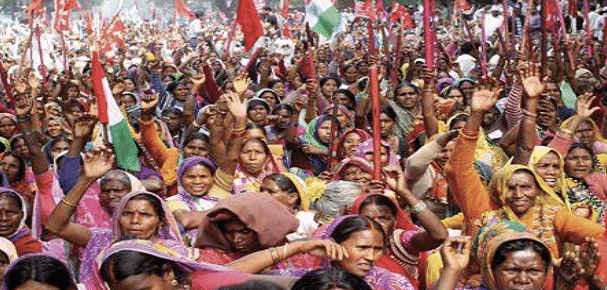
- Collective action requires sustained group effort and often involves advocating for changes in state laws or practices while opposing the state.
- An organized structure is essential in such action, where the leadership and organizational structure governs how members interact, make decisions, and carry out actions.
- A social movement unites its participants around shared goals and ideologies, with a general focus on enacting or preventing change through a specific method of action.
- However, these defining characteristics may evolve over time during the course of the movement's existence.
- Social movements face challenges in swiftly transforming society as there may be opposition and resistance due to conflicting interests and values.
- Nevertheless, change can occur over time.
Counter Movements
- Oppositional movements that aim to defend the status quo are known as counter movements. Historical examples of counter movements include Sati supporters who established Dharma Sabha to petition the British not to pass laws against sati, and those who opposed girls' education and widow remarriage.
Social Movement Actions
- While demonstrations are a common form of collective action, social movements also engage in other important actions.
- Meetings are held to mobilize the public around important issues, campaigns are developed to influence the government, media, and public opinion-shapers, and different forms of protest such as processions, street theatre, music, and poetry are used.
- Gandhi employed cutting-edge tactics such as ahimsa, satyagraha, and the use of the charkha during India's struggle for freedom.
Distinguishing Social Change and Social Movements
Social Change: Continuous and pervasive, occurring organically without deliberate efforts.
- Example: Sanskritisation and Westernisation illustrate broad cultural shifts over time.
Social Movements: Aimed at specific objectives with structured efforts and organization.
- Example: 19th-century social reformers who targeted specific societal issues like caste and gender discrimination.
Comparison:
- Social Change is dynamic, resulting from a myriad of factors, while Social Movements are strategic, focusing on immediate and targeted outcomes.
- Impact: Social movements often catalyze faster, more observable changes compared to the gradual evolution typical of social change.
Sociology and Social Movements
- Social movements focus on changing specific aspects of society within a nation. The French Revolution, for instance, occurred during a time of suffering, depression, and a longing for freedom and equality.
- Similarly, the British industrial revolt was sparked by the grievances of underpaid and mistreated common people.
- According to Emile Durkheim, social movements have the potential to cause societal breakdown or disorder, and individual actions are less significant than the overall society. Durkheim's works on social facts, religion, suicide, and the division of labour are noteworthy contributions to sociology.
- Sociology, which is the study of society, often intersects with social movements that seek to improve the lives of lower-class individuals.
- For impoverished and marginalized groups, protests may be the only viable means of expression as they lack alternative options.
Types of Social Movement
There are three types of social movements that can be categorized based on their goals and methods.
Redemptive or Transformative Movements
- Goal: These movements focus on changing the personal consciousness and actions of their members. They seek to provoke inner transformation and personal betterment, which may or may not relate directly to broader societal change.
- Characteristics: Often religious or spiritual in nature, these movements typically require a strong personal commitment from their members and can involve intense emotional experiences.
- Examples: The movement led by Narayana Guru in Kerala, India, which aimed to transform the social practices of the Ezhava community, is an example of a redemptive movement.
Reformist Movements
- Goal: These movements aim to create change within the existing social and political systems. They do not seek to overturn the basic structures of society but instead focus on making moderate changes.
- Characteristics: Reformist movements tend to use legal and peaceful methods to achieve their goals, such as lobbying, petitioning, and participating in democratic processes.
- Examples: The Right to Information campaign in India is an example of a reformist movement that sought to make governmental processes more transparent and accountable without challenging the overall political system.
Revolutionary Movements
- Goal: Revolutionary movements aim to radically transform society by fundamentally changing its social, economic, and political structures.
- Characteristics: These movements often resort to more radical actions, which can include overthrowing governments or instigating major upheavals. They may use both nonviolent and violent means to achieve their goals.
- Examples: The Bolshevik Revolution in Russia, which overthrew the Tsarist regime to establish a communist state, is a classic example of a revolutionary movement.
Distinguishing the new social movement from the old social movements
Old Movements
- Earlier social movements were organized under the political party system, with the Indian National Congress leading the Indian National Movement and the Communist Party of China leading the Chinese Revolution.
- Some argue that class-based political action, initiated by trade unions and workers' parties, is losing relevance today.
- Those who disagree say that class-based inequality is no longer a significant issue in wealthy Western societies with robust welfare systems.
New Movements
- In contrast, political parties played a vital role in the early social movements, but dissatisfaction with parliamentary democracy led to an explosion of social movements in India in the 1970s.
- Political scientist Rajni Kothari contends that elites have taken control of state institutions.
- The "new" social movements prioritize quality of life issues such as a clean environment over altering power distribution in society.
- Many new social movements have an international focus, and there is increasing cooperation between old and new movements in coalitions such as the World Social Forum, which raises awareness about the perils of globalization.
Ecological Movements
- The increasing concern over the unrestricted use of natural resources and the development model that generates new needs requiring more exploitation of already depleted natural resources has grown significantly over time.
- Moreover, the assumption that every demographic group will benefit from development has been challenged in relation to this development model.
- The construction of large dams, for example, displaces people from their homes and livelihoods, such as farmers who are evicted to make way for industries.
- The interdependence of interests and ideologies is exemplified by the Chipko movement in the Himalayan foothills, which is a case in point of an ecological movement.
- Ramachandra Guha, in his book "Unquiet Woods," recounts how oak and rhododendron forests near the villages were saved.
- When government forest contractors arrived to cut them down, villagers, including many women, rushed forward to embrace the trees.
Class Based Movements
Peasant Movement
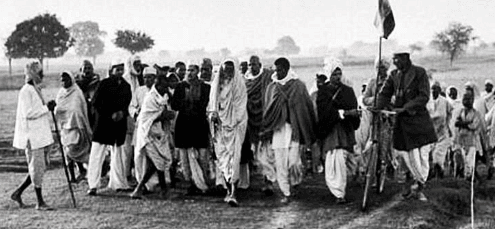
- Prior to the colonial period, peasant movements existed, but they were not localized and remained unknown as peasants lacked the means to mobilize themselves due to poverty and fear.
- During the colonial era in the 19th century, a few uprisings gained significant support. Gandhi supported the Bengal Revolt from 1917 to 1920 while planting indigo after his return from South Africa. Two important movements included the Champaran and Bardoli revolts of 1920.
- Organizations such as the All India Kissan Sabha (AIKS) and the Bihar Provincial Kissan Sabha (BPKS) were established. Farmers were required to give the government 50% of their profits but demanded to keep 60% and give the remaining third to government sharecroppers, supported by CPI and AIKS.
- The Naxalbari peasant movement evolved into the New Farmers Movement in West Bengal. Farmers pooled funds to construct roads and infrastructure after being disillusioned with politicians' false promises. They blocked government vehicles and took matters into their own hands as they waited years for administration assistance.
- The movement primarily concerned the market: prices, taxes, subsidies, easy loans, exploitation, and protest methods. Bandhs, railroads, and blocked roads were employed, with no involvement from politicians or administrators. The new farmer movements gradually embraced women's issues and environmental concerns.
Workers Movements
During the colonial era, workers in Calcutta, Bombay, and Chennai faced issues related to pay and working conditions. They formed associations called trade unions to represent their interests. Initially, the protests were localized, but as the national movement gained strength, the workers' movement also grew.
- In the early 20th century, there were textile strikes and workers' strikes. Gandhi ji's TLA and B.P. Wadia's AITUC were established. The British became cautious after the creation of ATTUC and passed laws with their own rules and regulations, such as the Trade Union Act.
- AITUC gradually grew in strength and received support from communists, leading to the creation of the Indian National Trade Union Congress. However, radicals and Congress departed, and at the local, regional, and national levels, AITUC continued to grow.
- In the 1960s, during the recession, many people lost their jobs, leading to protests and inflation. In the 1970s, numerous rail strikes affected urban transportation, with workers demanding higher pay and better working conditions. It's worth noting that protests are not allowed during an emergency.
Caste Based Movements
The Dalit Movement
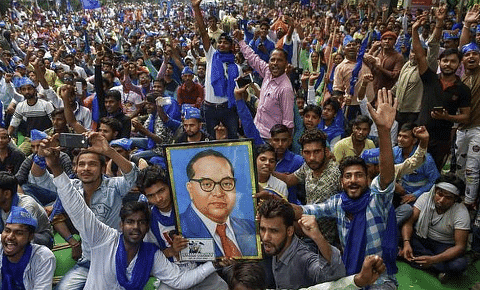
- The Dalit Movement was unique in that it focused on the fight for dignity and self-respect, setting it apart from other movements. The movement sought to combat discrimination and abolish the concept of untouchability, which was associated with ideas of destiny and clean air. Notably, every Dalit movement in India also advocated for broader issues such as employment and wages. In addition, the Panther Dalit Movement gained popularity by utilizing literature such as poems, plays, and stories to highlight Dalits' struggles and their need for change in all aspects of life.
Backward Classes Caste Movements
- The OBC Movement represents socially and economically disadvantaged groups who are classified as forward castes despite their poor economic status. The term "OBC" was first used in Madras and Bombay to refer to economically disadvantaged individuals. The All India Backward Classes League/Federation (AIBCL/F) was established to advocate for these individuals and to help them avoid being labeled as untouchables.
The Tribal Movements
- Tribal movements are predominantly located in the "tribal belt" of middle India, which includes regions like Chota Nagpur and the Santhal Parganas, now part of Jharkhand.
- Distinct tribal groups such as the Santhals, Hos, Oraons, and Mundas share common issues but also have significant differences in their cultural practices and struggles.
Jharkhand
- Historical Background: The movement for the state of Jharkhand, which was formalized in 2000, is rooted in over a century of resistance against various forms of oppression.
- Leadership: Birsa Munda, a key figure and adivasi leader, became a symbol of resistance against the British, embodying the spirit of the movement.
- Cultural Impact: Christian missionaries' role in spreading literacy among the adivasis of South Bihar enabled them to document their history and culture, fostering a unified ethnic consciousness among the Jharkhandis.
- Economic and Social Grievances: The movement was driven by issues like land acquisition for large projects, disruption of survey and settlement operations, resistance against the collection of loans and rents, and the nationalization of forest produce.
The Northeast
- State Formation and Identity Crisis: Post-independence, the integration of tribal areas into the administrative framework of Assam led to discomfort among tribal communities due to their distinct identity and desire for autonomy.
- Cultural Preservation: Tribes in the Northeast have strived to maintain their traditional worldviews and cultural practices despite external influences.
- Shift from Secessionism to Autonomy: Earlier movements aimed at complete secession from India have transitioned to seeking autonomy within the constitutional framework.
The Women's Movement
19th Century Social Reform Movements and Early Women’s Organisations
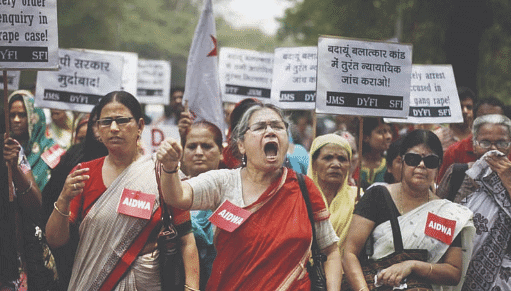
- The late 19th and early 20th centuries witnessed significant growth in women's organisations in India. Prominent groups included the Women's India Association (WIA) in 1917, All India Women's Conference (AIWC) in 1926, and National Council for Women in India (NCWI) in 1925.
- These organizations initially focused on limited scopes but gradually embraced wider issues including national freedom, advocating that both gender equality and political freedom are interconnected.
Agrarian Struggles and Revolts
- The involvement of women in social movements wasn't restricted to the educated middle class. Women from rural and tribal areas also participated actively, with movements such as the Tebhaga movement in Bengal and the Warli tribal revolt in Maharashtra highlighting women's active participation in addressing local injustices and exploitations.
Post 1947
- Post-independence, the women's movement saw a decline, attributed by some to the involvement of many activists in national building and others to the trauma of Partition. However, the movement saw a resurgence in the mid-1970s with renewed focus and adapted strategies.
- New issues addressed included violence against women, sexual harassment, and dowry. Legal changes, like requiring both parents' names on school forms, were achieved through these efforts.
Recognition of Diversity and Broader Challenges
- It was recognized that not all women face the same levels or types of discrimination. The concerns of middle-class women differed from those of peasant or Dalit women, particularly in areas like violence.
- The movement also acknowledged that societal constraints affect both men and women, promoting a broader understanding of gender roles and identities.
Contemporary Efforts and Government Initiatives
- Recent efforts have focused on improving gender justice through education and improving sex ratios. Government initiatives like Beti Bachao, Beti Padhao Yojana aim to empower women through education and improved societal attitudes towards women.
FAQs on Social Movements Class 12 Sociology
| 1. What are some key features of a social movement? |  |
| 2. How does sociology play a role in the study of social movements? | |
| 3. What are some examples of ecological movements? | |
| 4. What distinguishes caste-based movements from other types of social movements? | |
| 5. How do tribal movements differ from other social movements? | |



Social Movements Class 12 Sociology
,shortcuts and tricks
,MCQs
,Exam
,Social Movements Class 12 Sociology
,Sample Paper
,Viva Questions
,ppt
,study material
,video lectures
,Objective type Questions
,Important questions
,mock tests for examination
,Summary
,practice quizzes
,Previous Year Questions with Solutions
,Free
,past year papers
,Social Movements Class 12 Sociology
,Semester Notes
,Extra Questions
;



Chapter Notes - Social Movements Free PDF Download
Importance of Chapter Notes - Social Movements
Chapter Notes - Social Movements
Chapter Notes - Social Movements Humanities/Arts Questions
Study Chapter Notes - Social Movements on the App
|
© EduRev
|
Education Revolution
|


|




