UPSC Exam  >  UPSC Notes  >  History CSE  >  Causes of Decline: The Mughal Empire

Causes of Decline: The Mughal Empire

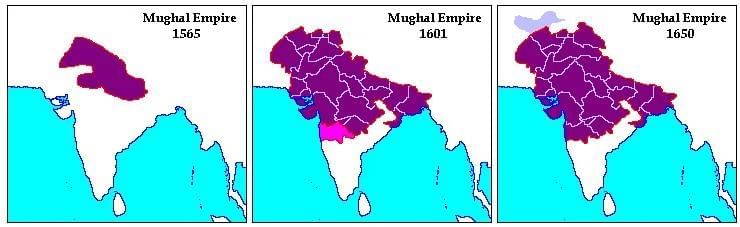
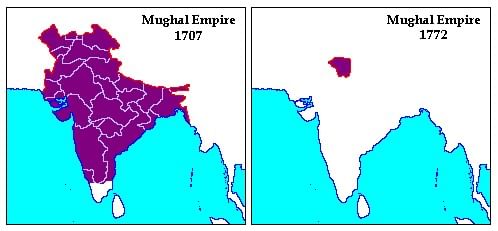
The Mughal Empire, established in the early 16th century, achieved remarkable territorial expansion, administrative consolidation and cultural synthesis. By the late 17th and 18th centuries, however, it began a prolonged process of weakening and fragmentation. The causes of this decline are multiple and inter-related-political, military, administrative, economic, social and external. Understanding these causes helps explain the transition from a centralised imperial polity to a subcontinent of competing regional states and, eventually, the ascendancy of European commercial and political power.

Causes of Decline: The Mughal Empire
Decline of Mughal EmpireDecline of Mughal Empire

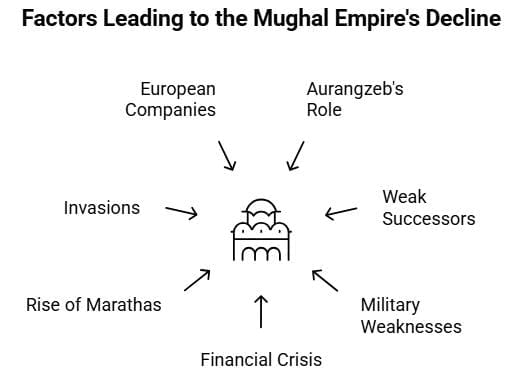
Overview of Principal Causes

  • Weak and contested succession after Aurangzeb (d. 1707) that produced a series of ineffective emperors and prolonged court factionalism.
  • Administrative fragmentation as provincial governors (subahdars), mansabdars and jagirdars asserted autonomy and converted temporary grants into hereditary power bases.
  • Military decline due to a feudal, personalised army structure, lack of modernisation and defections of commanders.
  • Fiscal stress and economic dislocation caused by prolonged warfare, revenue shortfalls, breakdown of agrarian productivity and the disruption of artisanal industries.
  • Religious and social alienation arising from some late imperial policies that generated internal revolts and weakened elite coalitions.
  • External invasions and plunder (notably by Nadir Shah and Ahmad Shah Abdali) that devastated the core regions and drained the treasury.
  • Rise of regional powers such as the Marathas, Sikhs, Jats, Nizam of Hyderabad, Awadh and Bengal that challenged Mughal authority.
  • European commercial penetration and military technology enabling the East India Company and other European powers to exploit divisions and gain political control.

Aurangzeb's Policies and Their Long-term Effects

  • Aurangzeb expanded the empire to its greatest territorial extent, particularly through prolonged campaigns in the Deccan (late 17th century). This territorial expansion overstretched administrative capacity and military resources.
  • His long Deccan campaigns were costly in men and treasure, disrupted trade routes and agricultural production, and diverted attention and revenue from the imperial core.
  • Some of Aurangzeb's religious and fiscal measures-perceived as less tolerant than earlier Mughal policies-contributed to alienation of groups such as the Sikhs, Jats, certain Rajput factions and Deccani elites, producing a series of rebellions and protracted insurgencies.
  • After Aurangzeb's death in 1707 the empire lacked a powerful unifying ruler; succession contests and short reigns produced administrative uncertainty.

Weak Successors, Court Factionalism and the Nobility

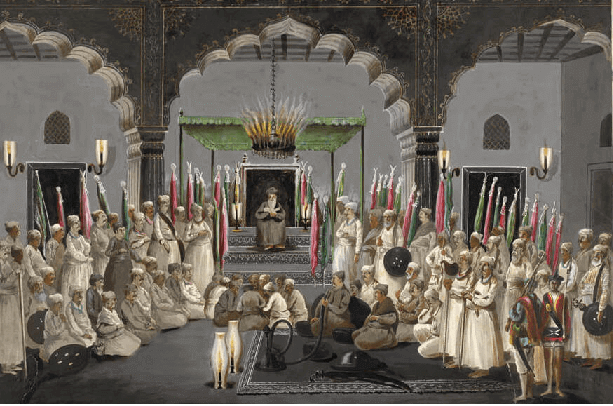
  • Successive emperors in the 18th century were often weak, occupied with court life or unable to enforce authority across distant provinces.
  • Royal succession was frequently contested; armed factionalism among princes and nobles weakened central rule and consumed imperial resources.
  • Nobles and regional officials used imperial weakness to transform offices and land grants into hereditary possessions, effectively creating semi-independent regional powers.
  • Court corruption, extravagant expenditure by the elite and declining administrative efficiency all contributed to erosion of central control.

Administrative Institutions: Mansabdari, Jagir and Their Disintegration

  • Mansabdari System: Under earlier Mughal rulers the mansabdari system provided an administrative and military framework in which officials (mansabdars) held ranks and were assigned revenue grants (jagirs) to maintain troops and meet obligations to the centre.
  • The system tied military and civil service to the central state but depended on regular transfers of jagirs and central oversight. Over time jagirs were not rotated, became hereditary in practice, and mansabdars converted their assignments into independent power bases.
  • Because soldiers were often loyal to their immediate mansabdar rather than directly to the emperor, the cohesion and central command of the army weakened.
Administrative Institutions: Mansabdari, Jagir and Their Disintegration

Military Weaknesses

  • The Mughal military was organised on a personalised, feudal basis rather than as a modern standing army. This produced problems of loyalty, discipline and the ability to sustain long campaigns.
  • The armed forces failed to keep pace with European military innovations in organisation, drill, discipline and especially in artillery and naval technology where relevant.
  • Officers frequently changed allegiance or declared independence when central pay faltered; unpaid troops deserted or served regional chiefs.
  • Prolonged internecine warfare diminished the emperor's capacity to raise and maintain organised forces for frontier defence or to repel invasions.
Mansabdari SystemMansabdari System

Fiscal and Economic Causes

  • Continuous warfare-especially the prolonged Deccan campaigns-depleted the imperial treasury. The state's expenditure on military campaigns rose sharply while revenue collection fell.
  • Agricultural disruption from warfare, banditry and heavy taxation led to reduced agricultural output and peasant distress; migration and abandoned cultivation reduced the tax base.
  • The system of revenue assignment (jagirs) weakened central fiscal control when jagirdars or zamindars retained more revenue locally or converted temporary assignments into hereditary income sources.
  • Growth of regional autonomy meant revenue resources were increasingly retained in the provinces rather than flowing to Delhi.
  • Handicraft industries, especially textiles, suffered from competition with cheap, machine-made European goods in the later 18th century; this accelerated deindustrialisation in some regions.
  • The loss of revenue and continued plunder by foreign invaders (e.g., Nadir Shah) intensified the fiscal crisis and reduced the state's ability to pay troops and administrators.

Rise of Regional Powers

  • With the erosion of central power, several regional polities consolidated territorial control: the Marathas in large parts of central and western India, the Sikh confederacies in the Punjab, the Jats around Bharatpur, and powerful provincial states in Bengal, Awadh and Hyderabad.
  • The Peshwas emerged as de facto leaders of Maratha power and pursued expansion that directly challenged Mughal influence.
  • Some regional chiefs framed Mughal rule as foreign domination and projected alternative political identities; this ideological shift weakened pan-imperial legitimacy.
  • Competing regional polities often fought each other and the weakened Mughal centre, creating a fragmented political map by the mid-18th century.

Invasions and Plunder: Nadir Shah and Ahmad Shah Abdali

  • The 1739 invasion of northern India by Nadir Shah (Persia) culminated in the sack of Delhi and massive looting of the imperial treasury, including the Peacock Throne and considerable bullion. This event symbolised the vulnerability of the Mughal capital and accelerated fiscal collapse.
  • Repeated invasions by Ahmed Shah Abdali (Ahmad Shah Durrani) in the 1740s-1760s further exposed military weakness and contributed to population displacement, economic disruption and loss of revenue.
  • The invasions demonstrated that the Mughal state could not prevent major external incursions or secure its frontiers without substantial reform and resources that were no longer available.

European Companies and the Shift in World Trade

  • European trading companies-especially the English (later British) East India Company-initially operated as commercial entities but developed military capability and local political alliances.
  • European maritime and military technology, together with disciplined company armies, gave them an advantage in local power struggles.
  • Control of port cities and access to global markets allowed Europeans to penetrate Indian trade networks, divert bullion and weaken traditional artisan sectors and merchant intermediaries.
  • Company interventions in regional politics-through subsidies, military aid and direct conquest-transformed commercial advantage into territorial control. A notable consequence was the capture of Bengal's resources following mid-18th century political events.

Social and Religious Factors

  • Some late Mughal policies strained the earlier basis of elite cooperation across religious lines. This reduced the capacity of the imperial centre to form coalitions that could stabilise the polity.
  • Peasant unrest, tribal uprisings and local revolts (for example by the Jats and other groups) further undermined rural order and revenue flows.
  • Local identities-regional, caste-based or religious-grew stronger as central authority receded, facilitating the rise of regional leaderships.

Consequences of the Decline

  • Political fragmentation and the emergence of multiple successor states with varying degrees of independence from the emperor.
  • Economic decline in certain regions through disrupted agriculture, revenue shortfall and decline of traditional industries.
  • Increased scope for European powers to intervene, negotiate rights, and eventually acquire territorial control and sovereignty in parts of India.
  • Ultimately, the breakdown of imperial authority created the conditions for colonial ascendancy in the later 18th and early 19th centuries.

MULTIPLE CHOICE QUESTION
Try yourself: Which factor contributed significantly to the weakening of the Mughal Empire's military?
A

Weak leadership of Aurangzeb's successors

B

Lack of discipline and organisation in the army

C

Financial crises caused by continuous warfare

D

Rise of the Marathas as a regional power

The document Causes of Decline: The Mughal Empire is a part of the UPSC Course History for UPSC CSE.
All you need of UPSC at this link: UPSC

FAQs on Causes of Decline: The Mughal Empire

1. What were the main political factors that led to the decline of the Mughal Empire?
Ans. The decline of the Mughal Empire was significantly influenced by political factors such as weak leadership after Aurangzeb, internal power struggles, and succession disputes. The lack of a strong central authority allowed regional governors (subahdars) to gain autonomy, leading to fragmentation of power and the rise of local rulers.
2. How did economic issues contribute to the fall of the Mughal Empire?
Ans. Economic issues played a critical role in the decline of the Mughal Empire. The empire faced heavy taxation to fund military campaigns, which burdened the peasants and led to revolts. Additionally, a decline in trade and agricultural productivity weakened the economy, reducing the empire's revenue and stability.
3. What role did religious intolerance play in the decline of the Mughal Empire?
Ans. Religious intolerance, particularly during Aurangzeb's reign, alienated non-Muslim communities, especially Hindus. His policies, such as re-imposing the jizya tax and destroying Hindu temples, incited resentment and rebellion, undermining the empire's unity and loyalty among its diverse population.
4. How did the invasions and conflicts with neighboring states affect the Mughal Empire?
Ans. The Mughal Empire faced numerous invasions, most notably by Nadir Shah of Persia in 1739, which resulted in significant loss of wealth and territory. These invasions exposed the empire's military vulnerabilities and further weakened its authority, leading to increased internal strife and loss of control over provinces.
5. In what ways did the European colonization impact the Mughal Empire's decline?
Ans. European colonization, particularly by the British, played a pivotal role in the decline of the Mughal Empire. The British East India Company gradually expanded its influence through trade, diplomacy, and military force, undermining Mughal authority. The eventual establishment of British rule in India marked the end of Mughal sovereignty and the empire's political relevance.
Explore Courses for UPSC exam
Get EduRev Notes directly in your Google search
Related Searches
Semester Notes, Previous Year Questions with Solutions, mock tests for examination, Causes of Decline: The Mughal Empire, past year papers, Important questions, Viva Questions, practice quizzes, Free, shortcuts and tricks, Causes of Decline: The Mughal Empire, video lectures, study material, Objective type Questions, ppt, Sample Paper, Extra Questions, Exam, Causes of Decline: The Mughal Empire, pdf , MCQs, Summary;