


All Exams >
CTET & State TET >
2 Months Preparation for CTET Paper 2 >
All Questions
All questions of Negative Numbers and Integers for CTET & State TET Exam
Practice Quiz or MCQ (Multiple Choice Questions) with solutions are available for Practice, which would help you prepare for chapter Integers, Class 6, Mathematics . You can practice these practice quizzes as per your speed and improvise the topic. Q.Absolute value of - 11 is- a)0
- b)11
- c)1
- d)-11
Correct answer is option 'B'. Can you explain this answer?
Practice Quiz or MCQ (Multiple Choice Questions) with solutions are available for Practice, which would help you prepare for chapter Integers, Class 6, Mathematics . You can practice these practice quizzes as per your speed and improvise the topic.
Q.
Absolute value of - 11 is
a)
0
b)
11
c)
1
d)
-11

|
Aashna Chopra answered |
The absolute value of any positive number is the number itself, so 11 has 11 as an absolute value. Also, the absolute value of a negative number is its (positive) opposite, so −11 also has 11 as an absolute value.

Sum of – 30 and – 12 is- a)-42
- b)42
- c)-18
- d)18
Correct answer is option 'A'. Can you explain this answer?
Sum of – 30 and – 12 is
a)
-42
b)
42
c)
-18
d)
18

|
Priyanka Sharma answered |
= ( -30) + (-12)
= -30 - 12
= -42
Which of the following statement is true:
- a)– 1 subtracted from – 5 gives 6
- b)3 subtracted from – 8 gives – 11
- c)2 subtracted from – 3 gives 1
- d)1 subtracted from – 7 gives – 6
Correct answer is option 'B'. Can you explain this answer?
Which of the following statement is true:
a)
– 1 subtracted from – 5 gives 6
b)
3 subtracted from – 8 gives – 11
c)
2 subtracted from – 3 gives 1
d)
1 subtracted from – 7 gives – 6
|
|
Priyanka Sharma answered |
= (-8) - 3
= -8 - 3
= - 11
try to convert this statment in mathematical equation and you will get your answer
Which of the following statement is false:
- a)-7 +(-6) = -13
- b)-5 + 1 = 4
- c)2 + (-1) = 1
- d)8 + (-9) = -1
Correct answer is option 'B'. Can you explain this answer?
Which of the following statement is false:
a)
-7 +(-6) = -13
b)
-5 + 1 = 4
c)
2 + (-1) = 1
d)
8 + (-9) = -1
|
|
Priyanka Sharma answered |
Let's examine each statement to verify its correctness:
-
Statement: −7+(−6)=−13
- Solution: Adding two negative numbers, −7+(−6)=−13-7 + (-6) = -13−7+(−6)=−13.
- Result: This statement is true.
-
Statement: −5+1=4
- Solution: Adding −5 and 1 gives −4, not 4.
- Result: This statement is false.
-
Statement: 2+(−1)=1
- Solution: Adding 2 and −1 gives 1.
- Result: This statement is true.
-
Statement: 8+(−9)=−1
- Solution: Adding 888 and −9 gives −1.
- Result: This statement is true.
Therefore, the false statement is:
2: −5+1=4. The correct result should be −5+1=−4.
Compare pairs of numbers using > or <: -13 _____ 13- a)<
- b)>
- c)=
- d)None of these
Correct answer is option 'A'. Can you explain this answer?
Compare pairs of numbers using > or <: -13 _____ 13
a)
<
b)
>
c)
=
d)
None of these
|
|
Priyanka Sharma answered |
Positve numbers are always greater than negative numbers.
Therfore, -13 < 13
Sum of -14 and 9 is- a)-5
- b)23
- c)5
- d)None of these
Correct answer is option 'A'. Can you explain this answer?
Sum of -14 and 9 is
a)
-5
b)
23
c)
5
d)
None of these
|
|
Priyanka Sharma answered |
= (-14) + 9
= -14 + 9
= -5
Can you explain the answer of this question below:Farther a number from zero on the right, _________ is its value.
- A:
equal
- B:
larger
- C:
smaller
- D:
None of these
The answer is b.
Farther a number from zero on the right, _________ is its value.
equal
larger
smaller
None of these

|
Akash Tiwari answered |
On the right side of zero lies the positive numbers.
Therefore, farther a number from zero on the right, larger is its value.
The number 3 less than – 2 is- a)5
- b)2
- c)-5
- d)-2
Correct answer is option 'C'. Can you explain this answer?
The number 3 less than – 2 is
a)
5
b)
2
c)
-5
d)
-2
|
|
Priyanka Sharma answered |
= a x b - a x c
= 2 x 10 - 2 x 6
= 20 - 12
= 8
(– 4) + (+ 3) = _____- a)7
- b)-1
- c)6
- d)None of these
Correct answer is option 'B'. Can you explain this answer?
(– 4) + (+ 3) = _____
a)
7
b)
-1
c)
6
d)
None of these

|
Let's Tute answered |
= (– 4) + (+ 3)
= - 4 + 3
= - 1
Which is the right form of integer ‘20°C above 0°C’?- a)-20
- b)30
- c)20
- d)None of these
Correct answer is option 'C'. Can you explain this answer?
Which is the right form of integer ‘20°C above 0°C’?
a)
-20
b)
30
c)
20
d)
None of these
|
|
Priyanka Sharma answered |
As number over 0oC are positive numbers, 20o C above 0oC will be written as 20.
(– 11) + (– 12) = ______- a)22
- b)-23
- c)23
- d)None of these
Correct answer is option 'B'. Can you explain this answer?
(– 11) + (– 12) = ______
a)
22
b)
-23
c)
23
d)
None of these

|
Shiksha Academy answered |
= (– 11) + (– 12)
= - 11 - 12
= - 23
Sum of -4, -6, -8 and 8 is- a)−14
- b)−12
- c)14
- d)−10
Correct answer is 'D'. Can you explain this answer?
Sum of -4, -6, -8 and 8 is
a)
−14
b)
−12
c)
14
d)
−10
|
|
Priyanka Sharma answered |
= (-4) + (-6) + (-8) + 8
= -4 - 6 - 8 + 8
= -10
Subtract (-7) from (-12):- a)5
- b)-19
- c)-5
- d)19
Correct answer is option 'C'. Can you explain this answer?
Subtract (-7) from (-12):
a)
5
b)
-19
c)
-5
d)
19

|
Dr Manju Sen answered |
Answer: C
Solution:
To calculate (−12)−(−7):
Solution:
To calculate (−12)−(−7):
(−12)−(−7) = (−12)+7 = − 5
Correct Answer: (C) - 5
Write the number with appropriate signs: 150 m below sea level.- a)-150
- b)150
- c)200
- d)None of these
Correct answer is option 'A'. Can you explain this answer?
Write the number with appropriate signs: 150 m below sea level.
a)
-150
b)
150
c)
200
d)
None of these
|
|
Priyanka Sharma answered |
Sea level is considered as 0, thus any number below 0 will be a negative number.
Therfore the appropriate sign for 150 m below the sea level is -150.
Which of the following numbers is to the right of -3 on number line?- a)-5
- b)-2
- c)-3
- d)-4
Correct answer is option 'B'. Can you explain this answer?
Which of the following numbers is to the right of -3 on number line?
a)
-5
b)
-2
c)
-3
d)
-4
|
|
Priyanka Sharma answered |
-2 is on the right of -3 on the number line as it a bigger number than -3.
Every positive integer is larger than every ________ integer.- a)positive
- b)negative
- c)1
- d)None of these
Correct answer is option 'B'. Can you explain this answer?
Every positive integer is larger than every ________ integer.
a)
positive
b)
negative
c)
1
d)
None of these
|
|
Anita Menon answered |
Every positive integer is larger than every negative integer.
Which of the following statement is true:- a)– 1 subtracted from – 5 gives 6
- b)3 subtracted from – 8 gives – 11
- c)2 subtracted from – 3 gives 1
- d)1 subtracted from – 7 gives – 6
Correct answer is option 'B'. Can you explain this answer?
Which of the following statement is true:
a)
– 1 subtracted from – 5 gives 6
b)
3 subtracted from – 8 gives – 11
c)
2 subtracted from – 3 gives 1
d)
1 subtracted from – 7 gives – 6

|
Rahul Mehra answered |
Ans.
Option (b)
Because (-)and (-) is = (+)
means when we subtract two negative digits then they get add in and answer comes in negative.
On a vertical number line, where are the positive numbers placed?- a)To the right of 0.
- b)To the left of 0.
- c)Above 0.
- d)Below zero.
Correct answer is option 'C'. Can you explain this answer?
On a vertical number line, where are the positive numbers placed?
a)
To the right of 0.
b)
To the left of 0.
c)
Above 0.
d)
Below zero.

|
Kunal Mehta answered |
On a vertical number line, positive numbers are located above zero. As we look upward on a vertical number line, the values of the numbers increase. On a vertical number line, negative numbers are located above zero.
The predecessor of −16 is- a)−15
- b)−17
- c)15
- d)17
Correct answer is option 'B'. Can you explain this answer?
The predecessor of −16 is
a)
−15
b)
−17
c)
15
d)
17
|
|
Dr Manju Sen answered |
To find the predecessor of a number we move from right to the left on the number line
And , −17 lies on left side of −16
Hence, −17 is the predecessor of −16
Option (B) is the correct answer
Write the statement “Seven times a number plus 7 gets you 77”in the form of equations.- a)6x – 6 = 66
- b)7x + 7 = 77
- c)7x + 6 = 66
- d)7x – 7 = 77
Correct answer is option 'B'. Can you explain this answer?
Write the statement “Seven times a number plus 7 gets you 77”in the form of equations.
a)
6x – 6 = 66
b)
7x + 7 = 77
c)
7x + 6 = 66
d)
7x – 7 = 77
|
|
Priyanka Sharma answered |
Let the number be x
Therefore, 7 times x would be 7x
= 7x + 7 = 77
Compare pairs of numbers using > or <: 0 _____ -15- a)<
- b)=
- c)>
- d)None of these
Correct answer is option 'C'. Can you explain this answer?
Compare pairs of numbers using > or <: 0 _____ -15
a)
<
b)
=
c)
>
d)
None of these
|
|
Priyanka Sharma answered |
0 is greater than every negative number.
Therefore, 0 > - 15
What is opposite of ’50 km of south’?- a)50 km of east
- b)50 km of west
- c)50 km of north
- d)None of these
Correct answer is option 'C'. Can you explain this answer?
What is opposite of ’50 km of south’?
a)
50 km of east
b)
50 km of west
c)
50 km of north
d)
None of these
|
|
Anita Menon answered |
The opposite of 50 km of south is 50 km of north.
What should be added to 18 to get −34?- a)52
- b)−52
- c)−16
- d)16
Correct answer is option 'B'. Can you explain this answer?
What should be added to 18 to get −34?
a)
52
b)
−52
c)
−16
d)
16

|
Manisha Zalone answered |
Let the no be x
therefore,
x+18=-34
x=-34-18
x=-52
therefore,
x+18=-34
x=-34-18
x=-52
Which of the following is correct?- a)- 1 < 0
- b)1 < 0
- c)- 8 > - 7
- d)- 2 > 4
Correct answer is option 'A'. Can you explain this answer?
Which of the following is correct?
a)
- 1 < 0
b)
1 < 0
c)
- 8 > - 7
d)
- 2 > 4

|
Praveen Kumar answered |
- -1 is less than 0 because on the number line, -1 is to the left of 0.
- 1 is greater than 0, so the statement "1 < 0"="" is="" />
- -8 is less than -7, making "-8 > -7" false.
- -2 is less than 4, so "-2 > 4" is also incorrect.
- Therefore, the only true statement is "-1 < />

The numbers on the left of 0 are ______ numbers, and the numbers on the right of 0 are ________ numbers.- a)negative, positive
- b)positive, negative
- c)positive, positive
- d)negative, negative
Correct answer is option 'A'. Can you explain this answer?
The numbers on the left of 0 are ______ numbers, and the numbers on the right of 0 are ________ numbers.
a)
negative, positive
b)
positive, negative
c)
positive, positive
d)
negative, negative

|
Coachify answered |
This is a sample number line.
We can observe that: The numbers on the left of 0 are negative numbers and the numbers on the right of 0 are positive numbers.

Which of the following statements is CORRECT?
Statement 1: When a positive integer and a negative integer are added, we always get a negative integer.
Statement 2: When two negative integers are added, we get a positive integer.- a)Only Statement 1
- b)Only Statement 2
- c)Both Statement 1 and Statement 2
- d)Neither Statement 1 nor Statement 2
Correct answer is option 'D'. Can you explain this answer?
Which of the following statements is CORRECT?
Statement 1: When a positive integer and a negative integer are added, we always get a negative integer.
Statement 2: When two negative integers are added, we get a positive integer.
Statement 1: When a positive integer and a negative integer are added, we always get a negative integer.
Statement 2: When two negative integers are added, we get a positive integer.
a)
Only Statement 1
b)
Only Statement 2
c)
Both Statement 1 and Statement 2
d)
Neither Statement 1 nor Statement 2

|
Devika Basak answered |
Understanding the Statements
To determine the correctness of the given statements, let's analyze them one by one.
Statement 1: Positive and Negative Integer Addition
- When a positive integer (e.g., +5) and a negative integer (e.g., -3) are added, the result depends on their absolute values.
- If the positive integer is larger than the negative integer, the result will be positive (e.g., +5 + -3 = +2).
- If the negative integer is larger, the result will be negative (e.g., +3 + -5 = -2).
- Thus, Statement 1 is incorrect because we do not always get a negative integer.
Statement 2: Adding Two Negative Integers
- When two negative integers (e.g., -2 and -3) are added, the result is always negative.
- For example, -2 + -3 = -5.
- This means that the sum of two negative integers will never yield a positive integer.
- Therefore, Statement 2 is also incorrect.
Conclusion
- Both statements are incorrect based on the definitions of adding positive and negative integers.
- Thus, the correct answer is option 'D': Neither Statement 1 nor Statement 2 is correct.
Understanding these principles is essential for mastering integer operations in mathematics.
To determine the correctness of the given statements, let's analyze them one by one.
Statement 1: Positive and Negative Integer Addition
- When a positive integer (e.g., +5) and a negative integer (e.g., -3) are added, the result depends on their absolute values.
- If the positive integer is larger than the negative integer, the result will be positive (e.g., +5 + -3 = +2).
- If the negative integer is larger, the result will be negative (e.g., +3 + -5 = -2).
- Thus, Statement 1 is incorrect because we do not always get a negative integer.
Statement 2: Adding Two Negative Integers
- When two negative integers (e.g., -2 and -3) are added, the result is always negative.
- For example, -2 + -3 = -5.
- This means that the sum of two negative integers will never yield a positive integer.
- Therefore, Statement 2 is also incorrect.
Conclusion
- Both statements are incorrect based on the definitions of adding positive and negative integers.
- Thus, the correct answer is option 'D': Neither Statement 1 nor Statement 2 is correct.
Understanding these principles is essential for mastering integer operations in mathematics.
The additive inverse of a negative integer- a)is always negative
- b)is always positive
- c)is the same integer
- d)zero
Correct answer is option 'B'. Can you explain this answer?
The additive inverse of a negative integer
a)
is always negative
b)
is always positive
c)
is the same integer
d)
zero

|
Aniket Mukherjee answered |
Understanding Additive Inverse
The additive inverse of a number is what you add to that number to get zero. For any integer 'x', the additive inverse is '-x'.
Negative Integer Example
Consider a negative integer, for example, -5. The additive inverse of -5 is calculated as follows:
- Additive Inverse = -(-5) = 5
Thus, the additive inverse of a negative integer is always a positive integer.
Explanation of Options
Let's analyze the given options:
- a) Is always negative
- This is incorrect because the additive inverse of a negative integer is positive.
- b) Is always positive
- This is the correct answer. The additive inverse of any negative integer results in a positive integer.
- c) Is the same integer
- This option is incorrect. The additive inverse changes the sign, so it cannot be the same integer.
- d) Zero
- This is also incorrect. The additive inverse of a negative integer is not zero but a positive integer.
Conclusion
In conclusion, the additive inverse of a negative integer is always positive. This means that if you have a negative number and you take its additive inverse, you will always end up with a positive number, ensuring the sum equals zero when added together.
The additive inverse of a number is what you add to that number to get zero. For any integer 'x', the additive inverse is '-x'.
Negative Integer Example
Consider a negative integer, for example, -5. The additive inverse of -5 is calculated as follows:
- Additive Inverse = -(-5) = 5
Thus, the additive inverse of a negative integer is always a positive integer.
Explanation of Options
Let's analyze the given options:
- a) Is always negative
- This is incorrect because the additive inverse of a negative integer is positive.
- b) Is always positive
- This is the correct answer. The additive inverse of any negative integer results in a positive integer.
- c) Is the same integer
- This option is incorrect. The additive inverse changes the sign, so it cannot be the same integer.
- d) Zero
- This is also incorrect. The additive inverse of a negative integer is not zero but a positive integer.
Conclusion
In conclusion, the additive inverse of a negative integer is always positive. This means that if you have a negative number and you take its additive inverse, you will always end up with a positive number, ensuring the sum equals zero when added together.
Number of even numbers between 58 and 80 is - a)10
- b)11
- c)12
- d)13
Correct answer is option 'A'. Can you explain this answer?
Number of even numbers between 58 and 80 is
a)
10
b)
11
c)
12
d)
13

|
Indu Gupta answered |
Option A is right
If a number side to be an even number is must be divisible by 22. Therefore the even number between 5858 and 8080 are
60, 62, 64, 66, 68, 70, 72, 74, 76, 78.
So, there are 1010 even numbers between 58 and 80
On the number line, the integer 5 is located _______.- a)to the left of 0
- b)to the right of 0
- c)to the left of 1
- d)to the left of −2
Correct answer is option 'B'. Can you explain this answer?
On the number line, the integer 5 is located _______.
a)
to the left of 0
b)
to the right of 0
c)
to the left of 1
d)
to the left of −2
|
|
Coachify answered |
The number line represents all the real numbers. The positive numbers are on the right of 0 and the negative numbers are on the left of 0, as shown in the above figure.
Since 5 is a positive number, it lies to the right of 0.
Hence, on the number line, the integer 5 is located to the right of 0.

(–3) + (–6) ______ (–3) – (–6)- a)>
- b)<
- c)=
- d)None of these
Correct answer is option 'B'. Can you explain this answer?
(–3) + (–6) ______ (–3) – (–6)
a)
>
b)
<
c)
=
d)
None of these

|
Rohini Seth answered |
(-3) + (-6) = -9
(-3) – (-6) = -3 + 6 = 3
-9 < 3
Which of the following is correct?- a)-1 < 0
- b)1 < 0
- c)-8 > -7
- d)-2 > 4
Correct answer is option 'A'. Can you explain this answer?
Which of the following is correct?
a)
-1 < 0
b)
1 < 0
c)
-8 > -7
d)
-2 > 4

|
Akshita Reddy answered |
Understanding Inequalities
Inequalities are statements that compare two values or expressions. The symbols used in inequalities are:
- "<" means="" "less="" than."="">
- ">" means "greater than."
Let's analyze each option provided:
Option A: -1 <>
- This statement is true.
- In the number line, -1 is to the left of 0, indicating that -1 is indeed less than 0.
Option B: 1 <>
- This statement is false.
- In the number line, 1 is to the right of 0, meaning that 1 is greater than 0.
Option C: -8 > -7
- This statement is false.
- On the number line, -8 is to the left of -7, which means -8 is less than -7.
Option D: -2 > 4
- This statement is false.
- Again, on the number line, -2 is to the right of 4, indicating that -2 is greater than 4. However, in absolute terms, -2 is less than 4.
Conclusion
The only correct option is A: -1 < 0.="" understanding="" the="" number="" line="" and="" the="" values="" associated="" with="" positive="" and="" negative="" numbers="" is="" crucial="" in="" solving="" inequalities.="" always="" remember="" that="" negative="" numbers="" are="" less="" than="" positive="" numbers!="" 0.="" understanding="" the="" number="" line="" and="" the="" values="" associated="" with="" positive="" and="" negative="" numbers="" is="" crucial="" in="" solving="" inequalities.="" always="" remember="" that="" negative="" numbers="" are="" less="" than="" positive="">
Inequalities are statements that compare two values or expressions. The symbols used in inequalities are:
- "<" means="" "less="" than."="">
- ">" means "greater than."
Let's analyze each option provided:
Option A: -1 <>
- This statement is true.
- In the number line, -1 is to the left of 0, indicating that -1 is indeed less than 0.
Option B: 1 <>
- This statement is false.
- In the number line, 1 is to the right of 0, meaning that 1 is greater than 0.
Option C: -8 > -7
- This statement is false.
- On the number line, -8 is to the left of -7, which means -8 is less than -7.
Option D: -2 > 4
- This statement is false.
- Again, on the number line, -2 is to the right of 4, indicating that -2 is greater than 4. However, in absolute terms, -2 is less than 4.
Conclusion
The only correct option is A: -1 < 0.="" understanding="" the="" number="" line="" and="" the="" values="" associated="" with="" positive="" and="" negative="" numbers="" is="" crucial="" in="" solving="" inequalities.="" always="" remember="" that="" negative="" numbers="" are="" less="" than="" positive="" numbers!="" 0.="" understanding="" the="" number="" line="" and="" the="" values="" associated="" with="" positive="" and="" negative="" numbers="" is="" crucial="" in="" solving="" inequalities.="" always="" remember="" that="" negative="" numbers="" are="" less="" than="" positive="">
Find the sum of 137 and – 354- a)217
- b)-217
- c)207
- d)-207
Correct answer is option 'B'. Can you explain this answer?
Find the sum of 137 and – 354
a)
217
b)
-217
c)
207
d)
-207

|
Arjun Yadav answered |
Understanding the Problem
To find the sum of 137 and -354, we need to perform the addition of a positive and a negative number.
Step-by-Step Calculation
1. Identify the Numbers:
- The first number is 137 (positive).
- The second number is -354 (negative).
2. Perform the Addition:
- When adding a positive number and a negative number, we effectively subtract the absolute value of the negative number from the positive number.
- Here, we can rewrite the sum as:
137 + (-354) = 137 - 354
3. Calculate the Difference:
- Now, we subtract 354 from 137.
- Since 354 is larger than 137, the result will be negative.
- Performing the subtraction:
354 - 137 = 217
4. Determine the Sign:
- Since we are subtracting a larger number from a smaller one, we place a negative sign in front of the result:
Thus, 137 - 354 = -217.
Final Result
The sum of 137 and -354 is -217.
Conclusion
The correct answer is option 'B', which is -217. This negative result indicates that the overall value is below zero, aligning with our calculation process.
To find the sum of 137 and -354, we need to perform the addition of a positive and a negative number.
Step-by-Step Calculation
1. Identify the Numbers:
- The first number is 137 (positive).
- The second number is -354 (negative).
2. Perform the Addition:
- When adding a positive number and a negative number, we effectively subtract the absolute value of the negative number from the positive number.
- Here, we can rewrite the sum as:
137 + (-354) = 137 - 354
3. Calculate the Difference:
- Now, we subtract 354 from 137.
- Since 354 is larger than 137, the result will be negative.
- Performing the subtraction:
354 - 137 = 217
4. Determine the Sign:
- Since we are subtracting a larger number from a smaller one, we place a negative sign in front of the result:
Thus, 137 - 354 = -217.
Final Result
The sum of 137 and -354 is -217.
Conclusion
The correct answer is option 'B', which is -217. This negative result indicates that the overall value is below zero, aligning with our calculation process.
Calculate: 9 − (−6)- a)3
- b)−3
- c)15
- d)−15
Correct answer is option 'C'. Can you explain this answer?
Calculate:
9 − (−6)
a)
3
b)
−3
c)
15
d)
−15
|
|
Shivam Chakraborty answered |
Understanding the Expression
To solve the expression 9 - (-6), we need to carefully evaluate the subtraction of a negative number.
Step-by-Step Calculation
- Identify the Operation: The expression involves subtracting a negative number.
- Rule of Subtracting Negatives: When you subtract a negative number, it is equivalent to adding the positive version of that number.
- Rewrite the Expression: Thus, we can rewrite the expression 9 - (-6) as 9 + 6.
Performing the Addition
- Calculate the Sum:
- 9 + 6 = 15
Conclusion
- The final result of the expression 9 - (-6) is 15.
- Therefore, the correct answer is option 'C', which is 15.
This logical breakdown helps us understand why the answer is 15, making it clear that subtracting a negative number effectively increases the total.
To solve the expression 9 - (-6), we need to carefully evaluate the subtraction of a negative number.
Step-by-Step Calculation
- Identify the Operation: The expression involves subtracting a negative number.
- Rule of Subtracting Negatives: When you subtract a negative number, it is equivalent to adding the positive version of that number.
- Rewrite the Expression: Thus, we can rewrite the expression 9 - (-6) as 9 + 6.
Performing the Addition
- Calculate the Sum:
- 9 + 6 = 15
Conclusion
- The final result of the expression 9 - (-6) is 15.
- Therefore, the correct answer is option 'C', which is 15.
This logical breakdown helps us understand why the answer is 15, making it clear that subtracting a negative number effectively increases the total.
Find: 45−(−15)- a)60
- b)30
- c)-30
- d)-60
Correct answer is option 'A'. Can you explain this answer?
Find: 45−(−15)
a)
60
b)
30
c)
-30
d)
-60

|
Torcia Education answered |
Answer: A
Solution:
To calculate 45−(−15) apply the rule of subtraction:
Solution:
To calculate 45−(−15) apply the rule of subtraction:
45−(−15) = 45 + 15 = 60
Correct Answer: (A) 60
What integers or number should be added to 5 to get 14?- a)1
- b)-1
- c)-9
- d)9
Correct answer is option 'D'. Can you explain this answer?
What integers or number should be added to 5 to get 14?
a)
1
b)
-1
c)
-9
d)
9
|
|
Coachify answered |
Let x be the number that needs to be added to -5 to get 4. The equation is:
(5)+x=14
Solving for
x=14-5=9
So, the correct answer is (d) 9.
(5)+x=14
Solving for
x=14-5=9
So, the correct answer is (d) 9.
Answer the following using number line.The integer which is 7 more than −4 is - a)−7
- b)−3
- c)3
- d)7
Correct answer is option 'C'. Can you explain this answer?
Answer the following using number line.
The integer which is 7 more than −4 is
a)
−7
b)
−3
c)
3
d)
7

|
Harshad Datta answered |
Understanding the Problem
To find the integer that is 7 more than -4, we can break down the problem step by step.
Step 1: Starting Point
- Our starting point is -4 on the number line.
Step 2: Adding 7
- To find the integer that is 7 more than -4, we need to move 7 units to the right on the number line.
Visualizing on the Number Line
- Picture a number line where:
- To the left, we have negative numbers (e.g., -1, -2, -3, -4...)
- To the right, we have positive numbers (e.g., 0, 1, 2, 3...)
- Starting at -4:
- Move 1 unit to the right to reach -3.
- Move another unit to reach -2.
- Continue moving right until you have moved 7 units total:
- -4 → -3 → -2 → -1 → 0 → 1 → 2 → 3
Step 3: The Result
- After moving 7 units to the right from -4, we end up at 3.
Conclusion
- Therefore, the integer that is 7 more than -4 is 3.
Correct Option
- Hence, the correct answer is option C.
To find the integer that is 7 more than -4, we can break down the problem step by step.
Step 1: Starting Point
- Our starting point is -4 on the number line.
Step 2: Adding 7
- To find the integer that is 7 more than -4, we need to move 7 units to the right on the number line.
Visualizing on the Number Line
- Picture a number line where:
- To the left, we have negative numbers (e.g., -1, -2, -3, -4...)
- To the right, we have positive numbers (e.g., 0, 1, 2, 3...)
- Starting at -4:
- Move 1 unit to the right to reach -3.
- Move another unit to reach -2.
- Continue moving right until you have moved 7 units total:
- -4 → -3 → -2 → -1 → 0 → 1 → 2 → 3
Step 3: The Result
- After moving 7 units to the right from -4, we end up at 3.
Conclusion
- Therefore, the integer that is 7 more than -4 is 3.
Correct Option
- Hence, the correct answer is option C.
Addition of one negative and one positive integer is- a)always positive
- b)always negative
- c)same as the sign of larger number
- d)same as the sign of smaller number
Correct answer is option 'C'. Can you explain this answer?
Addition of one negative and one positive integer is
a)
always positive
b)
always negative
c)
same as the sign of larger number
d)
same as the sign of smaller number

|
Maitri Bajaj answered |
Understanding Addition of Negative and Positive Integers
When we add one negative integer and one positive integer, the result depends on their absolute values and the signs involved. Here’s a detailed breakdown:
1. Definitions
- Positive Integer: A number greater than zero (e.g., 5, 10).
- Negative Integer: A number less than zero (e.g., -3, -8).
2. The Process of Addition
- Adding a positive integer means you are moving to the right on the number line.
- Adding a negative integer means you are moving to the left on the number line.
3. Comparing Absolute Values
- When a negative integer is added to a positive integer, the result can be found by comparing their absolute values.
- For example, if we have 4 (positive) and -3 (negative):
- The absolute value of 4 is 4.
- The absolute value of -3 is 3.
- Since 4 > 3, the result (4 + (-3)) will be positive and equal to 1.
4. Sign of the Result
- If the positive integer's absolute value is greater than that of the negative integer, the result is positive.
- If the negative integer's absolute value is greater, the result is negative.
- If both are equal, the result is zero.
5. Conclusion
- Thus, the correct answer is option 'C': the sign of the result is the same as the sign of the larger number (in absolute value). This means the final sum will reflect the dominance of either the positive or negative integer depending on their values.
When we add one negative integer and one positive integer, the result depends on their absolute values and the signs involved. Here’s a detailed breakdown:
1. Definitions
- Positive Integer: A number greater than zero (e.g., 5, 10).
- Negative Integer: A number less than zero (e.g., -3, -8).
2. The Process of Addition
- Adding a positive integer means you are moving to the right on the number line.
- Adding a negative integer means you are moving to the left on the number line.
3. Comparing Absolute Values
- When a negative integer is added to a positive integer, the result can be found by comparing their absolute values.
- For example, if we have 4 (positive) and -3 (negative):
- The absolute value of 4 is 4.
- The absolute value of -3 is 3.
- Since 4 > 3, the result (4 + (-3)) will be positive and equal to 1.
4. Sign of the Result
- If the positive integer's absolute value is greater than that of the negative integer, the result is positive.
- If the negative integer's absolute value is greater, the result is negative.
- If both are equal, the result is zero.
5. Conclusion
- Thus, the correct answer is option 'C': the sign of the result is the same as the sign of the larger number (in absolute value). This means the final sum will reflect the dominance of either the positive or negative integer depending on their values.
The integer 5 units to the right of 0 on the number line is:- a)+5
- b)−5
- c)+4
- d)−4
Correct answer is option 'A'. Can you explain this answer?
The integer 5 units to the right of 0 on the number line is:
a)
+5
b)
−5
c)
+4
d)
−4
|
|
Ishaan Chawla answered |
Understanding the Number Line
The number line is a visual representation of numbers arranged in order. It includes positive numbers, negative numbers, and zero, which divides the positive and negative sides.
Positioning on the Number Line
- The number line extends infinitely in both directions.
- Positive numbers are found to the right of zero, while negative numbers are to the left.
Finding the Integer 5 Units to the Right of 0
- Starting from zero on the number line, moving to the right means we are adding positive values.
- Each unit moved to the right represents an increase in value.
Calculating the Position
- From 0, if we move 1 unit to the right, we reach +1.
- Moving 2 units to the right takes us to +2.
- Continuing this process:
- 3 units = +3
- 4 units = +4
- 5 units = +5
Thus, after moving 5 units to the right of 0, we land on +5.
Conclusion
The correct answer to the question, "The integer 5 units to the right of 0 on the number line is:" is indeed:
- Option A: +5
This confirms that moving right from zero results in positive values, specifically +5 when moved 5 units.
The number line is a visual representation of numbers arranged in order. It includes positive numbers, negative numbers, and zero, which divides the positive and negative sides.
Positioning on the Number Line
- The number line extends infinitely in both directions.
- Positive numbers are found to the right of zero, while negative numbers are to the left.
Finding the Integer 5 Units to the Right of 0
- Starting from zero on the number line, moving to the right means we are adding positive values.
- Each unit moved to the right represents an increase in value.
Calculating the Position
- From 0, if we move 1 unit to the right, we reach +1.
- Moving 2 units to the right takes us to +2.
- Continuing this process:
- 3 units = +3
- 4 units = +4
- 5 units = +5
Thus, after moving 5 units to the right of 0, we land on +5.
Conclusion
The correct answer to the question, "The integer 5 units to the right of 0 on the number line is:" is indeed:
- Option A: +5
This confirms that moving right from zero results in positive values, specifically +5 when moved 5 units.
The smallest positive integer is- a)0
- b)10
- c)1
- d)9
Correct answer is option 'C'. Can you explain this answer?
The smallest positive integer is
a)
0
b)
10
c)
1
d)
9
|
|
Dr Manju Sen answered |
The smallest positive integer is 1. Positive integers are the numbers greater than 0, and the smallest of these is 1.
Thus, the smallest positive integer is 1Thus, the smallest positive integer is 1
When the integers 10, 0, 4, 5, 7 are arranged in descending or ascending order, them find out which of the following integers always remains in the middle of the arrangement.- a)5
- b)7
- c)4
- d)0
Correct answer is option 'A'. Can you explain this answer?
When the integers 10, 0, 4, 5, 7 are arranged in descending or ascending order, them find out which of the following integers always remains in the middle of the arrangement.
a)
5
b)
7
c)
4
d)
0

|
EduRev CAT answered |
We are given the integers 10, 0, 4, 5, 7. We need to arrange them in both ascending order (smallest to largest) and descending order (largest to smallest). Then we must check which integer always comes in the middle.
Step 1: Arrange in ascending order
Ascending means from the smallest to the greatest: 0, 4, 5, 7, 10.
Here, the middle number is the third one (since there are 5 numbers). So, the middle is 5.
Ascending means from the smallest to the greatest: 0, 4, 5, 7, 10.
Here, the middle number is the third one (since there are 5 numbers). So, the middle is 5.
Step 2: Arrange in descending order
Descending means from the greatest to the smallest: 10, 7, 5, 4, 0.
Here again, the middle number is the third one. So, the middle is still 5.
Descending means from the greatest to the smallest: 10, 7, 5, 4, 0.
Here again, the middle number is the third one. So, the middle is still 5.
Step 3: Compare both
Middle in ascending order = 5.
Middle in descending order = 5.
So, 5 always remains in the middle, no matter how we arrange.
Middle in ascending order = 5.
Middle in descending order = 5.
So, 5 always remains in the middle, no matter how we arrange.
Final Answer: The integer that always stays in the middle is a) 5
Evaluate:(+5) + (−6) = ?- a)−1
- b)1
- c)2
- d)−2
Correct answer is option 'A'. Can you explain this answer?
Evaluate:
(+5) + (−6) = ?
a)
−1
b)
1
c)
2
d)
−2
|
|
Shiksha Academy answered |
Write given integers in addition expression and we get:
(+5) + (−6)
Subtract smaller integer 5 from bigger integer 6 as follows:
6 − 5 = 1
Since, the bigger integer −6 is a negative integer, so the result should also be negative that is −1
Hence, +5 − 6 = −1
The coordinate of 3rd alphabet on left of C is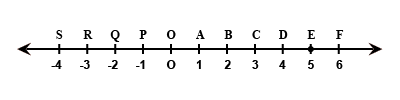
- a)−3
- b)3
- c)0
- d)1
Correct answer is option 'C'. Can you explain this answer?
The coordinate of 3rd alphabet on left of C is
a)
−3
b)
3
c)
0
d)
1

|
Gunjan Lakhani answered |
3rd alphabet to the left of C is O.
O lies on 0 on number line. Hence, its coordinate is 0.
Compare: 1,00,002 ___ 10,00,002- a)>
- b)<
- c)=
- d)None of these
Correct answer is option 'B'. Can you explain this answer?
Compare: 1,00,002 ___ 10,00,002
a)
>
b)
<
c)
=
d)
None of these

|
Vp Classes answered |
If we write the given numbers in words well be easily able to solve this.
One lakh two and the second number is ten lakh two.
Obviously the second number is greater then the first.
So option B is the correct answer.
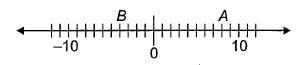
By observing the above number line, state which of the following statements is true.
- a)B is 2
- b)A is 4
- c)B is –13
- d)B is −4
Correct answer is option 'D'. Can you explain this answer?
By observing the above number line, state which of the following statements is true.
a)
B is 2
b)
A is 4
c)
B is –13
d)
B is −4
|
|
Praveen Kumar answered |
From above number line we cans see that A is 7 marks right of 0 and B is 4 marks to the left of 0
So, A = 7 and B = −4
Hence, Option (D) is correct
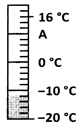
On the following number line value ‘zero’ is shown by the point
- a)X
- b)Y
- c)Z
- d)W
Correct answer is option 'C'. Can you explain this answer?
On the following number line value ‘zero’ is shown by the point
a)
X
b)
Y
c)
Z
d)
W
|
|
Praveen Kumar answered |
Option (c) is correct; in the figure given below, each unit has a value of 5.


Which integer is the additive inverse of itself?- a)−1
- b)1
- c)0
- d)2
Correct answer is option 'C'. Can you explain this answer?
Which integer is the additive inverse of itself?
a)
−1
b)
1
c)
0
d)
2
|
|
Coachify answered |
Additive inverse of number is that when added to a number it results in 0
Additive inverse of itself = a + 0 = 0
Therefore a = 0
Hence the correct answer is option C.
Chapter doubts & questions for Negative Numbers and Integers - 2 Months Preparation for CTET Paper 2 2026 is part of CTET & State TET exam preparation. The chapters have been prepared according to the CTET & State TET exam syllabus. The Chapter doubts & questions, notes, tests & MCQs are made for CTET & State TET 2026 Exam. Find important definitions, questions, notes, meanings, examples, exercises, MCQs and online tests here.
Chapter doubts & questions of Negative Numbers and Integers - 2 Months Preparation for CTET Paper 2 in English & Hindi are available as part of CTET & State TET exam.
Download more important topics, notes, lectures and mock test series for CTET & State TET Exam by signing up for free.
2 Months Preparation for CTET Paper 2
367 videos|1021 docs|335 tests
|
