


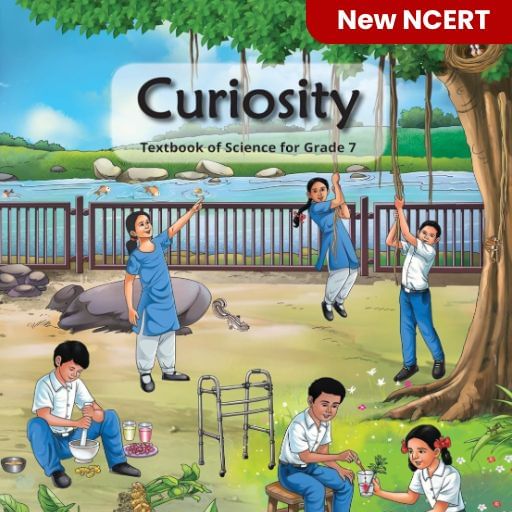
|
INFINITY COURSE
Science (Curiosity) Class 722,383 students learning this week · Last updated on Oct 18, 2025 |
Science (Curiosity) Class 7 Study Material


Trending Courses for Class 7
Science (Curiosity) Class 7 - New NCERT CBSE Exam Pattern 2025-2026
Science (Curiosity) Class 7 - New NCERT Exam Pattern for Class 7
The Class 7 Science curriculum, based on the New NCERT syllabus, is designed to foster curiosity and a deeper understanding of the natural world. The assessment structure plays a crucial role in evaluating students' grasp of scientific concepts. Below is a detailed overview of the exam pattern for Class 7 Science.
Exam Structure
- Type of Questions: The exam will include a mix of objective type questions, short answer questions, and long answer questions.
- Weightage: Each section will have a specific weightage contributing to the overall score.
- Duration: The total time allotted for the exam is typically 3 hours.
Section Breakdown
- Objective Questions: These may include multiple-choice questions (MCQs) and fill-in-the-blanks, testing basic recall and comprehension.
- Short Answer Questions: Students are required to explain concepts or provide definitions, usually requiring 2-3 sentences.
- Long Answer Questions: These questions encourage detailed explanations, analysis, or problem-solving, often requiring a paragraph or more.
Practical Assessment
- Lab Work: Practical experiments form an essential part of the curriculum, and students are evaluated on their ability to conduct experiments and report their findings.
- Project Work: Students may be assigned projects that encourage exploration of scientific phenomena, promoting hands-on learning.
Assessment Criteria
- Understanding of Concepts: Students are assessed on their comprehension of scientific principles and theories.
- Application of Knowledge: Exam questions often require students to apply their knowledge to real-world scenarios.
- Critical Thinking: The ability to analyze and evaluate information will also be a key focus during assessments.
Preparation Tips
- Regular Revision: Consistent review of chapters will help reinforce learning and retention.
- Practice Sample Papers: Solving previous years' papers and sample questions can provide insight into the exam pattern and types of questions asked.
- Group Study: Collaborative learning can enhance understanding through discussion and explanation of concepts among peers.
By understanding the exam pattern and focusing on the key areas outlined above, students can enhance their preparation and approach their Class 7 Science exams with confidence.


Science (Curiosity) Class 7 - New NCERT Syllabus 2025-2026 PDF Download
Class 7 Science Syllabus: The Ever-Evolving World of Science
This syllabus outlines the topics covered in Class 7 Science, focusing on curiosity-driven exploration and understanding of the natural world through various scientific principles.
Unit 1: Exploring Substances: Acidic, Basic, and Neutral
- Definition and Characteristics of Acids, Bases, and Neutrals
- Indicators: Natural and Synthetic
- Applications of Acids and Bases in Daily Life
Unit 2: Electricity: Circuits and their Components
- Understanding Electric Current and Voltage
- Components of an Electric Circuit: Resistors, Batteries, and Switches
- Simple Circuit Design and Safety Precautions
Unit 3: The World of Metals and Non-metals
- Properties of Metals and Non-metals
- Uses of Metals and Non-metals in Daily Life
- Reactions of Metals with Acids and Water
Unit 4: Changes Around Us: Physical and Chemical
- Definition and Examples of Physical Changes
- Definition and Examples of Chemical Changes
- Indicators of Chemical Reactions
Unit 5: Adolescence: A Stage of Growth and Change
- Physical Changes During Adolescence
- Emotional and Social Changes in Adolescents
- Health and Hygiene during Adolescence
Unit 6: Heat Transfer in Nature
- Types of Heat Transfer: Conduction, Convection, and Radiation
- Effects of Heat on Matter
- Real-life Examples of Heat Transfer
Unit 7: Measurement of Time and Motion
- Understanding Time: Measurement and Units
- Concept of Speed and Velocity
- Graphical Representation of Motion
Unit 8: Life Processes in Animals
- Basic Life Processes: Nutrition, Respiration, and Circulation
- Excretion and Reproduction in Animals
- Adaptations in Animals for Survival
Unit 9: Life Processes in Plants
- Photosynthesis: Process and Importance
- Transport of Water and Nutrients in Plants
- Reproductive Processes in Plants
Unit 10: Light: Shadows and Reflections
- The Nature of Light: Sources and Properties
- Reflection of Light and Formation of Shadows
- Applications of Light in Daily Life
Unit 11: Earth, Moon, and the Sun
- Structure and Composition of the Earth
- Phases of the Moon and Eclipses
- The Sun: Importance for Life on Earth
This comprehensive Class 7 Science syllabus encourages students to engage with the world around them through curiosity and scientific inquiry. Each unit is designed to build foundational knowledge and foster critical thinking skills essential for future studies in science.
This course is helpful for the following exams: Class 7
How to Prepare Science (Curiosity) Class 7 - New NCERT?
How to Prepare Science (Curiosity) Class 7 - New NCERT for Class 7?
Preparing for the Science (Curiosity) Class 7 - New NCERT can be an engaging and enriching experience. Here are some effective strategies to help you excel in this course offered by EduRev.
1. Understand the Syllabus
To begin your preparation for Science (Curiosity) Class 7 - New NCERT, it's crucial to familiarize yourself with the syllabus. Make a list of all the chapters and topics covered in the course, as this will help you organize your study plan.
2. Gather Study Materials
Utilize the resources provided in the Science (Curiosity) Class 7 - New NCERT course. Ensure you have access to textbooks, reference books, and supplementary materials from EduRev that align with the curriculum.
3. Create a Study Schedule
A well-structured study schedule is essential for effective learning. Allocate specific time slots for each chapter in the Science (Curiosity) Class 7 - New NCERT. This will help you stay focused and cover all topics systematically.
4. Focus on Conceptual Understanding
Science is all about understanding concepts rather than rote memorization. Spend time grasping the fundamental principles in the Science (Curiosity) Class 7 - New NCERT. Use diagrams, charts, and experiments to reinforce your learning.
5. Practice Regularly
Regular practice is key to mastering science concepts. Solve exercises and sample papers from the Science (Curiosity) Class 7 - New NCERT. This will enhance your problem-solving skills and boost your confidence.
6. Engage in Group Studies
Collaborating with classmates can be beneficial. Join or form study groups to discuss topics from the Science (Curiosity) Class 7 - New NCERT. Explaining concepts to others will deepen your understanding.
7. Utilize Online Resources
Take advantage of the online resources available in the Science (Curiosity) Class 7 - New NCERT course offered by EduRev. Video lectures, quizzes, and interactive content can make learning more enjoyable and effective.
8. Seek Help When Needed
If you encounter difficulties in understanding any topic, don’t hesitate to ask for help. Reach out to teachers, tutors, or fellow students for clarification on concepts from the Science (Curiosity) Class 7 - New NCERT.
9. Revise Regularly
Revision is crucial for retaining information. Set aside time for regular revision of the Science (Curiosity) Class 7 - New NCERT material. This will help reinforce your learning and prepare you for exams.
10. Stay Curious!
Lastly, maintain a curious mindset. Explore beyond the syllabus of Science (Curiosity) Class 7 - New NCERT. Read books, watch documentaries, or conduct simple experiments to nurture your interest in science.
By following these steps, you will be well-prepared to excel in the Science (Curiosity) Class 7 - New NCERT. Embrace the learning journey and enjoy discovering the wonders of science with EduRev!
Importance of Science (Curiosity) Class 7 - New NCERT
Importance of Science (Curiosity) Class 7 - New NCERT Course for Class 7
In today's rapidly advancing world, the significance of science education cannot be overstated. The "Science (Curiosity) Class 7 - New NCERT" course offered by EduRev is designed to ignite the spark of curiosity in young minds, fostering a deeper understanding of the world around them. Below are key points that highlight the importance of this course:
1. Fostering Curiosity
- Encourages students to ask questions and explore the world.
- Stimulates critical thinking and problem-solving skills.
2. Comprehensive Understanding of Concepts
- Covers essential scientific concepts in an engaging manner.
- Utilizes real-life applications to make learning relatable.
3. Development of Practical Skills
- Incorporates hands-on experiments and activities.
- Enhances observational skills and scientific reasoning.
4. Encouraging Teamwork and Collaboration
- Promotes group projects that foster teamwork.
- Builds communication skills through collaborative learning.
5. Preparing for Future Studies
- Lays a strong foundation for advanced scientific studies.
- Prepares students for STEM (Science, Technology, Engineering, and Mathematics) careers.
6. Cultivating a Scientific Temperament
- Instills a sense of inquiry and skepticism.
- Encourages students to analyze information critically.
7. Relevance to Everyday Life
- Connects scientific principles to daily experiences.
- Helps students understand the importance of science in societal issues.
Conclusion
The "Science (Curiosity) Class 7 - New NCERT" course by EduRev not only equips students with essential scientific knowledge but also nurtures their innate curiosity. By engaging with the content, students develop a lifelong love for learning and an appreciation for the wonders of science.
Science (Curiosity) Class 7 - New NCERT FAQs
| 1. What is the importance of curiosity in science? |  |
| 2. How can curiosity be nurtured in students? | |
| 3. What are some examples of scientific curiosity in everyday life? | |
| 4. How does asking questions contribute to scientific learning? | |
| 5. What role does observation play in fostering curiosity? | |
| 6. Why is it important to teach students about the scientific method? | |
| 7. How can teachers encourage students to be curious about science topics? | |
| 8. What are some fun experiments to do in a science class? | |
| 9. How can students pursue their curiosity outside the classroom? | |
| 10. What impact does curiosity have on problem-solving skills? | |
| 11. How does curiosity influence scientific research? | |
| 12. Can curiosity be linked to academic success in science? | |
| 13. What are the challenges in promoting curiosity in science education? | |
| 14. How can technology enhance curiosity in science learning? | |
| 15. What is the relationship between curiosity and lifelong learning in science? | |
Best Coaching for Science (Curiosity) Class 7 - New NCERT
Tags related with Science (Curiosity) Class 7 - New NCERT
Best Science (Curiosity) Class 7 - New NCERT NCERT Solutions and Study Materials

|
View your Course Analysis |

|

|
Create your own Test |
|



|
|



|
Explore Courses for Class 7 exam
|

|
Course Speciality


Science (Curiosity) Class 7 Books
Science (Curiosity) Class 7 Notes PDF Download
Science (Curiosity) Class 7 Previous Year Papers
Important Questions for Science (Curiosity) Class 7
|
© EduRev
|
Education Revolution
|


|







within 7 days!