


|
INFINITY COURSE
Monthly Yojana Magazine (English) for UPSC120,186 students learning this week · Last updated on Dec 21, 2024 |
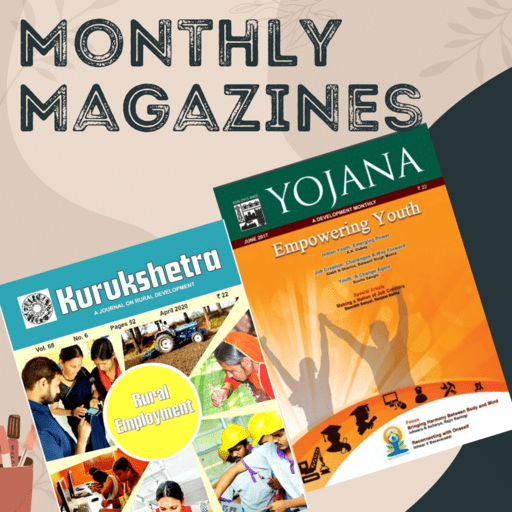
The Monthly Yojana & Kurukshetra Magazine (English) Course for UPSC on EduRev provides comprehensive study material for aspirants preparing for the UP
... view more
SC exam. The course includes detailed analysis and discussions on the monthly issues of Yojana and Kurukshetra magazines in English. It covers a wide range of topics like governance, economy, social issues, international relations, and more. With regular updates and in-depth insights, this course is designed to help UPSC aspirants stay updated and well-prepared for their exams.
Monthly Yojana Magazine (English) Study Material

| 1 Crore+ students have signed up on EduRev. Have you? Download the App |
Top Courses for UPSC
Monthly Yojana & Kurukshetra Magazine (English) for UPSC Exam Pattern 2024-2025
Monthly Yojana & Kurukshetra Magazine (English) Exam Pattern for UPSC
Aspiring candidates preparing for the UPSC exam can greatly benefit from referring to the Monthly Yojana & Kurukshetra Magazine (English). These magazines are known for their comprehensive coverage of various topics and provide valuable insights into current affairs, government policies, and socio-economic issues.
Exam Pattern for UPSC:
1. Preliminary Examination:
- Consists of two objective-type papers: General Studies Paper I and General Studies Paper II (CSAT).
- Paper I includes subjects like history, geography, economics, polity, science and technology, environment, and current affairs.
- Paper II tests candidates' comprehension, logical reasoning, analytical ability, and decision-making skills.
2. Main Examination:
- Consists of nine descriptive papers, out of which two are qualifying in nature.
- The qualifying papers include English and any Indian language.
- The remaining seven papers cover subjects such as essay writing, general studies (four papers), optional subjects (two papers), and ethics.
3. Interview (Personality Test):
- Candidates who qualify the Main Examination are called for the interview round.
- The interview aims to assess candidates' personality traits, communication skills, and overall suitability for a career in civil services.
How Monthly Yojana & Kurukshetra Magazine can help in UPSC preparation:
1. Current Affairs:
- The magazines provide in-depth analysis and discussion on current affairs topics, which are crucial for the UPSC exam.
- It helps candidates stay updated with the latest developments in various fields, including government schemes, policies, and initiatives.
2. Socio-economic Issues:
- The magazines cover socio-economic issues like poverty, education, healthcare, women empowerment, etc.
- Candidates can gain a comprehensive understanding of these issues, which are often asked in the UPSC exam.
3. Government Policies:
- Yojana Magazine focuses on government policies and their impact on different sectors.
- It helps candidates understand the rationale behind policies, their implementation, and their implications on society.
4. Essay Writing:
- Kurukshetra Magazine often includes articles on essay topics relevant to the UPSC exam.
- Candidates can enhance their essay writing skills by reading and analyzing these articles.
5. Optional Subjects:
- The magazines cover a wide range of optional subjects, which can be beneficial for candidates looking for additional resources for their optional paper preparation.
In conclusion, Monthly Yojana & Kurukshetra Magazine (English) is a valuable resource for UPSC aspirants. It provides comprehensive coverage of current affairs, government policies, and socio-economic issues, which are essential for the exam. Regularly referring to these magazines can enhance candidates' knowledge and understanding of various subjects, thereby improving their chances of success in the UPSC exam.
Aspiring candidates preparing for the UPSC exam can greatly benefit from referring to the Monthly Yojana & Kurukshetra Magazine (English). These magazines are known for their comprehensive coverage of various topics and provide valuable insights into current affairs, government policies, and socio-economic issues.
Exam Pattern for UPSC:
1. Preliminary Examination:
- Consists of two objective-type papers: General Studies Paper I and General Studies Paper II (CSAT).
- Paper I includes subjects like history, geography, economics, polity, science and technology, environment, and current affairs.
- Paper II tests candidates' comprehension, logical reasoning, analytical ability, and decision-making skills.
2. Main Examination:
- Consists of nine descriptive papers, out of which two are qualifying in nature.
- The qualifying papers include English and any Indian language.
- The remaining seven papers cover subjects such as essay writing, general studies (four papers), optional subjects (two papers), and ethics.
3. Interview (Personality Test):
- Candidates who qualify the Main Examination are called for the interview round.
- The interview aims to assess candidates' personality traits, communication skills, and overall suitability for a career in civil services.
How Monthly Yojana & Kurukshetra Magazine can help in UPSC preparation:
1. Current Affairs:
- The magazines provide in-depth analysis and discussion on current affairs topics, which are crucial for the UPSC exam.
- It helps candidates stay updated with the latest developments in various fields, including government schemes, policies, and initiatives.
2. Socio-economic Issues:
- The magazines cover socio-economic issues like poverty, education, healthcare, women empowerment, etc.
- Candidates can gain a comprehensive understanding of these issues, which are often asked in the UPSC exam.
3. Government Policies:
- Yojana Magazine focuses on government policies and their impact on different sectors.
- It helps candidates understand the rationale behind policies, their implementation, and their implications on society.
4. Essay Writing:
- Kurukshetra Magazine often includes articles on essay topics relevant to the UPSC exam.
- Candidates can enhance their essay writing skills by reading and analyzing these articles.
5. Optional Subjects:
- The magazines cover a wide range of optional subjects, which can be beneficial for candidates looking for additional resources for their optional paper preparation.
In conclusion, Monthly Yojana & Kurukshetra Magazine (English) is a valuable resource for UPSC aspirants. It provides comprehensive coverage of current affairs, government policies, and socio-economic issues, which are essential for the exam. Regularly referring to these magazines can enhance candidates' knowledge and understanding of various subjects, thereby improving their chances of success in the UPSC exam.


Monthly Yojana & Kurukshetra Magazine (English) Syllabus 2024-2025 PDF Download
Syllabus for UPSC
UPSC Monthly Yojana & Kurukshetra Magazine (English)
- Overview of Yojana & Kurukshetra magazines
- Importance of reading these magazines for UPSC preparation
- How to make the most of the content in Yojana & Kurukshetra
- Strategies for effective reading and note-taking
UPSC June 2023
- Current affairs and events of June 2023
- Analysis of important national and international issues
- Economic and social developments
- Government policies and schemes
- Science and technology advancements
- Environment and ecology updates
UPSC May 2023
- Current affairs and events of May 2023
- Analysis of important national and international issues
- Economic and social developments
- Government policies and schemes
- Science and technology advancements
- Environment and ecology updates
UPSC April 2023
- Current affairs and events of April 2023
- Analysis of important national and international issues
- Economic and social developments
- Government policies and schemes
- Science and technology advancements
- Environment and ecology updates
UPSC March 2023
- Current affairs and events of March 2023
- Analysis of important national and international issues
- Economic and social developments
- Government policies and schemes
- Science and technology advancements
- Environment and ecology updates
UPSC February 2023
- Current affairs and events of February 2023
- Analysis of important national and international issues
- Economic and social developments
- Government policies and schemes
- Science and technology advancements
- Environment and ecology updates
UPSC January 2023
- Current affairs and events of January 2023
- Analysis of important national and international issues
- Economic and social developments
- Government policies and schemes
- Science and technology advancements
- Environment and ecology updates
UPSC December 2022
- Current affairs and events of December 2022
- Analysis of important national and international issues
- Economic and social developments
- Government policies and schemes
- Science and technology advancements
- Environment and ecology updates
UPSC November 2022
- Current affairs and events of November 2022
- Analysis of important national and international issues
- Economic and social developments
- Government policies and schemes
- Science and technology advancements
- Environment and ecology updates
UPSC October 2022
- Current affairs and events of October 2022
- Analysis of important national and international issues
- Economic and social developments
- Government policies and schemes
- Science and technology advancements
- Environment and ecology updates
UPSC September 2022
- Current affairs and events of September 2022
- Analysis of important national and international issues
- Economic and social developments
- Government policies and schemes
- Science and technology advancements
- Environment and ecology updates
UPSC August 2022
- Current affairs and events of August 2022
- Analysis of important national and international issues
- Economic and social developments
- Government policies and schemes
- Science and technology advancements
- Environment and ecology updates
UPSC July 2022
- Current affairs and events of July 2022
- Analysis of important national and international issues
- Economic and social developments
- Government policies and schemes
- Science and technology advancements
- Environment and ecology updates
UPSC June 2022
- Current affairs and events of June 2022
- Analysis of important national and international issues
- Economic and social developments
- Government policies and schemes
- Science and technology advancements
- Environment and ecology updates
UPSC May 2022
- Current affairs and events of May 2022
- Analysis of important national and international issues
- Economic and social developments
- Government policies and schemes
- Science and technology advancements
- Environment and ecology updates
UPSC Monthly Yojana & Kurukshetra Magazine (English)
- Overview of Yojana & Kurukshetra magazines
- Importance of reading these magazines for UPSC preparation
- How to make the most of the content in Yojana & Kurukshetra
- Strategies for effective reading and note-taking
UPSC June 2023
- Current affairs and events of June 2023
- Analysis of important national and international issues
- Economic and social developments
- Government policies and schemes
- Science and technology advancements
- Environment and ecology updates
UPSC May 2023
- Current affairs and events of May 2023
- Analysis of important national and international issues
- Economic and social developments
- Government policies and schemes
- Science and technology advancements
- Environment and ecology updates
UPSC April 2023
- Current affairs and events of April 2023
- Analysis of important national and international issues
- Economic and social developments
- Government policies and schemes
- Science and technology advancements
- Environment and ecology updates
UPSC March 2023
- Current affairs and events of March 2023
- Analysis of important national and international issues
- Economic and social developments
- Government policies and schemes
- Science and technology advancements
- Environment and ecology updates
UPSC February 2023
- Current affairs and events of February 2023
- Analysis of important national and international issues
- Economic and social developments
- Government policies and schemes
- Science and technology advancements
- Environment and ecology updates
UPSC January 2023
- Current affairs and events of January 2023
- Analysis of important national and international issues
- Economic and social developments
- Government policies and schemes
- Science and technology advancements
- Environment and ecology updates
UPSC December 2022
- Current affairs and events of December 2022
- Analysis of important national and international issues
- Economic and social developments
- Government policies and schemes
- Science and technology advancements
- Environment and ecology updates
UPSC November 2022
- Current affairs and events of November 2022
- Analysis of important national and international issues
- Economic and social developments
- Government policies and schemes
- Science and technology advancements
- Environment and ecology updates
UPSC October 2022
- Current affairs and events of October 2022
- Analysis of important national and international issues
- Economic and social developments
- Government policies and schemes
- Science and technology advancements
- Environment and ecology updates
UPSC September 2022
- Current affairs and events of September 2022
- Analysis of important national and international issues
- Economic and social developments
- Government policies and schemes
- Science and technology advancements
- Environment and ecology updates
UPSC August 2022
- Current affairs and events of August 2022
- Analysis of important national and international issues
- Economic and social developments
- Government policies and schemes
- Science and technology advancements
- Environment and ecology updates
UPSC July 2022
- Current affairs and events of July 2022
- Analysis of important national and international issues
- Economic and social developments
- Government policies and schemes
- Science and technology advancements
- Environment and ecology updates
UPSC June 2022
- Current affairs and events of June 2022
- Analysis of important national and international issues
- Economic and social developments
- Government policies and schemes
- Science and technology advancements
- Environment and ecology updates
UPSC May 2022
- Current affairs and events of May 2022
- Analysis of important national and international issues
- Economic and social developments
- Government policies and schemes
- Science and technology advancements
- Environment and ecology updates
This course is helpful for the following exams: UPSC, Current Affairs
How to Prepare Monthly Yojana & Kurukshetra Magazine (English) for UPSC?
How to Prepare Monthly Yojana & Kurukshetra Magazine (English) for UPSC?
Preparing for the UPSC examination requires a comprehensive study plan and access to relevant study materials. One such important resource is the Monthly Yojana & Kurukshetra Magazine (English), which covers important socio-economic, political, and cultural issues in India.
Here are some key points to consider while preparing for the Monthly Yojana & Kurukshetra Magazine (English) for UPSC:
1. Understand the purpose: The purpose of the magazine is to provide an in-depth analysis and understanding of various government policies and programs. It covers topics related to governance, economy, social issues, and international relations. Understanding the purpose of the magazine will help you approach the content with the right mindset.
2. Read selectively: The magazines are voluminous, and it may not be feasible to read every article in detail. Instead, focus on the articles that are directly relevant to the UPSC syllabus. Identify the key topics and prioritize your reading accordingly.
3. Take notes: While reading the magazine, take notes of important points, facts, and figures. This will help you revise the information later and also serve as a quick reference during the exam preparation. Organize your notes in a systematic manner for easy retrieval.
4. Analyze the content: The magazine articles often present different perspectives and viewpoints on a particular issue. Analyze the content critically and develop your own opinion. This will help you in writing balanced answers during the UPSC mains examination.
5. Connect with current affairs: The magazine provides insights into the current issues and challenges faced by the country. Relate the information from the magazine with the current affairs to develop a holistic understanding of the topics. This will also help you in writing dynamic and relevant answers in the UPSC examination.
6. Practice answer writing: The magazine can serve as a valuable source for practicing answer writing. Choose relevant topics and write short essays or answers based on the information provided in the magazine. This will enhance your writing skills and improve your ability to articulate your thoughts effectively.
In conclusion, the Monthly Yojana & Kurukshetra Magazine (English) is a valuable resource for UPSC preparation. By understanding its purpose, reading selectively, taking notes, analyzing the content, connecting with current affairs, and practicing answer writing, you can make the most out of this resource and enhance your chances of success in the UPSC examination.
Preparing for the UPSC examination requires a comprehensive study plan and access to relevant study materials. One such important resource is the Monthly Yojana & Kurukshetra Magazine (English), which covers important socio-economic, political, and cultural issues in India.
Here are some key points to consider while preparing for the Monthly Yojana & Kurukshetra Magazine (English) for UPSC:
1. Understand the purpose: The purpose of the magazine is to provide an in-depth analysis and understanding of various government policies and programs. It covers topics related to governance, economy, social issues, and international relations. Understanding the purpose of the magazine will help you approach the content with the right mindset.
2. Read selectively: The magazines are voluminous, and it may not be feasible to read every article in detail. Instead, focus on the articles that are directly relevant to the UPSC syllabus. Identify the key topics and prioritize your reading accordingly.
3. Take notes: While reading the magazine, take notes of important points, facts, and figures. This will help you revise the information later and also serve as a quick reference during the exam preparation. Organize your notes in a systematic manner for easy retrieval.
4. Analyze the content: The magazine articles often present different perspectives and viewpoints on a particular issue. Analyze the content critically and develop your own opinion. This will help you in writing balanced answers during the UPSC mains examination.
5. Connect with current affairs: The magazine provides insights into the current issues and challenges faced by the country. Relate the information from the magazine with the current affairs to develop a holistic understanding of the topics. This will also help you in writing dynamic and relevant answers in the UPSC examination.
6. Practice answer writing: The magazine can serve as a valuable source for practicing answer writing. Choose relevant topics and write short essays or answers based on the information provided in the magazine. This will enhance your writing skills and improve your ability to articulate your thoughts effectively.
In conclusion, the Monthly Yojana & Kurukshetra Magazine (English) is a valuable resource for UPSC preparation. By understanding its purpose, reading selectively, taking notes, analyzing the content, connecting with current affairs, and practicing answer writing, you can make the most out of this resource and enhance your chances of success in the UPSC examination.
Importance of Monthly Yojana & Kurukshetra Magazine (English) for UPSC
The Importance of Monthly Yojana & Kurukshetra Magazine (English) Course for UPSC
The Monthly Yojana & Kurukshetra Magazine (English) Course offered by EduRev is an invaluable resource for UPSC aspirants. With its comprehensive content and well-structured approach, this course plays a crucial role in the preparation journey of aspiring civil servants.
1. Insightful Content: The course provides access to the monthly editions of Yojana and Kurukshetra magazines in English. These magazines are highly regarded for their in-depth analysis of current affairs, government policies, and social issues. The content is curated by experts in the field, ensuring the utmost quality and relevance.
2. Comprehensive Coverage: The course covers a wide range of subjects and topics, including governance, economy, agriculture, health, education, environment, and more. It helps candidates develop a holistic understanding of various issues and enhances their ability to analyze and critically evaluate different perspectives.
3. Current Affairs Relevance: Yojana and Kurukshetra magazines are known for their focus on current affairs. The course ensures that UPSC aspirants stay updated with the latest developments in the socio-economic and political landscape of India. This is particularly crucial as the UPSC exam demands a thorough understanding of current affairs.
4. Enhanced Answer Writing Skills: The course includes practice questions and model answers based on the content of the magazines. This helps aspirants improve their answer writing skills, which is a vital aspect of the UPSC examination. The model answers provide guidance on structuring answers, using relevant examples, and effectively conveying one's thoughts.
5. Supplement to Standard Textbooks: While standard textbooks cover the theoretical aspects of subjects, Yojana and Kurukshetra magazines provide a practical and real-world perspective. This course acts as a complementary resource, enriching the knowledge gained from textbooks and enhancing the overall understanding of topics.
6. Language Proficiency: The course is available in English, making it accessible to a wider range of aspirants. It helps improve candidates' language proficiency, which is crucial for both the written examination and the interview stage of the UPSC process.
In conclusion, the Monthly Yojana & Kurukshetra Magazine (English) Course offered by EduRev is an essential tool for UPSC aspirants. Its insightful content, comprehensive coverage, focus on current affairs, and emphasis on answer writing skills make it an invaluable resource in the preparation journey. By enrolling in this course, aspirants can enhance their knowledge, improve their language proficiency, and increase their chances of success in the UPSC examination.
The Monthly Yojana & Kurukshetra Magazine (English) Course offered by EduRev is an invaluable resource for UPSC aspirants. With its comprehensive content and well-structured approach, this course plays a crucial role in the preparation journey of aspiring civil servants.
1. Insightful Content: The course provides access to the monthly editions of Yojana and Kurukshetra magazines in English. These magazines are highly regarded for their in-depth analysis of current affairs, government policies, and social issues. The content is curated by experts in the field, ensuring the utmost quality and relevance.
2. Comprehensive Coverage: The course covers a wide range of subjects and topics, including governance, economy, agriculture, health, education, environment, and more. It helps candidates develop a holistic understanding of various issues and enhances their ability to analyze and critically evaluate different perspectives.
3. Current Affairs Relevance: Yojana and Kurukshetra magazines are known for their focus on current affairs. The course ensures that UPSC aspirants stay updated with the latest developments in the socio-economic and political landscape of India. This is particularly crucial as the UPSC exam demands a thorough understanding of current affairs.
4. Enhanced Answer Writing Skills: The course includes practice questions and model answers based on the content of the magazines. This helps aspirants improve their answer writing skills, which is a vital aspect of the UPSC examination. The model answers provide guidance on structuring answers, using relevant examples, and effectively conveying one's thoughts.
5. Supplement to Standard Textbooks: While standard textbooks cover the theoretical aspects of subjects, Yojana and Kurukshetra magazines provide a practical and real-world perspective. This course acts as a complementary resource, enriching the knowledge gained from textbooks and enhancing the overall understanding of topics.
6. Language Proficiency: The course is available in English, making it accessible to a wider range of aspirants. It helps improve candidates' language proficiency, which is crucial for both the written examination and the interview stage of the UPSC process.
In conclusion, the Monthly Yojana & Kurukshetra Magazine (English) Course offered by EduRev is an essential tool for UPSC aspirants. Its insightful content, comprehensive coverage, focus on current affairs, and emphasis on answer writing skills make it an invaluable resource in the preparation journey. By enrolling in this course, aspirants can enhance their knowledge, improve their language proficiency, and increase their chances of success in the UPSC examination.
Monthly Yojana & Kurukshetra Magazine (English) for UPSC FAQs
| 1. What is the Monthly Yojana & Kurukshetra Magazine? |  |
Ans. The Monthly Yojana & Kurukshetra Magazine is a publication by the Government of India that aims to provide insights on various socio-economic issues and government initiatives.
| 2. Is the Monthly Yojana & Kurukshetra Magazine available in English? | |
Ans. Yes, the Monthly Yojana & Kurukshetra Magazine is available in English language.
| 3. Where can I find the Monthly Yojana & Kurukshetra Magazine in English? | |
Ans. The Monthly Yojana & Kurukshetra Magazine in English can be found online on the official website of the Government of India or at selected bookstores.
| 4. Is the Monthly Yojana & Kurukshetra Magazine helpful for UPSC exam preparation? | |
Ans. Yes, the Monthly Yojana & Kurukshetra Magazine is considered helpful for UPSC exam preparation as it covers a wide range of topics related to socio-economic issues, government policies, and current affairs.
| 5. What is the frequency of publication for the Monthly Yojana & Kurukshetra Magazine? | |
Ans. The Monthly Yojana & Kurukshetra Magazine is published on a monthly basis.
| 6. Can I access past issues of the Monthly Yojana & Kurukshetra Magazine? | |
Ans. Yes, past issues of the Monthly Yojana & Kurukshetra Magazine are available online on the official website of the Government of India.
| 7. Does the Monthly Yojana & Kurukshetra Magazine provide in-depth analysis of government schemes and policies? | |
Ans. Yes, the Monthly Yojana & Kurukshetra Magazine provides in-depth analysis of various government schemes and policies, along with their impact on society and the economy.
| 8. How can the Monthly Yojana & Kurukshetra Magazine be beneficial for UPSC aspirants? | |
Ans. The Monthly Yojana & Kurukshetra Magazine can be beneficial for UPSC aspirants as it helps them develop a comprehensive understanding of current socio-economic issues and government initiatives, which are important for the UPSC exam.
| 9. Can the Monthly Yojana & Kurukshetra Magazine be used as a reference for essay writing in UPSC exam? | |
Ans. Yes, the Monthly Yojana & Kurukshetra Magazine can be a valuable reference for essay writing in the UPSC exam, as it provides detailed insights on various topics.
| 10. Are there any online platforms where I can access the Monthly Yojana & Kurukshetra Magazine for free? | |
Ans. The Monthly Yojana & Kurukshetra Magazine is not available for free on any online platforms. It can be accessed on the official website of the Government of India or purchased from selected bookstores.
| 11. Can I subscribe to the Monthly Yojana & Kurukshetra Magazine for home delivery? | |
Ans. Yes, you can subscribe to the Monthly Yojana & Kurukshetra Magazine for home delivery. The subscription details can be found on the official website of the Government of India.
| 12. Does the Monthly Yojana & Kurukshetra Magazine cover international issues? | |
Ans. Yes, the Monthly Yojana & Kurukshetra Magazine covers a wide range of issues, including international affairs, that have an impact on India's socio-economic development.
| 13. Is the Monthly Yojana & Kurukshetra Magazine available in other regional languages? | |
Ans. Yes, apart from English, the Monthly Yojana & Kurukshetra Magazine is also available in Hindi and other regional languages of India.
| 14. Can I access the Monthly Yojana & Kurukshetra Magazine on my mobile or tablet? | |
Ans. Yes, the Monthly Yojana & Kurukshetra Magazine can be accessed on mobile or tablet devices through the official website or by downloading the mobile application, if available.
| 15. Are there any sample questions or practice tests related to the Monthly Yojana & Kurukshetra Magazine for UPSC exam preparation? | |
Ans. Yes, there are various online platforms and coaching institutes that provide sample questions and practice tests specifically designed for UPSC exam preparation based on the content of the Monthly Yojana & Kurukshetra Magazine.
Best Coaching for Monthly Yojana & Kurukshetra Magazine (English) for UPSC
Looking for the best coaching and study material for your UPSC preparation? Look no further! EduRev, the leading online education platform, offers free online coaching and study material for Monthly Yojana & Kurukshetra Magazine (English) for UPSC. With EduRev, you can easily download PDFs of the magazines and access their summaries, important chapters, and articles. The Monthly Yojana magazine covers a wide range of topics related to social and economic issues, while the Kurukshetra magazine focuses on rural development and rural life in India. Both magazines are essential for staying updated with the latest UPSC current affairs.
The Yojana and Kurukshetra magazines provide in-depth analysis and expert insights on various topics, making them the best magazines for UPSC preparation. Whether you are looking for detailed articles, editorials, or topic-specific information, these magazines have it all. With the Yojana and Kurukshetra magazine subscription, you can access the latest issues online and stay ahead in your preparation.
EduRev's platform allows you to access the Yojana and Kurukshetra magazines in PDF format, making it convenient for offline reading and revision. The platform also offers a comprehensive review of each magazine, helping you understand the key takeaways from each edition. With EduRev, you can effectively utilize the Yojana and Kurukshetra magazines for your civil services exam preparation.
By choosing EduRev for your UPSC preparation, you not only get access to the best coaching and study material but also a dedicated platform that caters to all your learning needs. So, start your journey towards success with EduRev and make the Monthly Yojana & Kurukshetra Magazine your go-to resource for UPSC preparation.
The Yojana and Kurukshetra magazines provide in-depth analysis and expert insights on various topics, making them the best magazines for UPSC preparation. Whether you are looking for detailed articles, editorials, or topic-specific information, these magazines have it all. With the Yojana and Kurukshetra magazine subscription, you can access the latest issues online and stay ahead in your preparation.
EduRev's platform allows you to access the Yojana and Kurukshetra magazines in PDF format, making it convenient for offline reading and revision. The platform also offers a comprehensive review of each magazine, helping you understand the key takeaways from each edition. With EduRev, you can effectively utilize the Yojana and Kurukshetra magazines for your civil services exam preparation.
By choosing EduRev for your UPSC preparation, you not only get access to the best coaching and study material but also a dedicated platform that caters to all your learning needs. So, start your journey towards success with EduRev and make the Monthly Yojana & Kurukshetra Magazine your go-to resource for UPSC preparation.
Tags related with Monthly Yojana & Kurukshetra Magazine (English) for UPSC
Monthly Yojana magazine, Monthly Kurukshetra magazine, English magazine for UPSC, Yojana and Kurukshetra magazine subscription, UPSC current affairs magazine, Yojana and Kurukshetra magazine PDF, Yojana magazine articles, Kurukshetra magazine topics, UPSC magazine online, Yojana and Kurukshetra magazine review, Yojana magazine for civil services, Kurukshetra magazine for UPSC preparation, Yojana magazine analysis, Kurukshetra magazine editorial, Yojana magazine subscription online, Kurukshetra magazine for IAS exam, Monthly magazine for UPSC, Best magazine for UPSC preparation.
Course Description
Monthly Yojana & Kurukshetra Magazine (English) for UPSC 2024-2025 is part of UPSC preparation. The notes and questions for Monthly Yojana & Kurukshetra Magazine (English) have been prepared
according to the UPSC exam syllabus. Information about Monthly Yojana & Kurukshetra Magazine (English) covers all important topics for UPSC 2024-2025 Exam.
Find important definitions, questions, notes,examples, exercises test series, mock tests and Previous year questions (PYQs) below for
Monthly Yojana & Kurukshetra Magazine (English).
Preparation for Monthly Yojana & Kurukshetra Magazine (English) in English is available as part of our UPSC preparation & Monthly Yojana & Kurukshetra Magazine (English) in Hindi for UPSC courses.
Download more important topics related with Monthly Yojana & Kurukshetra Magazine (English), notes, lectures and mock test series for UPSC Exam by signing up for free.
Course Speciality
Monthly Yojana Magazine & Kurukshetra Magazine (English)
Full Syllabus, Lectures & Tests to study Monthly Yojana & Kurukshetra Magazine (English) - UPSC | Best Strategy to prepare for Monthly Yojana & Kurukshetra Magazine (English) | Free Course for UPSC Exam
Course Options

|
View your Course Analysis |

|

|
Create your own Test |
|
Related Searches
Yojana Magazine November 2024 , Kurukshetra Magazine November 2024
Related Exams
|
|
Join course for Free
This course includes:

180+ Documents

4.63 (359+ ratings)


|
Explore Courses for UPSC exam
|

|
Signup for Free!
Signup to see your scores go up within 7 days! Learn & Practice with 1000+ FREE Notes, Videos & Tests.
Course Speciality
Monthly Yojana Magazine & Kurukshetra Magazine (English)
Full Syllabus, Lectures & Tests to study Monthly Yojana & Kurukshetra Magazine (English) - UPSC | Best Strategy to prepare for Monthly Yojana & Kurukshetra Magazine (English) | Free Course for UPSC Exam





Additional Information about Monthly Yojana Magazine (English) for UPSC for UPSC Preparation
Monthly Yojana Magazine (English) for UPSC Books
Monthly Yojana Magazine (English) for UPSC Books is your ultimate resource for mastering the UPSC Exam.
Get with a wide array of carefully selected books that cover every aspect of the Monthly Yojana Magazine (English) for UPSC syllabus.
From in-depth subject knowledge to practice papers, our collection has it all.
Boost your confidence by attempting question papers and gain valuable insights from detailed paper analysis.
Prepare with precision using our mock tests, designed to simulate the real exam experience.
With Monthly Yojana Magazine (English) for UPSC UPSC Books, you'll have the best study material at your fingertips, ensuring your success in the UPSC Exam.
Monthly Yojana Magazine (English) for UPSC Notes PDF Download
Access the comprehensive Monthly Yojana Magazine (English) for UPSC Notes for UPSC Exam at EduRev.
Elevate your preparation with well-structured study material and concise notes.
Stay updated with the latest exam pattern and syllabus.
Prepare confidently with practice papers and question banks. Enhance your understanding through detailed paper analysis.
Get access to toppers' notes for valuable insights.
With Monthly Yojana Magazine (English) for UPSC Notes PDF download, you can streamline your study and be well-prepared for the UPSC Exam.
Achieve success with EduRev's trusted study resources and boost your scores effortlessly.
Monthly Yojana Magazine (English) for UPSC Previous Year Papers
Monthly Yojana Magazine (English) for UPSC Previous Year Papers from EduRev: Prepare for UPSC exam with ease using our extensive collection of Previous Year Papers.
Access question papers, practice papers, and in-depth paper analysis to master the exam pattern and syllabus.
Stay updated on the exam date and results while practicing in your preferred language.
Whether you need preparation tips, best books, study material, or subject-specific syllabus, EduRev's official website has you covered.
Enhance your exam readiness with Toppers' notes and comprehensive videos.
Trust EduRev's Previous Year Papers for a successful UPSC exam journey.
Important Questions for Monthly Yojana Magazine (English) for UPSC
Important questions are crucial for acing your UPSC exam.
Understanding the question pattern and types is essential for effective preparation.
Explore previous years' question papers to get a sense of the language and format used.
Practice papers are available to hone your skills and assess your progress.
Analyzing question trends can give you an edge during the exam. Our recommended books and study material cover all topics in the syllabus.
Additionally, coaching videos provide valuable insights. Stay updated on the official website for exam dates and results.
Prepare with confidence, as EduRev has got your question-related needs covered for Monthly Yojana Magazine (English) for UPSC .
|
© EduRev
|
Education Revolution
|


|






Signup to see your scores
go up within 7 days!
Access 1000+ FREE Docs, Videos and Tests
Takes less than 10 seconds to signup