UPSC Daily Current Affairs: 5th May 2025


GS3/Economy
Vizhinjam Port: A Game-Changer for India's Maritime Trade and Economic Growth
Why in News?
Recently, Prime Minister Modi inaugurated the ₹8,800 crore Vizhinjam International Deepwater Multipurpose Seaport in Thiruvananthapuram, Kerala. This development marks a significant milestone in enhancing India's maritime capabilities.
- Vizhinjam is India's first deep-water, semi-automated container transhipment port.
- Strategically located 10 nautical miles from global shipping routes, it aims to transform India's role in international trade.
- The port has already surpassed its initial target of handling 1 lakh TEUs annually.
Additional Details
- Historical Significance: The port's maritime relevance dates back to the Chola period, known as Rajendra Chola Pattinam. After a decline, it has been revitalized into a modern transhipment hub.
- First Phase Development: Developed under a public-private partnership (PPP), the project included investments from the Kerala Government, Adani Ports, and the Union Government, totaling ₹8,867 crore.
- Key Features:
- Natural draft of 20 metres for accommodating Ultra Large Container Vessels.
- Employs semi-automation with trained women crane operators.
- Operational since July 2024, achieving remarkable milestones in container handling.
- Future Development Plans: The Kerala Government, in collaboration with Adani Ports, aims to complete further construction phases by 2028, increasing capacity from 1 million TEUs to 4.87 million TEUs.
The Vizhinjam International Seaport has the potential to significantly boost India's maritime trade and economic growth, serving as a transformative hub for South Asia. Its success hinges on effective collaboration among state and central authorities, businesses, and global shipping companies.
GS3/Economy
Temporary Respite: On GST, India's Manufacturing
Why in News?
Since the Goods and Services Tax (GST) system was implemented in 2017, India's GST collections have consistently reached new record highs every April, reflecting the evolving economic landscape.
- In April 2025, India recorded a gross GST collection of ₹2.37 lakh crore, the highest monthly collection since the GST regime began.
- This figure marked a 12.6% year-on-year growth from April 2024's collection of ₹2.10 lakh crore.
Additional Details
- Higher Tax Filing Discipline: Increased awareness and digital tracking have significantly enhanced GST compliance among businesses. For instance, GST collections have risen from ₹1.03 lakh crore in 2018 to ₹2.37 lakh crore in 2025, indicating better adherence to filing norms.
- Faster Refunds Encourage Participation: Swift processing of refunds, particularly for small businesses, has motivated timely and accurate GST filing. Refunds to exporters surged by 86% in April 2025, showcasing improved trust in the system.
- Fintech Integration Supports MSMEs: With 87% fintech adoption in India, Micro, Small, and Medium Enterprises (MSMEs) have better access to formal banking and invoicing systems, aiding compliance. Digital invoicing apps have simplified the filing process for small traders.
- Digital Audit Trails Enhance Enforcement: Fintech tools enable real-time tracking of transactions, which minimizes tax evasion. Technologies like e-invoicing allow tax authorities to quickly identify discrepancies.
- COVID-19 Accelerated Formalization: The pandemic propelled many informal businesses into the digital economy, increasing the necessity for tax compliance. Many first-time filers from the MSME sector were onboarded digitally during 2020-21, expanding the taxpayer base.
What Led to the 86% Rise in Refunds to Exporters?
- Improved GST Processing Systems: The government has streamlined refund procedures, enabling faster digital approvals. Automation has facilitated quicker credit settlements to exporters.
- Higher Volume of Export Orders: An increase in international demand has led to a rise in export activity, resulting in more refund claims under GST.
- Greater GST Compliance by Exporters: Enhanced record-keeping and digital documentation have prompted more businesses to file refund claims accurately and on time.
What is HSBC India PMI?
The HSBC India Purchasing Managers' Index (PMI) is a vital economic indicator compiled in partnership with S&P Global, designed to gauge the economic health of India's manufacturing and services sectors.
What is Purchasing Managers' Index (PMI)?
The PMI is an economic indicator that assesses the health and performance of a country's manufacturing and services sectors based on surveys of purchasing managers across various industries.
Index Scale
- Above 50: Indicates expansion in economic activity
- Below 50: Indicates contraction
- Exactly 50: No change
Why Did the HSBC India PMI Show a 10-Month High in April?
- Surge in New Business Orders: There was a marked increase in domestic and international demand for Indian-manufactured goods, boosting factory activity.
- Export Growth from Global Demand: Strong demand from regions like Africa, Asia, and the Americas fueled export-oriented production.
- Positive Business Sentiment: Companies were expanding production and hiring in response to growing order books and market optimism.
How Has the U.S. Tariff Pause on China Affected India's Manufacturing Sector?
- Increased Export Orders to India: Global buyers are shifting orders from China to India to avoid potential U.S. tariffs.
- Realignment of Supply Chains: India is increasingly recognized as an alternative manufacturing base amid U.S.-China trade tensions.
- Short-Term Boost in Manufacturing Activity: Anticipated U.S. tariffs on Chinese goods have created temporary opportunities for Indian exporters.
Way Forward:
- Strengthen Fintech-GST Integration: Enhance digital infrastructure and incentivize e-invoicing to sustain high compliance rates and broaden the tax base.
- Enhance Export Ecosystem: Build long-term trade resilience through export incentives, logistics improvements, and streamlined refund systems.
This summary highlights the significant developments in GST collections and their implications for India's economic landscape, particularly in the manufacturing sector.
GS3/Economy
"China Plus One" Strategy
 Why in News?
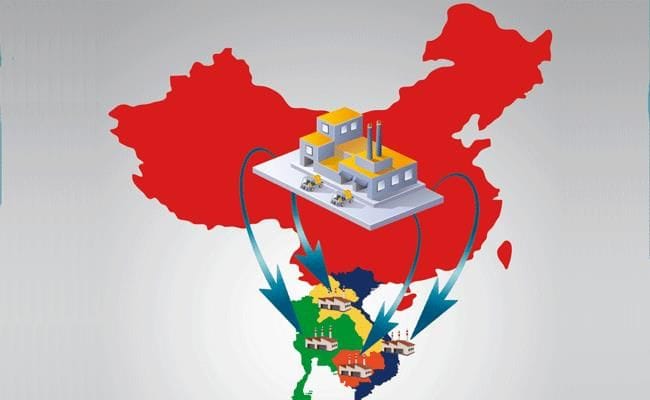
Japanese companies and other international businesses are increasingly looking to India as part of the "China Plus One" strategy. This approach aims to diversify supply chains and minimize reliance on China.
- The "China Plus One" strategy is a global business model established in 2013.
- It aims to reduce dependency on China by incorporating an alternative country into the manufacturing or sourcing process.
- The strategy has gained traction due to geopolitical risks, trade tensions, and regulatory unpredictability in China.
- Key events, including the US-China trade war and China's Zero-Covid policy, have further accelerated this trend.
- Countries like Vietnam, Mexico, and Taiwan are benefitting from this strategy in various sectors.
Additional Details
- Benefits for India: India presents a vast market, skilled labor, and cost advantages, which makes it a compelling option for diversification. Additionally, the country's growing digital infrastructure and industrial corridors, along with government initiatives like PLI and Make in India, align with the objectives of the China Plus One strategy.
- Challenges: Despite its advantages, India faces hurdles such as limited integration into global value chains, logistical inefficiencies, and regulatory bottlenecks. Historical protectionist trade policies and the absence of participation in trade agreements like RCEP further impede India's potential in this context.
For India to successfully compete with nations benefiting from the China Plus One strategy, it must implement labor reforms, enhance the ease of doing business, and improve trade facilitation.
Consider the following:
- 1. Foreign currency convertible bonds
- 2. Foreign institutional investment with certain conditions
- 3. Global depository receipts
- 4. Non-resident external deposits
Which of the above can be included in Foreign Direct Investments?
- Options: (a) 1, 2 and 3* (b) 3 only (c) 2 and 4 (d) 1 and 4
GS2/Governance
Demise of Foreign Aid in India
Why in News?
India's relationship with foreign aid has historically been complex, oscillating between acceptance and skepticism. Recent trends indicate a global retreat from official aid, notably highlighted by the targeting of USAID under U.S. President Donald Trump, amidst growing geopolitical conflicts and economic pressures in donor nations. For India, this gradual withdrawal from foreign aid has been anticipated for some time.
- Historical reliance on foreign aid has shifted towards self-sufficiency and investment.
- NGOs face significant challenges due to declining foreign contributions and stringent regulations.
- Regulatory constraints on foreign-funded NGOs threaten their operational capacity and impact.
Additional Details
- Historical Context: After Independence, India sought international aid to address developmental needs. The period from 1955 to 1965 saw peak aid inflows, particularly from Western nations.
- Shift in Focus: By the 1990s, due to India's economic growth, official development assistance (ODA) had become minimal, reflecting a new perception of India's capacity for self-reliance.
- NGO Funding Streams: Initially supported by public donations, Indian NGOs have increasingly depended on government grants and foreign aid since the 1960s. However, recent years have seen a decline in foreign funding, particularly after the implementation of the Foreign Contributions Regulation Act (FCRA).
- Regulatory Impacts: The FCRA, enacted in 1976, and its subsequent amendments have tightened regulations on foreign funding for NGOs, potentially undermining their role in social development.
- Consequences of Aid Withdrawal: The cessation of foreign aid may lead to job losses, stalled projects, and a reduction in social initiatives, jeopardizing democratic processes and checks on government power.
In conclusion, while the ambition for self-reliance aligns with nationalistic goals, it necessitates a balanced approach. Over-regulation of NGOs and a reduction in foreign aid could hinder India's broader developmental and democratic aspirations, highlighting the need for careful consideration of global collaboration.
GS3/Science and Technology
'Kamala' and 'Pusa DST Rice 1' GM Rice
 Why in News?
India's Agriculture Minister has announced the introduction of 'Kamala' and 'Pusa DST Rice 1', which are the country's first genome-edited rice varieties and the world's first of their kind. These rice varieties have been developed by the Indian Council of Agricultural Research.
- 'Kamala' (DRR Dhan 100) is developed by ICAR-IIRR Hyderabad and shows improved yield, early maturity, and drought tolerance.
- 'Pusa DST Rice 1' is developed by ICAR-IARI Delhi and enhances drought and salinity tolerance.
- Both varieties utilize CRISPR-Cas9 genome editing technology without any foreign DNA insertion.
- These varieties have received approval from the Institutional Biosafety Committees and Review Committee on Genetic Manipulation under relaxed genome-editing regulations.
Additional Details
- Yield Improvement:
- Kamala offers a yield increase of 19% over Samba Mahsuri (average yield: 5.37 t/ha, maximum up to 9 t/ha).
- Pusa DST Rice 1 shows a yield boost of 9.6% to 30.4% over MTU1010 under stress conditions.
- Climate Resilience: Both varieties exhibit drought tolerance and early maturity, making them suitable for saline, alkaline, or coastal soils.
- Water Conservation: Kamala matures 20 days earlier, resulting in savings of approximately 7,500 million m³ of water through 3 fewer irrigations.
- Emission Reduction: Cultivating these varieties over 5 million hectares could potentially reduce greenhouse gas emissions by 32,000 tonnes (a 20% decrease).
- Food Security: The enhanced paddy output is crucial for improving India's average yield, which supports 40% of the total food grain basket.
The introduction of 'Kamala' and 'Pusa DST Rice 1' signifies a significant advancement in agricultural technology, promising benefits in yield, climate adaptability, and sustainability for Indian agriculture.
With reference to the Genetically Modified mustard (GM mustard) developed in India, consider the following statements:
- 1. GM mustard has the genes of a soil bacterium that give the plant the property of pest-resistance to a wide variety of pests.
- 2. GM mustard has the genes that allow the plant cross-pollination and hybridization.
- 3. GM mustard has been developed jointly by the IARI and Punjab Agricultural University.
Which of the statements given above is/are correct?
- Options: (a) 1 and 3 only (b) 2 only* (c) 2 and 3 only (d) 1, 2 and 3
GS2/International Relations
Indians Earn the Most Among Asian Americans
Why in News?
Indian Americans have the highest median annual income among all Asian ethnic groups in the United States, earning approximately 40% more than their Chinese and Japanese counterparts.
- Median annual income of Indian American households is $151,200 in 2023.
- Indian Americans have a higher educational attainment, with 77% holding a bachelor's degree or higher.
- Income disparities exist even among educated groups, as seen with Mongolian Americans earning significantly less.
Additional Details
- Highest Median Income Among Asian Groups: Indian American households lead with a median income of $151,200, which is more than both Chinese and Japanese households by about 40%.
- Income Reflects High Educational Attainment: Despite similar education levels, income varies significantly among different ethnic groups, indicating that factors such as job type, geography, and discrimination play a role.
- Significance of Indian Diaspora: Indian diaspora communities are influential economically, culturally, and politically, contributing to their host countries while promoting Indian culture globally.
- Challenges Faced: Issues such as caste-based discrimination, racial intolerance, and political polarization continue to affect the Indian diaspora, impacting social integration and opportunities.
In conclusion, the economic strength and high earning potential of Indian Americans underscore their significant contributions to both the U.S. economy and Indian society. Their achievements reflect broader implications for the Indian diaspora's influence in various sectors, despite ongoing challenges.
GS3/Science and Technology
ICAR Unveils World's First Genome-Edited Rice
Why in News?
The Indian Council of Agricultural Research (ICAR) has announced the development of the world's first genome-edited rice varieties. These varieties are designed to offer higher yields, enhanced tolerance to drought and salinity, and improved nitrogen-use efficiency, making them more resilient to climate change and conserving water resources.
- ICAR has developed two genome-edited rice varieties: DRR Dhan 100 (Kamala) and Pusa DST Rice 1.
- These varieties enhance yield, drought, and salinity tolerance without incorporating any foreign DNA.
Additional Details
- Genome Editing in Plants: This process involves making precise changes to a plant's DNA without inserting foreign genetic material, using technologies such as CRISPR-Cas9.
- Exemption from Regulations: Genome-edited crops are exempt from stringent biosafety regulations under India's Environment (Protection) Act, 1986, allowing for easier development and use.
- Key Traits of New Varieties: These include early maturity (about 130 days), drought tolerance, high nitrogen-use efficiency, and significant yield improvements (up to 5.37 tonnes/ha).
- Significant Water Savings: The shorter maturity period of Kamala allows for reduced irrigation needs, saving approximately 7,500 million cubic meters of water.
- Government Support: The Indian government has allocated ₹500 crore for genome-editing research to enhance agricultural yield and climate resilience.
This breakthrough in rice cultivation is crucial for addressing food security in India, where paddy is a staple food crop. With the potential to significantly increase yields and reduce environmental impact, these genome-edited varieties could play a vital role in the future of sustainable agriculture.
GS2/Polity
Debate on State Share in Tax Pool - A Critical Challenge for the 16th Finance Commission
Why in News?
The Finance Commission (FC) of India is under increasing pressure from various states to enhance their share in the divisible tax pool. Proposals suggest raising the share from the current 41% to as high as 50%. This situation has sparked a significant discussion regarding fiscal federalism, central transfers, and the overall intergovernmental fiscal structure in India.
- The 14th Finance Commission increased states' share in the divisible tax pool to 42%.
- The 15th Finance Commission maintained this share but faced challenges due to the reorganization of Jammu and Kashmir.
- Despite nominal increases in devolution, the Centre has imposed more cesses and surcharges which are not shareable with states.
Additional Details
- Decline in States' Effective Share: The shareable tax pool has decreased from 88.6% in 2011-12 to 78.9% in 2021-22, resulting in states receiving only 32% of total gross tax revenues over the last six years.
- Fiscal Constraints: Increased devolution could limit the Centre's fiscal capacity, which is already stretched due to ongoing borrowing to fund state transfers.
- Tied vs Untied Transfers: Current funding for states involves conditions on usage, with approximately 60% of general government expenditures being state-funded. A shift towards untied transfers would require rationalizing centrally sponsored schemes (CSS), a complex task due to political and developmental pressures.
- Quality of State Spending: States face rising revenue deficits, leading to increased borrowing for non-capital expenditures. For instance, Karnataka and Punjab are experiencing significant revenue deficits that adversely affect capital investment.
- Equity and Efficiency in Public Service Delivery: There are stark disparities in spending between low-income states like Bihar and wealthier states, raising concerns about whether increasing untied funds will reduce or exacerbate inequality in public services.
- Devolution to Local Governments: The third tier of governance in India, such as Panchayats and Municipalities, receives significantly less funding compared to their counterparts in countries like China and South Africa. The question remains whether a higher state share will incentivize more financial devolution to these local bodies.
The 16th Finance Commission must navigate a complex landscape, aiming to balance enhancing the fiscal autonomy of states while ensuring the fiscal sustainability of the Centre. The Commission's approach should promote efficient and equitable spending and encourage genuine federalism by empowering local governments. A comprehensive strategy is essential to address the constitutional, economic, and political factors influencing India's fiscal federalism.
GS2/International Relations
India Must Rethink Its Arctic Outlook
Why in News?
The geopolitical landscape is rapidly changing, particularly in the Arctic, which is shifting from a region known for scientific cooperation to a contested area of military and strategic competition among great powers.
- The Arctic's strategic importance is increasing due to climate change and the accessibility of the Northern Sea Route (NSR).
- India's current Arctic Policy focuses on environmental and scientific issues but may not adequately address the evolving geopolitical realities.
- India must recalibrate its Arctic strategy to enhance its relevance and influence in the region.
Additional Details
- Geopolitical Dynamics: The Arctic has transformed into a geopolitical hotspot with rising tensions as states enhance their military capabilities, including reviving military installations and conducting submarine deployments.
- India's Arctic Policy: India's 2022 Arctic Policy emphasizes climate science and environmental protection, drawing from its experience with the Himalayan region, but it may not fully capture the strategic shifts occurring in the Arctic.
- India's historical ties with Russia are under scrutiny by Nordic states, complicating its diplomatic positioning.
- India needs to establish dedicated Arctic engagement desks within its Foreign and Defence Ministries to foster a more coherent strategy.
In conclusion, India's Arctic strategy, while focused on scientific and environmental aspects, is insufficient in light of increasing geopolitical tensions. A more integrated approach that balances climate concerns with strategic interests is essential for India to safeguard its long-term objectives in the Arctic region.
GS3/Environment
Biological Diversity (Access and Benefit Sharing) Regulation, 2025
Why in the News?
The National Biodiversity Authority (NBA) has introduced new regulations aimed at managing access to biological resources and ensuring fair and equitable benefit sharing, following approval from the Central Government.
- The regulation establishes guidelines for sharing benefits derived from biological resources, traditional knowledge, and digital sequence information (DSI).
- A tiered benefit-sharing structure is introduced based on the user's annual turnover.
- Cultivated medicinal plants are exempt from these regulations, in line with the Biodiversity (Amendment) Act, 2023.
- For high-value or threatened species, benefit sharing rates increase significantly.
Additional Details
- Benefit Sharing Structure:
- No sharing for turnover up to ₹5 crore.
- 0.2% for turnover between ₹5-50 crore.
- 0.4% for turnover between ₹50-250 crore.
- 0.6% for turnover above ₹250 crore.
- Compliance Requirements: Users must submit annual resource usage statements if their turnover exceeds ₹1 crore.
- For species like red sanders, agarwood, and sandalwood, sharing must be at least 5%, increasing to 20% or more for commercial use.
- This regulation includes researchers and IP right seekers, marking the first inclusion of digital data in benefit sharing.
This regulation reflects India's commitment to the principles of sustainable development and responsible use of biodiversity as outlined in international agreements such as the Convention on Biological Diversity (CBD) and the Nagoya Protocol.
GS3/Economy
Fuel vs. Feed: The Maize Ethanol Controversy
 Why in News?
The increasing use of maize for ethanol production has raised significant concerns regarding the availability and pricing of maize for traditional sectors, particularly food and feed industries. This shift in maize use is impacting domestic agriculture and food security.
- Rising demand for ethanol from maize is disrupting traditional supply chains.
- Maize prices have surged significantly due to its diversion towards fuel production.
- There are proposals to allow imports of genetically modified (GM) maize strictly for ethanol production.
Additional Details
- Maize Supply and Prices: The demand for maize for ethanol production has led to an increase in prices from Rs 14,000-15,000 to Rs 24,000-25,000 per tonne over four years, primarily due to its diversion under the blending programme.
- DDGS (Distiller's Dried Grains with Solubles): This protein-rich by-product from ethanol production is gaining traction as a feed component, with maize-based DDGS containing 28-30% protein, compared to more expensive traditional protein sources like soyabean DOC.
- The feed industry is facing pressure due to rising maize prices, leading to calls for import liberalization.
- India's current maize import policy allows limited imports at a lower duty rate, with a prohibition on GM maize for food or feed use.
- Experts suggest increasing domestic maize production by reallocating acreage from rice to maize, which would support both fuel and feed needs without harming other crops.
In conclusion, the controversy surrounding maize as a fuel source versus its traditional roles in food and feed is critical. Balancing these demands is essential to ensure food security while supporting the biofuel industry.
GS3/Environment
Repairability Index (RI) for Mobile and Electronics Sector
Why in News?
The Committee established to formulate India's Repairability Index (RI) framework has submitted its report to the Department of Consumer Affairs, highlighting the importance of product repairability in promoting sustainable consumption.
- The Repairability Index (RI) serves as a standardized label indicating how easily a product can be repaired.
- Initially applicable to smartphones and tablets, the RI utilizes a 5-point numeric scale for scoring.
- Six key parameters are assessed to calculate the RI score.
Additional Details
- Key Parameters:The RI is calculated based on the following six parameters:
- Disassembly Depth
- Repair Information
- Spare Parts Availability
- Software Updates
- Tools Required
- Fasteners Used
- The scoring focuses on critical components such as the battery, display, cameras, charging port, microphone, speaker, and hinge mechanism.
- RI labels are required to be displayed at points of sale, on e-commerce platforms, and via QR codes on product packaging.
- The RI framework aims to align with global best practices while ensuring ease of business for manufacturers.
- Original Equipment Manufacturers (OEMs) will self-declare their RI scores, ensuring no additional compliance burden.
- A clear scoring methodology with assigned weightages for each parameter has been established.
- The framework complements the existing Right to Repair Portal launched in 2022, which provides repair-related information across four sectors.
- The committee emphasized the necessity of creating a robust post-sale ecosystem for consumers in both urban and rural areas.
This initiative marks a significant step towards enhancing consumer awareness and fostering a culture of sustainability in the electronics sector.
FAQs on UPSC Daily Current Affairs: 5th May 2025
| 1. What is the significance of Vizhinjam Port for India's maritime trade? |  |
| 2. How does the "China Plus One" strategy affect India's manufacturing sector? | |
| 3. What is the impact of the 'Kamala' and 'Pusa DST Rice 1' genetically modified rice varieties in India? | |
| 4. What are the key challenges related to the debate on state share in the tax pool for the 16th Finance Commission? | |
| 5. Why is it important for India to rethink its Arctic outlook? | |




