UPSC Daily Current Affairs: 9th June 2025


GS2/Polity
Judicial Sensitivity to Sentiments is a Sign of Regression
Source: The Hindu
 Why in News?
The erosion of free speech protections in India has become a pressing concern. Recent judicial trends indicate a shift from safeguarding individual liberties to prioritizing cultural sentiments, raising alarm about the implications for democracy and dissent.
- The Indian judiciary is increasingly managing speech with a focus on national pride and public sensitivity.
- There has been a notable shift from viewing free speech as a right to a privilege, where individuals must justify their expressions.
- Judicial validation of public outrage poses a risk to lawful speech, inhibiting honest discourse.
- The conflation of emotional reactions with legal harm undermines constitutional protections against speech restrictions.
Additional Details
- Judicial Transformation: The courts have shifted from protecting free speech to enforcing civility, evident in cases like the Allahabad High Court's handling of criticism against public figures.
- Public Outrage as a Legal Standard: Courts have suggested apologies for lawful speech, as seen in the case of Kamal Haasan, indicating a trend towards cultural appeasement over legal reasoning.
- Misinterpretation of Constitutional Safeguards: The judiciary's readiness to favor sentiment over scrutiny in defamation cases poses a threat to dissent and satire.
- Judicial Sentimentalism: The trend towards viewing speech through the lens of public decorum undermines the essence of democracy, which thrives on disagreement and dissent.
To safeguard the spirit of Article 19, India must reaffirm its commitment to free speech, prioritizing individual liberties over collective sentiments. Courts should focus on the potential for real harm rather than emotional offense, ensuring that apologies remain voluntary expressions of conscience rather than judicially mandated actions. The judiciary's role should be to uphold constitutional freedoms, protecting even unpopular or uncomfortable expressions.
GS2/Governance
Consultative Regulation-Making That Should Go Further
Source: The Hindu
Why in News?
In recent months, India's financial regulatory landscape has undergone significant reforms, particularly through the initiatives of the Reserve Bank of India (RBI) and the Securities and Exchange Board of India (SEBI). These reforms aim to enhance transparency and promote consultative governance, but they still require further development to achieve a comprehensive regulatory framework.
- RBI and SEBI have introduced new frameworks to improve regulatory processes.
- Public consultations are now mandated, but transparency in substance remains insufficient.
- Economic rationale and market failure identification are crucial for effective regulation.
- Institutional capacity and a uniform legal framework are necessary for consistent implementation.
Additional Details
- Consultative Governance: The new frameworks require public consultations lasting 21 days and internal reviews, marking a departure from previous opaque processes.
- Importance of Economic Rationale: Regulatory proposals should be grounded in identifying market failures, similar to practices in the US and Europe, which require rigorous cost-benefit analyses.
- Capacity Challenges: Limited resources within regulatory bodies pose challenges to effective implementation, necessitating better coordination and capacity-building.
- Legislative Reform: A comprehensive law akin to the US Administrative Procedure Act could standardize and enhance regulatory processes across sectors in India.
In conclusion, while RBI and SEBI have made strides toward reforming India's regulatory environment, ongoing efforts must focus on embedding transparency, economic logic, and accountability into the regulation-making process. This will ensure that regulations are effectively tailored to address market failures and remain responsive to changing conditions.
GS2/Governance
Digital Postal Index Number (DIGIPIN)
Source: Money Control
Why in News?
The Government of India has recently launched DIGIPIN, a geo-coded digital address system aimed at enhancing the accuracy and efficiency of address identification across the nation.
- DIGIPIN is designed to improve location identification.
- Developed by the Department of Posts in collaboration with IIT Hyderabad and the National Remote Sensing Centre (NRSC).
- Utilizes GNSS data for high-precision geo-coding of physical locations.
- Provides unique 10-character alphanumeric codes for locations.
- Accessible via the India Post online portal and compatible with GPS-enabled devices.
Additional Details
- Accessibility: Users can retrieve their DIGIPIN through India Post's online services, ensuring ease of use.
- Nature of the System: DIGIPIN is open source, interoperable, and privacy-focused, making it publicly accessible and not storing personal data.
- Code Format: Each location receives a unique 10-character alphanumeric code (e.g., 39J-53M-TJF9) corresponding to an area of approximately 4x4 square meters.
- Coverage Area: DIGIPIN is applicable across urban, rural, forest, and oceanic regions, even where traditional addresses are unavailable.
- Significance: It enables precise mapping, supports e-commerce delivery, enhances emergency response services, facilitates public service delivery, and aids in the inclusion of remote regions in national mapping efforts.
In conclusion, DIGIPIN represents a significant advancement in India's address identification system, promoting efficient delivery services and improving accessibility in various regions.
[UPSC 2022] Consider the following:
- Aarogya Setu
- CoWIN
- DigiLocker
- DIKSHA
Which of the above are built on top of open-source digital platforms?
- Options: (a) 1 and 2 only (b) 2, 3 and 4 only (c) 1, 3 and 4 only (d) 1, 2, 3 and 4*
GS3/Economy
India's EV Localisation Policy: Balancing Imports and Industrial Growth
Source: New Indian Express
Why in the News?
The Ministry of Heavy Industries has introduced guidelines for the Scheme to Promote Manufacturing of Electric Passenger Cars in India, signifying a significant step towards enhancing the country's electric vehicle (EV) sector.
- The policy reduces customs duty on fully built electric cars from 70-100% to 15% for vehicles priced above $35,000.
- Manufacturers must invest a minimum of Rs. 4,150 crore in India to benefit from the reduced duty.
- The scheme aims to balance affordability for consumers with the goal of self-reliance in EV manufacturing.
- Critics warn that the initiative could hinder India's domestic manufacturing ambitions if foreign technology is not transferred.
Additional Details
- Key Provisions: The customs duty cut is valid for five years, and investments should lead to domestic value addition (DVA) of at least 25% in three years, increasing to 50% by year five.
- Impact on Ecosystem: The policy aims to balance short-term consumer affordability with long-term manufacturing independence, with EVs making up 7.8% of total vehicle sales in FY 2025.
- Concerns: Critics highlight that without core technology transfer, India risks becoming a mere assembly hub for foreign companies, potentially stalling innovation and domestic job growth.
- Path Forward: Experts recommend focusing on building domestic capacities, fostering innovation, and aligning India's climate commitments with manufacturing strategies for sustainable growth.
In conclusion, while India's EV localisation policy aims to promote domestic manufacturing and reduce reliance on imports, careful implementation and a focus on innovation and skills development are crucial for achieving long-term success in the electric vehicle sector.
GS3/Defence & Security
Defence Production in India Receives a Fillip
Source: PIB
 Why in News?
The recent military operation, Operation Sindoor, which involved a strike against Pakistan in May, has sparked extensive discussions around strategic military efforts. Importantly, it has also provided a significant boost to India's defence sector, particularly benefiting private companies and small businesses (MSMEs) engaged in defence manufacturing.
- Defence company stocks experienced a 21% surge following Operation Sindoor, notably outperforming the broader market's 3.1% increase in the Nifty50 index.
- In the week succeeding the operation, defence stocks rose an additional 5.4%, while the Nifty50 index declined by 0.5%, indicating sustained investor confidence in the defence sector.
- The operation served as a catalyst, reversing the previous underperformance of defence stocks, which had lagged behind leading companies on the National Stock Exchange.
Significance of Growth in Defence Production and Exports
- Enhances Self-Reliance: The growth in defence production, which reached a record ₹1.3 lakh crore in FY24, highlights India's evolving capability to produce defence equipment domestically, thereby reducing dependency on imports.
- Boosts Economic and Strategic Strength: With defence exports doubling since FY20 and surpassing ₹20,000 crore, India's presence in the global defence market is strengthening, contributing to economic growth. The government aims for an export target of ₹30,000 crore for the current fiscal.
- Encourages Innovation and Industry Growth: The consistent double-digit growth since FY22 fosters innovation and investment in defence technology, benefiting both public and private sectors.
Contributions of Private Companies and MSMEs
- Growing Share in Defence Production: Private defence companies increased their share of total production from about 20% in FY17 to nearly 24% in FY25, with companies like Paras Defence and Space Technologies emerging as key players.
- Leading Role in Defence Exports: Private firms dominate defence exports, largely due to export authorizations. They have significantly contributed to the export of small arms and protective gear.
- MSMEs as Key Component Suppliers: MSMEs are crucial suppliers to the defence industry, with government procurement from these entities doubling the target to ₹13,000 crore in FY25. Additionally, they provided goods worth around ₹3,000 crore between FY18 and FY20, with larger orders expected thereafter.
Timeline of Defence Production Growth
Defence production faced a contraction of 2.5% prior to the pandemic. However, since then, it has consistently shown double-digit growth, with production nearing ₹90,000 crore by December 2024, against a target of ₹1.6 lakh crore for FY25.
Government Initiatives
- Promoting Domestic Manufacturing: The government has established ambitious targets to enhance indigenous defence production, aiming for ₹1.6 lakh crore in FY25.
- Supporting MSMEs through Procurement: Public procurement targets have been set to ensure a steady flow of orders to MSMEs, with goods worth ₹13,000 crore procured in FY25, which is more than double the initial target.
- Encouraging Private Sector Participation: Policies have been put in place to facilitate the increasing involvement of private companies in defence production and exports.
Way Forward
- Enhance Technology Upgradation and Innovation: It is imperative to invest more in research and development and foster collaboration between public and private sectors to develop advanced defence technologies, ensuring global competitiveness and self-reliance.
- Strengthen MSME Integration and Export Support: Expanding financial and policy support to MSMEs for scaling production capacity and quality is crucial, along with establishing dedicated mechanisms to facilitate defence exports.
Mains PYQ:
[UPSC 2014] Defence manufacturing in India is still in a nascent stage. What influence is this expected to have on Indian defence and economy in the short and long run?
The recent data illustrates a significant "fillip" in India's defence production, which is directly correlated with the "nascent stage" described in the 2014 PYQ. This past perception highlighted the challenges faced by Indian defence manufacturing, but the discussions following Operation Sindoor demonstrate a growing confidence in India's indigenous defence capabilities. Notably, defence stocks of 18 companies on the Nifty Defence Index rose by almost 21% in just a week in May, outperforming the Nifty50 index significantly.
GS1/History & Culture
Evidence of Pre-Harappan Human Presence Discovered in Rann of Kutch
Source: Indian Express
 Why in News?
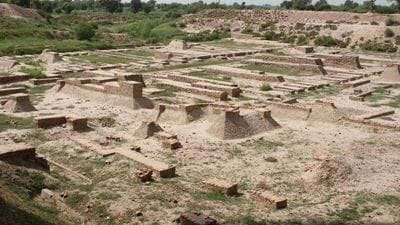
Researchers from IIT Gandhinagar have uncovered evidence indicating that humans inhabited the Great Rann of Kutch approximately 5,000 years prior to the emergence of the Harappan civilization. These early inhabitants are believed to have been coastal hunter-gatherers.
- Evidence of human activity dating back to 7,000-7,500 years ago has been found.
- Carbon dating of shell samples shows they are 5,000-5,500 years older than Harappan artifacts.
- Findings suggest a diverse diet including shellfish, plants, and fruits.
Additional Details
- Khadir Island: Located in the Great Rann of Kutch, Gujarat, Khadir Island is near the prominent Harappan site of Dholavira.
- Geographic Context: The island was surrounded by water 5,000-6,000 years ago, due to elevated sea levels.
- Discovery Site: Archaeological remains near Bambhanka, about 1 km from Dholavira, were uncovered in 2016.
- Site Features: Significant findings include house complexes, broken potsherds, marine shells, and wall remnants made from random rubble masonry.
- Shell Deposits: A 30-40 cm thick shell deposit was discovered on a hillock, previously noted by geologist Arthur Beavor Wynne in 1872.
- Diet and Food Practices: Evidence such as broken shell middens suggests that these hunter-gatherers consumed shellfish, along with plants and fruits, though no plant remains have been found.
- Tool Use: Various stone tools, including flakes and cores made from materials like chert and agate, indicate sophisticated tool-making practices.
- Trade and Cultural Links: The presence of non-local tool stones points to exchange networks, suggesting long-distance connections with regions like Las Bela (Pakistan) and coastal Oman.
In summary, the findings from the Great Rann of Kutch provide critical insights into the lifestyle and dietary practices of prehistoric hunter-gatherers, highlighting their mobility and cultural connections across ancient trade routes.
GS3/Environment
Stratospheric Aerosol Injection
Source: The Hindu
Why in News?
A recent study published in the journal Earth's Future has proposed a novel approach to Stratospheric Aerosol Injection (SAI). This technique could potentially lower costs and facilitate its implementation, despite existing opposition to it.
- SAI is a method designed to cool the planet and mitigate the effects of climate change.
- The technique involves adding tiny reflective particles to the upper atmosphere, inspired by the cooling effects of volcanic eruptions.
Additional Details
- Stratospheric Aerosol Injection (SAI): This method aims to mimic the natural cooling effects of volcanic activity by injecting sulfur dioxide (SO2) into the stratosphere, where it forms sunlight-reflecting sulfate aerosols.
- Aerosols: These are minuscule solid or liquid particles suspended in air or gas, which can be natural (like fog or volcanic gas) or artificial (such as smoke from burning fossil fuels).
- Aerosols can be classified into primary aerosols, which are emitted directly into the atmosphere, and secondary aerosols, formed from precursor gases.
- True aerosol particles typically range from a few milli-micrometers to about 1 micrometer in diameter. Particles smaller than 0.1 micrometer are often referred to as Aitken nuclei.
- Visible forms of atmospheric aerosols include smoke, smog, haze, and dust.
This innovative approach to SAI brings a controversial method closer to potential application, raising discussions on its viability and implications for climate intervention strategies.
GS2/International Relations
Key Facts about Thitu Island
 Why in News?
A recent incident involving a Chinese ship that ran aground due to severe weather near Thitu Island has heightened alertness among Filipino soldiers. This situation underscores the ongoing tensions in the disputed South China Sea region.
Key Takeaways
- Thitu Island, also known as Pag-asa Island, is part of the Spratly Islands in the South China Sea.
- The Spratly Islands consist of over 100 small islands and reefs, claimed by multiple nations including China, Taiwan, Vietnam, Malaysia, and the Philippines.
- Thitu Island is the second largest of the naturally occurring Spratly Islands and the largest among the nine islands occupied by the Philippines.
Additional Details
- Geographical Significance: Thitu Island is located approximately 24-27 km from China's Subi Reef, which is home to a significant military base.
- The island has been administered by the Philippines since 1971, with civilian settlements beginning in the mid-1990s.
- Thitu Island hosts a Philippine fishing village, military forces, a school, an airport (Rancudo Airfield), a large harbor, and a lighthouse for navigation.
This incident serves as a reminder of the geopolitical complexities in the South China Sea, where territorial claims and military presence often lead to heightened tensions among the involved countries.
GS3/Defence & Security
Intensifying Anti-Naxal Drive, Sustaining Welfare Focus
 Why in News?
The current government has ramped up its efforts against the Naxal insurgency in its first year while also expanding significant welfare schemes initiated in previous terms.
Key Takeaways
- The government aims to eliminate Left-Wing Extremism (LWE) by March 31, 2026.
- Security forces have made notable gains in Maoist strongholds such as Chhattisgarh, Jharkhand, and Odisha.
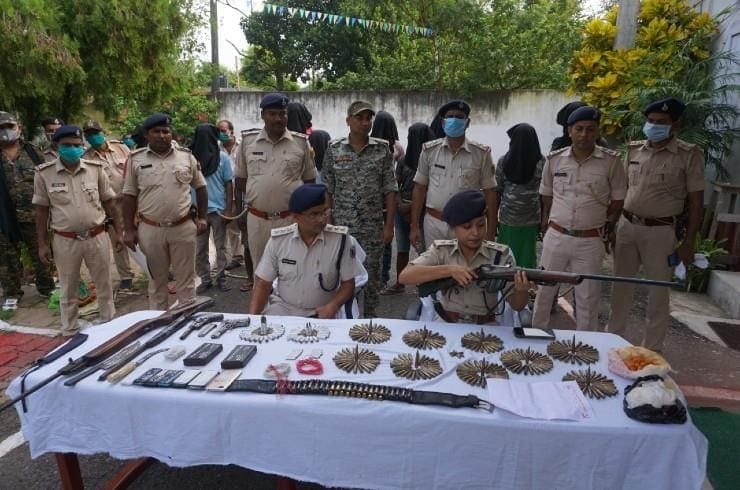
- Operation Black Forest dismantled a major Maoist stronghold, resulting in significant arrests and surrenders.
- Ayushman Bharat has been expanded to cover all citizens aged 70 and above.
- The Pradhan Mantri Awas Yojana-Gramin (PMAY-G) has been extended to build 2 crore additional rural houses.
Additional Details
- Major Gains in Maoist Strongholds: Security forces have achieved significant progress, particularly in the Bijapur-Sukma-Dantewada tri-junction using forward operating bases and improved road connectivity.
- Surge in Maoist Casualties: In Chhattisgarh, 209 Maoists were killed in the first five months of 2025, surpassing the total for 2024, with the notable elimination of CPI Maoist general secretary Basavaraju.
- Operation Black Forest: Launched on April 21, this operation was a collaborative effort by the CRPF and Chhattisgarh Police that resulted in the arrest of 54 Naxalites and 84 surrenders.
- Challenges Persist: Despite military successes, ambushes by Maoists demonstrate that they still retain operational capabilities.
- Welfare Initiatives: The government expanded the Ayushman Bharat scheme to include all citizens aged 70 and over, addressing the health insurance coverage gap for the elderly in India.
- Under the PMAY-G, the government aims to construct 2 crore additional rural houses, with substantial funds already released.
To effectively neutralize LWE, it is essential for the government to maintain military pressure while also focusing on governance, infrastructure development, and welfare outreach in affected regions.
GS3/Environment
Himalayan Long-tailed Myotis
 Why in News?
Recently, researchers have identified a new species of bat known as the Himalayan Long-tailed Myotis (Myotis himalaicus), highlighting the biodiversity of the Western Himalayan region.
Key Takeaways
- This bat species is part of the Myotis frater complex, which includes morphologically similar species distributed across a wide geographical range.
- The Himalayan Long-tailed Myotis is primarily found in forested habitats in the southern slopes of the Himalayas.
Additional Details
- Habitat: The Himalayan Long-tailed Myotis resides in Deodar, Pine, and Cedar forests, indicating its preference for specific environmental conditions.
- Physical Characteristics: It is a medium-sized bat, measuring approximately 3.5 inches long and weighing less than an ounce. Notable features include delicate feet and relatively long thumbs with strong but short claws.
- Distribution: This species has been observed in areas like Uttarakhand, India, and Khyber Pakhtunkhwa, Pakistan.
- Ecological Significance: Bats are vital for biodiversity and ecosystem health. They serve as insect predators, consuming pests that affect agriculture and spreading seeds for important tree species.
The discovery of the Himalayan Long-tailed Myotis emphasizes the need for further research and conservation efforts in the Himalayan region to protect its unique wildlife.
GS3/Science and Technology
India's First Gene-Edited Sheep Thrives at Six Months
 Why in News?
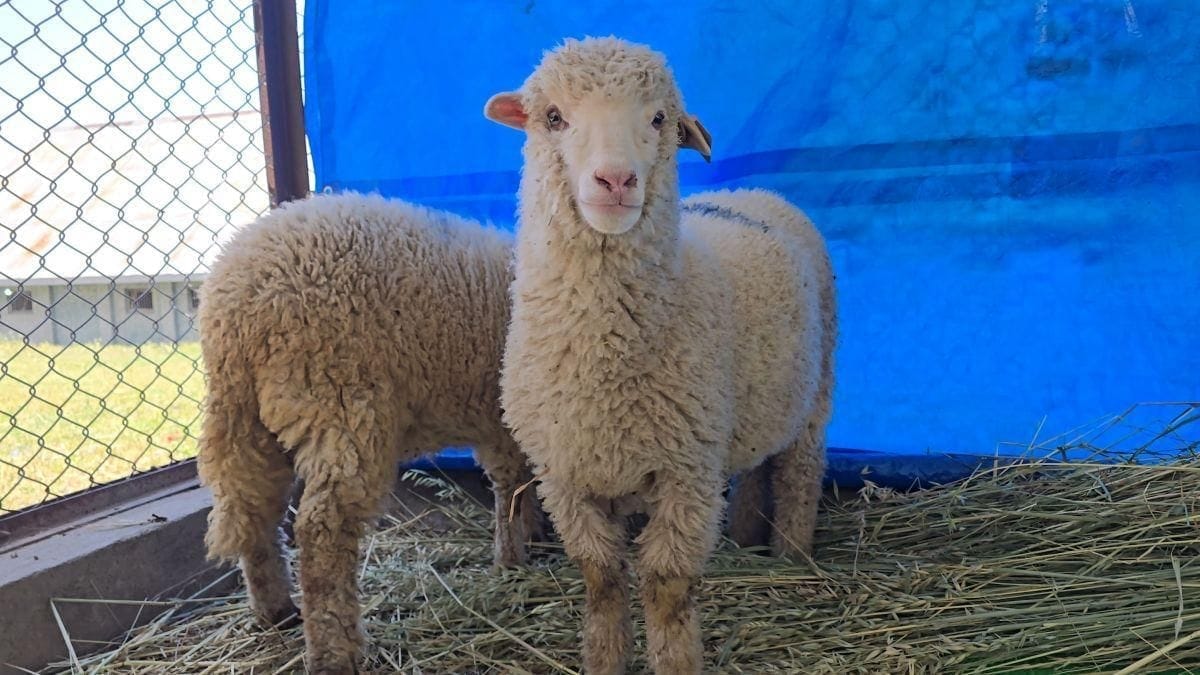
Recently, a significant achievement was made by a team led by Professor Riyaz Ahmad Shah at Sher-e-Kashmir University of Agricultural Sciences and Technology (SKUAST), Srinagar, with the successful birth of India's first gene-edited sheep, a Kashmir Merino. This breakthrough was initially kept confidential until gene sequencing confirmed its success, marking a pivotal advancement in India's genetic research landscape.
Key Takeaways
- India's first gene-edited sheep is a Kashmir Merino, known for its fine wool and quality meat.
- The breed is a product of cross-breeding between local and exotic sheep breeds, enhancing productivity.
- This genetic achievement opens avenues for improving livestock through transgenic advancements.
Additional Details
- Development: The Kashmir Merino breed was developed in the 1960s at the Govt. Sheep Breeding and Research Farm in Reasi, Jammu, through a program that integrated native breeds such as Poonchi, Gaddi, and Bakerwal with exotic breeds like Australian Merino.
- Productivity: The Kashmir Merino is 3 to 4 times more productive than local sheep in terms of wool and meat, rivaling exotic fine wool breeds.
- Adaptability: This breed is well-suited to the harsh climatic conditions and diseases prevalent in the Kashmir Valley.
- Gene Editing: The gene-editing technique employed was CRISPR-Cas9, specifically targeting the myostatin gene, a known suppressor of muscle growth, resulting in a 30% increase in muscle mass.
- This achievement is particularly significant as it meets rising demands for quality meat and highlights advancements in India's genomic science.
Six months post-birth, the gene-edited Kashmir Merino is thriving, symbolizing a major leap in livestock biotechnology. The journey of this project began in 2020, facing multiple challenges before the successful birth of the sheep in December 2024. This innovation follows India's earlier success in gene-editing rice and points towards a future where genetics plays a crucial role in agriculture.
FAQs on UPSC Daily Current Affairs: 9th June 2025
| 1. What is the significance of the Judicial Sensitivity to Sentiments in the context of legal decisions? |  |
| 2. How does the Consultative Regulation-Making process impact governance? | |
| 3. What is the purpose of the Digital Postal Index Number (DIGIPIN) in India? | |
| 4. What are the key components of India's EV Localisation Policy? | |
| 5. Why is the discovery of Pre-Harappan human presence in the Rann of Kutch significant? | |