Mnemonics : Our Home: Earth, a Unique Life Sustaining Planet


Why Earth is Special
Earth supports lifeMnemonic: PALM
- Position of earth
- Atmosphere
- Liquid water
- Magnetic field
Planets
1. Order of Planets
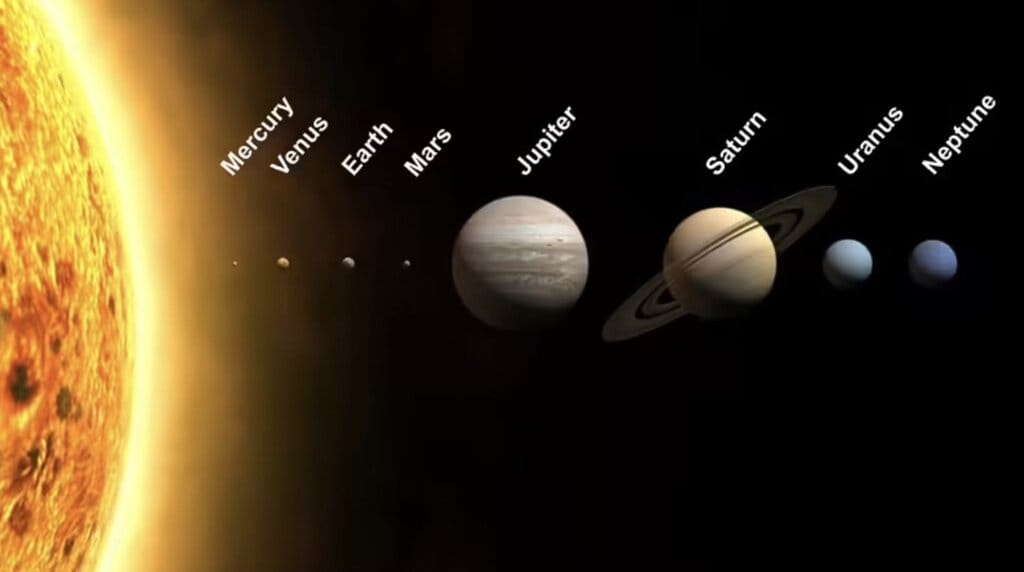
Planets from Sun outward
Mnemonic: My Very Excellent Mother Just Served Us Nuts"
My = Mercury
Very =Venus
Excellent = Earth
Mother = Mars
Just = Jupiter
Served= Saturn
Us = Uranus
Nuts = Neptune
2. Mars vs Earth
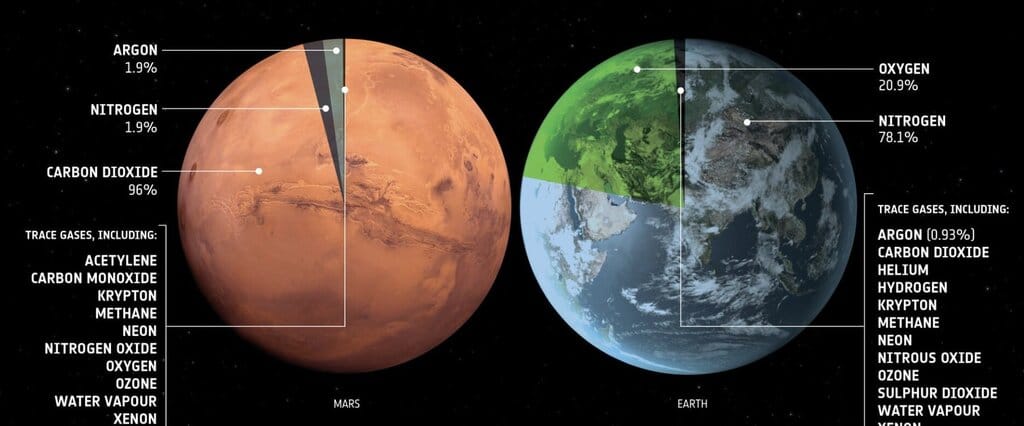
Almost habitable
Mnemonic for features of Mars : THIN
- Too cold
- Hardly air
- Ice water
- No life
Protection & Temperature Control
1. Greenhouse Effect
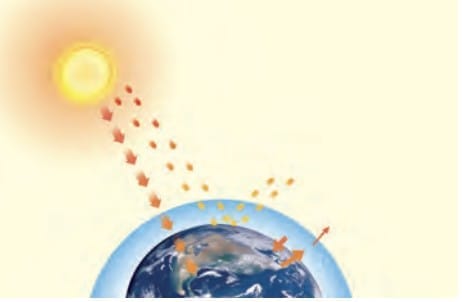
Atmosphere traps heat
Mnemonic: BLANKET
Blocks heat: It prevents all the Earth's heat from escaping into the vacuum of space.
Lets sunlight in: The atmosphere is transparent to incoming solar energy.
Air gases: Specifically "Greenhouse Gases" like Carbon Dioxide
Natural warming: It is a vital, natural cycle that makes the planet habitable.
Keeps warm: It maintains a steady global average temperature
Earth safe: It protects us from the extreme freezing temperatures of deep space.
Temperature control: It acts like a thermostat for the planet.
2. Global Warming
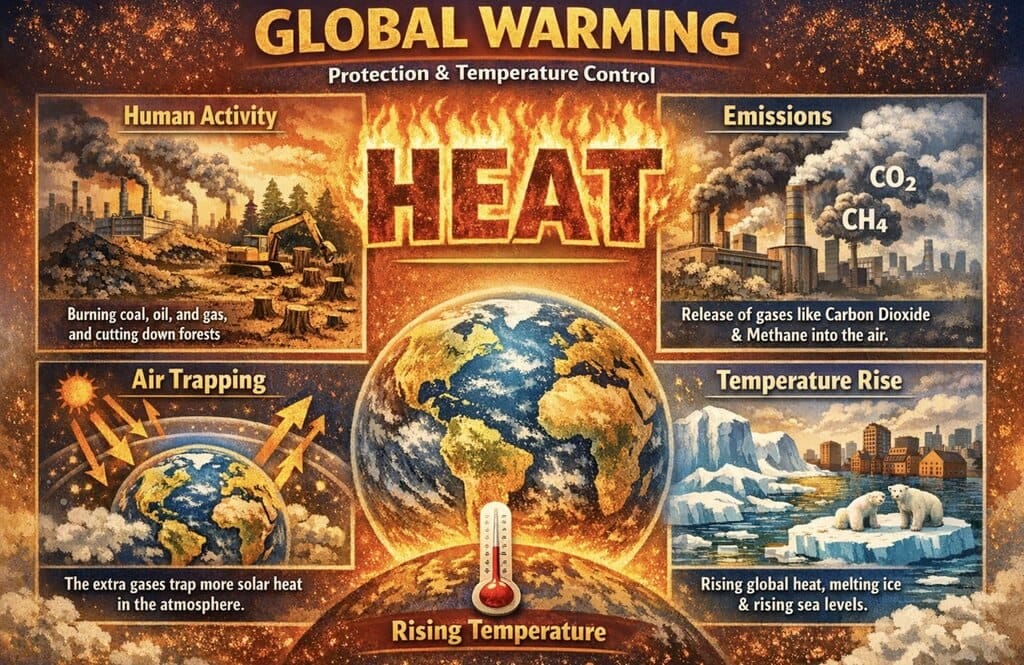 Rising temperature
Mnemonic: HEAT
Human activity: Burning coal, oil, and gas, and cutting down forests
Emissions: The release of gases like Carbon Dioxide and Methane into the air.
Air trapping: The extra gases trap more solar heat in the atmosphere.
Temperature rise: The steady increase in global heat, leading to melting ice and rising sea levels.
3. Magnetic Field
Invisible protectionMnemonic: SHIELD
Stops rays: It blocks dangerous cosmic and solar radiation from reaching the surface.
Holds air: By deflecting solar wind, it prevents our atmosphere from being "blown away" into space.
Invisible: You can't see it, but it's always there (and your compass needle relies on it!).
Earth core: Generated by the spinning, liquid iron in the outer core.
Life saver: Without it, Earth would be a radiation-baked desert like Mars.
Defence: It is the planet's first line of defence against space weather.
Life Processes
1. Importance of Water
Essential for life.Mnemonic: LIFE
- Living cells
- Internal transport
- Food making
- Energy reactions
2. Reproduction
Life continues.Mnemonic: RENEW
Replace: It replaces members of a species that die due to age, disease, or predators.
Exist: It ensures the species continues to exist on Earth rather than going extinct.
Next generation: The process of passing down genetic "blueprints" (DNA) to offspring.
Evolve: It allows for small genetic variations that help a species adapt over time.
Withstand change: A healthy population can better withstand environmental shifts or disasters.
3. Asexual Reproduction
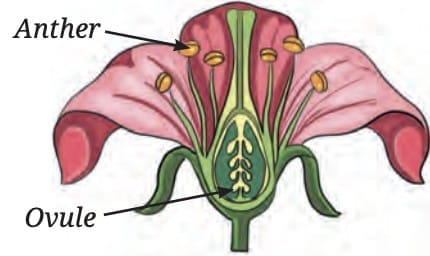
One parent
Mnemonic: CLONE
Copy: The offspring is a perfect genetic copy of the parent.
Like parent: It looks, acts, and functions exactly like the parent.
One parent: No mate or partner is required for this process.
No variation: There is no mixing of DNA, so there are no new traits introduced.
Exact: The number of chromosomes and the DNA sequence remain exact.
4. Sexual Reproduction
Two parentsMnemonic: MIX
- Mixed genes
- Inherited traits
- X-factor differences
5. Gametes
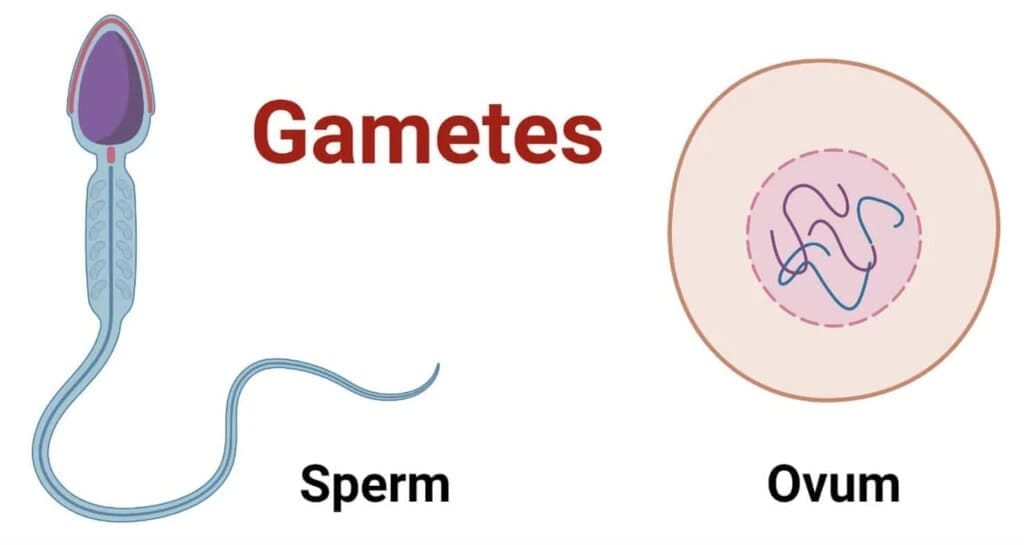
Half genetic material
Mnemonic: HALF
- Half genes
- Add together
- Life begins
- Full set formed (half + half)
6. Why Siblings Differ
Gene mixingMnemonic: SHUFFLE
Shared genes: Siblings share a common pool of DNA from their parents.
Half from each: They still get 50% from Mom and 50% from Dad.
Unique mix: The specific 50% they get is different every time.
Family traits: This explains why you might have your Dad's nose but your Mom's eyes.
Fresh combo: Every fertilisation event is a brand-new "roll of the dice."
Looked different: This variation is why one sibling might be tall while another is short.
Every time: The "shuffling" happens every single time a new offspring is created.
What Humans Can Do
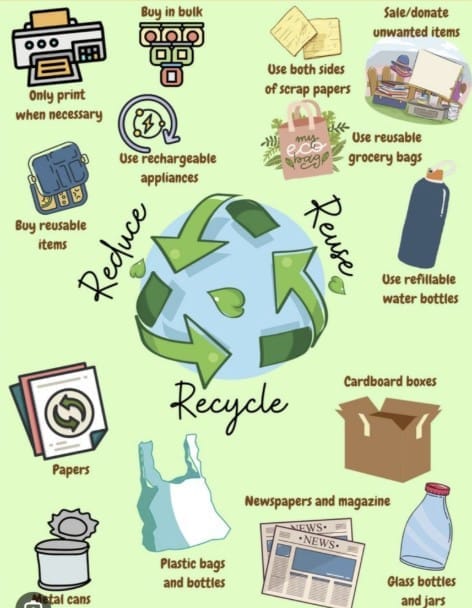
Protect Earth
Mnemonic: 3RS
- Reduce
- Reuse
- Recycle
- Save resources
Earth's Uniqueness
Perfect life system
Mnemonic: HOME
- Habitable zone
- Ozone protection
- Magnetic shield
- Ecosystem balance
FAQs on Mnemonics : Our Home: Earth, a Unique Life Sustaining Planet
| 1. Why is Earth considered a unique planet for sustaining life? |  |
| 2. What role does the atmosphere play in protecting life on Earth? | |
| 3. How does Earth maintain temperature control? | |
| 4. In what ways can humans contribute to protecting Earth's unique environment? | |
| 5. What are some life processes that are vital for the existence of life on Earth? | |




